You want a delivery dashboard that helps you decide quickly. Good dashboard design starts with knowing what users need. It also starts with knowing what your business wants. With FineReport, you can build dashboards for any device. You can use data from many places. The dashboards show information in clear ways.
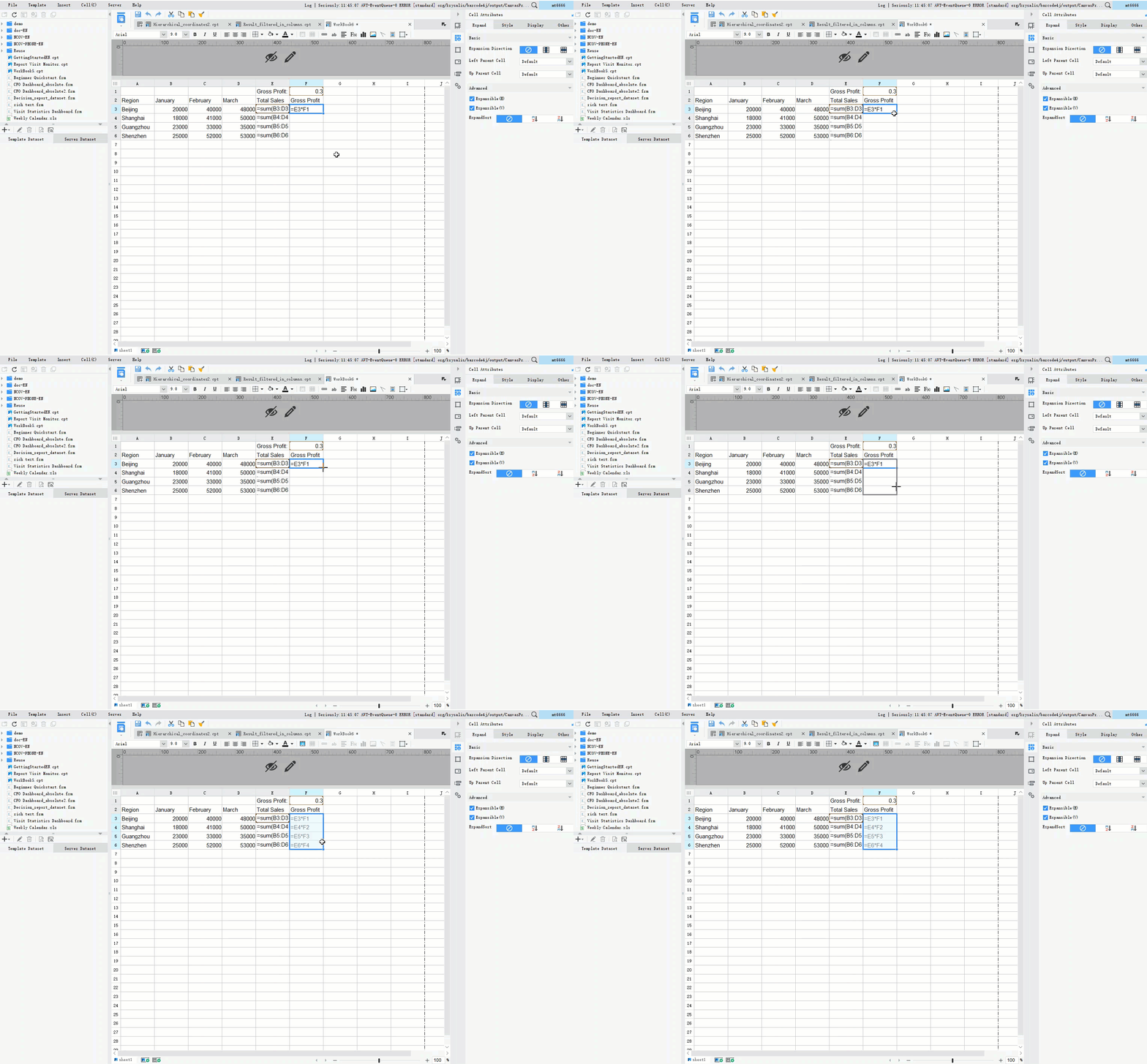
Drag-and-drop tools make dashboard design simple for everyone.
FineReport lets you make 3D visual dashboards without coding.
You can connect to different systems for a full view.
Feature
FanRuan FineReport
Other Tools
User-friendly interface
Yes
Changes
Pixel-perfect reports
Yes
Changes
Data integration
Yes
Not much
Zero code dashboard
Yes
Not there
Understand Delivery Dashboard Users
Identify User Roles
First, you need to know who uses the dashboard. Each person has a different job. They need different information. Managers look for big patterns. Drivers check their routes and times. Customer service teams want order status and delivery problems. When you know user roles, you make sure the dashboard helps with daily work.
Gather User Needs
You must find out what each user wants from the dashboard. There are many ways to do this:
Make user personas to show skills and goals for each user.
Talk to stakeholders to learn what they expect and what troubles them.
Watch people use the dashboard in testing to see what needs fixing.
Ask for feedback with surveys or forms to get ideas and opinions.
These steps help you build a dashboard that solves real problems and makes work easier.
Define Success Metrics
You need to pick key metrics to see how well your dashboard works. Use numbers and opinions to check how it performs. The table below shows common ways to track success:
When you know customer KPIs and meet them, you make customers happier. You also make your dashboard more useful.
Select Dashboard Type and Data Sources
Operational vs. Analytical Dashboards
You must pick the best dashboard for your delivery work. Operational dashboards show what is happening right now. You can see orders, inventory, and routes as they change. Analytical dashboards help you look at data over time. You can check how things went before and plan for the future.
Feature
Operational Dashboard
Analytical Dashboard
Purpose
Real-time monitoring of logistics operations
In-depth analysis of logistics data
Data Handling
Focuses on current data and KPIs
Utilizes historical data for trend analysis
User Interaction
Designed for quick decision-making
Supports detailed exploration and insights
Examples of Use Cases
Inventory tracking, order fulfillment
Performance analysis, forecasting
Integrate Data with FineReport
FineReport connects to many kinds of data sources. You can get information from databases, spreadsheets, and other systems. Drag-and-drop tools let you build dashboards without writing code. The FineVis plugin gives you cool charts and 3D visuals. You can see dashboards on computers, tablets, or phones. This helps you bring all your data together and understand everything.
In manufacturing, you can link order data from ERP and production data from MES. In logistics, you can mix shipment tracking with warehouse inventory. FineReport makes it simple to combine all your data.
Align with Delivery Objectives
Your dashboard should match your delivery goals. Here are some common goals in logistics:
Make suppliers more reliable by getting orders right and on time.
Make last-mile delivery better by lowering complaints and costs.
Make warehouses safer with no injuries and good training.
Speed up order fulfillment by picking and shipping faster.
Use green logistics by cutting emissions and using recyclable materials.
Your dashboard needs to show numbers that help you reach these goals. You can check progress and find problems fast. This keeps your delivery running well and helps your business succeed.
Key Delivery Metrics and KPIs of Delivery Dashboard
Prioritize Actionable Metrics
You should pay attention to the most important kpis when making your delivery dashboard. Actionable metrics help you make choices fast. They show what is happening now and what you need to do next. Many top companies use dashboards to see kpis from inventory, logistics, and supplier performance all in one place. This helps you see your whole supply chain.
Order Fill Rate: Tells how many customer orders you fill from your inventory.
Cash to Cash Cycle Time: Shows how long it takes to turn inventory into cash.
Supplier Lead Time: Tells how fast suppliers bring goods.
On-Time In-Full (OTIF): Tracks the percent of deliveries that are on time and complete.
Perfect Order Rate: Shows how many orders are delivered with no mistakes.
Transportation Cost per Unit: Tells the cost to move each shipment.
Inventory Turnover Ratio: Shows how often you sell and replace inventory.
Order Cycle Time: Tells the time from order to delivery.
Real-Time Sustainability Metrics: Tracks carbon emissions and resource use.
Dashboards with real-time data and alerts let you see updates right away. You can find problems and fix them quickly.
Avoid Data Overload
If you have too much information, your dashboard gets hard to use. You should put related information together. Take out data you do not need. Use simple visuals so the screen does not look crowded. Pre-calculate summaries to make things easy to see. Always start with a clear goal for your dashboard. This keeps the design simple and easy to use.
Cognitive Load Theory says that simple layouts and modular designs help people understand information better. When you keep things clear, everyone can use the dashboard more easily.
Map Metrics to User Goals
You should connect your kpis to what users want to do. For example, if your goal is fast delivery and easy returns, you can track these indicators:
Goal
Leading Indicators
Lagging Indicators
Fast delivery and return
Number of successful deliveries
Customer satisfaction level
Time taken for delivery
Return rate
When you match key metrics to user goals, you make sure your dashboard helps real business needs. This is one of the best ways to design a dashboard.
Delivery Dashboard Design Principles with FanRuan
When you design a delivery dashboard, you want everyone to use it easily. You need to follow important dashboard ui design rules. Your dashboard should be clear and simple. It should help people make choices fast. FanRuan’s FineReport gives you tools to do this. You can use drag-and-drop and responsive design. Let’s see some good ways to make a dashboard that people like.
You should help users see the most important things first. Good dashboard design uses visual hierarchy. Here are some ways to set up your layout:
Put the most important metric in the top left corner. People look there first.
Use big numbers or charts to get attention. This makes key data easy to see.
Group similar metrics together. This helps users find things fast.
Use clear labels and different font sizes or colors for titles.
Leave enough white space. This keeps the dashboard from looking crowded.
Show an overview at the top. Add more details as users scroll down.
FineReport’s drag-and-drop tools make this easy. If you know Excel, you can build dashboards without trouble. You can move charts, tables, and widgets where you want. This helps you make a dashboard that fits your work.
Simplicity and Usability
Keep your dashboard simple. The best dashboards are clear and easy to use. You want users to find answers fast. Here are some tips to make your dashboard better:
Show only the most important data. Too much data can confuse people.
Use a clear visual order to show what matters most.
Pick fonts that are easy to read. Use strong contrast for text.
Keep the design clean. Do not add too many things.
Make it easy to move around. Use menus, tabs, or filters.
Add tooltips or filters so users can see more details if they want.
Ask users for feedback. Change your dashboard to fit their needs.
Cognitive psychology gives more ways to help users. Break information into small parts. This makes it easier to understand. Grouping information and making clear paths help users move around. Fitts’s Law says big buttons and KPIs are easier to click. Hick’s Law says fewer choices make things less confusing. Gestalt principles say to group related items together.
Color, Contrast, and Accessibility
Color and contrast are important in dashboard design. You want your dashboard to look nice and be easy to read. Here are some ways to use color and contrast:
Pick colors that look good together.
Use color to show important things or give hints.
Make sure colors are easy to tell apart. This helps users find things fast.
Do not use only color to show meaning. Use icons, labels, or patterns too.
Check that text stands out from the background. This helps people with vision problems.
When you use these dashboard design rules, your dashboard is better for everyone. You help users focus on what matters. They can make choices faster and have a better time. FanRuan’s FineReport lets you use these rules easily. You can build dashboards for any device and any user.
Visualizing Delivery Dashboard Data Effectively
Choose the Right Charts
You want your dashboard to show delivery performance in simple ways. Picking the right chart helps you spot patterns fast. Bar and column charts help you compare values between groups. For example, you can see delivery times for different routes. Line and area charts show changes over time. You can track delivery speed each week. Bullet charts show if you meet your goals.
Chart Type
Purpose
Bar Chart
Compare values within and between groups
Column Chart
Compare values within and between groups
Bullet Chart
Display performance against goals
Line Chart
Show change over time
Area Chart
Show change over time
Tell a Clear Data Story
You can turn numbers into stories that everyone understands. Start with a clear goal for your dashboard. Know who will use it and what they need. Build a simple story that shows what is happening. Use visuals to highlight important data. Edit your dashboard so it does not have too much information. These steps make your data visualization more helpful. You help people see trends and take action.
Begin with a clear goal.
Know your audience.
Use visuals to highlight key points.
Keep information simple and organized.
Edit for clarity.
Ensure Real-Time Insights
You need real-time data to make quick decisions. Instant data refresh keeps your dashboard updated. Multi-source integration brings all your data together. Role-based access controls keep your data safe. Each team sees what matters most.
Instant data refresh keeps information current.
Multi-source integration brings all your data together.
Role-based access ensures security and relevance.
When you use these design strategies, your dashboard becomes a strong tool. You can see what matters, understand the story behind the numbers, and act quickly.
Test and Iterate Your Delivery Dashboard
Collect User Feedback
You need to find out what users think about your dashboard. Start by watching how people use it. Use tools like heatmaps and session recordings. These tools show where users click and what they miss. Add feedback widgets so users can share their thoughts while using the dashboard. After a session, ask users to fill out a short survey. The survey asks what was easy or hard. You can also test for screen reader compatibility. Check keyboard navigation and color contrast. This makes sure everyone can use the dashboard.
Testing Method
Description
Screen Reader Compatibility
Checks if visually impaired users can use the dashboard
Keyboard Navigation
Ensures all features work without a mouse
Color and Contrast Testing
Makes sure text is easy to read for everyone
Heatmap Analysis
Shows which parts users focus on or ignore
Session Recordings
Reveals where users get stuck or confused
Post-Session Surveys
Collects feedback on what works and what does not
Feedback Widgets
Lets users share ideas during real use
Usage Analytics
Tracks clicks and actions to spot problems
Moderated Testing
Guides users through tasks for live feedback
Unmoderated Testing
Lets users try tasks on their own and records their actions
Continuous Improvement
You should always try to make your dashboard better. Start by writing down all feedback and ideas from users. Assign team members to handle changes and set deadlines. Use this record as a roadmap to track progress. Spot issues that come up often. Build a flexible process so you can test new features and fix problems quickly. Try pilot deployments to catch issues early. Automate testing to keep quality high. Work together as a team to solve bottlenecks and make approvals faster.
Set a clear purpose for your dashboard.
Identify your main users.
Keep a knowledge base for lessons learned.
Test new updates with a small group first.
Use automated checks to find errors.
Work as a team to solve problems fast.
Measure Dashboard Impact
You want to know if your dashboard helps your business. Track key metrics to see how well it works. Use these common measures:
Metric
Description
Impact on Operations
On-time delivery performance
Percent of deliveries made on time
Improves customer trust and satisfaction
Order cycle time
Time from order to delivery
Reduces delays and boosts efficiency
Supplier performance metrics
Checks how reliable and high-quality suppliers are
Strengthens supply chain management
You can also watch delivery time, operational efficiency, and customer satisfaction. These numbers show if your dashboard supports your goals and follows best practices. Review them often to keep improving.
You can build a good delivery dashboard by following easy steps. First, learn who will use the dashboard. Pick the right dashboard design for your users. Use simple layouts so people find things quickly. Organize information in a way that makes sense. Focus on metrics that help you take action. Check your dashboard often to make it better. FanRuan and FineReport let you connect lots of data sources. You can use your dashboard for any size business.
Key Step
Description
Know Your Audience
Make user personas and learn what they need
Choose Dashboard Type
Pick a dashboard that fits user and business goals
Apply UI Principles
Help users with clear visual order
Keep it Simple
Remove clutter and show only important metrics
Integrate Data
Use tools to connect data easily
User-focused design makes dashboards simple to use.
Actionable metrics help you make better choices.
FineReport gives real-time updates and works for big companies.
Product Trial
FineReport
Pixel-perfect reports · Interactive dashboards · Easy data entry · Digital twins
Access a wealth of case studies, industry insights, and solution guides to accelerate digital transformation.
FAQ
What types of delivery metrics should you track?
Track metrics that help you make quick choices. Some good ones are on-time delivery rate, order cycle time, and inventory turnover. These numbers show how your delivery is doing and what you can make better.
How do you keep your dashboard easy to use?
Only show the most important data. Use clear labels and simple charts. Put related information together. Ask users what they think and update the dashboard often. This makes your dashboard helpful and easy for everyone.
How do you connect multiple data sources in FineReport?
FineReport has built-in connectors for your data. You can pick from more than 100 sources like databases, Excel, or cloud services. Just drag your data into the dashboard. FineReport puts all your information in one place so you can look at it easily.
Can you use FineReport dashboards on mobile devices?
Yes! FineReport dashboards work on phones and tablets. The design changes to fit any screen size. You can see delivery data anywhere you go. Open the dashboard in your browser or use the FineReport app.