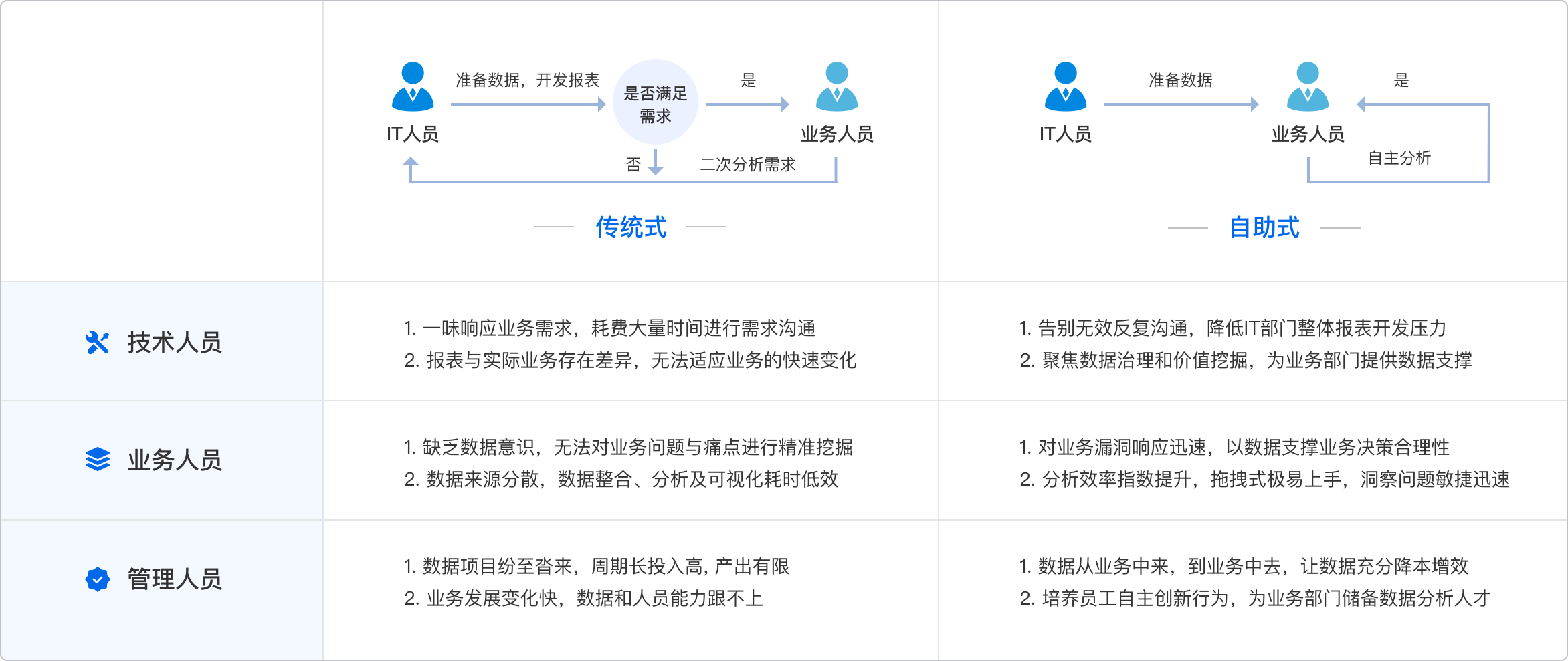
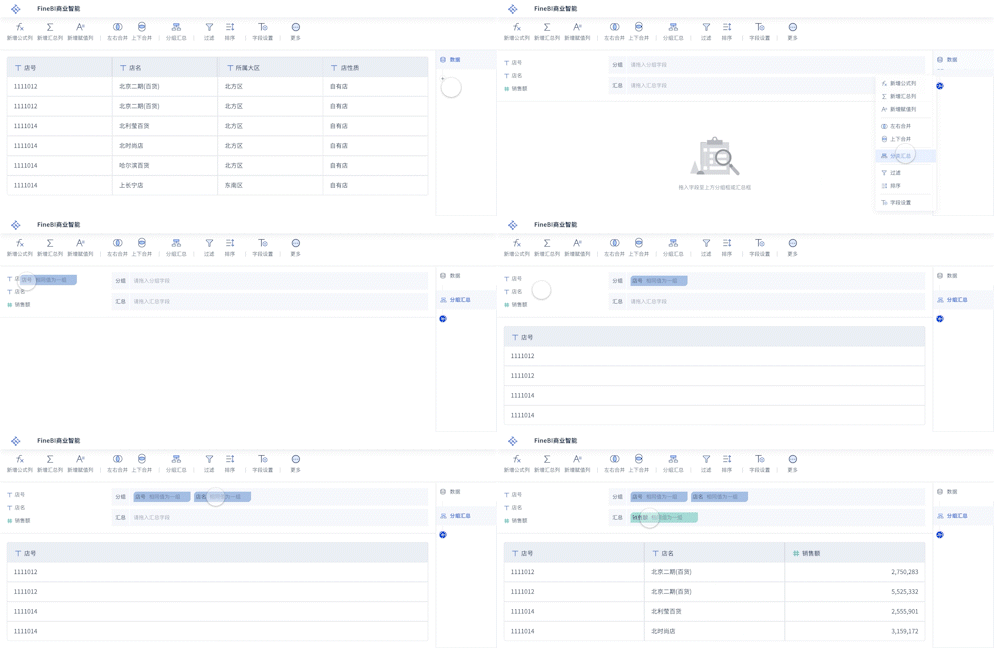
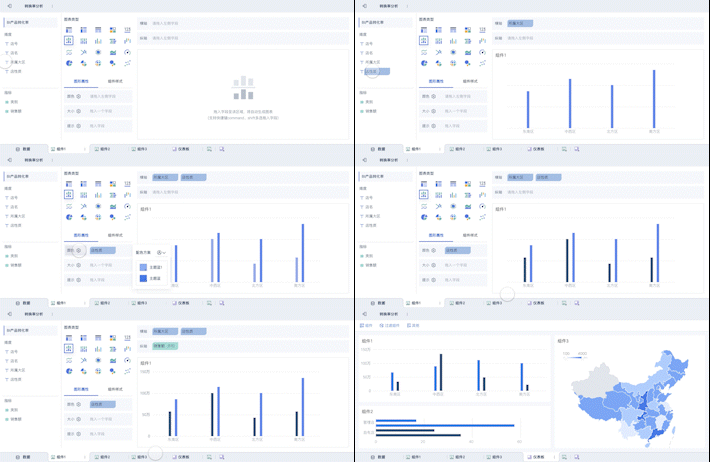
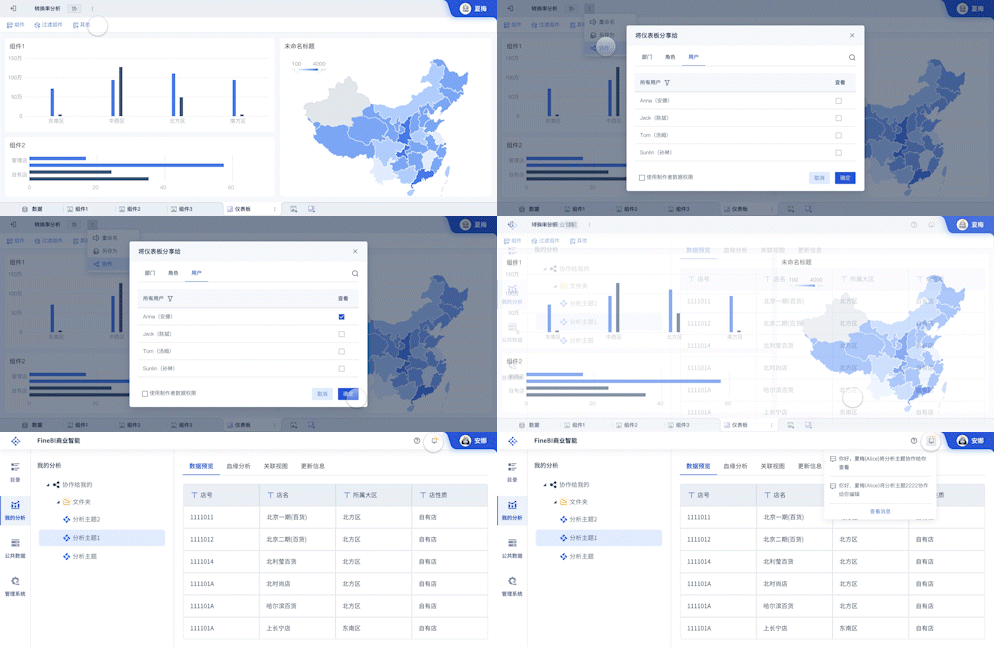
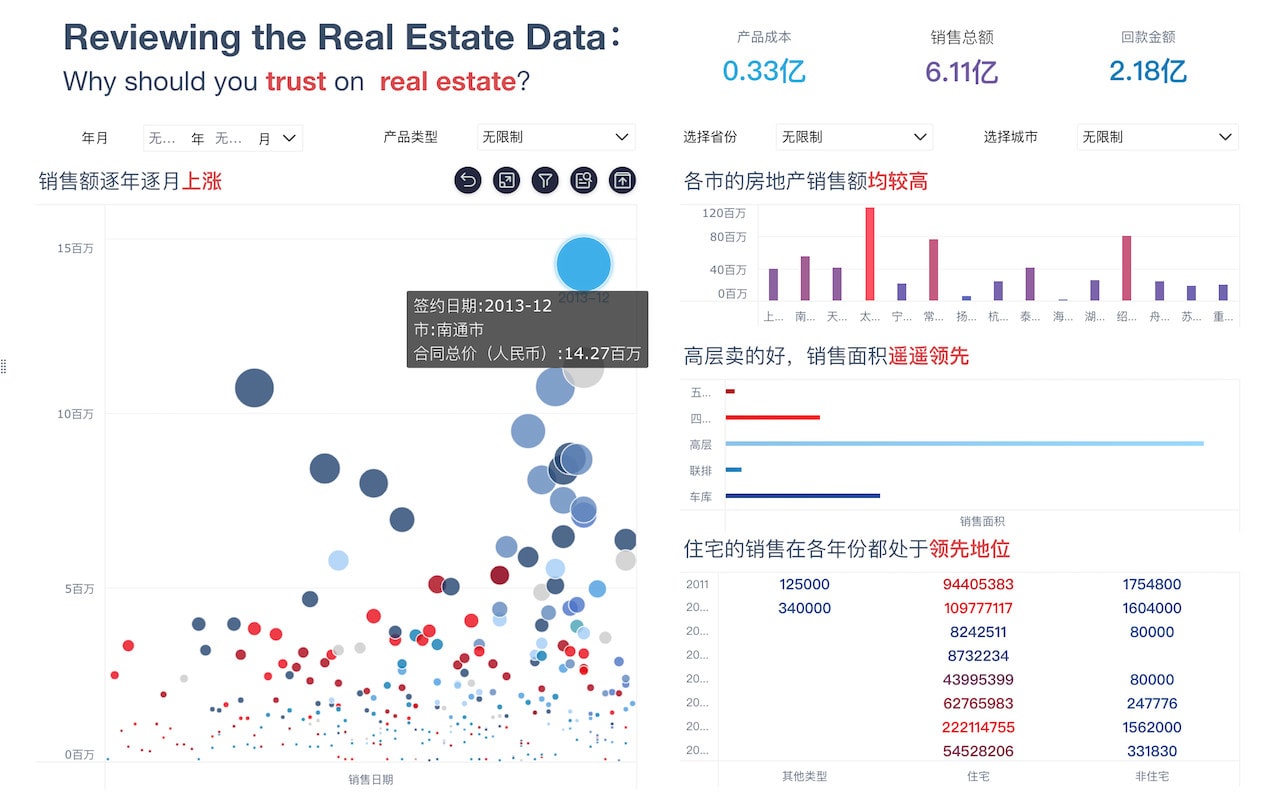
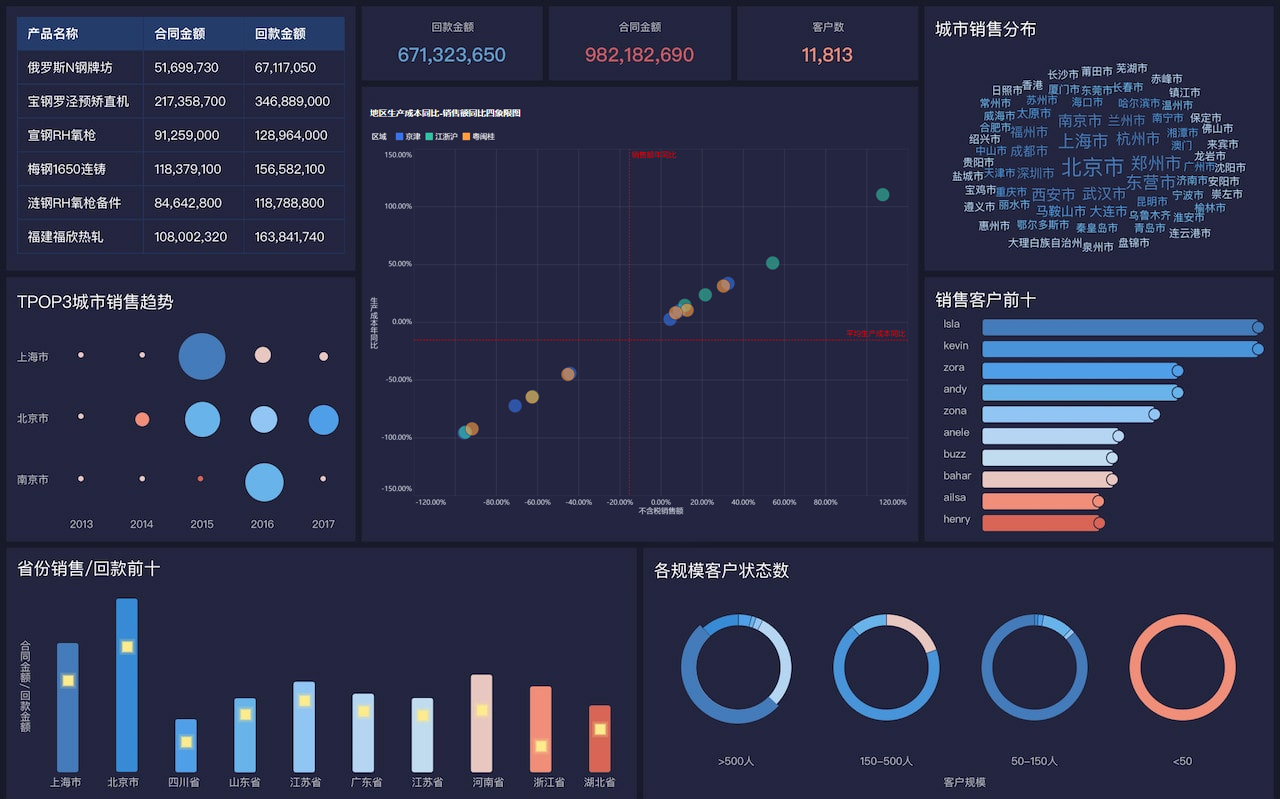
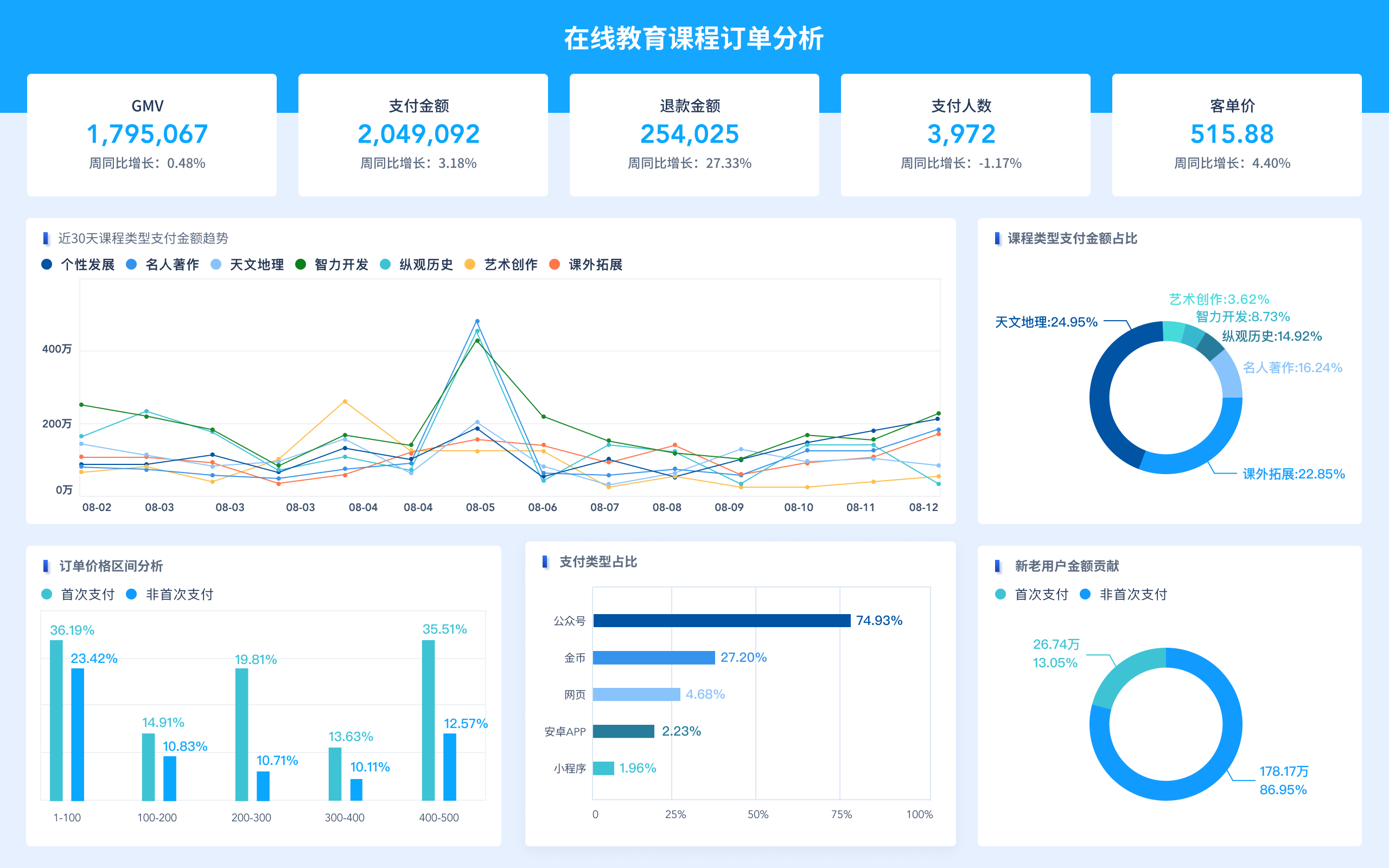
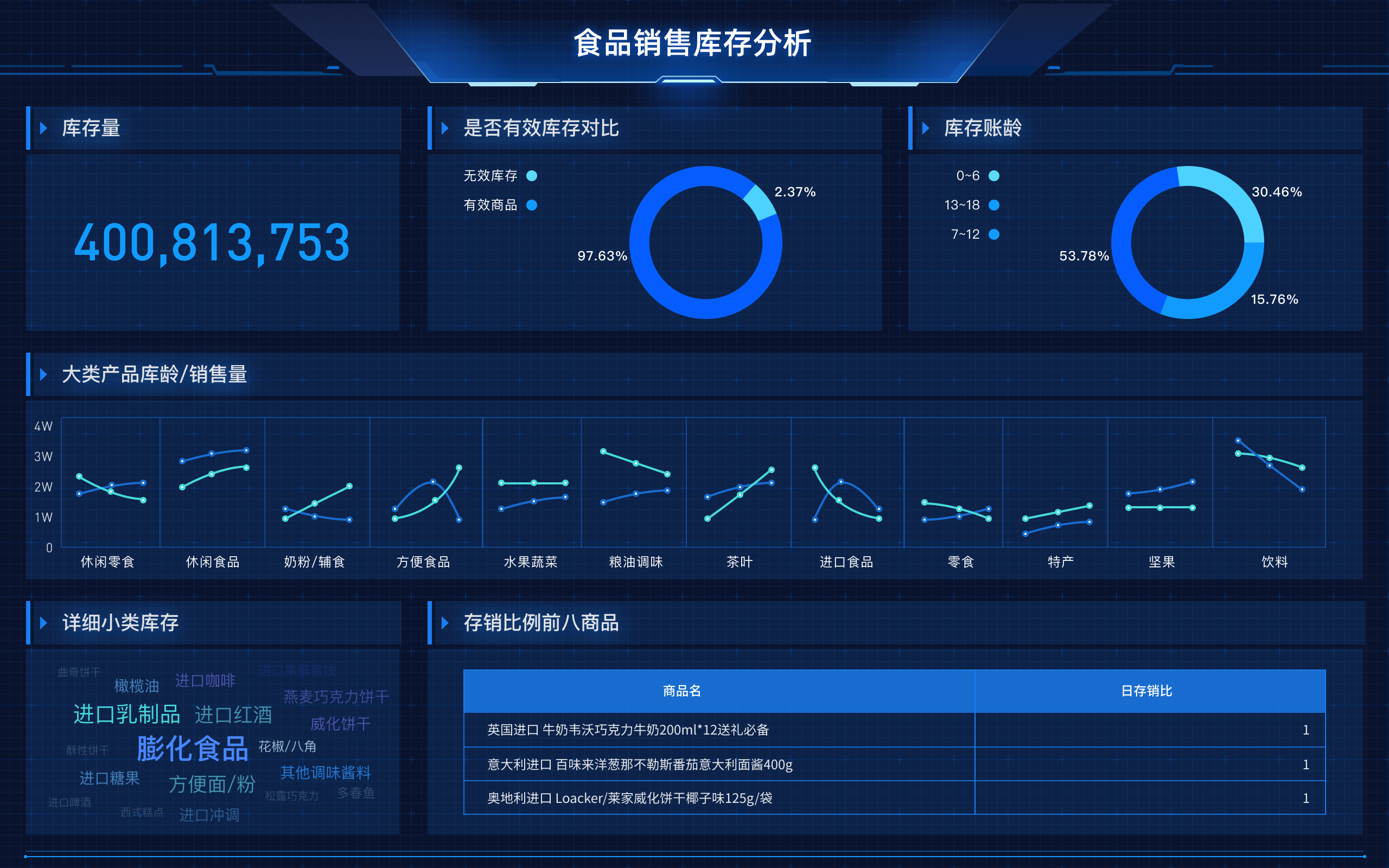
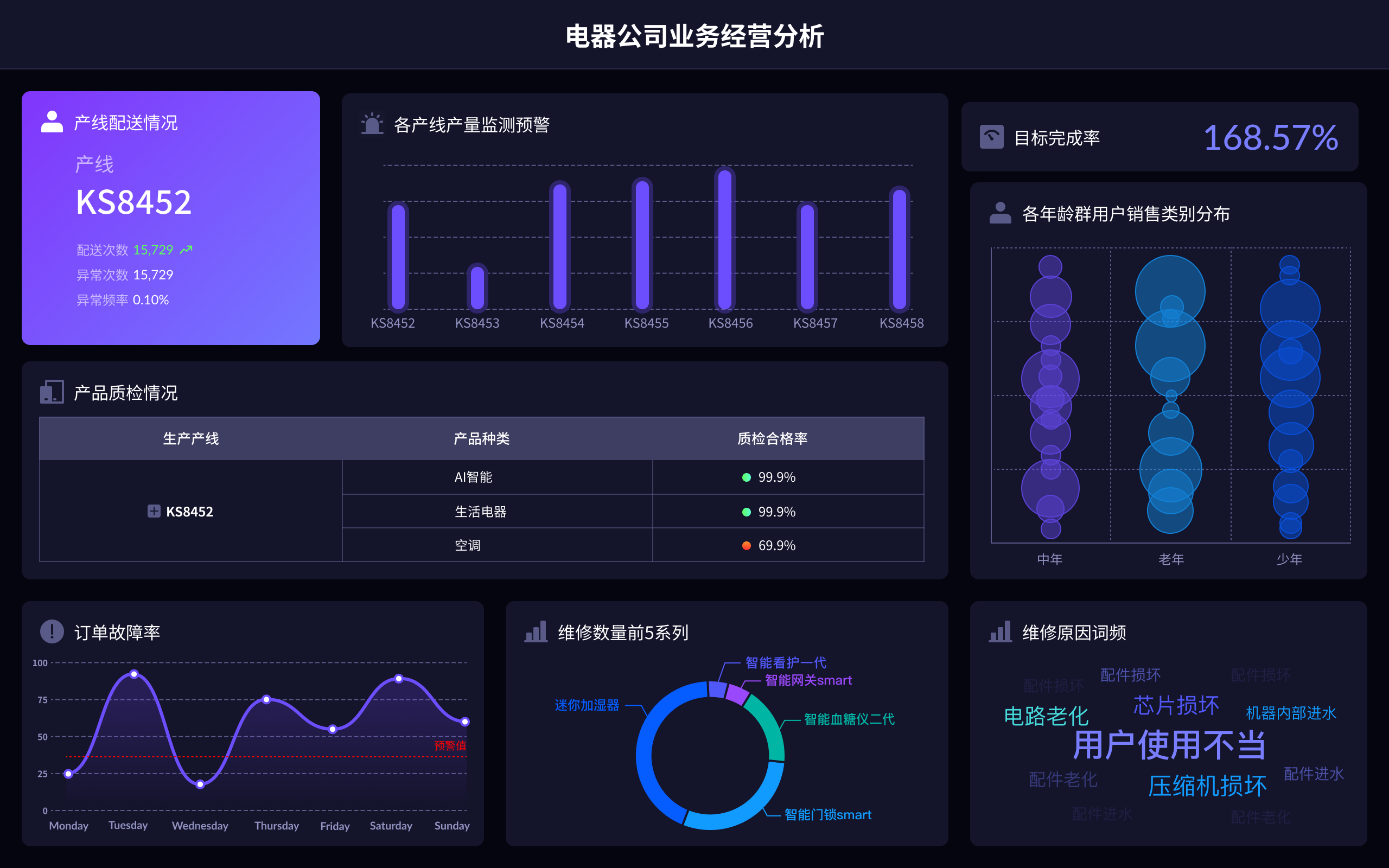
Data needs to be visualized for several reasons: to enhance understanding, to identify patterns, to communicate insights effectively, and to support decision-making. Visualizing data transforms raw numbers into meaningful visuals, making it easier to grasp complex information quickly. For instance, when dealing with large datasets, visual representations like charts or graphs can help highlight trends and outliers that might be missed in tabular formats. This not only facilitates better analysis but also aids in presenting the findings in a more compelling manner.
I、ENHANCE UNDERSTANDING
One of the primary reasons data needs to be visualized is to enhance understanding. Raw data in its numerical or textual form can often be overwhelming and difficult to interpret. Visualizations such as charts, graphs, and maps allow users to quickly grasp the meaning behind the data. For example, a line graph can show trends over time, while a bar chart can compare different categories. By converting data into a visual format, it becomes much easier to identify relationships, trends, and patterns that might not be immediately apparent from the raw data. This enhanced understanding is crucial for effective analysis and decision-making.
II、IDENTIFY PATTERNS
Visualizing data helps in identifying patterns that might be hidden in large datasets. Patterns such as seasonal trends, correlations, and anomalies can be easily spotted through visual representations. For instance, a heat map can reveal geographic trends, while scatter plots can show correlations between variables. These patterns are essential for businesses and researchers to make predictions and informed decisions. Without visualization, identifying these patterns would require sifting through vast amounts of data, which is both time-consuming and prone to error.
III、COMMUNICATE INSIGHTS EFFECTIVELY
Effective communication of insights is another key reason for data visualization. Visualizations can convey complex information in a clear and concise manner, making it accessible to a broader audience. Whether presenting to stakeholders, team members, or the public, visual aids such as infographics, dashboards, and reports can help convey the message more effectively. Tools like FineBI, FineReport, and FineVis from FanRuan are designed to create interactive and visually appealing reports and dashboards, which can significantly enhance the way insights are communicated. More information about these tools can be found on their respective websites: FineBI (https://s.fanruan.com/f459r), FineReport (https://s.fanruan.com/ryhzq), FineVis (https://s.fanruan.com/7z296).
IV、SUPPORT DECISION-MAKING
Supporting decision-making is perhaps the most critical reason for data visualization. Decision-makers rely on accurate and timely information to make informed choices. Visualizations provide a quick and intuitive way to understand the data, identify key metrics, and assess performance. Dashboards, for instance, can provide real-time insights into business operations, helping managers to make data-driven decisions. By presenting data in a visual format, it becomes easier to compare different scenarios, evaluate outcomes, and choose the best course of action.
V、INCREASE ENGAGEMENT
Data visualization can also increase engagement with the data. Interactive visualizations allow users to explore the data in more depth, providing a more engaging and immersive experience. Tools like FineBI, FineReport, and FineVis offer features such as drill-downs, filters, and interactive charts, which enable users to interact with the data directly. This interactivity not only makes the data more accessible but also encourages users to explore and analyze the data more thoroughly. Engaged users are more likely to gain valuable insights and contribute to better decision-making processes.
VI、FACILITATE COLLABORATION
Facilitating collaboration is another significant benefit of data visualization. In a business environment, different teams and departments need to work together to achieve common goals. Visualizations provide a common language that everyone can understand, regardless of their technical expertise. By presenting data in a visual format, it becomes easier for teams to share insights, discuss findings, and collaborate on strategies. Tools like FineBI, FineReport, and FineVis offer collaborative features such as shared dashboards and reports, which can enhance teamwork and improve overall productivity.
VII、IMPROVE ACCURACY
Improving accuracy is another important reason to visualize data. Manual analysis of raw data is prone to human error, especially when dealing with large datasets. Visualizations can help reduce these errors by providing a clear and concise representation of the data. For example, anomalies and outliers can be quickly identified in a visual format, allowing for more accurate analysis. Additionally, tools like FineBI, FineReport, and FineVis provide automated data processing and visualization capabilities, which further enhance accuracy and reduce the likelihood of errors.
VIII、ENHANCE DATA STORYTELLING
Enhancing data storytelling is another key benefit of data visualization. Data storytelling involves presenting data in a way that tells a story, making it more relatable and engaging for the audience. Visualizations play a crucial role in this process by providing a visual narrative that complements the data. For instance, a well-designed infographic can tell a compelling story about a company's performance, market trends, or customer behavior. Tools like FineBI, FineReport, and FineVis offer a range of visualization options that can help create effective data stories, making it easier to communicate insights and drive action.
IX、ENABLE DATA-DRIVEN CULTURE
Enabling a data-driven culture within an organization is another significant advantage of data visualization. By making data more accessible and understandable, visualizations encourage employees at all levels to use data in their decision-making processes. This promotes a culture of data-driven decision-making, where insights are derived from data rather than intuition or guesswork. Tools like FineBI, FineReport, and FineVis support this by providing user-friendly interfaces and powerful visualization capabilities, making it easier for everyone in the organization to leverage data effectively.
X、SUPPORT DATA DEMOCRATIZATION
Supporting data democratization is another important reason for data visualization. Data democratization involves making data accessible to everyone in the organization, regardless of their technical expertise. Visualizations play a crucial role in this process by providing a simple and intuitive way to understand the data. Tools like FineBI, FineReport, and FineVis offer features such as drag-and-drop interfaces, pre-built templates, and interactive dashboards, which make it easy for non-technical users to create and interpret visualizations. This democratization of data empowers employees at all levels to make data-driven decisions and contribute to the organization's success.
XI、SUPPORT CONTINUOUS IMPROVEMENT
Supporting continuous improvement is another significant benefit of data visualization. By providing real-time insights into performance and trends, visualizations enable organizations to monitor their progress and identify areas for improvement. Dashboards and reports can be used to track key performance indicators (KPIs), measure the impact of initiatives, and identify opportunities for optimization. Tools like FineBI, FineReport, and FineVis provide powerful visualization capabilities that can help organizations continuously improve their operations and achieve their goals.
XII、ENHANCE CUSTOMER EXPERIENCE
Enhancing customer experience is another important reason to visualize data. By analyzing customer data and visualizing the insights, organizations can gain a deeper understanding of customer behavior, preferences, and needs. This information can be used to personalize the customer experience, improve products and services, and build stronger customer relationships. Tools like FineBI, FineReport, and FineVis offer advanced data visualization capabilities that can help organizations analyze customer data and create more engaging and personalized experiences.
In conclusion, data visualization is essential for enhancing understanding, identifying patterns, communicating insights effectively, supporting decision-making, increasing engagement, facilitating collaboration, improving accuracy, enhancing data storytelling, enabling a data-driven culture, supporting data democratization, supporting continuous improvement, and enhancing customer experience. Tools like FineBI, FineReport, and FineVis from FanRuan provide powerful visualization capabilities that can help organizations unlock the full potential of their data. More information about these tools can be found on their respective websites: FineBI (https://s.fanruan.com/f459r), FineReport (https://s.fanruan.com/ryhzq), FineVis (https://s.fanruan.com/7z296).
相关问答FAQs:
为什么数据需要可视化?
数据可视化是将数据以图形或图表的形式呈现出来,这种方式可以帮助人们更直观地理解数据。通过数据可视化,人们可以更容易地发现数据之间的关系、趋势和模式,从而更好地进行分析和决策。
怎样用英语表达“数据需要可视化”?
在英语中,可以表达“数据需要可视化”为“Data needs to be visualized”或者“Data requires visualization”。另外,还可以说“Visualization of data is necessary”。
数据可视化有哪些常用的工具?
数据可视化有许多常用的工具,其中一些流行的工具包括Tableau、Power BI、Google Data Studio、D3.js等。这些工具提供了丰富的功能和图表类型,可以帮助用户将数据呈现得更加生动和易懂。
本文内容通过AI工具匹配关键字智能整合而成,仅供参考,帆软不对内容的真实、准确或完整作任何形式的承诺。具体产品功能请以帆软官方帮助文档为准,或联系您的对接销售进行咨询。如有其他问题,您可以通过联系blog@fanruan.com进行反馈,帆软收到您的反馈后将及时答复和处理。