数据仓库有什么优势吗英文
-
Data warehouses offer several significant advantages, including enhanced data management, improved query performance, scalability, historical data analysis, and better decision-making support. One of the primary benefits is enhanced data management, which involves consolidating data from multiple sources into a single repository, making it easier to manage, access, and analyze. This integration simplifies data governance, improves data quality, and ensures consistency across the organization.
ENHANCED DATA MANAGEMENT
Data warehouses provide a structured environment where data from various sources is integrated and organized into a unified format. This centralized data repository simplifies data governance by ensuring consistency and accuracy across different systems. By consolidating disparate data sources, organizations can eliminate data silos and streamline data management processes. This integration allows for easier access to comprehensive datasets, making it simpler for users to retrieve and analyze information without having to query multiple sources.
Additionally, a data warehouse enables improved data quality through standardized data formats and cleansing processes. By enforcing consistent data standards and performing regular data cleansing, organizations can maintain high data quality levels, which is crucial for accurate analysis and reporting. The ability to manage and oversee data centrally also facilitates better compliance with data governance policies and regulations, ensuring that data handling practices meet legal and industry standards.
IMPROVED QUERY PERFORMANCE
One of the key advantages of a data warehouse is its ability to handle complex queries efficiently. Data warehouses are designed with optimized query processing capabilities, allowing them to execute complex analytical queries much faster than traditional operational databases. This enhanced performance is achieved through data indexing, partitioning, and the use of specialized query optimization techniques.
The architecture of a data warehouse typically includes features such as pre-aggregated data and materialized views, which further improve query performance by reducing the need for real-time calculations. By storing aggregated data and precomputed results, data warehouses can deliver faster query responses and support more efficient data analysis. This improved performance is crucial for organizations that rely on timely and accurate data insights for decision-making and strategic planning.
SCALABILITY
Data warehouses are designed to be highly scalable, allowing organizations to handle growing volumes of data without compromising performance. Scalability in a data warehouse context refers to the ability to accommodate increasing amounts of data and users while maintaining high performance levels. This is achieved through various architectural features such as distributed processing and elastic storage capabilities.
The scalability of data warehouses also extends to query performance and storage capacity, enabling organizations to expand their data infrastructure as needed. As data volumes grow, organizations can scale their data warehouse environment by adding more processing power or storage resources. This flexibility ensures that organizations can continue to leverage their data warehouse effectively as their data needs evolve.
HISTORICAL DATA ANALYSIS
Data warehouses are particularly valuable for historical data analysis, allowing organizations to track and analyze data over extended periods. Unlike operational databases, which are designed for real-time transactions, data warehouses are optimized for storing historical data and performing time-series analysis. This capability enables organizations to identify trends, patterns, and changes in their data over time.
By maintaining historical data, data warehouses support longitudinal studies and trend analysis, which are essential for understanding long-term business performance and making strategic decisions. Organizations can perform year-over-year comparisons, analyze seasonal trends, and evaluate the impact of historical events on current performance. This in-depth historical analysis provides valuable insights that are crucial for informed decision-making and strategic planning.
BETTER DECISION-MAKING SUPPORT
Data warehouses enhance decision-making capabilities by providing a comprehensive and accurate view of an organization’s data. With consolidated and high-quality data readily available, decision-makers can rely on data-driven insights to guide their strategies and actions. The ability to access and analyze large volumes of data quickly and efficiently supports informed decision-making and strategic planning.
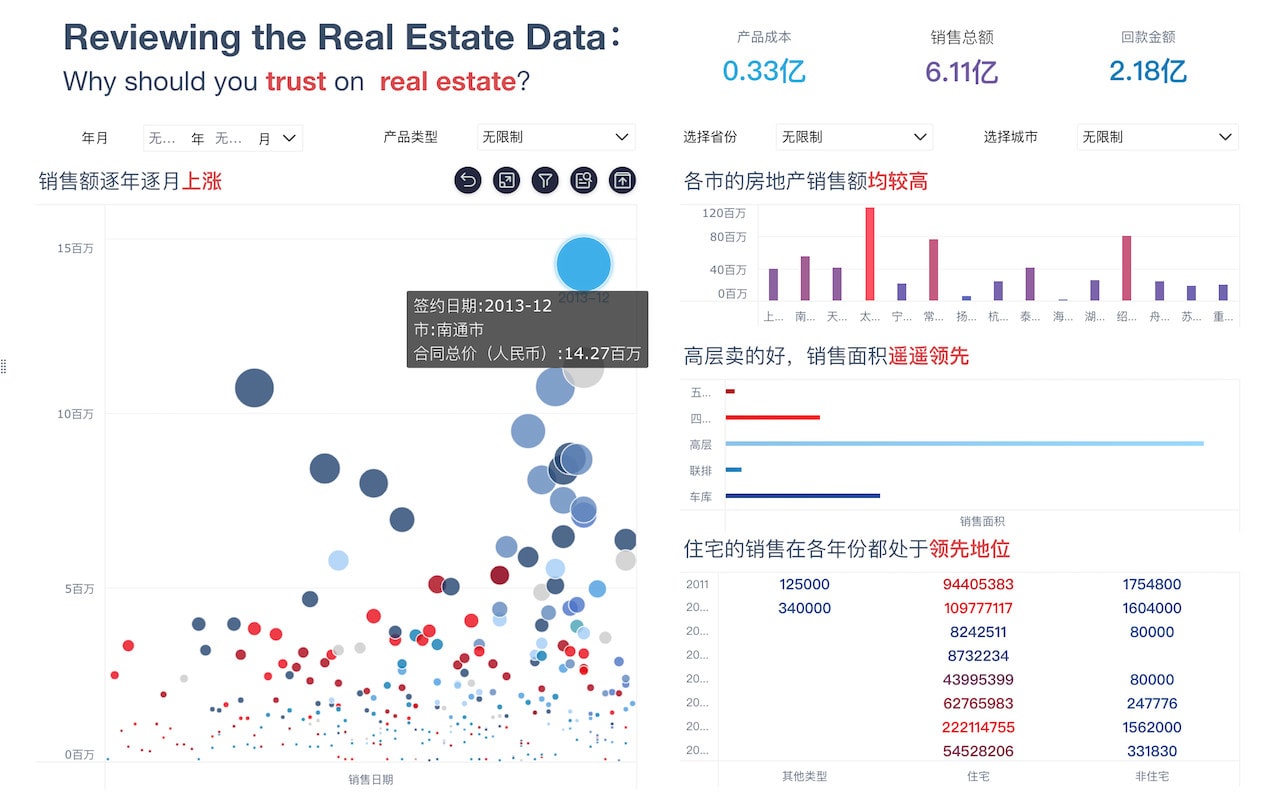
Additionally, data warehouses facilitate advanced analytics and reporting, allowing organizations to leverage tools such as business intelligence (BI) platforms and data visualization software. These tools enable users to create interactive dashboards, generate detailed reports, and perform complex analyses, further supporting data-driven decision-making. The availability of accurate and timely data empowers organizations to make strategic decisions based on actionable insights, ultimately driving business success.
1年前 -
Data warehouses offer several advantages including enhanced data management, improved query performance, and consolidated data sources. These systems are specifically designed to handle large volumes of data from various sources and support complex queries and analytics. One significant advantage is enhanced data management, which involves integrating and organizing data in a way that makes it easily accessible and analyzable. Data warehouses centralize information, allowing for more efficient data retrieval and reporting. This centralized approach not only streamlines data management but also ensures consistency and accuracy across different business operations.
ENHANCED DATA MANAGEMENT
Data warehouses excel in enhanced data management by consolidating data from disparate sources into a single, unified repository. This integration process involves extracting data from various operational systems, transforming it to fit the data warehouse schema, and loading it into the warehouse. This ETL (Extract, Transform, Load) process ensures that data is consistent and accurate, which is crucial for effective analysis. By having a central repository, organizations can reduce redundancy, avoid data silos, and maintain a single version of the truth. This comprehensive approach to data management facilitates easier data governance, better compliance with regulations, and improved data quality.
IMPROVED QUERY PERFORMANCE
Another key advantage of data warehouses is their ability to deliver improved query performance. Data warehouses are optimized for query processing, which means they can handle complex queries and large datasets more efficiently than traditional databases. This optimization is achieved through various techniques such as indexing, partitioning, and the use of materialized views. These techniques reduce the time it takes to retrieve and analyze data, allowing users to gain insights quickly and make data-driven decisions faster. As a result, businesses can respond more rapidly to market changes and operational needs, enhancing overall agility and competitiveness.
CONSOLIDATED DATA SOURCES
Data warehouses provide consolidated data sources, which means they bring together data from multiple operational systems into a single repository. This consolidation enables organizations to perform comprehensive analyses and generate holistic insights that would be difficult to achieve with isolated data sources. By integrating data from various departments, such as sales, finance, and marketing, businesses can gain a unified view of their operations. This consolidated perspective supports better strategic planning, more accurate forecasting, and improved decision-making. Additionally, having all relevant data in one place reduces the complexity of data management and ensures that reports and analytics are based on comprehensive and up-to-date information.
ENHANCED BUSINESS INTELLIGENCE CAPABILITIES
Data warehouses significantly enhance business intelligence (BI) capabilities by providing a robust platform for data analysis and reporting. With a data warehouse, organizations can leverage advanced analytics tools and techniques to uncover insights and trends that drive business strategy. BI tools integrated with data warehouses enable users to create detailed reports, interactive dashboards, and visualizations that facilitate data exploration and interpretation. This capability supports more informed decision-making, helps identify business opportunities, and drives strategic initiatives. Enhanced BI capabilities lead to more effective performance monitoring, trend analysis, and strategic planning.
DATA INTEGRITY AND CONSISTENCY
Data integrity and consistency are crucial advantages of data warehouses. By consolidating data from various sources and maintaining a centralized repository, data warehouses ensure that information is accurate, reliable, and consistent across the organization. This consistency is achieved through standardized data models, validation processes, and rigorous data quality controls. Ensuring data integrity helps prevent discrepancies and errors that can arise from disparate data sources, thus supporting reliable reporting and analysis. Maintaining data consistency also enhances trust in the information used for decision-making, leading to more accurate and credible business outcomes.
SCALABILITY AND FLEXIBILITY
Data warehouses offer scalability and flexibility to accommodate growing data volumes and evolving business needs. As organizations generate and collect more data, data warehouses can scale up to handle increased workloads without compromising performance. This scalability is achieved through architectural design choices, such as distributed processing and cloud-based solutions. Additionally, data warehouses provide flexibility in terms of data modeling and integration, allowing businesses to adapt to changing requirements and incorporate new data sources as needed. This adaptability ensures that the data warehouse remains relevant and effective in supporting long-term business objectives and technological advancements.
SECURITY AND DATA GOVERNANCE
Security and data governance are fundamental aspects of data warehouse advantages. Data warehouses implement robust security measures to protect sensitive information from unauthorized access and breaches. This includes access controls, encryption, and auditing capabilities that ensure data is secure both in transit and at rest. Data governance practices are also integral to data warehouse management, involving the establishment of policies and procedures for data quality, usage, and compliance. Effective data governance ensures that data is managed properly, maintains regulatory compliance, and supports transparent and accountable data practices.
By leveraging these advantages, organizations can significantly enhance their data management, analysis, and decision-making capabilities, positioning themselves for greater success in a data-driven world.
1年前 -
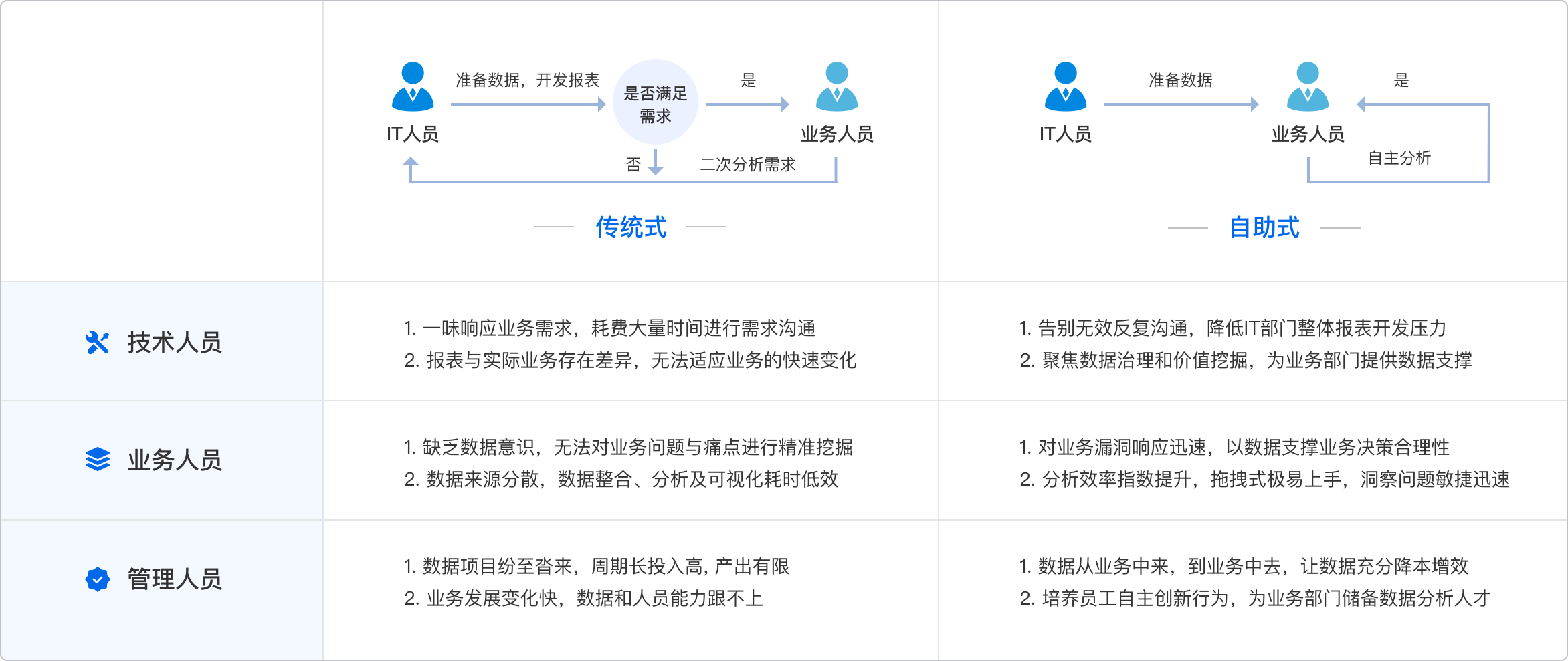
数据仓库的优势包括:支持决策、整合数据、提高查询性能、增强数据分析能力。首先,数据仓库通过集中存储来自不同来源的数据,使得企业能够更高效地进行数据整合。这样,用户在进行决策时可以获得更全面的信息,避免了数据孤岛现象。此外,数据仓库为复杂的查询提供了优化的性能,使得数据分析的速度大大提高。企业利用数据仓库能够快速获得洞察,从而做出更为精准的商业决策,提高市场竞争力。
一、支持决策
数据仓库的核心优势之一是其对决策支持的显著提升。企业在进行战略规划和运营管理时,需要依赖大量的数据分析,而数据仓库提供了一个集中的平台,使得决策者能够轻松访问和分析各种数据。数据仓库中的数据经过清洗、转化和整合,确保了数据的准确性和一致性。这种高质量的数据可以帮助企业识别市场趋势、客户需求和运营效率,从而支持更科学的决策。
通过数据仓库,企业还可以进行多维分析,支持不同维度的数据查询,比如按时间、地区、产品等多个维度进行分析。决策者可以利用这些功能,深入挖掘数据背后的信息,快速获得业务洞察。例如,在销售分析中,企业可以快速获取某一地区、某一时间段的销售数据,帮助评估销售策略的效果,并及时调整市场策略。
二、整合数据
数据仓库的另一个重要优势是其能够有效整合来自不同来源的数据。现代企业往往使用多种系统收集数据,比如CRM系统、ERP系统、社交媒体等。这些系统中的数据格式、结构和内容各不相同,导致数据整合变得极为复杂。数据仓库通过ETL(提取、转化、加载)过程,将这些异构数据源中的数据进行清洗和整合,形成一个统一的数据视图。
整合后的数据不仅提高了数据的一致性,也为跨部门合作提供了便利。不同部门可以共享数据,消除信息孤岛,使得各部门在制定策略和执行计划时能够基于相同的数据基础进行沟通和协作。这种整合能力对于企业的运营效率和创新能力有着重要的推动作用。
三、提高查询性能
在大数据时代,快速获取和处理数据是企业成功的关键。数据仓库通过多种优化手段提高了查询性能,使得用户能够在海量数据中迅速找到所需信息。数据仓库通常采用星型或雪花型的数据模型,方便用户进行高效查询。此外,数据仓库还使用索引、分区和数据压缩等技术,进一步提升查询速度。
例如,企业可以对历史销售数据进行深入分析,通过数据仓库快速生成销售报告、趋势图等,为决策提供实时支持。这种高效的查询性能不仅提高了工作效率,也帮助企业在竞争中占得先机。高效的数据查询能力使得企业能够在瞬息万变的市场中快速反应,及时调整策略。
四、增强数据分析能力
数据仓库的设计旨在支持复杂的数据分析,为企业提供强大的数据分析能力。通过数据仓库,企业可以利用各种分析工具和技术,对数据进行深入挖掘和分析。数据仓库通常支持OLAP(联机分析处理)技术,使得用户能够进行多维分析,从而发现潜在的商机和风险。
增强的数据分析能力使得企业能够进行预测分析、趋势分析和关联分析等多种分析方式。企业可以通过数据仓库分析客户行为,识别出潜在的高价值客户,制定相应的营销策略。此外,数据仓库还支持数据挖掘技术,帮助企业从海量数据中提取有价值的信息,支持产品开发、市场推广等决策。
五、提高数据安全性
在数据管理中,数据安全性是一个不可忽视的重要因素。数据仓库在设计时考虑到了数据的安全性,通过多种安全措施确保数据的保护。数据仓库通常会采用访问控制机制,限制用户对数据的访问权限,确保只有授权用户才能访问敏感数据。
此外,数据仓库还会定期进行数据备份,防止数据丢失。在数据传输过程中,数据仓库会采用加密技术,确保数据在网络传输中的安全性。这种全面的安全措施大大降低了数据泄露和数据丢失的风险,为企业提供了一个安全可靠的数据环境。
六、支持历史数据分析
数据仓库不仅支持实时数据分析,还非常适合历史数据分析。由于数据仓库能够存储大量的历史数据,企业可以对数据进行长期的趋势分析和模式识别。这种历史数据分析对于企业的战略规划和市场研究具有重要意义。
企业可以利用历史数据分析评估过去的市场表现,识别出成功与失败的原因,从而为未来的决策提供依据。例如,企业可以通过分析过去几年的销售数据,了解不同季节、不同产品的销售趋势,以便制定更为科学的销售计划和库存管理策略。
七、促进数据驱动文化
数据仓库的实施不仅提升了企业的技术能力,也促进了数据驱动文化的形成。在数据仓库的支持下,企业各级决策者都能够基于数据进行决策,减少了凭经验决策的情况。这种数据驱动的文化有助于提高企业的整体效率和创新能力。
通过数据仓库,员工能够更方便地获取所需的数据,进行自助式的数据分析。企业可以通过培训和教育,提高员工的数据素养,让每一位员工都能利用数据为工作提供支持。这种文化的形成不仅提升了员工的工作积极性,也为企业的持续发展奠定了基础。
八、适应业务变化
现代商业环境变化迅速,企业需要灵活应对市场变化。数据仓库的灵活性使得企业能够快速适应业务变化。在数据仓库中,企业可以快速集成新的数据源,进行数据模型的调整,以满足不断变化的业务需求。
例如,当企业推出新产品时,可以迅速将相关的数据源集成到数据仓库中,进行实时的数据分析,从而评估新产品的市场反应。这种快速响应能力使得企业能够在竞争中保持优势,抓住市场机会。
九、提升客户体验
通过数据仓库,企业能够更好地了解客户需求,提升客户体验。企业可以利用数据仓库分析客户的购买行为、偏好和反馈,从而制定个性化的营销策略和服务方案。通过对客户数据的深入分析,企业能够更精准地满足客户需求,增强客户满意度和忠诚度。
例如,企业可以通过分析客户的购买历史,向客户推荐相关产品,提供个性化的服务。这种以客户为中心的策略不仅提升了客户体验,也为企业创造了更多的商业机会。
十、降低运营成本
数据仓库的实施虽然需要一定的初期投入,但从长远来看,它能够有效降低企业的运营成本。通过集中管理数据,企业可以减少数据重复存储和管理的成本,提高数据的利用效率。数据仓库还能够减少数据处理和查询的时间成本,提升员工的工作效率。
此外,数据仓库的实施还可以降低决策的风险,避免因决策失误带来的损失。通过对数据的深度分析,企业能够更好地把握市场机会,制定科学的战略规划,从而实现资源的最优配置,降低运营成本。
1年前