
AI & Data
Uncovering the Truth Behind AI Delivery: Why Seemingly Perfect Strategies Fail in Enterprise Deployments
In the first post of this series, we discussed the critical choices in technical architecture, establishing a foundation backed by Natural Language to Domain-Specific Language (NL2DSL) and orchestrated by Data Agents at the top. In the second post, we dispelled the commercial illusion of “data democratization” and addressed the actual ROI and core requirements that enterprises are willing to pay for. Now, assuming you have chosen the right technical path and the executives have finally signed the contract, does this mean you have won?
Not quite. Welcome to a harsh reality in the B2B sector: the endless complexities of project delivery.
Over the past three years, we have navigated through more than 30 real-world enterprise AI deployments. We have seen numerous highly capable teams enter client sites with meticulously crafted customer success playbooks, only to see their projects collapse due to complex organizational politics and poor data infrastructure.
Today, to conclude this series, we will discuss the realities of implementing ChatBI (Conversational Business Intelligence).
Truth 1: Customer Success is Not a Checklist, but a Process of Navigating Organizational Dynamics
Every software team has a standard playbook outlining the five key elements of success: clear user personas, a pressing pain point in the legacy experience, adequate data quality, a client-side project manager who understands the business and assumes responsibility, and strong executive backing. In reality, for 90% of enterprises, this idealized methodology does not apply.
Regarding user personas: The playbook assumes a specific role within a business line will use the tool frequently every day. In reality, the underlying motivation for many market demands is simply that “leadership wants to tell a good story with AI.” This is a political reality within the organization, not an ideal assumption that can be validated through user interviews.
Regarding executive support: The playbook states that executives must mandate the team’s use of the tool. However, there is a significant gap between forcing others to use a system and using it oneself. If executives only review polished presentations from subordinates and never query data in the system themselves, the tool will eventually be marginalized.
Regarding data readiness: The playbook suggests rejecting clients with poor data quality. Yet, in the current economic climate, few vendors can afford to turn away clients. Poor data quality should not be an absolute disqualifier; rather, it should serve as leverage during the delivery process to align expectations and define project boundaries.
The most important lesson we learned on-site is to let go of the obsession with “perfecting the use case.” Ninety percent of use cases that perform flawlessly in a lab environment will fail in production. Successful use cases are not rigidly planned; they are developed through low-cost trial and error.
Truth 2: AI Without Metric Governance is Just a Faster Way to Generate Errors
How do most ChatBI projects fail during delivery? Here is an example of failure and subsequent recovery from a home furnishings manufacturer.
This leading enterprise, with 5,000 employees and a 100-person IT team, spent two years building a Hadoop data warehouse. Their initial attempt at AI implementation was very typical: feeding wide tables directly to the AI model.
The results were highly problematic, leading to rapid failure. Because the fields in the wide tables contained numerous ambiguities (same names for different meanings, different names for the same meanings), coupled with complex business logic, the AI frequently produced inaccurate answers. To verify the numbers provided by the AI, users had to manually cross-check against legacy systems. This is not enablement, this is creating extra work.
The turning point came when they abandoned the wide table approach and transitioned fully to building a centralized metrics platform.
They halted the flawed initiative. Facing the same data, they restructured the underlying architecture by building a strict metrics layer on top of the physical tables. Complex logic, such as year-over-year and month-over-month calculations, as well as dual-perspective attribution (regional and key accounts), were all solidified and standardized within the metrics platform.
The results were remarkable. Six months later, they had accumulated over 70 core users in marketing and over 20 in finance. The system successfully handled 3,042 high-quality queries, with an accuracy rate stabilizing above 99%.
This story provides a stark realization: ChatBI without metric governance is simply garbage in, garbage out. It merely provides business personnel with a faster way to obtain incorrect answers. Only when the underlying data definitions are thoroughly governed and unified can the upper-layer AI be fully trusted by users.
Final Thoughts: The Pragmatic 50–30–20 Delivery Formula
Behind the 3,042 high-quality queries at this company, we often asked ourselves: Was it a breakthrough in our NL2DSL technology? Did the reasoning capabilities of the underlying models improve? It turns out that the role of technology was much smaller than we expected. Those 3,000+ queries were systematically cultivated — achieved by monitoring backend logs daily, enforcing strict boundary controls, and guiding seed users step-by-step on how to formulate questions.
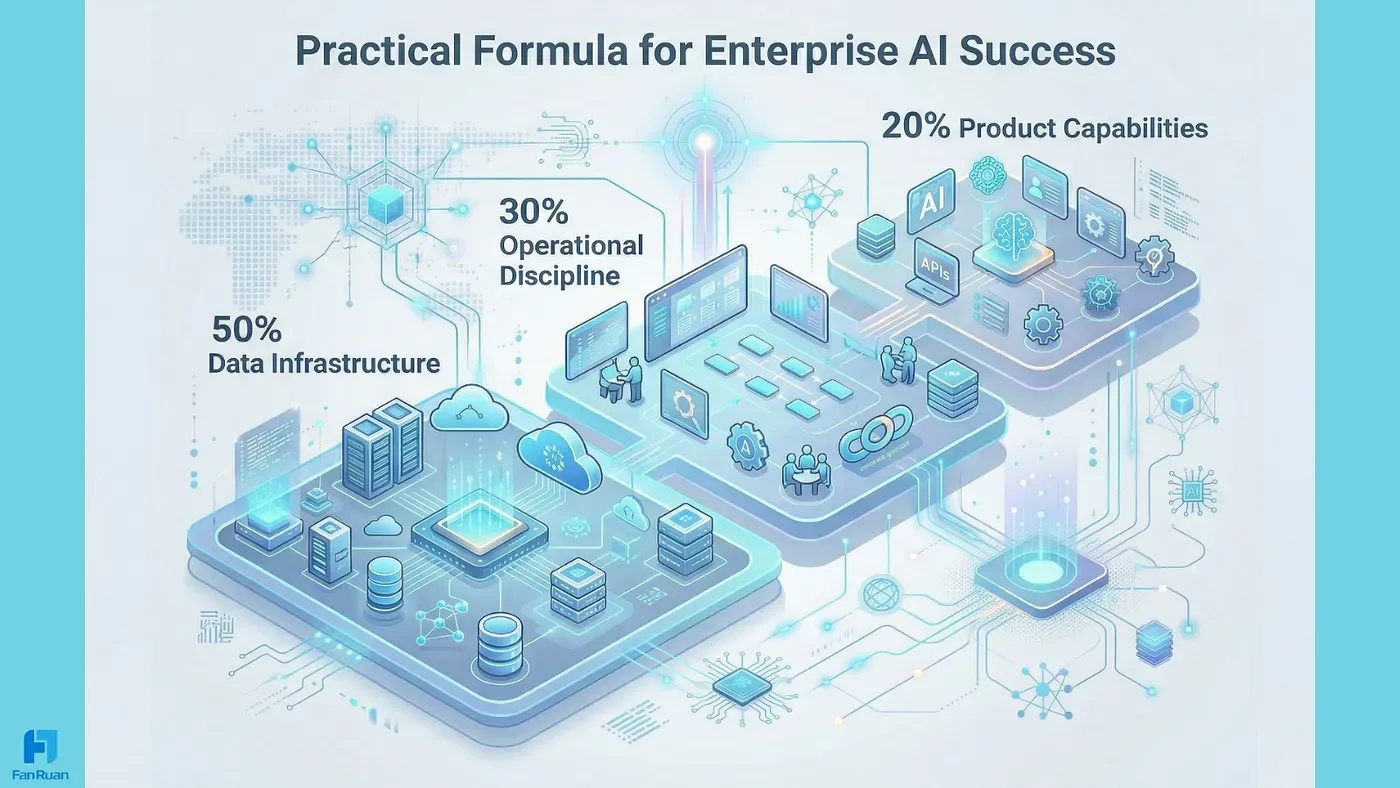
From the experiences of navigating these 30+ challenging projects, we developed a highly practical formula for enterprise AI success:
50% Data Infrastructure: This includes the consolidation of historical data warehouses, the construction of metrics platforms, and the strict unification of data definitions. If this foundation is weak, even the most advanced models will yield an unusable product.
30% Operational Discipline: This includes the decisiveness to quickly determine whether a project is salvageable, aligning expectations to focus on baseline deployability rather than perfection, and the resolve to freeze scope before requirements become unmanageable.
20% Product Capabilities: Finally comes the 20% allocated to product experience: system response speed, the flexibility of frontend visualization, and the ability to generate deep attribution analysis efficiently.
These three retrospectives summarize the operational detours we took over the past three years.
From abandoning the all-encompassing Text-to-SQL approach in favor of NL2DSL, to piercing the commercial illusion of company-wide enablement to find real requirements, and finally to discarding the idealized playbook to manage delivery complexities using the 50–30–20 formula. AI is not magic, it is merely a magnifying glass for your existing organizational capabilities, data infrastructure, and business discipline. If your underlying data is disorganized, AI will simply amplify that chaos and present it directly to management.
The difference between becoming another failed project and becoming an industry benchmark never lies in the intelligence of the model you use. It lies in whether you have the objectivity to face reality: acknowledging that you cannot use the modern interface of ChatBI to mask the underlying lack of enterprise data governance.
If you are also struggling with these deployment complexities, perhaps it is time to set aside the polished presentations and address the actual operational challenges.
Got questions? Ping me on Linkedin.

Article by
Saber Chen
AI Product Architect & CPO
Saber has 15 years of experience in enterprise software, where he has guided 43,000+ clients and managed teams of 500+, building top-tier data intelligence solutions. When not building scalable B2B architecture, he's on the basketball court or diving into vibe coding.


Keep Learning
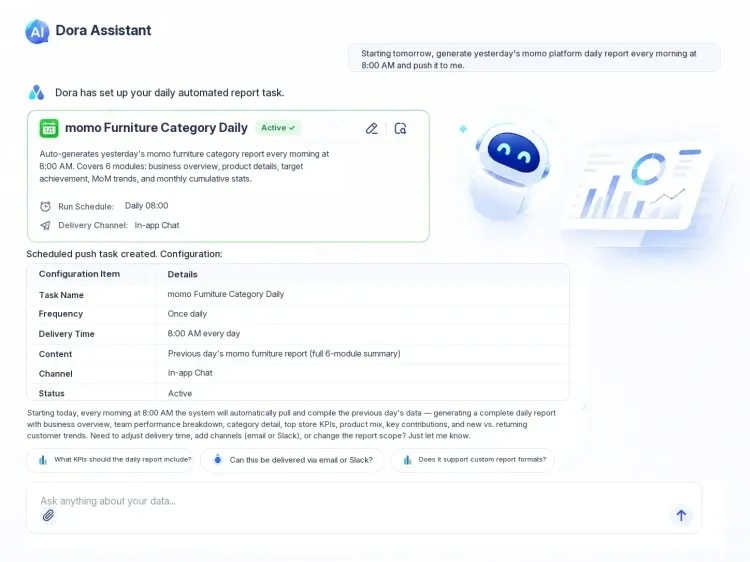 Fast Answers Are Not Enough: Why Data Agents Need AI-Ready Data
See why enterprise Data Agents need AI-ready data—and how trusted metrics, traceable sources, secure access, timely updates, and business context build trust.
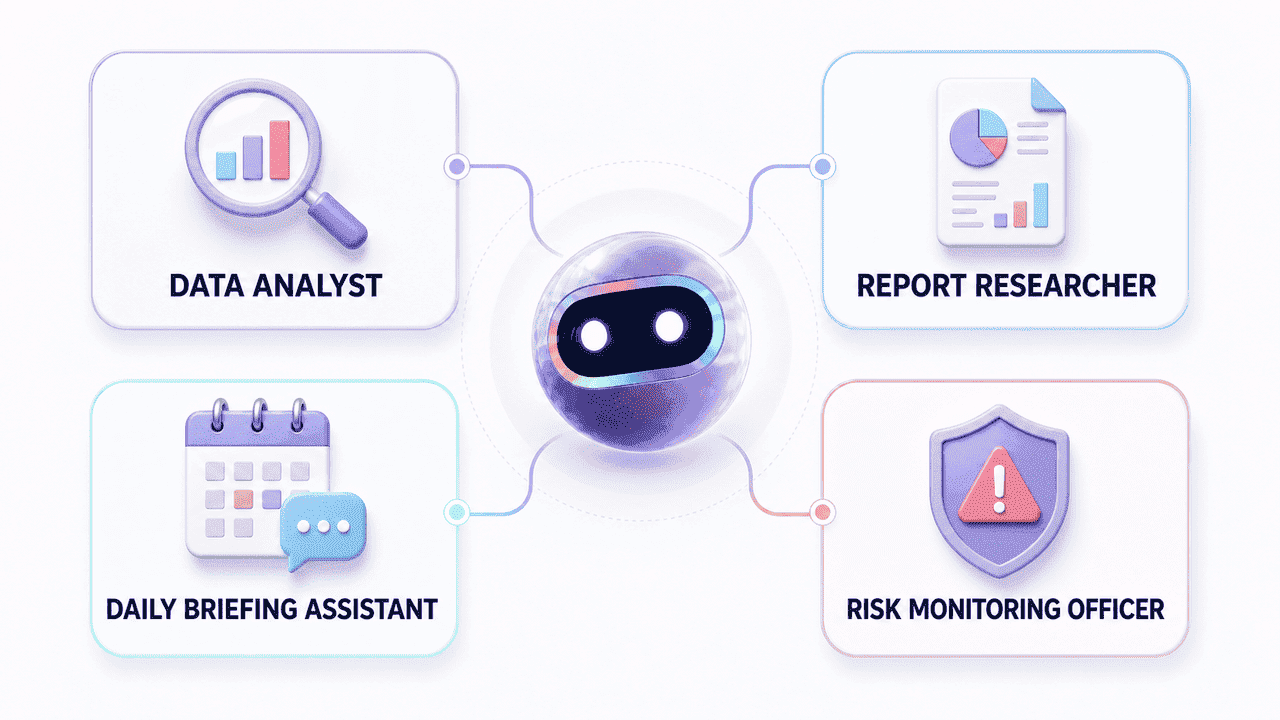 The Next Step for Enterprise AI: From Productivity Tools to Data Agents That Get Work Done
See how enterprise AI is evolving from productivity tools to Data Agents like Dora, which turn trusted BI into analysis, reports, alerts, and action.
 Stop Calling BI “Dashboards.” The Real Work Is Underwater.
The visualization is the visible 10%. The real work happens underwater, in the crushing depths where no one looks and no one credits.