An expense report is the standard business document employees use to record work-related spending and request reimbursement or document company-paid transactions. For finance teams, it is more than paperwork—it is a frontline control mechanism for spend visibility, policy enforcement, audit readiness, and faster month-end close. If you manage reimbursements, corporate cards, travel costs, or project expenses, a clear expense reporting process helps eliminate missing receipts, duplicate claims, slow approvals, and inconsistent records.
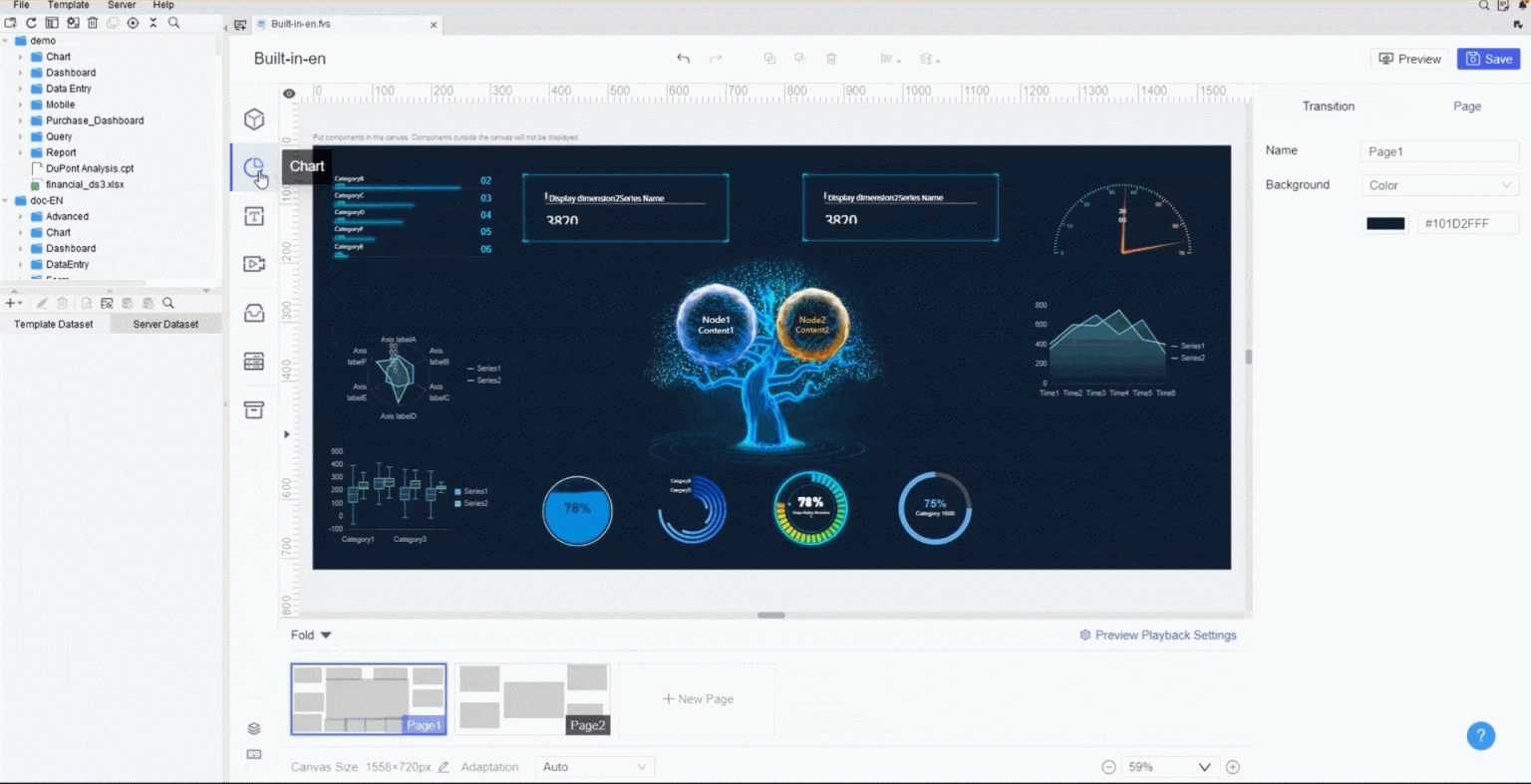
All reports in this article are built with FineReport
An expense report is a form or digital record that lists business expenses incurred by an employee, team, or cardholder during a specific reporting period. It usually includes each expense line item, supporting details, and receipts so managers and finance teams can review, approve, reimburse, and record the cost properly.
In practical terms, expense reports are commonly used by:
Employees seeking reimbursement for out-of-pocket purchases
Managers reviewing team spending
Finance and accounting teams validating policy compliance
Companies reconciling corporate card transactions
Project leaders tracking billable or client-related costs
A single reimbursement request is often just one expense or one isolated claim. A full expense report is broader: it usually contains multiple expenses grouped together over a week, month, trip, or project. For example, one employee may submit a full travel expense report covering airfare, hotel, taxis, meals, and mileage in one package rather than filing each item separately.
At a minimum, most expense reports include:
Dates of purchase
Merchant or vendor names
Expense amounts
Expense categories
Business purpose
Payment method
Receipt attachments
Notes or explanations where needed
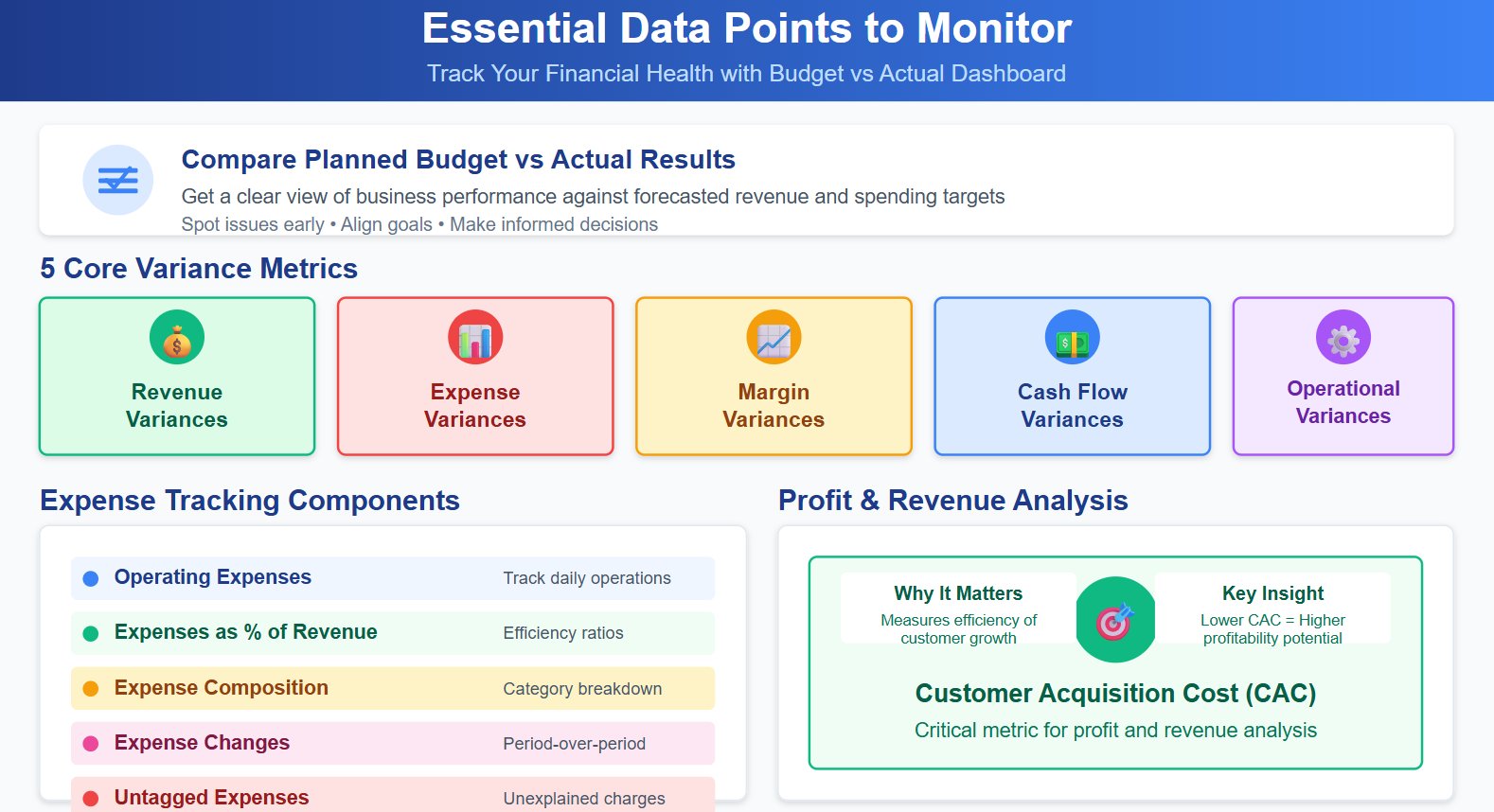
Key Metrics (KPIs) for Expense Reporting
To run an efficient expense reporting process, organizations should monitor a few core metrics consistently:
Total submitted expenses: The full value of all reported expenses in a period.
Average reimbursement time: The number of days from submission to employee repayment.
Approval cycle time: How long managers and finance take to review and approve reports.
Policy violation rate: The percentage of expense lines or reports that break company rules.
Receipt attachment rate: The share of submitted expenses with valid supporting documents.
Duplicate claim rate: The percentage of repeated or overlapping reimbursements detected.
Expense by category: Spend broken down into travel, meals, lodging, supplies, mileage, and more.
Expense by department or project: Useful for budget ownership and cost allocation.
Corporate card reconciliation rate: The percentage of card transactions properly matched to receipts and categories.
Rejected report rate: The share of reports sent back due to errors, missing details, or non-compliance.
How an Expense Report Works
A good expense report process should be simple for employees and controlled enough for finance. The goal is not just reimbursement—it is consistent documentation and accurate accounting.
The standard expense reporting process
Most organizations follow a workflow like this:
The employee incurs a business expense
This may be paid personally or through a corporate card.
Receipts and documentation are collected
The employee saves paper or digital receipts, mileage logs, or travel records.
The expense report is completed
The employee enters each transaction with the required details.
The report is submitted for approval
A direct manager, budget owner, or finance reviewer checks validity and business purpose.
Finance reviews for compliance and accounting treatment
The team checks categories, tax, receipt matching, duplication, and policy thresholds.
The report is approved or rejected for correction
If something is missing, it is returned to the employee.
Reimbursement or reconciliation occurs
Out-of-pocket expenses are repaid, or corporate card charges are posted and reconciled.
The report is archived for records
This supports audits, tax documentation, and future reporting.
Different stakeholders play different roles:
Employees are responsible for accurate entry, timely submission, and attaching proof.
Managers verify the business purpose and spending necessity.
Finance teams enforce policy, confirm documentation, code expenses correctly, and close the loop in accounting.
What information should be included
A strong expense report template should capture enough detail for approval, accounting, and future reference. Common fields include:
Employee name
Employee ID or department
Manager name
Reporting period
Expense date
Merchant or vendor
Expense category
Description or business purpose
Client, project, or cost center if applicable
Payment method
Currency
Subtotal
Tax amount
Total amount
Advance received, if any
Amount to reimburse
Notes or exceptions
Approval signatures or workflow status
Additional documentation may also be required:
Receipts for meals, lodging, flights, supplies, and other purchases
Mileage logs for personal vehicle use on company business
Per diem details for travel reimbursements under fixed daily allowances
Itineraries or booking confirmations for travel-heavy submissions
Why Expense Reports Matter for Businesses and Employees
Expense reporting matters because every reimbursement is also a financial control event. Done well, it improves visibility and trust. Done poorly, it creates leakage, delays, and accounting risk.
Better financial control and policy compliance
Expense reports help businesses understand where money is going and whether employees are following company policy. They give finance leaders a structured way to monitor discretionary spend, compare department activity, and identify outliers before small issues become costly patterns.
Key control benefits include:
Better budgeting by category, department, or project
More consistent enforcement of spending rules
Clear documentation for audits and tax support
Easier detection of duplicate claims
Reduced risk of personal or non-business expenses being reimbursed
Fewer missing receipts and undocumented transactions
For example, when expense reports are standardized, finance teams can quickly flag expenses that exceed meal caps, violate hotel limits, or lack a valid business purpose. That is far harder to do when employees submit loose receipts or email reimbursement requests informally.
Faster reimbursement and cleaner recordkeeping
From the employee’s perspective, expense reports matter because they directly affect reimbursement speed. The more complete and organized the report, the faster it moves through review and payment.
For the business, structured records make downstream accounting easier. Standardized reports support:
Faster month-end close
More reliable tax documentation
Historical spend analysis
Cleaner audit trails
Easier reconciliation with card statements and general ledger entries
When reports follow the same format every time, finance can process them in batches, identify trends, and reduce manual follow-up. That means fewer back-and-forth emails and fewer delays for everyone involved.
Common Types of Expense Reports
Not every expense report serves the same purpose. The right structure depends on how the cost was paid and how the company needs to track it.
Employee reimbursement reports
These are the most common type of expense report. They are used when employees pay for business expenses personally and later request reimbursement.
Typical use cases include:
Client meals
Parking and tolls
Small office supplies
Local transportation
Emergency business purchases
Travel costs not booked centrally
These reports usually require receipts and a clear business purpose because the company is paying the employee back directly.
Corporate card expense reports
Corporate card expense reports are used to document company-paid card transactions. Even though the employee may not be seeking reimbursement, they still need to categorize the expense, attach the receipt, and explain the business purpose.
This is critical for:
Statement reconciliation
Proper account coding
Tax and audit documentation
Detection of personal misuse
Visibility into team and departmental spending
In many businesses, the report is used to match every card transaction with a receipt and expense category before finance closes the period.
Travel, mileage, and project-based reports
Some expenses are best grouped by scenario rather than by payment method.
Common specialized reports include:
Travel expense reports for flights, lodging, meals, rideshare, and incidentals
Mileage expense reports for employees using personal vehicles for business travel
Project-based expense reports for client work, implementation teams, field operations, or events
Remote work travel reports for offsite meetings, training, and cross-location visits
Event expense reports for trade shows, conferences, and hosted business activities
These report formats are useful because they make cost allocation easier and give finance better reporting by trip, event, or project code.
How to Fill Out an Expense Report Correctly
A poorly completed expense report slows approvals and increases the odds of rejection. The best approach is to treat every line item like an auditable record.
Step-by-step instructions
Use this process to fill out an expense report accurately:
Enter employee and reporting details
Add your name, department, manager, and reporting period first so the report is routed correctly.
List each expense in chronological order
For each line item, include the date, vendor, category, and exact amount.
Describe the business purpose clearly
Avoid vague notes like “meeting” or “travel.” Use specific descriptions such as “client lunch for Q3 contract review” or “taxi from airport to customer site.”
Select the correct payment method
Mark whether the expense was paid personally, with a corporate card, or via cash advance.
Attach all supporting documents
Add itemized receipts, invoices, mileage logs, or booking confirmations where required.
Check tax and totals
Make sure subtotals, tax values, advances, and reimbursement amounts are accurate.
Review against company policy before submission
Confirm spending limits, receipt thresholds, and required fields.
The most common mistakes are simple but expensive in aggregate:
Missing receipts
Vague business justifications
Wrong category selection
Duplicate entries
Incorrect totals
Submitting too late
Mixing personal and business expenses
Best practices for finance teams and managers
As a consultant, I recommend organizations focus on four operating disciplines:
Set clear submission deadlines
Weekly, biweekly, or monthly deadlines reduce late reporting and improve close accuracy.
Standardize expense categories
Keep category lists clean and limited. Too many categories create coding errors; too few reduce reporting usefulness.
Define approval rules upfront
Route reports by manager, department, amount threshold, or project owner to avoid bottlenecks.
Automate policy checks where possible
Flag missing receipts, overspend, duplicate claims, and unusual merchant patterns before finance touches the report.
Use templates or software instead of ad hoc spreadsheets
This reduces errors, improves visibility, and gives finance a consistent structure to work with.
A mature process is not just about control. It is about making compliance easier than non-compliance.
If your current process relies on email chains, inconsistent spreadsheets, or manual receipt chasing, start with a simple template and then mature into a more automated workflow.
Free downloadable expense report template
A practical expense report template should work for reimbursement, travel, and recurring monthly submissions. At a minimum, your template should include:
Employee name
Department
Manager
Reporting period
Expense date
Merchant
Category
Business purpose
Payment method
Tax
Amount
Receipt attached
Notes
Total reimbursement
Approval fields
You can customize the template based on your policy by adding:
Daily meal limits
Mileage reimbursement rate
Per diem fields
Project or client code
Advance deduction
Multi-level approval signature lines
Required receipt threshold rules
For small teams, a spreadsheet template may be enough. For growing businesses, digital workflow, validation, and dashboard visibility quickly become more valuable than the template itself.
Frequently asked questions about expense reports
Who needs an expense report?
Any employee or cardholder who incurs business-related expenses may need an expense report. This includes staff submitting reimbursements, travelers, field teams, and employees using corporate cards.
When should an expense report be submitted?
Most companies require submission weekly, biweekly, monthly, or immediately after a business trip. The best practice is to submit as soon as the reporting period ends while receipts and context are still fresh.
What counts as a reimbursable expense?
It depends on company policy, but common reimbursable expenses include approved travel, client meals, lodging, mileage, office supplies, and project-related purchases made for business purposes.
Are receipts always required?
Often yes, especially for travel, lodging, meals, and higher-value purchases. Some companies allow small expenses below a threshold without receipts, but finance should define that rule clearly.
How long should expense records be kept?
Retention periods vary by jurisdiction and company policy, but businesses typically keep expense documentation for several years to support audits, tax filings, and historical analysis.
Can an expense report include both personal-card and corporate-card expenses?
Yes, but the payment method should be clearly marked for each line item so finance knows which expenses need reimbursement and which only need reconciliation.
Build a Smarter Expense Reporting Workflow with FineReport
Building this manually is complex; use FineReport to utilize ready-made templates and automate this entire workflow.
Get Ready-to-Use Dashboard Templates in Fine Gallery
For enterprise teams, the challenge is not defining what an expense report is. The challenge is operationalizing expense reporting across departments, systems, approval chains, and reporting cycles without creating more administrative burden.
FineReport helps businesses move from static forms to a scalable reporting workflow by enabling teams to:
Design itemized reimbursement forms and approval-ready reports
Connect multiple data sources for finance, HR, ERP, and card data
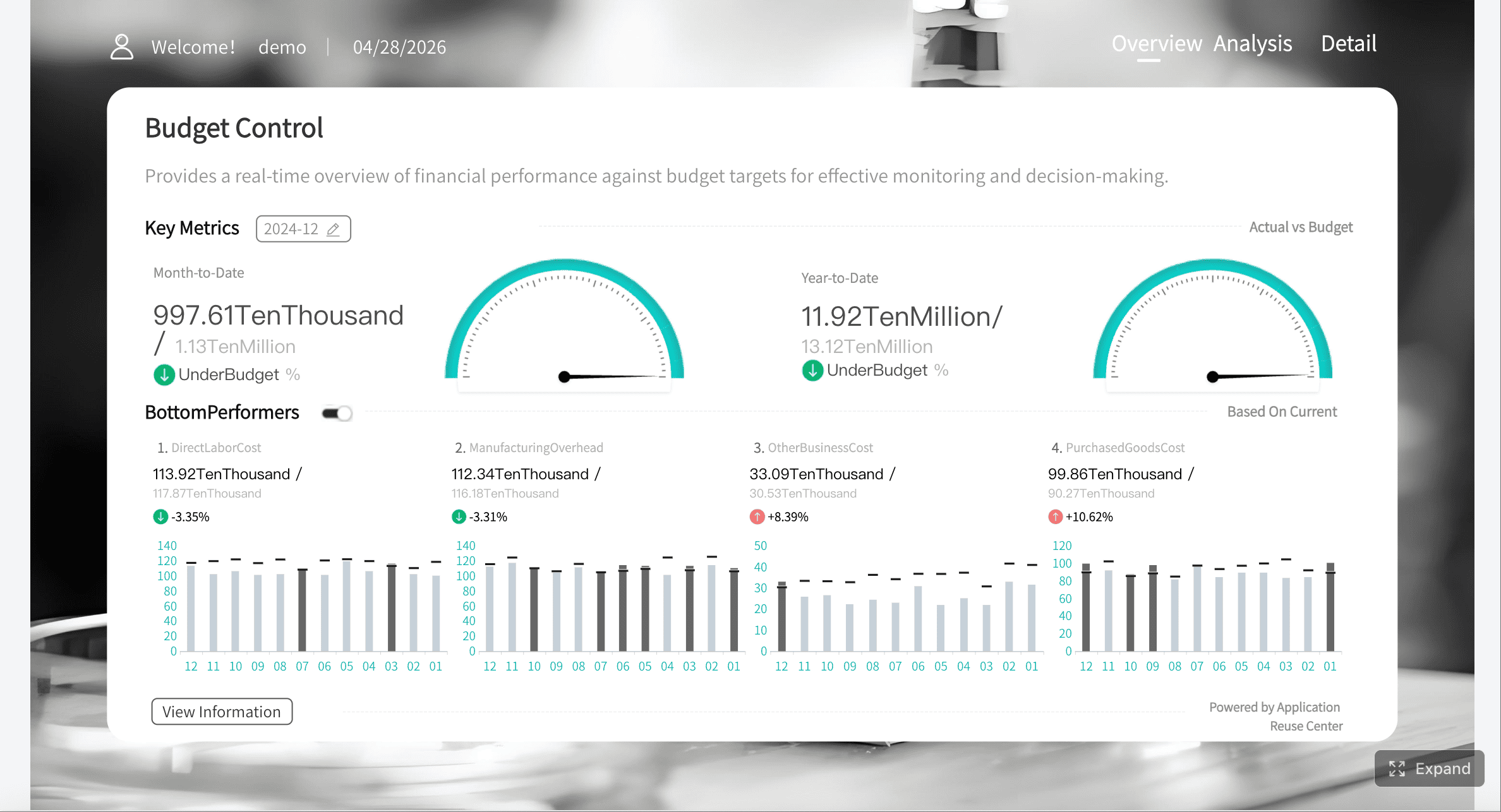
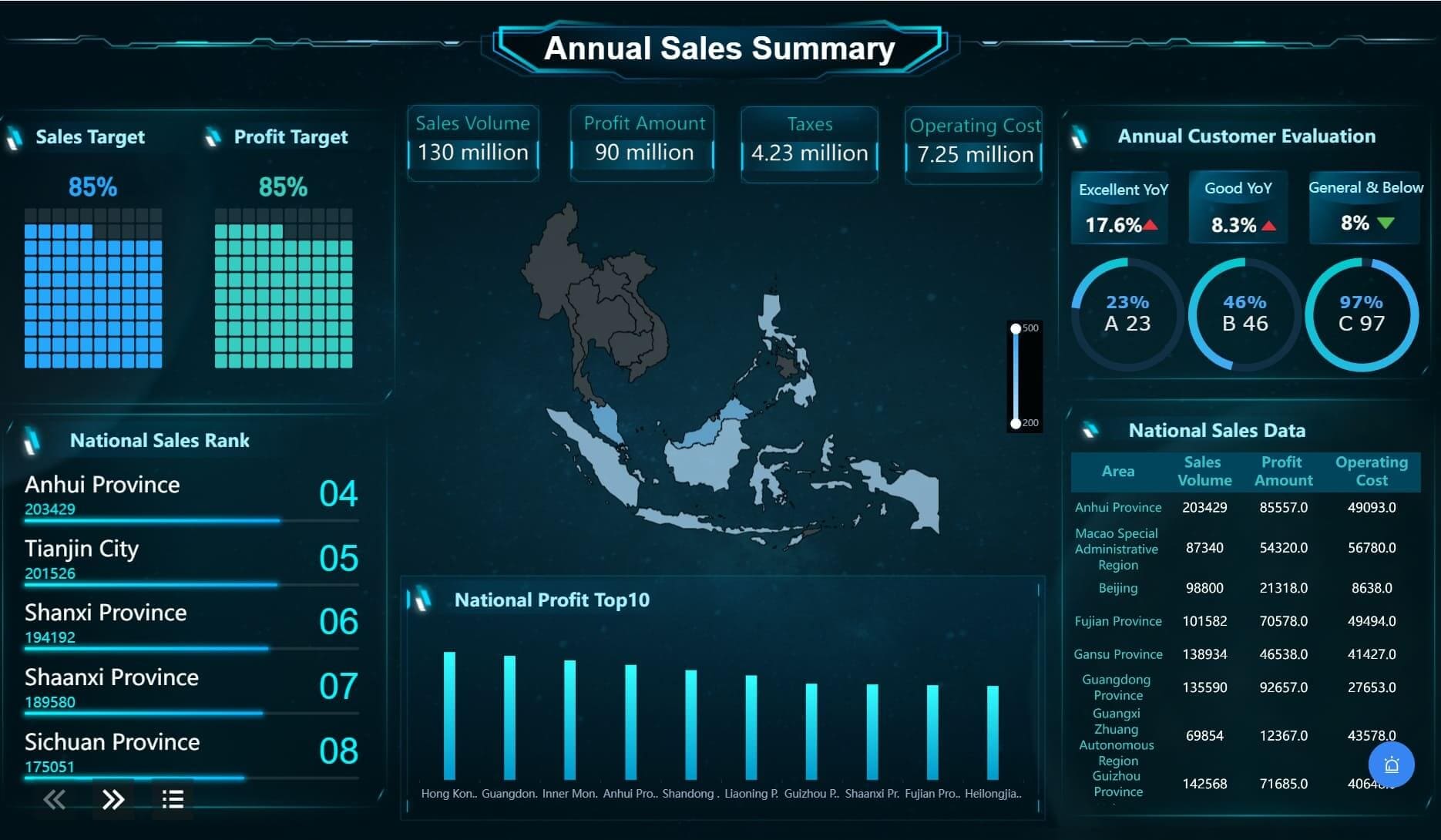
Create real-time dashboards for expense KPIs and policy compliance
Support drill-down analysis by employee, department, project, or category
Generate scheduled reports for finance leaders automatically
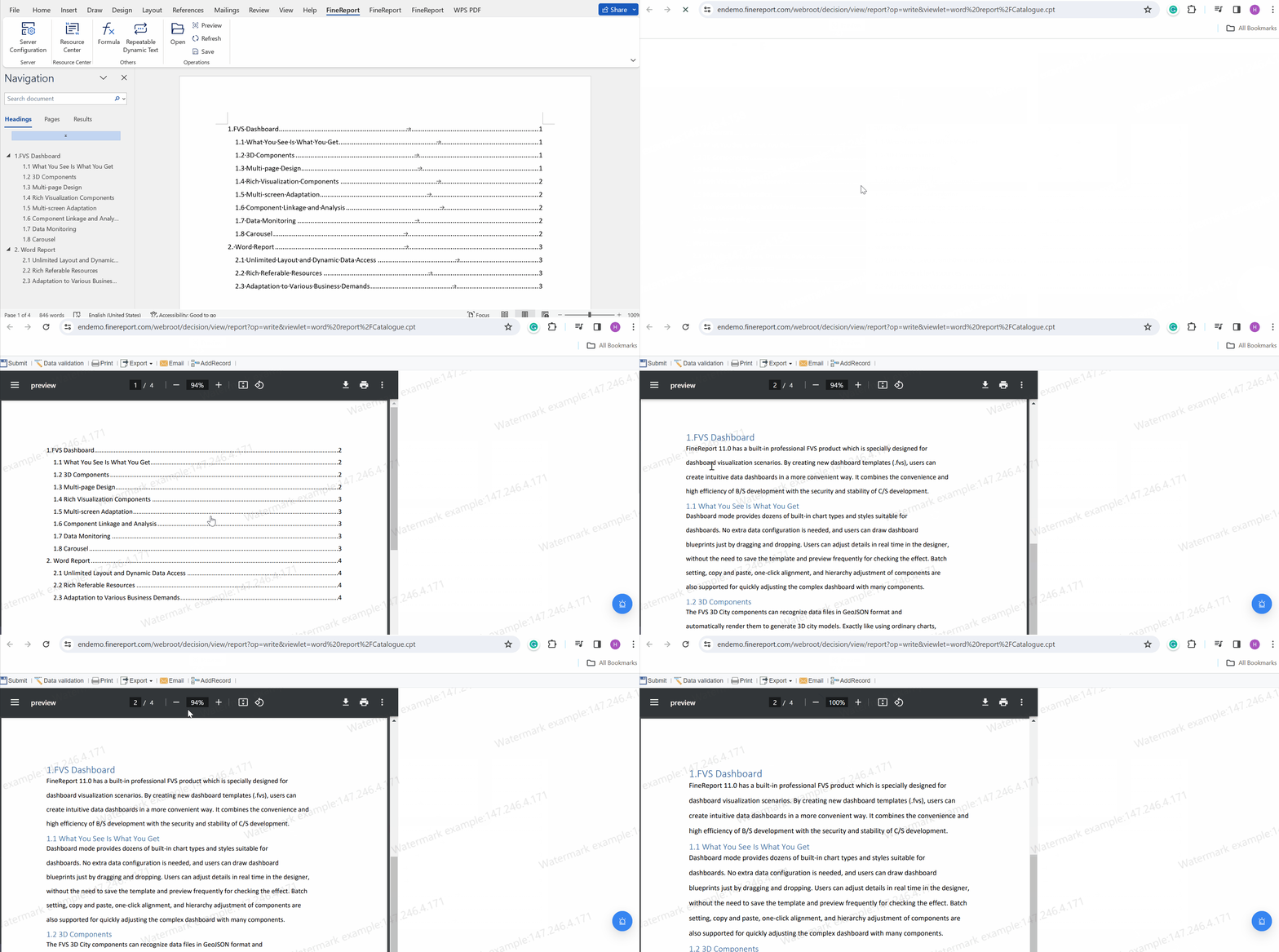
Export reports to Excel, PDF, Word, and other business-friendly formats
Centralize reporting access through a managed enterprise portal
Because FineReport supports interactive reporting, dashboard design, multi-source integration, automated distribution, and enterprise-grade permissions, it is well suited for organizations that want more than a basic spreadsheet. It helps finance teams create a reporting environment where expense data is visible, standardized, and easier to govern.
If you are still piecing together expense reporting with manual spreadsheets and disconnected approvals, now is the right time to modernize the process.
An expense report documents business-related spending so a company can review, approve, reimburse, and record costs accurately. It also helps finance teams enforce policy and maintain audit-ready records.
Most expense reports include the expense date, vendor, amount, category, business purpose, payment method, and attached receipts. Many companies also add employee details, department, project, tax, and approval status.
In most cases, yes, because receipts support reimbursement, policy compliance, and audit documentation. Some companies allow limited exceptions for small amounts or mileage, depending on their expense policy.
Expense reports are typically approved first by a manager or budget owner and then reviewed by finance or accounting. The exact workflow depends on company size, policy rules, and the type of expense.
A reimbursement request often refers to a single claim for repayment, while an expense report usually groups multiple business expenses into one submission. An expense report can also include company-paid transactions such as corporate card charges.
Product Trial
FineReport
Pixel-perfect reports · Interactive dashboards · Easy data entry · Digital twins