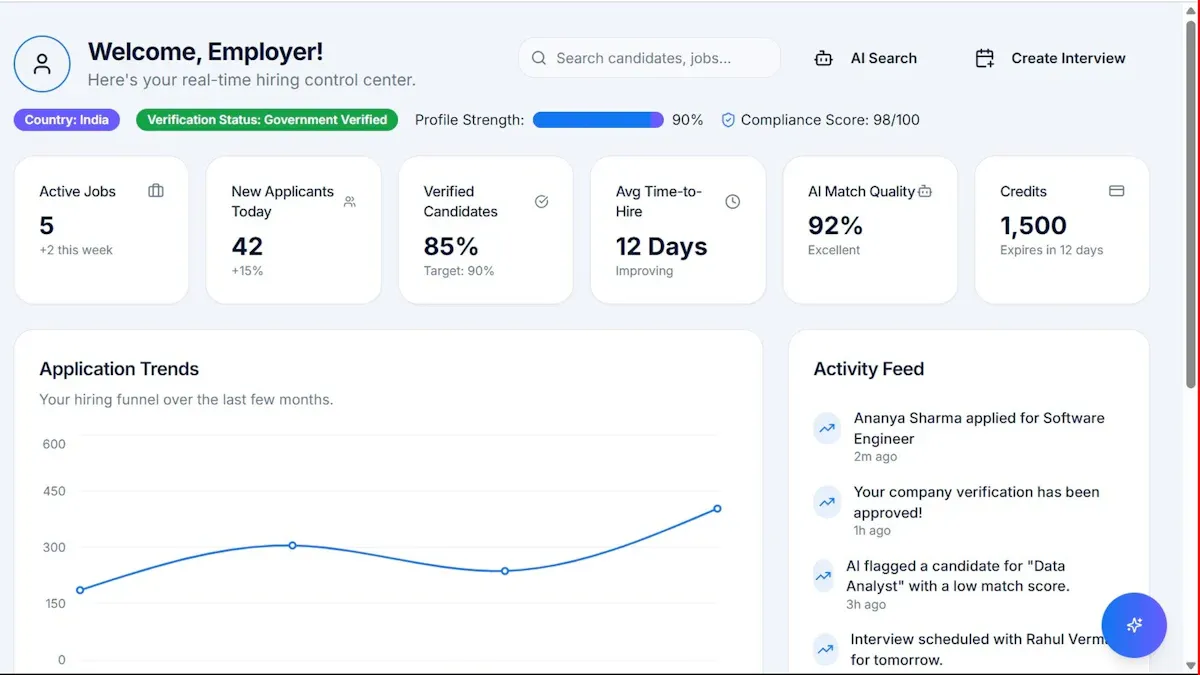
Report writing in business communication is the discipline of turning facts, analysis, and recommendations into a document that helps managers make decisions faster and with less ambiguity. For operations leaders, team managers, analysts, and department heads, poor reports create real business friction: unclear next steps, delayed approvals, duplicated work, weak accountability, and decisions based on incomplete evidence. A strong business report solves that problem by presenting the right information, in the right structure, for the right audience.
[Insert Dashboard Demo Here: Executive business report dashboard with KPI cards, trend lines, summary tables, and recommendation highlights]
All reports in this article are built with FineReport
Report Writing in Business Communication: What It Is and Why It Matters
A business report is a formal, structured document used to communicate information, analysis, findings, and recommendations in a professional setting. Unlike casual workplace messages, a report is built to support action. It answers a defined business question, documents evidence, and guides the reader toward a conclusion or decision.
In practice, report writing in business communication is used whenever an organization needs more than a quick update. A report may explain performance, investigate an issue, compare options, evaluate risks, or recommend a course of action. It is common in management, finance, HR, operations, compliance, procurement, project delivery, and executive reporting.
[Insert Dashboard Demo Here: Business communication reporting workflow showing data collection, analysis, drafting, review, and executive approval]
Typical situations where reports are used include:
Monthly or quarterly performance reviews
Project progress updates
Budget and cost analyses
Incident investigations
Market or competitor analysis
Audit and compliance reviews
Recommendation papers for leadership decisions
A report is not the same as an email, memo, or presentation.
The key difference is depth and permanence. Reports are intended to be read, reviewed, archived, and acted on. They usually carry more weight because they are expected to be evidence-based, logically organized, and professionally presented.
Core Structure of an Effective Report in Business Communication
A good report is easy to scan but rigorous enough to withstand scrutiny. Decision-makers do not want to hunt for the point. They want immediate context, reliable analysis, and practical recommendations.
Common sections included in most reports
Most business reports follow a recognizable structure. The exact format may vary by company or use case, but these sections appear often:
Title page: States the report title, author, department, and date
Executive summary: Gives a concise overview of the purpose, findings, and recommendations
Introduction: Explains the background, objective, and scope
Method or approach: Describes how information was collected or analyzed when relevant
Findings: Presents facts, data, observations, and analysis
Conclusion: Summarizes what the evidence means
Recommendations: Outlines specific actions to take
Appendices: Includes detailed supporting material not needed in the main flow
Supporting documents: Charts, tables, calculations, or supplementary records where necessary
[Insert Dashboard Demo Here: Report layout preview with title page, executive summary, findings charts, and recommendations section]
If the report is data-heavy, a table of contents, numbered headings, and labeled exhibits become even more important. These features help readers navigate complex information without losing the core message.
How to organize information for clarity and flow
The strongest reports move from purpose to evidence to action. That means organizing content in a sequence the reader can follow quickly:
State the business issue
Define the purpose and scope
Present the facts and evidence
Interpret what the evidence shows
Conclude what it means
Recommend what should happen next
This logical flow prevents a common failure in report writing in business communication: presenting lots of data without a clear takeaway.
To improve readability, use:
Clear section headings
Short paragraphs
Bullet points for grouped information
Tables for comparisons
Charts for trends and patterns
Consistent numbering and labeling
Key Metrics (KPIs) for effective business report writing
If you want reports to improve business communication, measure report quality itself. These KPIs are especially useful for teams that produce regular internal or executive reports.
Purpose clarity: Whether the report clearly states why it exists and what decision it supports
Audience alignment: How well the report matches the knowledge level and needs of its readers
Evidence quality: The reliability, accuracy, and relevance of the data used
Readability score: How easy the report is to scan and understand
Turnaround time: The time required to prepare and deliver the report
Decision usefulness: Whether the report leads to a clear decision, action, or next step
Recommendation quality: How specific, feasible, and measurable the recommendations are
Formatting consistency: Whether headings, tables, labels, and structure follow standards
Error rate: The number of factual, grammatical, or visual mistakes in the final document
Stakeholder satisfaction: Feedback from readers on clarity, usefulness, and professionalism
[Insert Dashboard Demo Here: KPI dashboard for report quality including readability, turnaround time, error rate, and decision usefulness]
Step-by-Step Process for Report Writing in Business Communication
High-quality reports are rarely produced by writing from the top down in one sitting. They are built through a repeatable process. This is where many teams improve dramatically: not by writing more, but by planning better.
Define the purpose, audience, and scope
Before drafting, clarify three things:
Purpose: What is the report trying to achieve?
Audience: Who will read it and what do they already know?
Scope: What is included, and what is intentionally excluded?
If the purpose is vague, the report will drift. If the audience is unclear, the tone and level of detail will miss the mark. If the scope is too broad, the report becomes bloated and hard to use.
Ask practical questions such as:
What decision should this report help make?
Who is the primary reader: executives, managers, clients, or technical staff?
What timeframe, business unit, or problem does the report cover?
What level of detail is necessary for action?
Gather, evaluate, and organize information
Once the brief is clear, collect information that is relevant, accurate, and current. This may include:
Internal performance data
Project records
Financial results
Customer feedback
Operational logs
Interviews with stakeholders
Benchmark or market information
Then evaluate the material. Not all data belongs in the report. Focus on evidence that directly supports the business question.
A practical way to organize findings is by grouping them into themes such as:
Performance
Risks
Root causes
Opportunities
Financial impact
Recommended actions
[Insert Dashboard Demo Here: Data preparation view with categorized findings, source validation, and summary analysis panels]
Draft the report with a professional tone
Professional report writing in business communication requires clarity, objectivity, and control. The goal is not to sound academic or overly formal. The goal is to help the reader understand the issue and act confidently.
Use language that is:
Concise
Specific
Neutral
Evidence-based
Focused on business implications
For example, instead of writing:
“There seems to be some kind of decline in response efficiency lately.”
Write:
“Average response time increased by 18% over the last quarter, primarily due to staffing gaps during peak hours.”
That sentence is stronger because it is precise, measurable, and operationally useful.
Edit, format, and proofread before submission
Editing is where a report becomes executive-ready. Review the document for:
Logical structure
Repetition
Gaps in evidence
Consistent terminology
Grammar and punctuation
Table and chart accuracy
Visual clarity
Alignment between findings, conclusions, and recommendations
A simple rule: every conclusion should be backed by evidence, and every recommendation should connect to a conclusion.
Best Practices for Report Writing in Business Communication
Teams that write consistently strong reports tend to follow a few disciplined habits. These are not academic rules. They are practical standards that make reports more useful in real business environments.
Writing techniques that improve clarity and credibility
Use plain language wherever possible. Business readers are busy, and complexity often reduces trust rather than increasing it.
Best practices include:
Lead with the main point
Use precise verbs and measurable statements
Support claims with evidence
Separate facts from interpretation
Keep sentences direct and purposeful
Avoid:
Jargon without explanation
Vague claims
Empty filler phrases
Emotional language
Repeating the same point in multiple sections
[Insert Dashboard Demo Here: Annotated report example highlighting executive summary, concise findings, and evidence-backed recommendations]
Formatting choices that make reports easier to scan
Formatting affects whether your report gets read properly. A well-formatted report helps readers absorb key points quickly.
Use these formatting choices consistently:
Descriptive headings and subheadings
Numbered sections for long reports
White space between blocks of text
Bulleted lists for grouped points
Tables for side-by-side comparison
Clear chart titles and axis labels
Consistent fonts, spacing, and page layout
For performance reports, dashboards and automated visuals are especially effective because they reduce manual formatting work and improve consistency across reporting cycles.
Common mistakes to avoid
Many weak reports fail for predictable reasons. Watch for these issues:
Unclear purpose: The reader cannot tell what question the report answers
Weak structure: Findings appear without context or sequence
Poor data presentation: Charts are confusing, unlabeled, or irrelevant
Unsupported conclusions: Opinions are presented as facts
Missing recommendations: The report explains the issue but does not propose action
Overloaded content: Too much background, not enough decision value
Inconsistent formatting: The report looks fragmented and unprofessional
4 implementation best practices from a consultant’s perspective
If you are improving report writing across a team or department, use this approach:
Standardize report templates
Create approved formats for recurring reports such as monthly operations reviews, project status reports, and incident summaries.
Define required sections, visual standards, and naming conventions.
Build around decision questions
Start each report with the key question it must answer.
Train authors to write only what helps the reader make that decision.
Automate data collection where possible
Reduce manual copying from spreadsheets and systems.
Use connected reporting tools to pull live data and refresh visuals automatically.
Add a review checkpoint before submission
Require one reviewer to check logic, evidence, and formatting.
This significantly improves consistency and reduces embarrassing errors.
Use this practical structure for most workplace reports:
Section
What to include
Title
Report name, author, date, department
Executive Summary
Main purpose, top findings, key recommendation
Introduction
Background, objective, scope
Findings
Facts, data, observations, grouped by theme
Analysis
Interpretation of what the findings mean
Conclusion
Clear answer to the report’s main question
Recommendations
Specific next steps, owners, and timelines
Appendix
Supporting detail if needed
A useful drafting formula is:
What is the issue?
What evidence do we have?
What does it mean?
What should happen next?
Where to build stronger business and report writing skills
Professionals can strengthen report-writing capability through:
University business writing guides
Internal communication training modules
Management development programs
Analyst and project reporting workshops
Practical editing and proofreading courses
For teams, the biggest gains often come from combining writing training with better reporting systems. When reporting tools, templates, and workflows are standardized, writing quality improves faster.
Final Checklist for Clear and Professional Report Writing in Business Communication
Before sharing a report, run through this final checklist:
Does the report answer the main business question?
Is the purpose clear in the introduction and summary?
Is the content tailored to the audience?
Does each conclusion follow from the evidence?
Are the recommendations specific and actionable?
Are charts, tables, and labels easy to understand?
Is formatting consistent across the full document?
Have grammar, spelling, and punctuation been checked?
Are supporting details placed in appendices where appropriate?
Can a busy reader understand the key message in a few minutes?
[Insert Dashboard Demo Here: Final report review dashboard with approval checklist, formatting validation, and executive summary preview]
In theory, report writing in business communication sounds straightforward: define the objective, analyze the facts, and present a clear recommendation. In reality, building this manually is complex. Teams often pull data from multiple systems, reformat spreadsheets, recreate charts, update templates by hand, and spend hours verifying whether the latest version is correct. That process slows down reporting cycles and increases the risk of inconsistency.
FineReport solves this problem by turning report creation into a repeatable, automated workflow. Instead of building every report from scratch, teams can use ready-made templates, connect live data sources, generate dashboards, standardize layouts, and produce professional reports faster and with fewer errors.
[Insert Dashboard Demo Here: FineReport business reporting interface with template library, automated charts, and export-ready report builder]
Build standardized report templates for recurring business use cases
Connect reports to operational and financial data sources
Automate KPI updates and visual refreshes
Create executive dashboards and printable reports in one workflow
Improve consistency across departments and reporting periods
Reduce manual reporting effort for analysts and managers
For enterprises, that means stronger governance, faster reporting turnaround, and better decision support. For report authors, it means spending less time assembling documents and more time interpreting what matters.
If your team is still building critical reports manually, this is the moment to modernize the process.
A business report is a formal document that presents facts, analysis, findings, and recommendations to support a decision or action. It is more structured and evidence-based than an email, memo, or presentation.
Most business reports include a title page, executive summary, introduction, findings, conclusion, and recommendations. Some also add a method section, appendices, and supporting charts or tables.
Start with the business issue and purpose, then present evidence, explain what it means, and end with clear recommendations. This flow helps readers quickly understand the problem, analysis, and next steps.
A business report is designed for formal analysis, documentation, and decision support, while emails are used for quick communication and presentations support spoken delivery. Reports usually provide more depth, permanence, and accountability.
Focus on the audience, use plain language, organize sections clearly, and highlight the main takeaway early. Visuals such as tables, charts, and dashboards can also make complex information easier to scan and act on.
Product Trial
FineReport
Pixel-perfect reports · Interactive dashboards · Easy data entry · Digital twins