Businesses rarely struggle because they lack data. More often, they struggle because data is scattered across systems, reported inconsistently, and delivered in ways that do not support real decisions. That is where custom dashboard development becomes valuable.
A custom dashboard is not just a screen full of charts. It is a tailored analytics product designed around your workflows, users, metrics, and governance requirements. Instead of forcing teams to adapt to a generic reporting interface, custom dashboards bring the right information to the right people in the right format.
In this guide, we will explain what custom dashboard development involves, how the architecture works, the step-by-step build process, and how to decide whether to build from scratch or buy a dashboard platform.
Custom dashboard development is the process of designing and building a dashboard that fits a company’s exact data model, business logic, user roles, and experience requirements. Unlike off-the-shelf reporting tools, a custom dashboard is not limited to preset templates, standard metrics, or rigid layouts.
A typical off-the-shelf BI tool is built to serve many companies with similar features. That can be useful for fast deployment, but it often falls short when your business has:
A custom dashboard solves problems that generic reporting often cannot. It can consolidate fragmented data from CRMs, ERPs, ad platforms, product databases, support tools, spreadsheets, and internal applications into one trusted view. It can also provide role-based visibility so that executives, managers, analysts, and frontline staff each see the information that matters to them.
This matters across nearly every function:
So when does a company actually need a tailored solution instead of yet another generic BI view?
Common signs include:
If any of these issues sound familiar, custom dashboard development may be a strategic investment rather than just a reporting upgrade.
A successful custom dashboard is built on more than attractive charts. Its value depends on the architecture behind the interface. That architecture usually includes data ingestion, transformation, metrics modeling, permissions, APIs, and frontend design.
Most businesses do not operate from a single data source. Data typically lives across:
The first job of a custom dashboard architecture is to move that data into a unified model. This is usually handled through connectors, APIs, middleware, and data pipelines.
In practice, the flow often looks like this:
At this stage, teams also choose between ETL and ELT:
The right choice depends on data volume, existing infrastructure, cost, and governance needs. ELT is often preferred in modern cloud analytics because it is flexible and warehouse-friendly. ETL may still make sense when transformation logic must happen earlier for performance, privacy, or integration reasons.
Refresh frequency is another major architectural decision. Some dashboards need:
Data quality controls are equally important. A visually polished dashboard is useless if the underlying numbers are wrong. Strong custom dashboard development includes checks for:
Without these controls, user trust collapses quickly.
The backend is where a dashboard becomes a decision system rather than just a chart library.
This layer defines how KPIs are calculated and standardized across the business. For example, what exactly counts as revenue? When does a lead become qualified? How is churn measured? What is the difference between gross margin and contribution margin? These definitions must be modeled consistently.
A robust dashboard backend often includes:
Metrics modeling is critical because inconsistent definitions create confusion and conflict. If sales, finance, and leadership all use different formulas for the same KPI, the dashboard will expose disagreements rather than resolve them.
Permissions are another core backend requirement. Many dashboards must support:
Governance is especially important in regulated industries, enterprise environments, and client-facing applications. A custom dashboard may need to track version history, preserve metric definitions, and document every data change that affects reporting.
This is also where a modern dashboard platform can help. For organizations that want strong self-service analytics with enterprise control, FineBI is a practical recommendation. As a custom dashboard development tool, FineBI supports data integration, visual dashboard creation, permissions management, and interactive analysis while reducing the engineering effort required to deliver business-ready dashboards.
The frontend is the part users see, but it should be shaped by real workflows rather than aesthetics alone.
A good dashboard interface helps people answer questions fast. It makes patterns visible, exceptions obvious, and next actions clear. That means design choices must support usability, not decoration.
Key frontend elements often include:
Visualization design matters because not every metric belongs in the same chart type. Trends may fit line charts, comparisons may fit bars, composition may fit stacked visuals, and operational details may require tables. The goal is not to make the dashboard look impressive. The goal is to make decisions easier.
Accessibility should also be built in from the start. That includes:
Performance is equally important. A dashboard that loads slowly or freezes under filter changes will not be adopted. Teams should optimize query performance, reduce unnecessary widgets, lazy-load heavy components, and ensure acceptable performance on both desktop and mobile.
Mobile considerations matter more than many teams expect. Executives, field teams, and sales leaders often check dashboards on phones or tablets. A custom dashboard should either be responsive or provide a mobile-specific experience based on actual user behavior.
The best custom dashboards are not built by jumping straight into coding. They are built through a structured process that aligns business goals, data realities, and user needs.
The first phase is discovery. This is where the team identifies:
Stakeholder mapping is especially important because different users rarely want the same interface. An executive might need a high-level scorecard, while an operations manager needs daily exception handling and an analyst needs flexible drill-downs.
This phase should convert business questions into concrete dashboard requirements. For example:
Success criteria should also be defined early. A dashboard is not successful just because it launches. It is successful if it improves reporting speed, reduces manual effort, increases adoption, supports faster decisions, or creates better visibility across teams.
After discovery, the next step is prototyping. Starting with wireframes helps teams test assumptions before investing heavily in development.
Wireframes should answer questions like:
Prototyping reduces rework because users can react to structure and flow before engineering builds the full solution.
Development should then proceed iteratively. Rather than trying to deliver everything at once, it is smarter to build in phases:
Validation is not optional. Teams must confirm both calculation accuracy and usability. Even a small error in business logic can undermine trust. Likewise, a technically correct dashboard may still fail if users cannot navigate it quickly.
This phase often involves side-by-side reconciliation with existing reports, stakeholder reviews, and user acceptance testing.
If your organization wants to accelerate this phase, tools such as FineBI can be useful because they shorten the path from raw data to interactive dashboard prototypes while still supporting tailored visualization and business-specific metric design.
Launch should be planned as an operational rollout, not just a deployment event.
A successful launch includes:
Documentation is often overlooked, but it directly affects trust and adoption. Users should understand what each KPI means, where data comes from, how often it refreshes, and what limitations exist.
Ongoing management is where many dashboards either mature or decay. Good dashboard lifecycle management includes:
A dashboard is never truly finished. As the business evolves, so will metrics, processes, and user expectations.
One of the most important decisions in custom dashboard development is whether to build a solution yourself, work with a partner, or buy an existing platform and configure it.
The right answer depends on complexity, speed, resources, and long-term goals.
Buying a dashboard platform often makes sense when speed and lower upfront cost are the top priorities. If your requirements are relatively standard, a commercial BI or dashboard tool can help you launch quickly.
Buying is often the right choice when:
The tradeoffs are real, though. Off-the-shelf platforms may limit:
There are also ongoing costs to consider, including per-user licensing, premium connectors, usage-based pricing, and the risk of vendor lock-in.
For many mid-sized organizations, a configurable platform is the most practical middle ground. In that category, FineBI stands out as a strong option because it combines dashboard customization, self-service analytics, and enterprise data capabilities without requiring every use case to be fully custom-coded.
A fully custom solution is usually justified when the dashboard is tightly connected to your business model, customer experience, or governance requirements.
Building makes more sense when you need:
While custom development usually has a higher initial cost, it can deliver better long-term flexibility. You are not limited by a vendor’s product roadmap, pricing changes, or interface constraints.
Still, building only works if the organization can maintain what it creates. Long-term maintainability depends on architecture quality, documentation, testing discipline, and clear ownership.
Before choosing build or buy, ask these questions:
The best decision is usually the one that balances immediate needs with long-term operating reality.
For companies without the time or expertise to build internally, working with dashboard development services can be the fastest path to a reliable outcome.
Most professional custom dashboard development services cover the full lifecycle of the project, including:
Engagement models vary. Common options include:
The right model depends on whether your needs are fixed, growing, or closely tied to a broader product roadmap.
Not every development partner is equally strong in data, product, and governance. A good dashboard partner should combine technical depth with practical business understanding.
Evaluate them based on:
Look for proof, not just claims. Strong partners should be able to discuss:
If you prefer a faster path with less custom engineering burden, ask whether the partner has experience implementing flexible BI platforms such as FineBI. That can be a major advantage when you want tailored dashboards without building every layer from scratch.
Many dashboard projects fail for predictable reasons. Avoid these common mistakes:
The biggest mistake is assuming a dashboard is purely a design project. It is really a business, data, and product project at the same time.
Custom dashboard development is about building visibility that actually fits the way your business operates. When done well, it creates a trusted layer between raw data and daily decisions. It brings fragmented systems together, standardizes metrics, improves accountability, and gives each team the visibility it needs.
The strongest dashboards are built on a solid architecture, validated with real users, and managed as living products rather than one-time reports. Whether you choose to build from scratch, configure a platform, or work with dashboard development services, the key is to align the solution with your workflows, governance needs, and long-term analytics strategy.
If your organization needs more than generic reporting, a tailored dashboard approach is often the difference between simply seeing data and actually using it well. And if you want a practical solution that balances customization with faster delivery, FineBI is worth serious consideration as a custom dashboard development tool for modern business intelligence and dashboard projects.
Custom dashboard development is the process of building a dashboard around your exact data sources, metrics, user roles, and workflows instead of relying on fixed templates. It is meant to support how your business actually operates.
A custom build makes more sense when your data is spread across many systems, KPI definitions differ by team, or you need advanced permissions, embedded analytics, or unique workflows. A standard BI tool is often better when speed and lower upfront cost matter most.
Most custom dashboards include data connectors, pipelines, transformation logic, a warehouse or serving layer, backend APIs, permissions, and a frontend interface. The goal is to turn scattered raw data into a reliable, role-based view for decision-making.
Timelines vary based on scope, integrations, data quality, and design complexity, but simple projects can take a few weeks while larger platforms may take several months. Discovery and data preparation often take longer than the visual layer itself.
Accuracy depends on validation rules, transformation checks, source reconciliation, monitoring for schema changes, and regular testing. Without strong data quality controls, even a well-designed dashboard will quickly lose user trust.

The Author
Eric
Related Articles
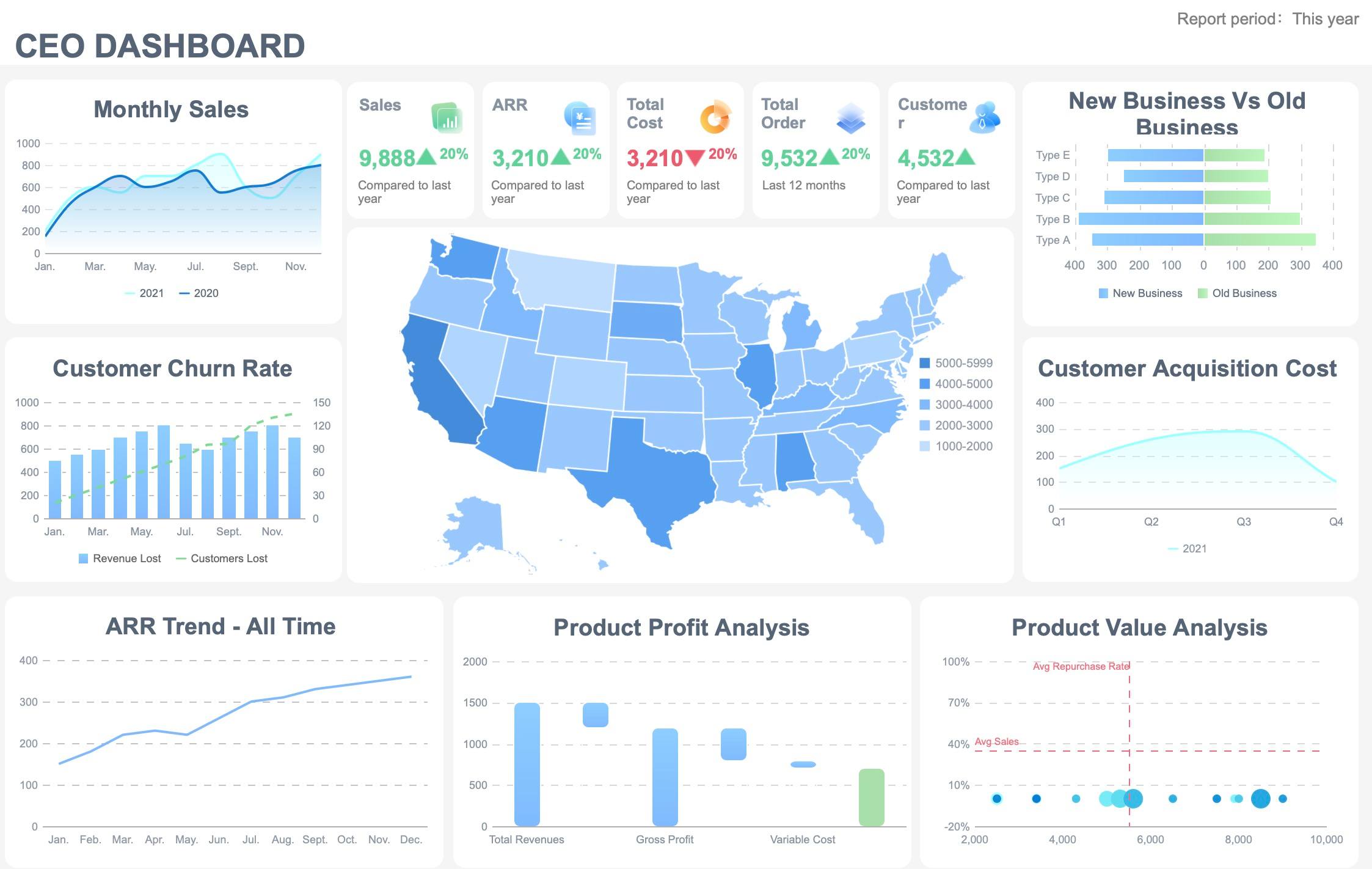
Executive Summary Dashboard for Enterprise Leaders: 9 Steps to Design KPIs, Layout, and Governance
Learn 9 steps to design an executive summary dashboard for enterprise leaders. Define KPIs, layout, and governance for better strategic decision-making.

Lewis Chou
May 04, 2026
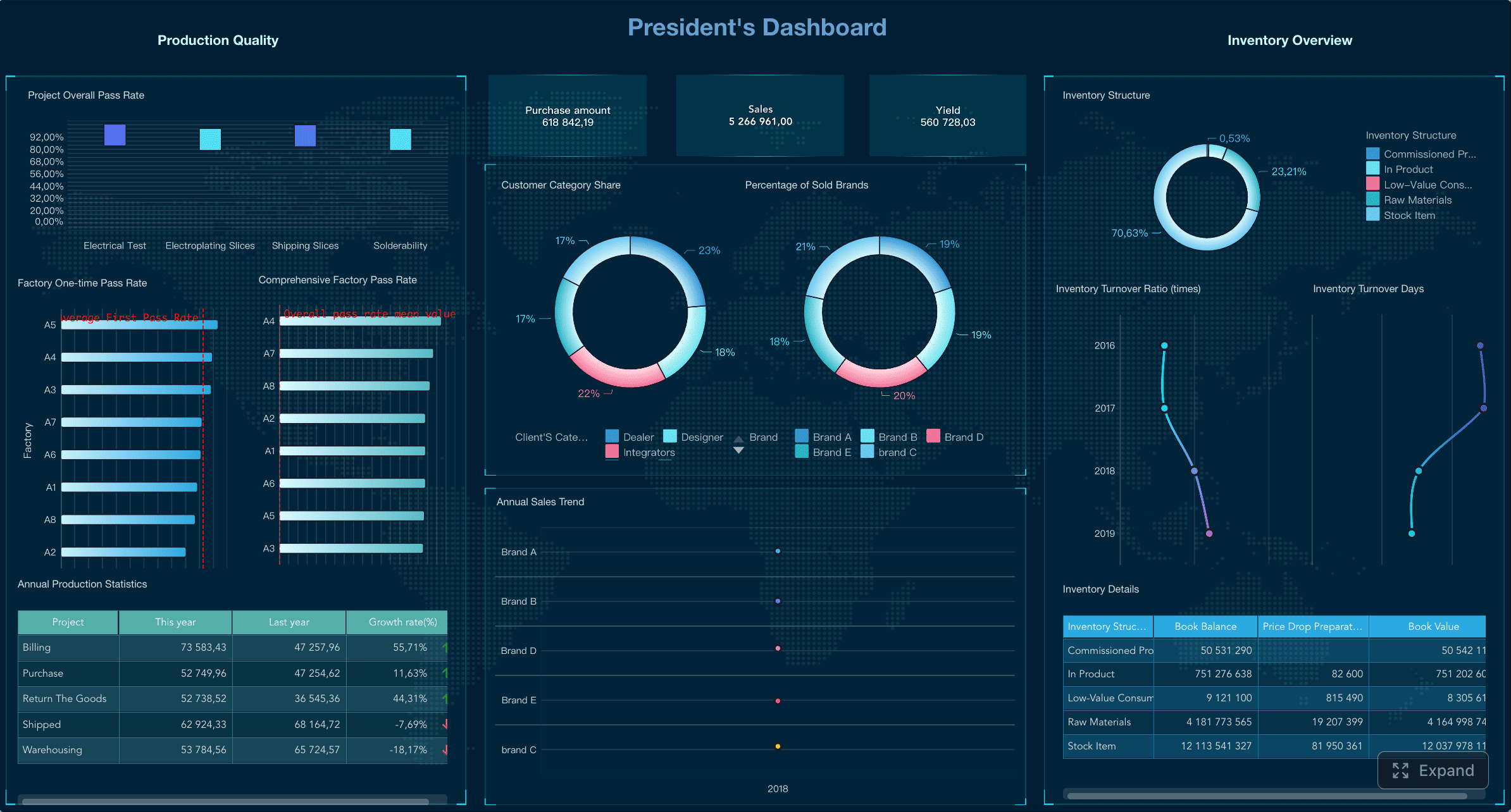
Executive Dashboard Template: What Enterprise Leaders Should Include Before They Build
Learn what to include in an executive dashboard template for better decision-making. Focus on KPIs, risk signals, and strategic alignment for leadership teams.
Lewis Chou
May 04, 2026

How to Build a Teams Call Queue Dashboard: Turn Raw Queue Data Into Actionable Insights
Learn how to transform raw Teams call queue data into a dashboard for real-time monitoring, trend analysis, and proactive service level management.
Lewis Chou
May 04, 2026