Month-end close is where reporting discipline gets tested. Finance teams must consolidate numbers from ERP, accounting, and operating systems, reconcile differences, prepare P&L, balance sheet, cash flow, and management reports, and deliver trusted outputs on time. When that process still depends on spreadsheet handoffs, manual exports, and repeated copy-paste work, delays become normal and confidence in the numbers drops.
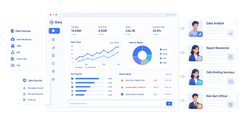
With FineReport + Dora, teams can ask for a report summary in chat, generate structured narratives from trusted report assets, receive scheduled briefings, and push exceptions to the right owner. That makes finance reporting automation practical for real enterprise close processes, not just a reporting theory.
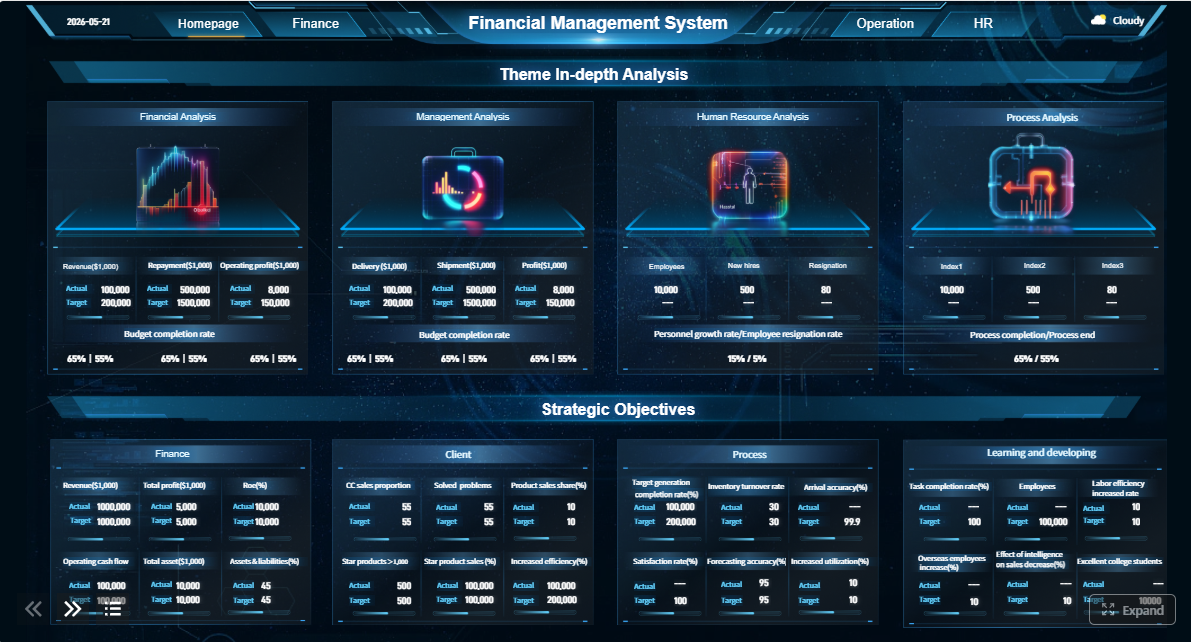
Click To Try The Dashboard
All reports in this article are built with FineReport
Why finance reporting automation matters during month-end close
Month-end close is a recurring, high-pressure workflow. Finance managers are expected to move fast, but also maintain control, traceability, and accuracy. That combination is exactly why finance reporting automation matters.
Common causes of reporting delays: fragmented data, spreadsheet handoffs, version confusion, and repetitive reconciliations
In many organizations, month-end reporting still breaks down in familiar ways:
Data sits across ERP, general ledger, expense, procurement, sales, and operations systems
Different teams export files in different formats
Finance staff manually align account mappings and reporting structures
Spreadsheet-based calculations are copied forward from prior months
Reconciliations are repeated because upstream data changes late in the process
These issues do not only waste time. They create hidden control risk. When one finance analyst is rebuilding the same reporting package every month, the process depends too heavily on individual effort.
Why month-end pressure increases the risk of errors, missed deadlines, and low confidence in numbers
Month-end close compresses many activities into a short window. Teams are chasing deadlines, answering executive questions, handling late adjustments, and preparing commentary at the same time. Under that pressure, even small manual tasks can cause bigger delays:
One wrong file version can invalidate a report pack
One broken formula can distort variance analysis
One late reconciliation can delay management review
One unclear data definition can trigger rework across multiple reports
Finance managers do not just need reports delivered quickly. They need stakeholders to trust the output.
What finance managers need most: faster consolidation, clearer audit trails, and fewer manual touchpoints
For most finance leaders, the priority is not “automate everything.” It is to improve the most painful and repetitive close tasks first:
Standardized report templates for recurring reporting packages
Traceable workflows with clear ownership and approvals
Fewer manual touchpoints between data refresh and report delivery
Faster explanation of variances and exceptions for management review
That is where finance reporting automation becomes valuable. It helps teams shorten the cycle without weakening control.
What financial reporting automation actually means in practice
Financial reporting automation is often misunderstood as simple scheduled report delivery. In practice, it should cover much more of the month-end process.
The difference between basic report scheduling and end-to-end automated financial reporting
Basic scheduling means a system refreshes and sends a report on a timetable. That is useful, but limited.
Pulling data from source systems into a governed reporting layer
Applying standard mappings, calculations, and KPI rules
Validating and consolidating numbers into trusted views
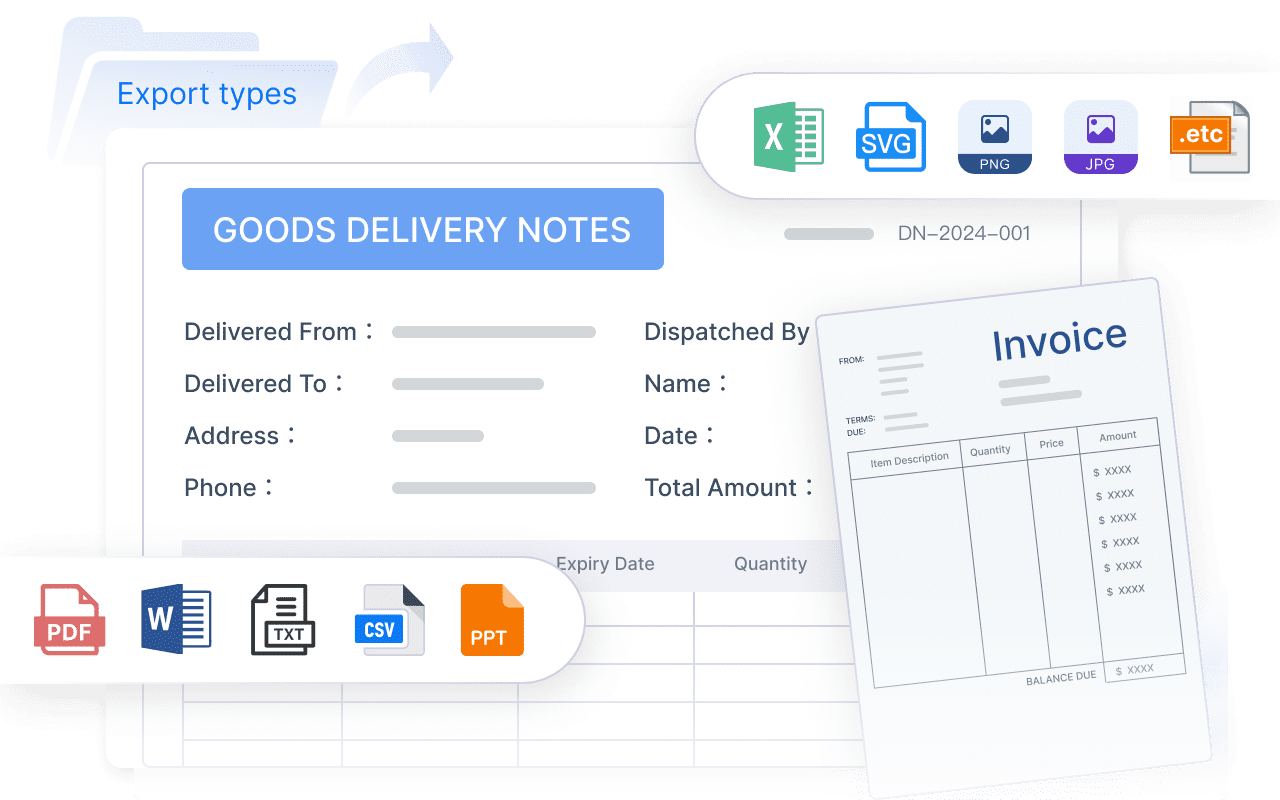
Producing recurring report outputs in approved formats
Distributing reports to the right users with permissions
Supporting review through summaries, exception highlights, and follow-up
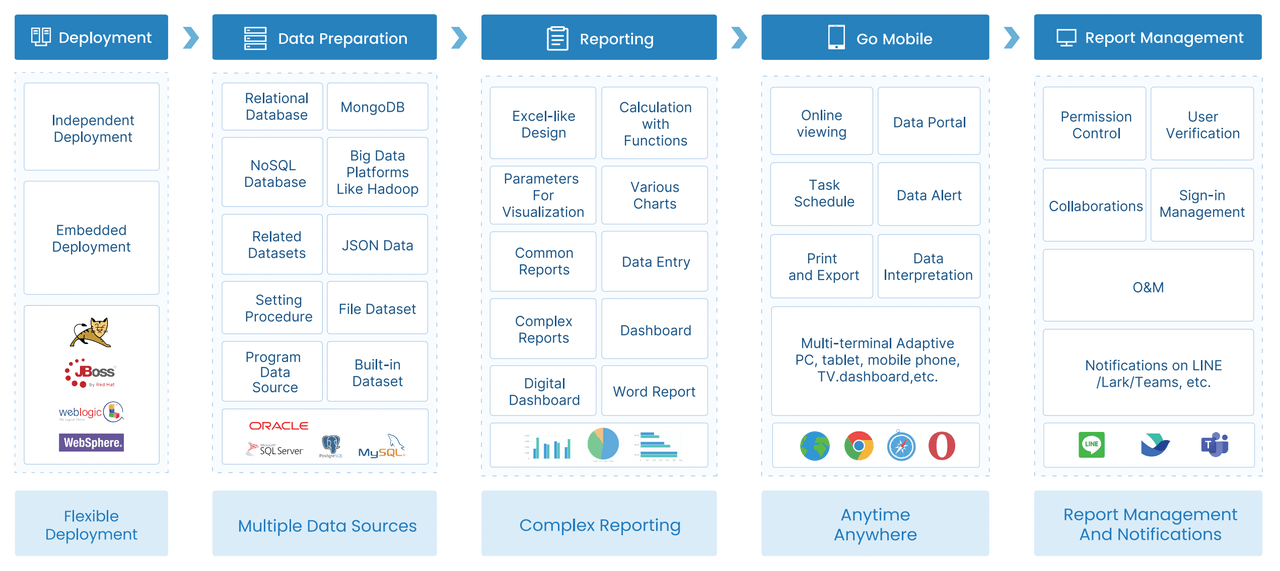
FineReport plays the foundation role here. It builds the trusted report assets, formatted reports, operational cockpits, and workflow structures that finance needs. Dora then adds the enterprise Data Agent layer so people can consume those assets faster through chat, scheduled briefings, alerts, and guided follow-up.
Which tasks can be automated across data collection, validation, consolidation, and distribution
During month-end close, finance teams can automate many repeatable tasks:
Data extraction from ERP, accounting, and operational systems
Standard transformation and mapping logic
Recurring validation checks for completeness and consistency
Consolidation into common reporting structures
Refresh of P&L, balance sheet, cash flow, and management report templates
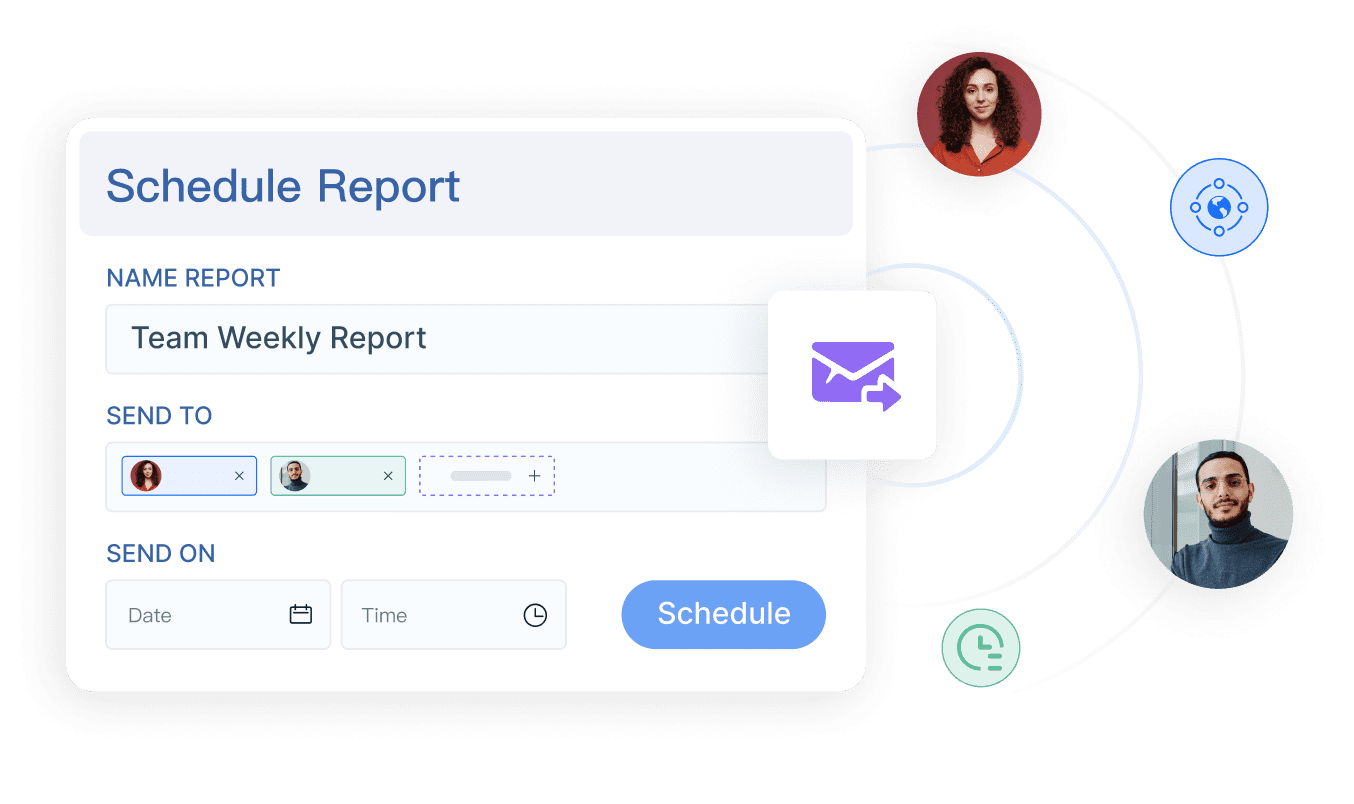
Scheduled report distribution to executives, controllers, and department heads
Exception detection for unusual variances, missing items, or overdue reviews
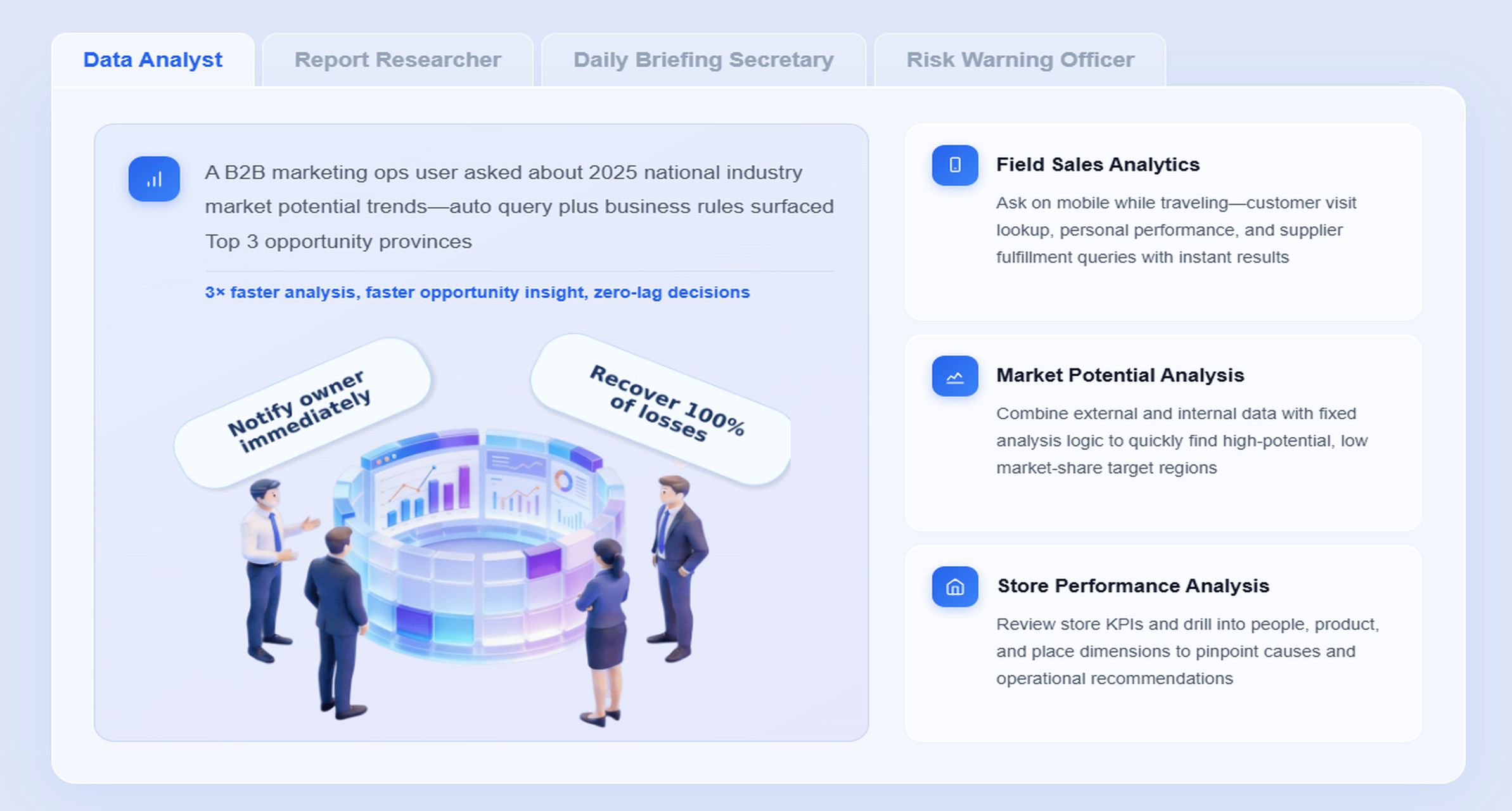
Dora strengthens this workflow by making report consumption easier. Instead of manually reading through multiple reports, finance managers can ask natural-language questions, receive structured report summaries, and get exceptions pushed to them proactively.
Where human review still matters for judgment, exceptions, and final sign-off
Automation does not remove the need for finance judgment. Human review still matters in areas such as:
Accounting policy interpretation
Materiality assessment
Final commentary on unusual results
Sign-off on management and statutory outputs
Escalation of complex exceptions
The goal is not to replace finance expertise. It is to reduce repetitive preparation work so finance managers spend more time reviewing, deciding, and communicating.
What finance reporting automation fixes — and what it does not
A successful automation project starts with realistic expectations.
Problems automation solves well
Rebuilding the same reports every month
Recurring close reports are strong candidates for automation because their structure changes less often than the data inside them.
Report Element: Standard month-end reporting package Definition: A recurring set of reports such as P&L, balance sheet, cash flow, and departmental summaries. Business value: Cuts time spent rebuilding the same outputs each cycle. AI use:Dora can summarize key sections, draft management commentary, and prepare a scheduled briefing for finance leaders.
Pulling data from multiple systems into one reporting view
Finance often needs one reporting layer across multiple systems and entities.
Report Element: Consolidated finance reporting view Definition: A unified reporting model that combines financial and operational data into one governed structure. Business value: Reduces manual exports and inconsistent reconciliation logic. AI use:Dora can answer cross-report questions in chat and explain how a variance appears across entities or departments.
Standardizing recurring calculations and report formats
Standardized templates reduce both delays and avoidable errors.
Report Element: Reusable report template Definition: A prebuilt FineReport template for regular reports with fixed structure, calculations, and formatting. Business value: Improves consistency across periods and stakeholders. AI use:Dora can retrieve the relevant report, explain charts, and generate structured narratives based on the approved format.
Reducing delays caused by manual copy-paste workflows
Manual handoffs are slow and error-prone.
Report Element: Automated data refresh and distribution workflow Definition: A scheduled process that updates reports and sends them to authorized users. Business value: Shortens reporting turnaround and reduces version confusion. AI use:Dora can push a concise summary with highlighted exceptions, rather than forcing users to open every report manually.
Limits finance teams should understand
Automation does not replace accounting policy decisions or management judgment
Finance reporting automation cannot make policy decisions for the team. It supports execution, not governance authority.
Poor source data and unclear processes still create bottlenecks
If account mappings are inconsistent, if entity rules differ, or if data ownership is unclear, automation will expose those issues rather than solve them automatically.
Change management is required to make new workflows stick
A better system still needs adoption. Teams must trust the data, understand the new workflow, and know when to intervene manually. Governance, training, and approval design matter as much as technology.
How finance teams use FineReport + Dora to speed up month-end reporting
FineReport + Dora is a practical combination for enterprise finance teams because each product plays a distinct role. FineReport provides the trusted reporting foundation. Dora adds an AI assistant and digital employee layer on top of those governed assets.
Connect and consolidate data faster
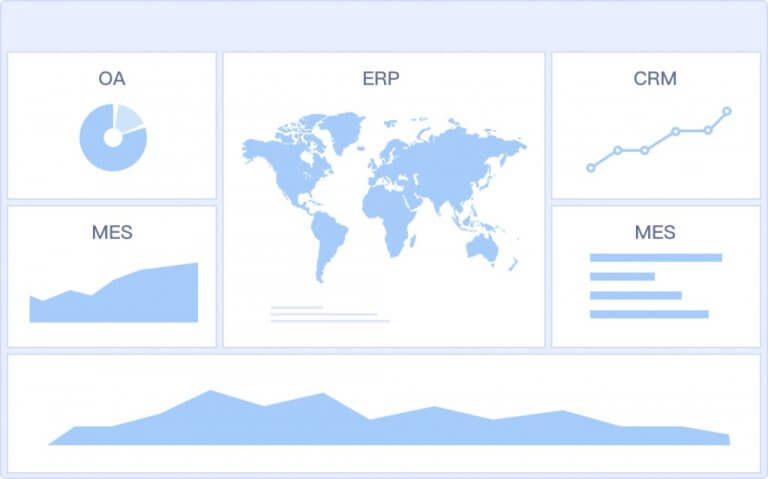
Month-end reporting starts with gathering data from multiple systems. FineReport helps finance teams connect ERP, accounting, and operational systems into a single reporting layer that supports recurring close outputs.
This improves month-end execution by:
Reducing file exports from source systems
Standardizing data formats before reporting
Centralizing key close views in one reporting environment
Supporting consistent mappings and reusable report logic
Instead of collecting numbers in disconnected spreadsheets, finance teams work from a trusted reporting foundation.
Automate recurring report production
Once the reporting logic is standardized, FineReport can support reusable templates for core finance outputs:
P&L reports
Balance sheet reports
Cash flow reports
Budget versus actual reports
Management and board-ready close summaries
These reports can be refreshed on schedule and distributed automatically to the right stakeholders. That reduces the operational burden of repetitive report assembly and helps finance managers focus on review quality.
Improve accuracy with AI-assisted analysis
This is where Dora adds significant value to finance reporting automation.
Dora is an enterprise Data Agent platform that sits on top of trusted report assets. For finance teams, that means users can interact with month-end reporting through natural language while staying grounded in governed KPIs, report templates, and permission rules.
Retrieving trusted FineReport outputs for this month’s close
Summarizing P&L, balance sheet, or cash flow changes in structured language
Explaining chart movement and variance drivers
Surfacing anomalies or threshold breaches for manager review
Pushing scheduled briefings to finance leaders before review meetings
Following up with responsible owners on exceptions that need explanation
This does not replace controller review. It reduces the time spent reading, extracting, and restating information from multiple reports.
Support governance and audit readiness
Finance automation only works in enterprise settings if governance remains strong. FineReport + Dora supports that requirement with:
Permission-controlled access to reports and data
More consistent report versions
Traceable reporting workflows
Reusable templates and governed KPI definitions
Auditable Skills-based execution for repeatable AI workflows
For finance managers, this is important. Dora should not be treated as a free-form AI tool operating outside reporting control. It works best when built on FineReport’s governed reporting layer and enterprise semantic rules.
The reporting bottleneck at month-end is not only report production. It is also report consumption. Finance managers, executives, and business leaders still need to read, interpret, question, and act on the results. That is where Dora creates a meaningful upgrade.
The most relevant Dora digital employee for this scenario is the Daily Briefing Secretary combined with the Report Researcher capability.
What Dora does in a month-end close scenario
Dora acts as an enterprise Data Agent that helps finance users consume trusted reports faster and more consistently. Instead of manually opening several reports, reviewing charts one by one, and drafting commentary from scratch, users can ask for an answer in chat and receive a structured response grounded in FineReport assets.
Scenario-specific chat example
A finance manager might ask:
“Summarize this month’s close report, highlight unusual gross margin and operating expense variances, list entities with overdue reconciliations, and draft a management briefing I can send to the CFO.”
That is not a generic chatbot exchange. It is a governed AI workflow tied to trusted report assets, KPI definitions, permissions, and report templates.
A practical Dora workflow for month-end finance reporting
Retrieve trusted FineReport finance reports and cockpits Dora accesses the approved P&L, balance sheet, cash flow, close progress dashboard, and exception lists built in FineReport.
Interpret KPI definitions, report templates, and semantic rules Dora understands governed business terms such as gross margin, operating expense ratio, overdue reconciliation, entity code, and reporting period using the trusted semantic layer behind the reporting workflow.
Generate a structured report summary through chat Dora produces a management-ready summary of financial performance, including chart explanations, variance commentary, and prioritized issues for review.
Detect exceptions and abnormal changes Dora identifies large variances, threshold breaches, missing close tasks, or unusual account movements based on defined rules and report context.
Push summaries and alerts to responsible users Dora can send scheduled briefings to finance leaders and exception pushes to entity owners, controllers, or department managers who need to respond.
Create follow-up records for review meetings Dora supports ongoing execution by recording open issues, preparing periodic updates, and helping teams review whether owners responded to exceptions.
Why FineReport is essential to trusted AI execution
Dora works best when the reporting foundation is already governed. FineReport provides that foundation through:
Operational cockpits for close status and finance KPIs
Permission controls
KPI governance and template consistency
Workflow support for data entry and reporting processes
Without that trusted base, AI answers become harder to control. With FineReport, Dora can operate as fourth-generation Agentic BI: natural-language request, trusted semantic layer, governed query or Skill execution, then summary, alert, action, and follow-up.
Why this is more practical than prompt-only AI reporting
Many AI demos look impressive but fail in enterprise finance because they depend too heavily on raw prompting. Dora is built for better landing capability because it uses more controlled, auditable, skills-based workflows.
That matters for finance teams because it supports:
Lower token waste than repeatedly re-explaining context in open-ended prompts
Faster execution paths for recurring reporting tasks
More stable workflows for repeatable month-end use cases
Stronger enterprise fit through permissions, KPI governance, semantic rules, and trusted report assets
For executives, the value is concrete: Dora is not an AI experiment. It is a landed digital employee for recurring reporting work such as monthly management packs, variance summaries, finance risk alerts, and owner follow-up.
For IT and data teams, the role shifts from manually producing every report to maintaining data connections, semantic layers, permissions, templates, and reusable agent Skills.
For finance users, the benefit is simpler: timely summaries, chart-based answers, scheduled briefings, and exception pushes without waiting for someone to manually interpret every report.
Finance managers usually judge automation by operational results, not feature lists. The biggest benefits of finance reporting automation in month-end close include:
Shorter reporting cycles and fewer last-minute fire drills
When recurring reports are templated and refresh automatically, teams spend less time assembling packs at the last minute.
Better consistency across entities, departments, and reporting periods
Standardized definitions and templates reduce reporting drift. Stakeholders can compare results more confidently because structure and logic are consistent.
More time for analysis, forecasting, and business partnering
Finance teams add more value when they are not trapped in repetitive report preparation. Automation shifts time toward interpretation, planning, and stakeholder support.
Best practices for a successful rollout
Start with the most repetitive month-end reports
Begin with stable, recurring reports such as P&L, balance sheet, cash flow, and close status reporting. These deliver quick value and are easier to standardize.
Clean up data definitions before automating downstream steps
If margin, entity, account category, or reconciliation status means different things across teams, automation will not fix the confusion. Standard definitions are essential.
Set approval checkpoints so automation supports control, not confusion
Automation should accelerate workflow while preserving sign-off discipline. Define where controller review, finance manager review, and executive distribution happen.
Preserve permission governance in AI workflows
Dora outputs should respect the same FineReport access boundaries as the reports themselves. That is critical for finance security and governance.
Use human review for AI-generated report narratives and expand Skills gradually
Dora can generate structured summaries and management narratives, but finance teams should review them before broad distribution. Start with narrow, repeatable Skills and expand once trust is established.
Then identify the systems and teams feeding those outputs.
Map manual bottlenecks and rank automation opportunities by effort and impact
Look for the highest-friction steps:
Repeated data exports
Spreadsheet reformatting
Manual reconciliation tracking
Recurring report rebuilding
Delayed commentary preparation
Slow exception follow-up
Rank these by business impact and implementation complexity.
Pilot FineReport + Dora on one reporting package before scaling wider
A strong starting point is one recurring month-end package, such as the management close report. FineReport can standardize the report templates and reporting cockpit. Dora can then act as the Daily Briefing Secretary or Report Researcher to summarize results, explain variances, and push follow-up items.
This approach helps teams prove value in a real scenario before broader rollout.
Review results, refine workflows, and expand automation in phases
After the pilot, assess:
Reporting turnaround time
Error reduction
Review efficiency
Stakeholder satisfaction
AI summary usefulness
Exception response timeliness
Then expand to more reports, more entities, and more digital employee workflows in phases.
FineReport + Dora solution pitch
Building this manually is complex. FineReport helps teams standardize trusted reports, operational cockpits, templates, and reporting workflows. Dora turns those assets into an AI assistant that can answer report questions in chat, generate structured summaries, push scheduled briefings, monitor exceptions, and follow up with responsible owners.
For finance managers, that means a practical path to finance reporting automation that supports month-end close without weakening governance. FineReport remains the reporting foundation for formatted reports, complex reports, management packs, operational cockpits, and reporting workflows. Dora becomes the AI digital employee layer that makes those assets easier to consume and act on.
FineReport + Dora is not only a reporting upgrade; it is a practical fourth-generation Agentic BI path.FineReport provides governed reports and operational cockpits. Dora provides the AI assistant layer for scenario execution, with more controlled Skills, lower token waste, faster execution paths, and more stable workflows than prompt-only agents.
Get Ready-to-Use Dashboard Templates in Fine Gallery
The strongest Dora pitch is scenario + product + service: FineReport provides the trusted reporting foundation, Dora provides the AI digital employee, and implementation service connects data, governance, semantic setup, Skills, report templates, permissions, and rollout.
If your finance team wants to shorten month-end reporting cycles, reduce manual rework, and improve how stakeholders consume close reports, FineReport + Dora offers an enterprise-ready approach built for real reporting operations.
Finance reporting automation uses software to pull data, apply reporting rules, refresh financial statements, and distribute reports with less manual work. In month-end close, it helps finance teams reduce spreadsheet handoffs, delays, and version confusion.
The best starting points are recurring tasks such as data extraction, validation checks, reconciliations, report refreshes, and scheduled distribution of P&L, balance sheet, cash flow, and management reports. These are high-volume activities with clear rules and repeatable workflows.
FineReport provides the governed reports, dashboards, and templates finance teams rely on during close. Dora adds chat-based summaries, scheduled briefings, and proactive exception alerts so managers can review issues and act faster.
No, automation reduces repetitive work but does not replace finance judgment. Human review is still needed for exceptions, variance explanations, approvals, and final sign-off.
The biggest benefits are faster close cycles, fewer manual errors, stronger audit trails, and more confidence in reported numbers. It also gives finance staff more time for analysis instead of rebuilding reports each month.
Product Trial
FineReport
Pixel-perfect reports · Interactive dashboards · Easy data entry · Digital twins