Performance reporting software helps RIAs track portfolio returns, benchmark results, present client-ready reports, and connect reporting with broader advisory workflows. If you are evaluating performance reporting software, you are likely trying to solve a practical problem: how to move beyond basic portfolio summaries and deliver reporting that is accurate, scalable, client-friendly, and operationally useful.
For RIAs, that usually means more than showing account balances and market value changes. It means handling household-level performance, cash flows, fee-aware reporting, benchmark comparisons, realized and unrealized gains, and presentation formats that work in client meetings. It also means choosing software that fits how your firm actually operates, whether you are an independent advisor, a multi-advisor RIA, or a larger wealth management team managing more complex portfolios.
This guide compares seven types of performance reporting platforms through one lens: reporting depth. That includes how far each tool goes in calculation detail, client presentation, customization, integration, and workflow support.
Teams needing highly customized, pixel-perfect, scheduled, operational reporting alongside dashboards
Strong for custom reporting use cases
Strong for branded reports, portals, dashboards, and printable outputs
Very high
Depends on connected systems
Strong for reporting workflows and distribution
Moderate
Best Performance Reporting Software for RIAs: What This Comparison Covers
Performance reporting software for RIAs is not just a dashboard or quarterly statement builder. At a minimum, it should help advisors calculate performance correctly, compare results to benchmarks, and deliver reports that clients can understand. At a higher level, it should support deeper reporting needs such as composite views, cash flow context, fee transparency, multi-account households, and branded reporting experiences.
This comparison focuses on the criteria that most directly affect reporting depth:
Wealth management teams evaluating reporting as part of a broader platform decision
Operations leaders and reporting teams who need more flexibility than standard templates provide
A simple portal and a few charts may be enough for some firms. But if your team needs meeting-ready books, household-level reporting, batch delivery, branded PDFs, or operational report workflows, the differences between tools become much more important.
How to Evaluate Reporting Depth Before Choosing a Platform
Core reporting capabilities that matter most
The first question is not whether a platform can generate reports. Most can. The more useful question is how deep the reporting actually goes.
Look closely at whether the software supports:
Performance calculation accuracy
Benchmark selection and comparison
Composite or grouped reporting
Fee reporting and net-of-fee views
Household-level and account-group reporting
Realized and unrealized gains
Cash flow analysis
Contribution and withdrawal tracking
Time-weighted and other return methodologies where relevant
For many RIAs, reporting depth shows up in edge cases rather than headline features. Can the system present one household across multiple account types cleanly? Can it reflect large external cash movements without confusing clients? Can it show fees clearly and consistently? Can an advisor tailor the same report differently for a retiree, an accumulator, and a business-owner client?
A strong reporting platform should make those tasks manageable without excessive spreadsheet work.
Client experience and advisor workflow considerations
Good performance reporting software also affects client trust and advisor efficiency. Reporting is not just a back-office function. It is part of the client experience.
Evaluate:
Client portal usability
PDF report quality and flexibility
Dashboard clarity
White-label and branding options
Meeting-ready presentation output
Onboarding and setup effort
Data reconciliation workflows
Exception management
Learning curve for advisory and operations staff
Some platforms are strong in calculations but feel rigid when it comes to report design. Others look polished in client meetings but offer less flexibility in deeper portfolio breakdowns. The right choice depends on whether your firm prioritizes analytical depth, operational efficiency, client presentation, or a mix of all three.
Integration and operational fit
Reporting software rarely works alone. In most RIA environments, it needs to connect with:
Custodian data feeds
CRM systems
Portfolio accounting tools
Financial planning software
Billing systems
Trading or rebalancing tools
The right platform should fit your broader operating model. If your reporting workflow depends on multiple handoffs between accounting, billing, CRM, and client communications, a tool with weak integration can create more manual work than it removes.
That is especially important for firms that want reporting to support more than quarterly reviews. If you are using reports for compliance, client service, internal management, billing validation, or advisor oversight, operational fit matters as much as presentation quality.
7 Performance Reporting Software Tools Compared by Reporting Depth
Tools strongest for deep analytics and customization
1. FineReport
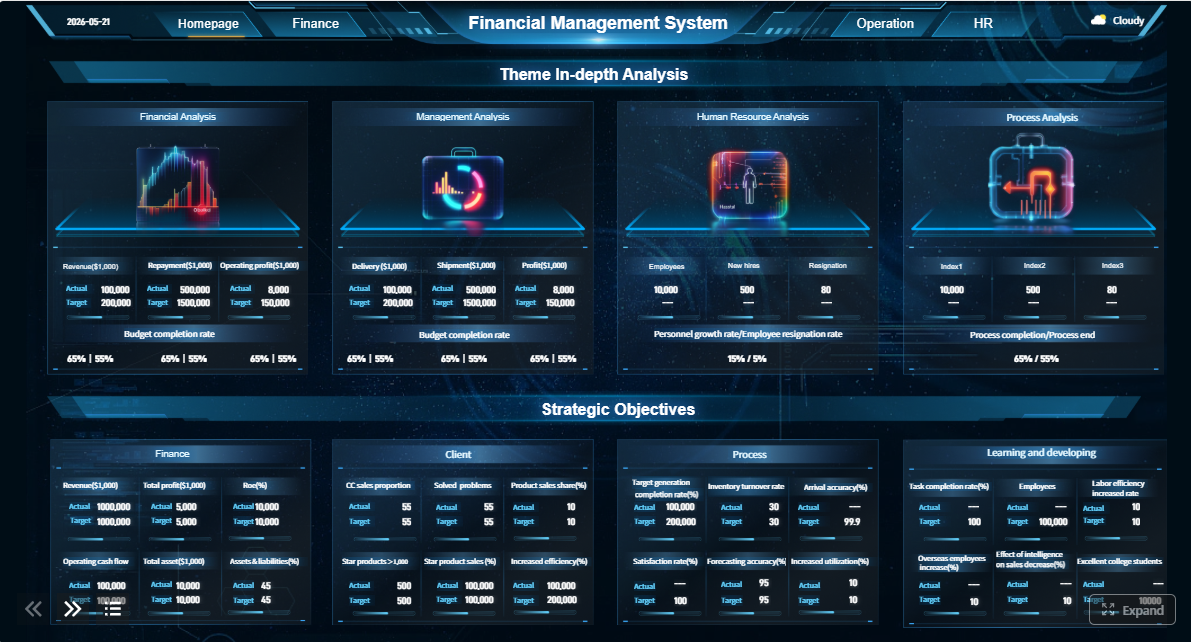
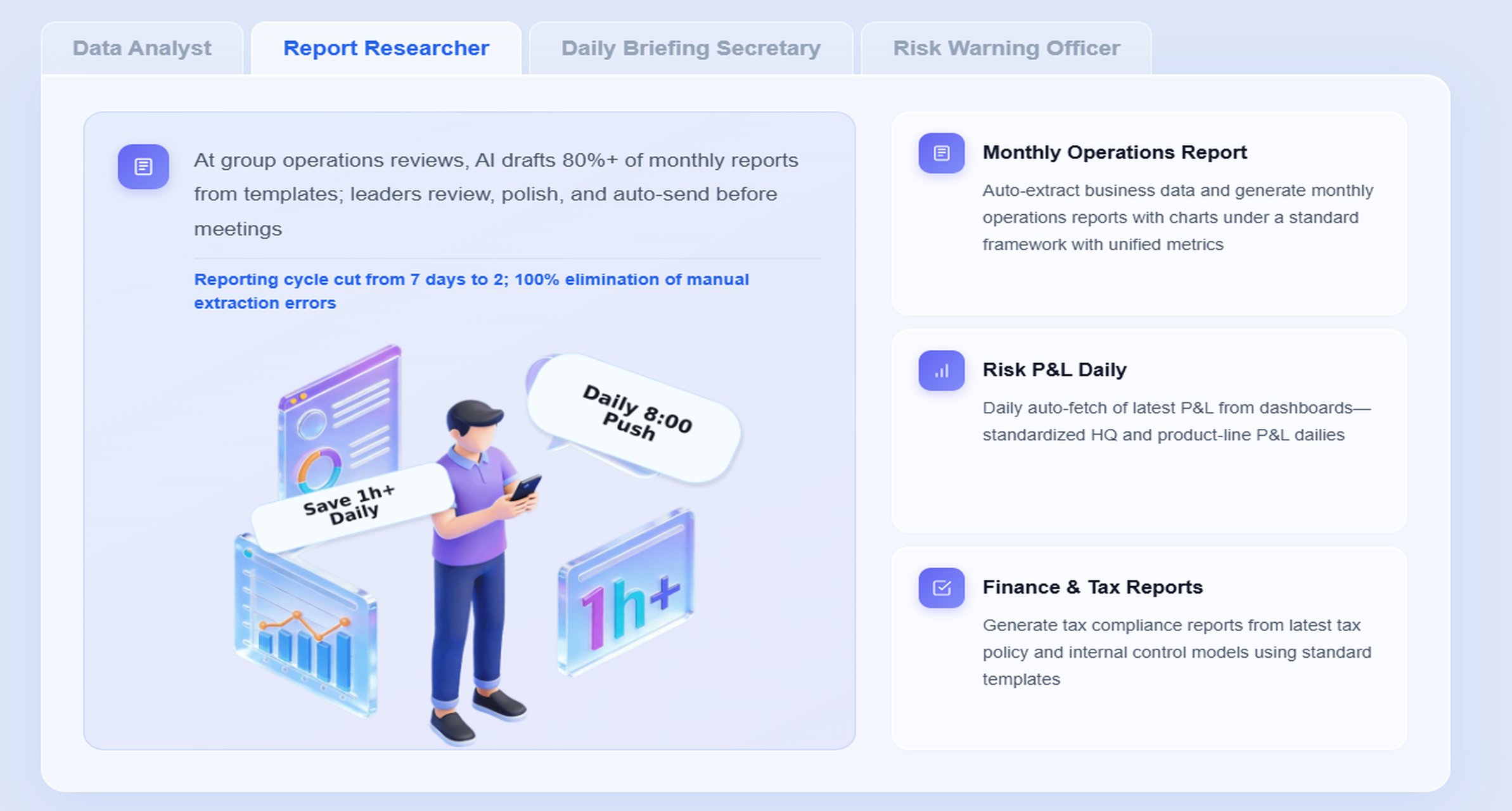
FineReport is not a traditional RIA portfolio accounting platform, but it is highly relevant when a firm needs custom reporting depth beyond standard advisor software templates. For teams that already have core data sources and want to build highly customized, pixel-perfect, branded, printable, and scheduled reports, FineReport can fill an important gap.
Tools like Orion, Addepar, or Tamarac are commonly used for portfolio accounting and advisor workflows. But some firms still need a dedicated reporting layer for:
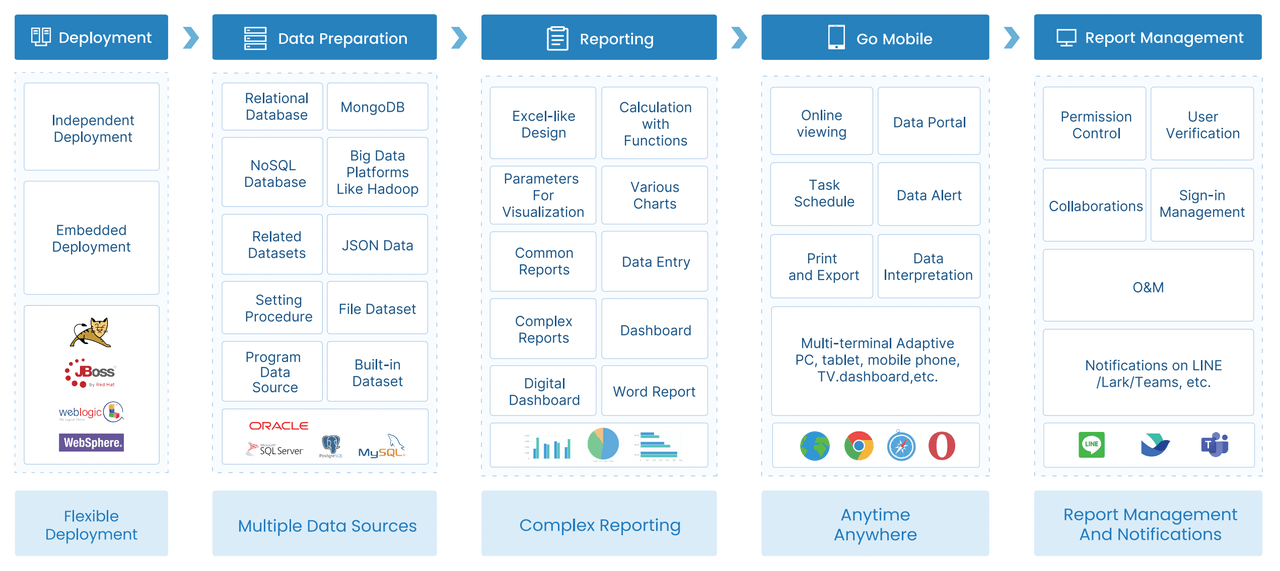
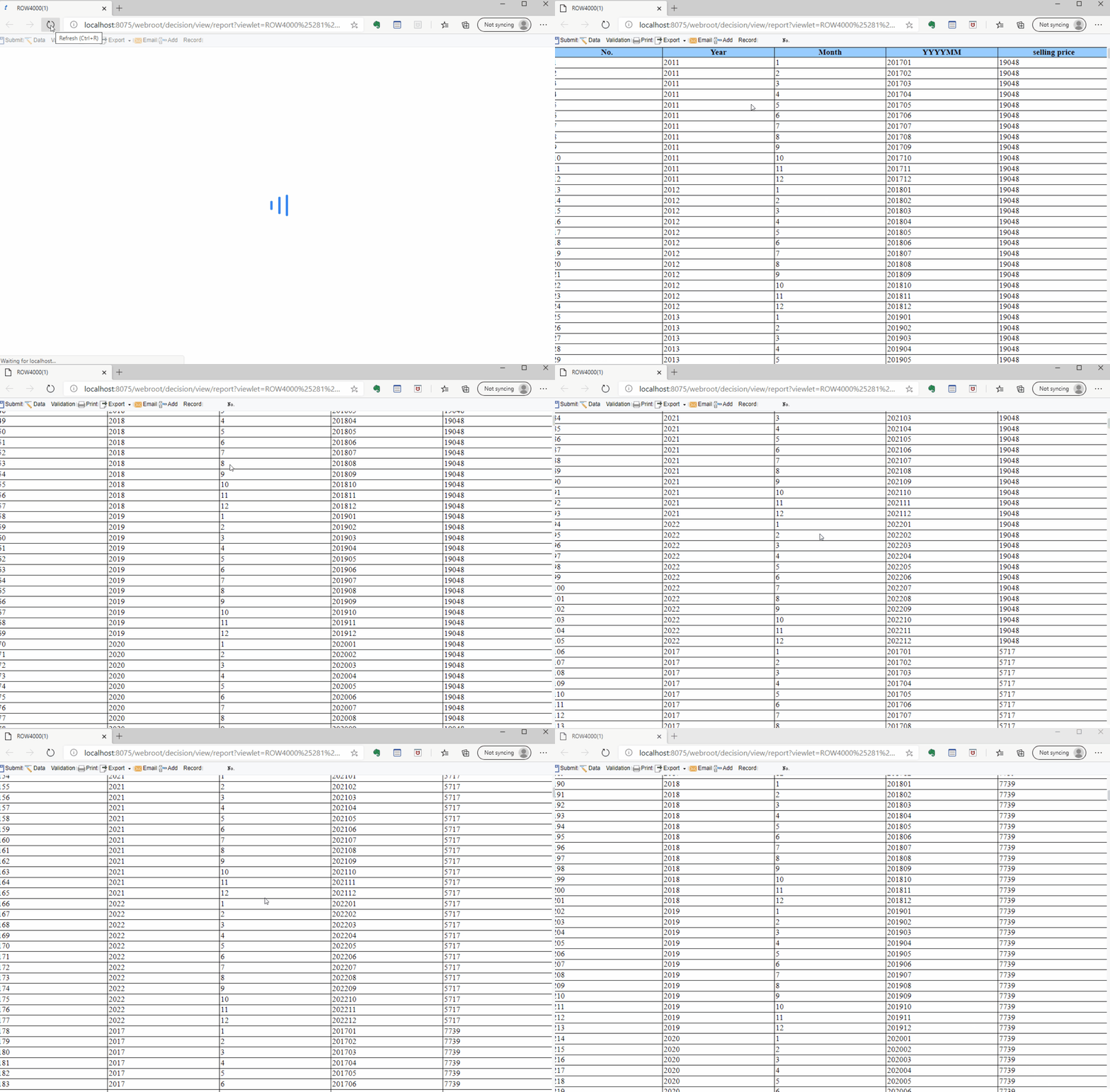
FineReport is particularly relevant if your team wants report design control that goes beyond standard portal widgets or template-based exports. It supports pixel-perfect report design, paginated reports, parameter queries, dashboard integration, scheduled distribution, and data entry forms for operational workflows.
That makes it a practical option for wealth management teams that need to standardize branded reporting or support internal reporting processes across departments.
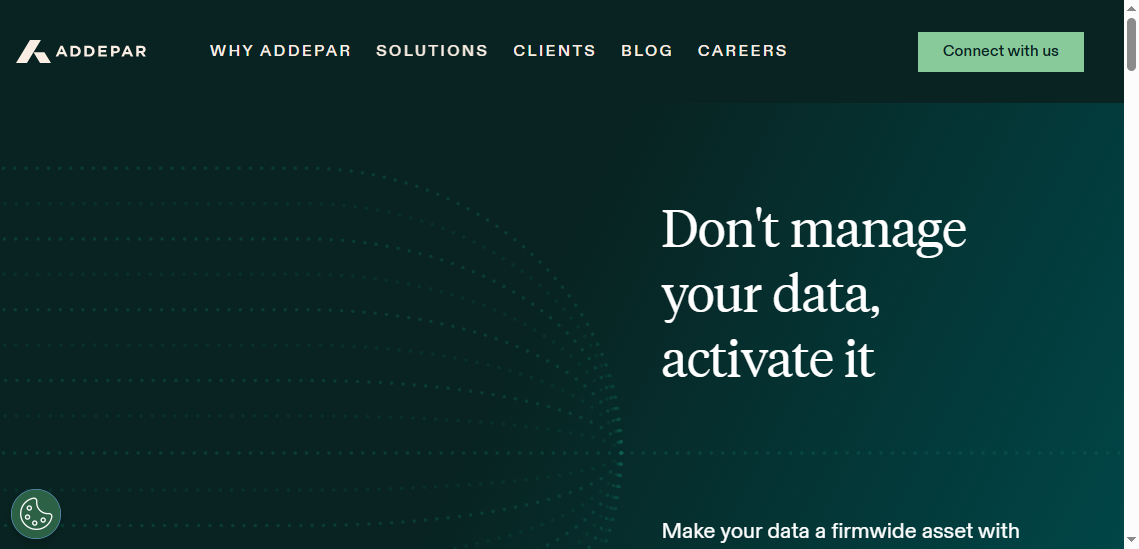
Addepar is often shortlisted by firms that manage more complex client situations, especially where multiple entities, alternative assets, or highly tailored reporting are involved. Its reputation is strongest in data aggregation and flexible presentation for sophisticated wealth reporting environments.
Where it stands out:
Strong support for complex portfolio structures
Broad flexibility in how data is presented
Useful for firms serving high-net-worth or more complex households
Designed for detailed reporting across public and private investments
Tradeoffs to consider:
May be more than some smaller RIAs need
Implementation and ongoing setup can be more involved than lighter tools
Best value tends to appear in firms with higher reporting complexity
Addepar is usually a stronger fit when reporting depth means handling portfolio complexity at scale, not just producing attractive quarterly statements.
Tools best for all-in-one portfolio management and reporting
3. Orion Advisor Tech
Orion is widely used by RIAs that want reporting as part of a broader advisor technology ecosystem. It combines portfolio accounting, reporting, billing, trading, and client experience capabilities in a more unified environment.
Where it stands out:
Strong reporting options within a broader advisor operations stack
Client-facing outputs are well developed
Useful for firms that want to reduce fragmentation across systems
Supports personalized reporting and operational workflows
Tradeoffs to consider:
Firms may still need to evaluate how well each module fits their existing processes
Broader platforms can require more change management at implementation
Some teams may prefer a more specialized reporting-first approach
Orion is a strong candidate for RIAs that want reporting depth tied closely to billing, portfolio management, and advisor operations.
4. Envestnet Tamarac
Tamarac is often evaluated by larger RIAs or firms with more demanding operational requirements. It is generally positioned as a more comprehensive platform that connects reporting with rebalancing, portfolio management, and broader advisor workflows.
Where it stands out:
Strong operational fit for firms managing more accounts and complexity
Reporting sits within a broader workflow and portfolio management framework
Typically appeals to firms that value integrated advisor operations
Can support household and multi-account workflows effectively
Tradeoffs to consider:
Can be heavier to implement than simpler systems
Smaller firms may not need its full breadth
Fit depends on how much of the wider platform you plan to use
If your firm wants reporting to be tightly connected to portfolio operations, Tamarac is often worth a serious look.
5. Morningstar Wealth Platform
Morningstar Wealth Platform tends to appeal to firms that value investment research and portfolio management capabilities alongside reporting. It may not always be the most customizable reporting environment, but it can be attractive for firms wanting a broader investment workflow foundation.
Where it stands out:
Research-oriented ecosystem
Portfolio management and rebalancing support
Suitable for firms that want reporting tied to investment workflows
Often relevant for firms already using Morningstar tools
Tradeoffs to consider:
Reporting customization may not be as deep as more specialized platforms
Best fit depends on how central Morningstar’s broader environment is to your practice
Tools best for client-friendly presentation and usability
6. Black Diamond
Black Diamond is often recognized for polished client presentation and advisor-facing usability. It is typically attractive to firms that want clean visual output and a modern client experience without sacrificing core performance reporting capabilities.
Where it stands out:
Strong visual presentation for client reporting
Good fit for advisor-client meeting workflows
Broadly suitable for firms prioritizing client communication
Often easier to position as a premium client experience tool
Tradeoffs to consider:
Some firms may want deeper customization than standard workflows provide
As with many broad platforms, reporting flexibility should be tested in live demos against your actual use cases
7. AssetBook
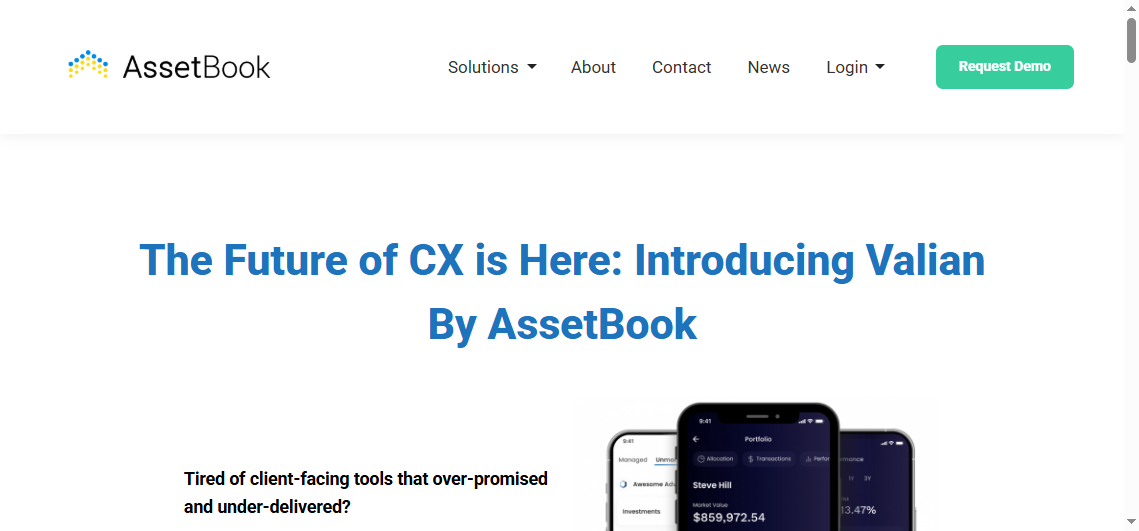
AssetBook is commonly viewed as a practical choice for smaller and mid-sized RIAs that want cloud-based reporting with a lighter learning curve. It may not offer the deepest reporting capabilities in the market, but it can cover the needs of firms that want speed, usability, and a reasonable level of customization.
Where it stands out:
Straightforward user experience
Client-friendly dashboards and reports
More accessible for firms that do not need enterprise-level complexity
Practical for smaller teams with limited operations staff
Tradeoffs to consider:
May be less suitable for highly complex reporting environments
Firms with advanced composite, alternatives, or highly customized presentation needs may eventually outgrow it
Quick comparison: strengths, tradeoffs, and best-fit firm type
Here is a simpler way to think about shortlist fit:
Startup or smaller RIAs: AssetBook can be attractive if ease of use matters more than deep customization.
Growth-stage RIAs: Black Diamond or Orion may fit firms that need stronger client experience and broader operations support.
Larger or more complex RIAs: Envestnet Tamarac and Addepar are more likely to fit firms with deeper operational and data requirements.
Firms with specialized reporting needs:FineReport is worth considering when standard templates are not enough and your reporting requirements include branded documents, internal operations reports, scheduled distribution, or dashboard-plus-report workflows.
Pros, Cons, and Best-Fit Use Cases for Each Option
Where each platform excels
Each platform tends to excel in a different version of the reporting problem:
Addepar: Complex wealth visibility, flexible reporting structures, and data depth
Orion: Reporting combined with broader advisor operations and portfolio workflows
Envestnet Tamarac: Integrated portfolio management and reporting for larger firms
Black Diamond: Strong client presentation and polished advisor meeting outputs
AssetBook: Simplicity and accessibility for smaller firms
Morningstar Wealth Platform: Reporting tied to investment research and portfolio workflows
FineReport: Highly customized, pixel-perfect, printable, and scheduled reporting beyond standard wealth templates
Common limitations to watch for
No platform is ideal for every RIA. Common tradeoffs include:
Steeper implementation for more comprehensive platforms
Weaker customization in systems that rely heavily on fixed report templates
Limited integrations where a platform is strongest inside its own ecosystem
Higher total cost for enterprise-grade tools
Operational complexity when reporting sits across multiple disconnected systems
This is why demos need to focus on your own reporting cases, not generic sample dashboards.
Which firms should shortlist which tools
Use the following logic as a starting point:
Shortlist Addepar if your firm handles complex wealth structures, alternatives, or highly customized reporting needs.
Shortlist Orion if you want strong reporting inside a broader advisor tech stack.
Shortlist Tamarac if you need operational breadth and integrated portfolio workflows.
Shortlist Black Diamond if client presentation and portal quality are top priorities.
Shortlist AssetBook if you want a practical cloud-based solution with less overhead.
Shortlist Morningstar Wealth Platform if your reporting decision is tied closely to research and investment management workflows.
Shortlist FineReport if your main challenge is not portfolio accounting itself, but building custom reports, printable books, scheduled report delivery, internal dashboards, or operational reporting that your current wealth platform cannot easily produce.
How to Choose the Right Reporting Software for Your Advisory Firm
Questions to ask before booking demos
Before you book demos, clarify your requirements in concrete terms:
What report formats do clients actually expect?
Do they want portal access, polished quarterly PDFs, meeting books, or all of the above?
How often are reports delivered?
Quarterly only, monthly, on demand, or event-driven?
How much customization do you really need?
Are standard templates enough, or do you need household-specific layouts, branding, and flexible calculations?
Which integrations are essential today?
Custodians, CRM, billing, planning, rebalancing, and compliance workflows all matter.
What future workflows should the platform support?
Growth often exposes weaknesses in systems that seem fine at smaller scale.
A strong demo should show your own use cases, including a sample household, a sample quarterly report, a billing-related output, and a client review meeting packet.
Final recommendation framework
A simple scorecard can make selection easier. Score each platform from 1 to 5 across:
Reporting depth
Client experience
Customization
Implementation effort
Integration fit
Support quality
Total cost of ownership
Then weight those factors based on your business model.
For example:
A small RIA may weigh ease of use and cost
A growing multi-advisor firm may weigh workflow fit and scalability
A specialized wealth manager may weigh customization and data complexity
An operations-heavy team may weigh automation, batch delivery, and reconciliation support
Practical Recommendations for Evaluating Performance Reporting Software
Test with one real client household, not a canned demo.
That is the fastest way to see whether the platform handles your actual reporting complexity.
Separate visualization quality from reporting depth.
A beautiful dashboard does not automatically mean stronger fee reporting, benchmark handling, or PDF flexibility.
Map reporting into your operations, not just advisor meetings.
Reporting affects billing checks, reconciliation, client service, and internal oversight.
Ask how much report customization can be done without technical workarounds.
This often determines whether the platform will scale with your firm.
Plan for growth, not just current account volume.
The right system should support your future service model, not only your current one.
When FineReport Is a Good Fit for Performance Reporting Workflows
Tools like Orion, Tamarac, Black Diamond, and Addepar are widely used for advisor reporting, portfolio visibility, and client experience. But teams with complex reporting workflows may also need a dedicated enterprise reporting platform like FineReport.
FineReport is especially useful when the problem is not just “which RIA portfolio tool should we use,” but also:
How do we produce pixel-perfect, branded reports for different audiences?
How do we support paginated and printable reports instead of only screen dashboards?
How do we allow parameter queries for advisors, operations teams, or management?
How do we automate scheduled distribution of recurring reports?
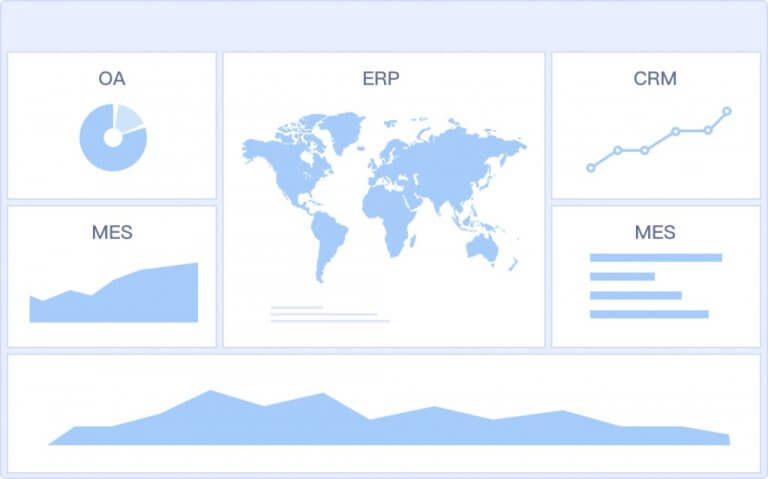
How do we combine dashboards and structured reports in one reporting environment?
How do we support data entry forms or operational workflows where teams need to submit or adjust information?
For wealth management and financial services teams, those needs often appear in:
Department-level dashboards connected to underlying tabular reports
FineReport’s strengths are most relevant when you need a reporting layer with stronger design control and enterprise reporting governance than a standard portal or fixed-template report builder can provide.
Get Ready-to-Use Dashboard and Report Templates in Fine Gallery
If your firm already has core portfolio systems but still struggles to produce the exact reports stakeholders need, FineReport can be a practical addition to the stack rather than a replacement for every other tool.
Final Thoughts
The best performance reporting software for RIAs depends less on feature checklists and more on the kind of reporting your firm actually needs to deliver.
If your priority is polished client presentation, some platforms stand out quickly. If your challenge is integrating reporting with billing, portfolio accounting, and household workflows, others will be stronger. And if your firm needs highly customized, pixel-perfect, scheduled, or operational reporting beyond standard advisor templates, FineReport deserves a place on the shortlist.
The smartest approach is to evaluate reporting depth in the context of your own firm:
your clients
your workflows
your growth plans
your reporting standards
your team’s capacity to implement and maintain the system
That is how you avoid buying software that looks good in a demo but falls short in production.
Performance reporting software helps RIAs calculate portfolio returns, compare results to benchmarks, and present client-ready reports across accounts or households. More advanced tools also support billing, cash flow tracking, fee reporting, and operational workflows.
RIAs should focus on calculation accuracy, benchmark flexibility, household-level reporting, fee transparency, and report customization. Integrations, client portals, and batch or scheduled delivery also matter if the firm needs scalable workflows.
Basic tools usually show balances, holdings, and simple returns, while stronger performance reporting platforms handle cash flows, net-of-fee views, grouped accounts, and more tailored client presentations. The difference is usually depth, flexibility, and how well reporting connects to firm operations.
Smaller RIAs often prefer simpler cloud-based platforms that are easier to manage and deploy, while larger firms usually need deeper integrations, broader workflow support, and more complex reporting capabilities. The best choice depends on your reporting needs, client complexity, and internal operations.
A highly customizable tool is useful when standard templates are too limiting and your team needs branded PDFs, pixel-perfect layouts, dashboards, portals, or scheduled operational reports. It is especially helpful for firms that already have data in multiple systems and want more control over presentation and distribution.
Product Trial
FineReport
Pixel-perfect reports · Interactive dashboards · Easy data entry · Digital twins