For GSA contractors, transactional data reporting is no longer just a policy term to know in passing. It directly affects how you capture sales data, how often you report it, how you coordinate across contracts, sales, and finance teams, and how you prove compliance under your Multiple Award Schedule obligations.
At a practical level, transactional data reporting means submitting monthly line-item sales data for covered Schedule activity rather than relying only on higher-level reporting practices. That shift matters because it increases the importance of clean source data, repeatable reporting workflows, and timely internal review.
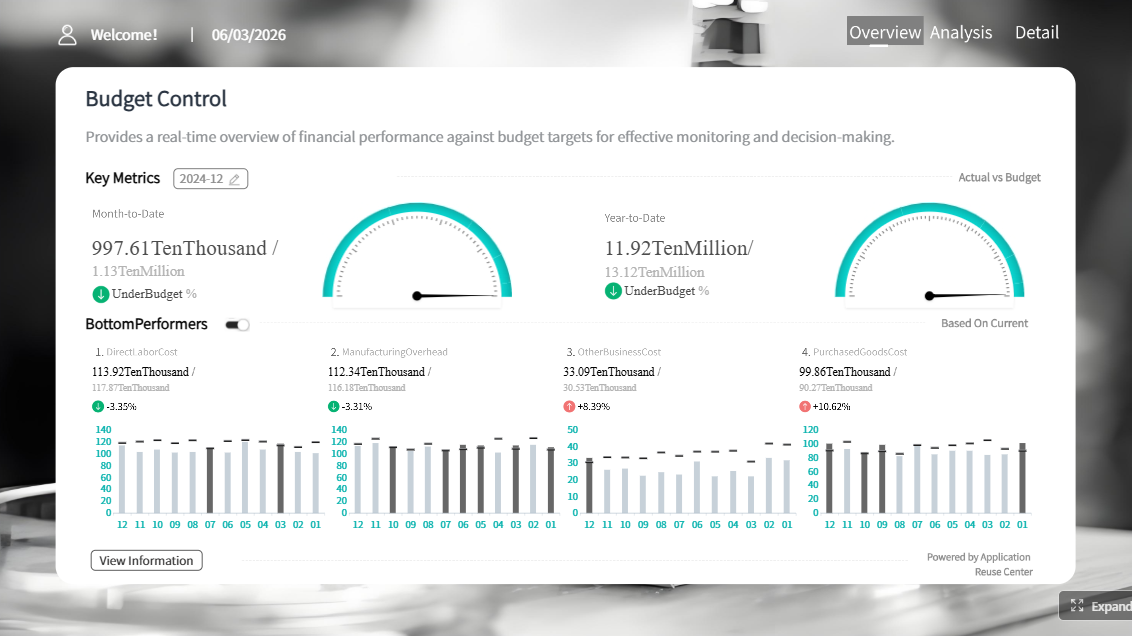
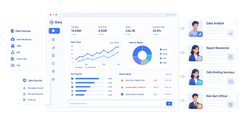
It also creates a strong use case for a more modern reporting approach. With FineReport + Dora, teams can ask for a report summary in chat, generate structured narratives from trusted report assets, receive scheduled briefings, and push exceptions to the right owner. Instead of manually stitching together spreadsheets, portal exports, and deadline reminders, contractors can build governed reporting views in FineReport and add Dora as the enterprise Data Agent layer for monthly monitoring, exception follow-up, and management summaries.
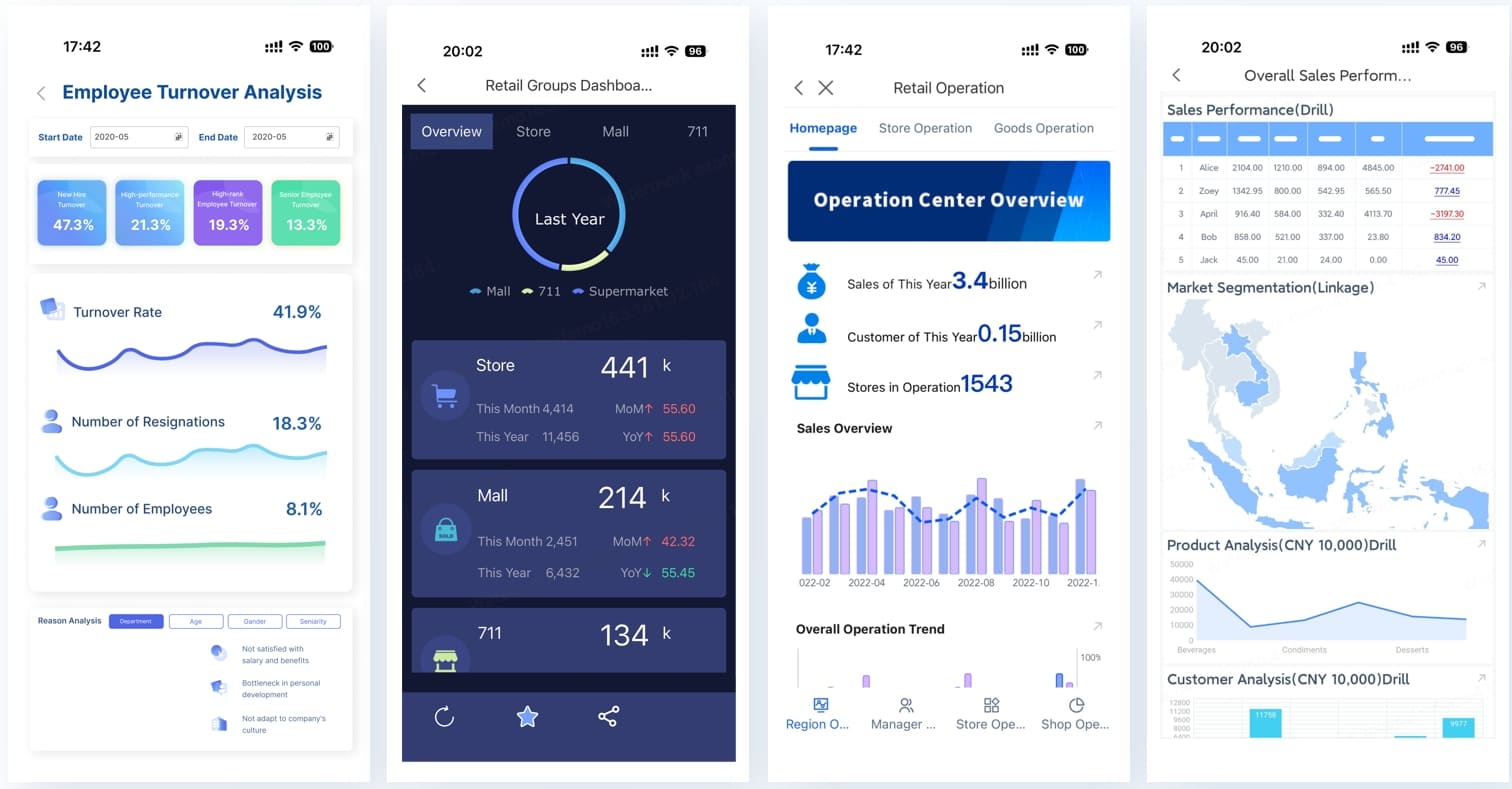
Click To Try The Dashboard
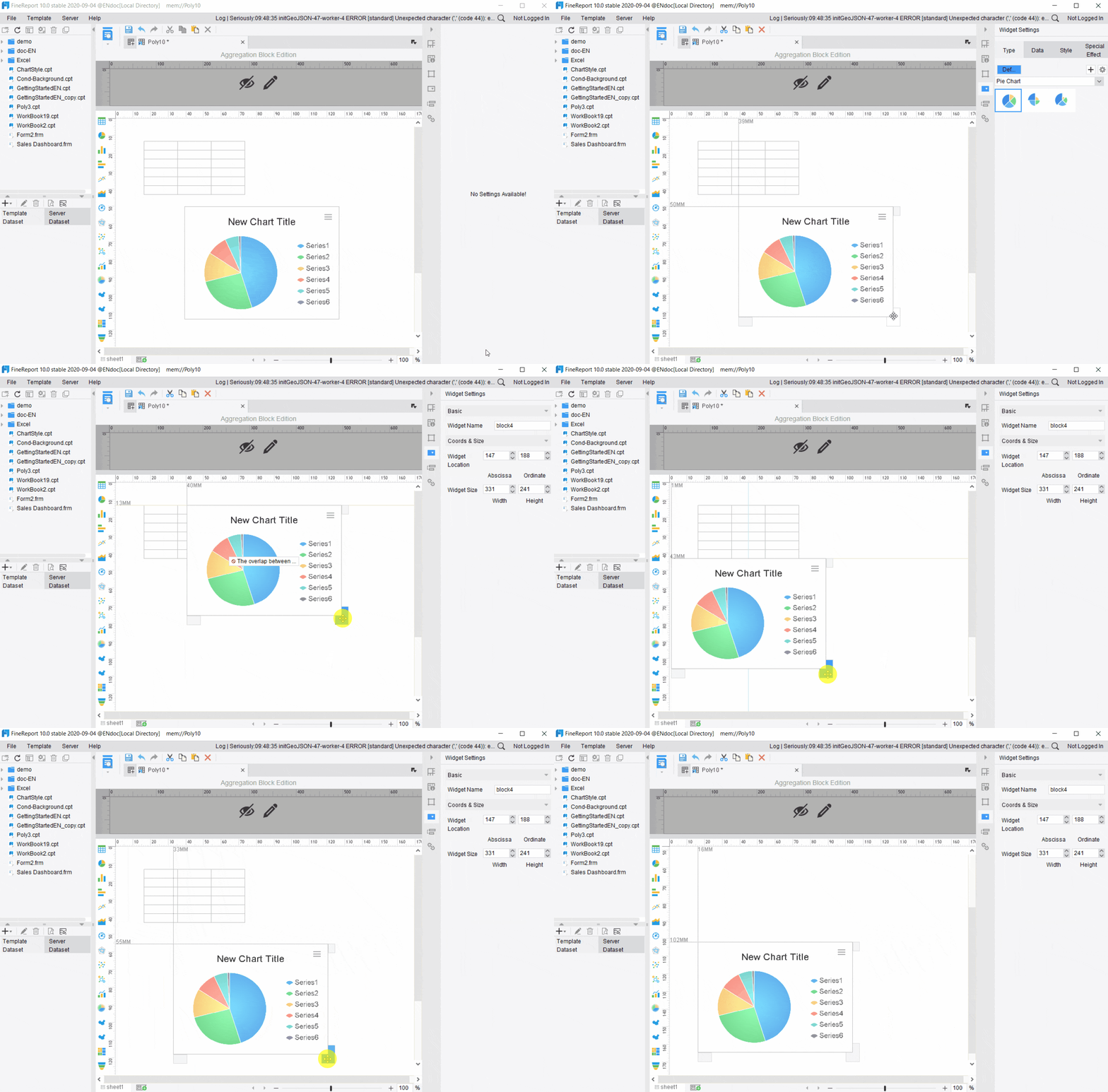
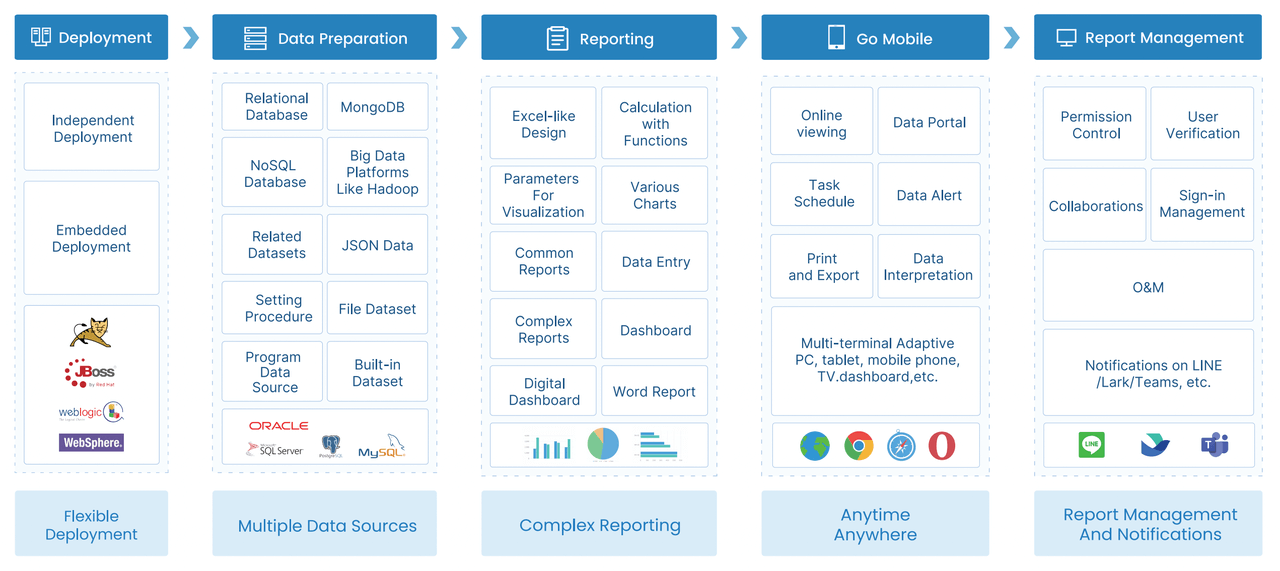
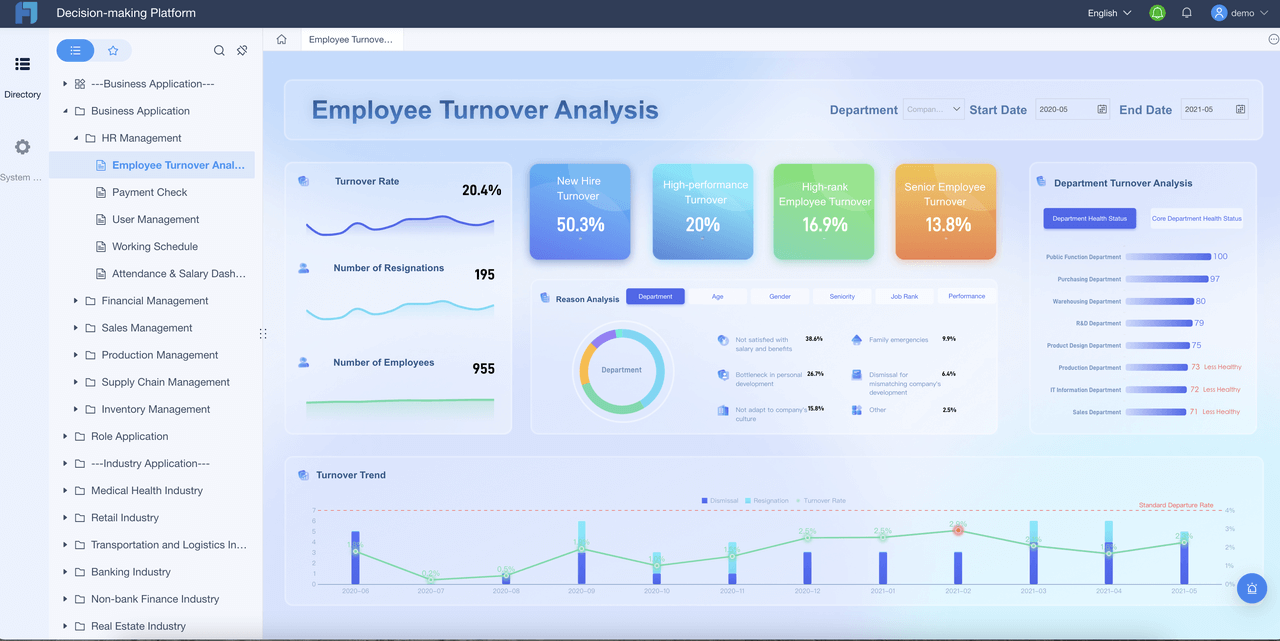
All reports in this article are built with FineReport
What Is Transactional Data Reporting and Why It Matters
Transactional data reporting, often called TDR, is the process by which GSA contractors submit order-level or line-item sales information for qualifying contract activity on a regular schedule, typically monthly. In plain language, it means you do not just report that sales happened. You report the individual transaction details behind those sales.
For GSA contractors, this matters because Multiple Award Schedule compliance increasingly depends on the ability to produce accurate, complete, and timely transaction-level records. That includes product or service descriptions, quantities, pricing information, order references, and other required data points tied to sales activity under the contract.
Monthly line-item reporting fits into MAS compliance because it helps the government understand:
what agencies are buying
what they are paying
how often certain items or services are purchased
where pricing patterns or inconsistencies may need review
For contractors, the operational impact is significant. The topic is becoming more important because reporting expectations have expanded, policy treatment has evolved, and more contractors now need a dependable monthly reporting process instead of a looser, quarter-end scramble.
Who is affected? In practice, this concerns:
current MAS contract holders
contractors transitioning into updated reporting requirements
contract administrators responsible for submissions
finance teams reconciling reported sales
sales operations teams capturing order details
executives who need visibility into compliance risk
For leaders, the issue is not just compliance. It is process maturity. If your team cannot quickly identify which orders are reportable, whether required fields are populated, and whether monthly submissions align with internal records, the risk is not theoretical. It becomes a recurring operational burden.
How the Transactional Data Reporting Program Works
The transactional data reporting program is built around a simple concept: if sales occur under the relevant contract, the contractor must capture and submit transaction-level data on a recurring basis. What makes it challenging is not the idea itself, but the details of execution.
What contractors report each month
Each month, contractors generally report line-item elements tied to sales activity. The exact fields can vary depending on whether the sale involves products, services, or special reporting situations, but common elements include:
contract or BPA number
delivery order, task order, or procurement instrument identifier
Special Item Number
description of deliverable
manufacturer information for applicable products
part number or item identifier where applicable
unit of measure
quantity sold
price paid per unit
total price
customer-related identifiers
order timing or shipment-related fields where required
The compliance challenge is that these values often come from multiple systems rather than one perfect source. Sales may live in CRM, invoicing in ERP, item descriptions in catalog tools, and contract references in a separate administration file.
From a reporting operations perspective, the core monthly report usually needs the following elements:
Core report elements for monthly TDR management
Report Element: Reportable transaction list Definition: A line-item list of all sales activity that should be included in the monthly submission period. Business value: Prevents missed reportable orders and gives the team a single controlled reporting universe. AI use:Dora can summarize the monthly reportable population, flag unusually low or high volumes, and explain which business units drove the reporting load.
Report Element: Required field completion status Definition: A completeness check showing whether each transaction includes all required reporting fields. Business value: Reduces the risk of incomplete submissions and rework close to the deadline. AI use:Dora can identify which fields are most frequently missing, generate a structured report summary, and push follow-up tasks to responsible owners.
Report Element: Submission calendar and deadline tracker Definition: A dashboard view showing reporting deadlines, status by period, and pending approvals. Business value: Keeps monthly reporting on schedule and improves management visibility. AI use:Dora can act as a Daily Briefing Secretary to send scheduled reminders, summarize open items, and notify owners before deadlines slip.
Report Element: Sales-to-report reconciliation Definition: A comparison between internal booked or invoiced sales and the reportable line items prepared for submission. Business value: Helps detect omissions, duplicate lines, or classification errors. AI use:Dora can explain reconciliation gaps in chat and suggest which teams need to validate discrepancies.
Report Element: Correction and resubmission log Definition: A record of changed lines, corrected values, and post-submission updates. Business value: Supports audit readiness and internal accountability. AI use:Dora can produce weekly narratives on correction trends and highlight repeat error patterns.
Reporting timing is another key issue. Transactional data reporting is generally handled on a monthly cadence, and contractors need a consistent internal cutoff, review cycle, and submission process. Data accuracy expectations are high because submitted data informs contract oversight and buying analysis. If source records are inconsistent, the problem is not just clerical. It can affect compliance posture and administrative credibility.
Transactional data reporting changes the oversight model from a heavier dependence on traditional pricing disclosures toward a more data-driven review of actual transaction activity. For contractors, that means the government can evaluate pricing and purchasing behavior based more directly on reported order data.
This matters because reported sales data supports:
contract administration
market visibility
oversight of purchasing patterns
pricing analysis for same or similar items
broader acquisition decision-making
For contractors, the operational takeaway is clear: reported data is no longer just an after-the-fact submission task. It becomes part of how your contract performance is understood.
This is exactly where a governed reporting foundation helps. FineReport can consolidate reportable transactions, reconciliation status, line-item detail, and deadline tracking into one operational cockpit. Then Dora can sit on top of that trusted reporting layer to answer questions like:
Which orders are still missing required fields?
What caused this month’s jump in reportable transactions?
Which business unit has the most unresolved exceptions?
Summarize submission readiness for leadership in one paragraph.
That is a more practical enterprise model than leaving TDR buried in spreadsheets and email threads.
Transactional Data Reporting Requirements Contractors Need to Know
Knowing that transactional data reporting exists is not enough. Contractors need to understand where the requirement comes from, how scope can change, and where compliance usually breaks down.
Contract clauses, policy updates, and scope
The governing requirement for transactional data reporting is tied to the applicable contract clause and related GSA policy framework. Contractors should verify current applicability directly in their awarded contract documents, current solicitation refreshes, mass modifications, and official GSA guidance.
That point is important because scope can change. Reporting requirements may expand through:
solicitation refreshes
mass modifications
clause updates
added SIN applicability
policy notices affecting how contractors must report
A common mistake is assuming that a prior understanding of the rule is still current. In reality, contractors should periodically confirm:
whether TDR applies to their contract
whether all relevant SINs are covered
whether any data fields have changed
whether timing or portal instructions have been updated
whether no-sales confirmations are required for inactive periods
From an enterprise reporting standpoint, this constant policy movement is one reason static manual processes fail over time. Teams need a reporting workflow that can adapt without being rebuilt from scratch every quarter.
Compliance responsibilities and common risk areas
Compliance responsibilities extend beyond entering values into a portal. Contractors need to maintain a process that supports:
accurate recordkeeping
consistent accounting treatment
line-item traceability
review and approval controls
reconciliation between source systems and submitted data
retention of supporting records for later review
Frequent risk areas include:
incomplete required fields
missed monthly deadlines
inconsistent item descriptions
mismatches between ERP and reporting extracts
duplicate or omitted transactions
use of inconsistent reporting points across periods
poor handoff between sales, finance, and contracts staff
These issues are often symptoms of process fragmentation rather than one person’s error. If item descriptions are inconsistent, it may be a master data issue. If deadlines are missed, it may be a workflow visibility issue. If totals do not reconcile, it may be a timing issue between invoices and payments.
This is where IT teams and operations teams play a larger role in the AI era. IT is not just asked to produce another dashboard. IT helps standardize data connections, semantic rules, report templates, permissions, and reusable agent Skills so the business can manage recurring compliance work more reliably.
Store evidence, logs, and any follow-up corrections.
FineReport is well suited to this kind of workflow because it can serve as the reporting foundation for formatted reports, exception tables, status cockpits, and workflow-driven review dashboards. Instead of passing spreadsheets around, teams can review one governed reporting environment.
For example, a monthly TDR operational cockpit in FineReport can include:
reportable sales by month
lines pending validation
missing-field exception list
overdue approval steps
reconciliation variance summary
correction history by department
That creates a trusted reporting base. Then Dora can add the AI assistant layer for report consumption and follow-up.
Controls matter because many TDR errors begin before the reporting month ends. The better approach is to improve how data is captured at the source.
Useful controls include:
standardized item and service description conventions
required data fields in sales entry processes
monthly reconciliation checkpoints
owner-based exception queues
documented approval steps
submission logs and change records
Training should include more than the contracts team. Sales, contracts, finance, and operations staff all influence whether line-item data is usable later. If one team uses internal shorthand and another relies on invoice descriptions, your monthly reporting burden grows fast.
This is also where AI can help in a controlled way. Dora should not be framed as replacing compliance judgment. It should be used as a governed AI workflow layer that helps teams consume reports faster, understand exceptions earlier, and keep follow-up moving.
How an AI Data Agent Automates Report Consumption
For many contractors, the hardest part of transactional data reporting is not just generating the file. It is consuming the reporting information in time to act on it. Teams need to know what is missing, what changed, what is overdue, and who owns the fix.
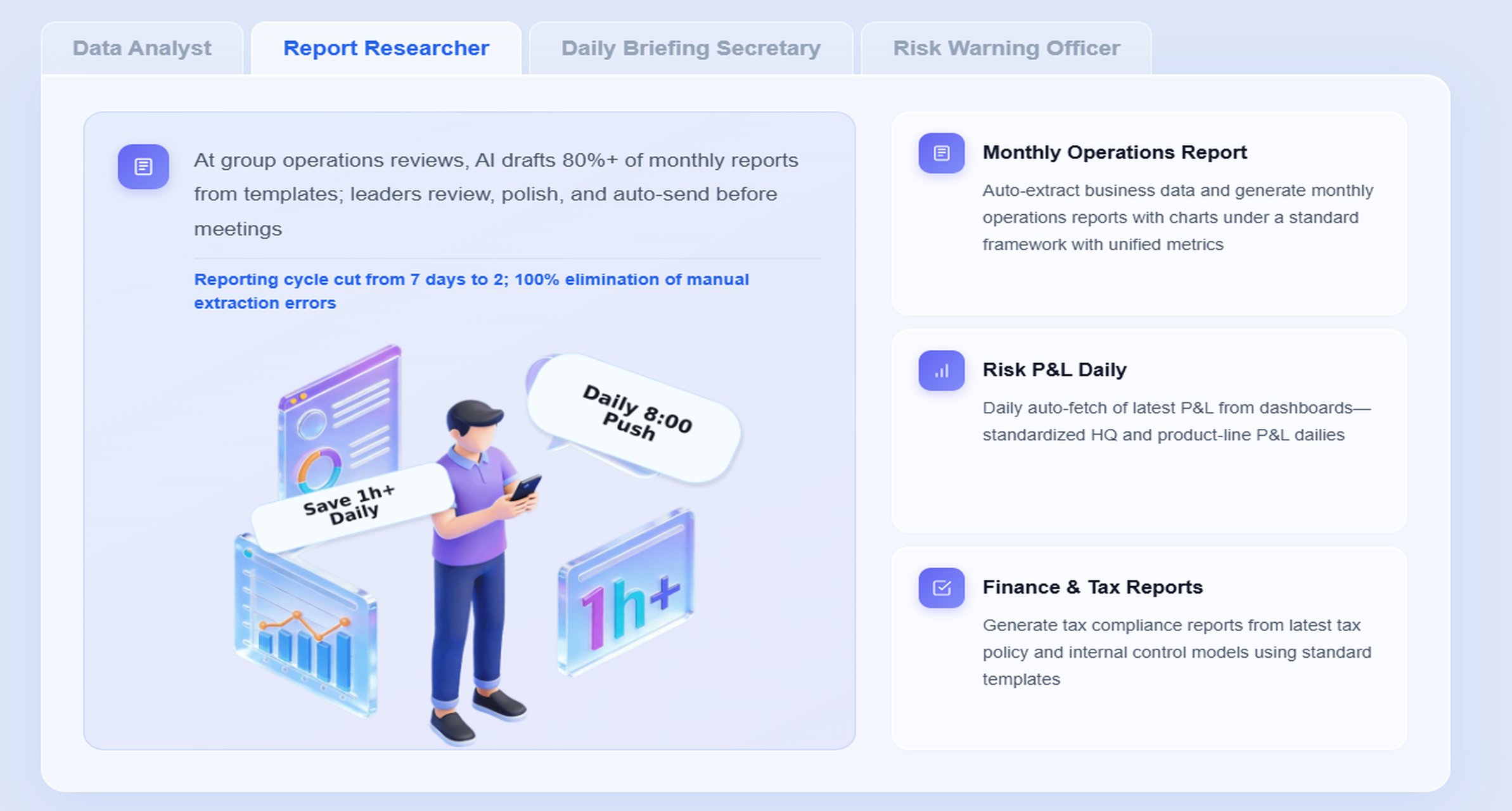
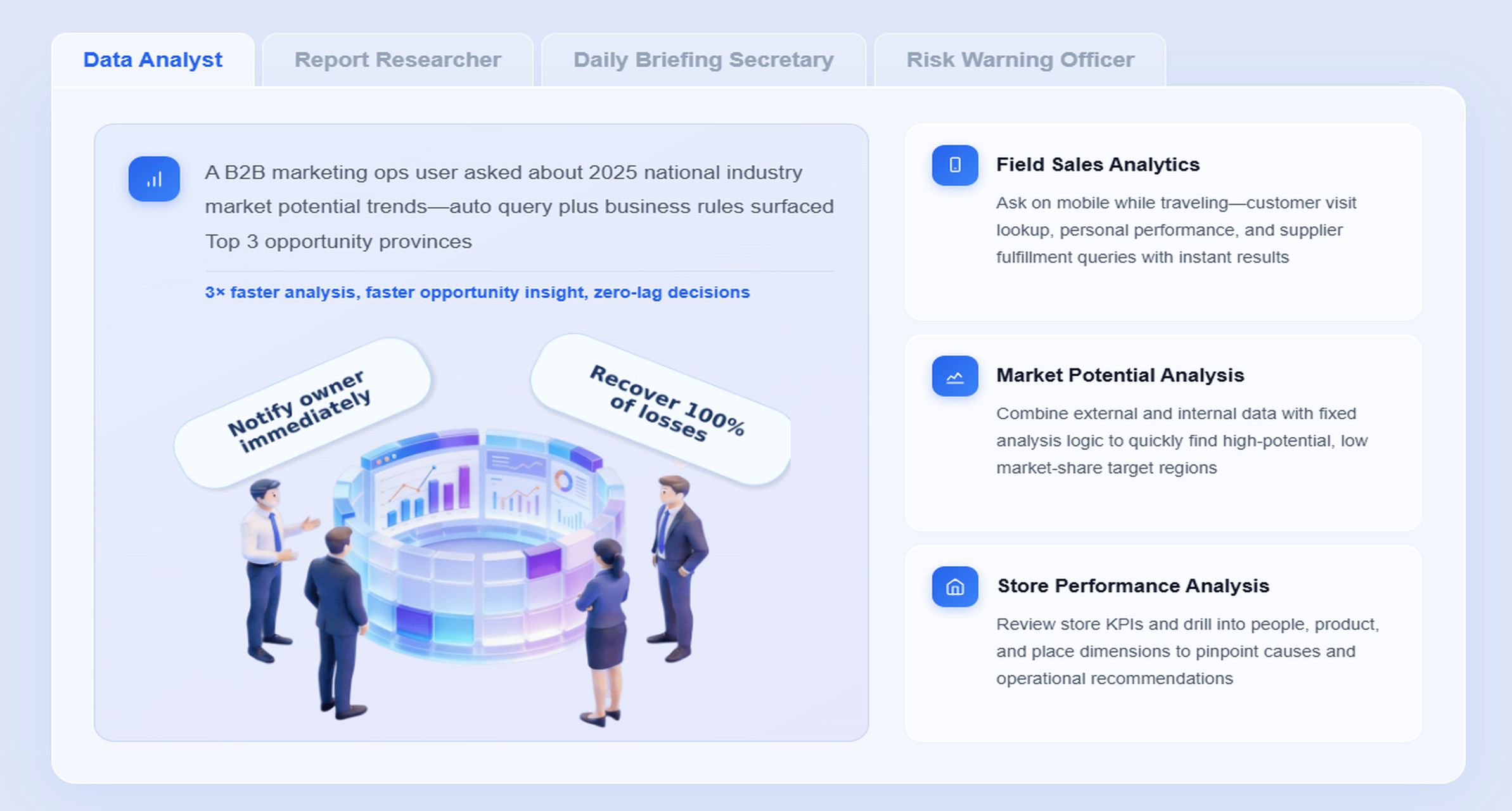
Dora addresses this as an enterprise Data Agent layered on top of FineReport and existing reporting assets. In this scenario, the most relevant Dora digital employees are the Daily Briefing Secretary, Data Analyst digital employee, and Risk Alert Officer.
FineReport provides the trusted reporting and semantic foundation by organizing:
reportable transaction lists
KPI definitions
contract and period filters
exception rules
monthly readiness dashboards
reconciliation reports
user permissions
Dora then uses that governed foundation to help teams query, summarize, alert, push, and follow up.
“Summarize this month’s transactional data reporting status, list missing required fields by owner, highlight unreconciled sales lines, and tell me which items could delay submission.”
Dora can return a structured report summary based on trusted FineReport assets rather than an ungoverned raw prompt. It can also link the answer back to the original report or cockpit view for review.
A practical Dora workflow for monthly TDR operations
Retrieve trusted FineReport report data Dora accesses the approved TDR operational cockpit, reconciliation report, and exception tables built in FineReport.
Interpret KPI definitions and semantic rules Dora understands what counts as a reportable transaction, how missing fields are defined, which status means approval complete, and how reconciliation thresholds are set.
Generate a structured report summary in chat Dora produces a management-ready summary of submission readiness, error trends, missing fields, and open issues.
Detect exceptions and threshold breaches Dora identifies overdue validations, unreconciled totals, repeated description issues, or business units with high exception volumes.
Push alerts and follow-up tasks
As a Risk Alert Officer or Daily Briefing Secretary, Dora can send scheduled summaries and exception pushes to the right owner or manager.
Create a follow-up record for review Dora supports periodic review by producing a daily or weekly summary of open items, corrected items, and unresolved compliance risks.
Why this AI model works better in enterprises
The value here is not generic AI chat. The value is Agentic BI built on governed reporting assets.
natural-language query over trusted reporting assets
chat-based AI assistant for report consumption
report, cockpit, metric, and exception retrieval from FineReport assets
structured report summaries and chart explanations
scheduled briefings and periodic exception push
digital employees for repeatable reporting workflows
Skills-based execution for more controllable and auditable AI workflows
For executives, this means Dora is not an AI experiment. It is a landed digital employee for recurring reporting work such as monthly compliance summaries, reconciliation follow-up, overdue exception tracking, and leadership briefings.
For business users, it reduces friction. They do not need to search through multiple tabs and files just to understand whether submission risk is rising.
For IT teams, it is a more realistic deployment path. Instead of building endless custom bots, they can focus on data connections, semantic layers, report templates, permissions, and reusable agent Skills.
Compared with raw prompt-only agents, this approach is designed for better enterprise landing capability. It supports more controlled execution paths, reduces token waste, improves workflow stability, and aligns better with permissions, KPI governance, report templates, and data quality requirements.
Transactional data reporting becomes manageable when contractors standardize the process before they try to accelerate it. The following practices are especially useful.
1. Standardize report templates and KPI definitions
Define exactly what each status, field, exception type, and reconciliation rule means. If teams use different definitions for reportable sales, missing fields, or corrected transactions, your monthly reporting will drift.
This is also essential for AI. Dora performs best when FineReport already contains trusted KPI definitions, report templates, and business terms.
2. Start with high-value recurring reports
Do not try to automate every compliance report at once. Begin with the recurring monthly TDR cockpit, the missing-field exception report, and the sales-to-report reconciliation dashboard.
That gives you fast operational value and creates the trusted reporting base Dora can use for summaries, alerts, and follow-up.
3. Build AI on top of governed permissions
Preserve access boundaries. If a user should only see specific contracts, business units, or reporting details, AI outputs must respect those same FineReport permissions.
This is one of the biggest differences between enterprise Data Agent deployment and casual AI usage.
4. Treat data quality as part of the AI implementation
If source descriptions are inconsistent or order references are incomplete, AI cannot fix the root problem by itself. Clean master data, controlled field capture, and reliable reconciliation processes are part of the implementation scope.
A governed AI workflow only becomes trustworthy when the reporting foundation is trustworthy.
5. Use human review for AI-generated narratives
Dora can generate structured report summaries, chart-based answers, and management narratives, but compliance-sensitive reporting should still include human review. Start with summary support, exception routing, and periodic briefings, then gradually expand Skills as confidence grows.
Transactional data reporting raises recurring practical questions. Contractors should answer them with reference to their specific contract terms and current official guidance, but the following issues come up often.
Questions contractors often ask
Do all contractors participate in transactional data reporting?
Not necessarily in every historical period or contract context, but current applicability depends on the awarded contract, relevant clause treatment, solicitation refreshes, and official GSA direction. Contractors should verify current status rather than rely on old assumptions.
What happens when there are no sales?
In many cases, contractors may still need to submit a no-sales or no-reportable-data confirmation for the period. The exact requirement should be checked against current contract instructions and portal guidance.
How are corrections handled?
Corrections usually require a controlled internal process: identify the inaccurate line, trace the source record, confirm the correct value, document the reason, and follow current portal or reporting procedures for updates. A correction log inside FineReport can help maintain visibility and audit readiness.
When should contractors seek clarification?
Any time there is uncertainty about clause applicability, data field interpretation, timing, order treatment, or special reporting conditions, contractors should consult the contracting officer or current official GSA guidance. Internal assumptions are not a substitute for authoritative direction.
Expansion trends and upcoming updates
The biggest strategic point is that transactional data reporting has moved from a niche concern to a mainstream contract operations issue. Contractors should expect continued attention to:
policy announcements
MAS refreshes
changes in field requirements
broader applicability across SINs
updates to reporting procedures
evolving expectations around data accuracy and contract administration
That means contractors should schedule periodic reviews of:
official contract clauses
accepted modifications
current Vendor Support Center or reporting portal instructions
internal mappings between source systems and report fields
reporting dashboards and exception rules
The operational goal is simple: do not let policy changes surprise your reporting process.
Building this manually is complex. FineReport helps teams standardize trusted reports, operational cockpits, templates, and reporting workflows. Dora turns those assets into an AI assistant that can answer report questions in chat, generate structured summaries, push scheduled briefings, monitor exceptions, and follow up with responsible owners.
In the transactional data reporting scenario, FineReport serves as the reporting foundation for:
monthly TDR operational cockpits
line-item detail reports
exception and reconciliation dashboards
approval tracking
correction logs
management compliance summaries
Dora then upgrades report consumption and execution. Instead of asking analysts to manually interpret every dashboard, teams can use Dora as a Report Researcher, Daily Briefing Secretary, Data Analyst digital employee, or Risk Alert Officer depending on the workflow.
That means a contracts leader can ask for a structured summary of this month’s submission readiness. A finance manager can receive a scheduled briefing on reconciliation gaps. An operations owner can get an exception push for missing required fields. Management can review a concise narrative without waiting for someone to manually prepare it from scratch.
FineReport + Dora is not only a reporting upgrade; it is a practical fourth-generation Agentic BI path. FineReport provides governed reports and operational cockpits. Dora provides the AI assistant layer for scenario execution, with more controlled Skills, lower token waste, faster execution paths, and more stable workflows than prompt-only agents.
Get Ready-to-Use Dashboard Templates in Fine Gallery
The strongest Dora pitch is scenario + product + service: FineReport provides the trusted reporting foundation, Dora provides the AI digital employee, and implementation service connects data, governance, semantic setup, Skills, report templates, permissions, and rollout.
If your organization is preparing for recurring transactional data reporting obligations, the practical question is no longer whether reporting needs structure. It is whether you want that structure to remain manual and fragile, or become governed, visible, and AI-assisted.
Transactional data reporting, or TDR, is the monthly submission of line-item sales data for covered GSA Schedule transactions. Instead of reporting only total sales, contractors report the details behind each qualifying order.
Contractors generally need transaction-level fields such as contract or order identifiers, SIN, item or service description, quantity, unit price, and total price. Some required fields vary depending on whether the sale is for products or services.
TDR data is typically reported every month. Contractors usually must submit the report within 30 calendar days after the end of the reporting month, including a no-sales confirmation when applicable.
It helps contractors prove that reported sales are accurate, complete, and timely under their MAS obligations. Strong TDR processes also reduce the risk of missed transactions, incomplete fields, and last-minute reporting issues.
The most effective approach is to centralize sales, contract, and finance data into a governed reporting workflow. Tools like FineReport and Dora can help teams monitor completeness, flag exceptions, and produce monthly compliance summaries faster.
Product Trial
FineReport
Pixel-perfect reports · Interactive dashboards · Easy data entry · Digital twins