Business management is the discipline of turning goals into results. It connects strategy with execution, money with decisions, and people with performance. Whether a company has 5 employees or 50,000, strong management is what keeps priorities clear, operations stable, and growth sustainable.
For business leaders, this is not an abstract concept. It is the daily work of deciding what matters, aligning teams, allocating resources, solving problems, and improving outcomes over time.
In this guide, we will explain what business management means in real companies, how it works day to day, how it differs from business administration, and which skills and career paths matter most.
What Is Business Management?
In plain language, business management is the process of planning, organizing, leading, and controlling a business so it can achieve its goals.
That sounds simple, but in practice it covers a wide range of responsibilities:
Setting direction
Choosing priorities
Managing budgets
Coordinating teams
Improving processes
Monitoring performance
Responding to change
A useful way to think about business management is this: strategy decides where the business wants to go, and management makes sure the organization can actually get there.
Business management connects four critical parts of a company:
Area
What management does
Strategy
Sets goals, priorities, and direction
Operations
Turns plans into products, services, and delivery
Finance
Allocates money, controls costs, and measures results
People
Builds teams, develops talent, and drives accountability
For a small business, management may be handled directly by the owner. In a growing company, managers begin to formalize workflows, reporting, and team structures. In a large organization, business management becomes more specialized across departments, regions, and product lines.
Why does this matter? Because companies do not usually fail from lack of ideas alone. They struggle when priorities are unclear, operations are inconsistent, cash is poorly managed, or teams are not aligned. Good management reduces that risk.
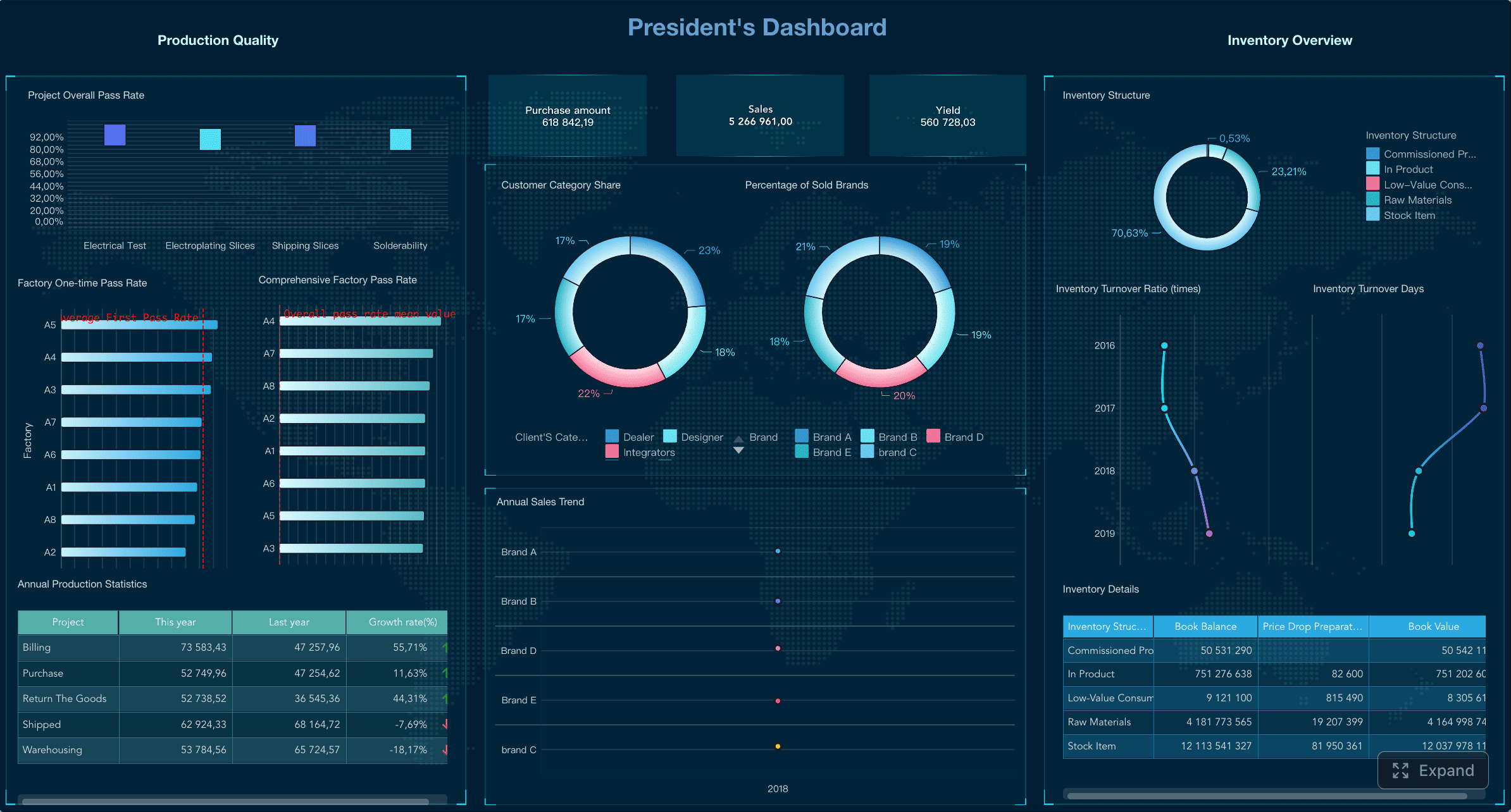
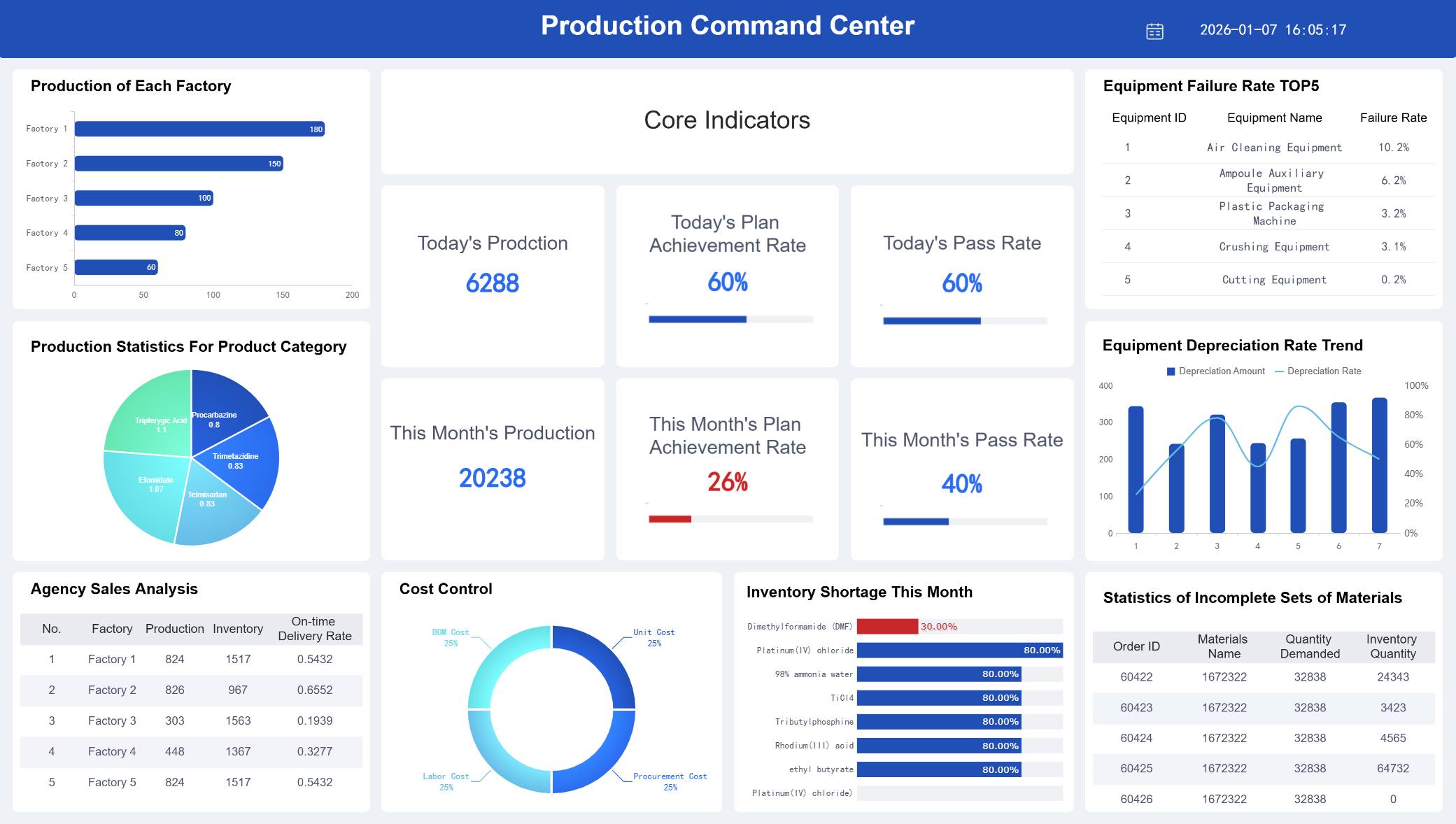
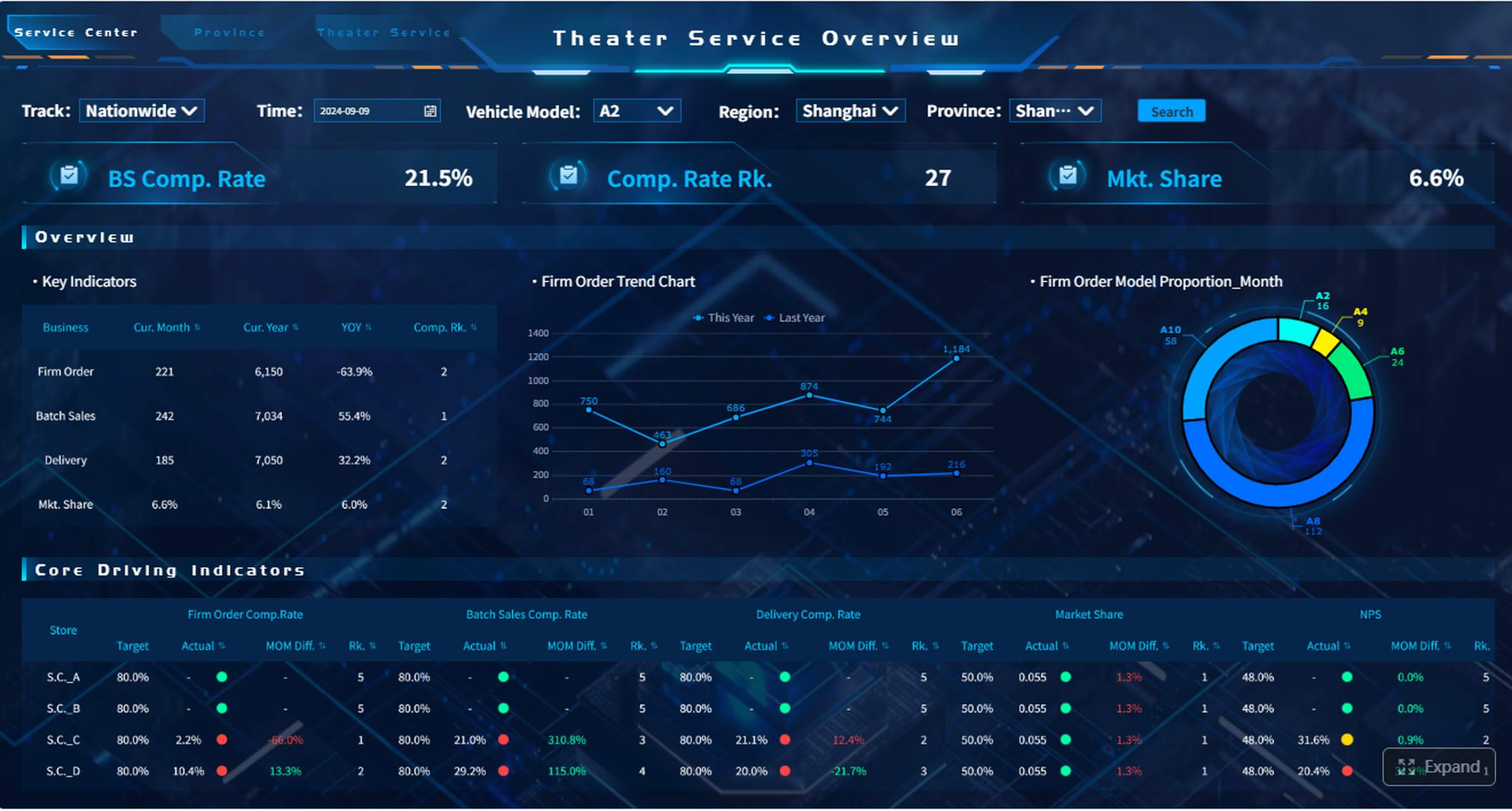
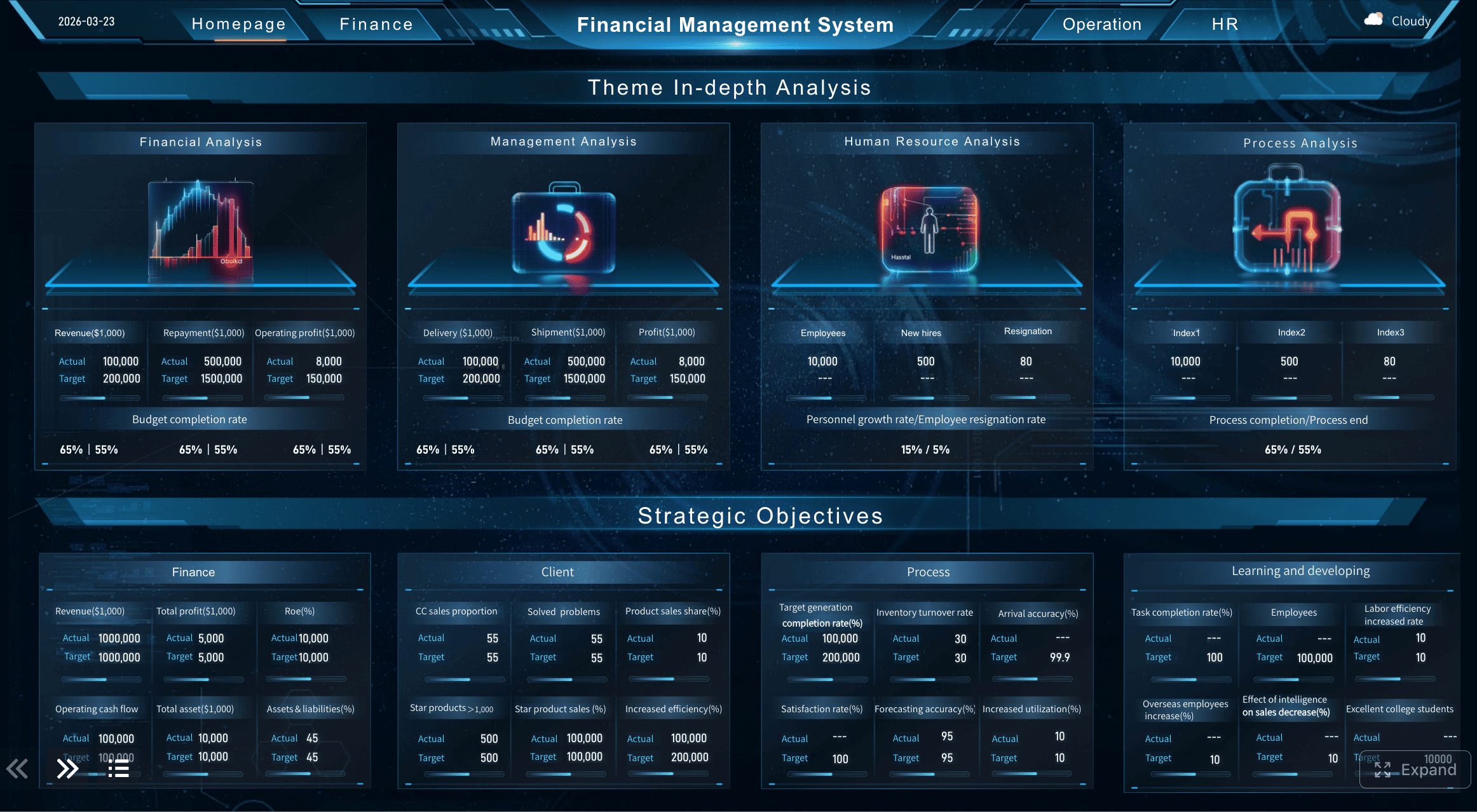
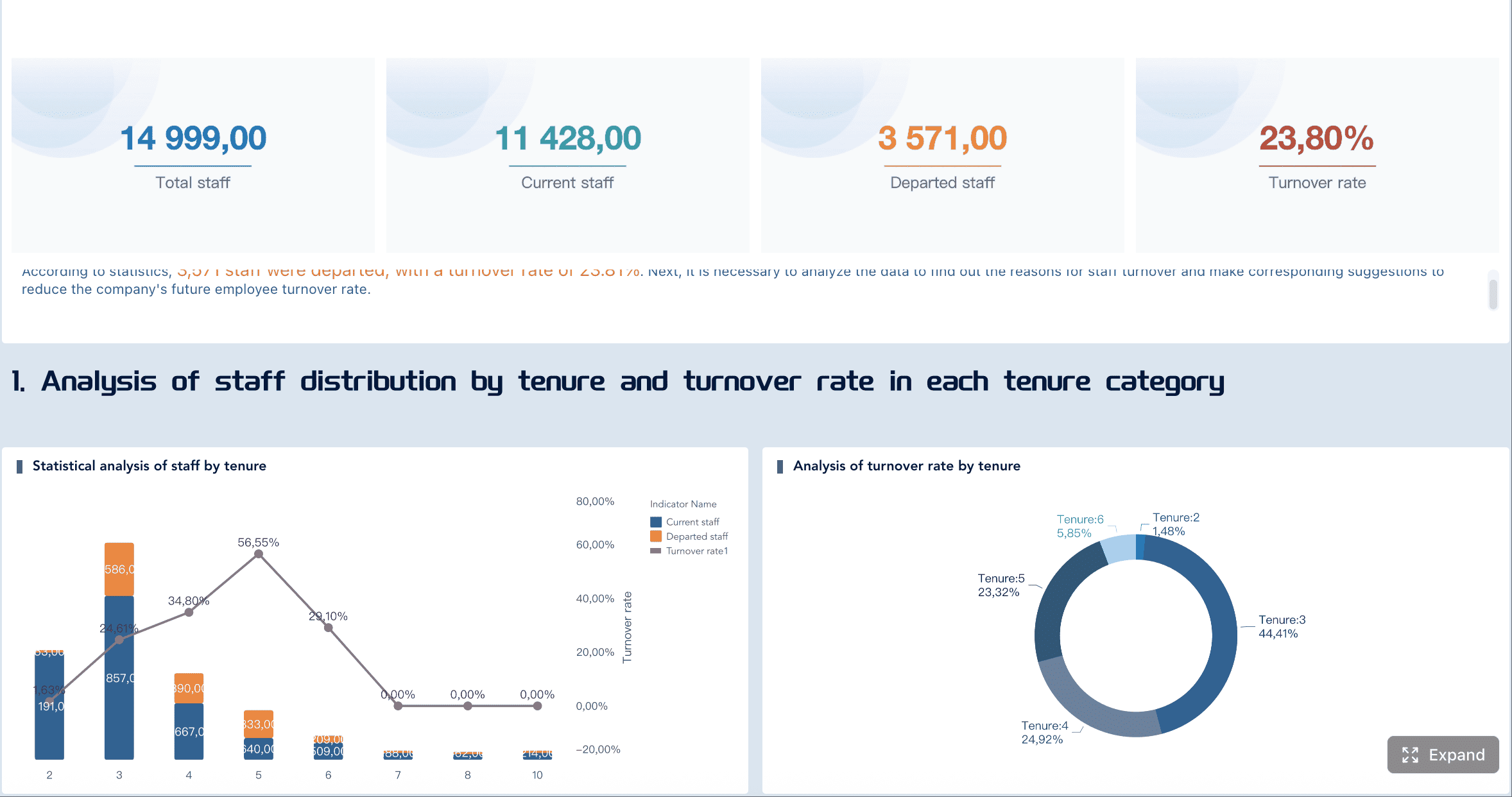
All dashboards in this article are built with FineBI.
The Core Functions of Business Management in Real Companies
Strategy and goal setting
Every business needs direction. One of the core functions of business management is deciding what the organization should focus on and what success looks like.
This includes:
Defining short-term and long-term objectives
Identifying target markets or customer segments
Prioritizing investments
Evaluating competitive pressures
Adjusting plans when market conditions change
For example, a manufacturer may decide its top priority is margin improvement rather than aggressive expansion. A software company may focus on customer retention instead of new acquisition. A retailer may shift resources toward e-commerce because store traffic is declining.
Managers help translate these choices into actionable goals. That often means turning broad strategy into specific targets for sales, operations, hiring, service quality, or profitability.
Strong managers also know that strategy is not static. They monitor demand, competition, regulation, and customer behavior. When conditions change, they revisit assumptions and reallocate effort.
Operations is where business plans become reality. It covers how work gets done, how products are delivered, and how customers experience the company.
In real companies, operational management includes:
Designing workflows
Assigning responsibilities
Managing inventory or capacity
Maintaining quality standards
Coordinating across departments
Reducing delays, errors, and waste
For example, a restaurant manager must coordinate staffing, supply orders, kitchen timing, and guest service. A logistics manager must balance delivery speed, route efficiency, and transportation cost. A SaaS operations lead may focus on onboarding, support response times, and service reliability.
This is why business management is closely tied to process discipline. Even a strong strategy will fail if execution is inconsistent.
As businesses scale, visibility becomes a major challenge. Leaders need to know where bottlenecks are forming, which processes are underperforming, and where service levels are slipping. This is where BI tools such as FineBI can be useful, helping managers turn operational data into dashboards that support faster decisions and clearer accountability.
No business management system is complete without financial control. Managers do not need to be accountants to lead well, but they do need to understand how money flows through the business.
Core financial responsibilities often include:
Budgeting
Forecasting revenue and expenses
Managing cash flow
Monitoring profit margins
Supporting pricing decisions
Reviewing financial performance against plan
A business can grow in revenue and still struggle if it prices poorly, carries too much inventory, or collects cash too slowly. That is why finance is not just a back-office function. It is a management discipline.
Good managers ask practical questions such as:
Are we growing profitably?
Which products or services make money?
Where are costs increasing?
Do we have enough cash to support expansion?
Are teams spending in line with priorities?
Performance control also depends on measurement. Managers use indicators such as gross margin, operating expenses, customer acquisition cost, labor productivity, and cash conversion cycle to understand business health.
When these metrics are visible and reviewed regularly, decision-making improves. When they are hidden or delayed, problems tend to grow before leaders can act.
Business management is not just about plans and numbers. It is also about people.
Managers influence how teams are hired, trained, supported, and held accountable. They shape the daily work environment more than most corporate policies ever will.
This function includes:
Recruiting and onboarding
Defining roles and expectations
Coaching and training
Setting performance standards
Recognizing strong work
Managing conflict
Building team trust and accountability
Culture is often misunderstood as a slogan or value statement. In practice, culture is the pattern of behaviors a company rewards, tolerates, and repeats. Managers are the people who reinforce those patterns every day.
For example, a culture of accountability is built when expectations are clear, metrics are visible, and follow-through matters. A culture of innovation grows when teams can raise problems early and test improvements without fear. A culture of customer focus appears when managers connect internal work to external outcomes.
Poor management often creates the opposite: confusion, low morale, slow decisions, and talent turnover.
On a daily basis, business management is a constant cycle of evaluating information and making trade-offs.
Managers rarely decide between a clearly good option and a clearly bad one. More often, they weigh competing priorities such as:
Speed vs quality
Growth vs profitability
Standardization vs flexibility
Short-term output vs long-term capability
Customer demands vs resource constraints
Effective planning usually starts with available facts: sales data, customer feedback, staffing levels, production capacity, project status, and financial performance.
Then managers ask:
What problem are we solving?
What options do we have?
What are the likely risks?
What will this decision affect downstream?
What should happen now, and what can wait?
This is why business management depends heavily on decision quality, not just effort. Organizations move faster when managers can interpret data, set priorities, and act with reasonable confidence.
Organizing teams and resources
Once priorities are set, managers need to organize the work. That means putting the right people, budget, systems, and timelines behind the plan.
This usually includes:
Defining who owns what
Structuring workflows
Assigning resources
Coordinating handoffs between departments
Using tools for visibility and tracking
In smaller businesses, this may happen through simple check-ins and shared spreadsheets. In larger businesses, it often requires formal operating rhythms, project systems, and reporting structures.
The management challenge is not only assigning tasks. It is creating enough clarity that teams can move without constant escalation.
A well-organized business typically shows these traits:
Roles are understood
Priorities are documented
Deadlines are realistic
Cross-functional coordination is routine
Teams know where to find reliable data
This is another area where analytics platforms can add value. For example, FineBI can help departments standardize reporting views so operations, finance, and leadership are working from the same numbers instead of conflicting spreadsheets.
Leading and solving problems
Leadership in business management is practical. It is less about speeches and more about creating momentum.
Managers lead by:
Communicating expectations clearly
Following up consistently
Removing blockers
Helping teams resolve issues quickly
Making decisions when ambiguity is slowing progress
Every business encounters operational friction: missed deadlines, customer complaints, supplier delays, system errors, or resource shortages. Managers are expected to solve these issues without losing sight of larger goals.
Good problem-solving usually follows a simple pattern:
Identify the real issue
Separate symptoms from root causes
Involve the right people
Choose a workable solution
Track whether it actually improved the result
Weak managers often react only to visible symptoms. Strong managers improve the underlying system.
For example, if customer complaints rise, the answer may not be “work harder.” The root cause could be poor training, unclear service standards, inaccurate inventory data, or a flawed approval process.
Monitoring results and improving performance
Management does not stop after a decision is made. It requires follow-through.
This is where monitoring and continuous improvement come in. Managers review results, compare performance to expectations, gather feedback, and adjust the system.
Common tools include:
KPI dashboards
Weekly business reviews
Department scorecards
Customer satisfaction tracking
Employee performance reviews
Process audits
The goal is not measurement for its own sake. The goal is better decisions and better outcomes.
A simple performance loop looks like this:
Step
Management activity
Set target
Define expected result
Measure
Track performance with metrics
Review
Compare actual vs target
Diagnose
Find the cause of gaps
Improve
Adjust process, resources, or behavior
Over time, this discipline compounds. Businesses that improve steadily often outperform those that rely on occasional big initiatives.
Business administration vs. business management
People often use these terms interchangeably, but there is a meaningful difference.
Business administration usually focuses more on the structure, systems, and administrative coordination of the business. It often includes policy, compliance, reporting, and the efficient functioning of business processes across departments.
Business management is typically more focused on leadership, execution, decision-making, and performance improvement in day-to-day operations.
Administration, coordination, business support, functional oversight
Supervision, operations, team leadership, general management
In real companies, the line is not always strict. Many roles include elements of both. But if you are comparing career paths or academic programs, this distinction is useful.
The Importance of Enterprise Management Tools to Business Success
Unified Operational Visibility: Enterprise management tools consolidate fragmented functions such as project tracking, financial reporting, and resource planning into a single platform. This integration eliminates data silos and provides leaders with real-time, organization-wide visibility, enabling evidence-based decision-making rather than reliance on intuition or outdated reports.
Enhanced Efficiency and Cost Reduction: By automating routine workflows and streamlining cross-departmental coordination, these tools significantly reduce manual overhead and operational waste. Organizations consistently report lower operating costs and faster time-to-market as teams spend less time on administrative tasks and more time on value-creating activities.
Strategic Alignment and Accountability: These platforms ensure that every team member operates from shared metrics, deadlines, and strategic objectives. This centralized framework fosters accountability, keeps departments aligned with overarching business goals, and prevents miscommunication that can derail complex initiatives.
Agility and Resilience: In a rapidly changing market, enterprise management tools enable organizations to identify bottlenecks early, reallocate resources dynamically, and respond swiftly to disruptions. This agility transforms reactive operations into proactive strategy, building organizational resilience against uncertainty.
Scalable Growth Foundation: As businesses expand, manual processes become unsustainable. Enterprise management tools provide the standardized, data-driven infrastructure necessary to scale operations without proportional increases in complexity or cost, making them indispensable for sustainable long-term growth.
Business management can lead to a wide range of roles because every industry needs coordination, leadership, and performance oversight.
Common positions include:
Operations coordinator
Project coordinator
Team lead or supervisor
Office manager
Sales manager
Customer service manager
Business analyst
Finance support manager
General manager
Operations manager
These roles appear in many settings:
Small businesses
Retail and hospitality
Manufacturing
Logistics and supply chain
Healthcare organizations
Technology companies
Professional services
Nonprofits
Government agencies
The appeal of business management is its portability. The core skills apply across sectors, even when the products, regulations, and customer models differ.
Skills employers look for
Employers usually hire business management talent for one reason: they need people who can turn complexity into action.
The most valued skills include:
Communication: explaining priorities clearly, listening well, and aligning teams
Problem-solving: identifying causes, testing solutions, and improving outcomes
Analytical thinking: interpreting data, spotting patterns, and making sound decisions
Leadership: motivating others, building trust, and driving accountability
Adaptability: adjusting to changing priorities, systems, and market conditions
Other highly practical skills include:
Time management
Conflict resolution
Budget awareness
Process improvement
Basic financial literacy
Data and dashboard fluency
Today, employers increasingly expect managers to work comfortably with reporting tools and operational metrics. Being able to read dashboards, identify exceptions, and communicate insights is becoming a baseline capability rather than a specialist skill.
What to expect from business management careers
Business management careers can offer strong growth potential, but they are rarely passive roles. Expectations are usually high because managers influence output, efficiency, and team performance directly.
What professionals can typically expect:
Fast exposure to real business problems
Cross-functional collaboration
Responsibility for deadlines, people, or budgets
Pressure to make decisions with incomplete information
Opportunities to grow into broader leadership roles
Work environments vary widely. A frontline operations manager in a warehouse will have a very different day from a project lead in a software company or a district manager in retail. Local job markets also matter. In some regions, manufacturing and logistics may dominate. In others, healthcare, education, or professional services create more management demand.
For career growth, practical experience matters as much as formal education. Employers value people who can show measurable impact: lower costs, improved service, stronger team results, or better process performance.
Why Business Management Matters for Long-Term Success
Strong business management creates the operating discipline that long-term success requires.
It supports growth because teams can scale work without constant chaos. It improves efficiency because resources are allocated more carefully. It increases resilience because the business can respond faster when markets shift, costs rise, or customer needs change. And it strengthens customer satisfaction because internal execution becomes more reliable.
Poor management, on the other hand, usually shows up in familiar ways:
Too many priorities at once
Unclear ownership
Slow decisions
Weak cost control
Inconsistent service
High employee turnover
Reporting that arrives too late to be useful
Better systems reduce these risks. Clear operating reviews, visible KPIs, defined roles, and consistent management routines help leaders move from reactive behavior to controlled execution.
Managers can explain performance with data, not guesswork
Budgets are linked to strategic goals
Problems are escalated early, not hidden
Cross-functional work moves with fewer delays
Employees know what is expected of them
Leaders review results regularly and act on what they learn
Customers experience more consistency over time
In short, business management is what makes a business dependable, scalable, and improvable. Strategy may define ambition, but management determines whether that ambition becomes real.
FAQs
Business management is the process of planning, organizing, leading, and controlling a company so it can achieve its goals. It connects strategy, operations, finance, and people to turn plans into measurable results.
Good business management helps a company stay focused, use resources wisely, and keep teams aligned. It also reduces the risk of poor execution, weak financial control, and unclear priorities.
The core functions of business management are planning, organizing, leading, and controlling. Together, these functions help managers set direction, coordinate work, monitor performance, and improve outcomes over time.
Business management usually focuses more on leadership, decision-making, and guiding day-to-day execution toward business goals. Business administration is often broader or more process-oriented, covering how business functions are structured and supported.
Strong business managers need leadership, communication, problem-solving, financial awareness, and decision-making skills. They also need to manage priorities well and adapt when business conditions change.
Product Trial
FineReport
Pixel-perfect reports · Interactive dashboards · Easy data entry · Digital twins