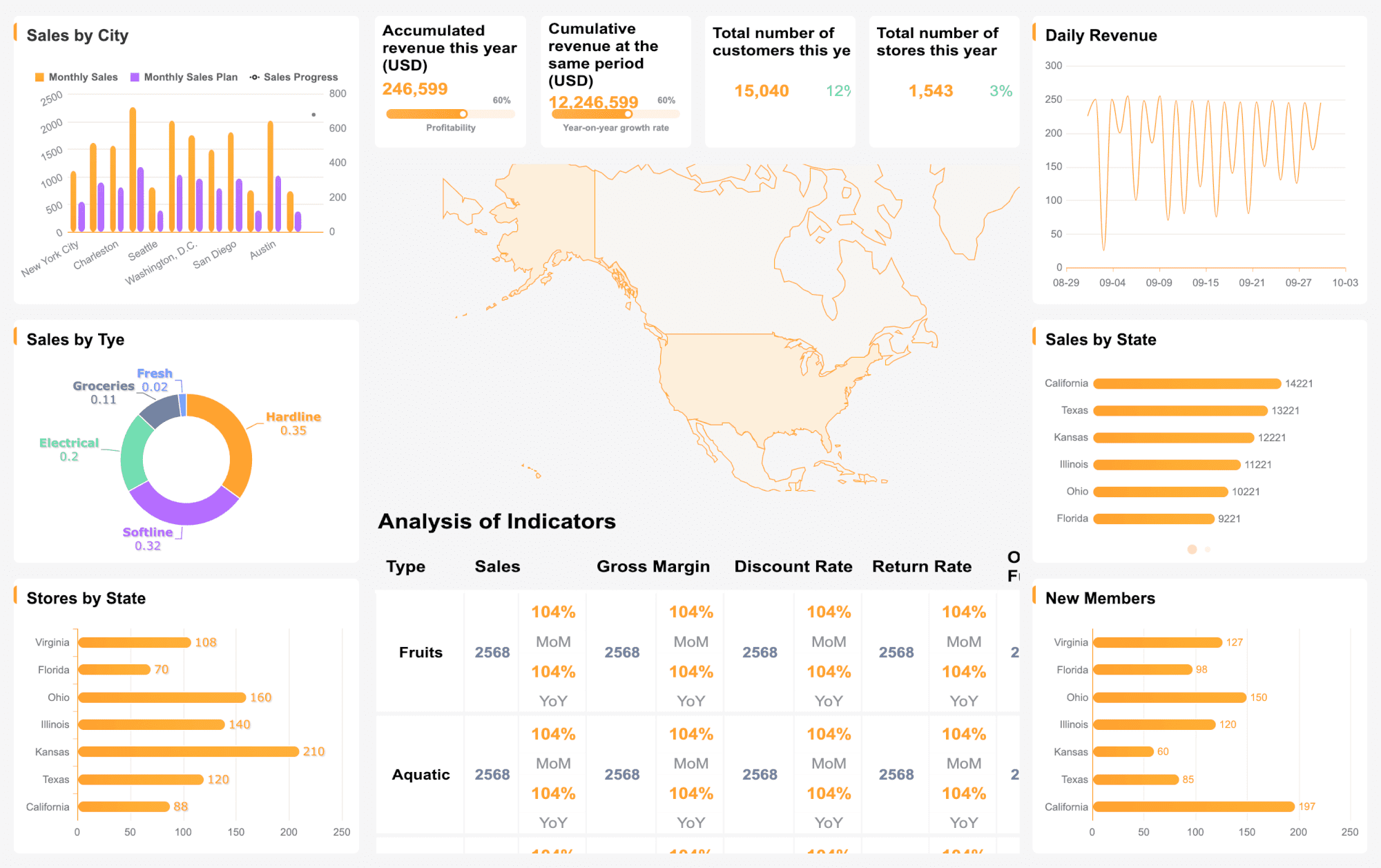
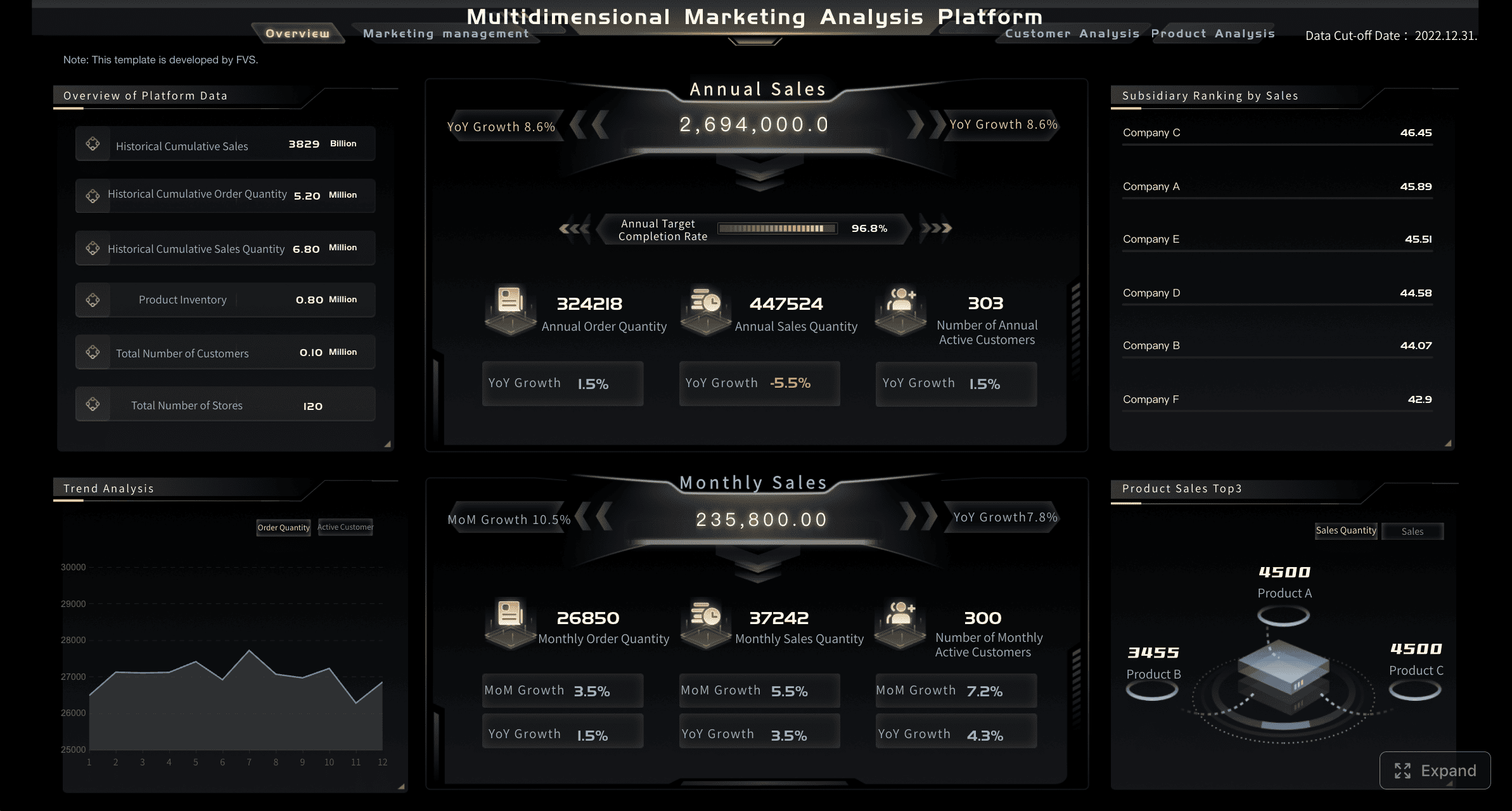
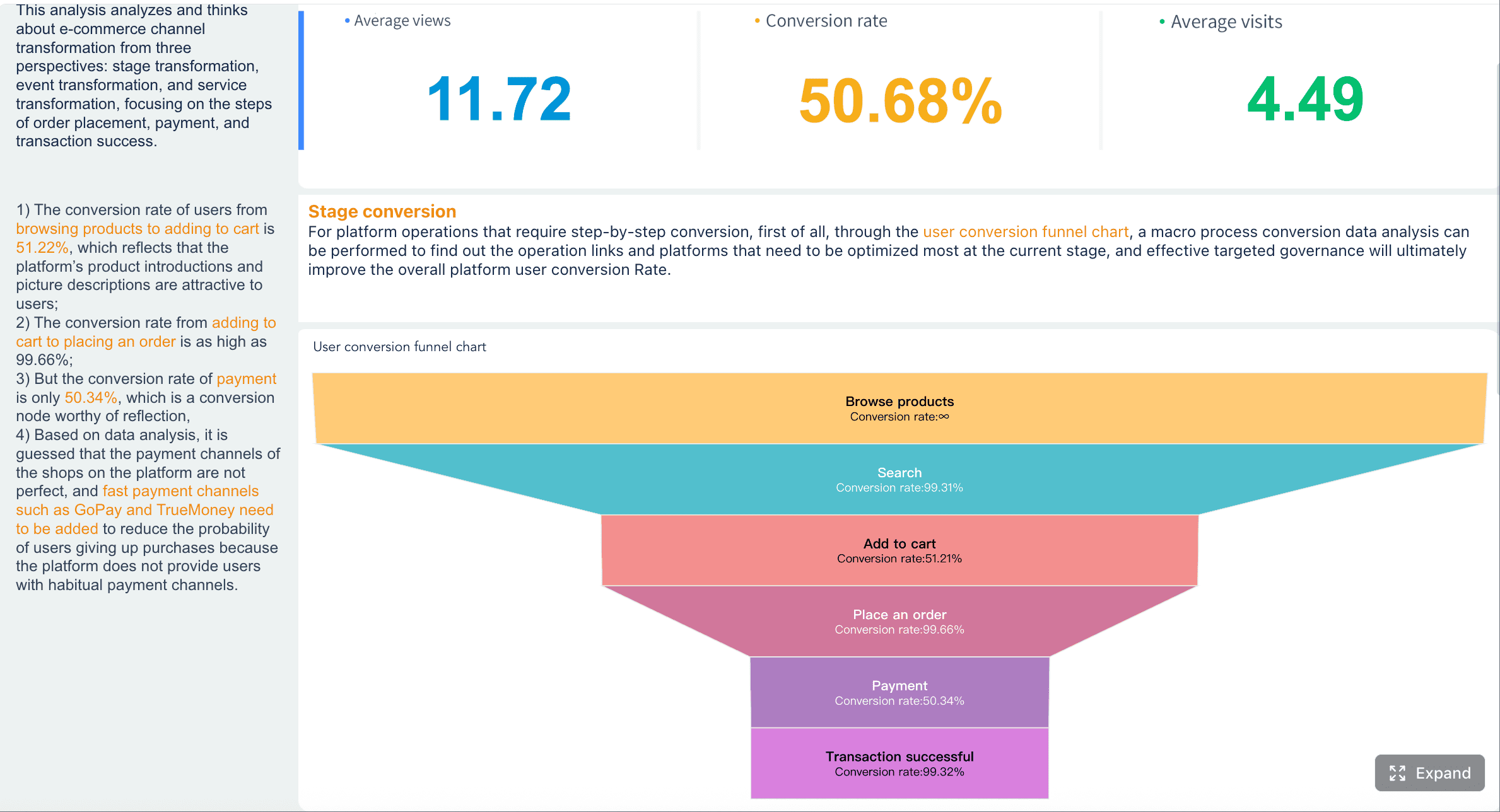
A monthly marketing report for executives is not a channel recap. It is a decision tool that shows whether marketing is contributing to pipeline, revenue, growth efficiency, and strategic priorities. For CMOs, operations directors, demand generation leaders, and marketing analysts, the challenge is rarely a lack of data. The real problem is turning fragmented platform metrics into a concise, trusted narrative that leadership can scan in minutes and act on immediately.
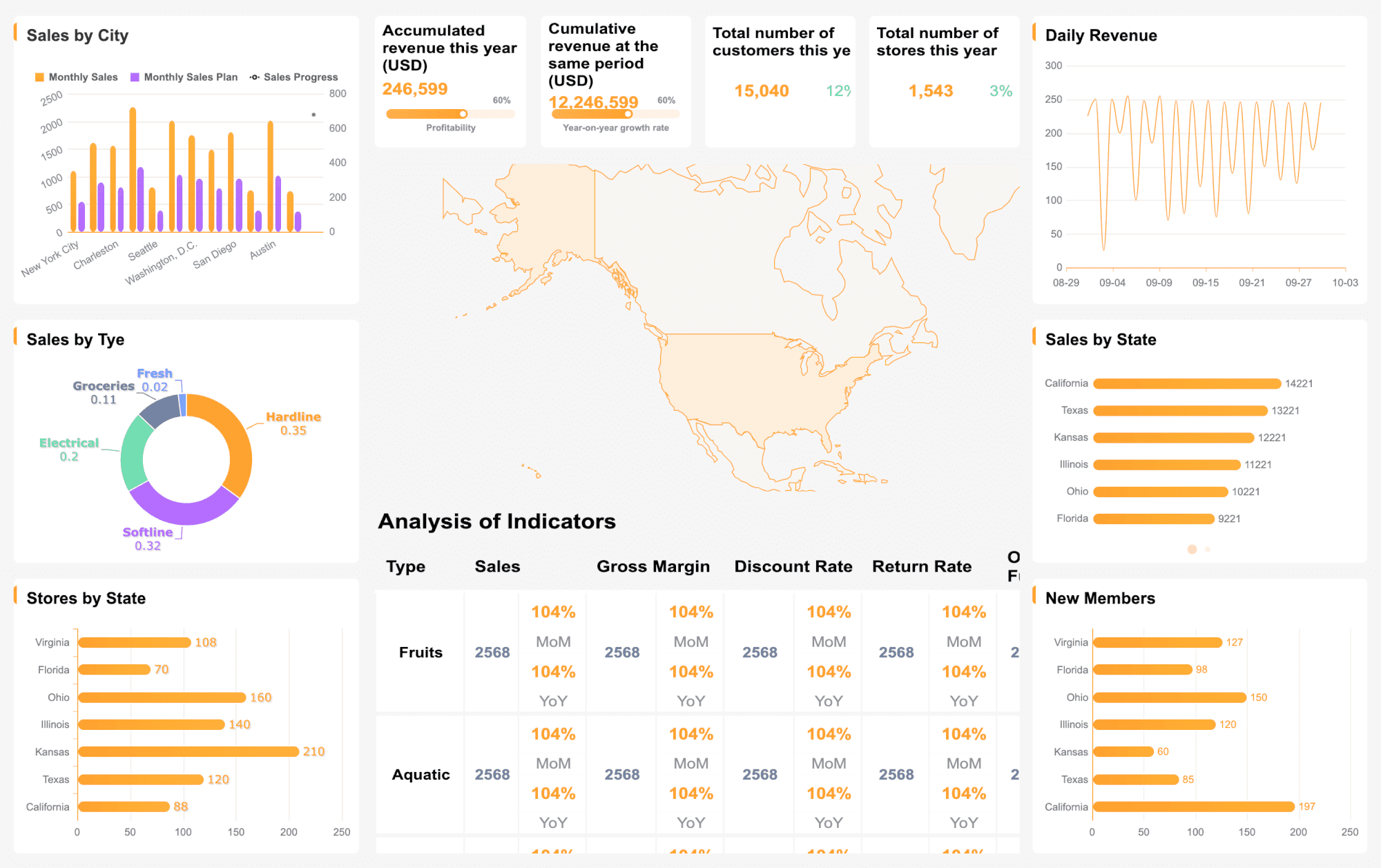
All reports in this article are built with FineReport
What executives need from a monthly marketing report
A strong monthly marketing report answers four executive questions fast:
What business impact did marketing create this month?
What changed versus last month or plan?
What risks or opportunities need attention now?
What decisions should leadership make next?
That is why an executive report differs from a channel update or campaign summary. A channel report may dive into click-through rates, creative performance, or keyword trends. An executive report should instead connect those activities to outcomes such as qualified pipeline, customer acquisition, efficiency, and forecast confidence.
Senior leaders care less about isolated metrics and more about direction and implications. They want to know whether marketing is improving the business, where momentum is building, where conversion is breaking, and what action should follow.
An executive-ready report should be:
Brief: ideally one summary page plus supporting detail
Clear: no jargon-heavy metric dumps
Comparative: always show month-over-month, quarter-to-date, or target variance
Decision-ready: every section should lead to an implication or action
Consistent: same definitions, same cadence, same logic every month
If your report forces leaders to interpret raw numbers on their own, it is not finished.
The core KPIs to include in a marketing report
The best KPI set depends on your business model, growth stage, and leadership priorities. But every executive marketing report should include a small, disciplined set of performance indicators that tie marketing to business outcomes.
Key Metrics (KPIs) of marketing report
Pipeline Contribution: The value of sales pipeline sourced or influenced by marketing during the reporting period.
Revenue Influence: Revenue associated with deals where marketing played a measurable role in acquisition or progression.
Customer Acquisition Cost (CAC): Total marketing and acquisition spend divided by new customers acquired.
Marketing ROI: Return generated from marketing investment relative to cost.
Lead Volume: Total number of leads captured in the month, usually segmented by source and quality.
Lead-to-MQL Conversion Rate: Percentage of raw leads that meet qualification thresholds.
MQL-to-SQL Conversion Rate: Measures whether marketing is passing high-quality leads to sales.
Opportunity Creation Rate: Percentage of qualified leads that become pipeline opportunities.
Stage-to-Stage Funnel Conversion: Conversion performance between funnel stages to identify friction points.
Cost Per Lead (CPL): Spend required to generate each lead.
Website Traffic Quality: Sessions tied to engaged visits, conversions, or target accounts rather than vanity traffic alone.
Engagement Rate: Interaction depth across key channels such as email, content, or social.
Share of Voice: Comparative brand visibility in your market or category.
Customer Retention Rate: Percentage of existing customers retained over a given period.
Lifecycle Performance: Performance by customer stage, from acquisition to expansion and retention.
Business and revenue impact metrics
Executives want marketing translated into financial language. That means starting with metrics that show contribution to growth.
Focus on:
Pipeline contribution
Revenue influence
New customer acquisition
Marketing-sourced or marketing-influenced bookings
Return on marketing investment
In B2B environments, pipeline often matters more than top-of-funnel volume. In B2C or ecommerce models, revenue, CAC, and repeat purchase behavior may take priority.
A practical consultant rule: if a metric cannot support a budget, resourcing, or strategy decision, it probably does not belong in the executive summary.
Demand generation and funnel health metrics
Once business impact is clear, leadership needs visibility into whether the growth engine is healthy.
Core funnel metrics include:
Lead volume by source
Lead quality mix
Cost per lead
MQL volume and rate
Opportunity creation
Lead-to-opportunity conversion
Stage-to-stage conversion rates
Sales cycle progression where marketing influence is material
These metrics help executives distinguish between two very different situations:
traffic is rising but lead quality is falling
spend is rising but opportunity creation is improving
Those are not the same story, and they should not trigger the same decision.
Brand, engagement, and retention indicators
Not every executive priority is short-term pipeline. In many organizations, brand strength and customer retention are equally important leading indicators.
Include measures such as:
Traffic quality, not just traffic volume
Engagement trend by audience or content type
Share of voice or branded search trend
Retention and repeat engagement
Expansion or lifecycle performance for existing customers
These metrics are especially important when leadership is asking questions like:
Are we gaining market attention?
Are we attracting the right audience?
Is our brand building future demand?
Are customers staying engaged after acquisition?
How to choose KPIs by goal, team, and reporting audience
The mistake most teams make is using one KPI template for every audience. Executive reporting should flex based on the business context.
Choose KPIs based on three filters:
1. Business goal
If the goal is aggressive growth, prioritize:
Pipeline contribution
Opportunity volume
CAC
Conversion velocity
If the goal is efficiency, prioritize:
ROI
CPL
CAC payback
Channel cost efficiency
If the goal is retention or expansion, prioritize:
Retention rate
Expansion revenue
Lifecycle conversion
Customer engagement
2. Team responsibility
A demand gen leader may need deeper funnel metrics. A brand leader may need awareness and share-of-voice indicators. A CMO may want both summarized into one operating view.
3. Reporting audience
Boards and C-level leaders want fewer metrics and more business impact. Functional executives may want one level deeper. Do not overload the top layer.
A useful benchmark is this: the executive summary should usually contain 5 to 9 core KPIs, not 25.
How to structure the marketing report so leaders can scan it fast
Good structure is what turns a pile of metrics into an executive marketing report people actually read. The goal is simple: make the story obvious.
Start with an executive summary
Lead with the outcomes, not the methodology.
Your executive summary should include:
Top 3 results from the month
Biggest change from prior month
Main risks or underperformance areas
2 to 3 recommendations
Any decisions needed from leadership
A good format is:
What happened
Why it happened
What to do next
This section should stand on its own. If an executive reads only this page, they should still understand the month.
Organize findings by goal, channel, or funnel stage
After the summary, structure the report in a way that supports strategic review.
The most effective reporting structures are usually one of these:
By business goal: pipeline growth, efficiency, retention, brand
By funnel stage: awareness, acquisition, conversion, expansion
By channel grouped under objectives: paid, organic, email, events, partner, content
Avoid a disconnected list of platform screenshots. Executives do not think in dashboards from separate tools. They think in business goals.
A clean report structure might look like this:
Executive summary
Business impact
Funnel performance
Channel drivers
Risks and actions
Appendix or detailed breakdowns
Add context, benchmarks, and visual cues
Numbers without comparison are weak. Every important metric should be paired with context such as:
Month-over-month change
Quarter-to-date trend
Target or budget variance
Prior-year benchmark
Threshold-based status markers
Visual cues improve speed of interpretation. Use:
Trend lines
variance arrows
target bars
red/amber/green indicators
short callout notes for anomalies
The commentary matters as much as the chart. A brief note such as “CPL increased 18% due to paid social audience expansion, but opportunity rate held steady” is more useful than a chart left unexplained.
End with actions, risks, and decisions needed
The report should close with operational clarity.
Include:
Actions marketing will take next month
Risks leadership should monitor
Dependencies on sales, product, budget, or data teams
Decisions required from executives
This creates accountability and makes the report a management tool rather than a historical archive.
A simple closing block works well:
Action: Reallocate 12% of paid budget toward highest-converting search campaigns
Risk: Webinar lead quality declined for the second month
Decision needed: Approve ABM test for two target segments next month
A step-by-step workflow to build the marketing report each month
A reliable monthly marketing report depends on process discipline. Without a repeatable workflow, reporting quality drops, trust erodes, and teams spend too much time reconciling numbers.
Gather data from the right sources
Start by defining the systems of record for each KPI.
Typical sources include:
Web analytics platforms
CRM systems
Marketing automation platforms
Ad channels
Social platforms
Ecommerce or product analytics systems
Existing BI dashboards
The rule is simple: one KPI, one approved source of truth. If pipeline comes from CRM, do not let ad platform estimates override it in executive reporting.
Validate, normalize, and consolidate performance data
This is where many reports fail. Before analysis, check that data is comparable and trustworthy.
Validate:
Date ranges
Attribution window consistency
Tracking tags and campaign naming
Duplicate lead handling
Currency and spend normalization
Funnel stage definitions
Source/medium mapping
Standardizing metric definitions is essential. “Leads,” “qualified leads,” and “marketing-sourced opportunities” must mean the same thing every month.
Turn data into insights executives can use
This is the real value-add. Do not just report that conversion fell. Explain the operational meaning.
Use this sequence:
State the metric change
Identify the likely cause
Explain the business implication
Recommend the next action
For example:
Metric change: MQL volume rose 14% month over month
Cause: Content syndication and paid search drove more top-funnel form fills
Implication: Pipeline coverage improved, but sales acceptance remained flat
Recommended action: Tighten qualification criteria and segment routing by intent tier
This approach is what makes a monthly marketing report useful to executives.
Review, approve, and distribute on a set cadence
Create a formal monthly reporting rhythm.
A proven process looks like this:
Data refresh on day 1 or 2 after month close
Analyst validation and commentary draft
Functional leader review
Executive summary approval
Scheduled distribution to stakeholders
Archive final version for historical comparison
This cadence reduces last-minute data disputes and builds confidence in the report.
How to automate marketing reporting without losing insight quality
Automation should eliminate repetitive assembly work, not remove strategic thinking. The goal is to spend less time collecting numbers and more time explaining what they mean.
These are low-value manual tasks that consume analyst time and introduce errors.
Build a simple automation workflow
A pragmatic automation workflow usually looks like this:
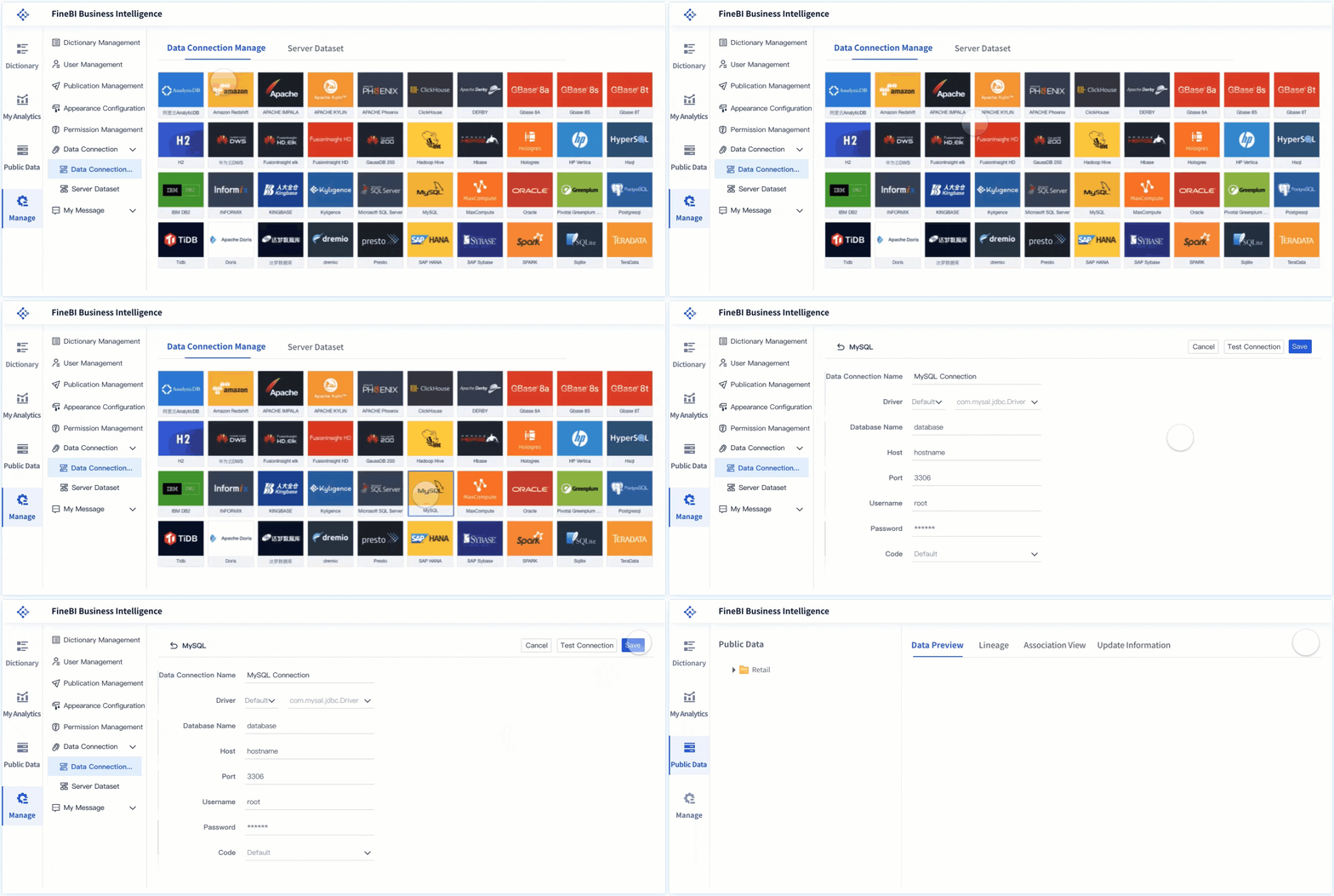
Connect data sources such as CRM, analytics, ad platforms, and spreadsheets
Clean and standardize data so definitions stay consistent
Map KPIs into a report model aligned to executive reporting logic
Populate dashboards and templates automatically
Schedule report delivery by email, portal, or mobile access
Add human commentary before final distribution
This is where enterprise reporting platforms stand out. They reduce the manual burden while preserving control, governance, and presentation quality.
Common reporting mistakes to avoid
Even well-intentioned teams undermine reporting value with avoidable mistakes.
Watch for these issues:
Metric overload: too many numbers, no clear priorities
Inconsistent definitions: KPI logic changes from month to month
Vanity metrics: high impressions, low business value
Missing narrative: data is presented without interpretation
No benchmark context: impossible to judge whether performance is good or bad
Manual spreadsheet stitching: high risk of human error
Late delivery: leaders get the report after decisions have already been made
The best executive reports are stable, comparable, and intentionally selective.
Templates and examples to speed up production
Templates are not just time-savers. They enforce discipline.
Use a reusable monthly structure with fixed sections for:
Executive summary
KPI scorecard
Revenue and pipeline impact
Funnel health
Channel performance drivers
Risks, actions, and decisions needed
Reusable layouts help teams compare months consistently and shorten review cycles.
Best practices for producing an executive marketing report that earns trust
If you want your marketing report to influence budget and strategy, apply these consultant-level practices.
1. Limit the executive layer to decision-grade metrics
Do not confuse completeness with usefulness. Show the few metrics that best represent business performance, then provide drill-downs only where needed.
2. Align every KPI to a business owner and definition
For each key metric, define:
calculation logic
source system
refresh frequency
owner
This creates a common data language and prevents recurring debate during review meetings.
3. Use commentary to explain variance, not to restate the chart
Strong comment: “Pipeline contribution increased 9% due to stronger mid-funnel conversion from partner campaigns; this offsets rising paid social CPL and supports next quarter coverage.”
4. Design for scan speed
Executives scan before they read. Use KPI cards, concise labels, color cues, and short annotations. Avoid dense tables on the first page.
5. Build a monthly reporting playbook
Document the workflow, source logic, QA steps, and distribution calendar. This lowers key-person dependency and improves consistency across months.
connect data from CRM, analytics tools, ad platforms, APIs, Excel, and enterprise systems
standardize reporting logic across departments
build executive dashboards with interactive charts and drill-down capability
generate recurring monthly reports automatically using templates
schedule daily, weekly, or monthly report delivery
export reports in formats executives already use
manage permissions with enterprise-grade control
This matters because executive reporting is not only about visualization. It is about operational reliability. FineReport helps marketing, analytics, and operations teams reduce manual work, avoid low-level copy-paste errors, and deliver consistent reports on schedule.
It also supports a more scalable reporting model. As your organization grows, you can move from one-off spreadsheets to a governed system with reusable dashboards, automated push reporting, mobile access, and flexible report design that fits leadership expectations.
In practical terms, that means your team spends less time assembling charts and more time driving strategy.
Final takeaway of marketing report
A high-performing monthly marketing report should do three things well:
show business impact clearly
surface the right KPIs with context
turn performance data into actions and decisions
If you get the structure and workflow right, executives stop seeing reporting as a formality and start using it as a management tool.
And if you want to scale that process without sacrificing accuracy or insight quality, automation is the next logical step. FineReport gives enterprise teams a faster way to standardize metrics, build executive-ready dashboards, and automate monthly reporting from end to end.
Get Ready-to-Use Dashboard Templates in Fine Gallery
It should focus on business impact, key KPI trends, major risks or opportunities, and recommended next actions. The best format is usually a short executive summary supported by a few clear visuals and benchmark comparisons.
The most important KPIs are usually pipeline contribution, revenue influence, customer acquisition cost, marketing ROI, and core funnel conversion rates. The exact mix should match your business model and leadership priorities.
A dashboard mainly shows current performance data, while an executive report explains what changed, why it matters, and what decisions should follow. Reports are more narrative and decision-oriented than real-time monitoring tools.
Monthly is the most common cadence because it gives enough data to spot trends without creating noise. Some teams also use weekly dashboards for active monitoring and quarterly reviews for broader strategy decisions.
Teams can connect data from ad platforms, CRM systems, web analytics, and marketing tools into one reporting layer, then standardize metrics and refresh dashboards automatically. Platforms like FineReport help reduce manual spreadsheet work and make reporting more consistent.
Product Trial
FineReport
Pixel-perfect reports · Interactive dashboards · Easy data entry · Digital twins