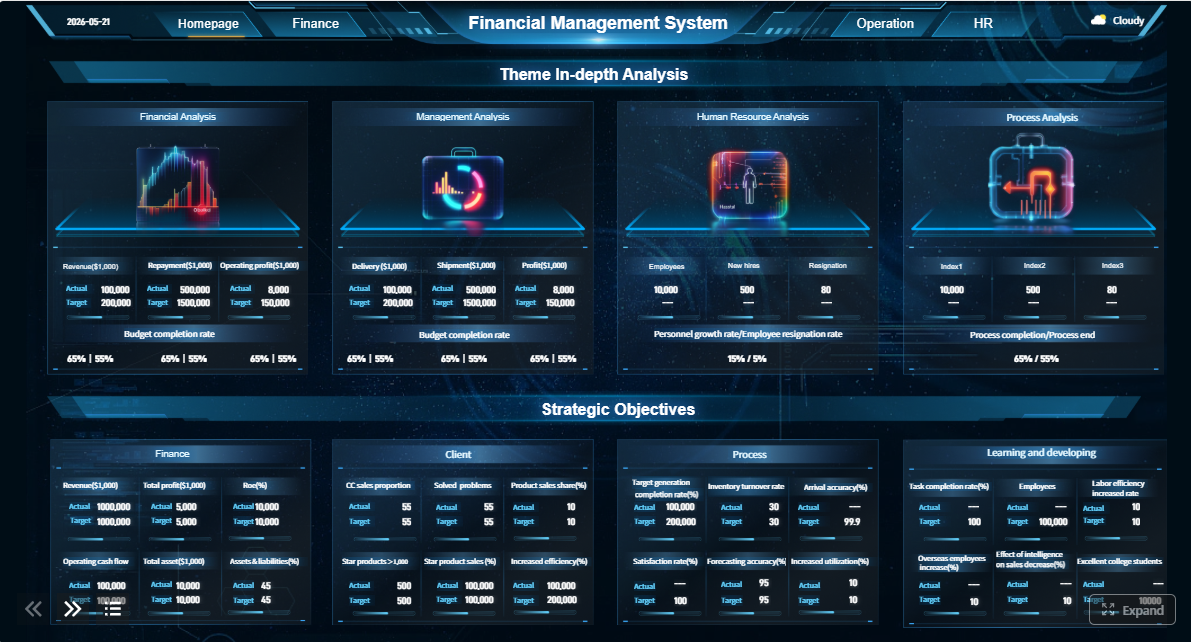
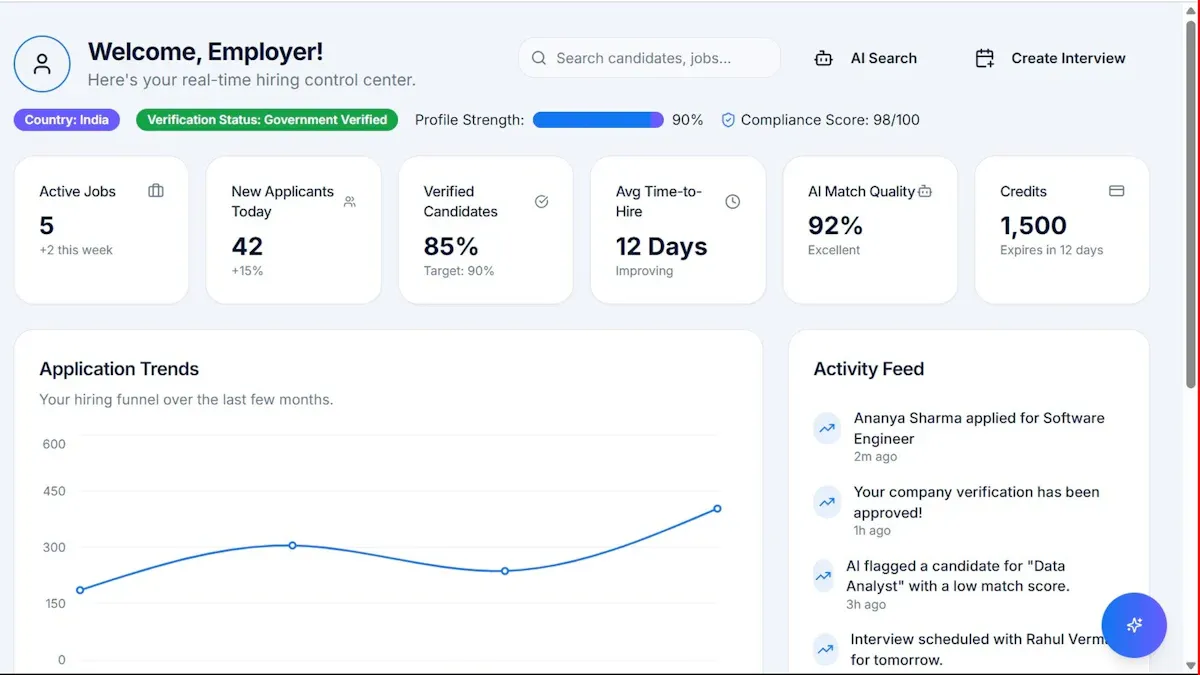
Finance reporting is only useful when managers can trust it, read it quickly, and act on it. In many companies, that still does not happen. Finance teams spend days reconciling numbers, building spreadsheet packs, rewriting commentary, and chasing business owners for explanations. By the time the report is ready, the decision window has already narrowed.
A stronger approach is to combine a reliable reporting foundation with an AI assistant layer. With FineReport + Dora, teams can ask for a report summary in chat, generate structured narratives from trusted report assets, receive scheduled briefings, and push exceptions to the right owner. That turns finance reporting from a static output into a governed, repeatable management workflow.
Click To Try The Dashboard
All reports in this article are built with FineReport
Finance reporting for managers: what it is and why it matters
In a management context, finance reporting is the structured process of turning accounting and operating data into reports that support decisions. It is broader than bookkeeping, more practical than compliance filing, and more repeatable than ad hoc analysis.
Bookkeeping records transactions. Compliance reporting satisfies statutory or regulatory requirements. Ad hoc analysis answers one-off questions. Management finance reporting sits in the middle: it provides recurring visibility into performance, risk, and operating drivers so leaders can make better decisions on cash, margin, hiring, pricing, and investment.
That distinction matters because managers do not just need “the numbers.” They need trusted numbers in a format that supports action.
External financial statements vs. internal management reports
Managers often use both, but they serve different purposes.
External financial statements are standardized, controlled, and primarily designed for shareholders, lenders, regulators, and auditors.
Internal management reports are designed for decision-making inside the business. They can include more operational segmentation, variance explanations, forward-looking indicators, and accountability views.
A monthly board pack, a CFO cash dashboard, a business unit margin report, and a departmental expense watchlist are all examples of management-oriented finance reporting. They are not replacements for statutory statements, but they are often more directly useful in running the business.
Why trusted finance reporting matters
When finance reporting is reliable, leaders can:
spot margin deterioration before it becomes a quarterly surprise
identify cash pressure early and adjust working capital actions
evaluate hiring plans against actual cost absorption
compare pricing changes to realized profitability
isolate unusual expenses and escalate ownership quickly
When reporting is inconsistent or late, managers start building shadow spreadsheets, disputing definitions, or delaying decisions. That destroys confidence and slows the business.
Build a trusted reporting foundation before designing KPI packs
Before choosing chart styles or monthly pack layouts, companies need to fix the reporting foundation. This is where many finance reporting programs fail. The KPI pack may look polished, but if the source logic, ownership, and controls are weak, no one will trust the result.
FineReport plays a critical role here by helping teams build formatted reports, management packs, operational cockpits, and reporting workflows on top of governed data connections and templates.
The first step is to define where finance reporting data comes from and who owns each piece of it.
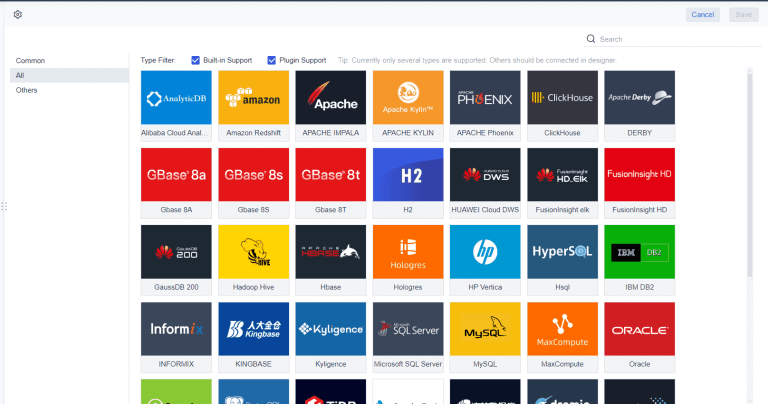
Common source systems include:
ERP and general ledger
accounts payable and receivable systems
payroll and HR systems
CRM and order management systems
inventory, procurement, or manufacturing systems
budgeting and planning tools
For each report, define:
primary source systems
report owner
reviewer or approver
cutoff rules
refresh timing
version control process
exception handling process
This is also the stage where finance must lock down metric definitions. A management team cannot act effectively if revenue means one thing in the sales report and another in the finance pack.
Core metric definitions to standardize
Revenue Definition: Recognized revenue based on approved accounting and reporting rules. Business value: Supports growth tracking, pricing analysis, and business unit performance review. AI use:Dora can explain period changes, summarize segment variance, and include revenue highlights in a scheduled monthly briefing.
Gross margin Definition: Revenue minus direct cost of goods sold or service delivery costs, based on agreed reporting rules. Business value: Helps managers understand profitability quality, not just top-line growth. AI use:Dora can flag margin compression, compare units or product lines, and generate chart-based explanations for review meetings.
Operating expense Definition: Selling, general, administrative, and other operating costs classified under the company’s internal reporting structure. Business value: Supports cost control, hiring discipline, and budget accountability. AI use:Dora can highlight overspend areas, summarize major movements, and route exception alerts to department owners.
Headcount Definition: Active employee count based on an approved HR snapshot rule, with clear treatment for contractors, leave, and transfers. Business value: Connects labor cost to hiring plans and capacity decisions. AI use:Dora can explain labor cost changes alongside headcount movement in management commentary.
Cash metrics Definition: Agreed measures such as cash balance, operating cash flow, free cash flow, days sales outstanding, or runway. Business value: Gives leadership early visibility into liquidity and working capital risk. AI use:Dora can produce a cash-focused executive briefing and push alerts when thresholds or deterioration rules are triggered.
Improve accuracy, consistency, and auditability
A trusted finance reporting process depends on controls, not just dashboards.
Key practices include:
reconciliations between subledgers and the general ledger
variance checks against prior periods, budgets, and forecasts
close checklists and review sign-offs
documented adjustment logic
commentary on material judgments and assumptions
clear handling for late entries and restatements
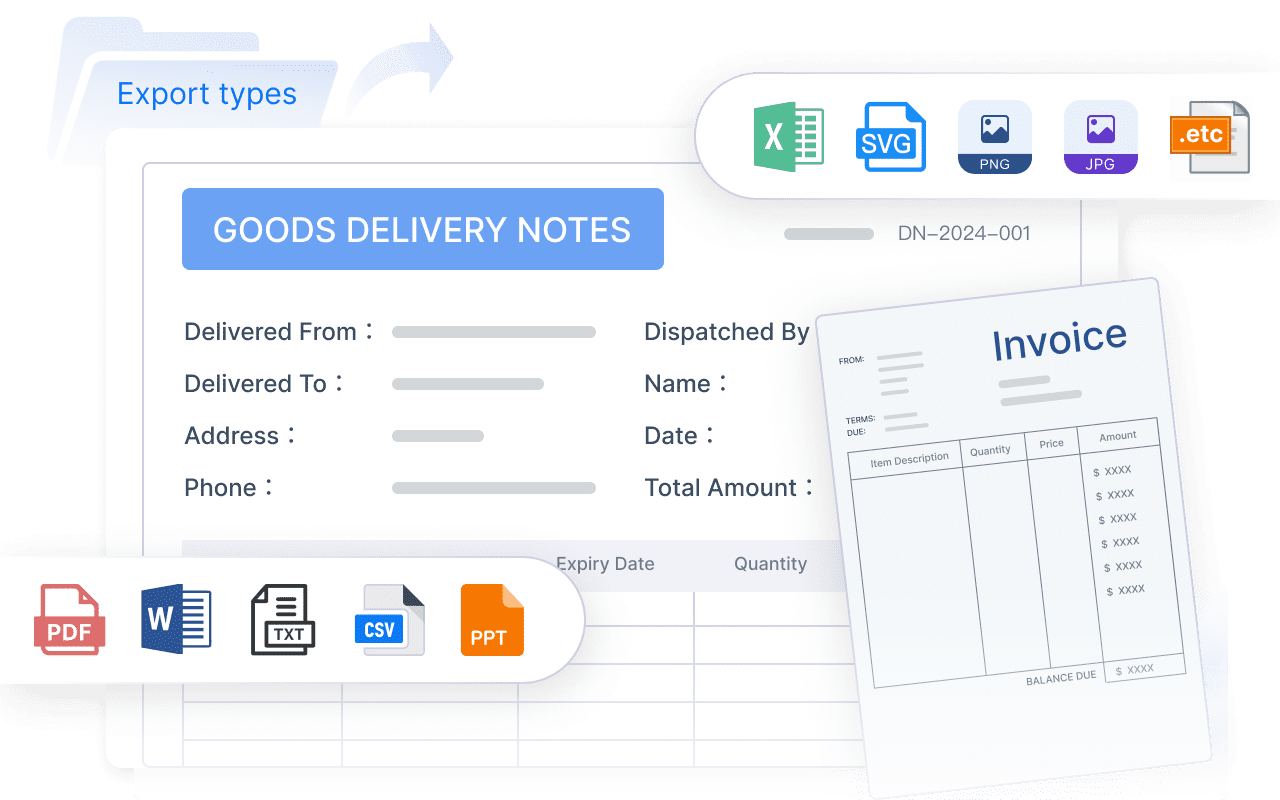
FineReport helps by turning these recurring steps into standardized reporting workflows and reusable management report templates. Instead of sending spreadsheet attachments back and forth, teams can centralize outputs, approval views, and report distribution in a governed reporting environment.
That consistency also creates the right base for Dora. AI works better when the reporting structure, KPI semantics, and exception rules are already defined. Without that foundation, AI-generated summaries risk reflecting the same confusion humans already struggle with.
The goal is to match reporting frequency to actual action. If leaders need to intervene weekly on margin erosion or collection slippage, a monthly-only report is too late.
Design KPI packs that managers actually use
A management KPI pack should help someone understand performance in minutes, not force them to decode finance jargon. The best finance reporting packs are concise, structured, and tied to accountability.
Select KPIs that connect performance to action
Too many finance teams overload reports with metrics because they can calculate them, not because managers use them. A better KPI pack combines a small set of leading and lagging indicators that clearly connect to business goals.
A useful KPI should answer at least one of these questions:
Are we growing as planned?
Are we converting growth into margin?
Are we protecting cash?
Are we overspending against plan?
Where is ownership needed now?
Common manager-facing KPI pack elements
Revenue vs. target Definition: Actual revenue compared with budget, forecast, or plan. Business value: Shows whether growth goals are on track and where gaps are emerging. AI use:Dora can summarize over- and under-performance by segment and prepare a plain-language explanation for the executive summary.
Gross margin % Definition:Gross profit as a percentage of revenue. Business value: Reveals pricing pressure, mix changes, cost inflation, or delivery inefficiency. AI use:Dora can explain abnormal margin shifts and connect them to product, region, or customer changes when the report design supports that view.
Operating expense vs. budget Definition: Actual operating expense compared with approved plan. Business value: Supports cost control and department accountability. AI use:Dora can generate exception summaries and push overspend alerts to the responsible function leader.
Operating cash flow Definition: Cash generated from core business operations during the reporting period. Business value: Tests whether accounting profit is translating into usable liquidity. AI use:Dora can include cash commentary in periodic briefings and highlight when receivables, payables, or inventory are driving deterioration.
DSO / collections status Definition: Days sales outstanding or other collection-efficiency measures. Business value: Helps protect working capital and forecast short-term liquidity pressure. AI use:Dora can act as a Risk Alert Officer, identifying overdue trends and routing follow-up tasks to owners.
Managers respond better when each KPI is presented in a consistent structure:
target
actual
variance
trend
owner
commentary
next action
Structure the monthly management pack
A strong monthly pack balances summary with drill-down. It should not be a dump of every available finance table.
A common structure includes:
Executive summary
This section should answer:
What changed materially this month?
What is above or below plan?
What needs leadership attention?
What action is proposed next?
With FineReport, this can be built as a formatted management report or cockpit with linked drill-down views. Dora can then generate a structured report summary from that trusted asset rather than inventing a narrative from raw, ungoverned data.
This is often the backbone of finance reporting because it connects commercial results, cost discipline, and operating leverage.
Cash highlights
A monthly pack should make cash visible, not bury it in the back. Include:
cash balance trend
operating cash flow
major inflow and outflow drivers
collection and payable watchpoints
short-term liquidity risks
Balance sheet watchpoints
Not every balance sheet line needs management commentary every month. Focus on items that affect risk, controls, or near-term decisions, such as:
receivables aging
inventory build-up
accrued liabilities
debt position
covenant-sensitive areas
unusual prepayments or reserves
Operational drivers
Finance reports become more useful when they connect numbers to business drivers, such as:
volume and price mix
customer churn or cohort profitability
labor utilization
procurement inflation
production scrap or service delivery efficiency
Where useful, segment results by business unit, product line, region, channel, or customer cohort. FineReport supports this kind of structured slicing while preserving consistent layouts and permission control.
Make reports easier to interpret
Managers should not have to reverse-engineer the meaning of a chart. Good finance reporting reduces interpretation time.
Best practices include:
use plain-language commentary
explain what changed, why it changed, and what happens next
emphasize exceptions and decision points
avoid cluttered visuals
use consistent labels, color logic, and period comparisons
keep tables readable and sorted by business significance
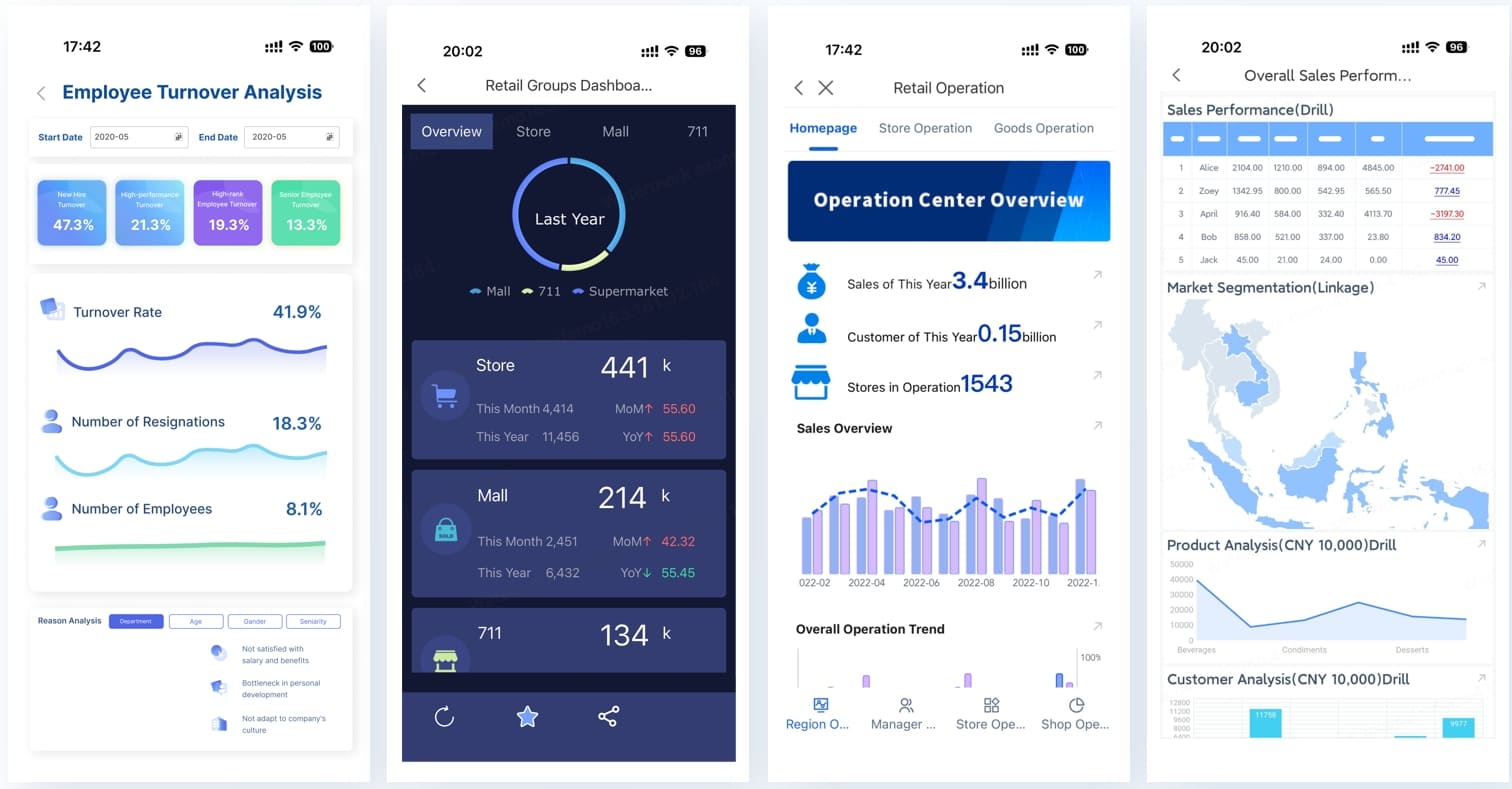
This is also where Dora adds value. Instead of forcing users to read every page manually, Dora can convert a finance report into a structured report summary, explain chart movements, and answer follow-up questions in chat while linking back to the original FineReport asset.
Run an AI-assisted monthly close without losing control
AI can improve finance reporting, but only when it is applied to governed workflows. The goal is not to hand over the close to an uncontrolled model. The goal is to reduce repetitive manual work while keeping finance review, approvals, and sign-off in place.
Apply AI to repetitive close tasks
In the monthly close cycle, finance teams repeat many predictable tasks:
collecting inputs from multiple systems
classifying recurring items
checking completion against close lists
comparing actuals to prior month, budget, or forecast
drafting first-pass variance commentary
rolling forward management pack sections
preparing executive summary language
These are strong candidates for AI support when underlying controls are already defined.
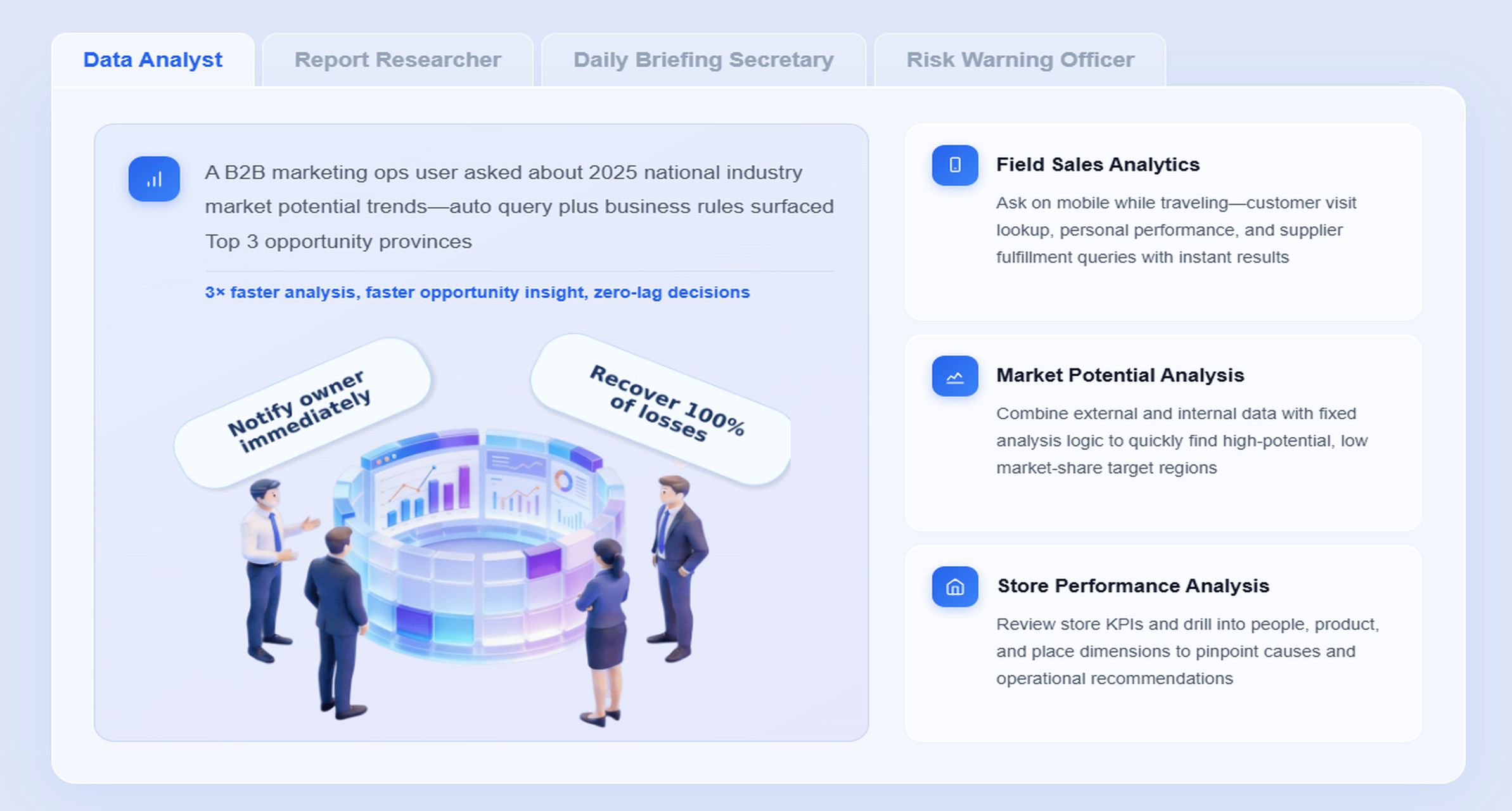
Dora can operate here as a scenario-based AI assistant or AI digital employee on top of trusted report assets. Examples include:
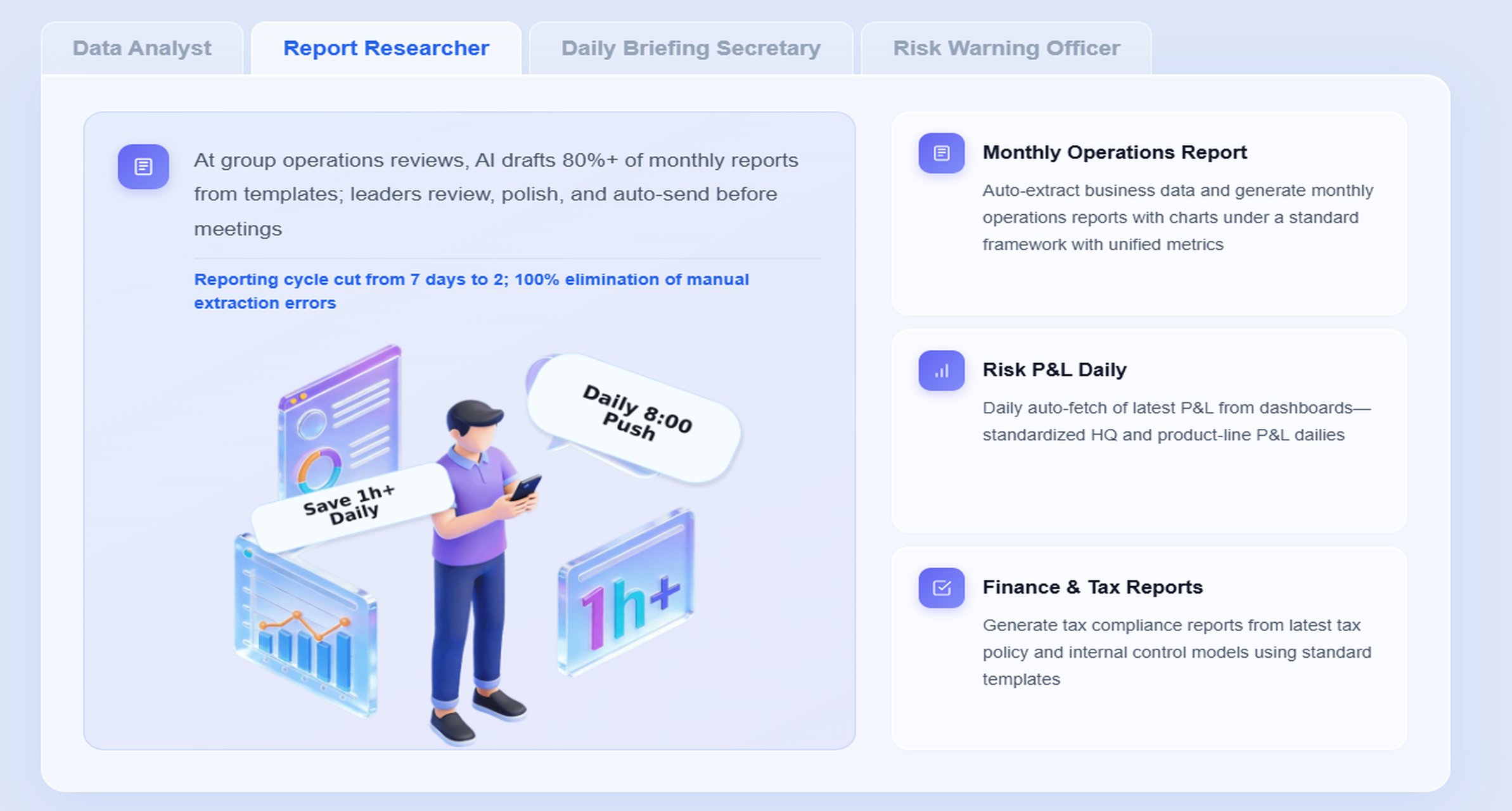
a Report Researcher that drafts structured management commentary from FineReport monthly pack outputs
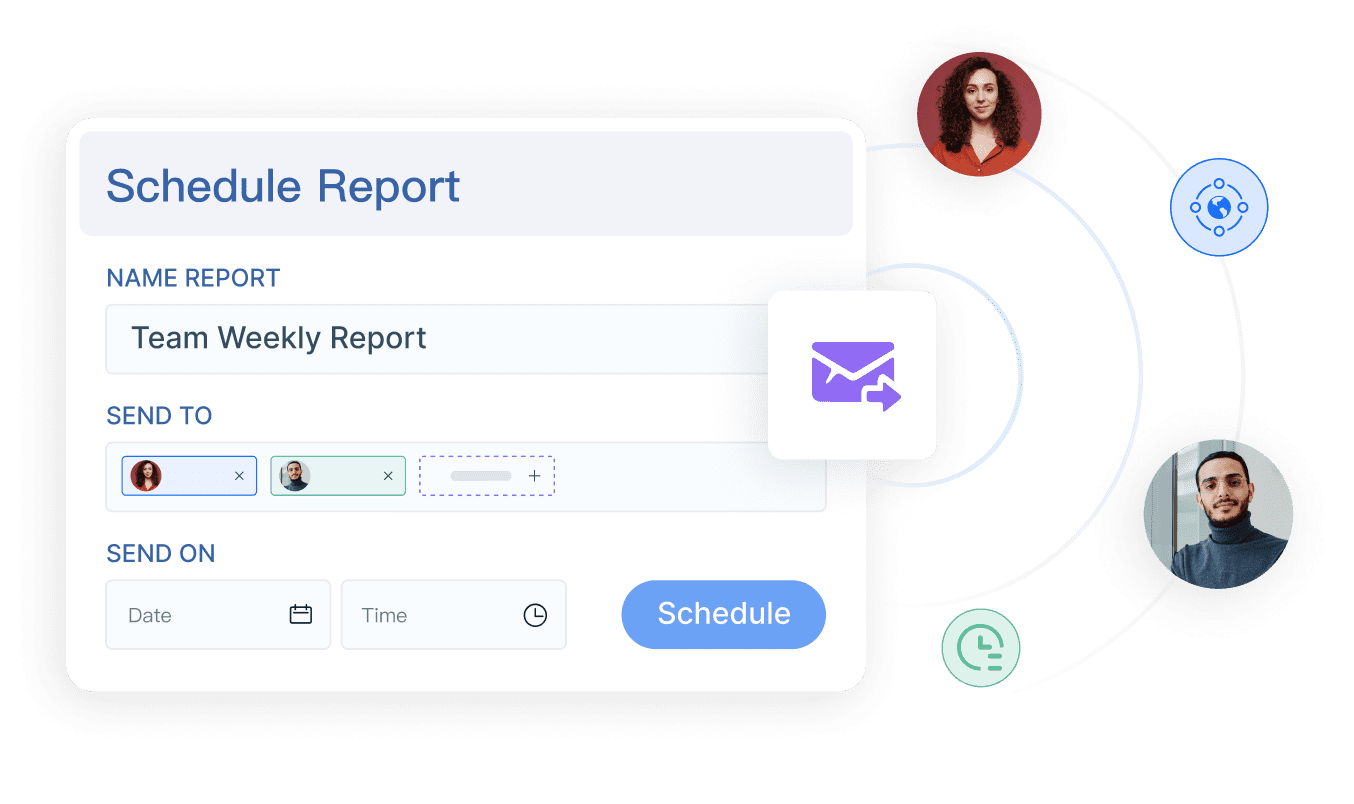
a Daily Briefing Secretary that prepares scheduled finance summaries for CFO or BU leaders
a Data Analyst digital employee that answers natural-language questions about revenue, margin, or cost changes
a Risk Alert Officer that watches for threshold breaches, unusual movements, or overdue close tasks
Because Dora works with governed report templates, KPI definitions, and semantic rules, it is better suited to enterprise finance reporting than raw prompt-only tools that operate without clear business context.
Keep human review at the center
Finance reporting is a high-trust function. AI can support preparation, but it should not remove human review.
Controls should cover:
journal entry approval
exception review
narrative validation
materiality judgment
disclosure sensitivity
final management pack sign-off
Managers still need finance reviewers to assess unusual movements, one-time items, missing data, and business context that may not be fully reflected in the model output.
This is an important positioning point: Dora is not a generic chatbot and not a replacement for finance judgment. It is a governed Agentic BI layer that helps users retrieve trusted finance reports, summarize them, explain them, push exceptions, and follow up with owners more efficiently.
Manage risk, governance, and compliance
Finance reporting contains sensitive and high-impact information, so AI usage must be governed carefully.
Key controls include:
role-based access to reports and metrics
approved data connections and reporting environments
documented AI use policies
review rules for generated narratives
logging and auditability of workflow steps
defined thresholds for exception alerts
monitoring for model limitations or hallucination risk
FineReport provides the trusted reporting and permission foundation. Dora extends that foundation with governed AI workflow execution. That is a more practical enterprise path than deploying an unstructured model and hoping it interprets finance data correctly.
The biggest reporting bottleneck is often not report creation, but report consumption. Managers receive a monthly pack, skim a few pages, ask finance follow-up questions, and then wait for clarifications. That delay creates rework for finance and slows decisions for the business.
For finance reporting, the most relevant digital employee is usually the Report Researcher combined with Daily Briefing Secretary capabilities. The Report Researcher turns trusted FineReport outputs into structured explanations. The Daily Briefing Secretary pushes scheduled summaries and meeting-ready briefs to stakeholders.
A concrete finance reporting chat example
A finance manager or executive could ask:
“Summarize this month’s finance reporting pack, highlight gross margin declines above threshold, explain the largest operating expense variances, and list the business owners who need follow-up before the management meeting.”
Instead of searching through multiple tabs and rewriting notes manually, Dora can work from the approved FineReport monthly pack and return a structured answer with links back to the original report sections.
Retrieve trusted FineReport report or monthly management pack data Dora accesses the approved FineReport asset, such as the finance cockpit, monthly P&L report, cash summary, or close-status dashboard.
Understand KPI definitions, templates, filters, and finance semantics Dora uses the governed semantic layer: what revenue means, how margin is calculated, which cost centers roll into operating expense, what threshold defines a material variance, and which owner is mapped to each segment.
Generate a structured report summary through chat Dora creates an executive-ready summary of the finance reporting pack, including key changes, trend explanations, chart commentary, and watchpoints.
Detect exceptions and unusual movements Dora identifies margin drops, expense overruns, missing close tasks, overdue reconciliations, or cash deterioration based on configured rules and approved thresholds.
Push summaries, alerts, and suggested follow-up to owners Dora can distribute scheduled monthly briefings, send targeted alerts to responsible managers, and provide chart-based answers that reduce back-and-forth between finance and the business.
Create follow-up records and review-ready summaries Dora can support meeting preparation by compiling open issues, owner responses, and a daily or weekly finance briefing for leadership review.
Why this works in real enterprises
This approach lands better than a feature-only AI demo because it starts from trusted reporting assets that already exist or can be standardized. FineReport provides:
natural-language query over trusted reporting assets
chart-based explanations and structured summaries
scheduled daily or monthly finance briefings
exception alerts and push notifications
follow-up tracking for responsible owners
skills-based execution for more controllable and auditable workflows
This matters because finance leaders do not need an AI novelty. They need a landed digital employee for recurring work like monthly close summaries, variance follow-up, cash watchlists, and management report preparation.
For IT teams, the value is also concrete. Their role shifts from manually producing every report variation to strengthening data connections, semantic setup, report templates, permissions, data quality, and reusable AI Skills. That is a more scalable enterprise model.
For business users and executives, the benefit is faster access to timely answers without weakening finance control.
Even well-designed finance reporting should be reviewed regularly. Reports that were useful two years ago may now be redundant, too detailed, or too slow.
Measure reporting effectiveness
Finance leaders should track whether reporting is actually helping the business, not just whether it was delivered.
Useful measures include:
timeliness of monthly pack delivery
number of post-publication corrections
rework caused by unclear definitions
stakeholder satisfaction
number of manual follow-up questions
usefulness for decisions and actions taken
A report that is technically accurate but rarely used is still a weak reporting asset.
Dora can also help here by showing which questions stakeholders ask most often, which report sections generate repeated follow-up, and where scheduled summary workflows reduce friction.
Build a continuous improvement roadmap
A finance reporting roadmap should improve both the reporting foundation and the AI layer over time.
Typical phases include:
standardize report templates and KPI definitions
centralize monthly management pack production in FineReport
strengthen reconciliations, controls, and review checkpoints
add semantic definitions and ownership mapping
introduce Dora for report summaries and scheduled finance briefings
expand into exception alerts, owner follow-up, and repeatable AI Skills
This phased path is often more successful than trying to automate every report at once.
Common mistakes to avoid
Common finance reporting failures include:
too many KPIs with no decision relevance
inconsistent metric definitions across departments
late adjustments that undermine trust
reports with no clear owner
visually dense packs with little commentary
no exception rules or escalation process
weak permission governance for sensitive finance data
overreliance on AI outputs that finance reviewers have not validated
AI can accelerate finance reporting, but it cannot compensate for poor data quality, weak semantics, or undefined ownership. Those basics remain essential.
Here are practical ways to improve finance reporting and make AI support usable in a real enterprise setting.
1. Standardize report templates and KPI definitions first
Create a shared logic for revenue, margin, expense, cash, and headcount before redesigning reports or adding AI. FineReport is especially useful here because it helps teams turn recurring finance outputs into standardized, reusable report assets.
2. Build a semantic layer into the reporting workflow
This is one of the most important AI-specific steps. Dora performs best when business terms, KPI definitions, filters, owner mappings, and exception thresholds are explicit. That makes natural-language finance reporting queries more accurate and more auditable.
3. Start with high-value recurring reports
Do not try to automate every finance output at once. Start with areas such as:
These scenarios have repeatable structure and clear business value, making them ideal for a finance-focused Data Agent.
4. Preserve permission governance and human review
AI-generated summaries must respect the same access boundaries as the underlying reports. Finance reviewers should validate material narratives, unusual movements, and owner-specific outputs before wider rollout. This keeps control intact while still reducing manual effort.
5. Define alert rules, responsibilities, and escalation paths
This is another AI-specific best practice. If Dora is going to push exceptions, finance needs explicit rules for:
what counts as a material variance
who owns the issue
when an alert should be sent
when escalation is required
how follow-up is documented
Without those rules, alerts create noise instead of action.
Building modern finance reporting manually is complex. Finance teams need standardized reports, trusted KPI logic, close controls, segmented management views, and consistent distribution. Then, if they want AI value, they also need semantic setup, permission governance, exception rules, and repeatable workflow design.
FineReport helps teams standardize trusted reports, operational cockpits, templates, and reporting workflows. Dora turns those assets into an AI assistant that can answer report questions in chat, generate structured summaries, push scheduled briefings, monitor exceptions, and follow up with responsible owners.
That combination is especially valuable in finance reporting because trust matters as much as speed. FineReport provides the reporting foundation. Dora provides the execution layer that helps teams move from manually preparing and explaining every report to using AI assistance for query, summary, push, alert, and follow-up.
FineReport + Dora is not only a reporting upgrade; it is a practical fourth-generation Agentic BI path. FineReport provides governed reports and operational cockpits. Dora provides the AI assistant layer for scenario execution, with more controlled Skills, lower token waste, faster execution paths, and more stable workflows than prompt-only agents.
Get Ready-to-Use Dashboard Templates in Fine Gallery
For executives, the value is concrete scenario ROI: monthly management reports, finance risk summaries, cash alerts, and follow-up workflows become faster and easier to consume without weakening control.
For IT teams, the role shifts from building endless one-off report requests to improving enterprise data connections, semantic layers, data quality, report templates, permission rules, and reusable agent Skills.
For business users, the experience becomes simpler: timely finance reporting summaries, chat-based answers, scheduled briefings, and exception pushes without digging through folders or waiting for another manual explanation.
The strongest Dora pitch is scenario + product + service: FineReport provides the trusted reporting foundation, Dora provides the AI digital employee, and implementation service connects data, governance, semantic setup, Skills, report templates, permissions, and rollout.
Management finance reporting is built for internal decision-making, with KPIs, variance explanations, and operational views tailored to managers. External financial reporting follows formal standards for investors, regulators, lenders, and auditors.
Trust usually breaks when definitions differ across reports, source data is inconsistent, or the reporting cycle is too slow. Late or disputed numbers often push teams to create shadow spreadsheets and delay decisions.
A useful monthly pack typically includes core financial statements, KPI trends, budget versus actual comparisons, variance commentary, and exception tracking. The goal is to help managers understand performance quickly and take action.
AI can summarize trusted reports, draft commentary, highlight unusual variances, and send briefings or alerts to the right owners. It speeds up recurring reporting work, but it works best when the underlying data and metric logic are governed.
FineReport helps teams build governed dashboards, report packs, and reporting workflows from standardized data sources. Dora adds an AI assistant layer for chat-based summaries, narrative generation, scheduled updates, and exception routing.
Product Trial
FineReport
Pixel-perfect reports · Interactive dashboards · Easy data entry · Digital twins