A Sales Activity Dashboard is the operating view sales leaders use to see whether the team is doing the work that creates pipeline, advances deals, and converts leads fast enough to win. It brings together rep activity, pipeline movement, and response-time data in one place so managers can spot performance issues before they become missed targets.
For sales managers, revenue operations leaders, and heads of sales, this solves a common problem: revenue dashboards show outcomes too late. By the time bookings dip, the real issue usually started earlier—low outreach, weak follow-up, stalled deals, or slow lead response. A strong Sales Activity Dashboard makes those signals visible in time to act.
Click To Try The Dashboard
What a Sales Activity Dashboard shows and why it matters
A Sales Activity Dashboard is a visual reporting layer that tracks the day-to-day actions of a sales team and connects those actions to pipeline progression. In plain language, it answers questions like:
A pipeline dashboard focuses on open deals, stage distribution, forecast value, and expected close dates.
A revenue dashboard focuses on closed-won outcomes, attainment, bookings, and trend performance.
A Sales Activity Dashboard focuses on the operational inputs and movement patterns that drive those outcomes.
That distinction matters because frontline decisions happen upstream. Managers do not coach on revenue after the quarter ends. They coach on behaviors, responsiveness, and deal progression during the quarter.
A well-designed dashboard helps teams monitor three things in one place:
Rep activity
Calls, emails, meetings, tasks, demos, and follow-ups by rep or team.
Pipeline movement
New opportunities, stage changes, stalled deals, conversion points, and velocity signals.
Response time
Speed to first touch, follow-up consistency, overdue actions, and SLA adherence.
This unified view is especially valuable for:
Sales leaders who need fast visibility into team execution
Frontline managers who run coaching, one-on-ones, and pipeline reviews
Sales operations teams who standardize reporting and improve data quality
SDR and BDR leaders who monitor outreach productivity and speed to lead
Account executive managers who need to balance activity volume with deal quality
In enterprise environments, the dashboard also improves alignment across CRM administration, marketing handoff, and service-level performance. If lead follow-up is slow or stage movement definitions are inconsistent, the dashboard exposes the issue quickly.
Core metrics every Sales Activity Dashboard should track
The best dashboards are not packed with every available CRM field. They focus on a small set of metrics tied to specific management decisions.
Key Metrics (KPIs)
Calls Completed: Total outbound or connected calls made in a defined period.
Emails Sent: Number of prospecting or follow-up emails logged by reps.
Meetings Booked or Held: Sales conversations that move opportunities forward.
Tasks Completed: Follow-up actions finished within the reporting window.
Activity Trend: Daily or weekly pattern of total sales actions over time.
New Opportunities Created: Number of new deals entering the pipeline.
Stage Changes: Count of opportunities moving from one stage to another.
Stalled Deals: Opportunities with no movement after a set number of days.
Stage Conversion Rate: Percentage of deals advancing from one stage to the next.
Pipeline Velocity: Speed at which opportunities progress toward close.
Lead Response Time: Average time from lead creation to first rep action.
Speed to First Touch: Time taken to make the first meaningful outreach attempt.
Follow-Up Consistency: Whether reps maintain the required cadence after initial contact.
Overdue Actions: Open follow-ups or tasks past due date.
SLA Compliance: Percentage of leads or actions handled within service-level expectations.
Rep activity and outreach volume
At the activity layer, a Sales Activity Dashboard should show whether the team is producing enough outreach to support pipeline goals.
Core measures include:
Calls made
Emails sent
Meetings booked
Meetings held
Tasks completed
Daily or weekly activity trends
These metrics should be segmented by:
Rep
Team
Region or territory
Industry segment
Lead source
Account tier
This segmentation is where the dashboard becomes useful for coaching. For example, one rep may have strong call volume but weak meeting conversion. Another may have lower outreach volume but better pipeline creation. Without side-by-side views, managers often default to coaching based on anecdotes rather than evidence.
The key is to avoid treating raw volume as the only signal. More calls do not automatically mean better performance. The dashboard should help managers compare activity against outcomes, not celebrate busyness alone.
Pipeline movement and stage progression
The second layer is pipeline flow. This is where sales activity gets connected to actual deal movement.
Track these operational metrics closely:
New opportunities created
Opportunities advanced by stage
Opportunities regressed or reopened
Stalled deals by aging threshold
Stage-to-stage conversion rates
Average days in stage
Pipeline velocity
These metrics show where deals are slowing down and where intervention is needed. If discovery-to-demo conversion is healthy but proposal-to-close conversion is dropping, the issue is likely not prospecting volume. It may be qualification quality, pricing friction, or follow-up execution late in the cycle.
Velocity indicators are especially important because they surface issues before close rates fall materially. A deal that sits too long in one stage becomes less likely to close and less reliable in forecast conversations.
A practical Sales Activity Dashboard should make it easy to answer:
Which stage has the most aging risk?
Which reps move deals efficiently?
Which territories create pipeline but fail to advance it?
Where are handoffs or approvals slowing cycle time?
Response time and follow-up quality
Response speed often has an outsized impact on conversion, especially in inbound and high-volume outbound environments. Yet many dashboards underreport it.
Your dashboard should include:
Average lead response time
Median speed to first touch
First-response SLA attainment
Number of untouched new leads
Follow-up cadence adherence
Overdue next steps
Time since last activity on active opportunities
These metrics help sales managers move beyond a simple “did the rep contact the lead” standard. The real question is whether the lead was contacted fast enough and followed up with enough consistency to create momentum.
A strong team also defines service-level expectations clearly. Examples include:
Inbound leads contacted within 15 minutes
Marketing-qualified leads accepted or rejected within 4 hours
Active opportunities updated every 48 hours
Follow-up tasks completed by due date
When these expectations are visible in the Sales Activity Dashboard, accountability improves and lead leakage drops.
How to build a useful dashboard without overwhelming your team
Many dashboards fail for a simple reason: they try to answer every question for every audience. The result is clutter, low adoption, and endless debate over numbers.
A practical dashboard should support decisions, not just display data.
Start with the business question
Begin with the management decisions the dashboard needs to support each day or week.
Examples:
Which reps need coaching on follow-up discipline?
Which deals are stalled and need intervention?
Are inbound leads getting touched within SLA?
Is outreach volume sufficient to support next month’s pipeline?
Which stage is reducing conversion this quarter?
Once those questions are clear, choose the metrics that directly support them. This is the most important design principle.
Also separate:
Leading indicators: calls, emails, meetings, response time, stage movement
A Sales Activity Dashboard should lean heavily toward leading indicators. Outcome metrics can stay visible, but they should not dominate the screen. Managers need to see what they can influence now.
Keep the layout simple and actionable
A good layout usually follows three reporting zones:
Activity
Pipeline movement
Responsiveness
That structure makes the dashboard easier to scan and easier to discuss in meetings.
Best-practice layout choices include:
Top row for summary KPIs
Middle section for trends over time
Lower section for rep-level or stage-level breakdowns
Filters for date range, team, rep, region, and segment
Alerts for SLA breaches, stalled deals, or overdue tasks
Use visual hierarchy carefully. The biggest charts should answer the most urgent questions. If a manager has only 30 seconds, the dashboard should immediately show where attention is needed.
Keep the number of widgets disciplined. More charts do not create more insight. In most cases, a strong operational dashboard can be built with 8 to 12 highly relevant components.
Set reporting rules and data hygiene standards
Even the best dashboard fails if the CRM data is inconsistent. This is why sales operations must define reporting standards early.
At minimum, standardize:
Activity logging requirements
Opportunity stage definitions
What counts as a completed meeting or call
Time-based reporting windows
Ownership rules for leads and opportunities
SLA definitions for response and follow-up
You should also actively reduce:
Duplicate records
Missing activity logs
Stale opportunity updates
Inconsistent close dates
Unclear next-step fields
Without these controls, sales teams lose trust in the dashboard. Once trust drops, adoption follows.
From a consulting perspective, this is non-negotiable: a dashboard is not a reporting project alone. It is a process governance project.
The lesson is simple: role-based views improve usability. Reps need focus. Managers need actionability. Executives need signal, not detail overload.
Reporting templates that speed up setup
Reusable templates are valuable because they create consistency and shorten implementation time. Common templates include:
Weekly performance review template
Weekly activity totals
Activity trend versus prior week
Opportunities created
Stage progression summary
Response-time snapshot
Top risks and exceptions
Coaching check-in template
Individual rep activity by type
Meeting conversion trend
Pipeline movement by owned deals
Follow-up compliance
Aging opportunities
Coaching notes and next actions
Pipeline health tracking template
Deal count by stage
Value by stage
Days in stage
Stalled deals by owner
Stage conversion rate
Open next steps and overdue tasks
A reusable template should include:
Clear KPI definitions
Standard filters
Consistent date windows
Benchmarks or targets
Space for owner-level accountability
Customize templates when the process changes materially—such as new territories, new lead-routing rules, or a revised sales methodology. Do not customize just because different stakeholders prefer different colors or chart types.
What strong examples have in common
High-performing dashboard designs usually share the same characteristics:
Clear ownership of each metric
Focused KPI set tied to decisions
Simple visual hierarchy
Consistent filters and time periods
Strong next-step accountability
Balanced use of activity and quality metrics
Most importantly, they do not rely on raw volume alone. Strong dashboards balance quantity metrics with quality signals like response time, conversion, and stage progression. That is what makes the dashboard operationally useful rather than performative.
Monthly: leadership reviews broader conversion, velocity, and process health
Quarterly: operations teams assess dashboard relevance, KPI fit, and data quality rules
Over time, remove what nobody uses. Add views for new channels, new territories, or new sales motions. If the business shifts from outbound-heavy prospecting to product-led inbound conversion, the dashboard must evolve with it.
A static dashboard becomes stale quickly. A useful one gets refined as the sales process matures.
Several dashboard mistakes appear repeatedly across sales organizations.
Measuring too many metrics without tying them to decisions
If a KPI does not trigger an action, it probably does not belong on the main dashboard.
Treating all activities as equal
Ten low-quality emails are not equivalent to one high-value discovery meeting. Context matters.
Ignoring response time
Many teams track calls and meetings but overlook how quickly they engage leads. That is a major blind spot.
Using inconsistent stage definitions
If reps interpret pipeline stages differently, conversion reporting becomes unreliable.
Tolerating poor data hygiene
Missing logs, duplicate leads, and stale opportunities quickly erode trust in the dashboard.
Building the dashboard once and never updating it
Sales motions change. Channels change. Team structures change. Reporting should keep pace.
The most expensive mistake, however, is assuming activity reporting alone improves performance. It does not. Improvement happens only when managers translate patterns into specific operational action.
Building the dashboard manually is complex—use FineBI to automate it
Designing a high-value Sales Activity Dashboard manually is harder than it looks. You need clean CRM data, standard KPI logic, role-based views, trend analysis, response-time tracking, and templates that managers will actually use. Building and maintaining all of that in spreadsheets or fragmented BI workflows is time-consuming and fragile.
This is where FineBI becomes the practical solution.
Instead of piecing together disconnected reports, use FineBI to utilize ready-made templates and automate this entire workflow. FineBI helps teams:
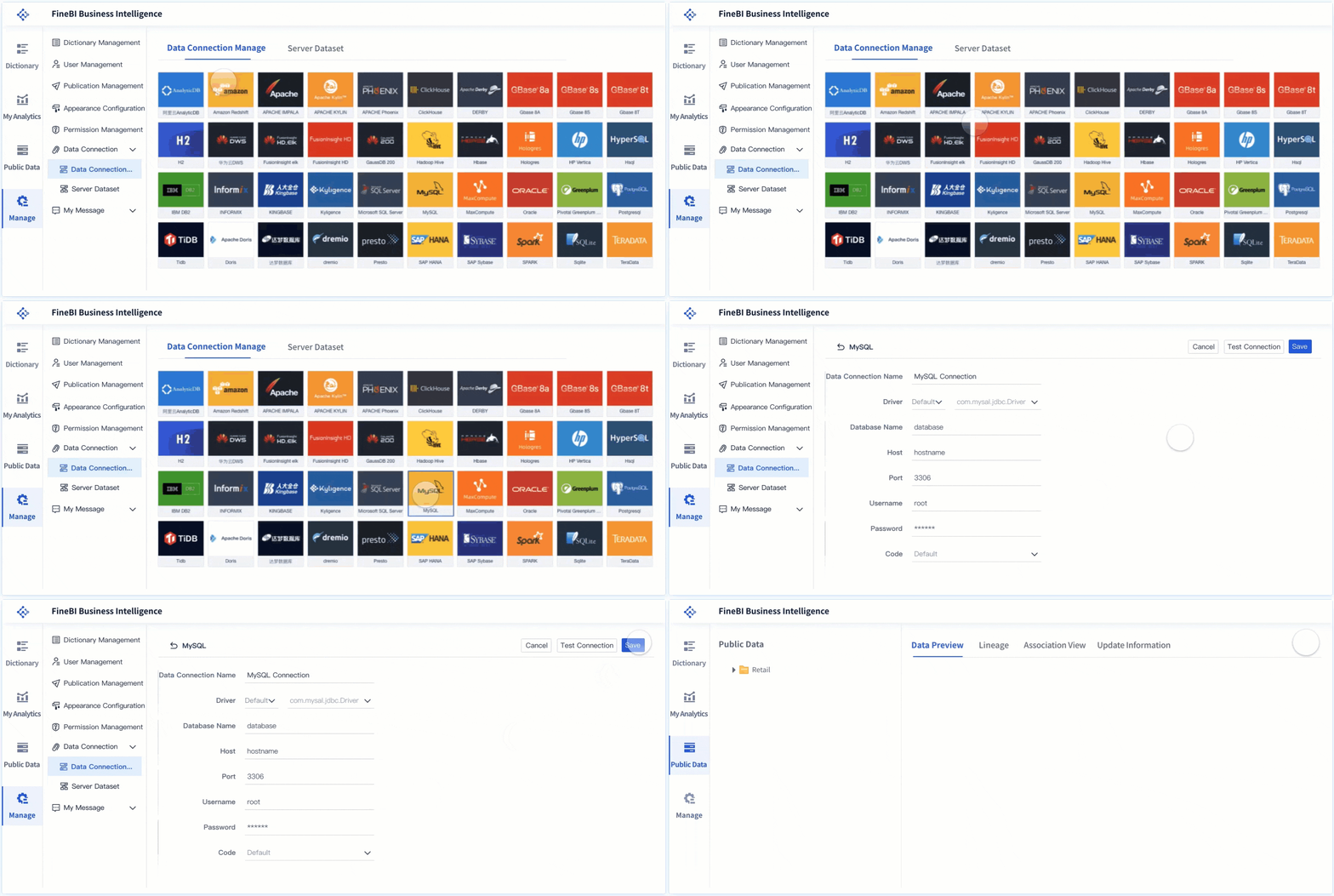
Consolidate sales data from CRM and operational systems
Build dashboards for rep activity, pipeline movement, and response time
Use reusable templates for weekly reviews, coaching sessions, and pipeline health checks
Apply filters, alerts, and drill-down views for managers and executives
Standardize KPI definitions and reduce manual reporting effort
Refresh dashboards automatically so teams always work from current data
For enterprise decision-makers, the value is straightforward: faster setup, more trusted reporting, less manual maintenance, and better manager adoption. Instead of spending cycles building dashboard logic from scratch, your team can focus on coaching, execution, and revenue improvement.
If your organization wants a Sales Activity Dashboard that is actually used—not just built—FineBI is the faster path to operational visibility at scale.
FAQs
A sales activity dashboard helps sales leaders monitor the daily actions and workflow signals that influence pipeline growth and deal conversion. It gives early visibility into issues like low outreach, stalled deals, or slow follow-up before revenue is affected.
It should usually track calls, emails, meetings, tasks, new opportunities, stage changes, stalled deals, and lead response time. The best dashboards focus on metrics that support coaching and pipeline decisions rather than showing every available CRM field.
A sales activity dashboard focuses on rep behavior, follow-up execution, and deal movement patterns. A pipeline dashboard is more centered on open opportunities, stage distribution, forecast value, and expected close dates.
Lead response time shows how quickly reps act on new leads, which directly affects contact rates and conversion potential. If response speed slips, managers can intervene before missed follow-up turns into lost pipeline.
Sales managers, revenue operations teams, SDR and BDR leaders, and heads of sales all benefit from it. It is especially useful for coaching reps, reviewing pipeline health, and improving consistency across teams and territories.
Product Trial
FineReport
Pixel-perfect reports · Interactive dashboards · Easy data entry · Digital twins