Record to report is the finance process that turns raw transaction data into trusted financial statements, management reports, and decision-ready insights. For finance leaders, controllers, shared services teams, and operations managers, the business value is straightforward: a strong record to report process reduces reporting errors, speeds up close, strengthens compliance, and gives leadership confidence in the numbers they use to run the business.
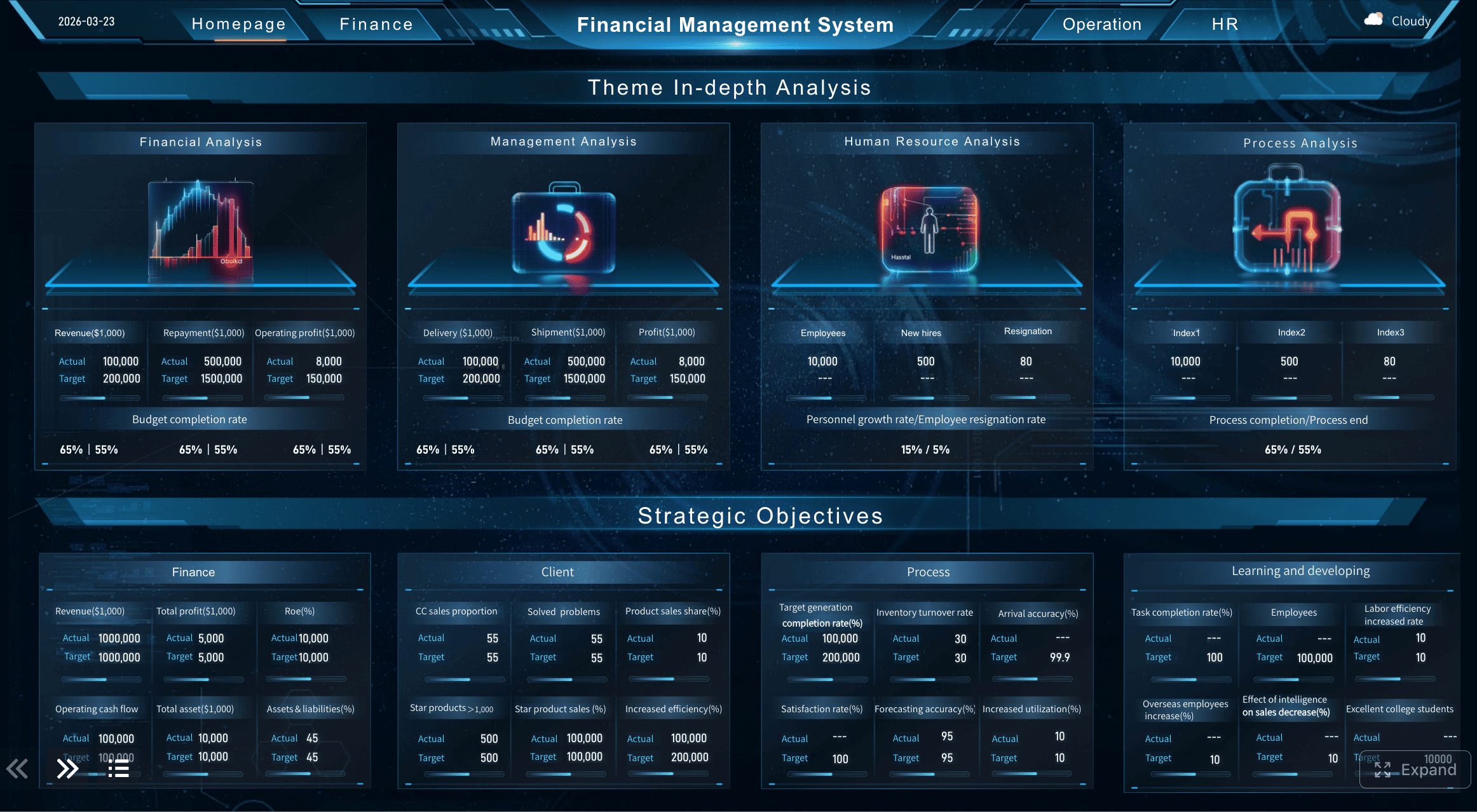
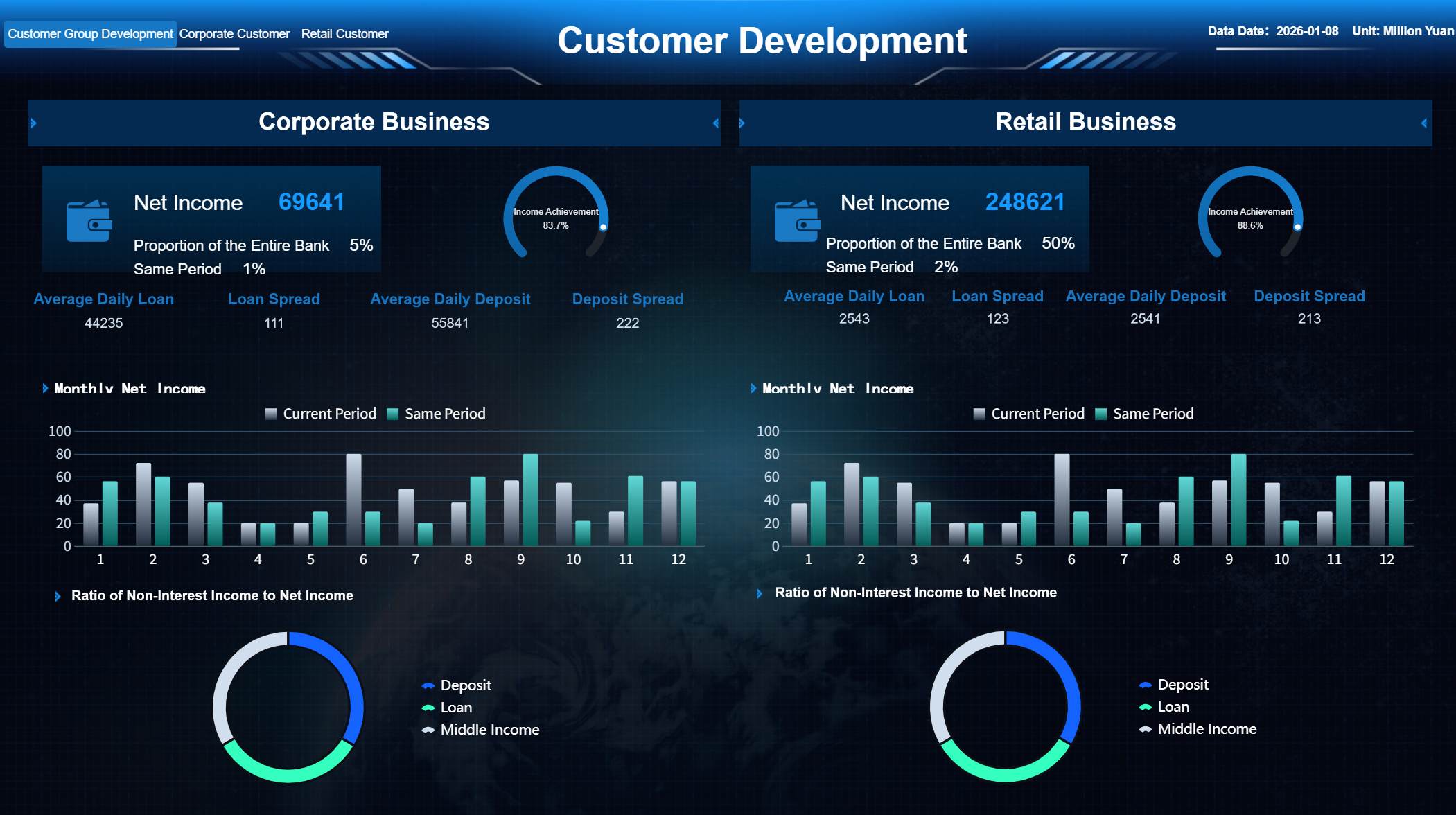
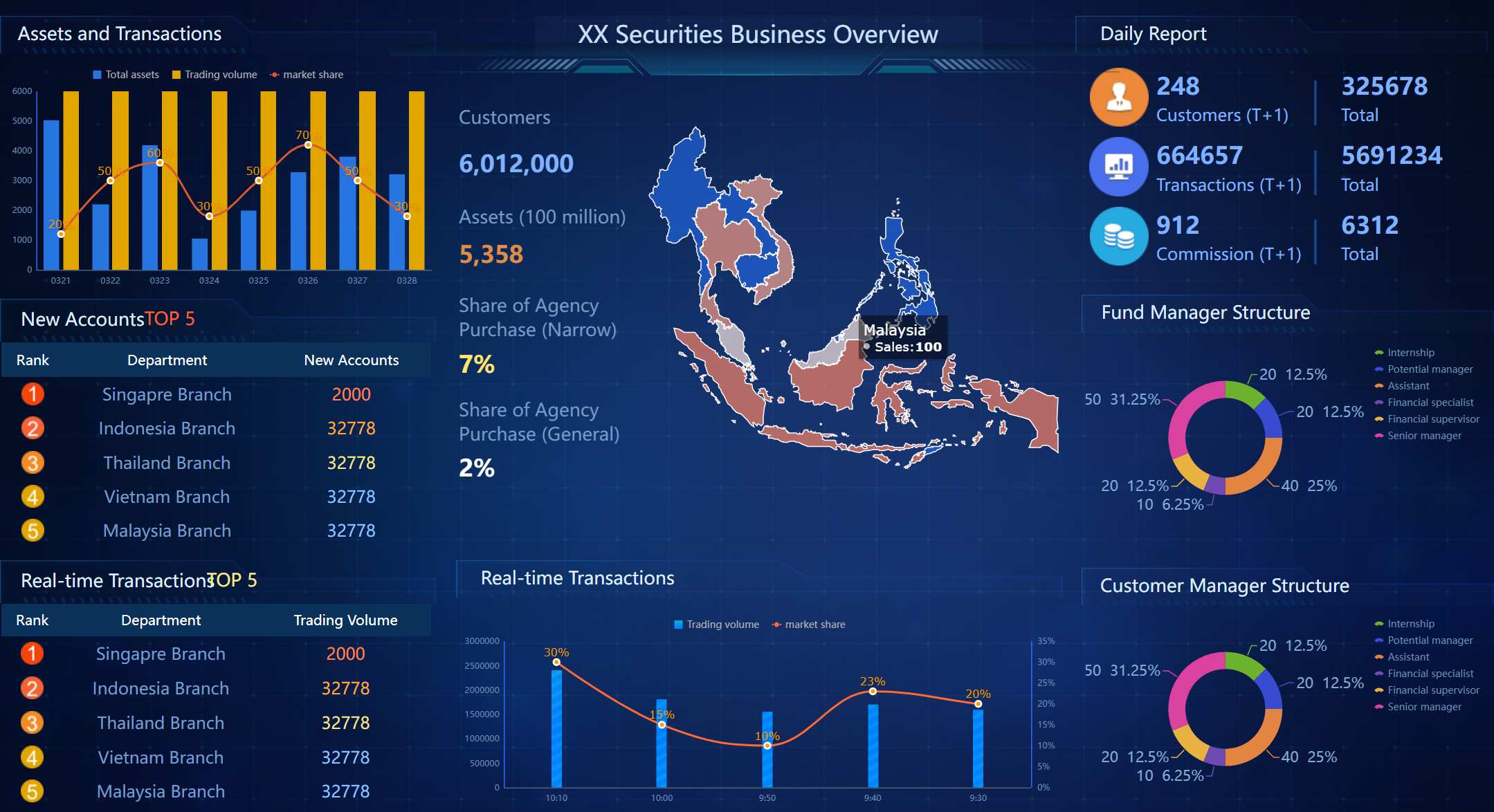
All reports in this article are built with FineReport.
Record to report, often shortened to R2R, is the end-to-end finance cycle used to collect, validate, process, and report financial information. In simple terms, it is how a company goes from daily transactions to final reports such as the income statement, balance sheet, cash flow statement, and internal performance dashboards.
For beginners, the easiest way to understand record to report is this:
Record = capture financial activity accurately
Reconcile = verify that balances and entries are correct
Report = present the final numbers to stakeholders
R2R sits at the center of the broader finance and accounting cycle. It connects upstream processes like procure-to-pay, order-to-cash, payroll, inventory, and fixed assets with downstream outputs like statutory reporting, management reporting, audit support, and executive decision-making.
That is why businesses rely on record to report. Without it, finance data stays fragmented across systems, teams spend too much time fixing errors, and leadership loses visibility into business performance.
Key Metrics (KPIs) for record to report
A reliable R2R process should be measured with clear operational and reporting KPIs. These are the core metrics finance teams track:
Close Cycle Time: Number of days required to complete month-end, quarter-end, or year-end close.
Reconciliation Completion Rate: Percentage of accounts reconciled on time and signed off.
Journal Entry Accuracy Rate: Share of journal entries posted correctly without rework.
Post-Close Adjustments: Number of adjustments made after books are closed, indicating quality issues.
Aging of Open Items: How long unresolved balances or exceptions remain outstanding.
Intercompany Mismatch Rate: Frequency of discrepancies between related entities.
Audit Findings: Number of control or reporting issues identified during audit.
Reporting Timeliness: Whether management and statutory reports are delivered by deadline.
Manual vs. Automated Tasks: Proportion of R2R activities still dependent on spreadsheets or manual effort.
Data Source Consistency: Degree to which reporting draws from standardized and governed finance data.
For enterprise teams, these KPIs help identify where the record to report process is slowing down, introducing risk, or creating avoidable cost.
How the record to report process works from start to finish
The record to report process follows a logical sequence. While the exact workflow differs by industry and ERP environment, most organizations move through the same core stages.
Capturing and organizing financial data
The first stage of record to report is collecting financial data from across the business. This includes transactions from sales, purchasing, accounts payable, accounts receivable, payroll, inventory, treasury, fixed assets, and other operational systems.
Finance teams must record these transactions completely and accurately in the general ledger or connected sub-ledgers. If data arrives late, in the wrong format, or with incomplete coding, the rest of the R2R cycle becomes slower and riskier.
Standardization is critical here. Teams need clear rules for:
Account coding
Cost center assignment
Entity mapping
Currency handling
Document support
Approval workflows
The goal is to make financial data consistent and usable before period-end pressure begins.
In modern environments, ERP platforms and reporting tools play a major role in making this data visible. FineReport can help finance teams consolidate data from multiple systems into dashboards that track posting completeness, missing entries, and source-level exceptions in real time.
Reconciling accounts and validating accuracy
Once transactions are recorded, the next priority is to confirm the numbers are right. Reconciliation is where finance teams compare balances across ledgers, bank statements, sub-systems, and supporting records to identify discrepancies.
This usually includes:
Matching general ledger balances to sub-ledgers
Validating bank and cash balances
Reviewing suspense accounts
Checking accruals and prepaid balances
Confirming intercompany transactions
Investigating unusual variances
This stage is also where internal controls matter most. A mature record to report process does not just reconcile balances. It documents who reviewed what, when exceptions were resolved, and whether approvals were completed.
Supporting documentation is equally important. If reconciliations are not backed by evidence, the business may still struggle during audit, even if balances appear correct.
Closing the books and creating reports
After recording and reconciliation come the formal close activities. This is the point where finance teams finalize the accounting period, post adjustments, complete reviews, and prepare the organization’s financial reports.
Typical close tasks include:
Posting accruals and deferrals
Booking depreciation and amortization
Reviewing reserves and provisions
Validating cut-off entries
Finalizing trial balances
Consolidating results across entities
Locking the accounting period
Once the books are closed, finance creates reports for both internal and external users. These may include statutory statements, board reports, budget-versus-actual analysis, profitability reviews, and executive dashboards.
The quality of the record to report process becomes visible here. If upstream recording and reconciliation were disciplined, reporting is timely and reliable. If not, finance ends up chasing corrections, extending close, and weakening trust in the numbers.
Key steps in the full Record to Report (R2R) cycle
To make the full cycle easier to understand, here are the major steps finance teams typically manage within record to report.
Journal entries and general ledger updates
Journal entries convert business activity into formal accounting records. Some are generated automatically through ERP workflows, while others are manual, such as accruals, allocations, or corrections.
A strong process requires:
Standard journal templates
Clear approval authority
Supporting documentation
Segregation of duties
Automated validation rules
The general ledger acts as the backbone of the full finance cycle. If GL integrity is weak, every downstream report becomes suspect.
Intercompany accounting and reconciliations
For multi-entity organizations, intercompany activity is often one of the hardest parts of record to report. Transactions between subsidiaries must align on both sides before consolidation.
Common challenges include:
Timing differences
Currency translation issues
Inconsistent account mapping
Missing counterpart entries
Unresolved balances at close
This is why many enterprise finance teams track intercompany status with dedicated dashboards rather than relying on spreadsheets alone.
Accruals, adjustments, and close activities
Not every financial event is fully reflected by the time cash moves or invoices are posted. Finance therefore records accruals, provisions, prepayments, reclasses, and other adjustments to ensure the right amounts appear in the right period.
This step is essential for accurate reporting under accounting standards and for credible business analysis. It also requires disciplined cut-off procedures, owner accountability, and close calendars that are realistic.
Final reporting, analysis, and compliance checks
The last step of the record to report cycle is not just publishing statements. It also includes explaining the numbers.
Finance teams typically perform:
Variance analysis
Trend analysis
Entity-level reviews
Balance sheet reviews
Compliance checks
Audit evidence preparation
This is where R2R creates strategic value. Good reporting helps leadership understand profitability, cost behavior, working capital trends, and operational risks.
Benefits of an effective record to report process
When record to report is well designed, it improves both finance operations and business performance.
Better accuracy, visibility, and confidence in financial data
A structured R2R process reduces inconsistent entries, duplicate work, and unsupported balances. That gives executives, controllers, and auditors more confidence in the financials.
Faster month-end and year-end close
Organizations with clear workflows, automation, and standardized controls can shorten close cycles significantly. That means finance spends less time assembling numbers and more time analyzing them.
Stronger compliance, controls, and audit support
Good record to report practices produce cleaner audit trails, better documentation, and more reliable sign-offs. This lowers compliance risk and reduces the stress of audit preparation.
Improved decision-making for finance leaders and stakeholders
Reliable reporting allows leaders to act quickly. Instead of debating whether the data is correct, they can focus on the business implications of the data.
Common record to report tools, systems, and optimization opportunities
The record to report process is heavily influenced by technology. Most finance teams use a mix of ERP systems, spreadsheets, close tools, reconciliation tools, and BI dashboards.
How ERP platforms support R2R
ERP platforms help finance teams centralize transaction processing, general ledger management, controls, and reporting. They reduce data fragmentation and create a common source of truth for accounting activity.
In practical terms, ERP systems support record to report by enabling:
Automated posting from operational modules
Standardized chart of accounts
Period-end close workflows
Consolidation across entities
Audit trail visibility
Role-based approvals and controls
SAP is a common example in enterprise finance. Many organizations use SAP ERP or SAP S/4HANA to manage general ledger posting, sub-ledger integration, intercompany transactions, and financial close activities. SAP can support record to report well, especially when processes are standardized and reporting is layered on top with analytics tools.
This is often where FineReport adds value. Many companies already have ERP data, but they struggle to present it in a way finance leaders can actually use. FineReport can sit on top of ERP and finance systems to build visual R2R dashboards for close tracking, reconciliation monitoring, management reporting, and audit-ready drill-down analysis.
Improving record to report usually starts with identifying what slows down close, causes rework, or creates control gaps. In consulting practice, the highest-impact optimization levers are usually the simplest.
1. Standardize the process before automating it
Do not automate inconsistent workflows. First define common policies for journal entries, reconciliations, close calendars, account ownership, and approval paths. Then automate the repeatable parts.
2. Reduce dependence on spreadsheets for critical controls
Spreadsheets are useful, but they become risky when they are the primary control layer for reconciliations, consolidations, and close sign-offs. Move key activities into governed systems and dashboards where possible.
3. Build role-based visibility across the close cycle
Controllers need one view, account owners need another, and executives need a summarized version. Design dashboards and workflows around decision needs, not just data availability.
4. Focus on exception management, not just task completion
A close checklist may show tasks as complete while underlying issues remain unresolved. Track exceptions, aging, and root causes directly. This improves both speed and control quality.
5. Choose the right operating model
Not every organization should optimize R2R the same way. Improvement path depends on size, complexity, geography, and internal capability. Typical models include:
In-house centralization for tighter control
Shared services for scale and consistency
Outsourcing for transactional efficiency
Hybrid models for global organizations
Continuous improvement programs for phased transformation
After process design is stabilized, automation and reporting platforms can drive real gains. This is the point where many finance teams evaluate FineReport to unify data, visualize bottlenecks, and give stakeholders a live view of the record to report cycle.
Best practices for implementing record to report successfully
If you are building or improving an R2R process, these are the steps I would recommend as a finance transformation consultant:
1. Map the full process from source systems to final reports
Document every step from transaction origin to management reporting. Include system handoffs, manual touches, approval points, and known bottlenecks. This reveals where delays and errors begin.
2. Assign clear ownership for each account and close task
Every key balance and control activity should have an owner, reviewer, due date, and escalation path. Ambiguous ownership is one of the most common causes of close delays.
3. Define a close calendar with evidence standards
Create a realistic schedule for journal posting, reconciliations, variance reviews, and report release. Pair each task with required documentation so the process is review-ready, not just “done.”
4. Use dashboards to monitor progress and exceptions daily
Do not wait until the last day of close to discover issues. Real-time dashboards for posting status, reconciliation completion, and open exceptions let finance intervene early.
5. Review KPIs monthly and improve continuously
The best R2R teams do not treat close as a one-time routine. They analyze cycle time, exception trends, manual work, and post-close adjustments after every period and keep improving.
Choosing the right improvement path for your business
The ideal record to report design depends on your organization’s operating model.
Small businesses often need simple standardization, fewer manual files, and basic close dashboards.
Mid-sized companies usually benefit from workflow discipline, role-based ownership, and ERP-connected reporting.
Large enterprises need stronger intercompany control, consolidation visibility, compliance support, and scalable automation.
Global organizations often require a shared services strategy, harmonized policies, and entity-level performance monitoring.
The key is to match process design to business complexity. Overengineering slows adoption. Underengineering creates control risk.
Final thoughts on record to report
Record to report is more than an accounting routine. It is the control framework that turns financial activity into reliable business insight. When the process is strong, organizations close faster, report with confidence, support audits more effectively, and make better decisions.
For beginners, the simplest takeaway is this: record to report connects day-to-day transactions with the final story the business tells through its financial results.
For finance leaders, the priority is different: build a process that is standardized, visible, controlled, and scalable. With the right ERP foundation, clear ownership, and dashboard-driven monitoring, record to report can move from a reactive close exercise to a high-value finance capability.
Record to report, or R2R, is the end-to-end finance process that turns business transactions into accurate financial statements and management reports. It covers recording, validating, reconciling, closing, and reporting financial data.
Most R2R workflows include data capture, journal entries, account reconciliations, period-end close, consolidation, and final reporting. Some companies also include variance analysis, audit support, and compliance checks within the process.
A strong R2R process helps finance teams reduce errors, close faster, improve compliance, and give leadership more confidence in reported numbers. It also creates better visibility into performance across entities, accounts, and reporting periods.
Month-end close is one critical part of R2R, but it is not the whole process. Record to report starts with transaction capture and continues through reconciliation, consolidation, reporting, and analysis.
Automation can reduce manual data handling, speed up reconciliations, improve control over approvals, and make reporting more timely. Tools like FineReport can also help teams monitor close status, exceptions, and finance KPIs in real time.
Product Trial
FineReport
Pixel-perfect reports · Interactive dashboards · Easy data entry · Digital twins