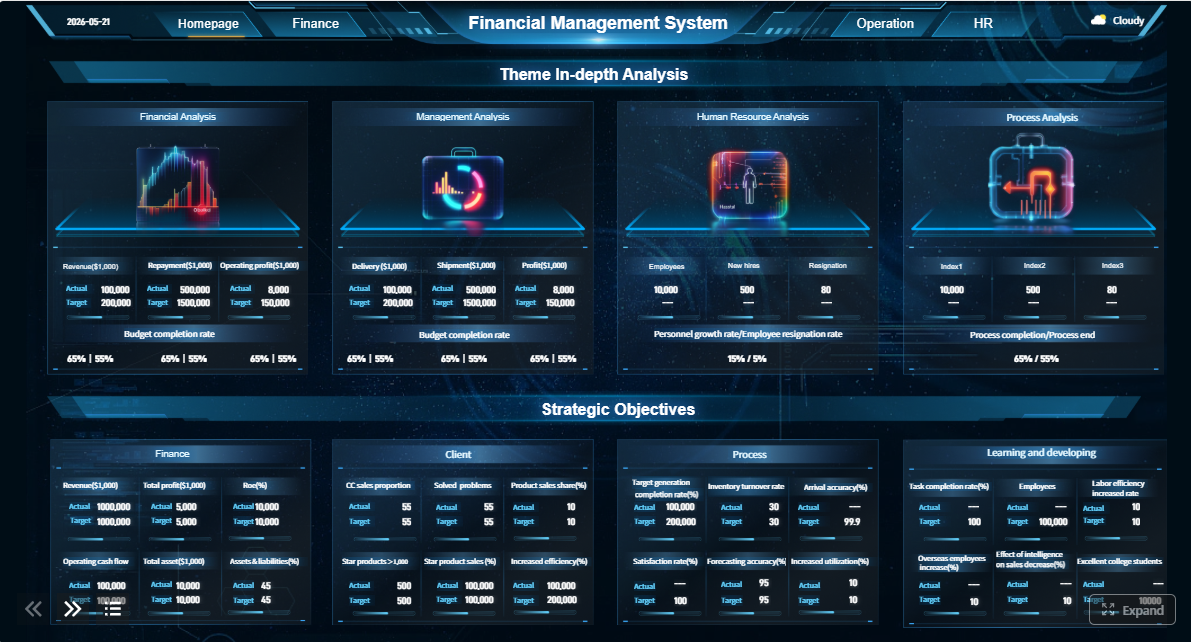
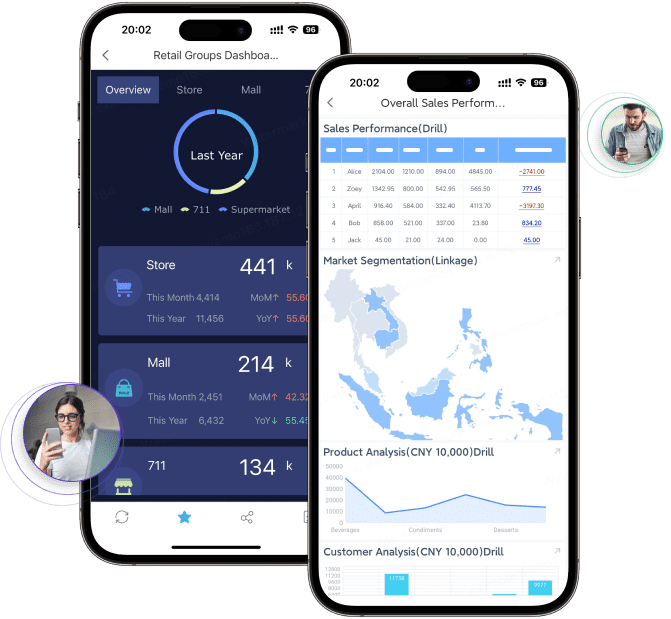
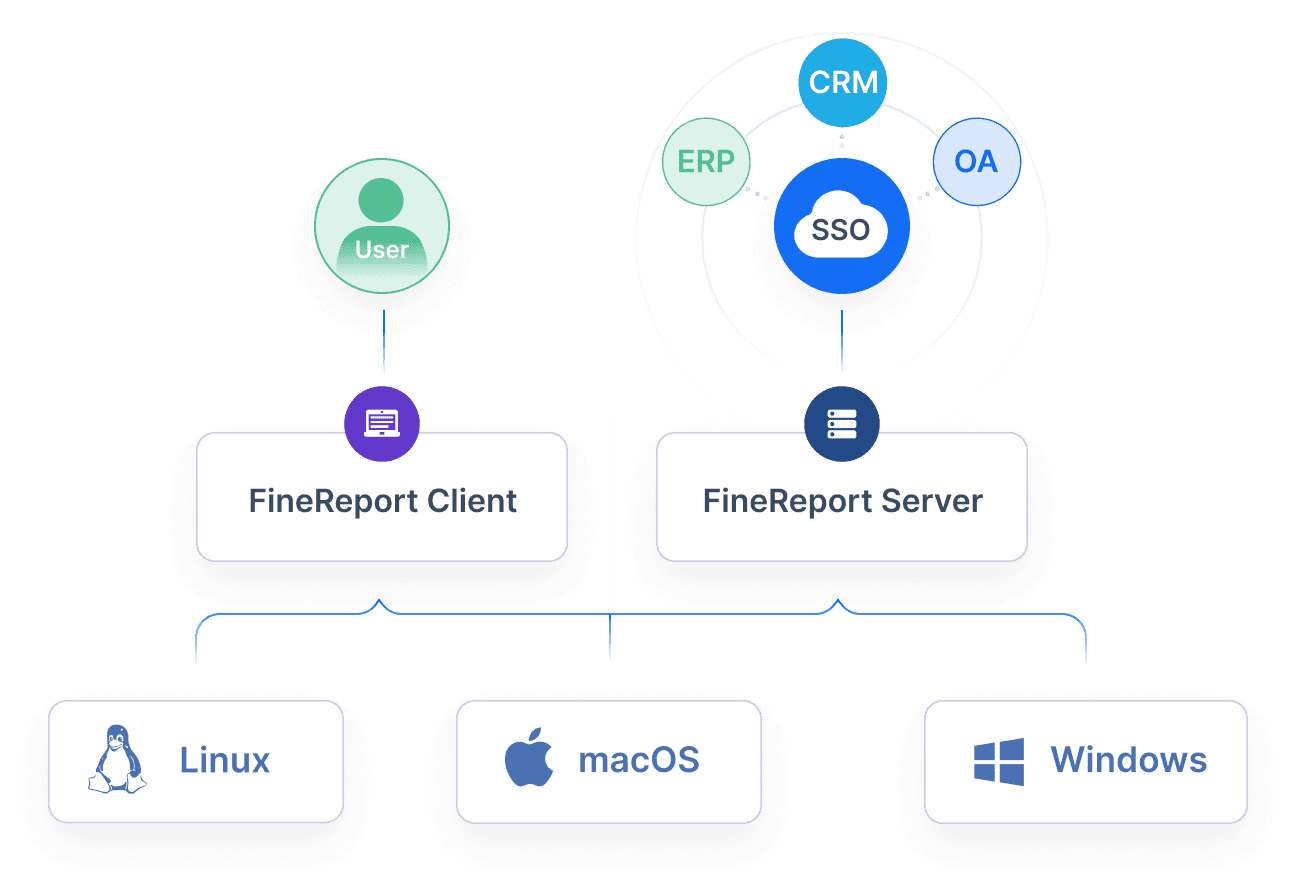
CFO teams are under pressure to deliver faster reporting, sharper variance analysis, and clearer executive communication without adding more manual work to every close cycle. Traditional monthly packs and spreadsheet-heavy workflows are no longer enough when leadership wants timely answers, action-oriented follow-up, and confidence in the numbers.
That is where ai financial reporting becomes practical. With FineReport + Dora, teams can ask for a report summary in chat, generate structured narratives from trusted report assets, receive scheduled briefings, and push exceptions to the right owner. Instead of spending hours compiling commentary, reconciling views, and emailing updates, finance leaders can move toward governed, repeatable, AI-assisted report consumption.
Click To Try The Dashboard
All reports in this article are built with FineReport
Why AI financial reporting matters for modern CFO teams
Finance reporting has shifted from static month-end packs toward more interactive, role-based, and response-oriented reporting. Executives no longer want a large PDF and a delayed meeting explanation. They want to ask questions, see the drivers behind the numbers, and quickly identify who owns the next action.
For CFO teams, this shift has two important implications:
The reporting layer must remain trusted, governed, and finance-approved
The consumption layer must become faster, more conversational, and more actionable
FineReport supports the first requirement by building the trusted reporting foundation: formatted finance reports, consolidated management packs, operational cockpits, report templates, and workflow-driven reporting processes. Dora adds the second requirement by acting as an enterprise Data Agent on top of those assets. It helps finance users retrieve approved reports, explain variances, summarize charts, push periodic briefings, and follow up on exceptions.
The move from static monthly packs to chat-based briefings
In many organizations, monthly reporting still depends on a familiar sequence:
Analysts extract data from ERP and business systems
Leadership reviews the pack and asks follow-up questions
Finance scrambles to answer those questions with additional offline analysis
This process is slow not only because data preparation takes time, but also because report consumption is inefficient. Even once the report exists, leaders still need help understanding what changed, why it changed, and what should happen next.
With FineReport + Dora, the monthly pack can become a chat-based executive briefing. A CFO, FP&A head, or controller can ask Dora for a structured summary of approved FineReport outputs, receive a plain-language explanation of the biggest changes, and drill back into the trusted report source when needed.
How finance leaders reduce manual compilation and improve decision speed
The real value of ai financial reporting is not just auto-generating words. It is reducing the repetitive work around report consumption:
drafting first-pass commentary
summarizing budget-versus-actual changes
identifying abnormal movements
packaging highlights for executives
routing issues to responsible owners
creating recurring daily, weekly, or monthly finance briefings
This makes finance teams faster without weakening control. Finance still owns KPI definitions, report templates, approval steps, and final sign-off. The AI assistant helps accelerate the repetitive parts of reporting work.
Where automation helps most in finance reporting
For most CFO organizations, the highest-value opportunities are clear:
Anomaly spotting: Flag unusual changes in revenue, margin, cash flow, or expenses
Variance summaries: Explain period-over-period and budget-versus-actual differences
Follow-up actions: Push issues to department owners with deadlines and accountability
These are exactly the areas where a governed Agentic BI approach is stronger than generic prompt-driven AI. FineReport supplies trusted finance outputs and semantic rules. Dora uses them to support controlled, repeatable workflows such as executive briefings, finance exception pushes, and follow-up summaries.
10 automation strategies to improve reporting speed and quality
Before scaling ai financial reporting, CFO teams should define the core report elements that matter most. The table below reflects a practical finance reporting structure.
Core finance report elements CFO teams should standardize first
Revenue and growth analysis: Definition of recognized revenue by entity, region, product, or customer segment. Business value: Helps leadership understand performance quality and growth drivers. AI use:Dora can summarize changes, compare segments, and highlight unusual movement in a scheduled finance briefing.
Gross margin and operating margin: Definition of profitability after direct and operating costs, based on approved finance logic. Business value: Supports profitability management and cost control. AI use:Dora can explain margin shifts, identify possible drivers, and include exceptions in management commentary.
Cash flow and liquidity status: Definition of operating, investing, and financing cash flow with treasury-related indicators. Business value: Enables better short-term planning and risk visibility. AI use:Dora can create chart-based answers, summarize liquidity changes, and alert teams to threshold breaches.
Budget-versus-actual variance: Definition of deviations between approved plan and actual results. Business value: Focuses attention on underperformance, overspend, or upside opportunities. AI use:Dora can draft structured variance summaries and route major exceptions to owners.
Close and consolidation status: Definition of reporting readiness by entity, business unit, or reporting package milestone. Business value: Gives the CFO office visibility into bottlenecks and overdue items. AI use:Dora can push status briefings, flag delays, and support follow-up with controllers or finance managers.
1. Turn monthly management packs into chat-based executive briefings
Most management packs contain the right information but are slow to consume. Executives often need a 5-minute summary, not a 50-page walkthrough.
With FineReport, finance teams can build standardized board and management reports with approved layouts, entity rollups, and drill-down structures. Dora can then act as a Daily Briefing Secretary or Report Researcher, turning those approved reports into concise, plain-language executive briefings.
This is especially useful when a CFO wants to know:
what changed from last month
what missed budget
what requires leadership action
what should be discussed in the review meeting
Instead of waiting for a manually written memo, the CFO can receive a scheduled briefing sourced from trusted FineReport assets.
2. Automate variance analysis and exception detection
Variance analysis is one of the clearest use cases for ai financial reporting. Finance teams repeatedly review the same core dimensions:
revenue
gross margin
EBITDA or operating profit
operating expenses
receivables
cash flow
The problem is not that finance lacks reports. The problem is that too much time is spent manually identifying which variances actually matter.
FineReport can organize budget-versus-actual, month-over-month, and year-over-year views into governed finance cockpits. Dora, acting as a Risk Alert Officer or Data Analyst digital employee, can monitor for threshold breaches, rank exceptions by severity, and summarize where finance attention is required first.
That changes reporting from “here is the pack” to “here are the three deviations that need action today.”
3. Generate narrative commentary from trusted finance data
Commentary writing is important, but it is also repetitive. Teams often spend hours drafting nearly identical language every month, then adjusting for the latest movements.
A better approach is to use FineReport as the trusted report and semantic foundation, then use Dora to generate a structured report summary from those assets. This can include:
top-line performance summary
major profit drivers
variance explanation by cost category
business-unit highlights
emerging risk notes
This does not remove finance review. It gives finance a controlled first draft based on approved KPIs, report templates, and governed business terms.
4. Prioritize follow-up actions for finance and business owners
Static reports often stop at observation. But CFO teams need accountability after the report is read.
For example, if one region misses margin targets, if receivables aging worsens, or if marketing spend exceeds budget, someone should receive a clear follow-up request. Dora helps move reporting toward execution by pushing issue summaries, assigning responsible users, and supporting follow-up records.
This is where Agentic BI becomes more useful than simple AI summarization. The point is not only to explain the report. The point is to connect exceptions to ownership and next steps in a governed AI workflow.
5. Standardize reporting across entities, regions, and business units
Finance automation fails when definitions vary across teams. If one region defines operating expense differently, or if entity-level packs use different structures, AI-generated summaries will be inconsistent and hard to trust.
FineReport is valuable here because it helps organizations standardize:
report templates
KPI definitions
consolidation structures
drill-down logic
approval workflows
Once that reporting foundation is in place, Dora can operate more reliably as an enterprise Data Agent. It can interpret approved finance terms, retrieve the right report sections, and generate more consistent briefings across the organization.
6. Use AI-powered insights in financial reports to surface key drivers
Executives rarely just ask what changed. They ask why.
That is why ai financial reporting should include driver-oriented analysis, not only descriptive reporting. Dora can help connect financial outliers to operational or commercial context already represented in FineReport cockpits and linked assets. For example:
margin decline tied to product mix change
operating expense spike linked to campaign timing
cash pressure connected to slower collections
revenue miss tied to delayed delivery or lower conversion
The key is governance. Dora should work from approved report logic, semantic definitions, and controlled Skills, not from unsupported assumptions.
7. Improve forecast and close-cycle reporting workflows
Recurring finance updates often create heavy manual effort during close and forecast cycles. Teams update the same formats, adjust the same commentary blocks, and resend the same summary emails.
8. Strengthen audit trails and approval visibility
CFOs cannot adopt AI reporting workflows without auditability. Finance needs visibility into how outputs were produced, reviewed, approved, and distributed.
FineReport already provides the governed reporting layer and workflow context. Dora adds an auditable AI assistant layer that can be designed around controlled Skills and permission-aware access. That supports better visibility for:
which source report was used
which KPI definitions applied
who reviewed the output
when alerts were sent
which follow-up actions were recorded
In finance, explainability matters as much as speed.
9. Build role-based reporting experiences for executives and controllers
Not every finance user needs the same reporting experience.
CFOs and executives want concise summaries, key deviations, and decisions required
Controllers want detailed exceptions, close issues, and approval visibility
FP&A teams want deeper analysis and metric explanations
Business owners want only the issues relevant to their cost center, region, or function
FineReport supports these role-based report views and access rules. Dora can then generate different AI-assisted outputs for each audience without breaking governance boundaries. This is a major enterprise advantage over generic AI tools that do not respect reporting permissions or finance-specific semantics by default.
10. Measure impact and expand automation in phases
The best ai financial reporting programs do not begin by automating everything. They begin with a few high-volume reporting scenarios that have clear business value.
Common first metrics include:
time to produce the monthly finance briefing
time spent drafting commentary
number of unresolved exceptions after report release
cycle time from anomaly detection to owner follow-up
consistency of reporting across entities
Once those workflows are stable, CFO teams can expand to additional reporting packs, entity-level alerts, forecast summaries, and operational-financial management views.
How an AI Data Agent Automates Report Consumption
The biggest reporting bottleneck in finance is often not report creation alone. It is what happens after the report exists: reading it, interpreting it, summarizing it, pushing it, and following up on exceptions. This is where Dora creates practical value as an enterprise Data Agent.
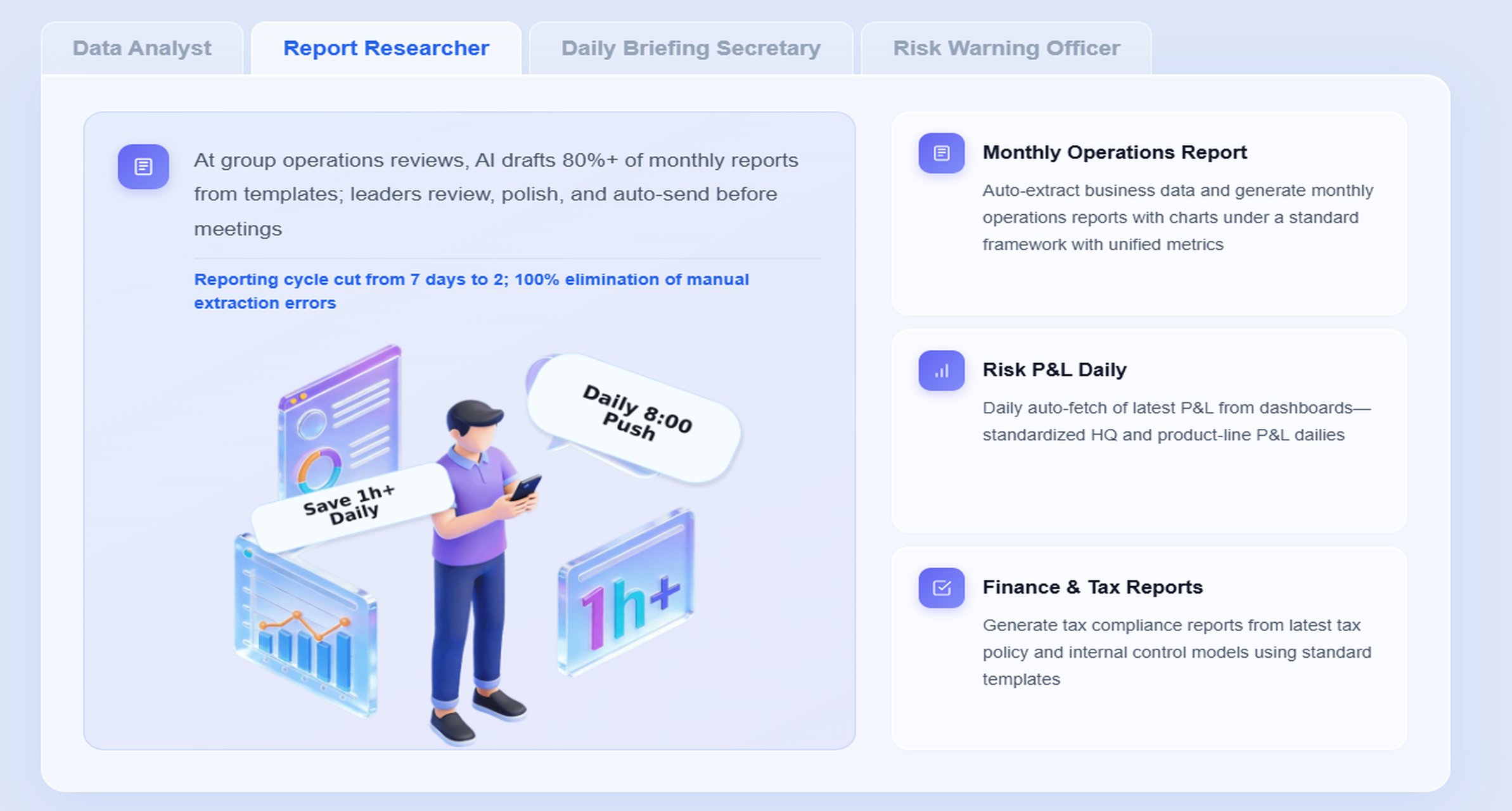
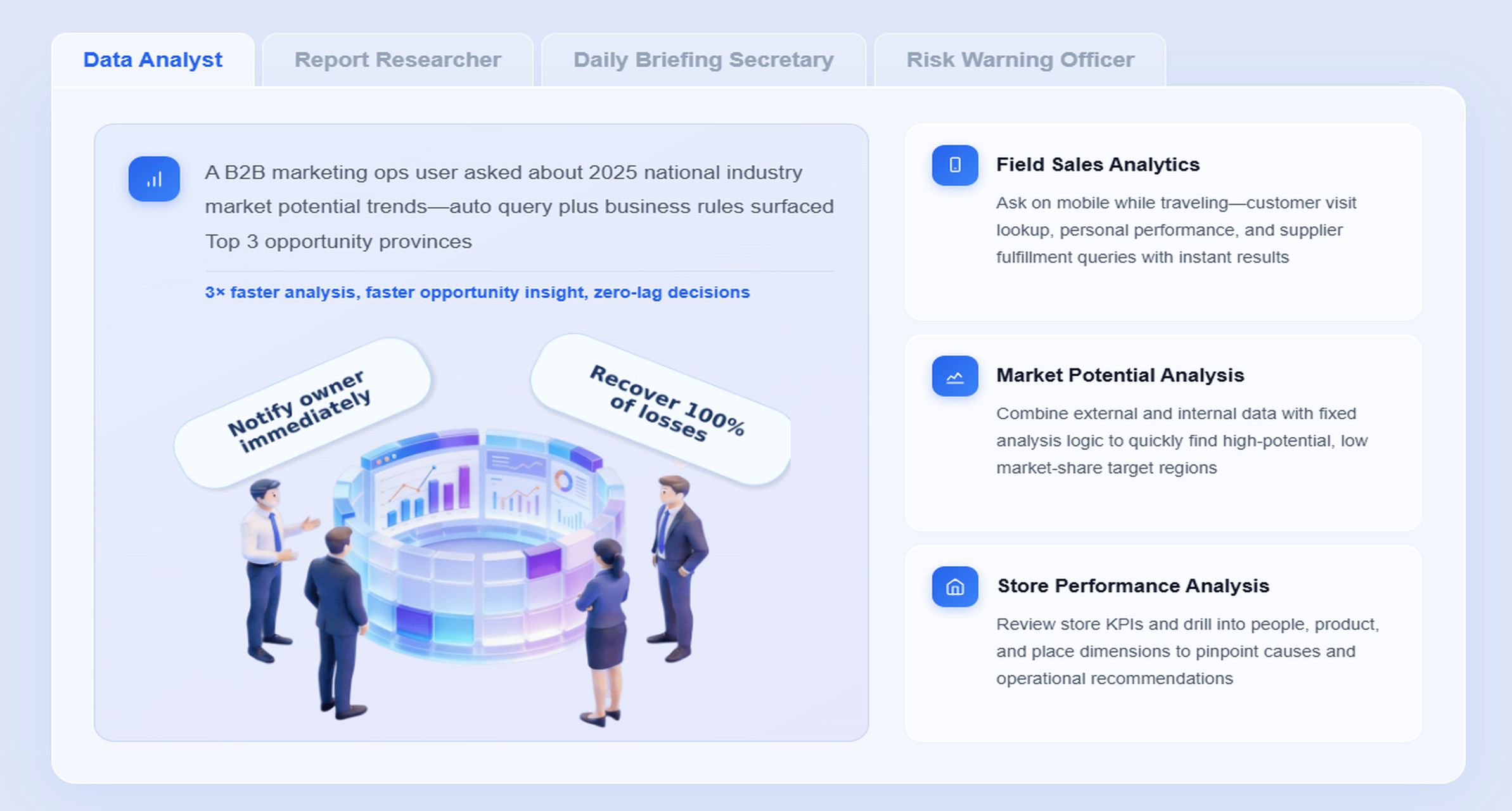
For CFO teams, the most relevant Dora digital employees are:
Daily Briefing Secretary for scheduled finance summaries
Data Analyst digital employee for natural-language report questions
Risk Alert Officer for anomaly monitoring and owner notification
A scenario-specific chat example for CFO reporting
A CFO or controller could ask:
“Summarize this month’s finance report, highlight abnormal changes in gross margin, operating expenses, and cash flow, and list the business owners who need follow-up by Friday.”
Dora can then retrieve the approved FineReport management pack, apply finance KPI definitions and semantic rules, generate a structured summary, flag the biggest exceptions, and prepare actionable follow-up.
A 6-step AI workflow for finance report consumption
Retrieve trusted FineReport finance reports and cockpits Dora accesses approved management packs, variance reports, close dashboards, or finance operational cockpits built in FineReport.
Interpret finance semantics and KPI rules Dora uses the governed semantic layer: metric definitions, report templates, filters, entity structures, thresholds, and finance business terminology.
Generate a structured report summary through chat Dora creates a management-ready narrative covering major changes, chart explanations, and exception highlights in plain language.
Detect abnormal movements and unresolved exceptions Dora identifies threshold breaches, unusual cost shifts, overdue close items, liquidity concerns, or severe variance patterns where configured.
Push summaries and alerts to the right users Dora sends scheduled briefings to CFOs and executives, and issue-based alerts to controllers, FP&A, or business owners responsible for action.
Record follow-up and create review-ready recaps Dora supports follow-up records, periodic summary pushes, and review materials for finance meetings, helping teams close the loop on reported issues.
Why FineReport is the trusted reporting foundation
AI is only useful in finance when the source is controlled. FineReport provides the reporting base needed for enterprise adoption:
formatted finance statements and management packs
multi-entity reporting templates
operational and executive cockpits
parameterized report views
workflow-driven reporting processes
governed permissions and access controls
That trusted reporting layer matters because Dora is not generating finance answers from thin air. It is helping users consume and act on trusted enterprise reporting assets.
How Dora improves execution after the report is built
Dora improves reporting execution in ways finance teams can actually operationalize:
chat-based AI assistant for report consumption
structured report summaries for leadership review
chart-based answers for fast explanation of movements
scheduled daily/weekly/monthly briefings
exception alerts and push notifications
follow-up reminders and owner routing
skills-based execution for more controllable and auditable workflows
This matters because many AI discussions in finance stay at the feature-comparison level. Dora is more practical when positioned as a scenario-specific AI digital employee working on top of trusted reports. That gives it better landing capability than generic agent demos that lack report governance, KPI consistency, or permission-aware execution.
It also supports more stable enterprise workflows than raw prompt-only approaches, because the interaction can be grounded in FineReport templates, semantic rules, and reusable Skills rather than wide-open prompting alone.
drill-back to underlying report assets when needed
This helps leadership spend less time searching through packs and more time making decisions.
Better exception follow-up across the business
Traditional reporting often ends with observation, not action. Finance identifies issues, but accountability is scattered across email threads and delayed meetings.
That is especially valuable for margin issues, overspend, delayed collections, close delays, and recurring budget deviations.
Less manual work for finance teams
Finance teams spend too much time on tasks that are necessary but repetitive:
formatting recurring reports
writing repetitive commentary
answering the same report questions
packaging highlights for different audiences
manually tracking issue follow-up
FineReport reduces reporting complexity through standardized templates and automation. Dora reduces consumption friction by helping users query, summarize, explain, and push those reports in a governed way.
More consistent corporate reporting
Growing organizations often struggle with inconsistent reporting structures across regions, entities, and business units. AI alone does not solve that problem. In fact, it can amplify inconsistency if definitions are not standardized.
The combination of FineReport + Dora is stronger because it starts with a governed reporting base and then adds the AI assistant layer. That supports scalable corporate reporting with more consistent definitions, outputs, and review workflows.
Governance, risk, and audit considerations before scaling
Data quality, controls, and source integrity
No ai financial reporting approach will be reliable if the underlying finance data is fragmented or poorly governed. Before scaling, CFO teams should confirm:
approved source systems
controlled data refresh processes
clear chart-of-accounts logic
reconciled entity mappings
finance-owned KPI definitions
AI should work from approved datasets and controlled report outputs, not from ad hoc exports scattered across departments.
Human review and accountability
AI can accelerate reporting, but finance must still own the final narrative, exception judgment, and escalation decision. This is especially important for board materials, investor-facing reporting, and any compliance-sensitive output.
A good operating model is:
AI drafts or summarizes
finance reviews and adjusts
approved users sign off
outputs are distributed under controlled permissions
That keeps accountability where it belongs.
AI in financial reporting and audit: navigating the new era
As AI adoption grows in finance, audit and assurance expectations will also rise. CFO teams should expect greater focus on:
explainability of AI-supported outputs
evidence of source control
documented review steps
permission-aware access
retained audit trails for approvals and distribution
This is another reason to prefer a governed enterprise Data Agent model over a generic AI tool. When AI is connected to trusted reporting assets and controlled Skills, reviewer confidence is easier to build.
acceptable use policies for sensitive financial information
escalation paths for unresolved reporting issues
These controls do not slow adoption. They make adoption sustainable.
How CFOs can make the most of AI in corporate reporting
Start with high-volume, repeatable reporting tasks
The best starting points are recurring workflows with measurable pain:
monthly management packs
budget-versus-actual summaries
close-status reporting
cash flow briefings
entity-level exception alerts
These scenarios create visible wins because the repetition is high and the value of faster reporting is easy to demonstrate.
Design for adoption, not just automation
An automated output that executives do not use has little value. CFO teams should design the experience around how stakeholders actually consume financial information:
short executive briefings
role-based exception summaries
clear drill-back to source reports
scheduled delivery at useful times
action-oriented follow-up
Dora is especially effective here because it supports chat, summaries, alert pushes, and follow-up rather than stopping at report display.
Build a roadmap for long-term reporting transformation
CFOs should view ai financial reporting as part of a broader finance modernization roadmap, not as a one-off experiment. Over time, the roadmap can include:
This is how reporting evolves from static output to a more responsive operating system for finance decisions.
Actionable Best Practices
1. Standardize report templates, KPI definitions, and business terms first
AI can only summarize consistently when the finance reporting layer is standardized. Establish common templates for management packs, variance reports, cash flow views, and entity reporting. Define business terms clearly so Dora can interpret them correctly across scenarios.
2. Build a semantic layer inside the reporting workflow
This is one of the most important AI-specific steps. Finance should document metric logic, hierarchies, thresholds, entity mappings, and commentary rules inside the reporting workflow. FineReport provides the governed report structure; Dora performs better when those semantics are explicit and reusable.
3. Start with recurring finance reports, not every report in the enterprise
Another critical AI-specific best practice is to target high-value, repeatable workflows first. Monthly CFO briefings, variance analysis, and cash flow exception summaries usually create faster ROI than trying to automate every finance output at once.
4. Preserve permission governance and approval steps
AI outputs must respect FineReport access boundaries. Keep role-based permissions, review checkpoints, and finance sign-off in place so summaries and pushes remain aligned with enterprise governance requirements.
5. Treat data quality as part of the AI implementation
Do not separate AI adoption from finance data discipline. Reconciled sources, consistent account mappings, and approved master data are part of the AI implementation, not a separate cleanup project to defer indefinitely.
Building this manually is complex. FineReport helps teams standardize trusted reports, operational cockpits, templates, and reporting workflows. Dora turns those assets into an AI assistant that can answer report questions in chat, generate structured summaries, push scheduled briefings, monitor exceptions, and follow up with responsible owners.
For CFO teams, that means a practical path to ai financial reporting that is grounded in enterprise reality:
FineReport builds the trusted finance reporting foundation
Dora adds the AI digital employee layer for finance execution
finance retains governance, permissions, and final accountability
FineReport + Dora is not only a reporting upgrade; it is a practical fourth-generation Agentic BI path. FineReport provides governed reports and operational cockpits. Dora provides the AI assistant layer for scenario execution, with more controlled Skills, lower token waste, faster execution paths, and more stable workflows than prompt-only agents.
Get Ready-to-Use Dashboard Templates in Fine Gallery
The strongest Dora pitch is scenario + product + service: FineReport provides the trusted reporting foundation, Dora provides the AI digital employee, and implementation service connects data, governance, semantic setup, Skills, report templates, permissions, and rollout.
For executives, the message is straightforward: Dora is not an AI experiment. It is a landed digital employee for recurring reporting work such as monthly management reports, finance risk summaries, exception alerts, and owner follow-up.
For IT and data teams, the role shifts from manually building every output to optimizing enterprise data connections, semantic layers, data quality, permissions, report templates, and reusable agent Skills.
For business users and finance stakeholders, the benefit is timely report summaries, chat-based answers, scheduled briefings, and exception pushes without waiting for analysts to manually package every update.
AI financial reporting uses artificial intelligence to summarize reports, explain variances, flag anomalies, and deliver faster finance briefings from approved reporting data. For CFO teams, it reduces manual reporting effort while keeping finance control over definitions, approvals, and final sign-off.
The best approach keeps AI on top of trusted, finance-approved reports rather than letting it generate numbers on its own. That means teams can automate commentary and exception routing while maintaining auditability, approval workflows, and a single source of truth.
Common starting points include variance summaries, first-draft management commentary, anomaly detection, recurring executive briefings, and exception follow-up. These tasks are repetitive, time-consuming, and well suited to governed automation.
No, AI is better used to support finance teams than replace them. Analysts and controllers still define metrics, validate outputs, interpret results, and make the final business judgment.
FineReport provides the trusted reporting foundation with approved finance reports, dashboards, and templates. Dora acts on top of those assets to deliver chat-based summaries, scheduled briefings, variance explanations, and exception alerts from governed data.
Product Trial
FineReport
Pixel-perfect reports · Interactive dashboards · Easy data entry · Digital twins