Best travel expense report software for finance teams in 2026
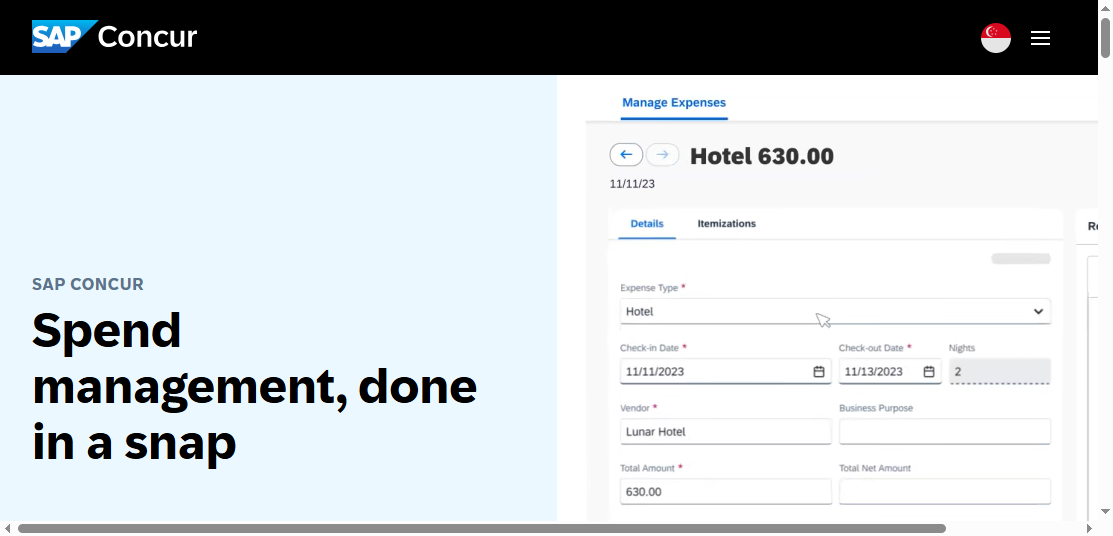
SAP Concur
One-sentence overview: SAP Concur is a mature travel expense report software platform built for organizations that need integrated travel booking, policy enforcement, and global spend controls.
Key Features:
Integrated travel booking and expense management
Strong policy rules and audit workflows
Corporate card and e-receipt integrations
Broad ERP, HR, and finance integrations
Multi-country support for large enterprises
Pros & Cons:
Pros: Deep enterprise functionality, strong compliance controls, broad ecosystem, strong fit for global travel programs
Best For: Global enterprises with complex approval structures, multi-entity operations, and formal travel programs
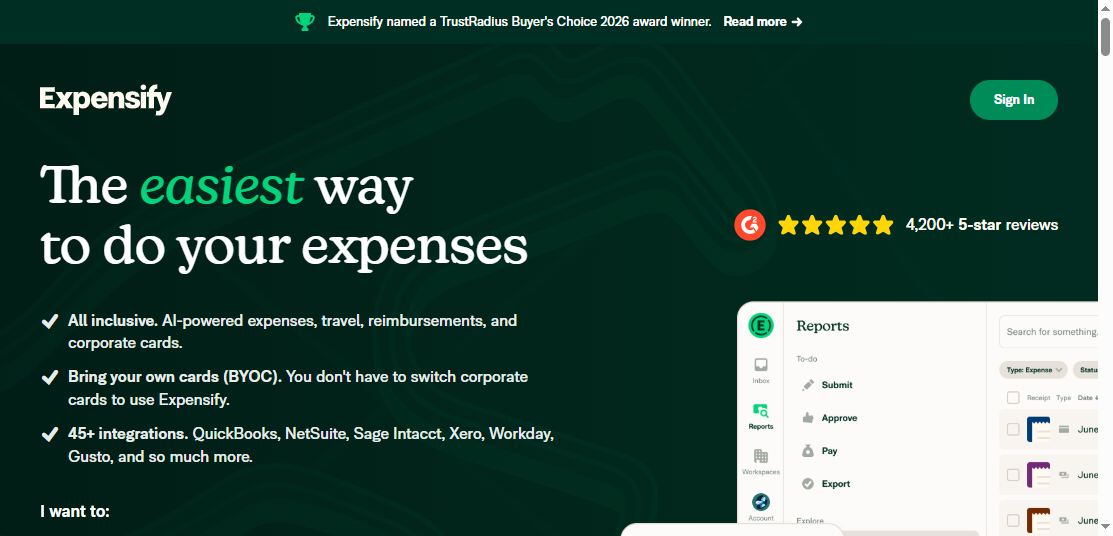
Expensify
One-sentence overview: Expensify is a user-friendly travel expense report software option focused on fast receipt capture, employee-friendly submission, and streamlined reimbursements.
Reimbursement workflows and global payments support
Integrations with accounting and payroll systems
Pros & Cons:
Pros: Easy adoption, strong mobile experience, quick setup, efficient for employee-driven submissions
Cons: Less suitable for highly complex finance controls, limited depth for organizations needing advanced customization
Best For: Growing companies and finance teams that want quick deployment and simple expense workflows
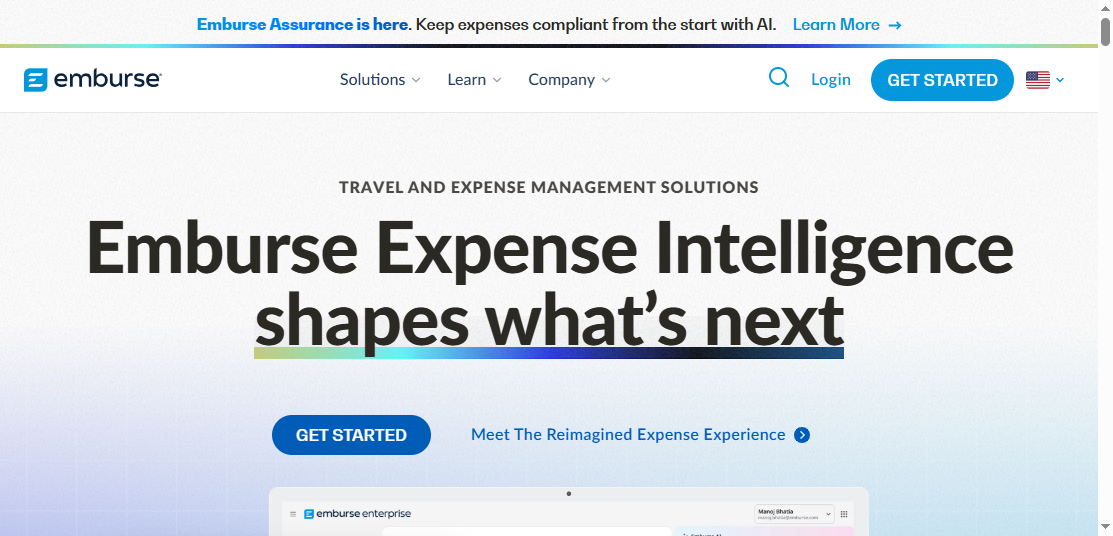
Emburse Professional
One-sentence overview: Emburse Professional is a configurable expense platform that supports finance teams needing stronger compliance, approval flexibility, and broader spend workflow coverage.
Key Features:
Configurable expense, invoice, and travel workflows
Policy controls and automated approval routing
Receipt capture and employee reimbursement tools
Compliance-focused controls and audit support
Analytics and visibility into travel and expense spend
Pros & Cons:
Pros: Good configurability, finance-oriented controls, broader workflow support beyond simple expenses
Cons: Steeper learning curve, setup can require more planning and admin ownership
Best For: Mid-sized and enterprise teams that need configurable controls without moving to the heaviest enterprise stack
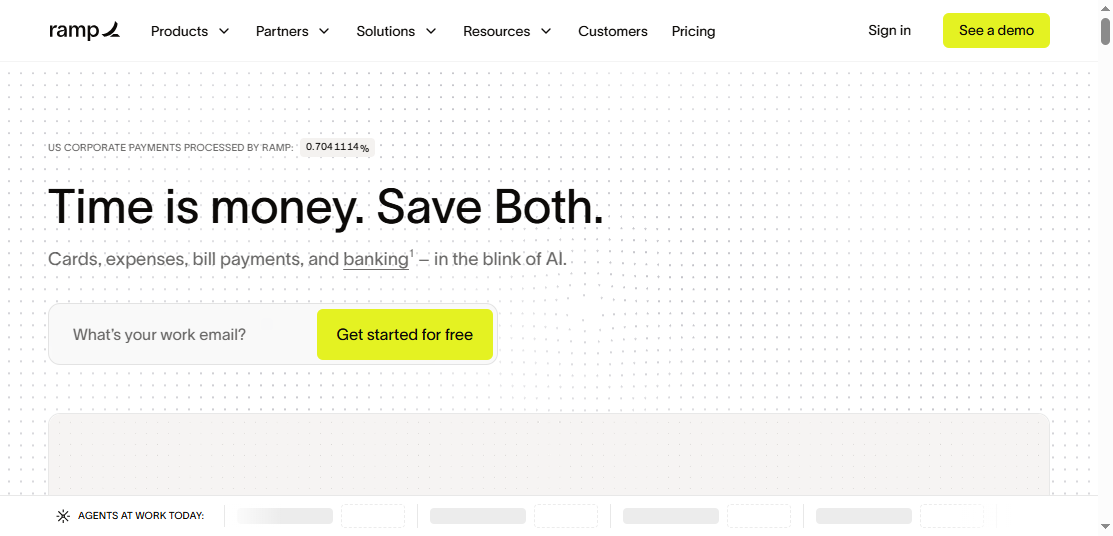
Ramp
One-sentence overview: Ramp is a spend management platform with expense automation and card controls that appeals to finance teams focused on real-time visibility and spend governance.
Key Features:
Corporate cards with spend controls
Automated receipt matching and expense coding
Approval flows and policy rules
Accounting integrations and reconciliation support
Budgeting and spend analytics
Pros & Cons:
Pros: Strong real-time spend visibility, modern UI, efficient card-first workflows
Cons: Travel booking depth may not match dedicated travel platforms, less ideal for highly travel-centric multinational programs
Best For: Finance teams prioritizing card controls, automation, and visibility over traditional travel-heavy workflows
Brex
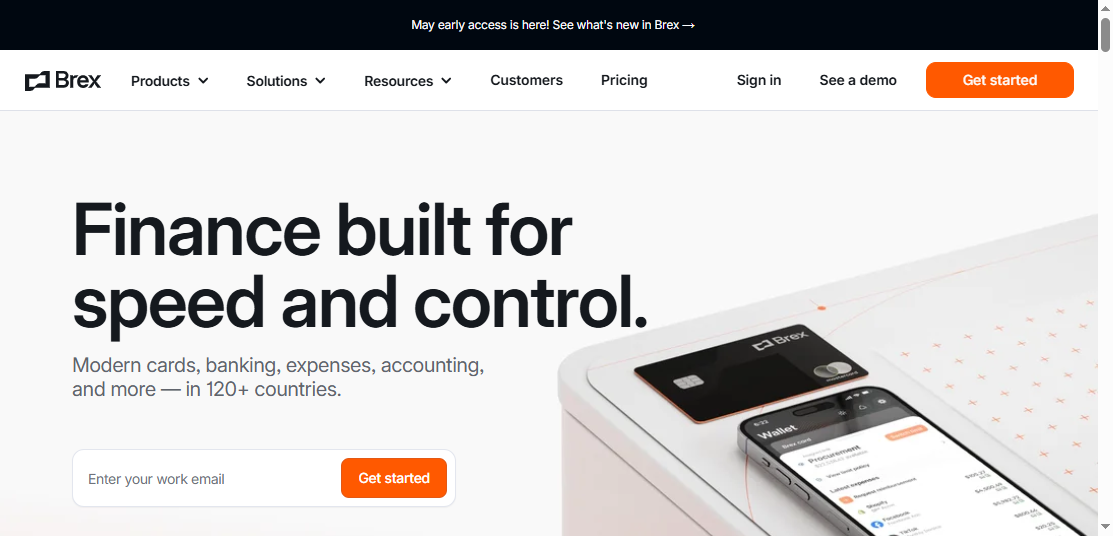
One-sentence overview: Brex offers corporate cards, expense management, and travel capabilities in one spend platform for fast-moving companies.
Cons: May not offer the same depth of configurability as enterprise-focused travel expense report software
Best For: Scaling businesses that want cards, travel, and expense in one platform
Zoho Expense
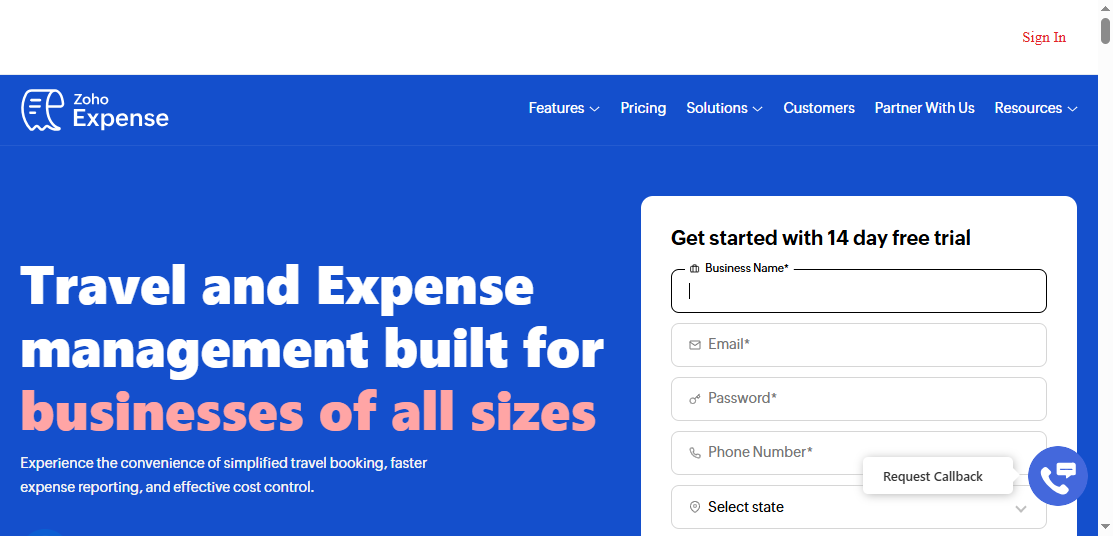
One-sentence overview: Zoho Expense is a practical and affordable travel expense report software choice for teams that need solid automation without enterprise-level complexity.
Key Features:
Receipt scanning and auto-expense creation
Mileage tracking and per diem support
Approval workflows and policy checks
Multi-currency expense management
Integration with accounting tools in the Zoho ecosystem and beyond
Pros & Cons:
Pros: Cost-effective, straightforward setup, good SMB usability
Cons: May not satisfy organizations with very advanced global compliance or ERP orchestration requirements
Best For: SMBs and lower mid-market teams replacing spreadsheets with a structured expense process
Rydoo
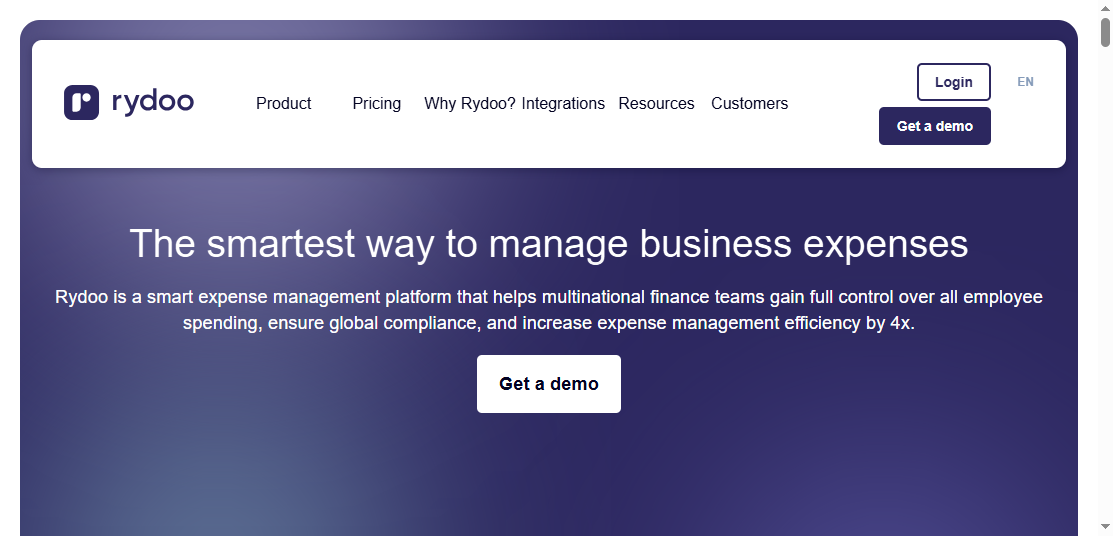
One-sentence overview: Rydoo focuses on mobile expense reporting and travel expense automation for teams that need a clean user experience and international support.
Key Features:
Mobile-first receipt capture
Mileage and per diem handling
Approval workflows and policy flags
Multi-currency support
Accounting integrations and export options
Pros & Cons:
Pros: Easy for employees to use, good international usability, efficient for distributed teams
Cons: Less comprehensive than larger enterprise suites for highly complex finance operations
Best For: International mid-market teams that need usability and cross-border support
What finance teams need from modern expense reporting tools is not just digital receipt storage. The best travel expense report software reduces manual entry, shortens reimbursement cycles, improves compliance, and gives controllers better visibility into spend before month-end.
How automation, policy controls, and reimbursement workflows affect close speed is straightforward: the fewer exceptions finance must chase, the faster expenses can be approved, coded, reimbursed, and exported into the general ledger. Automated receipt extraction, duplicate detection, and policy alerts reduce review time. Structured approval routing prevents delays caused by email-based signoff. Direct reimbursement workflows also lower the number of manual touchpoints between employees, managers, and AP.
The core differences between travel booking, expense capture, approval routing, and ERP sync matter when comparing tools:
Travel booking covers flights, hotels, rail, and car rental reservations under policy.
Expense capture includes receipt OCR, card matching, mileage, and manual out-of-pocket spend entry.
Approval routing determines who reviews what, in what order, and based on which thresholds or entities.
ERP sync controls how approved expense data posts into accounting, ERP, payroll, or reimbursement systems.
A product may be excellent at receipt capture but weaker at travel booking. Another may have deep ERP connectivity but require more implementation effort. Finance teams should evaluate the whole workflow, not just one feature.
Support for card feeds, email receipts, and mileage tracking
Approval workflows, audit controls, and policy enforcement
Custom routing by team, cost center, amount, or entity
Out-of-policy alerts and duplicate detection
Audit trails and exception handling
Integrations with accounting, ERP, payroll, and card programs
Native integrations and API flexibility
Support for reimbursement workflows
Sync quality for coding, reconciliation, and close processes
Pricing transparency, implementation effort, and scalability
Whether pricing is easy to understand
Expected admin workload during rollout
Suitability for SMB, mid-market, or enterprise growth
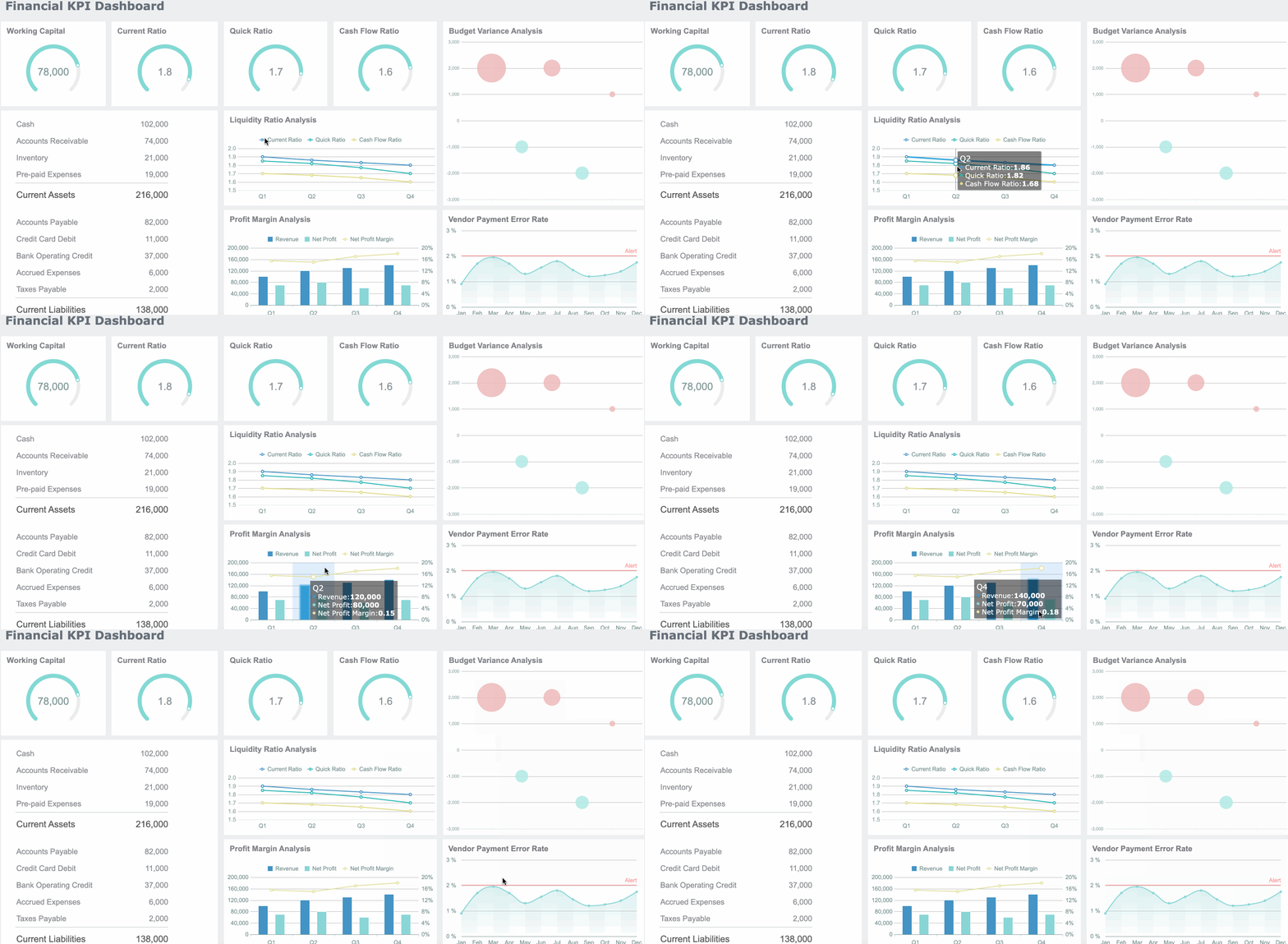
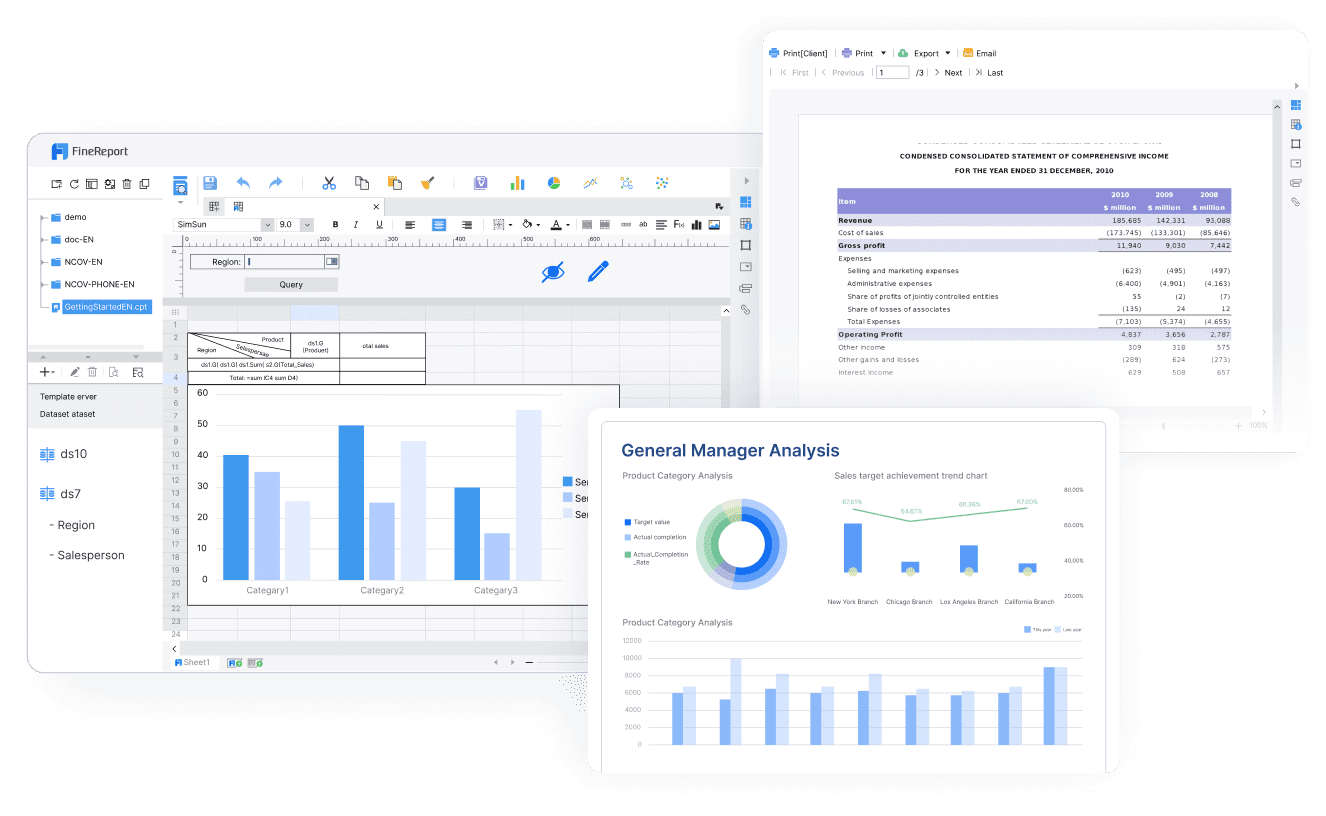
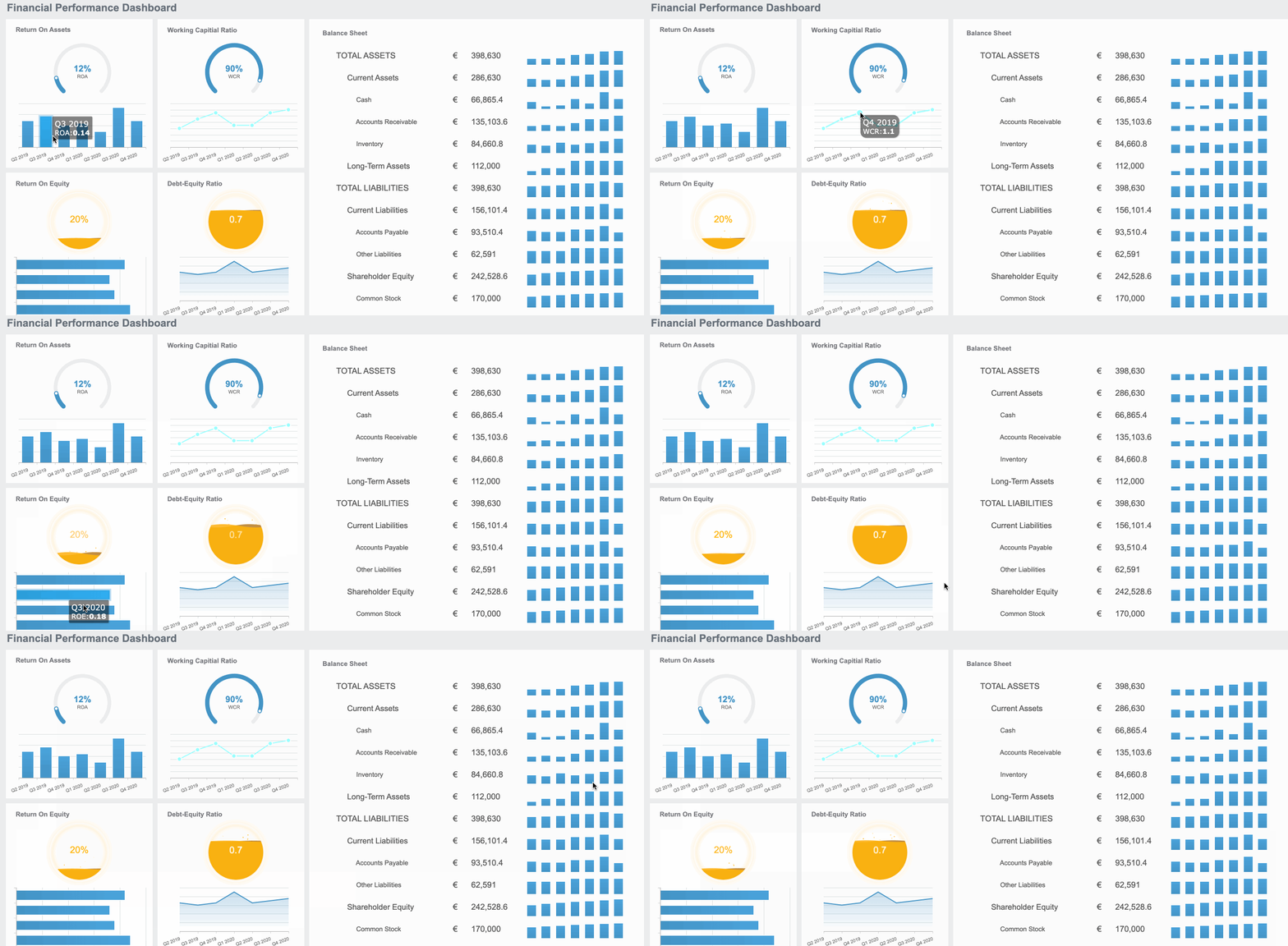
For finance teams, reporting quality also matters after transaction processing. This is where FineReport deserves attention alongside expense systems. While it is not positioned as a direct expense submission tool, it is highly valuable for organizations that want to consolidate travel and expense data from ERP, accounting, reimbursement, and spend platforms into interactive management reports. Finance leaders can use FineReport to build dashboards for policy exceptions, reimbursement aging, travel spend by entity, and close-cycle bottlenecks without relying only on default reports from a single vendor.
Who this comparison is for
This comparison is designed for:
Mid-market and enterprise finance teams
Companies with frequent employee travel and reimbursement needs
Organizations looking to replace spreadsheets or fragmented systems
If your current process depends on emailed receipts, manually keyed spreadsheets, delayed manager approvals, or disconnected travel and accounting systems, a modern travel expense report software platform can significantly improve control and speed.
10 tools compared: strengths, trade-offs, and best-fit use cases
SAP Concur
SAP Concur is often the first name finance leaders consider when they need mature travel and expense functionality at enterprise scale.
One-sentence overview: SAP Concur is a robust travel expense report software platform for global organizations that need integrated travel booking, policy control, and enterprise-grade workflow support.
Key Features:
Travel booking with broad supplier ecosystem support
Automated expense creation and receipt matching
Advanced policy controls and compliance workflows
Audit support and spend visibility tools
Extensive integrations with ERP, HR, payroll, and finance systems
Pros & Cons:
Pros: Excellent for complex global operations, deep policy enforcement, mature ecosystem, broad integration depth
Cons: Higher total cost, more implementation effort, heavier admin complexity than lighter tools
Best For: Enterprise finance teams with complex global travel needs
SAP Concur stands out when travel management and expense policy enforcement need to function as one governed process. It is especially strong for multinational organizations with layered approvals, formal travel programs, and a need for centralized oversight. The trade-off is that many companies will need dedicated implementation planning and ongoing admin support to get the most value from it.
Expensify
Expensify remains popular because it makes expense submission easy for employees and keeps the finance workflow relatively lightweight.
One-sentence overview: Expensify is a travel expense report software solution focused on rapid receipt capture, simple approvals, and quick employee reimbursement workflows.
Key Features:
Mobile receipt scanning and OCR
Fast report generation and submission
Corporate card matching
Reimbursement support and global payments options
Integrations with accounting, payroll, and finance tools
Pros & Cons:
Pros: Excellent user experience, fast adoption, quick deployment, efficient for finance teams that want to reduce manual submission friction
Cons: Less depth for highly customized policy structures or very large enterprise rollouts
Best For: Growing companies that want quick deployment
Expensify is particularly strong when the main problem is employee friction. If travelers delay reports because the process is tedious, the close cycle suffers. A system with strong mobile capture and simple approval flow can materially improve compliance and reimbursement speed.
Emburse Professional is well suited to organizations that need more configurability and finance-facing controls than basic expense tools typically offer.
One-sentence overview: Emburse Professional is configurable travel expense report software that combines expense, invoice, and travel workflows with strong finance controls.
Key Features:
Configurable workflows across expense, invoice, and travel
Automated policy checks and approvals
Receipt capture and reimbursement tools
Compliance and audit support
Spend analytics and visibility
Pros & Cons:
Pros: Strong finance controls, good workflow configurability, broader spend process support
Cons: Can require more setup and training than simpler tools
Best For: Finance teams focused on tighter controls
Emburse Professional is a solid middle ground for teams that have outgrown lightweight expense apps but do not necessarily want the weight of a full enterprise suite. It can be especially useful when policy complexity, approval logic, and compliance matter more than having the simplest possible end-user experience.
Other notable travel and expense platforms
Below are the remaining vendors that stand out for SMB usability, global support, spend visibility, or platform breadth.
Navan
One-sentence overview: Navan links travel booking and expense management tightly, helping finance teams reduce leakage between booked trips and reported spend.
Pros: Strong controls, good international oversight, modern finance visibility
Cons: Travel booking may not be as central as in travel-first tools
Best For: Multi-entity finance teams with global oversight needs
Zoho Expense
One-sentence overview: Zoho Expense is a practical option for companies that want affordable automation and a structured expense process.
Key Features: OCR, mileage, per diem, approval flows, multi-currency support
Pros & Cons:
Pros: Cost-effective, easy to roll out, good for replacing spreadsheets
Cons: Less depth for highly regulated or enterprise-scale environments
Best For: SMBs and lower mid-market teams
Rydoo
One-sentence overview: Rydoo offers mobile-friendly expense reporting and global support for teams with distributed travelers.
Key Features: Mobile capture, per diem, mileage, approval routing, multi-currency support
Pros & Cons:
Pros: Good usability, international readiness, employee-friendly
Cons: Not as broad as some enterprise suites
Best For: International mid-market teams
Coupa
One-sentence overview: Coupa is best known as a broader spend management platform that includes expense functionality inside a larger governance framework.
Cons: May be more than needed for teams focused mainly on travel expense reporting
Best For: Enterprises consolidating wider spend operations
For teams comparing these options, it is also worth planning how post-implementation analytics will work. Native dashboards are often useful operationally, but finance often needs more custom views across entities, cost centers, currencies, and reimbursement statuses. FineReport can support this layer by helping teams build centralized finance dashboards on top of expense system data, especially when leaders need board-ready reporting or cross-system analysis.
The best travel expense report software should do more than capture receipts. Finance teams need systems that reduce review effort while improving policy adherence.
Key capabilities include:
Custom approval chains
Route by department, amount, legal entity, project, or traveler role
Audit trails
Record every edit, approval, rejection, and policy exception
Duplicate detection
Catch reused receipts, duplicate card charges, or repeated claims
Policy alerts
Flag noncompliant spend before reimbursement
VAT, tax, mileage, and per diem support
Important for companies with international travel or tax recovery needs
Multi-entity handling
Critical for groups with shared services or regional finance structures
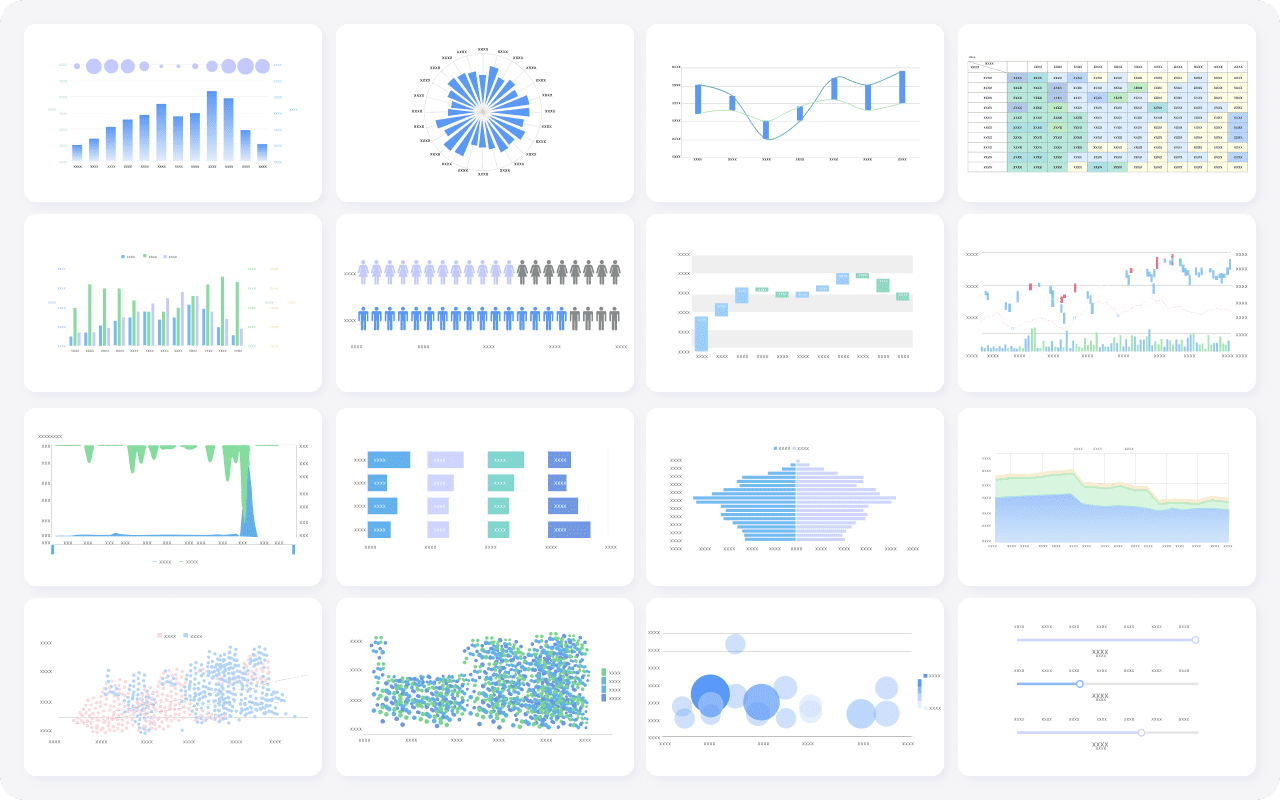
Finance leaders should also evaluate reporting flexibility. Operational reports for reimbursement aging, out-of-policy trends, expense type mix, and entity-level spend are essential. If native reporting is limited, a reporting platform such as FineReport can help extend analytics without forcing teams to export raw data into spreadsheets every month.
Integration and rollout considerations
Even strong software can underperform if rollout and integration are weak.
Important considerations include:
ERP and accounting integrations
Can approved expenses sync automatically with correct coding and dimensions?
Reimbursement methods
Does the system support payroll, AP, direct reimbursements, or global payout options?
Corporate card support
Are feeds reliable, and can transactions be matched automatically?
Admin workload
How much maintenance is required for policies, users, entities, and workflows?
Employee adoption
Will travelers actually use the app during trips?
Onboarding and change management
Is the product easy to explain and govern at scale?
A common mistake is choosing software based only on employee convenience or only on finance control. The better approach is balancing both. Employee adoption drives data completeness. Finance governance drives accuracy and compliance. The right platform supports both outcomes.
Before choosing a travel expense report software platform, finance teams should clarify priorities.
What problem are you solving first?
Better visibility?
Faster reimbursement?
Stronger policy compliance?
Better traveler experience?
Which systems must integrate from day one?
ERP
Accounting software
Payroll
HRIS
Corporate card programs
Travel booking tools
What level of configurability is necessary?
Simple manager approval may be enough for some teams
Others need routing by amount, entity, project, or cost center
How global is your expense environment?
Multi-currency
Tax rules
Reimbursement by country
Entity-level controls
How much implementation effort can you support?
Some platforms are operational in days
Others need a formal project team and phased rollout
It is also smart to ask how finance reporting will work after go-live. If your stakeholders need executive dashboards, exception analysis, or blended reporting across expense systems and ERP data, include that requirement early. This is another area where FineReport can add value as a reporting layer for finance operations.
Final recommendations by team type
Best fit for enterprise finance teams with complex global travel needs:SAP Concur
Best when global travel programs, mature policy controls, and enterprise integrations matter most
Best fit for growing companies that want quick deployment:Expensify
Best when speed, ease of use, and simplified employee submission are the top priorities
Best fit for teams focused on expense automation, visibility, or tighter controls:Emburse Professional, Ramp, or Payhawk
Emburse Professional for configurable finance workflows
Ramp for real-time spend automation and card-led control
Payhawk for multi-entity visibility and spend governance
Best fit for cost-conscious teams replacing spreadsheets:Zoho Expense
A practical choice for companies that need structure without enterprise complexity
Best fit for unified travel and expense modernization:Navan
Strong option when booking and expense workflows should live in one connected process
The best travel expense report software is the one that matches your finance operating model, not just the one with the longest feature list. For many finance teams, the ideal stack includes both a transaction platform for capture, approval, and reimbursement and a reporting layer for deeper visibility. That is why tools like FineReport can complement expense systems well, giving finance leaders better control over travel spend analytics, policy tracking, and close-cycle reporting across the business.
FAQs
The best option depends on your priorities, such as global compliance, ease of use, travel booking, or card-based spend control. SAP Concur suits complex enterprises, while tools like Expensify, Navan, Ramp, Brex, and Payhawk fit different operational needs.
Finance teams should compare policy controls, approval workflows, ERP and accounting integrations, mobile receipt capture, reporting, and global support. The right platform should match your company size, travel complexity, and internal control requirements.
Large and multinational companies usually need strong compliance controls, multi-entity support, and broad integrations. SAP Concur and Payhawk are often better fits for these requirements than lighter tools built for simpler workflows.
Yes, most leading platforms integrate with ERP, accounting, payroll, or HR systems to reduce manual entry and speed up reconciliation. Integration depth varies, so finance teams should verify compatibility with their existing stack before buying.
The most important features usually include receipt OCR, automated policy checks, approval routing, reimbursement workflows, spend analytics, and corporate card support. If travel booking is central to your process, native booking and real-time policy enforcement also matter.
Product Trial
FineReport
Pixel-perfect reports · Interactive dashboards · Easy data entry · Digital twins