Telecommunications analytics uses advanced tools to analyze large volumes of network and customer data. You gain insights that help you solve problems and improve how your business operates. Telecommunications analytics matters because it guides data-driven decision making, helping you understand network performance and what customers need.
The global telecommunications analytics market is growing fast, with projections reaching nearly USD 19.77 billion by 2033. When you use analytics, you can predict network traffic, allocate resources in real time, and identify issues before they affect customers. This strengthens customer experience and lets you offer personalized services. Analytics helps you deliver reliable connections and keep customers satisfied.
How Telecommunications Analytics Works
Data Sources and Integration
You start yourtelecom analytics journeyby gathering data from many sources. Telecom analytics platforms bring together network data, user data, device data, internal operations, and partner data. This integration is essential because telecom companies handle massive volumes of data every day. By combining these sources, you can maintain performance and scale your analytics as your business grows.
The typical workflow for telecommunications analytics begins with collecting and structuring data. You store this data in data lakes or cloud data warehouses. This approach helps you manage the increasing volume and complexity of telecom data. Integration tools allow you to connect to both traditional databases and modern cloud platforms, making it easier to unify your data for analysis.
Step Number
Step Name
Description
1
Collecting Data
Identify daily operational data sources to collect relevant information and structure it for storage.
2
Storing Data
Store data in data lakes or cloud data warehouses to manage the increasing volume of data.
3
Processing Data
Convert and organize data for accurate results using various processing methods.
4
Cleansing Data
Remove errors, inconsistencies, and duplicates from the data.
5
Analyzing Data
Convert raw data into valuable insights using different analytical methods.
Data Processing and Analysis
Once you have integrated your data, you move to processing and analysis. You ingest streams and batch feeds into a central repository, using tools like Spark for large-scale processing. You apply quality rules and feature engineering to prepare your data for analysis. Machine learning models help you classify, forecast, and detect anomalies in your telecom data. You then operationalize these insights by integrating them into your business systems.
You use data analytics methods such as descriptive, diagnostic, predictive, and prescriptive analytics. These methods help you transform raw data into actionable insights. By cleansing your data and applying advanced analytics, you can make informed decisions that improve network performance and customer satisfaction.
Tools for Telecom Analytics (FineBI)
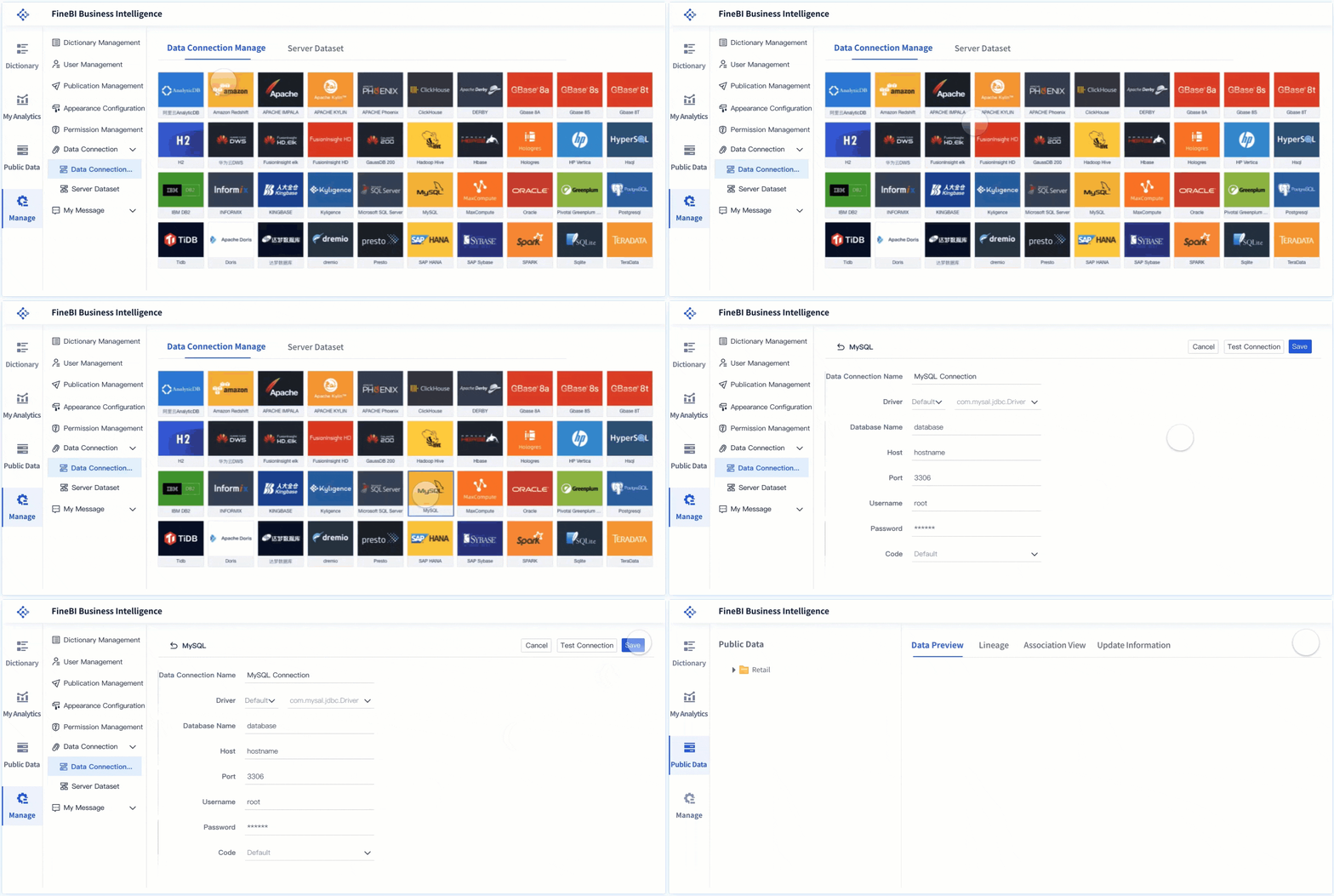
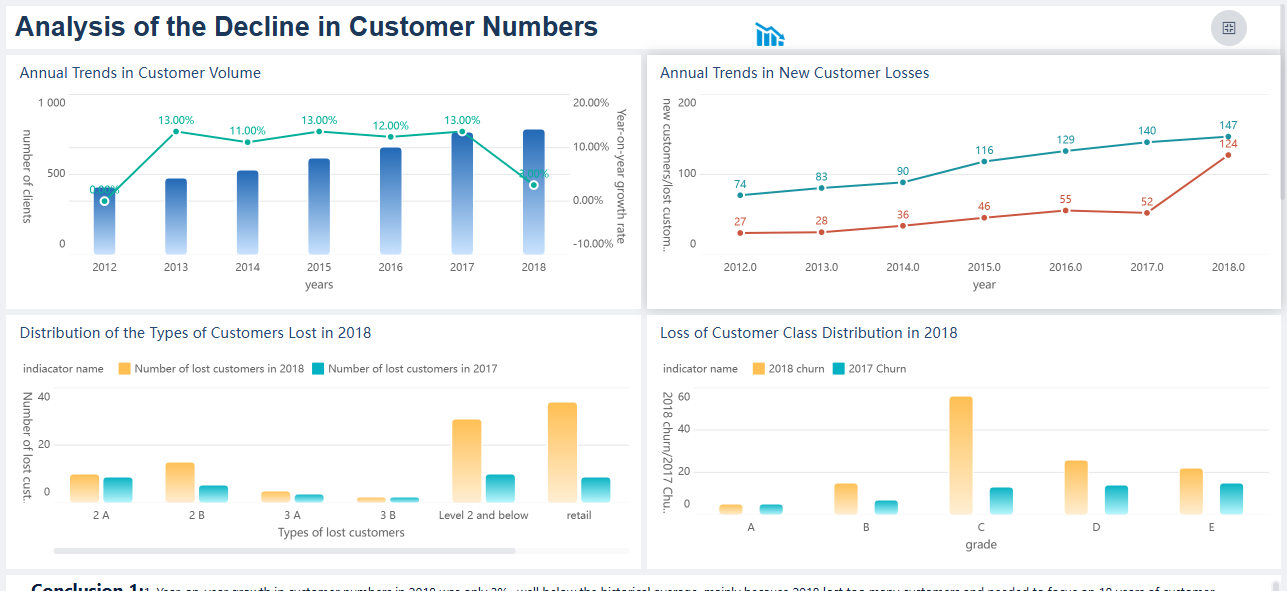
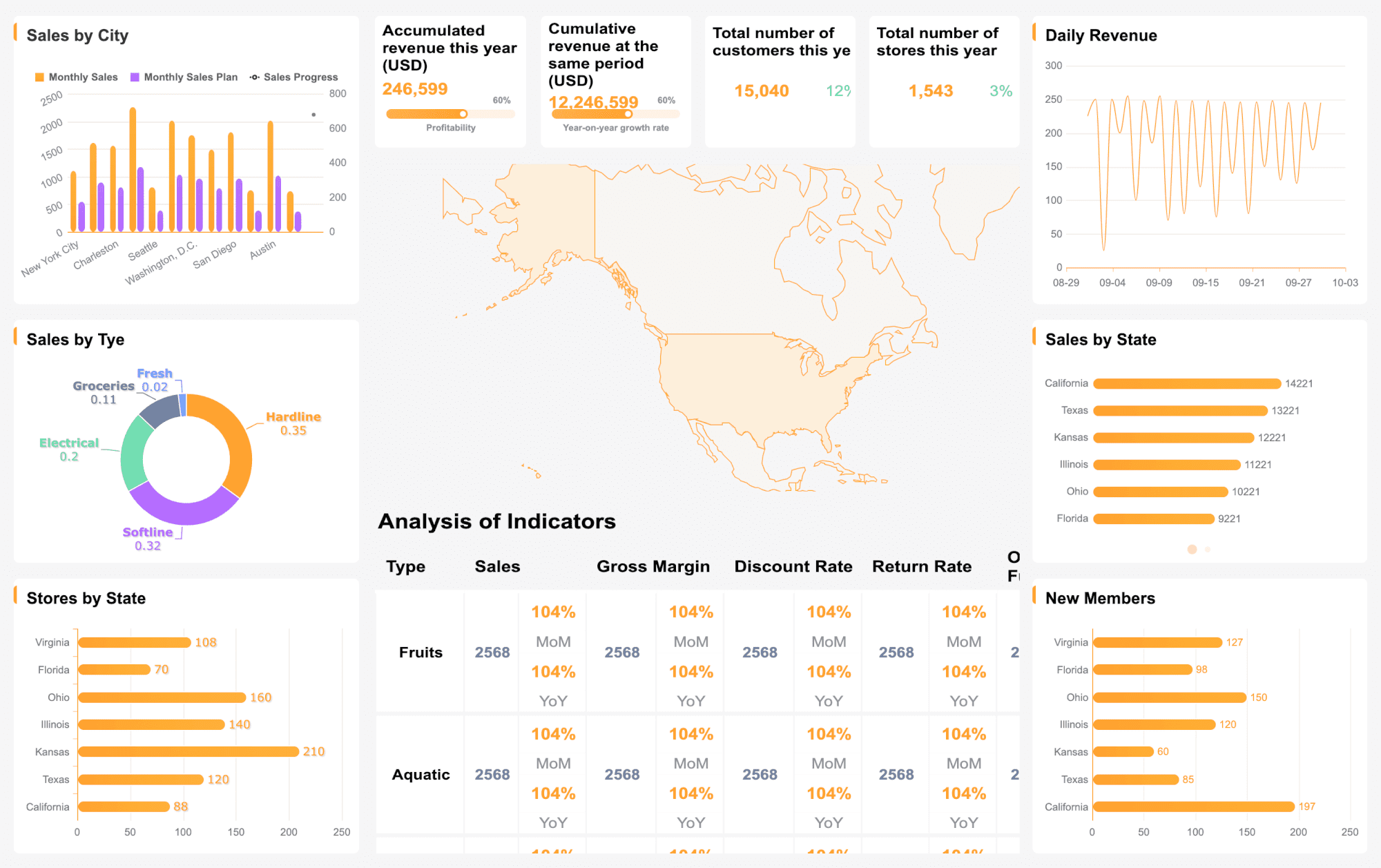
FineBIstands out as a powerful tool for telecom analytics. You can connect to over 60 types of data sources, including big data platforms, cloud data warehouses, and APIs. FineBI supports real-time data analytics, allowing you to analyze data as soon as it updates. Its self-service dashboards let you explore data visually and share insights across your organization.
FineBI’s architecture supports big data and cloud integration, offering scalability and high performance. You can process massive datasets and deliver analytics to thousands of users at once. FineBIalso provides advanced analytics features, such as predictive modeling and automated data cleansing. With FineBI, you gain a unified platform for all your telecom analytics needs, from data integration to actionable insights.
Telecom analytics includes several approaches that help you understand and improve your network and customer experience. Each type of analytics serves a unique purpose and provides different insights from your data.
Descriptive Analytics
Descriptive analytics summarizes historical data to show you what happened in your telecom operations. You can use this approach to identify trends, patterns, and relationships in past events. For example, you might analyze customer demographics and usage patterns to see which groups prefer unlimited data plans or prioritize voice call quality. This helps you tailor services to meet customer needs.
Demographic Group
Preferences
Usage Patterns
Younger Customers
Prefer unlimited data plans
Extensive use of streaming services
Older Customers
Prioritize voice call quality
Focus on customer service
Diagnostic Analytics
Diagnostic analytics helps you discover why certain events occurred in your network. You use this approach to identify root causes by finding patterns or correlations in your data. For instance, you might investigate reasons behind dropped calls or network outages. This allows you to resolve issues and improve service reliability.
Application Area
Description
Network Outage Analysis
Identifying causes of network outages to prevent future problems.
Call Drop Analysis
Investigating dropped calls to improve reliability.
Service Quality Investigation
Analyzing service quality issues for better customer satisfaction.
Predictive Analytics
Predictive analytics uses historical data and machine learning to forecast future trends and events. You can predict customer churn by applying models such as logistic regression, support vector machines, or random forests. These models help you identify customers at risk of leaving, so you can take action to retain them. Predictive modeling in telecom analytics supports proactive decision-making and improves customer retention.
Churn prediction techniques focus on customer behaviors that signal potential churn.
Random forests often provide the highest accuracy for predicting churn.
Prescriptive Analytics
Prescriptive analytics guides you on what actions to take based on data-driven insights. You use this approach to optimize resource allocation and improve operational efficiency. For example, you can predict network performance and adjust bandwidth allocation to enhance service quality. Prescriptive analytics empowers you to make informed decisions that reduce costs and boost efficiency.
Informed decision-making relies on actionable guidance from analytics.
Operational efficiency improves when you optimize resources using data analytics.
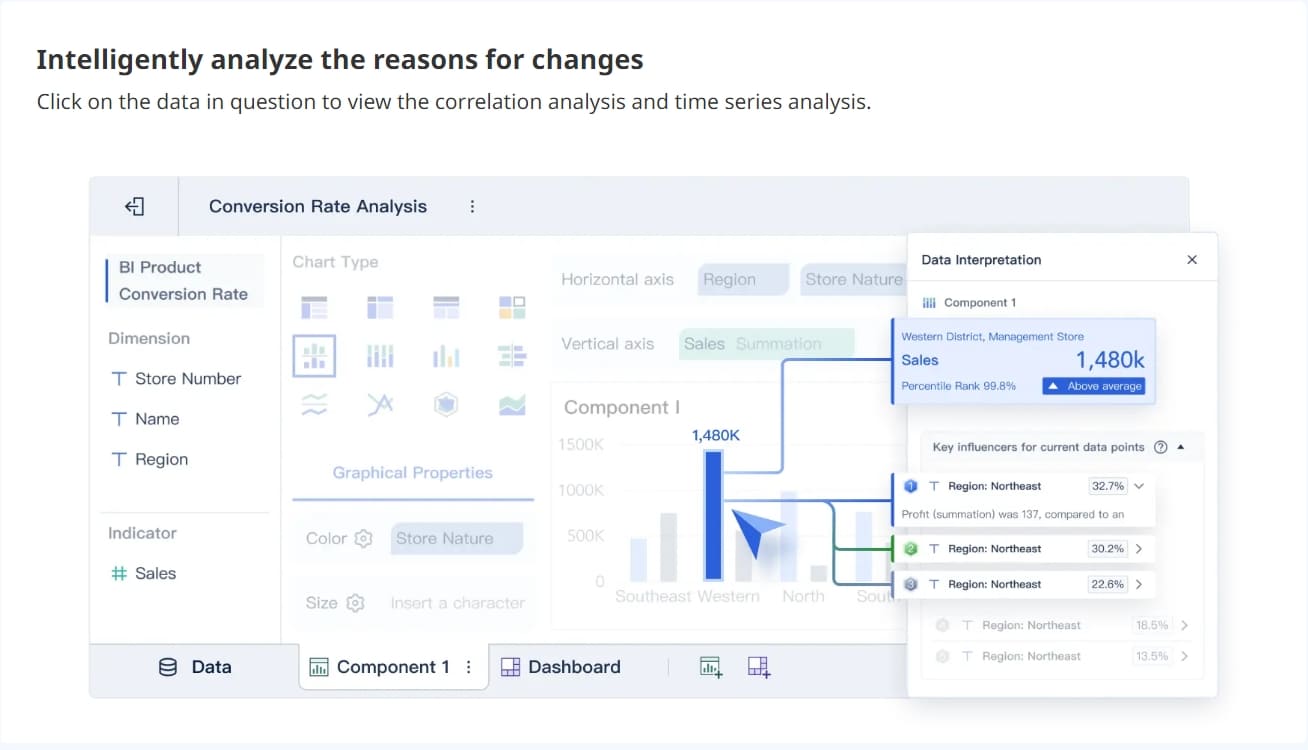
FineBIsupports all these types of telecom analytics. You can use its advanced analytics features, including predictive modeling and prescriptive analytics, to gain deeper insights and drive better outcomes for your business.
Telecommunications analyticsgives you the power to transform your business operations and deliver greater value to your customers. By using analytics, you can improve network performance, enhance customer experience, reduce churn rates, and prevent fraud. Let’s explore how these benefits impact your organization.
Improving Network Performance
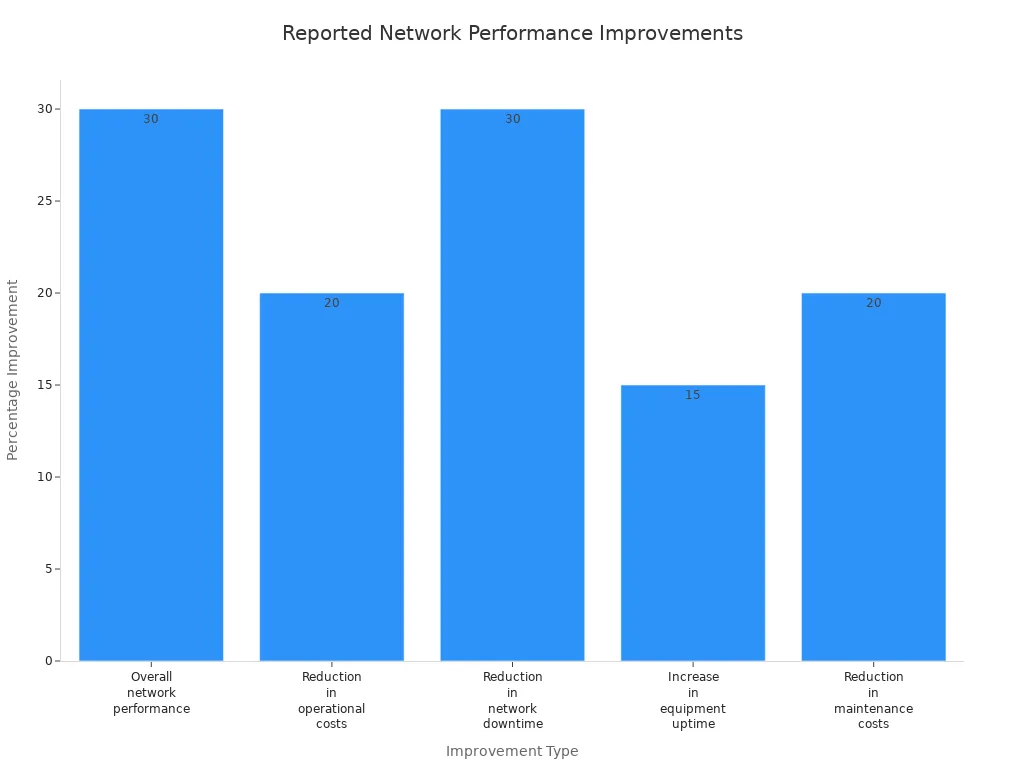
You rely on your network to deliver consistent and reliable service. Telecommunications analytics helps you monitor network health, predict failures, and optimize resources. When you use analytics, you can identify bottlenecks, forecast demand, and schedule maintenance before issues arise. This proactive approach leads to measurable improvements.
Improvement Type
Percentage Improvement
Overall network performance
Up to 30%
Reduction in operational costs
20%
Reduction in network downtime
Up to 30%
Increase in equipment uptime
15%
Reduction in maintenance costs
20%
With these improvements, you can deliver better service and reduce costs. FineBIenables you to track key performance indicators (KPIs) in real time, so you always know how your network is performing.
Enhancing Customer Experience with Telecommunications Analytics
Your customers expect seamless connectivity and personalized service. Telecommunications analytics allows you to understand customer needs and behaviors. You can use data analytics to map the customer journey, identify pain points, and tailor your offerings.
Evidence Description
Impact on Customer Satisfaction
Analytics tools provide insights for personalized experiences.
Tailored services enhance customer satisfaction.
Proactive service through monitoring live network performance.
Reduces service interruptions, improving satisfaction.
Customer journey mapping identifies opportunities for enhancing satisfaction.
Helps in addressing customer needs effectively.
Understanding customer needs leads to higher NPS scores and loyalty.
Directly correlates with improved customer satisfaction.
Reduced customer churn and increased revenue through effective engagement strategies.
Enhances brand reputation and customer loyalty.
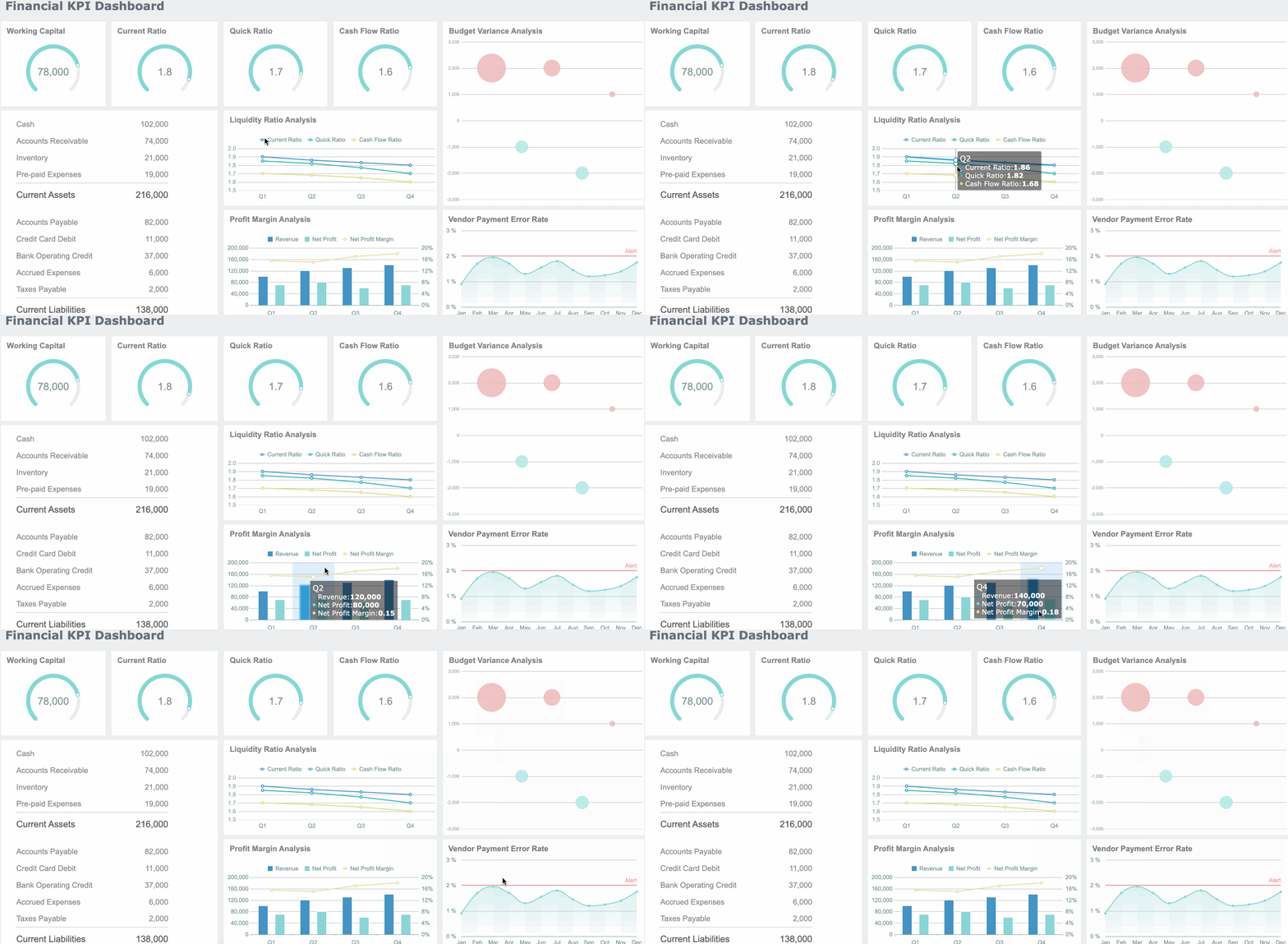
You can use analytics to deliver proactive support and resolve issues before they affect your customers. This approach increases customer loyalty and improves your Net Promoter Score (NPS). FineBI's dashboards help you visualize customer experience metrics and take action quickly.
Reducing Churn Rates with Telecommunications Analytics
Customer churn is a major concern for telecom operators. When you lose customers, you lose revenue and market share. Telecommunications analytics helps you identify early signs of customer churn by analyzing usage patterns, complaints, and service interactions. You can then intervene with targeted offers or support.
KPI
Description
Customer Churn
The number of customers that leave a company divided by the total number of customers.
Net Promoter Score (NPS)
Measures how likely a customer is to recommend your company to others.
First Call Resolution
Tracks the percentage of customer queries resolved in the very first interaction.
You can use predictive models to forecast which customers are at risk of leaving. By acting early, you improve retention and reduce churn rates. For example, NTT DATA Taiwan used analytics to integrate data from multiple systems, enabling self-service analysis and smarter decision-making. This approach helped them address customer churn and improve operational efficiency.
Advanced Fraud Detection and Prevention in Telecommunications Analytics
Fraud can cause significant financial losses for telecom operators. Telecommunications analytics gives you the tools to detect and prevent fraud in real time. You can analyze call patterns, billing records, and network activity to spot unusual behavior.
Common types of telecom fraud detected through analytics platforms include:
International Revenue Sharing Fraud (IRSF): Costs the industry billions each year by exploiting premium numbers.
Wangiri Fraud: Involves single-ring calls that trick customers into calling back expensive numbers.
Interconnect Bypass Fraud: Also known as SIM box fraud, leading to major revenue losses.
Telecom Arbitrage Fraud: Takes advantage of price differences in international call rates.
By using analytics, you can reduce the risk of fraud and protect your business. FineBIsupports advanced fraud detection by enabling you to monitor transactions and set up alerts for suspicious activity.
Note: Analytics not only helps you prevent losses but also builds trust with your customers by ensuring secure and reliable service.
Real-World Value: Industry Use Cases
You can see the impact of telecommunications analytics in real-world scenarios. In the semiconductor industry, analytics solutions have improved production efficiency, quality control, and decision-making. Companies use dashboards to monitor operations, receive real-time alerts, and unlock the value of their data.
Use Case
Description
Predictive Churn Analysis
Analytics can identify early signs of churn, allowing operators to intervene before customers leave.
Fraud Management
Big data analytics can detect unusual calling patterns to prevent fraud effectively.
Product Development
Data analytics helps in designing products that meet changing consumer needs based on usage data.
Targeted Marketing
Analytics can identify customer interests, enabling tailored marketing strategies for different segments.
Network Performance Monitoring
Predictive analytics can forecast network failures, allowing for proactive maintenance.
Customer Support Automation
Analyzing helpdesk data can reveal common issues, prompting automation in customer service.
New Customer Acquisition
Analytics helps create detailed profiles for targeted marketing to attract new customers.
Seasonal Offers
Data can indicate demand for specific products, like tourist SIMs, leading to timely promotions.
NTT DATA Taiwan’s experience shows how integrating analytics into your business can drive sustainable growth and smarter decisions.
FineBI: Your Partner in Telecommunications Analytics
FineBI empowers you to harness the full potential of telecommunications analytics. You can connect to diverse data sources, process massive datasets, and visualize insights through self-service dashboards. FineBIsupports real-time monitoring, KPI tracking, and advanced analytics, including predictive modeling and fraud detection. With FineBI, you can improve network performance, enhance customer experience, and make data-driven decisions that set you apart in a competitive market.
Challenges and Best Practices in Telecommunications Analytics
Common Implementation Challenges in Telecommunications Analytics
When you implement telecommunications analytics, you often face several obstacles that can slow progress and reduce effectiveness. One of the biggest issues is the presence ofdata silos. These silos prevent teams from sharing valuable data across your organization. As a result, you may find that your data scientists spend too much time preparing data instead of focusing on strategic analysis. This leads to delays and lost business value.
Data silos also create barriers to accessibility. When you cannot integrate data from different systems, you struggle to deliver timely and accurate information. Manual data gathering becomes time-consuming and error-prone. Inconsistent reports and outdated insights can undermine trust in your analytics and lead to poor decisions.
You also need to address other significant challenges:
Challenge
Description
AI and Machine Learning Integration
Integrating AI and machine learning into legacy systems is difficult, especially when you lack skilled personnel.
Cybersecurity Threats
Complex telecom networks are more vulnerable to cyberattacks, risking both operations and customer data.
Data Privacy Concerns
Managing large volumes of customer data raises privacy issues and increases regulatory scrutiny.
Best Practices for Success with Telecommunications Analytics
To overcome these challenges, you should follow proven best practices:
Engage stakeholders early and align your analytics projects with business value. This ensures that your efforts support your organization’s goals.
Establish clear communication channels and organizational structures. Regular engagement with executives and team members helps secure investment and support.
Increase the business acumen of your analytics teams. When your teams understand business needs, they deliver more relevant insights.
You can also learn from successful organizations:
Foster strong engagement with both customers and engineers by promoting transparency and open communication.
Create an Analytics Council to govern data management and analytics activities. This leads to better investment in data-driven initiatives.
Schedule regular communication with executives to keep analytics aligned with business objectives and drive measurable results.
Leveraging self-service business intelligence tools like FineBIcan make a big
difference. These solutions help you address personnel shortages by allowing business users to access analytics without specialized skills. This accessibility encourages collaboration and enables more team members to work with data.
Effective telecommunications analytics solutions also support regulatory compliance and strong data governance. You should regularly review and update governance policies to reflect changing regulations. Use data lineage tools to trace data origins and transformations for auditing. Implement encryption and access controls to protect sensitive information. High-quality data is essential for accurate analytics, better customer service, and strategic planning.
Tip: When you combine self-service analytics, strong governance, and open collaboration, you unlock the full potential of telecommunications analytics for your organization.
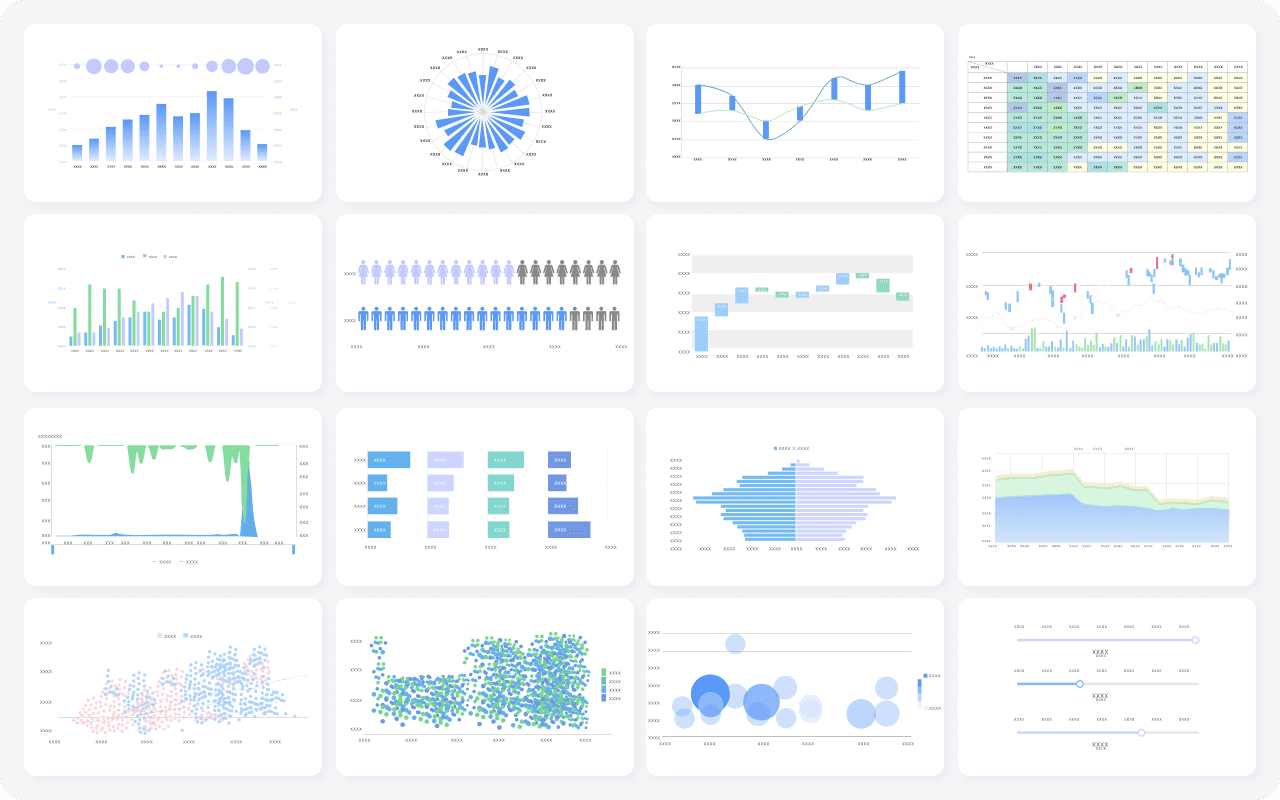
FineBI's Rich Built-in Chart Options For Data Visualization
Telecommunications analytics is essential for modern telecom operations. You use data to transform raw information into actionable insights, improve reliability, and tailor services for customers. The table below highlights key benefits:
Benefit
Description
Cost Savings
Prevents unexpected failures and reduces repair costs.
Improved Reliability
Ensures optimal network performance for customers.
Resource Efficiency
Allocates resources based on data-driven priorities.
You gain a competitive edge by adopting advanced analytics tools like FineBI. Predictive analytics helps you identify at-risk customers, develop retention strategies, and enhance customer support. Next steps include AI-powered network optimization, real-time customer experience analytics, and cloud data integration.
Continue Reading About Telecommunications Analytics
Access a wealth of case studies, industry insights, and solution guides to accelerate digital transformation.
FAQ
What is telecommunications analytics?
Telecommunications analytics uses data analysis tools to help you understand network performance and customer behavior. You can use these insights to improve service quality and make better business decisions.
How can telecommunications analytics reduce customer churn?
You can use telecommunications analytics to identify patterns in customer usage and complaints. Predictive models show which customers might leave. You can act early to retain them with targeted offers or improved support.
What types of data does telecommunications analytics use?
You analyze data from network devices, customer interactions, billing records, and service usage. Telecommunications analytics combines these sources to give you a complete view of your operations.
How does FineBI support telecommunications analytics?
FineBI connects to many data sources and processes large datasets quickly. You can create dashboards, track KPIs, and use predictive analytics to improve network performance and customer experience.
Is telecommunications analytics secure and compliant?
You can protect sensitive data with access controls and encryption. Telecommunications analytics platforms like FineBI support data governance and help you meet privacy regulations.