Data analytics in telecom industry refers to using advanced methods to collect, process, and interpret data from network operations, customer interactions, and business systems. You can see its significance in the rapid market growth, with industry value reaching $7.07 billion in 2024 and projected to grow at over 14% CAGR through 2035.
Benefit
Description
Network Optimization
You improve service quality and reduce downtime by predicting network issues.
Customer Experience
You use data insights to make decisions that increase customer satisfaction.
Revenue Management
You enhance pricing and reduce churn with data-driven strategies.
FineBIoffers a modern solution for telecom analytics, helping you unlock practical benefits and address real-world challenges.
Data Analytics in Telecom Industry
Definition and Scope
You encounterdata analytics in telecom industryevery time you use your phone, browse the internet, or interact with a service provider. This field involves collecting, processing, and analyzing vast amounts of data generated by network operations, customer interactions, and business systems. You use these insights to improve network performance, optimize resources, and deliver better services.
The scope of data analytics in telecom industry covers several types of analytics. You can see how each type supports different aspects of telecom operations in the table below:
Type of Analytics
Description
Applications in Telecom
Descriptive analytics
Summarizes historical data to provide insights into past events.
You rely on these analytics to understand what happened, why it happened, what might happen next, and what actions you should take. This approach helps you address challenges such as network outages, customer churn, and fraud.
Data analytics in telecom industry alsoconsolidates data from multiple sources. You use this capability to streamline operations and make decisions faster. You can personalize services, improve workflows, and create tailored solutions for specific consumer needs.
Aspect
Description
Customer Experience
Data analytics systems enhance customer experience by personalizing services and workflows.
Insights into Consumer Behavior
Helps businesses understand consumer patterns to formulate effective strategies.
Streamlined Operations
Consolidates data from various sources for efficient decision-making and problem-solving.
Improved Network Performance
Automates operations and uses data-driven insights to enhance network coverage and security.
Business Growth
Optimizes operations and creates tailored solutions to meet specific consumer needs.
Importance for Telecom Companies
You see telecom analytics as a critical tool for staying competitive in the telecommunications industry. You use it to address several key business needs. The reasons for investing in data analytics in telecom industry include:
Reason for Investment
Description
Enhance Customer Experience
Data analytics helps telecom companies understand and anticipate customer needs, improving satisfaction.
Optimize Network Performance
Analytics provide insights that help in managing and improving network efficiency.
Reduce Churn
By analyzing customer behavior, companies can identify at-risk customers and take action to retain them.
Identify Monetization Opportunities
Data analytics enables companies to discover new revenue streams and optimize existing ones.
Improve Operational Efficiency
Centralized data analysis allows for better decision-making and resource allocation across departments.
Foster Innovation
Insights from data can lead to new ideas and improvements in services and products.
You use telecom analytics to segment customers, target marketing efforts, detect fraud, and optimize pricing. You can group customers based on shared behaviors, focus resources on high-value segments, and prevent fraudulent activities. You also analyze customer behavior to set competitive pricing and maximize revenue.
You achieve measurable business outcomes by adopting data analytics in telecom industry. You improve customer retention by identifying early signs of churn and intervening before customers leave. You enhance operational efficiency by gaining insights into resource usage and workforce productivity. You increase revenue through targeted marketing and pricing strategies.
Business Outcome
Description
Improved Customer Retention
Data analytics helps identify early signs of churn, allowing operators to intervene before customers leave.
Enhanced Operational Efficiency
Analytics provide insights into resource usage and workforce productivity, leading to better operations.
Increased Revenue
Targeted marketing and pricing strategies based on data analytics can lead to higher sales and customer engagement.
You optimize billing, mine and model data, and even create new revenue streams by selling anonymized data while maintaining user privacy.
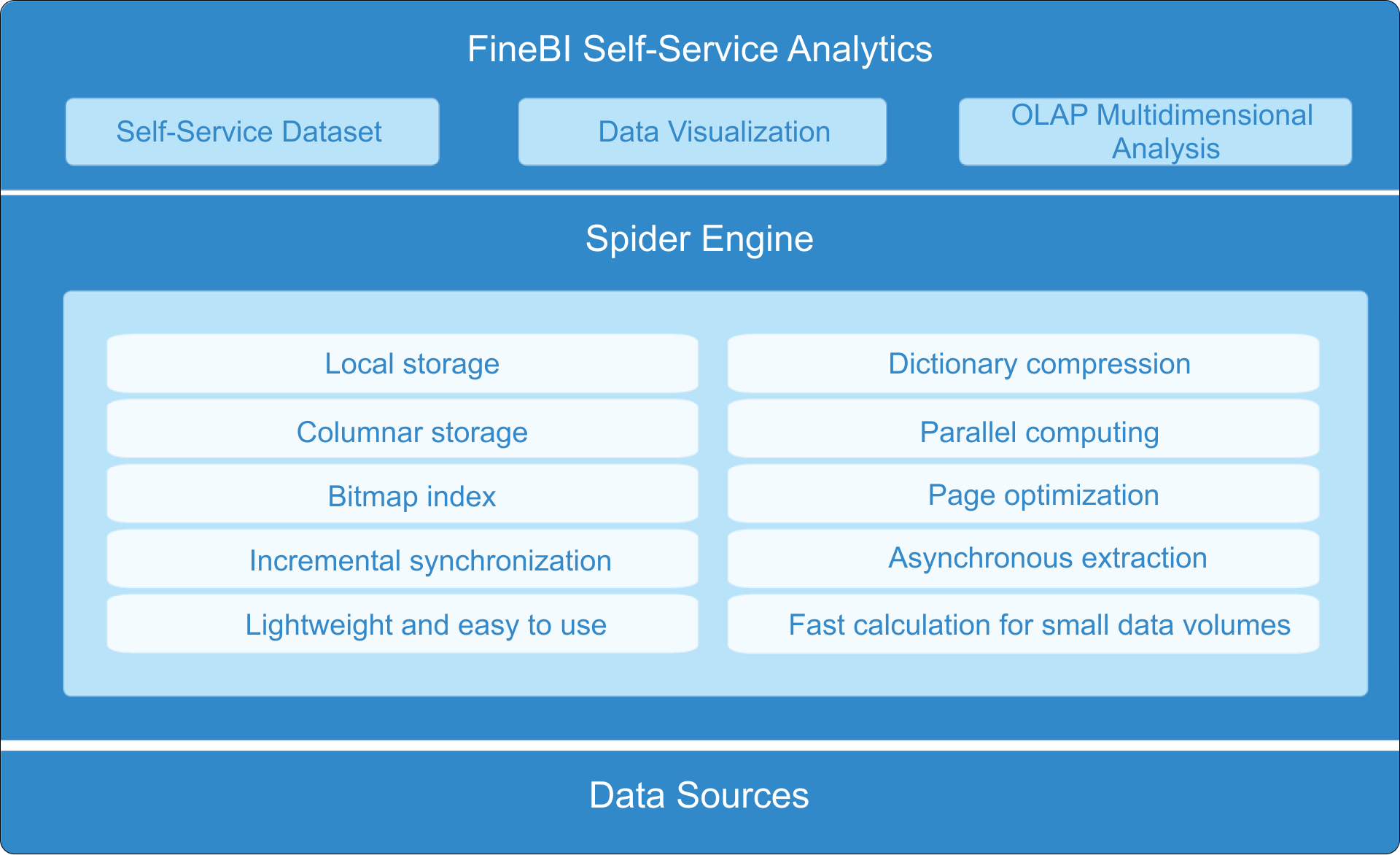
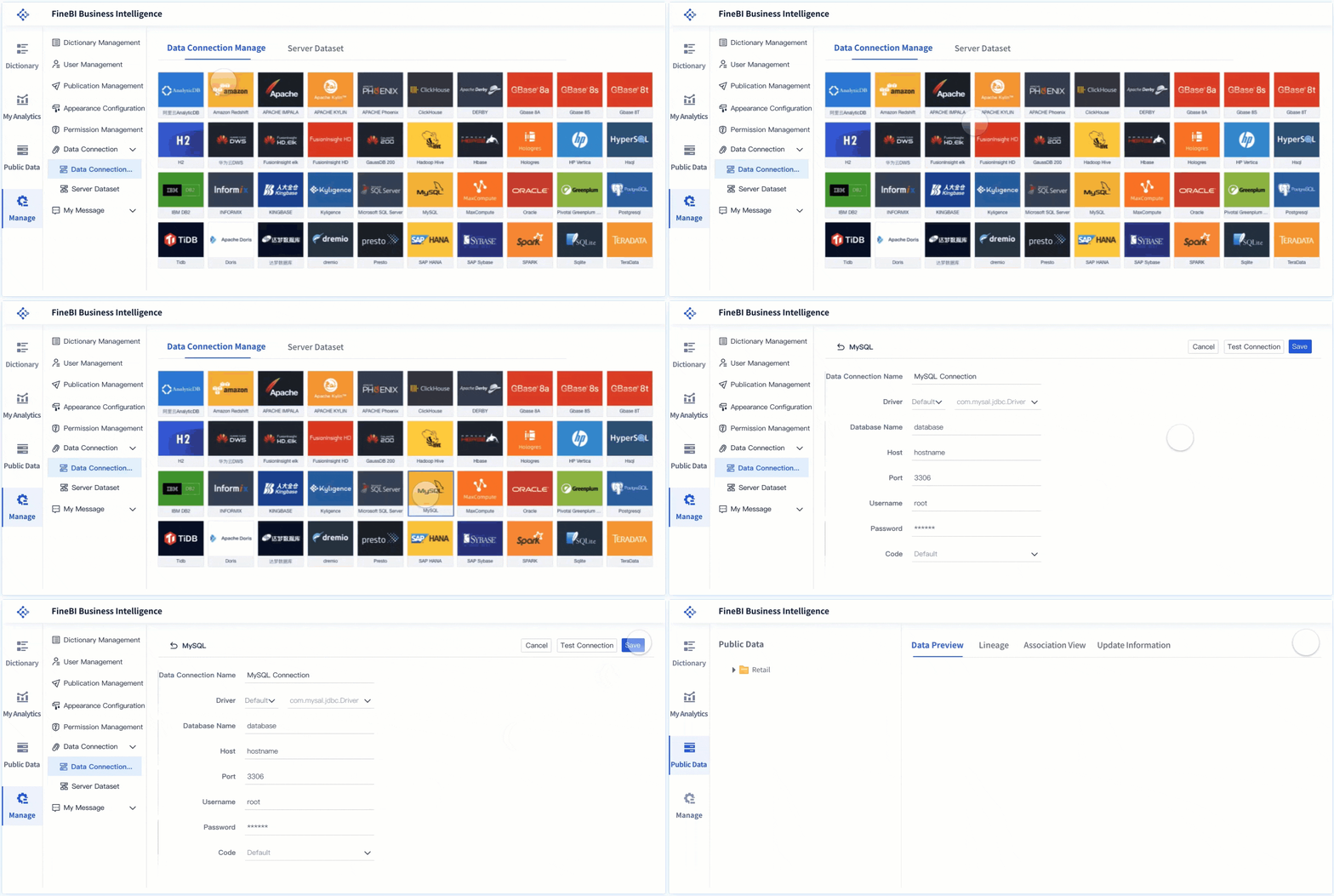
You need a robust solution to manage the complexity and scale of data analytics in telecom industry. FineBI stands out as a modern platform designed for telecom analytics. You use FineBIto connect to over 60 data sources, including relational databases, cloud warehouses, and big data platforms. You can integrate data from network logs, customer records, and operational systems without technical barriers.
FineBI guides you through four key stages:
Data Integration: You connect to diverse sources and schedule updates, ensuring you always work with the latest data.
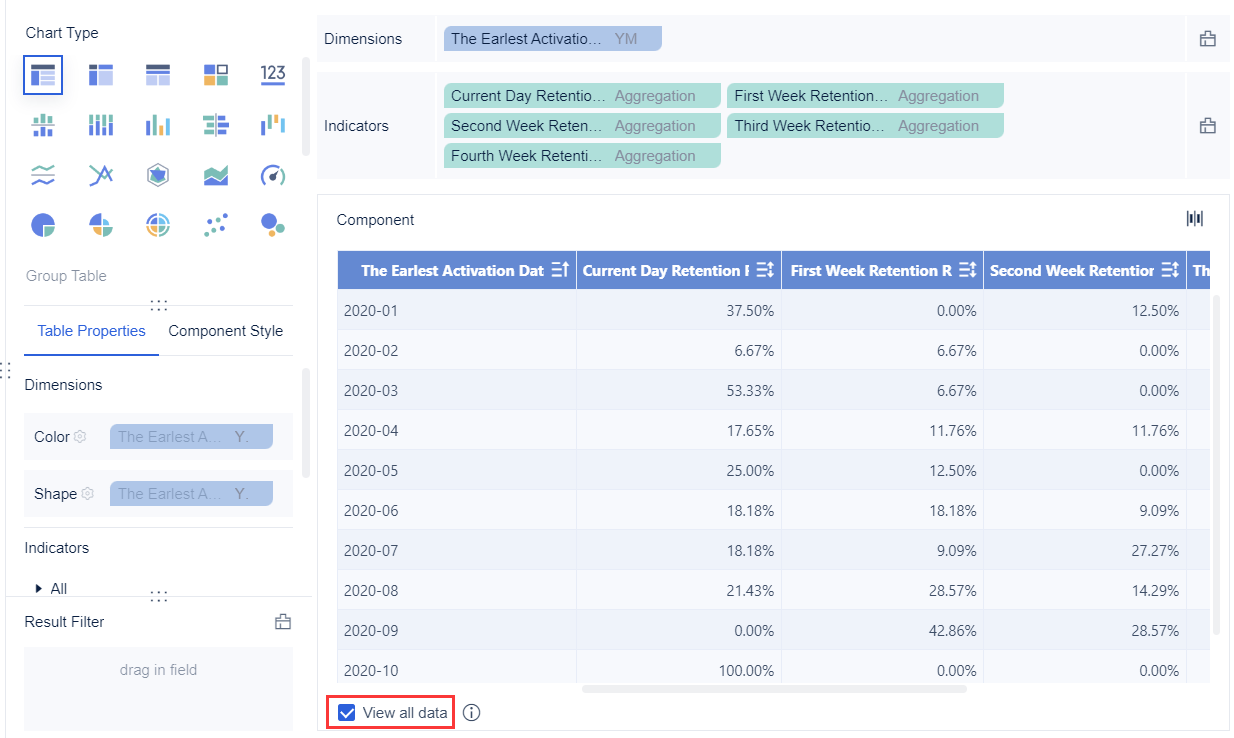
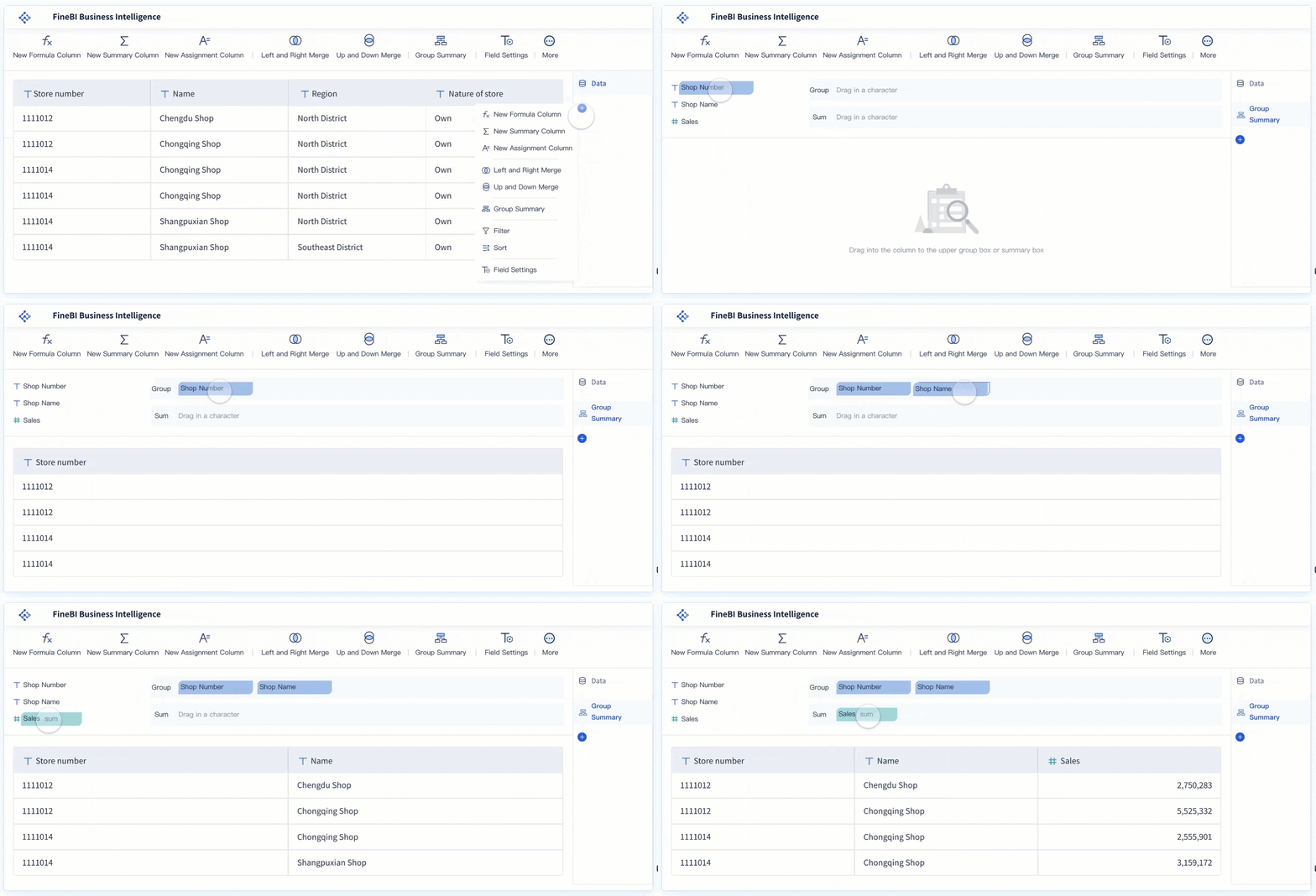
Data Processing: You build datasets by joining tables, adding formulas, and creating hierarchies. You clean and refine data to maintain quality.
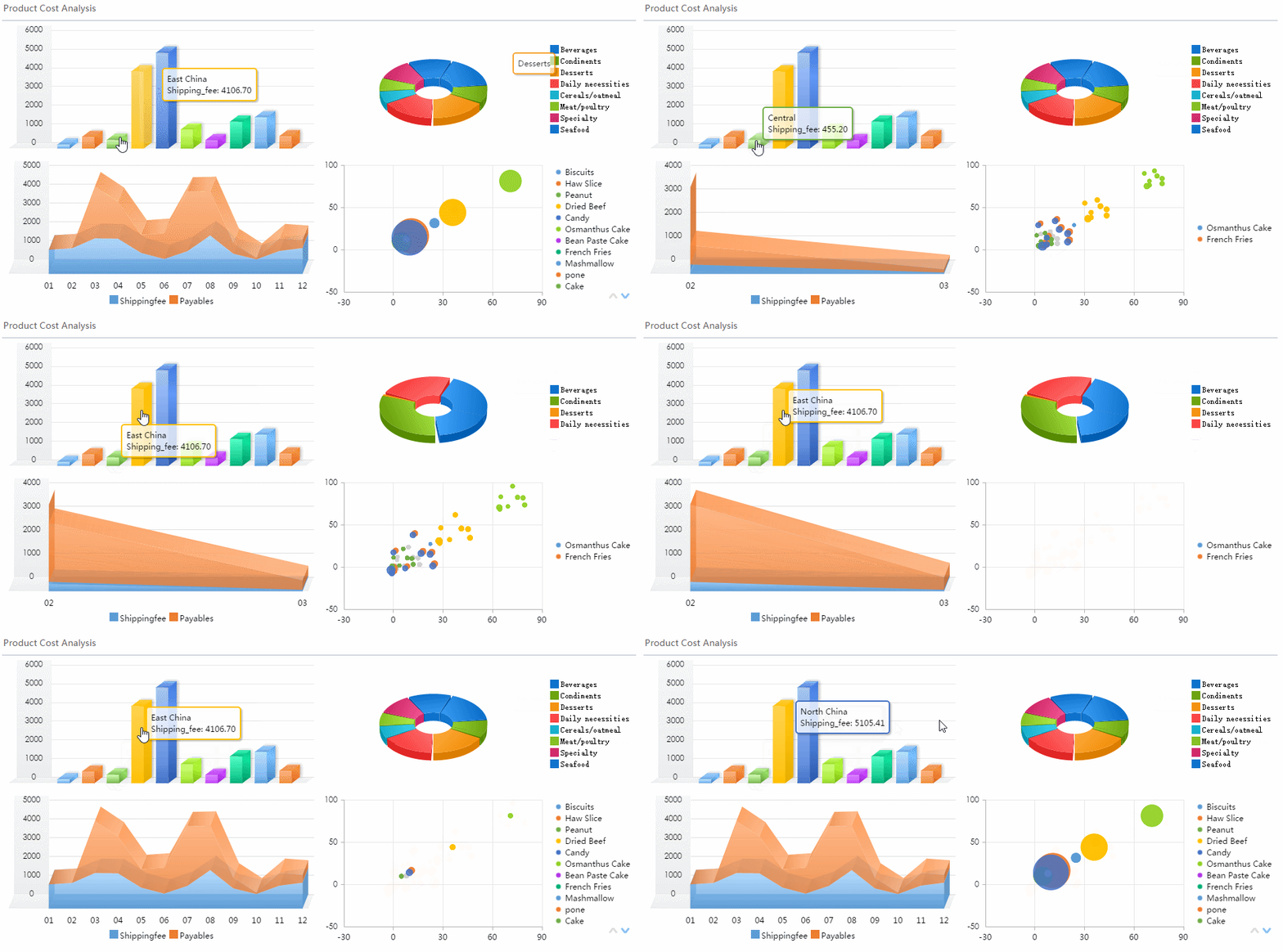
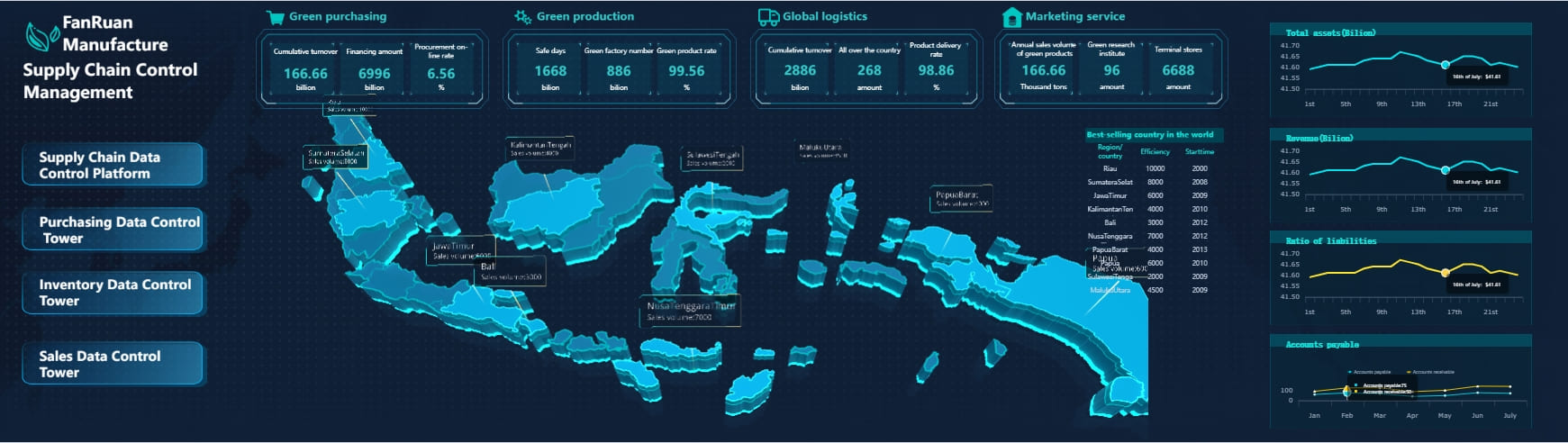
Visual Exploration: You create interactive dashboards using drag-and-drop charts and filters. You save templates for repeated analysis.
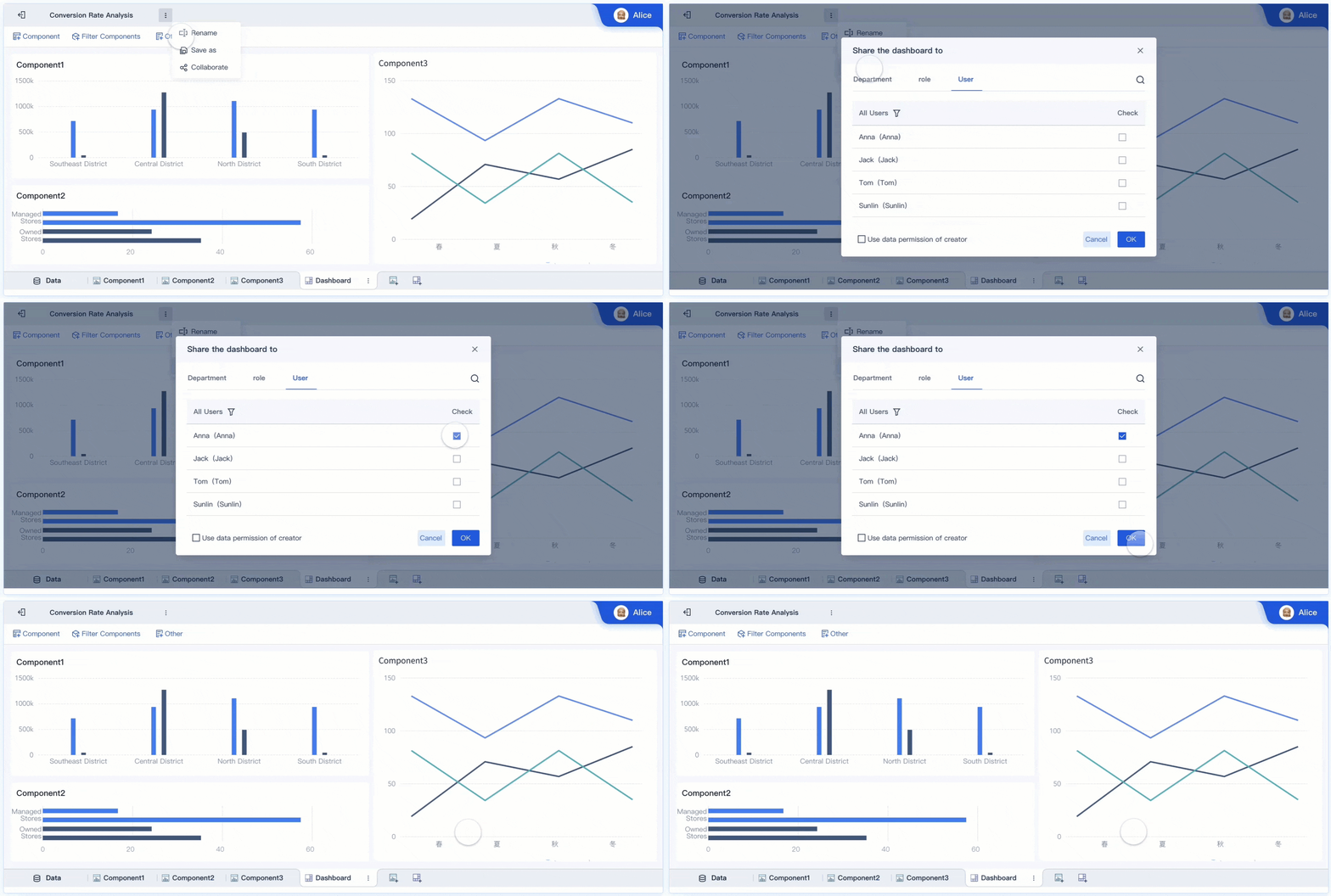
Publishing & Governance: You share dashboards securely and audit user activity, maintaining control over sensitive information.
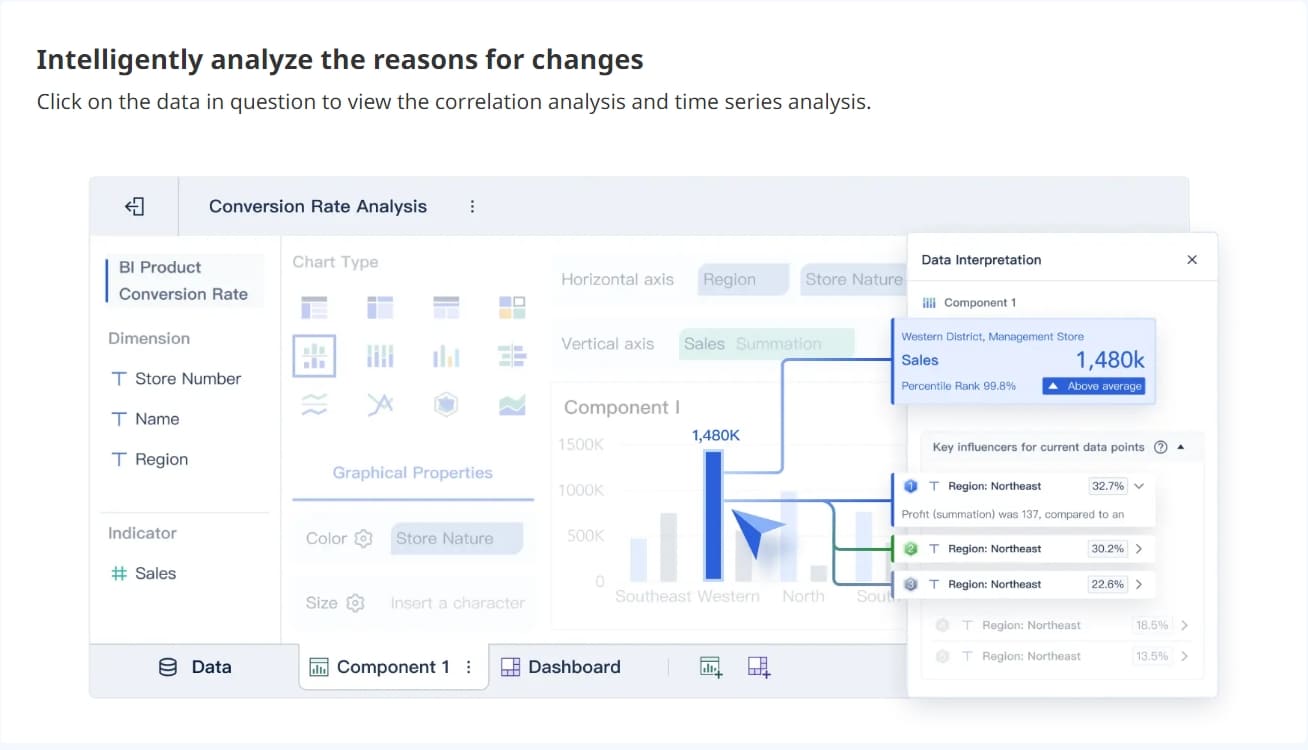
You benefit from FineBI’s self-service analytics, which allows you to explore data independently. You do not need coding skills to analyze trends, segment customers, or monitor network performance. You use AI-driven features to forecast demand, predict churn, and prescribe actions for network optimization.
You can see practical examples in telecom operations. You use FineBI to analyze call volumes, detect service quality issues, and monitor network outages in real time. You segment customers for targeted marketing and personalize offers to improve customer experience. You identify fraud patterns and optimize pricing strategies using predictive models.
FineBI supports collaborative decision-making. You share insights across departments, enabling teams to act on data quickly. You maintain enterprise-grade governance with role-based permissions and audit trails. You access dashboards on any device, ensuring you stay informed wherever you are.
You can look at customer stories like NTT DATA Taiwan, where FineBI helped integrate backend systems and visualize data for decision-making. You see how telecom analytics drives operational efficiency, supports data-driven strategies, and enables sustainable growth.
You unlock the full potential of data analytics in telecom industry with FineBI. You transform raw data into actionable insights, improve service quality, and foster innovation in the telecommunications industry.
Telecom analytics covers several typesof analysis, each serving a unique purpose in improving network performance and business outcomes. You can use these analytics to understand past events, predict future trends, and make better decisions in real time. FineBIsupports all these analytics types with self-service dashboards and AI-driven insights, making it easier for you to act on data quickly.
Descriptive Analytics
Descriptive analytics helps you understand what has happened in your network and business. You analyze historical data to spot trends and patterns. For example, you can:
Examine call volume to identify peak usage times.
Review network performance indicators like dropped calls and signal strength.
Segment customers based on behavior and preferences.
Analyze churn to understand why customers leave.
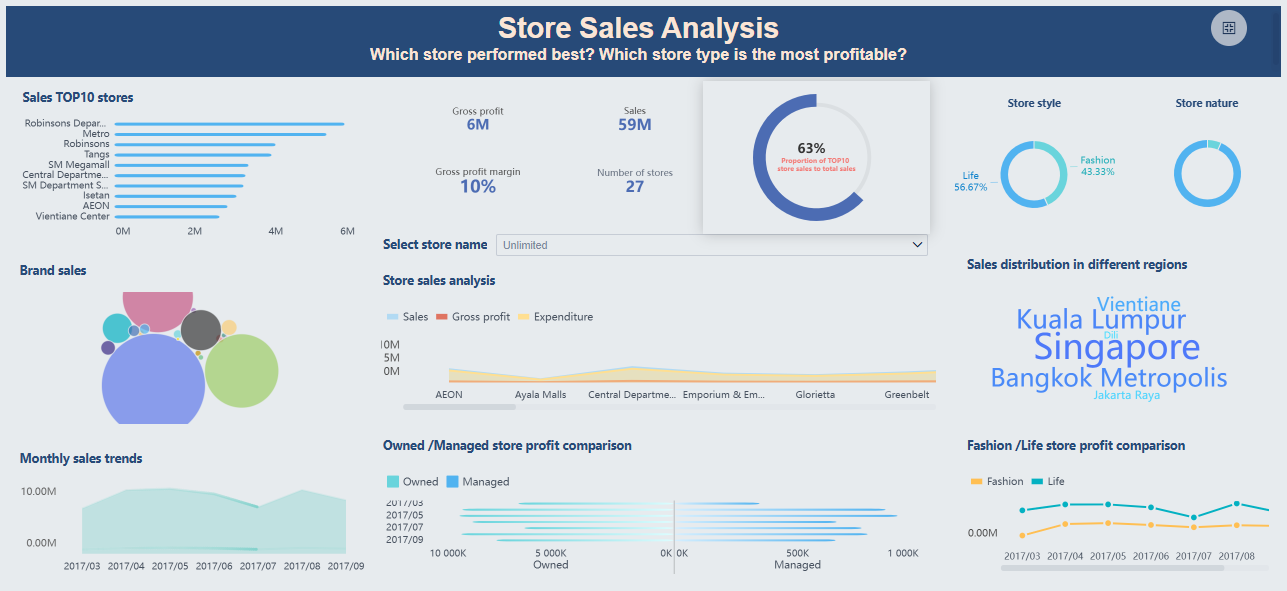
FineBIenables you to create dashboards that visualize these metrics. You can track network performance over time and share insights with your team.
Predictive analytics allows you to forecast what might happen next. You use models such as regression, classification, clustering, time series, and decision trees. These models help you:
Predict customer churn and take action to retain users.
Forecast demand for network resources.
Identify potential fraud before it impacts your business.
Segment customers for targeted marketing.
FineBI's AI-driven features let you build and apply these models without coding. You can anticipate changes in network performance and adjust your strategy.
Prescriptive analytics guides you on what actions to take. You use it to optimize resource allocation and improve network management. With prescriptive analytics, you can:
Make dynamic decisions based on real-time data.
Test different scenarios to find the best solutions.
Enhance operational efficiency and customer satisfaction.
FineBIsupports scenario analysis and recommends actions, helping you maximize network performance and service quality.
You can achieve significant improvements in operational efficiency withdata analytics in telecom industry. You standardize processes, which helps create a scalable and efficient business model. You use data-driven insights to enhance operational excellence and upskill your workforce, making your team adaptable in a dynamic market. You uncover usage patterns and monitor telecom expenses, which allows you to identify inefficiencies and drive strategic changes. Many telecom companies report that advanced analytics reduce operational expenses by 10-15%. FineBI supports these goals by integrating data from multiple sources and providing real-time dashboards, so you can act quickly and optimize resources.
Enhanced Customer Experience
You can elevate customer experience by understanding and addressing customer needs proactively. Data analytics in telecom industry enables you to personalize services and reduce churn rates. You usepredictive analyticsto streamline operations and improve efficiency. You also increase revenue through personalized marketing and foster loyalty with tailored experiences.
Benefit
Description
Increased Customer Satisfaction
You address customer needs, which enhances satisfaction and loyalty.
Reduced Churn Rates
You retain valuable customers with targeted retention strategies.
Enhanced Operational Efficiency
You improve efficiency and reduce costs with predictive analytics.
Higher Revenue Generation
You grow revenue with personalized marketing.
Improved Customer Loyalty
You foster long-term engagement with tailored experiences.
Informed Decision-Making
You use data analytics in telecom industry to support informed decision-making at every level. You harness vast datasets for actionable insights and strategic planning. You gain agility and responsiveness to market changes, which helps you maintain relevance and competitiveness.
Evidence Description
Key Insights
Business analytics enables you to analyze operational efficiency.
You drive informed decision-making and strategic planning.
Data-driven insights support strategic decisions.
You prioritize investments and market positioning.
Analytics enhance agility.
You respond rapidly to market changes and customer needs.
NTT DATA Taiwan demonstrates these benefits in practice. You see how integrating backend systems and visualizing data with FineBIempowers teams to make smarter decisions and improve business outcomes.
You can optimize costs with data analytics in telecom industry. You reduce system maintenance costs by up to 80% with scalable analytics systems. AI identifies redundant lines and service mismatches, which leads to cost reductions. You consolidate services into lower-cost packages and use fraud detection tools to save money and enhance security.
You lower operational expenses by identifying inefficiencies.
You reduce maintenance costs with scalable analytics.
You save money by consolidating services and detecting fraud.
FineBIhelps you achieve these savings by providing a unified platform for data integration, analysis, and visualization.
Challenges in Data Analytics in Telecom Industry
You face several obstacles when implementing data analytics in telecom industry. These challenges can slow down progress and limit the value you gain from your data. Understanding these issues helps you choose the right solutions and strategies.
Data Volume and Complexity
You deal withmassive amounts of data from connected devices, 5G networks, and OTT apps. The volume, variety, and speed of this data make it difficult to build a comprehensive analysis framework. You must manage expanding data volumes and consolidate complex formats from advanced technologies. The table below highlights key challenges:
Challenge
Description
Expanding data volumes
You store more data as new channels and sources emerge, requiring careful planning and management.
Complex data consolidation
You handle many formats, which complicates analysis, especially with legacy systems.
Data protection concerns
You must protect sensitive customer data from breaches and insider risks.
FineBIhelps you overcome these barriers by integrating data from over 60 sources and automating data processing. You can unify diverse datasets and maintain high data quality.
You must protect customer data and comply with regulations like GDPR. Building a robust security framework is essential for customer trust. You use encryption, real-time monitoring, and strict access controls to safeguard information. Modern tools like AI and machine learning help you respond to evolving cyber threats. FineBIsupports enterprise-grade governance with role-based permissions and audit trails, ensuring yourdata analytics in telecom industry remains secure.
Integration with Legacy Systems
You often work with legacy systems that lack compatibility with modern analytics platforms. Fragmented data and silos hinder your ability to use AI effectively. You can automate old manual processes and enhance fault detection with AI-driven tools. Centralized architecture and metadata standardization help you bridge the gap. FineBIoffers flexible connectors and supports custom integrations, making it easier to modernize your data analytics in telecom industry.
Skills and Resource Gaps
Rapid technological change creates a need for specialized training. You must upskill your workforce to keep pace with innovations in AI, cloud computing, and 5G. Solutions like VR, AR, and virtual simulations provide hands-on experience and improve operational efficiency. FineBI's intuitive interface lowers the barrier for business users, allowing you to perform advanced analytics without coding expertise. You empower your team to adapt and thrive in the evolving landscape of data analytics in telecom industry.
You usedata analytics in telecom industry to predict and reduce customer churn. You identify customers with low product usage and those who have experienced poor customer service interactions. You create targeted retention efforts based on these insights. FineBIhelps you collect and integrate data from multiple sources, store and analyze it efficiently, and visualize trends related to customer churn prediction. You implement strategies based on actionable reports, improving retention rates. You also leverage hyperlocal insights by mapping complaints and optimizing field dispatch, which enables faster response and proactive retention.
Aspect
Description
Hyperlocal Insights
Uses precise geocodes to map network performance and customer complaints, enabling proactive retention.
Mapping Complaints
Geocoding trouble tickets allows for immediate plotting of complaint distribution, revealing true patterns.
CRM Integration
Ensures operational systems reference the same verified addresses, reducing failures in service delivery.
Field Dispatch Optimization
Guides teams to critical locations for faster repairs, improving service response times.
Fraud Detection
You rely on data analytics in telecom industry to combat fraud. AI-powered fraud detection tools allow you to identify and prevent fraud before it occurs. You analyze real-time data and use advanced algorithms to block suspicious activities instantly. FineBIsupports these efforts by enabling real-time monitoring and secure data integration. You reduce financial losses and build customer trust by stopping fraudulent activities quickly.
Network Optimization
You optimize your network using data analytics in telecom industry. Real-time monitoring detects and resolves issues before they disrupt service. Predictive maintenance shifts your approach from reactive troubleshooting to proactive optimization. AI-driven anomaly detection identifies potential failures early. FineBI's dashboards let you visualize network health and automate adjustments.
This data-driven approach means your network can automatically adjust to fluctuating demand and heal itself when it detects a potential failure, resulting in a more resilient and reliable network.
You enhance marketing strategies with data analytics in telecom industry. AI analyzes customer preferences to select the best communication channels and timing. You execute campaigns in real time and adjust tactics based on performance metrics. FineBItracks key metrics and recommends personalized offers, such as plan upgrades for business customers or device upgrade campaigns for users with older devices. You forecast customer behavior and prepare timely campaigns for seasonal demand.
Aspect
Description
Channel Selection and Timing
AI analyzes customer preferences to determine the best communication channels for optimal engagement.
Execution and Monitoring
Campaigns are executed in real time, adjusting tactics based on performance metrics.
Personalization Techniques
AI analyzes usage patterns to deliver tailored marketing strategies based on individual behaviors.
Service Quality Monitoring
You monitor and improve service quality using data analytics in telecom industry. You analyze vast datasets to make informed decisions that drive efficiency and customer satisfaction. FineBIprovides insights into network performance and customer behavior, enabling predictive maintenance and resource optimization. You continuously monitor network performance, detect issues promptly, and anticipate equipment failures to reduce downtime.
Analytics provides insights intonetwork performance, customer behavior, and operational efficiency.
Predictive maintenance strategies prevent service degradation and enhance the Quality of Experience for customers.
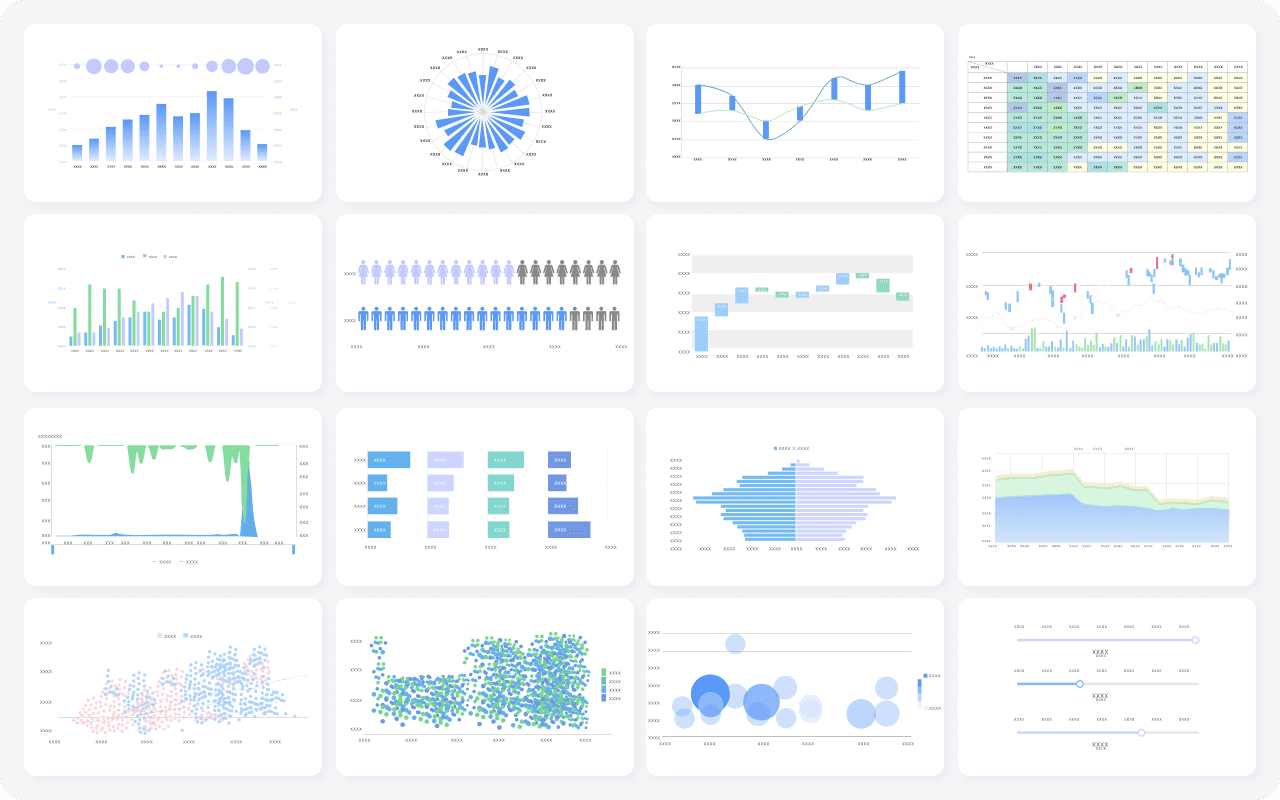
FineBI's Rich Built-in Chart Options For Data Visualization
You have seen how data analytics in telecom industry transforms raw information into actionable insights. You can use analytics to improve coverage, personalize services, prevent customer churn, optimize networks, and support investment planning. FineBI stands out as a strategic tool, meeting the growing demand for advanced analytics and enabling you to enhance customer interactions and service quality. As you adopt data-driven decision making, you position your business for innovation and sustained growth.
The future will bring deeper cloud adoption, operational AI, and hyper-personalized experiences. You can leverage analytics to streamline operations, boost customer satisfaction, and lead in telecom innovation.
Value Area
Description
Operational Efficiency
Streamline network performance and manage capacity for high-quality service.
Customer Experience
Offer personalized services by understanding customer preferences.
Innovation
Embed intelligence into products and services for business growth.
Continue Reading About Data Analytics in Telecom Industry
Access a wealth of case studies, industry insights, and solution guides to accelerate digital transformation.
FAQ
What is data analytics in telecom industry?
You use data analytics in telecom industry to collect, process, and analyze data from networks, customers, and business systems. This helps you improve network performance, reduce costs, and enhance customer experience.
How does data analytics in telecom industry help reduce churn?
You identify customers at risk of leaving by analyzing usage patterns and service interactions. You then create targeted retention strategies to keep these customers, which helps you reduce churn and increase loyalty.
What types of data can you analyze with data analytics in telecom industry?
You can analyze call records, network logs, customer feedback, billing data, and usage statistics. This gives you a complete view of your operations and customer behavior.
Why should you choose FineBI for data analytics in telecom industry?
You choose FineBI because it connects to over 60 data sources, supports real-time dashboards, and offers self-service analytics. You can explore data, build reports, and share insights without coding skills.
Can you use data analytics in telecom industry for fraud detection?
Yes. You use data analytics in telecom industry to detect unusual patterns and prevent fraud. Real-time monitoring and AI-driven tools help you block suspicious activities before they cause harm.