If you are searching for fund reporting software, you are likely trying to solve a very practical problem: how to produce investor-ready reports faster, with fewer spreadsheet errors, and with more control over approvals, formatting, and distribution.
For venture capital, private equity, real estate, and private credit managers, fund reporting usually means more than a dashboard. It includes investor updates, NAV packs, LP statements, capital account summaries, portfolio look-through reports, and audit-ready exports. In many firms, the challenge is not just calculating the numbers. It is turning data from accounting systems, CRM tools, portfolio monitoring platforms, and admin workflows into polished, repeatable deliverables for different stakeholders.
This guide compares leading fund reporting software options based on what matters most in 2026: reporting depth, implementation effort, integration fit, control, and usability for finance and investor relations teams.
Best Fund Reporting Software in 2026: what matters most
The best fund reporting software depends on the type of reports your firm must produce and how controlled that process needs to be.
A lightweight investor portal may be enough if your main goal is sending quarterly updates. But if your team must generate NAV packages, multi-entity statements, capital account reports, waterfall visibility, and audit-ready exports, then the reporting layer needs to support structured templates, traceable data, approval workflows, and recurring distribution.
The most important evaluation areas are:
Investor reporting needs: LP statements, capital activity summaries, quarterly updates, and ad hoc investor requests
NAV and finance reporting depth: support for management packs, portfolio-level rollups, and entity-level detail
Fund structure complexity: multi-fund, multi-entity, multi-currency, and strategy-specific requirements
Implementation effort: whether the software works as a packaged workflow or requires heavier setup
Integration fit: ability to work with accounting systems, CRM platforms, portfolio monitoring tools, and document repositories
Security and controls: permissions, approvals, audit trails, and secure delivery
Pricing transparency: whether costs are clear upfront or depend on modules, services, and reporting complexity
This is why fund managers should match software to operating model, not just product category. A venture manager with two funds and lean operations has different needs from a private equity firm producing investor statements across multiple vehicles and stakeholders.
How we compared fund reporting software
Core reporting capabilities
We first looked at the reporting workflows each platform is best known for.
That includes:
Investor reporting workflows
LP statement generation
NAV package creation
Capital account reporting
Waterfall or allocation visibility
Scheduled report delivery
We also considered whether platforms support:
Custom dashboards
Portfolio look-through views
Entity-level reporting
Flexible export options for Excel, PDF, and secure document sharing
For fund reporting teams, output quality matters. A visually attractive dashboard is useful, but many stakeholders still expect highly structured, printable, and version-controlled reports.
Operations and integration criteria
Fund reporting quality depends on upstream operations. So we also reviewed practical deployment criteria, including:
In real-world fund environments, reporting delays often come from handoffs between finance, investor relations, and operations. Platforms that reduce duplicate work score better here.
Commercial and practical fit
Finally, we assessed commercial and day-to-day fit:
Ease of use for finance teams
Ease of use for investor relations teams
Onboarding complexity
Customer support expectations
Likely total cost of ownership
A strong product on paper can still be a poor fit if every format change requires vendor services or if the firm lacks capacity for implementation.
7 fund reporting software platforms compared
FineReport
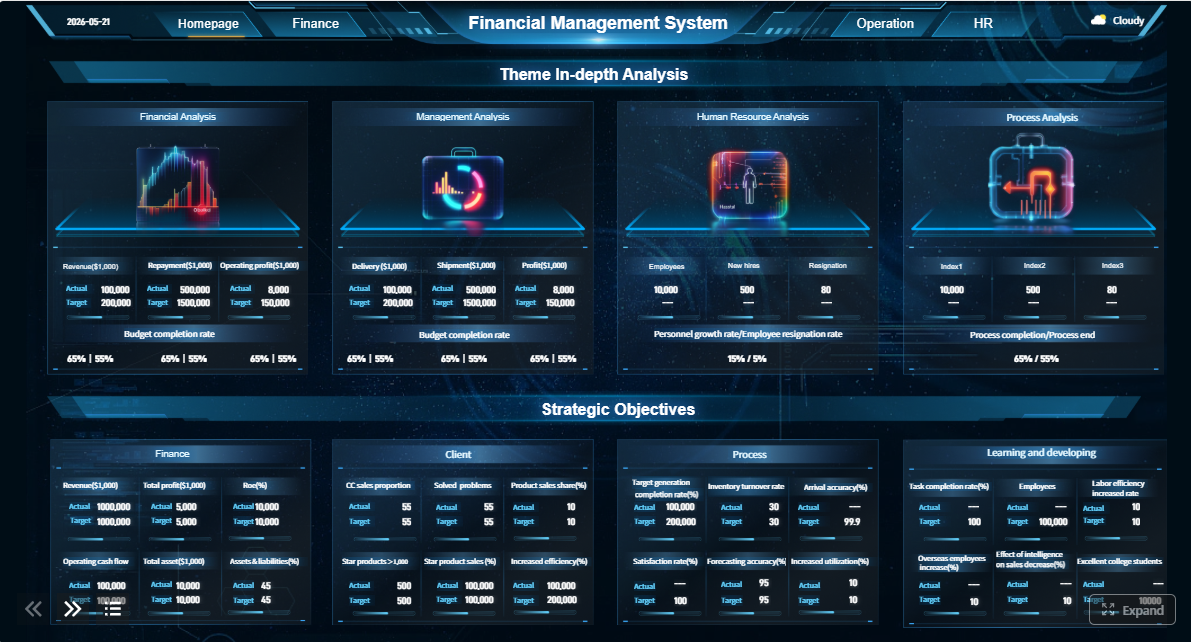
FineReport is a strong option for firms that need highly customized enterprise reporting, especially when investor reporting is only one part of a wider reporting requirement.
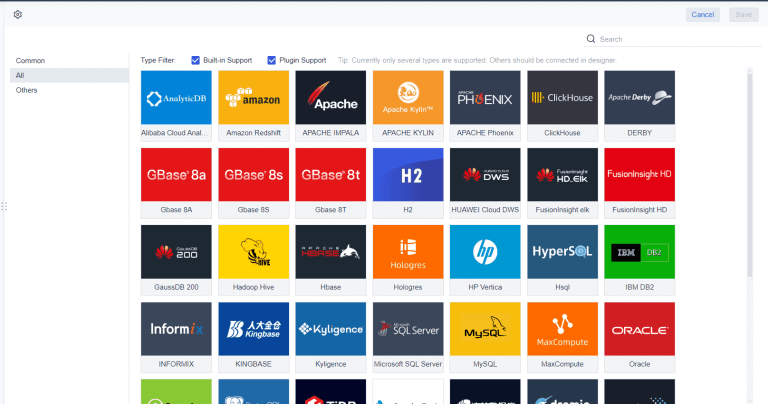
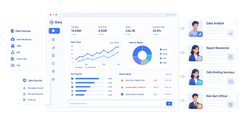
Rather than being a private-capital-only application, FineReport is an enterprise reporting platform designed for teams that need:
This can be especially useful when a fund manager must support not only LP reporting, but also internal management packs, finance operations, exception reporting, approval forms, or multi-department reporting workflows.
Where it stands out:
Flexible design for structured, board-ready, and printable reports
Strong for combining dashboards with detailed tabular reports
Useful when finance, operations, and investor teams need tailored outputs from shared data
Carta is best for managers seeking a broader private capital platform that combines cap table workflows, fund administration support, and investor reporting in one ecosystem.
For many venture capital firms, Carta is already part of the operating stack. That gives it a natural advantage when firms want reporting linked to fund operations, portfolio data, and LP communications without stitching together too many tools.
Strengths:
Broad platform footprint in private capital
Useful for firms already running key workflows in Carta
Investor-facing workflows are easier when fund and ownership data live in one environment
Relevant for VC and some PE teams that want an integrated experience
Limitations:
Firms with very bespoke reporting layouts may need more flexibility than packaged workflows offer
Deeply formatted, print-heavy reporting may require additional tooling depending on requirements
Best fit is often strongest for managers already committed to the Carta ecosystem
Best fit:
VC funds, emerging PE managers, and firms that value ecosystem consolidation over highly customized reporting design.
InvestorVision, now associated with FundCentre Reporting, is best for firms prioritizing LP fund reporting workflows, recurring investor communications, and polished statement delivery.
Its value is less about being a broad internal BI platform and more about giving firms a controlled, investor-facing reporting and communication workflow.
Strengths:
Strong orientation toward investor reporting
Useful for recurring LP communications and secure delivery
Good fit where presentation quality and controlled distribution matter
Suitable for firms wanting a more purpose-built investor reporting layer
Limitations:
May be less suitable as a broad internal analytics or operational reporting platform
Firms wanting custom finance, management, and operational reporting in one place may need supplemental tools
Workflow value is strongest when investor communications are the main priority
Best fit:
Private equity and alternatives managers that care most about secure, recurring LP reporting and polished investor statements.
Dynamo
Dynamo is best for teams that want reporting tied closely to fund accounting, CRM data, and operational workflows.
It is often considered by private markets managers that want reporting connected not only to finance outputs, but also to fundraising, investor relationship management, and day-to-day fund operations.
Strengths:
Good fit for firms wanting closer alignment between reporting and CRM or operating workflows
Practical for private markets teams that need data from multiple functional areas
Can support a more connected reporting process across investor relations and operations
Limitations:
Reporting strength depends in part on how well the wider environment is configured
Some teams may still need separate tools for highly formatted statements or advanced print-ready reporting
Implementation quality matters significantly
Best fit:
Private markets firms looking for reporting within a broader operational platform, especially where investor relations data and reporting need to stay connected.
Other notable platforms
Beyond Carta, InvestorVision, and Dynamo, four other platforms are worth shortlisting depending on your priorities.
Workiva
Workiva is a strong option for firms that need collaborative reporting, review controls, and audit-friendly output workflows.
It is especially relevant when fund reporting overlaps with board reporting, regulatory support, financial statements, or highly controlled document production.
Where it stands out:
Strong collaboration and review workflows
Useful for complex reporting governance
Well suited for teams managing multiple contributors and formal approval cycles
Trade-offs:
May be heavier than necessary for smaller firms with straightforward LP statement needs
Best value comes when governance and controlled reporting are major priorities
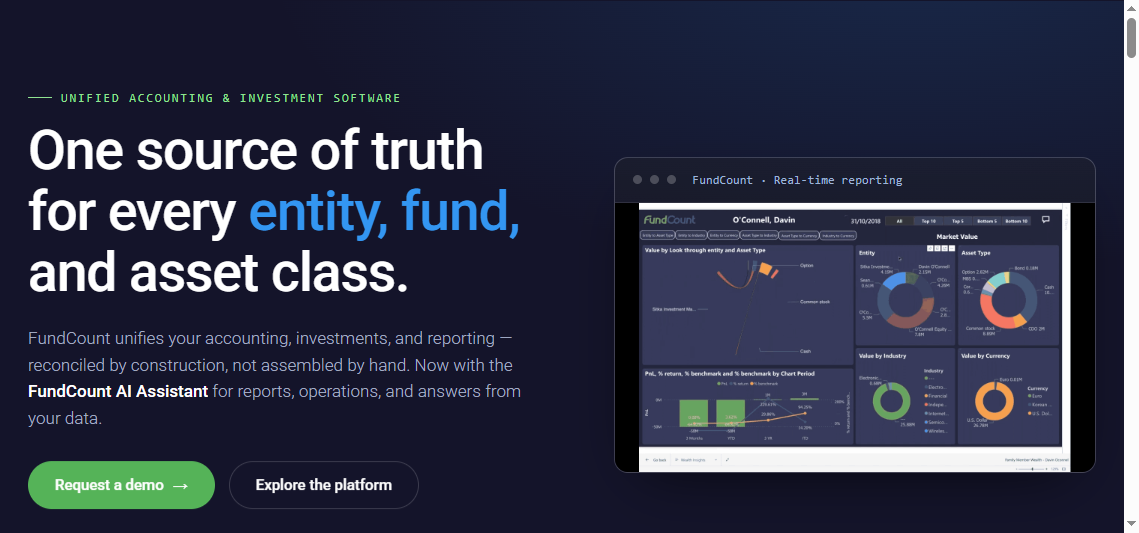
FundCount
FundCount is often considered by firms that want accounting-linked investor reporting and a reporting process tied closely to the books.
This makes it relevant for organizations where consistency between accounting records and investor outputs is a top concern.
Where it stands out:
Strong books-to-reporting positioning
Useful for accounting-driven fund reporting
Investor portal and report distribution can be attractive for admins and managers
Trade-offs:
Firms looking for a broader analytics or highly visual dashboard layer may want complementary tools
Fit depends on whether accounting is truly the center of the reporting stack
Cobalt
Cobalt is best known for portfolio monitoring, analytics, and reporting for private capital firms.
It is especially useful when reporting needs emphasize portfolio visibility, benchmarking, and self-service stakeholder views rather than formal statement production.
Good for firms prioritizing portfolio intelligence and ongoing visibility
Trade-offs:
Not the first choice for highly formatted LP statements or printable finance packs
Better as a monitoring and analytics layer than a full structured reporting engine
Which platform is best for different fund managers
Venture capital and emerging managers
Venture capital and smaller emerging managers usually benefit most from:
Ease of use
Investor-ready templates
Fast onboarding
Reduced manual reporting effort for small teams
For this group, Carta is often appealing if the firm already uses it for core workflows. Cobalt can also be helpful where portfolio monitoring is central. If the team needs more tailored report formatting across investors, boards, and finance, FineReport can be a practical addition or alternative depending on the broader stack.
Private equity, real estate, and private credit firms
These firms often need deeper operational and finance reporting, including:
Detailed NAV reporting
Multi-entity consolidation
Approval workflows
More complex fund structures
Printable statements and scheduled recurring packs
For these cases, InvestorVision, FundCount, Workiva, and FineReport tend to be more relevant depending on whether the priority is investor delivery, accounting linkage, governance, or report customization.
If the reporting process involves many exceptions, bespoke templates, or combined dashboards and printable reports, a flexible reporting platform becomes more important.
Firms serving multiple stakeholder groups
Some firms must serve:
Finance teams
Investor relations teams
Operations teams
External administrators
Internal leadership
Auditors or compliance reviewers
In this situation, the best platform is usually the one that prevents teams from rebuilding the same data in different formats.
If your firm needs both stakeholder-facing dashboards and highly structured exports, platforms with stronger enterprise reporting controls are often a better long-term fit than tools focused only on visualization or portal delivery.
Here are five practical steps I recommend to fund managers evaluating fund reporting software:
Map reports before mapping features.
List every output you produce today: LP statements, NAV packs, board decks, capital account summaries, portfolio updates, and audit exports. Then rank them by business criticality.
Separate dashboard needs from formal reporting needs.
Many firms overbuy visual analytics and underbuy structured reporting. If your stakeholders rely on PDFs, statements, and recurring packs, prioritize those first.
Test one real reporting cycle in the demo.
Ask the vendor to show how one quarterly process works end to end: data refresh, validation, approvals, formatting, and distribution.
Check customization boundaries early.
The biggest disappointment in reporting projects is discovering that “customizable” really means “customizable within a fixed template family.”
Plan for cross-team usage.
The best reporting tools reduce duplicate work across finance, investor relations, and operations. If each team still exports and rebuilds reports separately, you have not solved the real problem.
When FineReport is a good fit for fund reporting software
Tools like Carta, Dynamo, and investor portal solutions are widely used in private capital operations. But teams with more complex reporting workflows may also need a dedicated enterprise reporting platform like FineReport.
FineReport is particularly relevant when your reporting requirements extend beyond a standard investor portal and include:
Pixel-perfect report design for investor statements, management packs, and finance-ready outputs
Paginated and printable reports for formal distribution
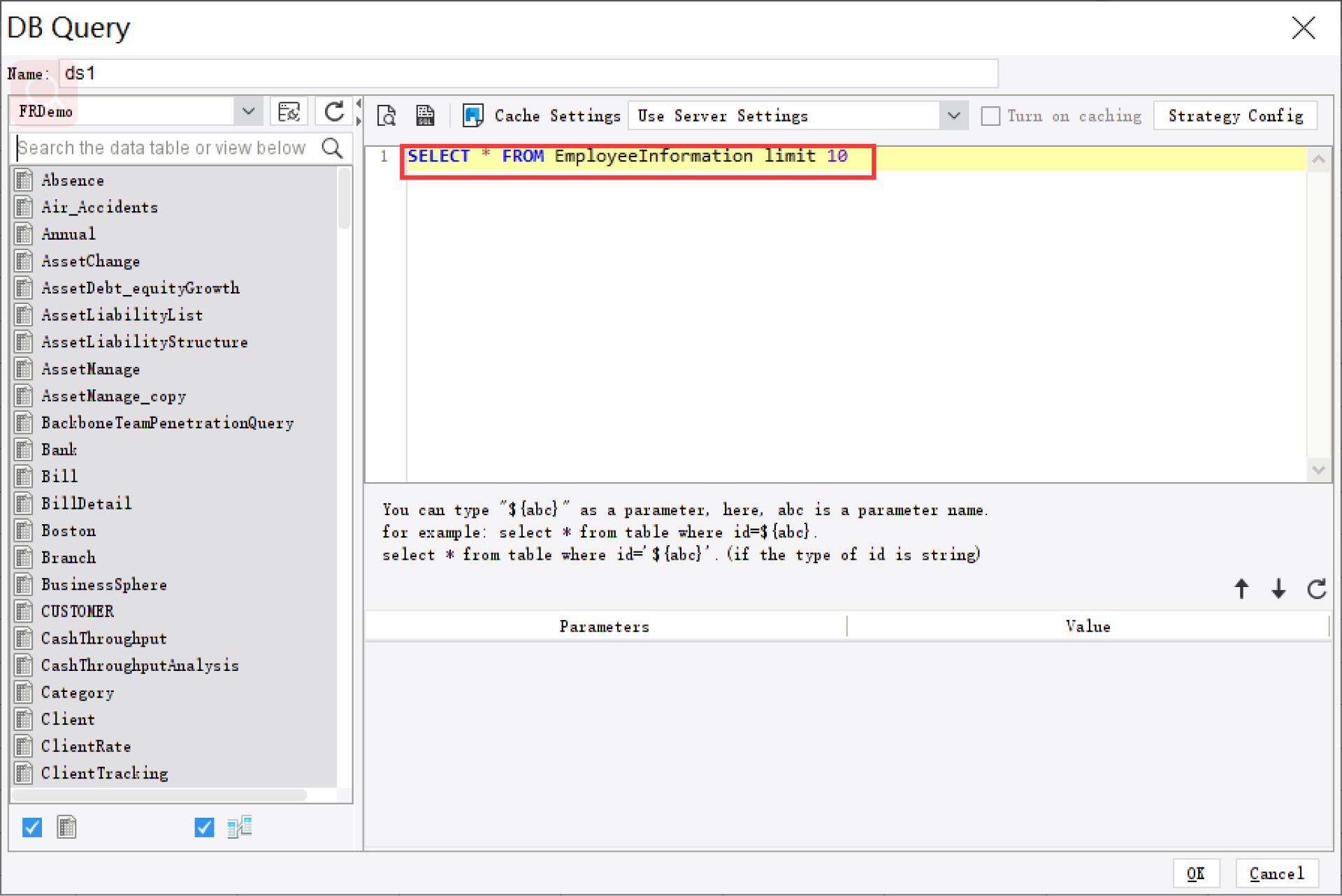
Parameter queries for filtering by fund, entity, investor, period, or asset
Scheduled reporting and automated distribution
Integrated dashboards and detailed reports in the same reporting environment
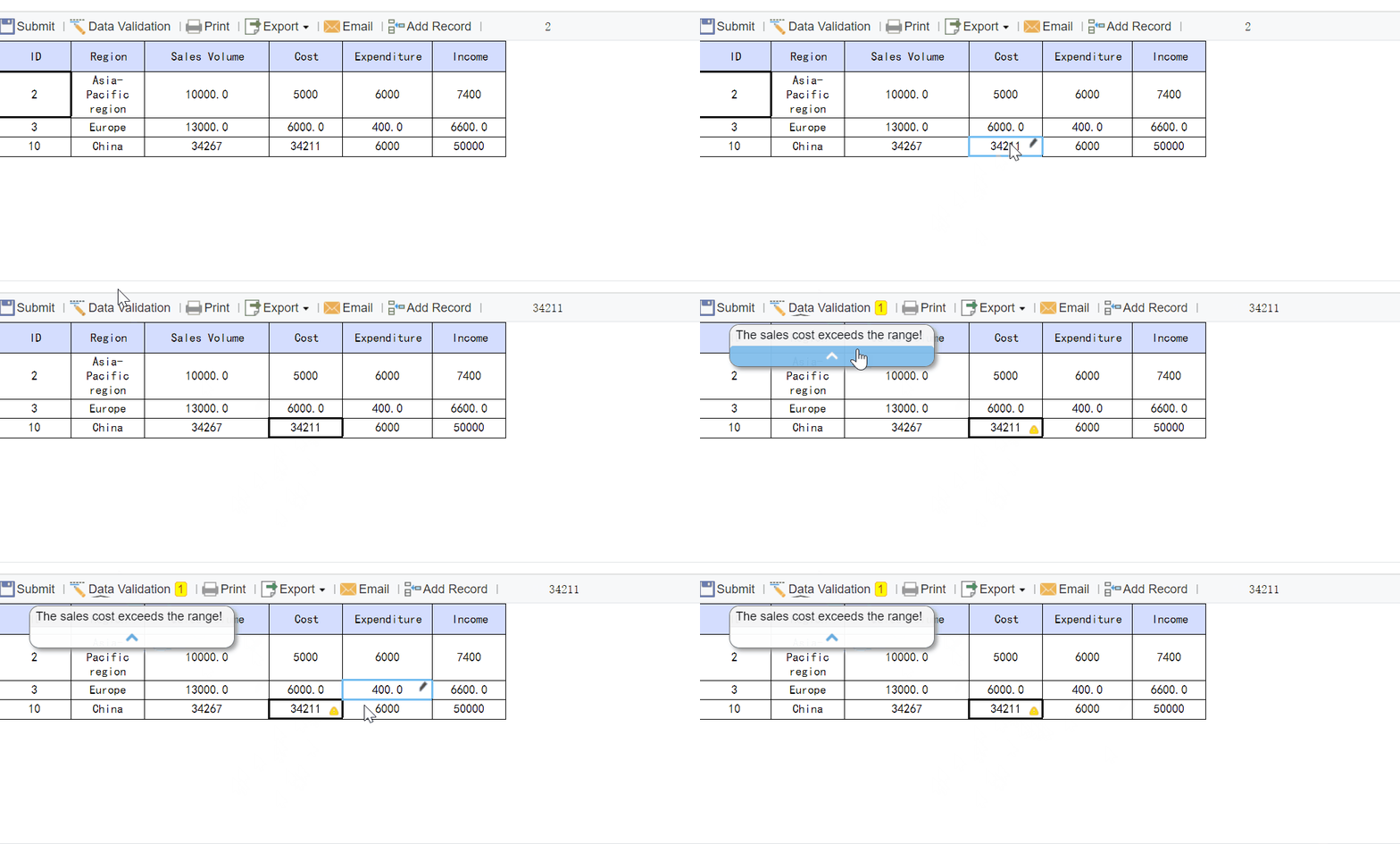
Data entry and forms for workflow steps, commentary capture, or operational inputs
For fund managers, this matters when reporting is not just a communications function but part of a broader operating process. Examples include:
Producing standardized monthly and quarterly fund packs
Delivering different report views for LPs, finance, and management
Creating printable reports that combine tables, commentary, and charts
Supporting operational workflows where teams must input notes, adjustments, or approvals
Building a governed reporting layer on top of existing accounting or portfolio systems
FineReport is not a replacement for every private capital platform. It is most compelling when the challenge is report flexibility, output control, and enterprise-grade reporting workflows.
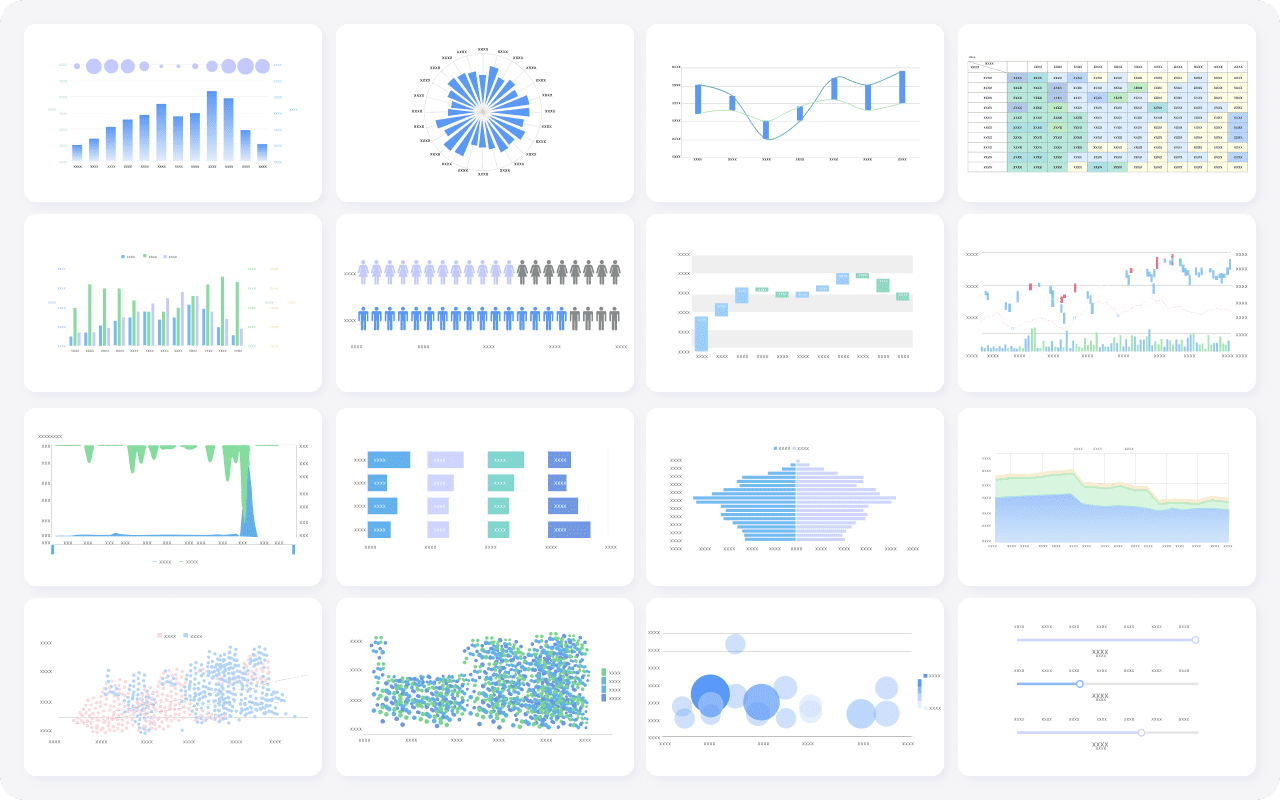
Get Ready-to-Use Dashboard and Report Templates in Fine Gallery
Final verdict and next steps
The best fund reporting software in 2026 depends less on brand recognition and more on how your firm actually reports.
A simple way to think about the shortlist:
Carta: strong for VC and PE firms already invested in its private capital ecosystem
InvestorVision: strong for polished LP reporting and secure investor communications
Dynamo: strong for firms wanting reporting tied to CRM and operations workflows
Workiva: strong for controlled, collaborative, audit-friendly reporting processes
FundCount: strong for accounting-linked reporting tied closely to books and investor outputs
Cobalt: strong for portfolio monitoring and analytics-heavy stakeholder reporting
FineReport: strong for firms needing customized, printable, scheduled, and enterprise-controlled reporting across multiple stakeholders
A practical next step is to create a shortlist of three tools and run the same evaluation against each:
Demo checklist
Can it generate your top three reports without workaround-heavy manual steps?
Can it support both investor-facing and internal reporting needs?
How does it handle approvals, permissions, and version control?
Can it export in the exact formats your stakeholders need?
What implementation support is required from your team?
What will total cost look like after setup, services, and scale?
Pilot criteria
Choose one real fund, one real reporting cycle, and one real stakeholder group. Then measure:
Time to produce the report
Number of manual interventions
Ease of template changes
Confidence in data traceability
Stakeholder satisfaction with the final output
The right platform should not just make reporting look better. It should make the entire reporting process more reliable, repeatable, and scalable.
Fund reporting software helps fund managers turn accounting, portfolio, and investor data into repeatable deliverables such as LP statements, NAV packs, capital account reports, and quarterly investor updates. It also supports approvals, version control, and secure distribution.
The most important features are template-driven reporting, data integrations, audit trails, permissions, scheduled delivery, and support for complex fund structures. Firms should also check whether the platform handles both dashboards and printable paginated reports.
Fund reporting software focuses on producing reports from source data, while an investor portal mainly handles secure access and document delivery. Some platforms combine both, but others are stronger on reporting depth than on communications.
The best choice depends on your operating model, reporting complexity, and existing systems. Carta may suit firms already using its private capital ecosystem, while FineReport can fit teams that need highly customized reporting workflows and printable outputs.
Yes, many platforms are designed to reduce manual spreadsheet work by automating report generation, formatting, approvals, and distribution. The biggest gains usually come when the software is connected to reliable accounting and operational data sources.
Product Trial
FineReport
Pixel-perfect reports · Interactive dashboards · Easy data entry · Digital twins



 Dynamo is best for teams that want reporting tied closely to fund accounting,
 Cobalt is best known for portfolio monitoring, analytics, and reporting for private capital firms.