Data platform services give you the tools to connect, manage, and analyze data from many sources. These services play a key role in business intelligence by making your data accessible and actionable. You can use a modern data platform to improve the speed and accuracy of your analytics. Key features such as seamless integration, robust data processing, and secure sharing help you make better decisions. FineBIstands out as an example of a self-service analytics solution that brings enterprise data together for smarter business intelligence.
Data Platform Services Overview
What Is a Data Platform?
You rely ondata platform servicesto manage, store, and analyze information from many sources. A data platform acts as the foundation for your data management and analytics needs. You use a modern data platform to unify structured and semi-structured data, making it easier to access and analyze. Data platform services help you handle large volumes of information, support both batch and real-time processing, and provide flexible data architecture. You benefit from advanced data governance, which ensures your data remains secure and compliant. Modern data platform services offer scalability, allowing you to grow your data environment as your business expands. You gain the ability to work with a mix of relational databases, NoSQL databases, data lakes, and warehouses. This flexibility supports a wide range of analytics tools, including business intelligence and machine learning.
Core Components of Data Platform Services
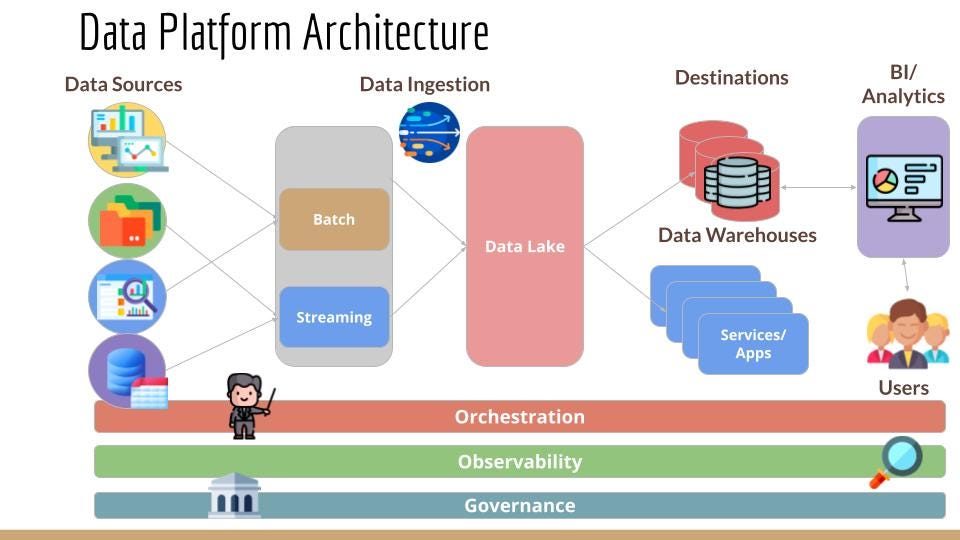
A modern data platform includes several essential components. You need each part to build a reliable and scalable data architecture. The following list outlines the most common elements found in modern data platform services:
Data Ingestion Layer: You collect and import data from various sources.
Data Storage and Processing: You store information securely and process it for analysis.
Data Transformation and Modeling: You clean, organize, and model data for better insights.
Data Analytics & Business Intelligence: You use tools to visualize and interpret data.
Data Governance & Security: You manage access, compliance, and data protection.
Machine Learning & Advanced Analytics Enablement: You apply predictive models and advanced analytics.
You see how amodern data platform supports both traditional and advanced analytics. The architecture allows you to work with large datasets, adapt to changing business needs, and maintain observability across your data environment. Data platform services provide the flexibility and scalability you need for effective data management. You can compare traditional and modern data platform architectures using the table below:
Feature
Traditional Data Platform
Modern Data Platform
Data type
Primarily structured data
Structured, semi-structured
Data volume
Limited; struggles with large volumes
Handles very large volumes of data
Data processing
Batch processing; struggles with real-time processing
Both batch and real-time processing
Data storage
Relational databases and data warehouses
Mix of relational databases, NoSQL databases, data lakes, and data warehouses
Infrastructure
Often on-premises
Often cloud-based, taking advantage of scalability and flexibility
Data analytics
Supports traditional analytics and BI tools
Supports a variety of analytics tools, including advanced analytics and AI/ML capabilities
Flexibility
Data must fit into predefined schemas
Flexible schema (schema-on-read)
Data governance
Basic data governance capabilities
Advanced data governance capabilities
You notice that modern data platform services deliver greater flexibility, scalability, and observability. You can manage data more efficiently and support a wider range of analytics and business intelligence needs.
Key Features of Modern Data Platform Services
Modern data platforms have transformed how you manage and analyze information. You benefit from a range ofkey featuresthat make these platforms essential for business intelligence and analytics. These features help you connect to diverse data sources, process and cleanse data efficiently, visualize insights, and maintain strong governance and security. Let’s explore each of these areas in detail.
Data Integration and Connectivity
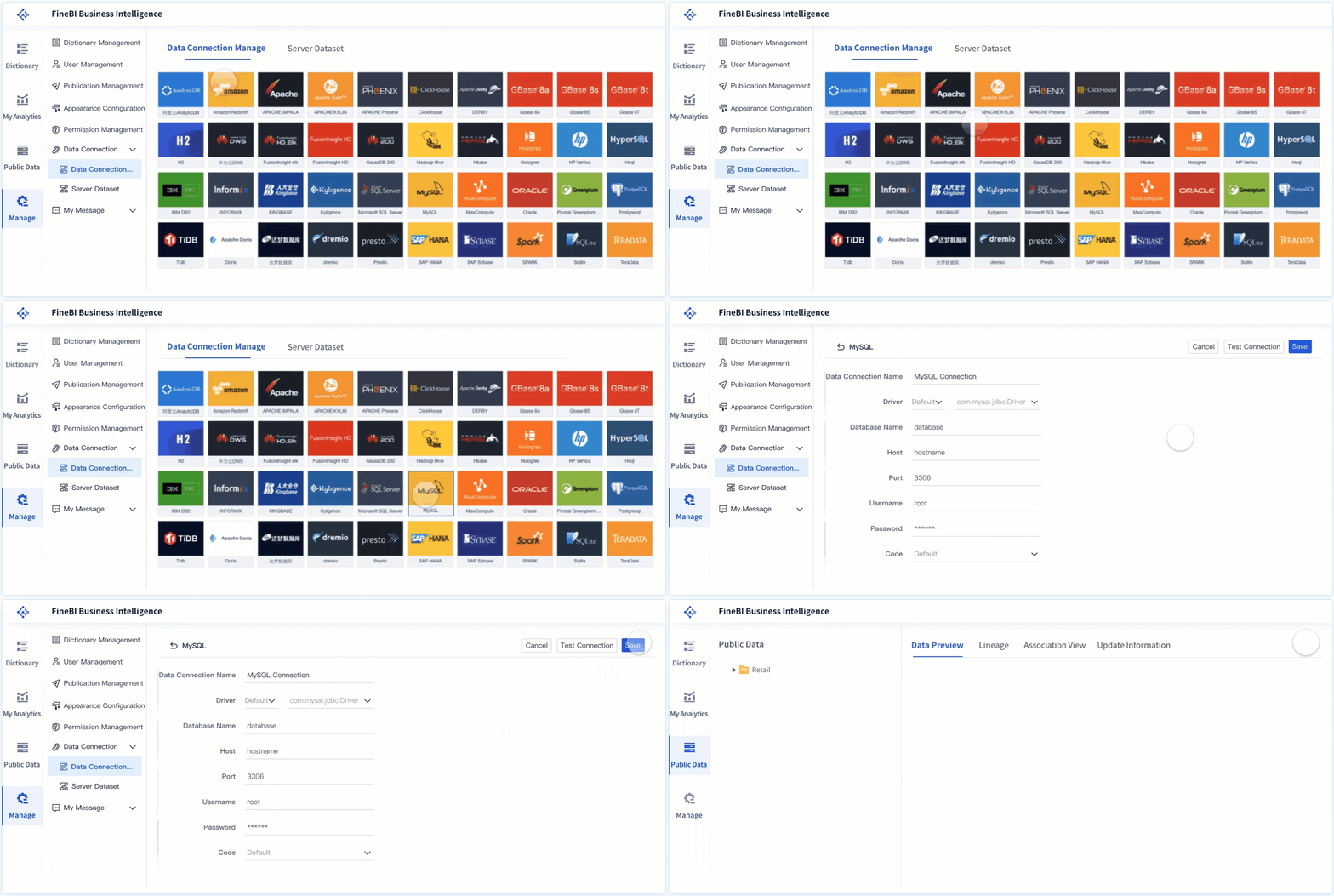
You need a modern data platform that connects seamlessly to all your data sources. This capability is one of the most important key features for any organization. Modern data platforms support a wide range of integration types, allowing you to unify data from databases, cloud applications, APIs, and big data environments. This flexibility ensures you can bring together information from across your business for unified analysis.
Here is a comparison of leading modern data platforms and their integration capabilities:
Platform
Supported Data Sources
Integration Types
Fivetran
700+ connectors including Salesforce, MySQL, PostgreSQL, MongoDB, S3, Google Cloud
ELT, Reverse ETL, Near real-time sync, Change Data Capture (CDC)
Talend
1000+ connectors including databases, cloud applications, IoT devices, APIs
ETL, ELT, API-based integration, Real-time data streaming, Reverse ETL
Informatica
Connectors including Oracle, AWS, Salesforce, Amazon Kinesis Streams
ETL, ELT, Real-time data streaming, Change Data Capture (CDC), API-based integrations
Dell Boomi
Cloud applications, PostgreSQL, MySQL, Oracle, SAP
ELT, ETL, Real-time API-based integrations, Event-driven data synchronization, B2B/EDI data exchange
ETL, ELT, Real-time data integration, API-based integration
You see that a modern data platform gives you the power to connect to hundreds of data sources. You can use ETL, ELT, and real-time streaming to move and synchronize your data. This level ofdata integrationsupports both operational and analytical needs, making your data platform a central hub for your business.
Once you connect your data, you must ensure it is accurate and ready for analysis. Data processing and cleansing are critical steps in any modern data platform. You use these processes to transform raw data into reliable information.
The most effective data processing and cleansing techniques include:
Removing duplication: You identify and eliminate redundant records to prevent skewed analysis.
Handling missing values: You decide whether to fill in or remove incomplete data points to maintain integrity.
Standardizing data: You ensure consistent formats across datasets for seamless integration.
Correcting inconsistencies: You resolve conflicting information to improve trustworthiness.
Handling outliers: You identify and address unusual data points to prevent negative effects on analysis.
Automated data cleansing plays a vital role in maintaining data quality. If you ignore this step, poor data quality can lead to bad decisions and operational inefficiencies. Studies show that 30% of enterprise data is incomplete or inaccurate, which can result in significant financial losses. AI-powered tools now automate much of the data cleaning process. These tools detect duplicates, fill missing data, and standardize formats, which enhances analytics accuracy. Automated data cleansing reduces errors and improves data quality, which is crucial for reliable analytics and decision-making. Poor data quality costs the U.S. economy billions each year, so you must prioritize this step in your data platform.
Visual Data Analytics with FineBI
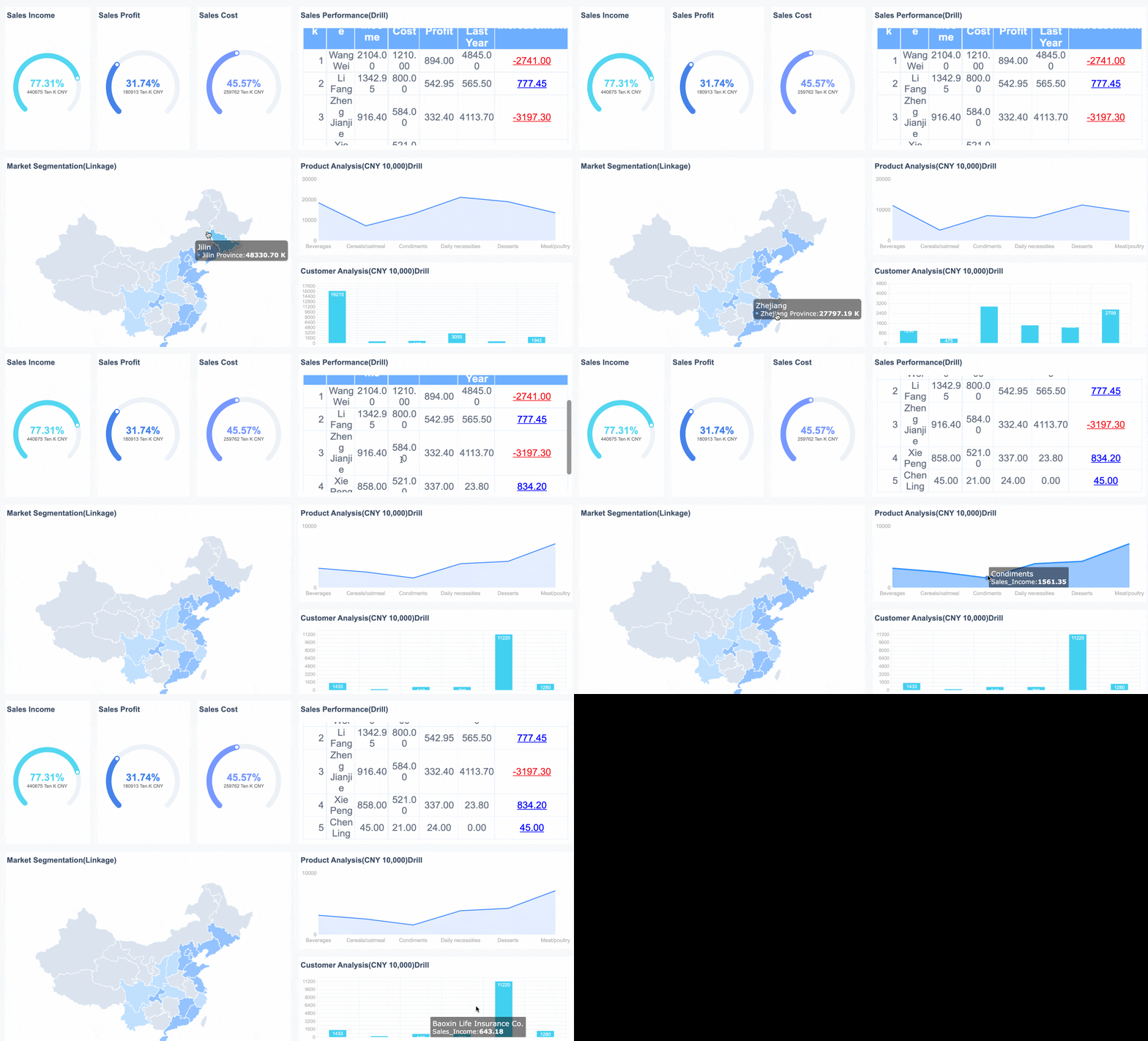
After you prepare your data, you want to explore and visualize it. Modern data platforms offer advanced data visualization tools that help you turn complex information into clear, actionable insights. FineBIstands out in this area by providing a rich set of visual analytics capabilities.
Feature
FineBI
Other Platforms
Chart Styles
Over 70 chart styles
Varies by platform
Pixel-Perfect Reports
Yes
Limited in some platforms
Interactive Features
Drill-through, parameter queries
Varies
Dynamic Data Integration
Yes
Varies
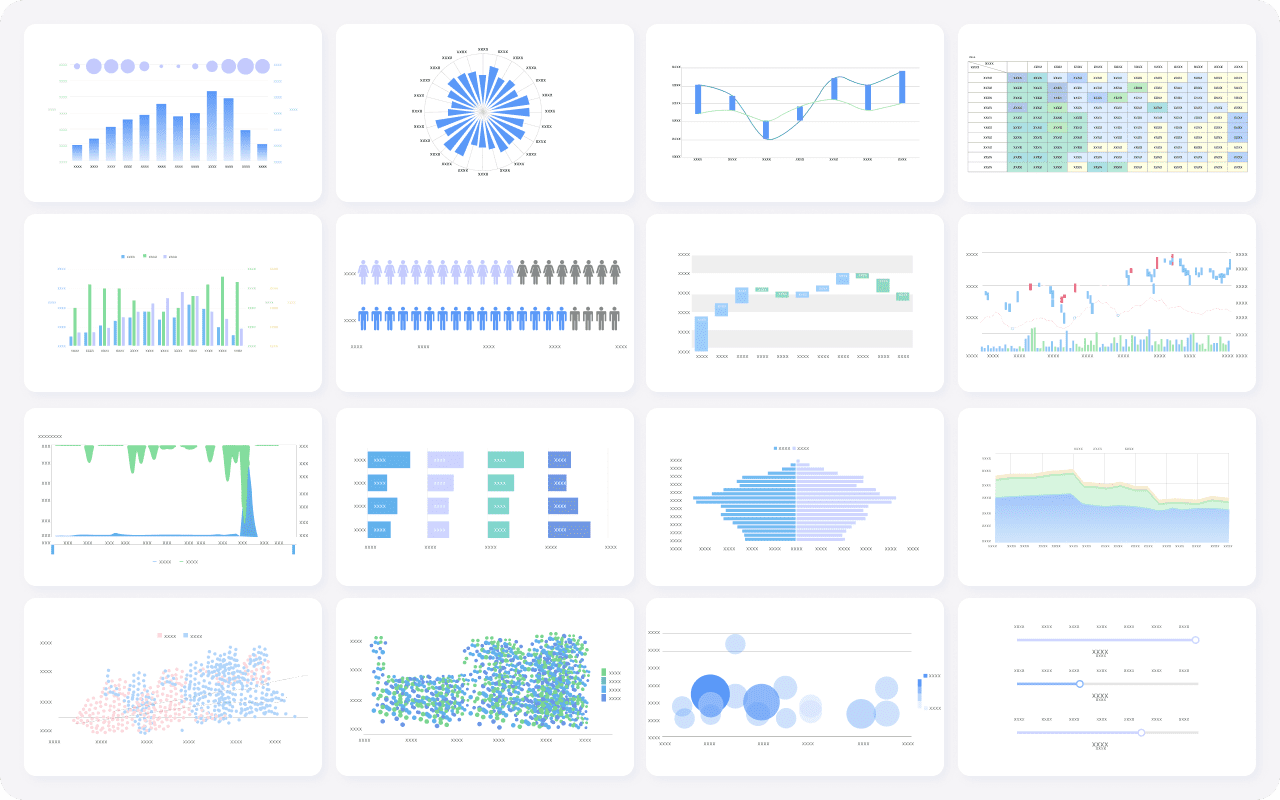
With FineBI, you can use more than 70 chart styles to present your data. You create pixel-perfect reports that meet your business needs. Interactive features such as drill-through and parameter queries let you explore data at different levels. FineBI supports dynamic data integration, so your dashboards always reflect the latest information. You use drag-and-drop tools to build dashboards without writing code. This self-service approach empowers you to analyze data independently and share insights across your organization. FineBI’s workflow covers data integration, processing, visual exploration, and secure publishing, making it a comprehensive solution for modern data platform needs.
You must protect your data and ensure compliance with regulations. Modern data platforms enforce clear governance rules to control access and usage. You benefit from integrated data quality, security, and compliance features that keep your information safe.
Modern data platforms use advanced technology to open data access while maintaining strict control over sensitive information. You can assign permissions based on roles, departments, or projects. This approach ensures that only authorized users can view or modify critical data. Governance capabilities help you comply with evolving regulations and audit requirements. By maintaining high standards for data security and governance, you build trust in your analytics and support responsible data use across your organization.
Tip: Always review your data governance policies to ensure they align with current regulations and business needs.
A modern data platform gives you the tools to manage data quality, security, and compliance in one place. You gain peace of mind knowing your data is protected and your analytics are trustworthy.
Why Data Platform Services Are Essential
Business Value and Efficiency
You needdata platform servicesto unlock real business impact in your organization. These services help you improve efficiency, reduce costs, and transform your business operations. When you use a modern data platform, you gain faster time to insight by automating data processing and streamlining data management. You can connect data products from different departments and unify data storage, which leads to better data quality and more reliable analytics.
A well-designed data platform empowers you to make informed decisions quickly. You reduce manual work and improve trust in your data. You also accelerate data-driven decision making, which helps you stay competitive. Data platform services support your business goals by enabling you to adapt to market changes and modernize your operations.
Here is a table that summarizes the business value drivers you gain from data platform services:
Business Value Driver
Description
Performance improvement
Enhances operational efficiency, effectiveness, and customer satisfaction, impacting KPIs like sales growth.
Direct or indirect cost savings
Reduces operational costs through automation and improved resource utilization, leading to financial savings.
Risk mitigation
Improves data security and compliance, reducing errors and potential risks.
Enables adaptation to market changes and modernization of business operations.
You see that data platform services deliver measurable improvements in efficiency and performance. You can automate repetitive tasks, optimize resource usage, and reduce operational risks. These benefits translate into direct financial savings and stronger business outcomes.
Note: A robust data platform helps you turn data into actionable insights. Without effective data management, your data can become a liability instead of an asset.
Real-Time Data Analytics
You rely on data platform services to provide real-time data analytics. This capability allows you to make decisions based on the most current information. You can detect and address operational issues as they occur, maintain a pulse on customer sentiment, and improve customer satisfaction.
Real-time data processing gives you faster time to insight. You can respond instantly to market changes and optimize your business strategies. Data platform services enable you to analyze data products from multiple sources and deliver up-to-the-minute insights for decision-making.
Consider the main benefits of real-time data analytics in your organization:
Detects and addresses operational issues as they occur.
Maintains a pulse on customer sentiment and behavior.
Improves customer satisfaction and builds stronger relationships.
You can also review the table below for more details:
Benefit
Description
Timely Responses
Enables organizations to react instantly to issues or trends, preventing potential problems.
Accuracy of Data
Ensures the use of the most current insights, avoiding stale information that can lead to missed opportunities.
Cost Savings
Helps in preventing fraud, optimizing inventory, and reducing operational costs through better insights.
Enhanced Customer Relationships
Allows businesses to respond proactively to customer needs, improving satisfaction and loyalty.
You benefit from real-time data analytics by increasing business efficiency and improving campaign performance. You can address operational issues quickly and strengthen customer relationships. Data platform services help you optimize logistics and deliver personalized experiences to your customers.
You need built-in scalability in your data platform to handle growing data volumes and changing business needs. Modern data platform services offer horizontal and vertical scalability, allowing you to add resources or optimize existing ones. You can scale resources in real time according to demand, which simplifies hardware provisioning and reduces costs.
A modern data platform supports distributed and parallel data processing. You can process large volumes of data quickly by distributing tasks across multiple computers. This approach improves data quality and ensures reliable data storage and management. You can integrate data products from various sources, including databases and live feeds, which enhances flexibility.
Here is a table that highlights the scalability features of modern data platforms:
Feature
Description
Horizontal and vertical scalability
Modern platforms can adapt to increased data and workload by adding resources or optimizing existing ones.
Real-time data management
Enables immediate processing of data for faster analysis.
Distributed and parallel processing
Allows for quick processing of large data volumes by distributing tasks across multiple computers.
Support for multiple data sources
Integrates data from various sources, including databases and live feeds.
Security and compliance
Incorporates advanced security measures to protect sensitive information and ensure regulatory compliance.
You benefit from true elastic scalability, which means your data platform can automatically adjust based on workload demands. This feature is essential as data volumes continue to grow. Traditional systems often struggle to keep up without costly redesigns, but modern data platform services provide the flexibility you need.
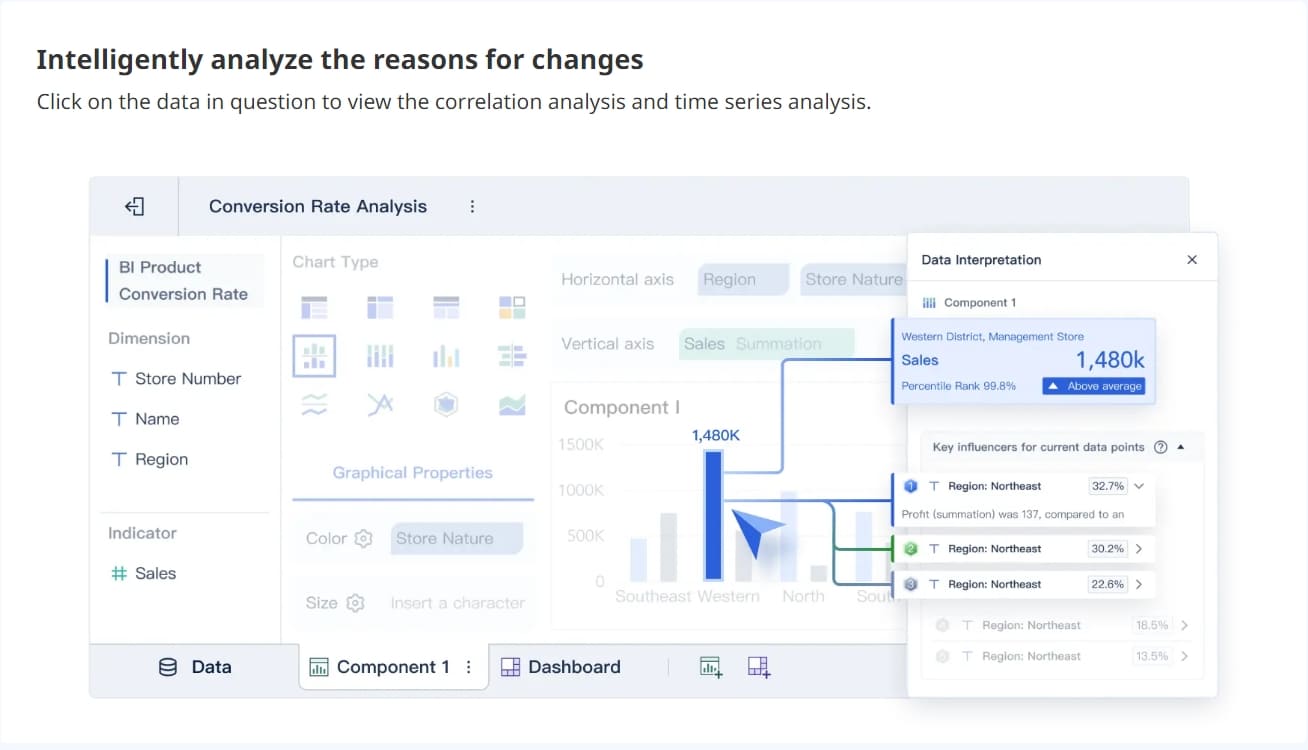
Platforms like FineBIoffer enhanced data analysis capabilities. You can create custom dashboards and perform multi-dimensional OLAP data analysis. Self-service functionalities empower you to analyze data independently, which lowers learning costs and enables faster time to insight. Improved collaboration features allow you to share insights across teams, which strengthens your data-driven culture.
Benefit
Description
Enhanced Data Analysis
FineBI enhances data analysis capabilities, allowing users to create custom dashboards and perform multi-dimensional OLAP data analysis.
Self-Service Functionalities
Users can independently analyze data with minimal learning costs, empowering business professionals to make informed decisions.
Improved Collaboration
The platform facilitates effective sharing of insights across teams, improving overall collaboration.
Tip: Built-in scalability and flexibility in your data platform help you adapt to business growth and changing requirements. You can maintain high data quality and strong data governance while supporting advanced analytics and data products.
You see the real business impact of data platform services in large enterprises. For example, BOE Technology Group used FineBIto overcome data fragmentation and inconsistent metric definitions. They built a unified data warehouse and standardized metrics, which led to a 5% reduction in inventory costs and a 50% increase in operational efficiency. The project enabled centralized monitoring, early risk identification, and faster time to insight. BOE now benefits from improved data processing, better data storage, and enhanced data governance, which supports executive decisions and drives digital transformation.
Data platform services are essential for your organization. You gain faster time to insight, improved efficiency, and the ability to scale and adapt. You can manage data products, ensure data quality, and support data-driven decision making. These services deliver real business impact by transforming your data management and analytics capabilities.
Comparing Traditional and Modern Data Platform Services
Key Differences
You often face a choice between traditional IT-centric platforms and modern self-service solutions.Traditional platformsrequire IT professionals to manage data and build reports. You may wait days or weeks for a report, and customizing layouts or connecting new data sources can be difficult. Modern data platforms change this experience. You use intuitive interfaces to create reports and dashboards yourself. You connect to diverse data sources with pre-built connectors. You customize layouts with drag-and-drop tools.
Here is a table that highlights the main differences:
Feature
Traditional Reporting
Self-Service Reporting
Dynamic Conditional Formatting
Limited, manual effort
Automatic, enhances analysis
Interactive Elements
Minimal, requires effort
Real-time sorting, filtering
Drag-and-Drop Layouts
Coding required
Easy, intuitive
Data Source Connectivity
Limited, needs integration
Broad, connects easily
Tool Integration
Requires development
Seamless, modern tools
You see that a modern data platform gives you more control and flexibility. You work faster and make decisions with up-to-date information.
Adoption Challenges and Considerations in Data Platform Services
Common Implementation Issues
When you start using data platform services, you may face several challenges. Many organizations focus too much on technical details and forget about business strategy. This can lead to low adoption rates. Departmental data silos often appear when teams use their own solutions, making it hard to share information. Poor-quality data can undermine your analytics and decision-making. Without strong data governance, managing information becomes chaotic. Legacy systems add complexity and cost, especially when you try to connect new tools. Sometimes, teams do not clearly define their requirements, which leads to confusion and missed goals.
You may also encounter high implementation costs. Licensing, customization, and training require significant investment. Integrating with legacy systems can disrupt your operations and increase expenses. Keeping data synchronized across platforms is another challenge. If you do not manage this well, you risk using outdated or inconsistent information.
Choosing the Right Data Platform
Selecting the right data platform services requires careful evaluation. You should compare platforms using clear criteria. The table below outlines important factors to consider:
Criteria
Description
Cost and Billing
Review pricing models and total ownership costs.
Data Management Capabilities
Assess data ingestion, storage, data transformation, and governance.
Scalability and Performance
Check the ability to scale and performance metrics.
Integration Capabilities
Look for easy integration with current tools and flexible architecture.
Deployment Options
Consider deployment models and management simplicity.
AI / ML Capabilities
Evaluate built-in AI/ML features or integration options.
Security and Compliance
Ensure strong security and regulatory compliance.
Vendor Reputation
Research the vendor’s support and update history.
You should also think about how to build a data platform that supports your business needs. Focus on data modeling and data-first strategies to ensure your platform grows with your organization.
Best Practices for Success
To succeed with data platform services, you need a clear plan. Start with strategic planning that aligns with your business goals. Establish strong data governance to organize and control access to information. Regularly update your systems to take advantage of new features and cloud capabilities. Train your team so everyone can use the platform effectively. Prioritize high-quality data and maintain good practices for data transformation. These steps help you get the most value from your investment and support long-term growth.
Tip: A well-implemented data platform supports better decision-making and helps your organization stay competitive.
You see how data platform services drive business transformation by eliminating silos and enabling real-time analytics. These platforms unify your data, enhance integration, and support centralized governance. When you select a solution, prioritize scalability, security, and ease of use. FineBIoffers self-service analytics and robust integration for organizations seeking actionable insights. To implement a modern data platform, establish regular data updates, enforce validation rules, and provide user training. Review your objectives and conduct a proof of concept to ensure success.
Access a wealth of case studies, industry insights, and solution guides to accelerate digital transformation.
FAQ
What is a data platform services catalog?
You use a data platform services catalog to organize available tools and resources. The catalog helps you find solutions for data integration, processing, and analytics. You can browse the catalog to compare features and select the best fit for your business needs.
How does discovery work in data platform services?
You rely on discovery to identify new data sources and insights. Discovery lets you explore datasets, uncover patterns, and improve decision-making. The process involves searching the catalog, connecting to sources, and using analytics tools for deeper understanding.
Why is a catalog important for data platform services?
A catalog gives you a structured overview of all available services. You use the catalog to streamline selection and deployment. The catalog supports efficient discovery, helping you locate resources quickly and optimize your data workflows.
What role does discovery play in business intelligence?
Discovery enables you to find valuable information hidden in your data. You use discovery to analyze trends, spot anomalies, and generate actionable insights. The catalog supports discovery by providing access to diverse datasets and analytics tools.
How do you maintain an effective catalog for data platform services?
You update the catalog regularly to reflect new tools and data sources. You organize the catalog for easy navigation and ensure discovery remains efficient. A well-maintained catalog helps you keep pace with changing business requirements and supports ongoing innovation.