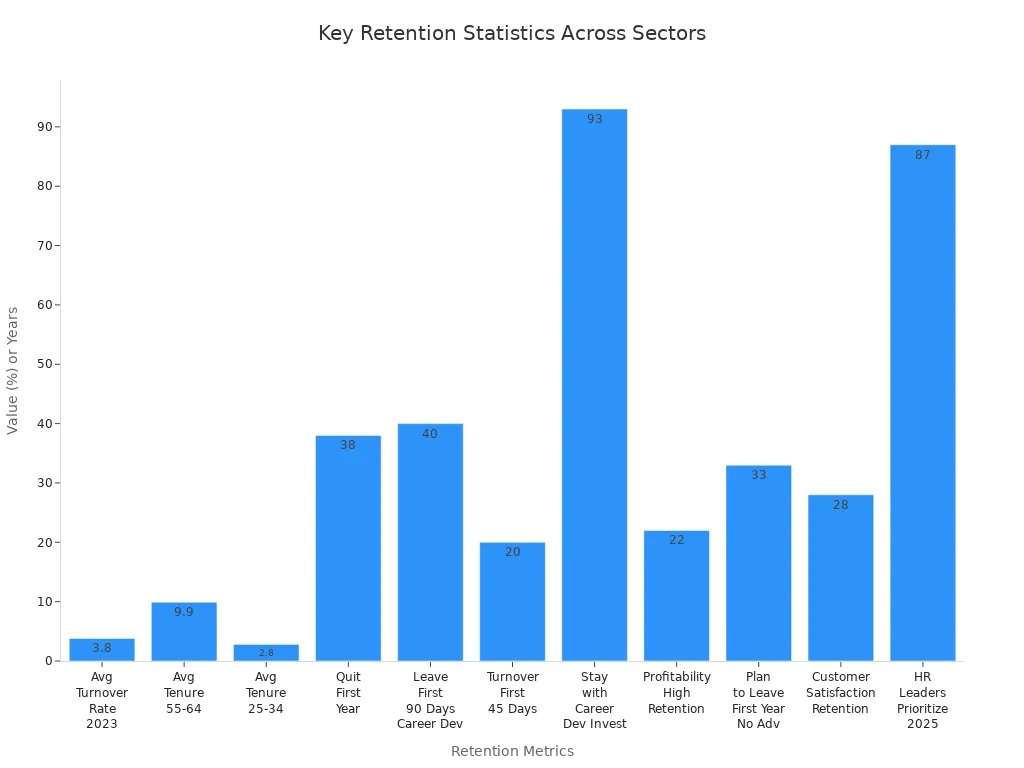
You might wonder about the definition of retention. Retention means keeping people, knowledge, or customers over time. In the workplace, retention describes how well you keep employees from leaving. The ACRL explains retention as the ability of an organization to reduce turnover and keep employees for as long as possible. Al-Emadi and colleagues say retention includes actions like rewarding employees and creating a safe environment.
Retention matters in many areas. You see it in employment, contracts, education, and business. For example, schools focus on student retention, while companies use retention strategies to build loyalty. When you understand retention, you improve audience engagement and use storytelling to connect with people. In fact, storytelling helps you remember key ideas and builds a stronger connection.
Statistic
Value
Source
Average Turnover Rate in the U.S. (2023)
3.8%
Bureau of Labor Statistics, Forbes
Percentage of Employees Who Quit Within the First Year
38%
Work Institute, Forbes
Increase in Profitability with High Retention Rates
22%
Gallup
Retention helps organizations and individuals succeed. Storytelling gives you tools to make retention stronger in your daily life and work.
Definition of Retention
What Retention Means
You encounter the definition of retention in many areas of life. Retention means keeping something valuable over time. In employment, retention refers to the ability to keep employees from leaving. In contracts, retention involves holding back funds until all obligations are met. In business, retention focuses on maintaining customer relationships and encouraging repeat purchases. You see retention in education as well, where schools aim to keep students enrolled and engaged in learning.
The definition of retention changes depending on the field. Here is a table that shows how different industries and sectors interpret retention:
Field
Definition
Example
Employment
Strategies to keep valuable employees.
Offering retention bonuses to encourage employees to stay during a merger.
Contracts
Withholding funds until obligations are met.
A construction company withholding 10% of payment until project completion to client satisfaction.
Business
Maintaining customer relationships.
Implementing customer retention initiatives to foster long-term client relationships.
Retention also appears in healthcare, SaaS, retail, manufacturing, and real estate. For example, healthcare organizations focus on patient engagement and service quality to build trust and loyalty. SaaS companies use flexible subscription models to meet diverse user needs. Retailers implement membership programs to encourage repeat purchases. Manufacturers offer customization and after-sale services to retain clients. Real estate professionals build long-term tenant relationships through flexible leasing terms.
You may hear myths about retention. Some people believe hiring has nothing to do with retention, but recruitment practices impact employee retention. Others think company culture does not matter, yet many employees leave for reasons beyond salary, such as company culture and benefits. Another misconception is that workers will only stay if they get promoted, but many employees prefer diverse experiences over traditional career advancement.
Importance of Retention
You need to understand the importance of retention to succeed in any organization. High retention rates help you build a stable workforce, reduce costs, and improve performance. When you keep employees, you avoid the expense of recruiting and training new staff. Replacing an employee can cost up to 200% of their annual salary. Recruiting new employees costs a business $4,700 per hire, and turnover costs can reach 33% of an employee's annual salary. High turnover leads to lost productivity and potential revenue, especially for experienced employees.
Retention benefits organizations in many ways. You see enhanced performance, innovation, and customer satisfaction when you prioritize retention. Employee loyalty reflects a company’s ability to maintain a stable workforce, which is crucial for a thriving workplace culture. High levels of employee loyalty correlate with improved staff morale, creating a sense of community and stability within teams.
You can measure the impact of retention in several ways:
Loss of productivity when an employee departs.
Overhead expenses incurred from recruiting and training a new employee.
Time taken for the new employee to reach full productivity, which can take years.
Retention depends on several key components. You need competitive compensation and benefits, opportunities for career growth, a positive work environment, recognition, work-life balance, effective communication, managerial support, employee involvement, well-being, and flexibility. These factors help you achieve high retention rates and support learning in your organization.
Retention must fit with your organization’s purpose, philosophy, priorities, and vision. When you align retention strategies with these elements, you create a strong foundation for long-term success.
You may also encounter misconceptions about retention in education. Some believe retaining a student will help them catch up with language, but research shows retention can hinder student success. Holding a student back a year does not guarantee improvement, especially if cognitive ability is not dependent on language proficiency.
Retention is critical for organizational success. You see measurable impacts when retention rates are high. Organizations with high retention rates experience enhanced performance, innovation, and customer satisfaction. Employee loyalty and learning contribute to a stable and thriving workplace. When you focus on retention, you build a stronger team and achieve better results.
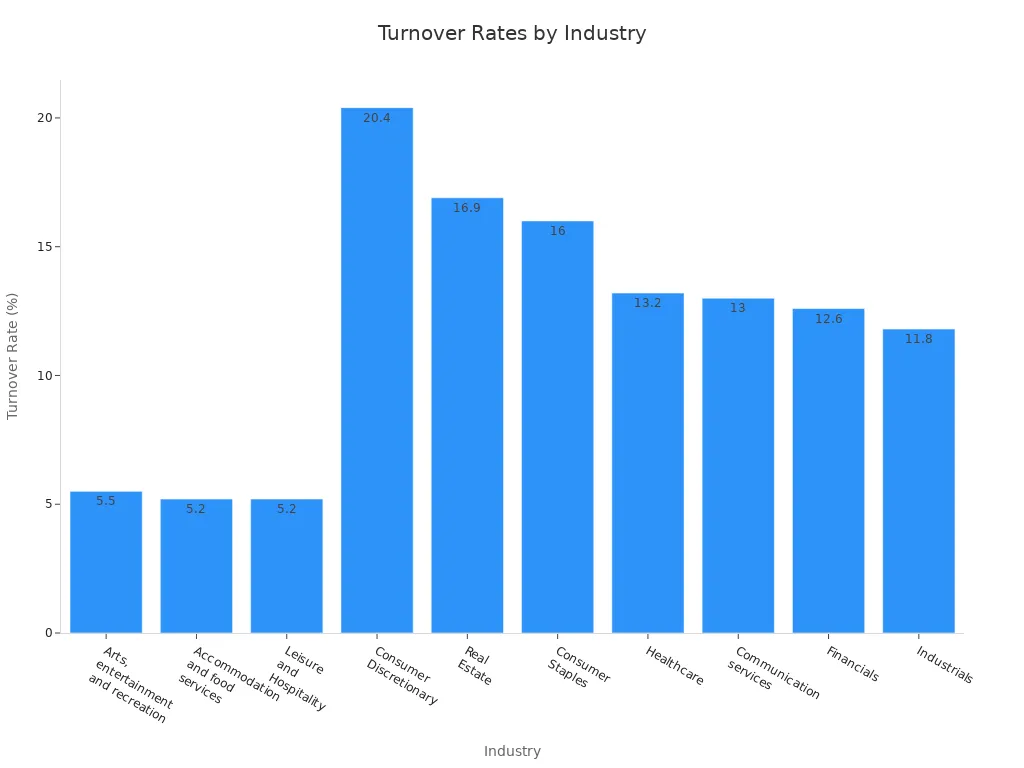
Retention in employmentmeans keeping your valuable employees over time. You focus on employee retention to build a stable workforce and reduce turnover. When you succeed at retaining talent, you create a positive environment where people want to stay. Employee retention matters because high turnover leads to increased costs and lost productivity. You see different turnover rates across industries. For example, arts, entertainment, and recreation have a turnover rate of 5.5%, while consumer discretionary reaches 20.4%. The table below shows how turnover rates vary:
Industry
Turnover Rate (%)
Arts, entertainment and recreation
5.5
Accommodation and food services
5.2
Leisure and Hospitality
5.2
Consumer Discretionary
20.4
Real Estate
16.9
Consumer Staples
16
Healthcare
13.2
Communication services
13
Financials
12.6
Industrials
11.8
Retention Strategies For Employees
You need effectiveretention strategiesto keep employees engaged and loyal. Onboarding plays a key role. When you provide a great onboarding experience, 69% of employees are more likely to stay for at least three years. Flexibility also matters. Employees value flexible work arrangements, and 78% say they would be more loyal to companies that offer them. Wellbeing benefits influence retention, with 61% of employees considering them a major factor. You can use several strategies to improve employee retention:
Onboarding and orientation
Mentorship programs
Employee compensation
Perks
Wellness offerings
Communication
Continuous feedback on performance
Training and development
Recognition and rewards systems
Work-life balance
Flexible work arrangements
Effective change management
Emphasis on teamwork
Acknowledgement of milestones
Retention strategies help you create a supportive culture and encourage employees to stay. You build trust and loyalty by focusing on compensation, career development, and work-life balance.
Measuring retention helps you understand how well you keep employees. You use retention metrics to track progress and identify areas for improvement. Common metrics include overall retention rate, employee satisfaction, turnover rate, voluntary turnover rate, involuntary turnover rate, average employee tenure, cost of employee turnover, and retention rate per category. The table below summarizes these metrics:
Metric
Description
Overall Retention Rate
Percentage of employees staying with the company over a period of time.
Employee Satisfaction
Measures overall contentment and engagement with work and company culture.
Overall Turnover Rate
Percentage of employees who leave the company over a given period of time.
Voluntary Turnover Rate
Percentage of employees who willingly leave the company, indicating dissatisfaction or better opportunities.
Involuntary Turnover Rate
Percentage of employees terminated or laid off, indicating potential management or training issues.
Average Employee Tenure
Average length of time employees stay with the company.
Cost of Employee Turnover
Financial implications of losing employees, including recruitment and training costs.
Retention Rate Per Category
Retention rates segmented by categories such as department, gender, or ethnicity.
You analyze these metrics to improve retention and make informed decisions. Measuring retention allows you to spot trends and adjust your strategies to retain talent and build a stronger organization.
Definition of Retention in Contracts and Education
Contract Retention Overview
Retention in contractsmeans you keep important documents and agreements for a set period. You use retention to protect your business and meet legal requirements. When you manage contracts, you must understand why retention matters. You need to keep contracts to avoid penalties and fines. Retention helps you reduce risks and resolve disputes. You also ensure business continuity when staff changes occur. Efficient contract retention allows you to find documents quickly and save costs.
You should remember the main reasons for contract retention in business and legal contexts:
Legal compliance requires you to retain contracts to meet regulations.
Risk mitigation protects your rights if disputes arise.
Business continuity ensures smooth operations during personnel changes.
Efficient management helps you access documents faster and streamline your workflow.
Retention in product management also involves keeping records of agreements with vendors and partners. You track contract retention to monitor obligations and deadlines. This process supports your team and helps you avoid mistakes.
Retention in Education
Retention in education means you keep students enrolled and engaged in learning. You focus on retention to help students complete their studies and reach their goals. The average retention rate in higher education is about 75%. One in four students does not finish a degree at their first institution. Retention rates for students of color are lower than the national average. Only 68% of students return for their second year, showing ongoing challenges.
You see that student engagement plays a key role in retention. Schools that personalize the student experience and connect with learners achieve better retention outcomes. Financial issues and life challenges are the main reasons students leave school. Academic difficulties also affect retention.
You can improve retention in education by using several interventions:
Mental health support integration boosts student well-being and persistence.
Co-curricular activities increase engagement and retention.
First-year experience programs help students transition and succeed.
Technology-enhanced engagement keeps students connected through real-time communication.
Financial support programs address economic barriers.
Intervention Type
Evidence
Mental Health Integration
Institutions integrating mental health support see improved persistence rates.
Co-curricular Involvement
Students attending co-curricular events are 53.7% more likely to persist to the next academic year.
First-Year Experience Programs
Comprehensive programs help students navigate their initial year, leading to higher retention.
Technology-Enhanced Engagement
Engagement software keeps students connected to their academic journey through real-time communication.
Financial Support Programs
30% of dropouts cite financial difficulties as their primary reason for leaving.
Retention in product management for education means you track student progress and use data to support learners. You analyze retention rates to identify at-risk students and provide targeted support. Schools must enhance communication and support systems to maintain engagement and improve retention.
Retention in business means keeping your customers over time and building long-term relationships. You focus on customer retention to reduce churn and increase the value each customer brings to your company. When you improve retention, you create a stable base of loyal customers who make repeat purchases and recommend your business to others.
Retention plays a critical role in every industry. You see it in retail, SaaS, and financial services, where companies measure how many customers stay with them year after year. High retention rates show that your customer interactions are effective and your service meets expectations. Low retention rates signal problems with customer satisfaction, engagement, or product quality.
Customer Retention Strategies
You need strongretention strategiesto keep your customers engaged and satisfied. These strategies help you reduce churn and boost retention rates. Leading companies use several proven methods to enhance retention:
Offer frequent communication and updates to keep customers informed and involved.
Build strong relationships through personalized customer interactions and support.
Implement referral programs to encourage existing customers to bring in new ones.
Exceed expectations by proactively managing and improving the customer experience.
You can see how top brands use these strategies. Starbucks uses a loyalty program in its mobile app to encourage repeat purchases. Sephora’s Beauty Insiders program rewards frequent shoppers with exclusive products and bonuses. These programs focus on customer engagement and satisfaction, which are key to improving retention.
The impact of customer retention strategies is clear. Retained customers generate more revenue at lower costs. A 5% increase in retention can boost your revenue by 25% to 95%. Existing customers are easier to sell to and cost less to retain than acquiring new ones. When you focus on long-term relationships, you shift your business model from transactional to loyalty-driven.
Here is a table showing average customer retention rates in key industries:
Industry
Average Retention Rate
Retail Industry
63%
Financial Services
74%
SaaS Companies
90%
Retention strategies not only reduce churn but also increase customer lifetime value. Loyal customers buy more often, spend more, and share positive experiences with others. Satisfied customers are 31% more likely to spend more than new customers, and 72% will share their positive experiences with six or more people. Upselling to existing customers can contribute up to 30% of your annual revenue.
FineBI for Retention Analysis
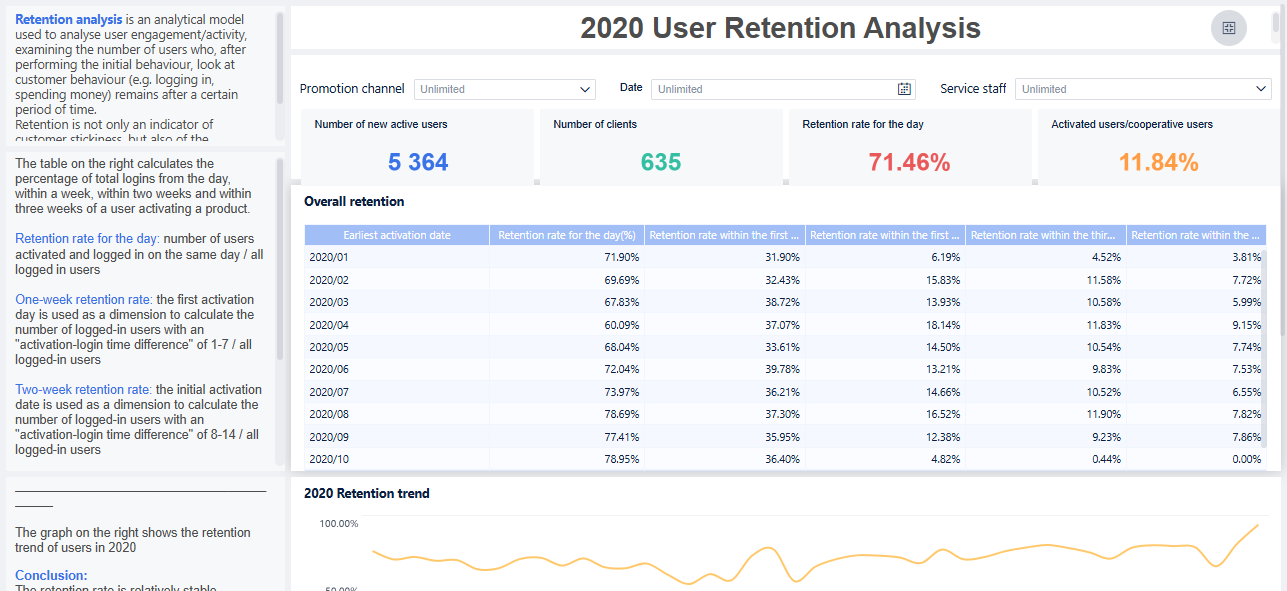
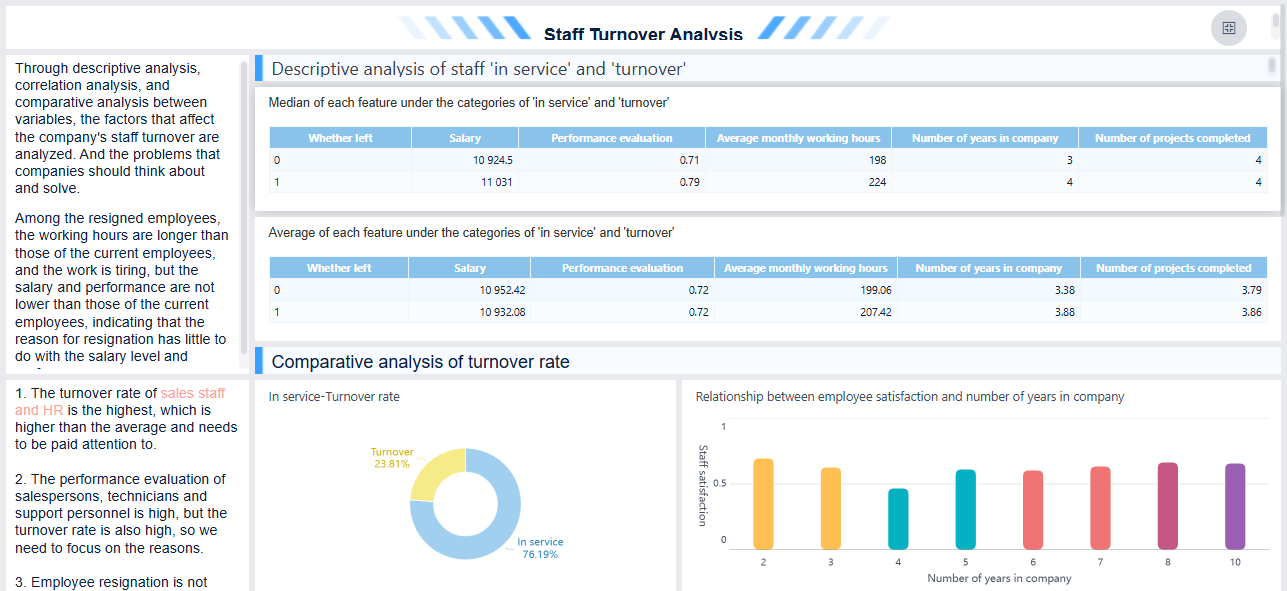
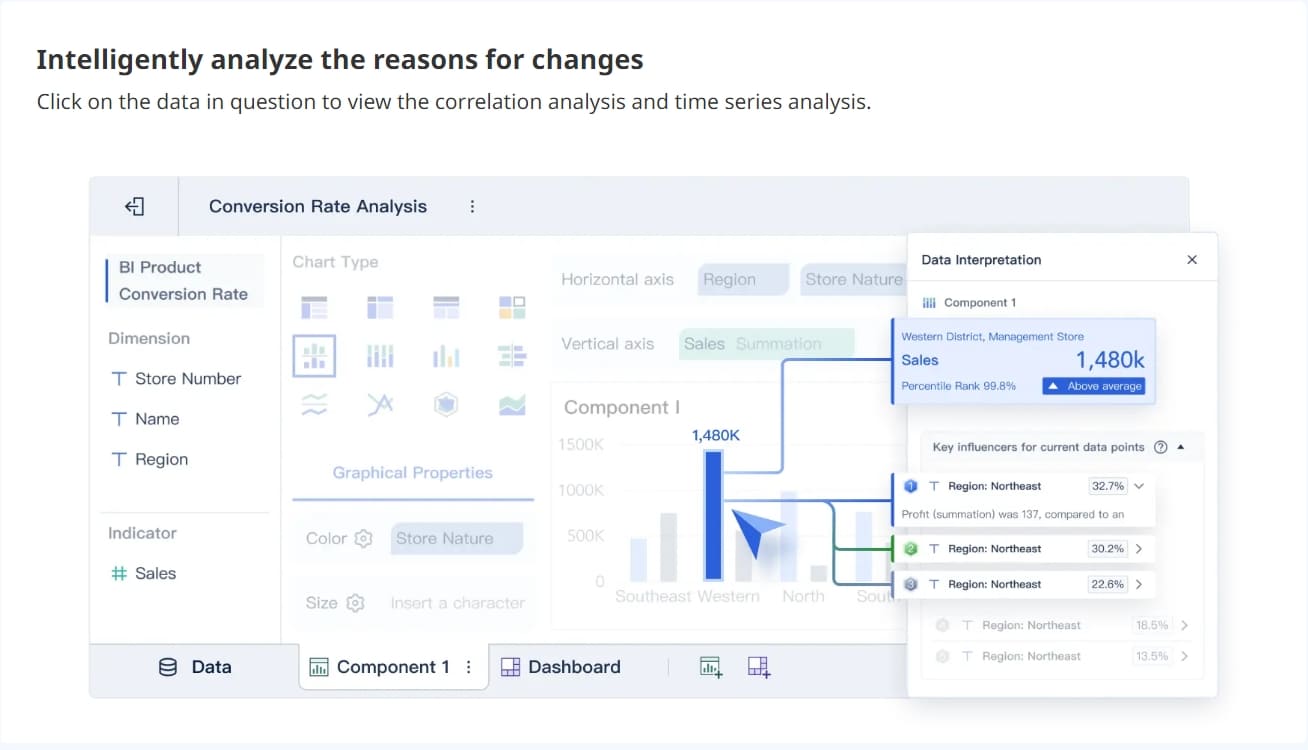
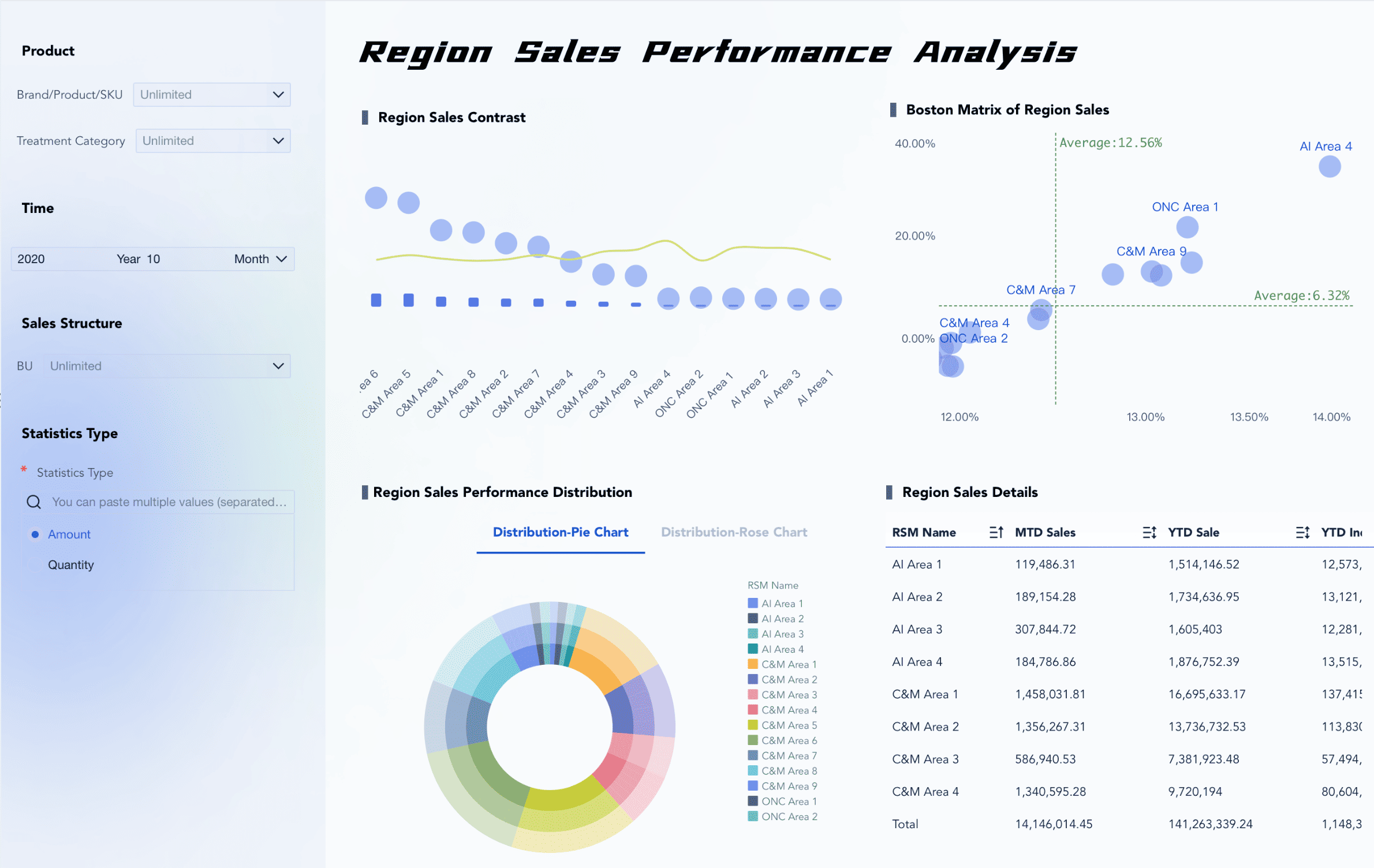
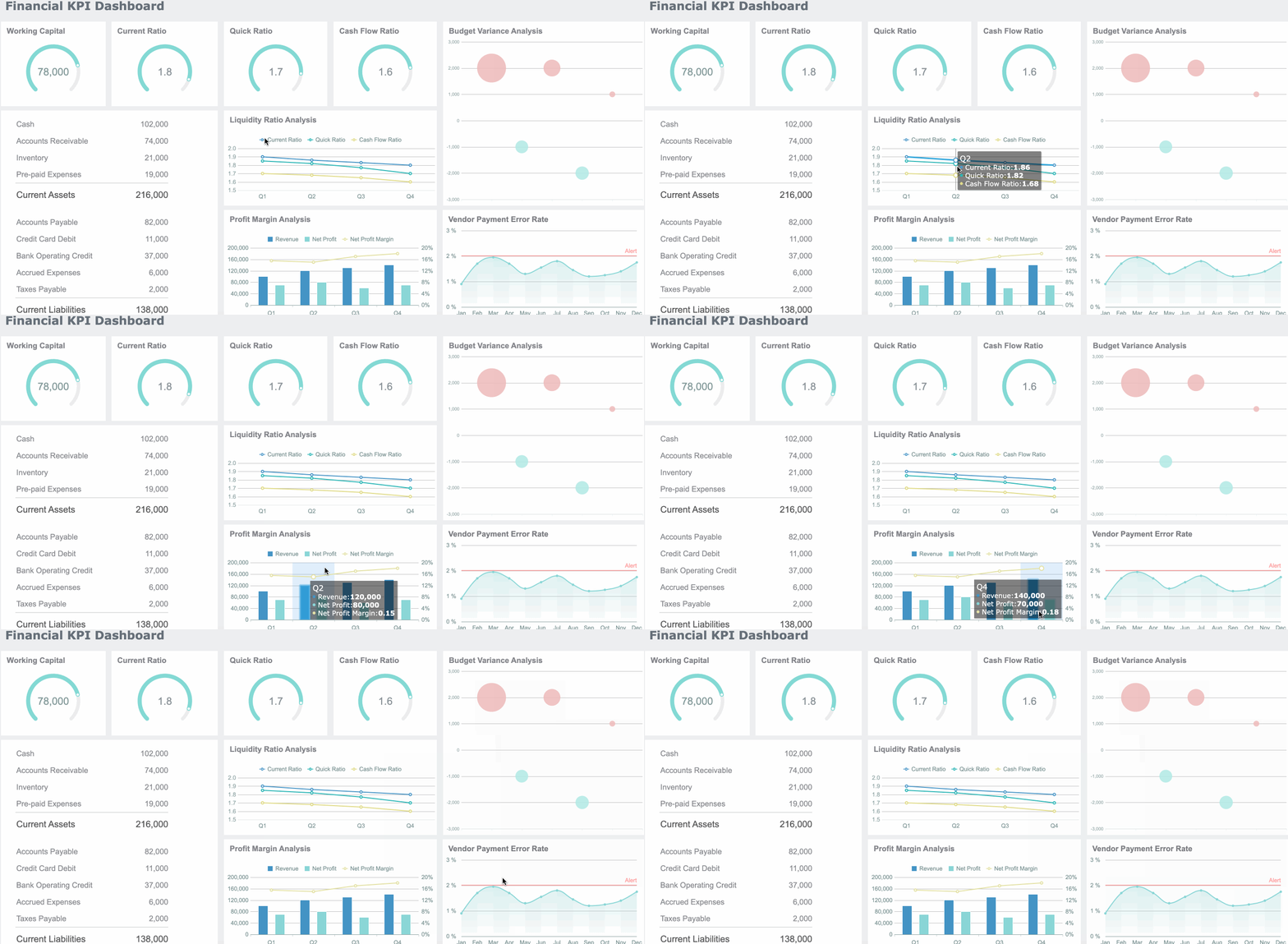
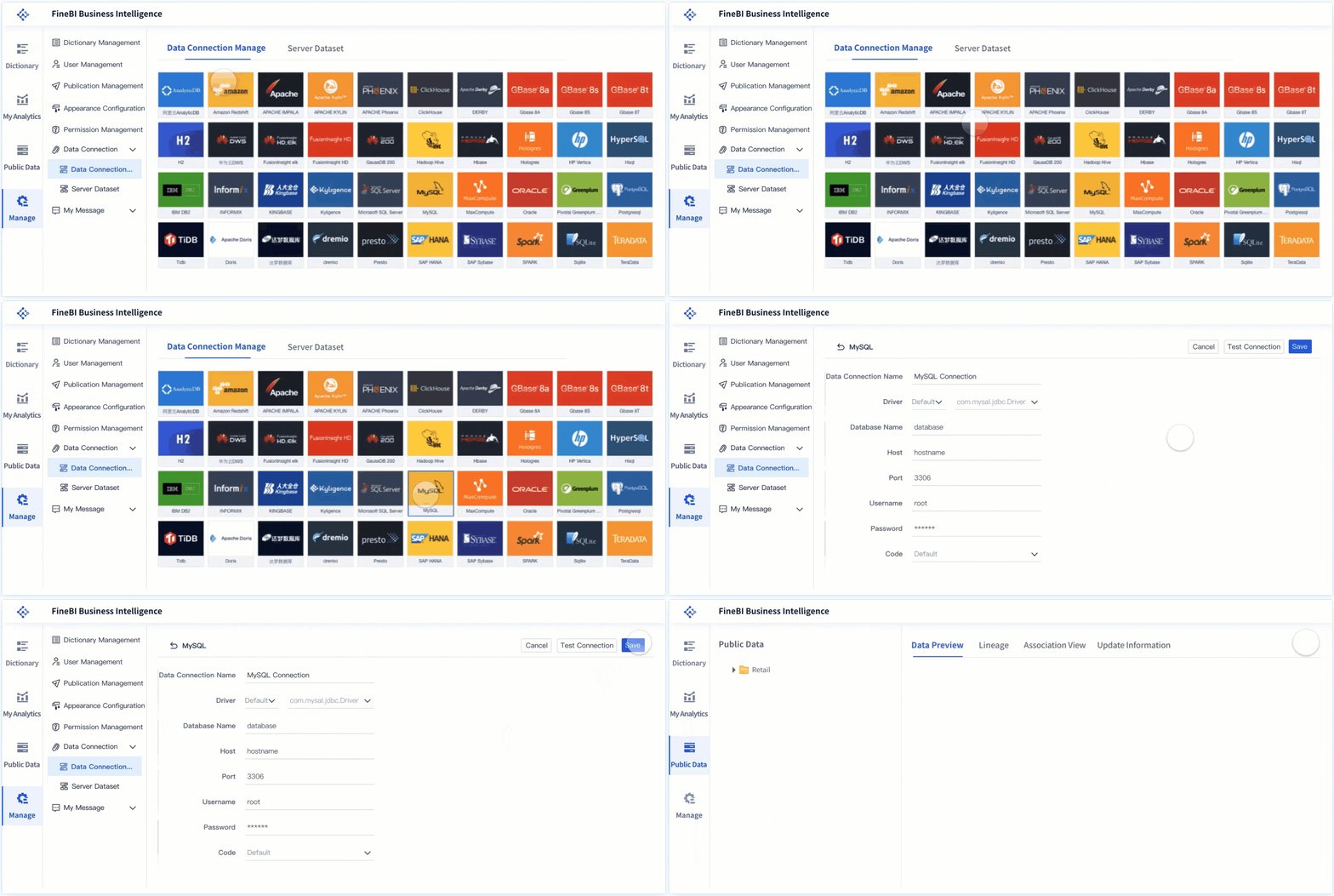
You can use FineBIto analyze and enhance retention in your business. FineBI provides powerful tools for customer retention analysis, helping you understand customer behavior and identify ways to improve retention. The platform connects to various data sources, allowing you to integrate customer data from multiple systems. You can create intuitive visualizations and customizable dashboards to track retention metrics, customer satisfaction, and engagement.
Feature
Benefit
Data Source Connectivity
Connects to various data sources for comprehensive data integration.
Enables tailored insights into customer behavior and retention metrics.
FineBI supports real-time insights, so you can monitor customer interactions and respond quickly to changes in retention rates. You can segment customers based on their behavior, identify at-risk customers, and design targeted retention strategies. The platform’s self-service analytics make it easy for you to explore data and share insights across your team.
FineBI's membership management solution helps you build detailed customer profiles and segment your audience using models like RFM (Recency, Frequency, Monetary). This approach allows you to personalize marketing efforts, optimize product offerings, and track the effectiveness of your retention strategies. You can use dashboards to monitor customer engagement, satisfaction, and loyalty, making it easier to enhance retention and drive business growth.
You can see the power of retention analysis in action with the Cupdata story. UnionPay Data Services, a leader in the fintech sector, faced challenges with data fragmentation and inefficient customer management. The company wanted to improve customer value identification and boost retention rates in the credit card sector.
UnionPay implemented FineBIas a unified data visualization platform. This solution allowed the company to integrate data from multiple sources, analyze customer interactions, and track key retention metrics. By modeling credit card revenue data, UnionPay identified performance gaps and designed targeted actions to improve customer engagement and satisfaction.
The results were impressive. System operation efficiency increased by 5%, and customer value identification accuracy reached 90%. The company used FineBI to analyze conversion rates across the customer lifecycle, identify drop-off points, and reactivate dormant customers. Precise marketing strategies and personalized services led to higher engagement and revenue.
FineBI enabled UnionPay to create real-time dashboards and intuitive reports for both business and IT teams. The platform’s data integration and visualization capabilities made it easier to monitor retention, customer satisfaction, and loyalty. UnionPay’s experience shows how you can use FineBI to enhance retention, reduce churn, and support sustainable business growth.
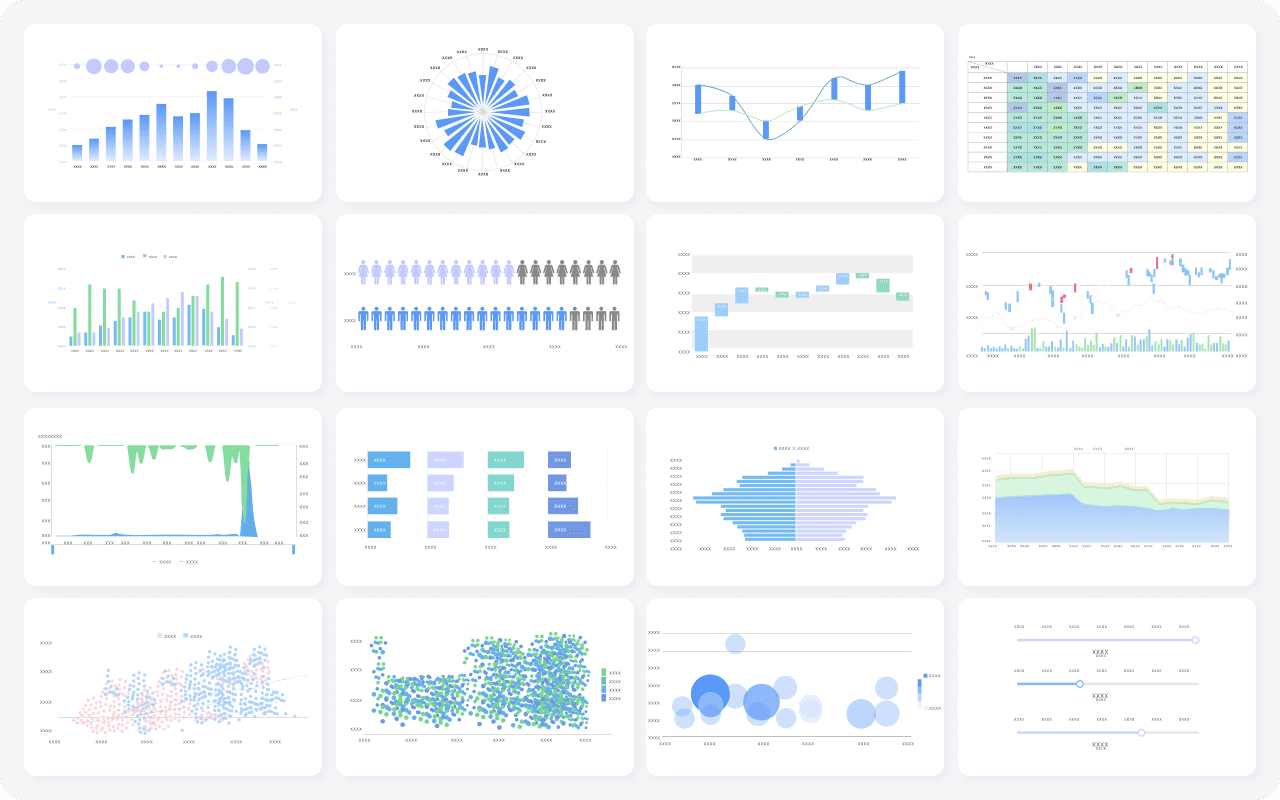
FineBI's Rich Built-in Chart Options For Data Visualization
Retention is essential for business growth and customer loyalty. When you focus on improving retention, you generate steady revenue from existing customers and simplify financial management. Loyal customers create recurring demand, act as advocates, and provide valuable word-of-mouth marketing. FineBI's membership management solution gives you the tools to analyze customer interactions, personalize engagement, and boost retention rates.
You can see that investing in retention strategies delivers a strong return on investment. Retaining customers is three to six times cheaper than acquiring new ones. Loyal customers contribute up to 65% of company revenue and are more likely to buy additional products or services. When you enhance retention, you build a foundation for long-term success.
Retention means keeping valuable people, knowledge, or customers over time. You see retention as a key factor in employment, contracts, education, and business. When you use strong retention strategies, you build trust, improve performance, and reduce costs. Research shows that work-life balance, flexible work, and good leadership increase retention rates. The table below highlights how trust and relationships impact retention:
Factor
Impact on Retention
Trust in Leadership
59% of workers trust their leaders
Good Relationship with Manager
3.4x more likely to stay
You can use analytics tools like FineBIto track retention, spot trends, and make better decisions. Start focusing on retention today to create lasting value for your organization and your career.
Access a wealth of case studies, industry insights, and solution guides to accelerate digital transformation.
FAQ
What does retention mean in business?
Retention in business means you keep your customers, employees, or resources over time. You focus on building loyalty and reducing turnover. High retention rates show that your company meets expectations and creates lasting value.
Why is retention important for organizations?
Retention helps you save money, maintain stability, and improve performance. When you keep employees or customers, you avoid the high costs of recruiting and training new people. Strong retention supports growth and long-term success.
How do you measure retention?
You measure retention by tracking how many customers or employees stay with your organization over a set period. Common metrics include retention rate, turnover rate, and average tenure. These numbers help you understand your strengths and weaknesses.
What strategies improve retention?
You improve retention by offering good communication, rewards, and support. You can use personalized experiences, flexible options, and recognition programs. These strategies help you build trust and keep people engaged.
How does technology help with retention?
Technology helps you analyze data, track retention trends, and design better strategies. Tools like FineBI let you create dashboards, segment customers, and monitor engagement. You use these insights to boost retention and make informed decisions.