A logistics dashboard gives you real-time visibility into your supply chain. You track shipments, inventory, and supplier performance with immediate access to data. This dashboard helps you respond quickly to changes, optimize operations, and reduce risks. See how it improves your business:
Benefit
Description
Real-time data visibility
Immediate insights into supply chain operations
Improved decision-making
Data-driven choices for procurement and production
Performance tracking
Monitors key metrics and supplier efficiency
Risk reduction
Early identification of potential disruptions
Comprehensive view
Holistic management of the entire supply chain
A modern logistics dashboard, especially with FineReport, transforms your daily workflow and empowers smarter decisions.
Logistics Dashboard Overview
A logistics dashboard is a digital tool that gives you a real-time overview of your supply chain activities. You use it to monitor shipments, inventory, and supplier performance, all in one place. This dashboard helps you make faster decisions and respond to changes as they happen.
You rely on a logistics dashboard to trackkey metricsand visualize complex data. It integrates information from multiple sources, providing a unified view that eliminates blind spots. With this tool, you gain continuous insight into your operations, which is essential for maintaining efficiency and control.
Tracks shipments and inventory in real time, giving you immediate access to status updates.
Integrates data from different systems, breaking down silos and improving resource utilization.
Visualizes performance indicators such as transportation costs, lead times, and customer satisfaction.
Facilitates collaboration by sharing information across departments and stakeholders.
Identifies bottlenecks by monitoring trends in costs, cycle times, and order accuracy.
Tip: Use your dashboard to spot issues early and take action before they disrupt your supply chain.
How It Works
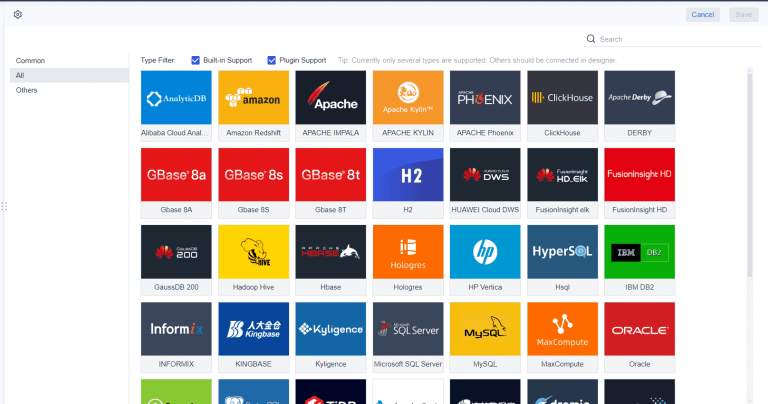
You connect your logistics dashboard to various data sources, such as warehouse systems, transportation platforms, and supplier databases. The dashboard collects and updates information automatically, displaying it through interactive charts and tables. This real-time integration enhances visibility and operational agility.
When you use a logistics dashboard, you benefit from:
Improved operational agility, allowing you to adapt instantly to changes.
Data-driven decision-making, which increases accuracy and helps you avoid disruptions.
Higher customer satisfaction, thanks to accurate tracking and communication.
Real-time communication and data sharing, fostering transparency and teamwork.
You see the entire supply chain at a glance, making it easier to collaborate, address issues, and drive improvements.
A logistics dashboard is a digital platform that gives you a real-time overview of your supply chain. You use it to track shipments, monitor inventory, and measure supplier performance. This dashboard helps you make quick decisions and maintain control over logistics operations.
When you rely on a logistics dashboard, you gain instant access to critical data. You see the status of shipments, inventory levels, and supplier activities all in one place. This visibility allows you to respond quickly to changes and keep your logistics running smoothly.
Visibility and Control
You need visibility to manage logistics effectively. A logistics dashboard centralizes information from different systems, giving you a clear view of your entire supply chain. You track key performance indicators and spot issues before they become problems.
You measure performance against business goals by tracking logistics KPIs.
You identify bottlenecks and recurring issues, which leads to improved efficiency.
Real-time updates enhance visibility over supply chain processes.
You spot inefficiencies and make better decisions.
High visibility lets you respond proactively to disruptions and maintain control.
Predictive analytics help you adjust to changes in demand and inventory.
You minimize downtime and improve service reliability.
Data insights allow you to react quickly to disruptions, improving order reliability.
Logistics environments adapt dynamically to demand and market changes.
You respond quickly to supplier delays and demand spikes, supporting production continuity and customer satisfaction.
FineReport strengthens visibility and control by integrating data from various systems like ERP, MES, and SRM. You interact with comprehensive data visualizations on a single dashboard, which simplifies analysis and enhances decision-making. The unified interface reduces communication costs between departments, making your logistics operations more efficient.
A logistics dashboard helps youoptimize processes and reduce costs. You use real-time data to make informed decisions that improve delivery times and lower expenses.
Contribution Area
Benefits
Route Optimization
Improved delivery times, reduced fuel consumption, and enhanced delivery efficiency.
Predictive Maintenance
Reduced downtime and overall fleet maintenance costs, leading to cost savings.
Inventory Management
Optimized stock levels, reduced holding costs, and better demand planning.
Performance Metrics and KPI Monitoring
Data-driven decisions, improved efficiency, and alignment with business goals.
Vendor and Supplier Performance
Data transparency, stronger supplier relationships, and informed decision-making.
Real-Time Risk Management
Proactive problem-solving, faster response times, and enhanced resilience to disruptions.
You see measurable improvements in logistics operations when you use a dashboard. You optimize routes, reduce fuel costs, and improve delivery efficiency. Predictive maintenance lowers downtime and fleet expenses. Better inventory management means you avoid overstocking and reduce holding costs. You monitor performance metrics and KPIs, which helps you align operations with business goals. You build stronger relationships with vendors and suppliers through transparent data. Real-time risk management lets you solve problems quickly and keep your supply chain resilient.
FineReport'slow-code functionality simplifies data integration and eliminates silos. You benefit from actionable insights that drive efficiency and cost savings across your logistics operations.
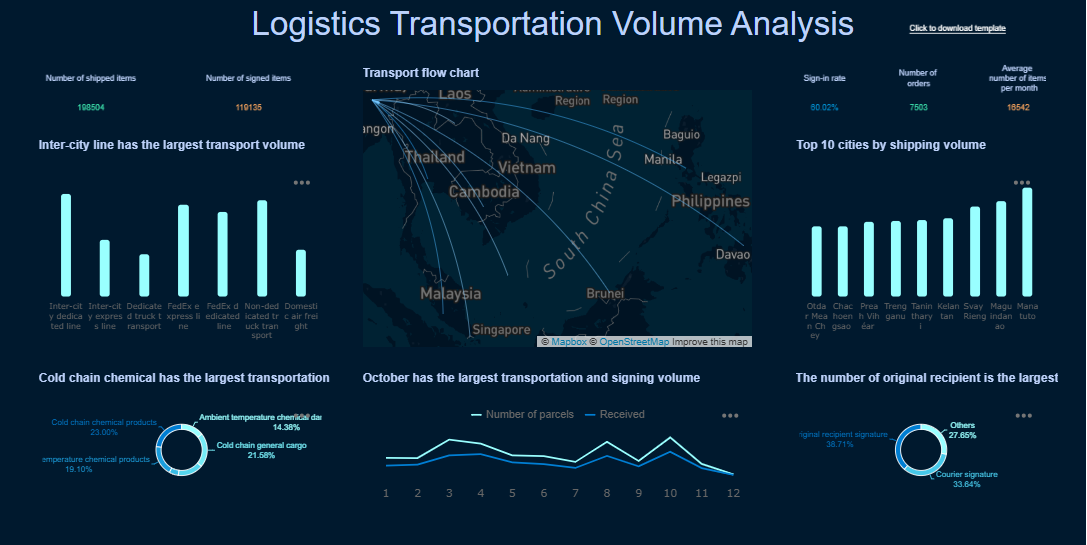
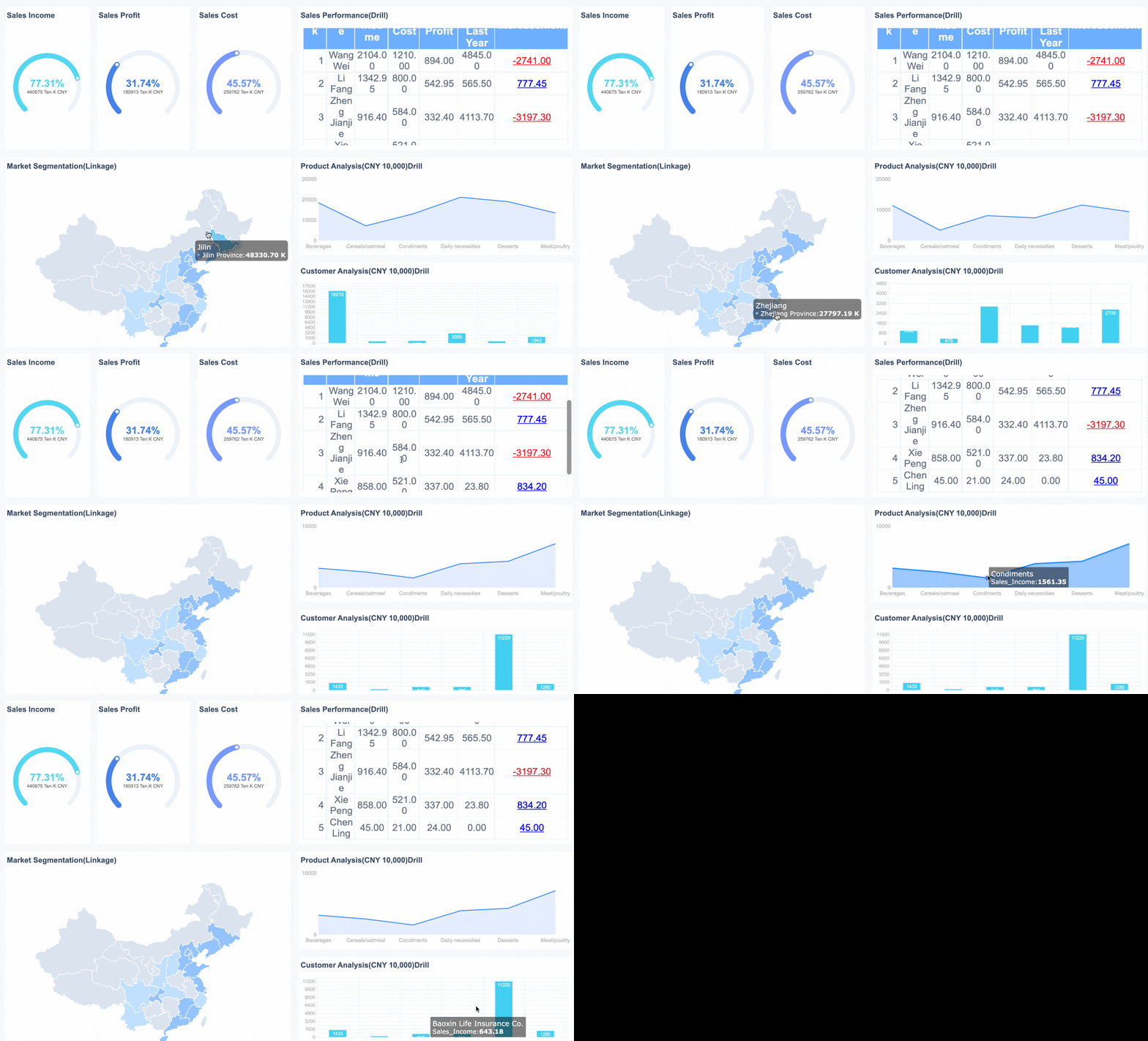
FineReport'sMultiple Built-in Charts For Visualization
A logistics dashboard empowers you to make smarter decisions. You use real-time data to monitor key metrics and respond proactively rather than reactively.
Data visualization tools transform decision-making in logistics. You see trends and patterns instantly, which helps you adjust strategies and improve outcomes. When you align business intelligence technologies with company objectives, you enhance your decision-making process. Management involvement ensures you optimize the use of BI tools.
A global transportation company improved decision-making by using dashboards to monitor operational, financial, and compliance performance. This led to a 33% increase in profitability and a 24% improvement in on-time performance for key accounts.
FineReportenables you to integrate data from multiple sources and visualize it on a single dashboard. You gain actionable insights from raw data, which supports better decisions. The Kintetsu World Express case shows how FineReport helped sales teams access comprehensive customer data, streamline reporting, and improve operational efficiency. You see the impact of real-time dashboards in enhancing information management and driving business success.
Tip: Use your logistics dashboard to turn raw data into actionable insights. This helps you make informed decisions and stay ahead in a competitive market.
Alogistics dashboardis a digital platform that gives you a real-time overview of your supply chain. You use it to track shipments, monitor inventory, and measure supplier performance. This dashboard helps you make quick decisions and maintain control over logistics operations.
When you use a logistics dashboard, you rely onkey performance indicators (KPIs) to measure and improve your logistics operations. These KPIs help you identify strengths and weaknesses, optimize processes, and deliver better results for your business. A kpi dashboard in logistics focuses on the most important metrics that drive efficiency and customer satisfaction.
Delivery and Inventory KPIs
You need to track delivery and inventory KPIs to ensure your logistics dashboard provides actionable insights. The most frequently monitored KPIs include:
On-Time Delivery Rate: This shows the percentage of shipments that arrive on or before their scheduled date. High on-time rates improve customer satisfaction.
Cost Per Mile or Cost Per Shipment: This measures how much you spend to move goods. It helps you find cost inefficiencies.
Shipment Accuracy: This tracks how often orders are picked, packed, and delivered correctly. High accuracy reduces errors and complaints.
Average Delivery Time: This tells you how long it takes for shipments to reach customers. Shorter times mean faster service.
Tracking these KPIs on your logistics dashboard helps you maintain high standards and meet customer expectations.
Transportation and Cost Metrics
Transportation and cost metrics play a vital role in logistics. You use your kpi dashboard to monitor these metrics and control expenses. The table below shows how key transportation metrics impact shipping costs:
Metric
Impact on Shipping Costs
Cost Per Unit Shipped
Lower costs through shipment consolidation and improved efficiency.
On-Time Delivery Rates
Better efficiency and customer satisfaction, leading to lower shipping costs.
Perfect Order Rates
Higher performance and trust, resulting in reduced costs.
By tracking these metrics, you can optimize routes, reduce fuel consumption, and improve overall logistics efficiency.
Order Accuracy and Fulfillment
Order accuracy and fulfillment are essential for successful logistics operations. When you monitor these KPIs on your dashboard, you reduce errors and improve customer satisfaction.
Fulfillment errors damage customer relationships and increase costs.
Mistakes in picking and shipping lead to extra expenses for corrections and returns.
Aiming for a picking accuracy of 99.5% or higher improves fulfillment rates.
Order accuracy means fulfilling orders correctly without mistakes.
High order accuracy reduces returns and complaints, boosting satisfaction.
Monitoring order accuracy helps you maintain efficient, customer-focused operations and strengthens your brand reputation.
A kpi dashboard in logistics gives you the data you need to track these metrics and make informed decisions. FineReportenables you to visualize and analyze all these KPIs in one place, making it easier to manage and improve your logistics performance.
Designing Effective Logistics Dashboard with FineReport
Customization and Usability
You need a logistics dashboard that adapts to your business needs.Customization features let you select templates, filter data, and adjust layouts for clear communication. You can choose from pre-designed templates that match your brand and reporting style. Data filtering helps you focus on the most relevant information. Custom visualizations, such as charts and graphs, make complex data easy to understand. You can adjust the layout, font, and color scheme to create visually appealing reports. Language support allows you to generate reports for diverse audiences.
Customization Feature
Description
Template Selection
Choose from a variety of pre-designed report templates that align with brand and reporting style.
Data Filtering
Apply filters to create targeted reports focusing on the most relevant information.
Visualizations
Customize charts and graphs to effectively communicate complex data insights.
Layout and Design
Adjust layout, font, and color scheme for visually appealing reports.
Language Support
Generate reports in multiple languages for diverse audiences.
Usability plays a key role in user adoption. A well-designed dashboard lets you extract insights quickly and make informed decisions. Customizable views and interactive filters keep users engaged. Slow dashboards erode trust and reduce usage. Companies using interactive dashboards find timely insights and higher engagement.
Mobile and 3D Dashboards
You need access to logistics data wherever you are. Mobile dashboards provide on-the-go access, improving the accessibility and actionability of insights. In a mobile-centric environment, you can monitor inventory, logistics, and supplier performance in real time. Live data updates help you respond swiftly to unexpected demand changes or supply chain disruptions.
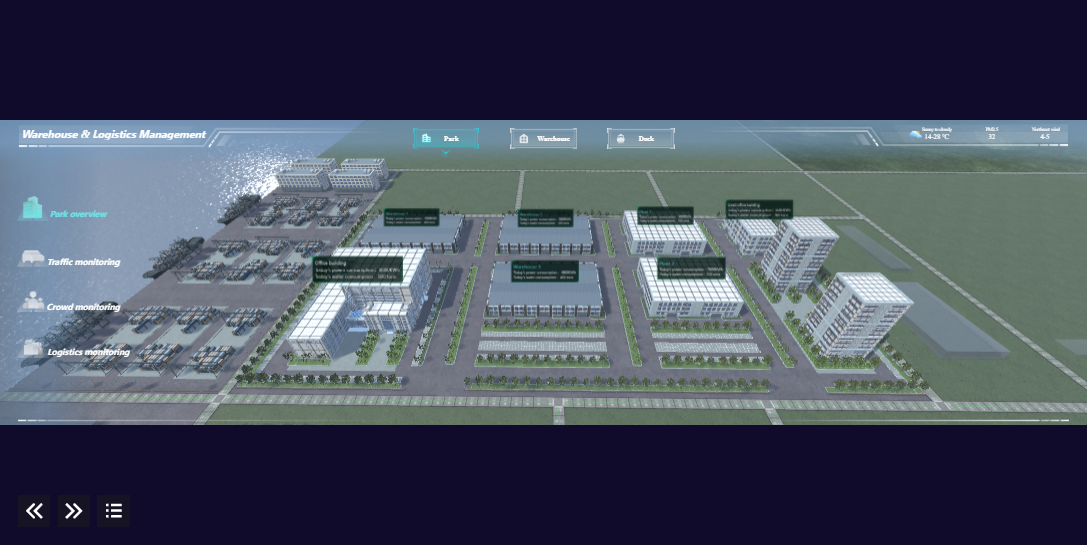
FineReportoffers mobile dashboards that work on smartphones and tablets. You can customize your dashboard for mobile viewing, ensuring you stay connected to your operations. FineReport’s 3D dashboards deliver interactive visualizations, making it easier to analyze complex logistics scenarios and optimize performance.
Integration ensures your logistics dashboard connects to all relevant data sources. You need seamless data flow between warehouse systems, transportation platforms, and supplier databases. FineReport’s decision-making platform supports integration with ERP, MES, and SRM systems, providing a unified view of your operations.
Security is essential for protecting sensitive logistics data. You should implement encryption, firewalls, and access controls. Role-based access restricts data visibility. Regular backups and disaster recovery procedures safeguard your information. FineReport supports these protocols, helping you comply with regulations and maintain data integrity.
Tip: Define clear objectives, choose the right metrics, and design for usability to create actionable dashboards that drive business results.
A logistics dashboard gives you the power to boost efficiency, gain real-time visibility, and make data-driven decisions. Many businesses use dashboards to build resilience and optimize performance. According to recent surveys, most supply chain leaders report improved outcomes after adopting dashboards. You see clear advantages over traditional tools:
Feature
Logistics Dashboards
Traditional Tools
Data Insights
Real-time, visual
Static, delayed
Decision-Making
Fast, data-driven
Manual, slower
Efficiency Gains
Significant
Limited
Evaluate your current logistics processes. Consider FineReportto unlock the full potential of your logistics dashboard.
Access a wealth of case studies, industry insights, and solution guides to accelerate digital transformation.
FAQ
What is a logistics dashboard?
A logistics dashboard is a digital tool that displays real-time data about your supply chain. You use it to track shipments, inventory, and supplier performance. This dashboard helps you make quick decisions and improve efficiency.
How does a logistics dashboard improve supply chain visibility?
You see all your logistics data in one place with a logistics dashboard. This visibility lets you monitor shipments, inventory, and supplier activities. You identify issues early and respond faster to changes in your supply chain.
What key metrics should you track on a logistics dashboard?
You should track on-time delivery rates, inventory levels, transportation costs, and order accuracy. These metrics help you measure performance, spot inefficiencies, and improve customer satisfaction.
Can you customize a logistics dashboard for your business needs?
You can customize a logistics dashboard to fit your business. You select templates, adjust layouts, and filter data. Customization helps you focus on the most important metrics and present information clearly.
Is a logistics dashboard accessible on mobile devices?
You access your logistics dashboard on smartphones and tablets. Mobile access lets you monitor supply chain activities anywhere. You stay informed and react quickly to disruptions or changes.