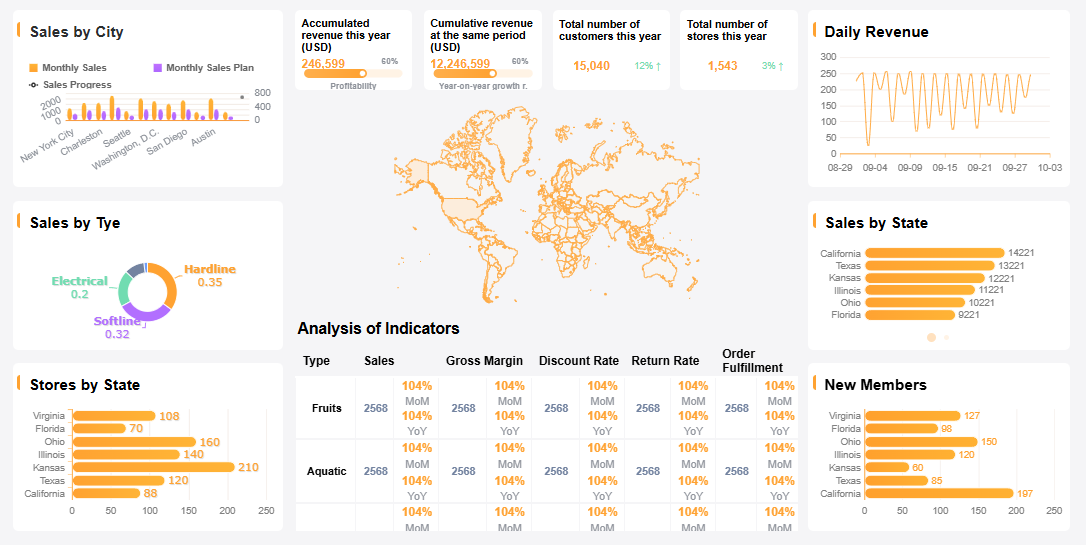
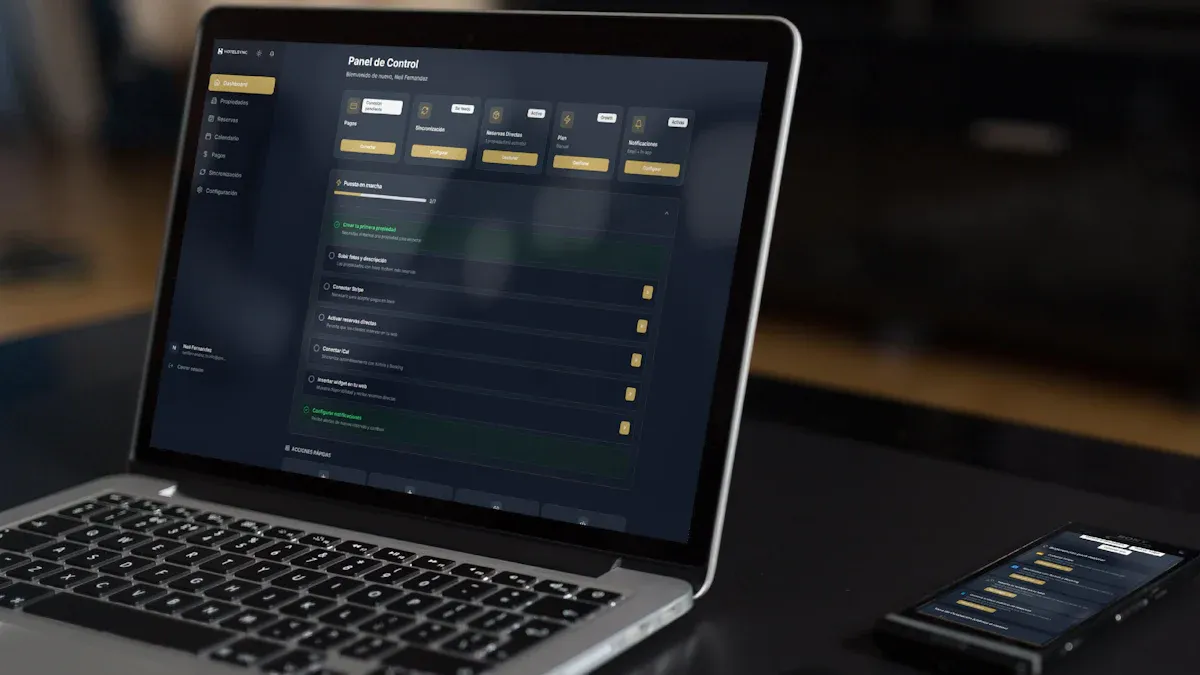
A marketing campaign dashboard is a tool that visualizes data, helping you gather, analyze, and present marketing data to measure campaign performance. You use it to track essential metrics across channels and make informed decisions.
You gain real-time visibility into campaign results.
You optimize budget allocation by monitoring acquisition costs and channel performance.
You connect marketing investments directly to revenue outcomes, driving capital efficiency.
Marketing Campaign Dashboard Overview
What It Is
A marketing campaign dashboard is a centralized digital tool that displays the most important data about your marketing efforts in one place. You use it to monitor, analyze, and visualize campaign performance across multiple channels. This dashboard gives you a clear snapshot of how your campaigns are performing right now, so you can make quick decisions and adjust your strategies as needed.
You see real-time updates on key metrics, which means you do not have to wait for weekly or monthly reports. The dashboard pulls data from sources like your website, social media platforms, and email campaigns, then presents it in easy-to-read charts and tables. This approach helps you spot trends, identify problems, and measure the impact of your marketing activities without digging through spreadsheets or separate analytics tools.
A marketing campaign dashboard differs from traditional marketing reports. While reports focus on historical data and long-term analysis, dashboards emphasizereal-time monitoring and daily decision-making. The table below highlights these differences:
Feature
Dashboards
Reports
Data Type
Real-time data monitoring
Historical data analysis
Purpose
Quick decision-making
Long-term strategic planning
Customization
High-level customizations available
Static after drafting
Usage Frequency
Used daily, often multiple times
Prepared at the end of a defined period
Audience
Internal teams (marketers, analysts, executives)
Broader audience (stakeholders, clients)
Core Purpose
The core purpose of a marketing campaign dashboard is to help you make smarter, faster decisions. You use it to track performance as it happens, allowing you to adjust your campaigns immediately. This tool aligns your team by providing everyone with the same data, which improves collaboration and ensures that all departments work toward shared goals.
You save time because the dashboard automates data collection and reporting. Instead of manually gathering information from different sources, you get instant access to the metrics that matter most. This efficiency lets you focus on strategy and execution rather than administrative tasks.
The dashboard also connects your marketing activities directly to business outcomes. You can see how your investments impact revenue, customer acquisition, and engagement. This visibility helps you prove the value of your marketing efforts and maximize your return on investment.
Marketing experts identify several core purposes for using a marketing campaign dashboard. The table below summarizes these functions:
Core Purpose
Description
Real-time performance monitoring
Enables teams to track performance as it happens, allowing for immediate adjustments.
Decision-making
Provides insights that facilitate faster and smarter decisions based on current data.
Alignment across teams
Ensures that all departments are working with the same data, fostering collaboration.
Proving and maximizing marketing ROI
Connects marketing efforts directly to revenue, demonstrating effectiveness.
Reducing manual reporting time
Saves significant time by automating data collection and reporting processes.
You benefit from immediate access to real-time data, which enables you to adjust your marketing strategies quickly. Centralizing performance data into a single visual view gives you instant visibility into what works and what needs improvement. This setup can reduce your reaction time from days to minutes, so you respond to performance signals without delay.
A marketing campaign dashboard also supports cross-team collaboration. You and your colleagues can visualize all relevant information in one place, share graphics and actions across departments, and integrate data from different sources. This shared workspace helps everyone understand the goals and messages, exchange ideas, and provide instant feedback. When sales teams understand the marketing narrative, they reinforce it in their conversations, which strengthens teamwork.
You can customize your dashboard based on your role and objectives. For example, a Chief Marketing Officer may focus on high-level metrics like customer acquisition cost and marketing ROI, while a pay-per-click specialist might track click-through rates and cost per click. This tailored approach ensures that your dashboard provides actionable insights relevant to your specific function.
Most marketing campaign dashboards include several key components. You typically track the following metrics:
Cost of customer acquisition
Customer lifetime value
Web traffic
Social media impact
Landing page conversion
Leads
Email conversion rate
Organic search
These metrics help you measure the effectiveness of your campaigns, optimize your budget, and improve your overall marketing strategy.
A marketing campaign dashboard gives you a clear, real-time view of your marketing activities. You see all your campaign data in one place, which helps you make faster and smarter decisions. This tool lets you track performance as it happens, so you can adjust your strategy without delay. You do not need to wait for manual reports or sift through spreadsheets. Instead, you get instant access to the metrics that matter most.
You can use a marketing campaign dashboard to improve communication with your team and stakeholders. The dashboard presents data in visually engaging charts and tables, making it easier to share results and insights. You also gain transparency, which helps everyone understand campaign progress and take responsibility for outcomes. By trackingkey metrics like revenueand customer acquisition costs, you measure your return on investment and optimize future campaigns.
The table below highlights the top five benefits you gain from using a marketing campaign dashboard:
Benefit
Description
Improved Strategy
Focus more on strategy, analysis, and optimization.
Improved Reporting and Communication
Simplify reporting with visually engaging dashboards.
Tracking and Measuring ROI
Evaluate ROI using metrics like revenue and acquisition costs.
Transparency and Accountability
Foster responsibility and data-driven decisions with clear performance data.
Identifying Trends and Opportunities
Spot trends, patterns, and anomalies by aggregating data over time.
You see immediate insights because the dashboard consolidates data from multiple sources. This real-time tracking lets you respond quickly to changes and optimize your campaigns for better results.
Problems It Solves
You often face challenges when managing marketing campaigns. Measuring performance can be difficult, especially when data comes from different sources. You may struggle to identify relevant KPIs or extract actionable insights. A marketing campaign dashboard solves these problems by bringing all your data together and making it easy to analyze.
You also encounter issues with cross-functional collaboration. Teams may use different tools or have inconsistent messaging, which confuses customers and weakens your brand. The dashboard helps align departments by providing a unified view of campaign data. You can maintain consistency in your brand presence and ensure everyone works toward the same goals.
Common challenges addressed by a marketing campaign dashboard include:
Difficulty in identifying relevant KPIs.
Lack of tools or expertise for effective data analysis.
Disconnected data sources hindering a holistic view of performance.
Inconsistent messaging across automated campaigns.
Confusion for customers due to varied brand voices across channels.
You reduce reporting errors because the dashboard automates data collection and visualization. Real-time insights help you spot trends and irregularities as they emerge. You can react to market changes in minutes, not days, and eliminate manual reporting mistakes.
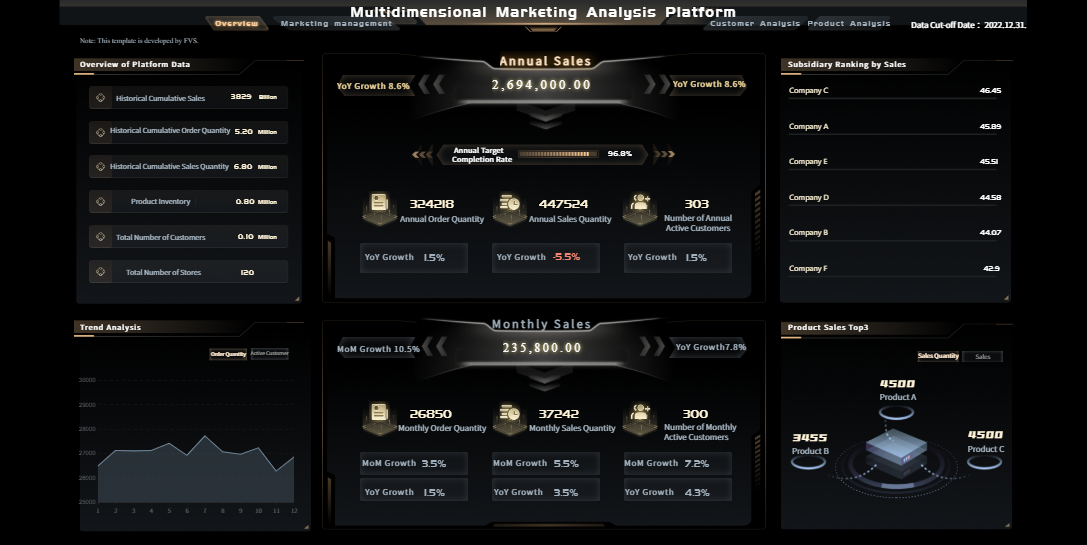
FineReport's Multidimensional Marketing Analysis Dashboard - Click To Engage
Essential Features and Metrics in a Marketing Campaign Dashboard
Must-Have Components
When you set up a marketing campaign dashboard, you need to include components that give you a complete view of your marketing activities. Each dashboard type serves a unique purpose, helping you track specific aspects of your campaigns. The table below shows theessential componentsfor different dashboard types:
Dashboard Type
Key Features
Campaign Performance Dashboard
Tracks reach, impressions, CTR, conversions, and ROAS. Helps optimize spend and campaign impact.
Social Media Dashboard
Measures follower growth, engagement, and content performance across platforms.
SEO & GEO Dashboard
Monitors keyword rankings, backlinks, and organic traffic, adapting to SEO changes.
Email Marketing Dashboard
Analyzes open rates, CTRs, and revenue per email to optimize email campaigns.
Lead Generation Dashboard
Provides visibility into lead sources and conversion rates, ensuring alignment with sales.
Customer Journey / Funnel Dashboard
Maps user touchpoints to identify drop-offs and optimize conversion paths.
Content Marketing Dashboard
Tracks content performance metrics like views and shares to guide content strategy.
Affiliate Marketing Dashboard
Monitors affiliate sales and commission structures for better partner management.
General Reporting Overview Dashboard
Consolidates KPIs across all marketing activities for a holistic performance view.
Customizable UI components let you deploy targeted campaigns efficiently. You maintain visual consistency and usability for different user groups. Modular design and advanced theming help you adjust your dashboard to fit each campaign and audience.
Important Metrics
You need to track the right metrics to measure the success of your marketing campaign dashboard. These metrics help you understand what works and where you can improve. Key performance indicators (KPIs) show how well your campaigns perform and guide your decisions.
Metric
Description
Return on Marketing Investment
Measures the revenue generated for every dollar spent on marketing.
Customer Lifetime Value
Estimates the total revenue a business can expect from a single customer account.
Cost per Lead
The total cost of acquiring a lead, important for budgeting and strategy.
Lead-to-Conversion Ratio
Indicates the effectiveness of converting leads into customers.
MQL Volume and Source Breakdown
Tracks the number of marketing-qualified leads and their sources to optimize lead generation.
MQL to SQL Conversion Rate
Shows the percentage of qualified leads that are accepted by sales, indicating lead quality.
Landing Page Conversion Rates
Measures the effectiveness of landing pages in converting visitors into leads.
Lead-to-Opportunity Rate
Reflects how well initial marketing efforts translate into sales conversations.
Website Conversations by Source
Analyzes traffic sources to understand which channels are most effective for lead generation.
Email Open Rate
Indicates the effectiveness of email campaigns in engaging recipients.
Social Media Engagement
Measures interactions on social platforms, important for brand awareness and engagement.
Search Rankings
Tracks the visibility of the website in search engine results, crucial for organic traffic.
You should monitor conversion rates, customer acquisition cost, return on investment, and engagement rates. These KPIs connect directly to campaign success. Regular tracking lets you adjust your strategy and improve results.
You can create an effective dashboard by following aclear process. Start by establishing your marketing goals. These goals should align with your business strategy. Next, choose a template or design your own dashboard from scratch. Focus on the metrics that matter most to your campaigns. Integrate your data sources, such as website analytics, social media, and email platforms. Clean your data to ensure accuracy before you visualize it. Select the right charts and tables to display each metric. Map your marketing activities to business outcomes and document the data chain. Acquire the necessary data, then validate your dashboard with a test version to check for errors.
Best Practices
You should followbest practicesto keep your dashboard accurate and useful. Define one clear purpose for each dashboard. Design for mobile devices first, since many users check data on their phones. Use color to highlight important information, not just for decoration. Build data quality checks into your dashboard to catch errors early. Set up role-based access so each user sees only what they need. Make every chart actionable, prompting decisions or next steps. Use consistent naming conventions to avoid confusion. Update your dashboard in real time or at least daily to reflect the latest campaign data.
Using FineReport
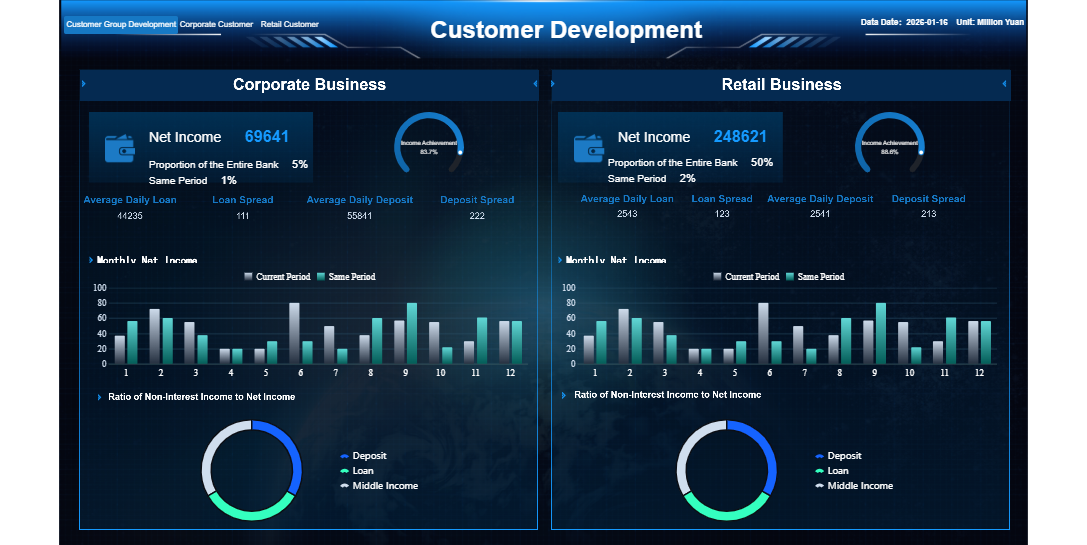
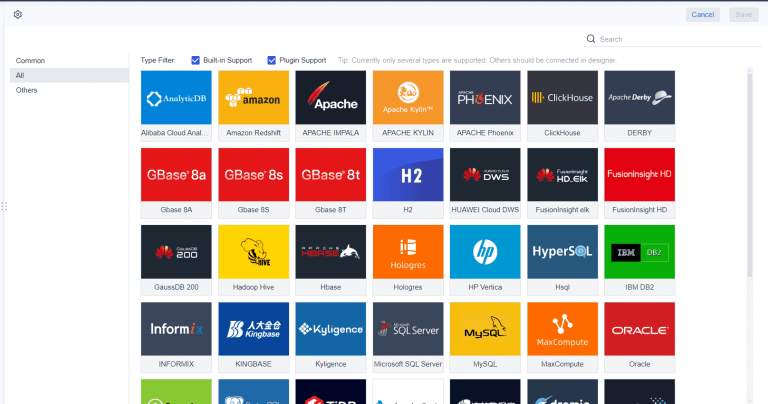
FineReportmakes building and managing dashboards easier. You can connect data from multiple sources, including databases and files, and see all your marketing data in one place. FineReport supports real-time reporting, so you always have up-to-date insights. You can access dashboards on any device, which helps you stay informed wherever you are. The drag-and-drop interface lets you customize visuals without coding. FineReport also supports mobile dashboards and advanced features like scheduled reporting and permission management. For example, retail companies use FineReport to manage membership marketing, while manufacturers like BOE use it to unify data and improve efficiency. These real-world cases show how FineReport helps you turn data into action.
A marketing campaign dashboard empowers you to make informed decisions, recognize consumer behavior, and align marketing with sales. You monitor performance in real time and transform complex data into actionable insights. FineReport streamlines funnel analysis and conversion tracking, helping you visualize every stage of your campaign.
Reason to Use a Dashboard
Benefit
Centralizes customer data
Reveals behavior patterns automatically
Saves time in reporting
Automates analysis for faster decisions
Improves forecasting
Generates accurate trend reports
Explore FineReportto optimize your marketing analytics and drive business growth.
Continue Reading About Marketing Campaign Dashboard
Access a wealth of case studies, industry insights, and solution guides to accelerate digital transformation.
FAQ
What is a marketing campaign dashboard?
A marketing campaign dashboard is a digital tool that displays your campaign data in real time. You use it to track performance, analyze results, and make quick decisions based on key metrics.
Why should you use a marketing campaign dashboard?
You should use a marketing campaign dashboard because it helps you monitor campaigns, spot trends, and improve strategy. You see all your data in one place, which saves time and increases accuracy.
Which metrics should you track in a marketing campaign dashboard?
You should track metrics like customer acquisition cost, conversion rates, return on investment, and engagement. These metrics show how well your campaigns perform and help you adjust your strategy.
How often should you update your marketing campaign dashboard?
You should update your marketing campaign dashboard daily or in real time. Frequent updates ensure you see the latest data and respond quickly to changes in campaign performance.
Can you customize a marketing campaign dashboard for different roles?
You can customize a marketing campaign dashboard for different roles. Marketers, analysts, and executives can each view the metrics that matter most to their responsibilities.