European Standards (ESRS) are the detailed technical rules companies must follow to disclose their environmental, social, and governance (ESG) impacts under the EU’s Corporate Sustainability Reporting Directive (CSRD).
What Are Sustainability Reporting Standards?
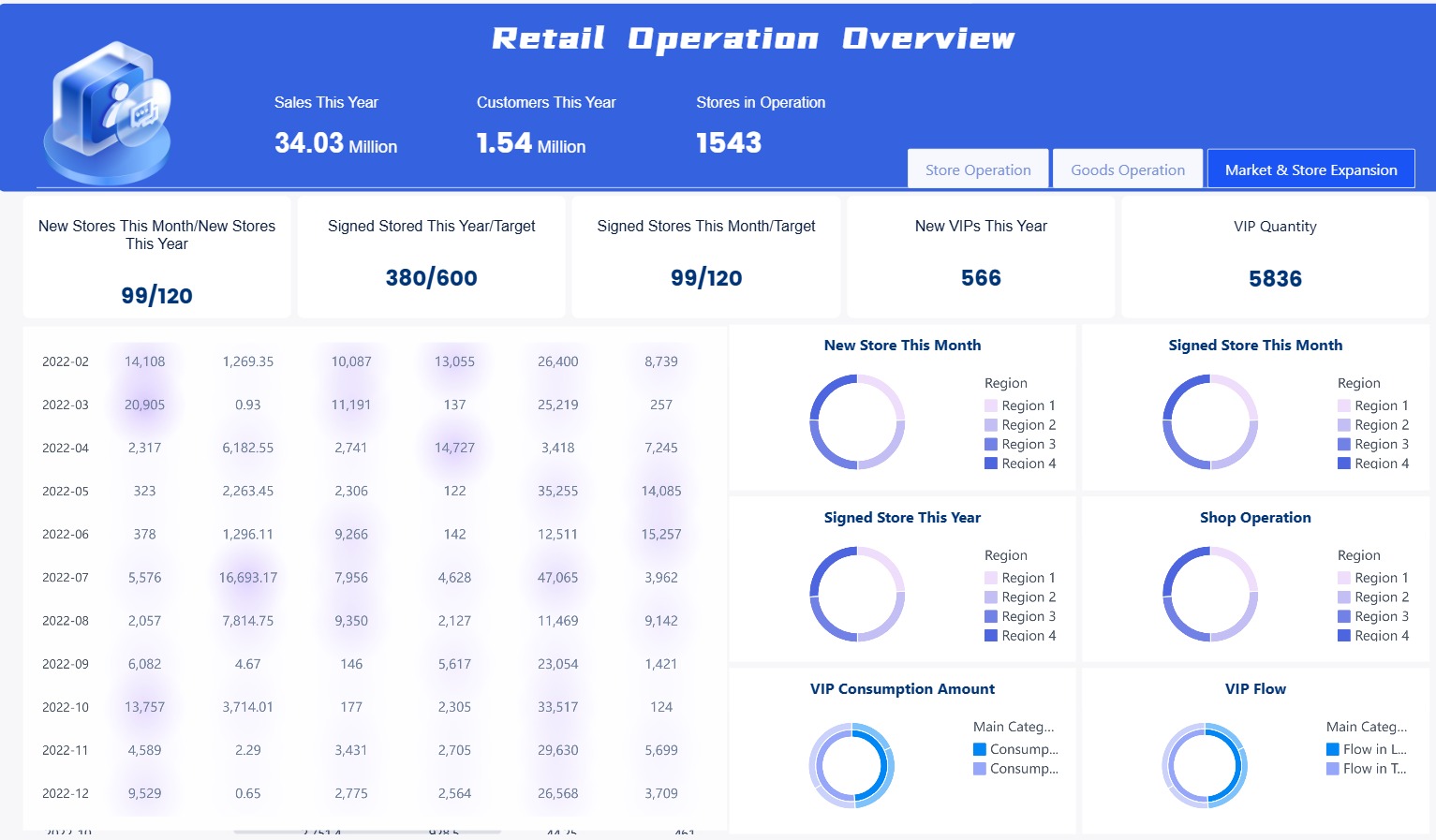 This FineBI template tracks Southeast Asian retail sales and regional performance metrics visually.
The Need for Standardized Reporting
For years, sustainability reporting was largely voluntary and fragmented. Companies used various frameworks like GRI, SASB, or TCFD, leading to reports that were difficult to compare, verify, or trust. This inconsistency—often termed “greenwashing”—made it challenging for investors, policymakers, and consumers to assess a company’s true sustainability performance. Standardized reporting eliminates this ambiguity, creating a level playing field where performance is measured uniformly, ensuring transparency and accountability across the board.
Overview of the European Framework
The European Union has established a comprehensive, interlinked regulatory framework to drive sustainable finance. At its core is the Corporate Sustainability Reporting Directive (CSRD), the law that mandates who must report and on what topics. To fulfill this directive’s requirements, companies apply the European Sustainability Reporting Standards (ESRS), which provide the specific disclosure requirements and metrics. This framework is designed to feed data into other EU regulations, like the EU Taxonomy, creating a cohesive system for sustainable economic activity.
Introduction to the Corporate Sustainability Reporting Directive (CSRD)
Key Objectives and Scope
The CSRD dramatically expands and strengthens sustainability reporting within the EU. Its primary objectives are to ensure that investors and other stakeholders have access to reliable, comparable, and decision-useful sustainability information. It aims to redirect capital flows towards more sustainable activities and to hold companies accountable for their impacts on people and the planet.
The scope is extensive. It applies to:
- All large EU companies (meeting two of: >250 employees, >€40M turnover, >€20M total assets).
- All companies listed on EU regulated markets (including SMEs, with some transitional provisions).
- Non-EU companies with significant activity in the EU (net turnover >€150M in the EU).
Timeline for Implementation
The CSRD is being phased in over several years:
- 2025: Reports in 2025 for the financial year 2024 for companies already subject to the Non-Financial Reporting Directive (NFRD).
- 2026: Reports in 2026 for the financial year 2025 for other large EU companies not previously under NFRD.
- 2027: Reports in 2027 for the financial year 2026 for listed SMEs and certain non-EU companies (with possible opt-out until 2028).
Understanding the European Sustainability Reporting Standards (ESRS)
Structure and Core Requirements
The ESRS, developed by EFRAG, are a set of 12 standards that provide the granular reporting requirements. They are structured to ensure a comprehensive “double materiality” assessment—evaluating both how sustainability issues affect the company (financial materiality) and how the company impacts society and the environment (impact materiality).
The standards are categorized into:
- Cross-cutting standards (ESRS 1 & 2): Set general principles (ESRS 1) and require a detailed explanation of the governance, strategy, and materiality assessment process (ESRS 2).
- Topical standards (ESRS E1-E5, S1-S4, G1): Cover specific Environmental (E), Social (S), and Governance (G) topics. Companies must report on these topics if deemed material based on their assessment.
- Sector-specific standards: For high-impact sectors (under development).
Key requirements include detailed quantitative and qualitative disclosures on climate change mitigation and adaptation, pollution, biodiversity, workforce conditions, affected communities, and business conduct.
How ESRS Supports the CSRD
The ESRS are the essential implementation tool of the CSRD. While the CSRD sets the "what" (the legal obligation to report), the ESRS define the "how" (the exact data points, metrics, and narrative disclosures required). They ensure that all companies report the same type of information in the same structured way, fulfilling the CSRD’s goals of comparability and reliability. The reported ESRS data must be digitally tagged (using XBRL) and, for large companies, independently assured (audited).
Key Differences Between ESRS and CSRD
Reporting Standards vs. Regulatory Directive
This is the fundamental distinction. The CSRD is an EU Directive—a law that member states must transpose into their national legislation. It creates the legal obligation to report. The ESRS are a set of delegated standards—the detailed technical rules that specify exactly what information must be disclosed to comply with that law. Think of the CSRD as the rule that says “you must build a house to code,” and the ESRS as the detailed architectural blueprints and building specifications.

Practical Implications for Companies
For compliance teams, this distinction has clear operational impacts:
- Legal Obligation: Non-compliance with the CSRD (the law) can result in sanctions from national competent authorities. Non-compliance with the ESRS means the sustainability statement is incomplete or misleading, which can also lead to sanctions and undermine stakeholder trust.
- Focus of Work: Preparations involve two streams: 1) Ensuring the organization understands and is prepared for the legal mandate (CSRD), and 2) Implementing the complex data collection, internal control, and reporting processes to meet the technical standards (ESRS).
- Evolution: The CSRD, as a directive, is relatively stable. The ESRS, however, are expected to be reviewed and updated more frequently by EFRAG and the European Commission to reflect new scientific evidence, market practices, and global developments.
Steps to Prepare for Compliance
Assessing Your Current Reporting Practices
The journey begins with a rigorous gap analysis.
- Scope Determination: Confirm if and when your company falls under the CSRD mandate.
- Double Materiality Assessment: Conduct a thorough analysis to identify which ESRS topical standards (E, S, G) are material to your business. This is the most critical step.
- Data Gap Analysis: Map your current sustainability data collection against the disclosure requirements of the material ESRS. Identify what data you have, what you need, and where the gaps are in systems, processes, and controls.
Building Internal Capabilities
Compliance requires a cross-functional effort.
- Governance & Leadership: Assign clear responsibility at the board and management levels. Establish a cross-departmental steering committee (Sustainability, Finance, Legal, Operations, HR).
- Process & Controls: Develop robust internal processes to collect, validate, and control sustainability data with the same rigor as financial data.
- Technology & Tools: Invest in software that can manage data collection, perform materiality assessments, facilitate reporting, and generate the required digital taxonomy (XBRL) filings. Manual processes will not scale.
Looking Ahead: The Future of Sustainability Reporting in Europe
Expected Evolutions and Updates
The ESRS framework is not static. We can expect:
- New Sector-Specific Standards: Additional standards for high-impact sectors like oil & gas, mining, and agriculture.
- Refinements to Existing Standards: Clarifications and potential simplifications based on feedback from the first reporting cycles, especially concerning SMEs.
- Increased Interoperability: Ongoing work to align ESRS with global baseline standards from the International Sustainability Standards Board (ISSB) and the Global Reporting Initiative (GRI) to reduce the reporting burden for multinational companies.
Global Impact and Alignment
The EU’s framework is becoming a de facto global standard due to the CSRD’s extraterritorial scope affecting non-EU companies. This "Brussels effect" is pushing international corporations worldwide to adopt ESRS-aligned reporting. Furthermore, the alignment efforts between ESRS, ISSB, and GRI are paving the way for a more coherent global corporate reporting system, where financial and sustainability information are interconnected and equally reliable.
Streamline Your ESRS Compliance Reporting With FanRuan BI Tools
Navigating complex ESRS and CSRD disclosure rules requires more than spreadsheets. FineBI and FineReport deliver a complete sustainability reporting workflow tailored to European regulatory demands:
• FineBI: Cross-department ESG data integration, real-time sustainability KPI dashboards for internal management
• FineReport: Print-ready, audit-compliant formal sustainability disclosure reports that meet ESRS format requirements
Companies across retail, manufacturing and financial services in the EU rely on FanRuan’s analytics tools to cut reporting workload by over 60% while staying fully aligned with updated European sustainability reporting standards.
FAQs
The CSRD is the EU law that mandates sustainability reporting, while the ESRS are the detailed technical standards that specify exactly what and how to report to comply with that law.