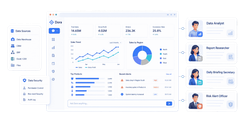
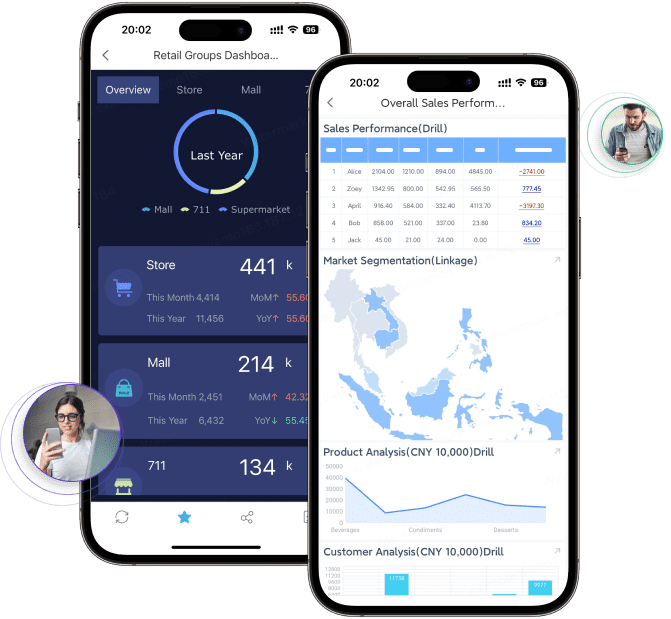
FineReport is an enterprise reporting and dashboard platform that helps logistics teams turn operational data into real-time visibility, performance analytics, and decision-ready reports.
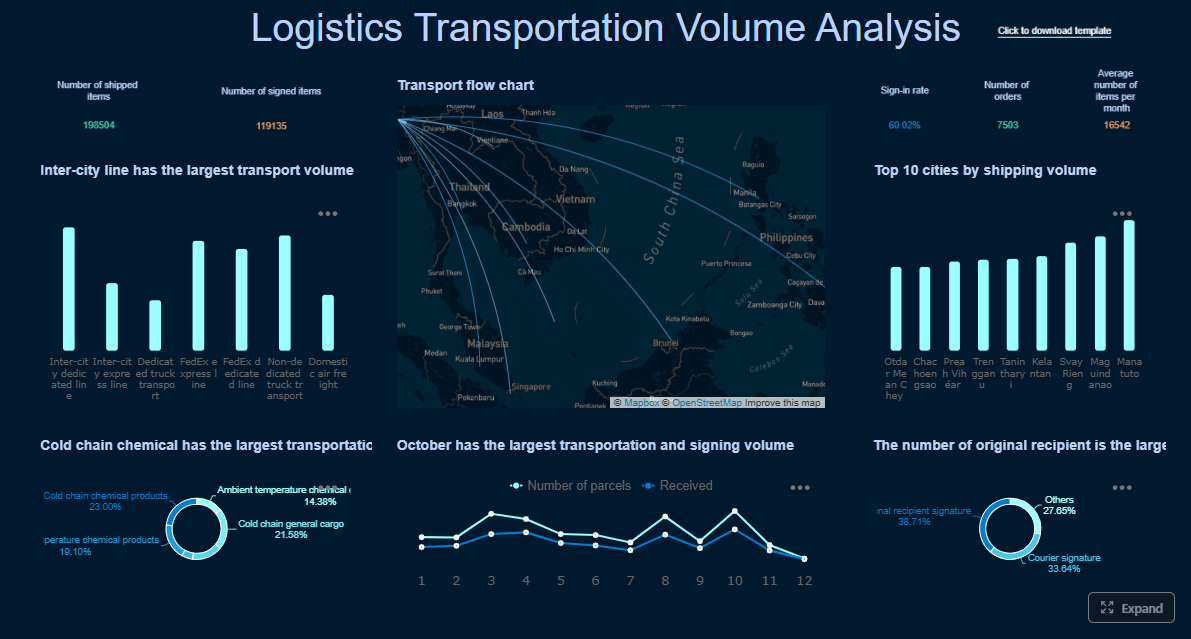 Click To Try The Dashboard
The 10 best logistics management software platforms in 2026
1. Platform overview snapshots
Below is a quick comparison of the best logistics management software options for 2026, based on usability, logistics depth, reporting, integration flexibility, and fit by business size.
| Platform | One-sentence overview | Standout features | Ideal company size | Notable limitations |
|---|---|---|---|---|
| Oracle Transportation Management | A robust enterprise transportation platform for complex, global logistics networks. | Carrier management, freight planning, multimodal execution, compliance | Large enterprises | Long implementation time, higher cost |
| SAP Transportation Management | A strong option for companies already running SAP and needing logistics tightly tied to ERP data. | Deep ERP integration, planning, freight settlement, global scale | Enterprise | Best value mostly within SAP ecosystem |
| Descartes | A broad logistics suite known for routing, customs, compliance, and transportation visibility. | Global trade support, routing, shipment tracking, compliance tools | Mid-market to enterprise | Interface and setup can feel complex |
| Blue Yonder | A supply chain and logistics platform built for advanced planning, fulfillment, and operational optimization. | Warehouse support, inventory visibility, AI-driven planning | Large enterprises | Can be more than smaller teams need |
| Manhattan Associates | A powerful platform for warehouse-heavy and omnichannel logistics operations. | WMS depth, order orchestration, inventory optimization | Mid-market to enterprise | Higher implementation effort |
| MercuryGate | A configurable TMS built for shippers, brokers, and third-party logistics providers. | Multi-carrier support, planning, visibility, customization | Mid-sized to enterprise | Reporting may require extra setup |
| FreightPOP | A practical shipping and logistics platform for teams that want fast deployment and broad carrier access. | Rate shopping, shipment execution, parcel + freight support | Small to mid-sized businesses | Less suitable for very complex enterprise workflows |
| Zoho Creator | A low-code platform for building tailored logistics workflows without starting from scratch. | Custom apps, mobile support, barcode scanning, automation | Small to mid-sized businesses | Requires design effort to build the right system |
| monday.com | A flexible work platform that can be adapted for logistics coordination and process management. | Workflow automation, dashboards, collaboration, ease of use | Small to mid-sized businesses | Not a dedicated logistics suite by default |
| FineReport | A reporting-first platform that strengthens logistics visibility, KPI tracking, and cross-system analytics. | Real-time dashboards, custom reports, data integration, drill-down analysis | Mid-sized to enterprise | Best used with existing operational systems |
2. Features, pros, cons, and best fit
1. Oracle Transportation Management
- One-sentence overview: Oracle Transportation Management is a mature enterprise-grade platform for planning, executing, and optimizing complex transportation operations across multiple regions and modes.
- Key Features:
- Transportation planning and load optimization
- Carrier sourcing and rate management
- Multimodal shipment execution
- Freight audit and settlement
- Global trade and compliance support
- Strong integration with Oracle ecosystem tools
- Pros & Cons:
- Pros: Highly scalable; strong for global transportation complexity; deep process control
- Cons: Implementation can be lengthy; customization often needs specialist support; pricing is typically enterprise-level
- Best For (Target user/scenario):
- Large enterprises managing high shipment volumes
- Organizations with complex routing, compliance, and carrier requirements
- Businesses already invested in Oracle systems
2. SAP Transportation Management
- One-sentence overview: SAP Transportation Management is designed for enterprises that want logistics execution and planning tightly connected to finance, procurement, and inventory data.
- Key Features:
- Transportation planning and execution
- Freight order management
- Carrier collaboration
- Freight cost calculation and settlement
- Global visibility and analytics
- Native alignment with SAP ERP environments
- Pros & Cons:
- Pros: Strong data consistency across business functions; solid enterprise reporting; effective for large-scale operations
- Cons: Best fit for SAP-centered organizations; implementation demands significant internal alignment; less flexible outside SAP stack
- Best For (Target user/scenario):
- Enterprises already using SAP
- Teams that need logistics linked closely to finance and inventory workflows
- Multi-location global businesses
3. Descartes

- One-sentence overview: Descartes offers a broad logistics technology portfolio covering transportation, routing, customs, compliance, and shipment visibility.
- Key Features:
- Route planning and fleet support
- Real-time shipment visibility
- Global trade compliance and customs tools
- Carrier connectivity
- Proof of delivery and dispatch functionality
- Scalable transportation workflows
- Pros & Cons:
- Pros: Strong compliance capabilities; good for cross-border operations; broad logistics coverage
- Cons: Product breadth can make evaluation harder; some users may find the interface less modern; configuration can be detailed
- Best For (Target user/scenario):
- Companies with international shipping needs
- Businesses balancing transportation execution with compliance demands
- Mid-sized and enterprise logistics teams
4. Blue Yonder
- One-sentence overview: Blue Yonder is a supply chain platform with advanced logistics, warehouse, and planning capabilities for large-scale operations.
- Key Features:
- Warehouse and labor management
- Inventory visibility
- Demand and fulfillment planning
- Transportation optimization
- AI-assisted forecasting and decision support
- End-to-end supply chain orchestration
- Pros & Cons:
- Pros: Strong end-to-end capabilities; advanced planning depth; suitable for sophisticated supply chains
- Cons: Complexity may exceed the needs of smaller teams; implementation and change management can be substantial
- Best For (Target user/scenario):
- Enterprises needing integrated planning and logistics execution
- Retail, manufacturing, and distribution networks with high operational complexity
- Teams prioritizing advanced optimization
5. Manhattan Associates
- One-sentence overview: Manhattan Associates is a strong choice for organizations where warehouse performance, order fulfillment, and inventory flow are central to logistics success.
- Key Features:
- Warehouse management
- Order management and fulfillment orchestration
- Inventory optimization
- Labor and slotting support
- Transportation coordination
- Omnichannel execution tools
- Pros & Cons:
- Pros: Excellent warehouse depth; strong fulfillment controls; good fit for distribution-heavy operations
- Cons: May require a larger implementation budget; best value appears in operationally mature environments
- Best For (Target user/scenario):
- Warehouse-centric businesses
- Retail and distribution companies with complex fulfillment operations
- Mid-sized to enterprise teams needing detailed warehouse control
6. MercuryGate

- One-sentence overview: MercuryGate is a configurable transportation management platform that supports shippers, brokers, and 3PLs needing flexibility across carriers and workflows.
- Key Features:
- Transportation planning and execution
- Multi-carrier and multimodal management
- Rate management and procurement
- Shipment tracking and visibility
- Workflow configuration
- Analytics and performance reporting
- Pros & Cons:
- Pros: Flexible configuration; strong TMS foundation; useful across varied logistics models
- Cons: Some reporting experiences may depend on setup quality; onboarding may take time for less technical teams
- Best For (Target user/scenario):
- Mid-sized companies growing into more advanced transportation operations
- 3PLs and brokers
- Businesses needing adaptable logistics workflows
7. FreightPOP
- One-sentence overview: FreightPOP is a shipping-focused platform that helps businesses centralize carrier selection, rate comparison, tracking, and shipment execution.
- Key Features:
- Rate shopping across carriers
- Parcel, LTL, FTL, and international shipping support
- Shipment booking and tracking
- ERP and eCommerce integrations
- Shipping analytics
- Centralized shipping workflows
- Pros & Cons:
- Pros: Faster to deploy than large enterprise suites; broad carrier connectivity; practical value for growing operations
- Cons: Less ideal for deeply customized enterprise logistics environments; advanced process control is narrower than top-tier enterprise tools
- Best For (Target user/scenario):
- Small and mid-sized businesses
- Teams wanting better shipping control without a large IT project
- Companies balancing usability and cost
8. Zoho Creator
- One-sentence overview: Zoho Creator is a low-code application platform that allows businesses to build custom logistics workflows for shipments, vehicles, drivers, and operations data.
- Key Features:
- Custom app builder
- Shipment tracking workflows
- Barcode scanning and mobile access
- Automation for notifications and approvals
- Dashboard and reporting capabilities
- Integration with third-party tools and APIs
- Pros & Cons:
- Pros: Flexible and customizable; useful for companies with unique processes; lower barrier than full custom development
- Cons: Not an out-of-the-box logistics suite; success depends on how well workflows are designed
- Best For (Target user/scenario):
- Small businesses that need affordability and customization
- Mid-sized teams replacing spreadsheets with tailored apps
- Companies with niche or evolving logistics processes
9. monday.com
- One-sentence overview: monday.com is a flexible operations platform that can be configured for logistics coordination, shipment planning, and cross-team workflow management.
- Key Features:
- Visual workflow boards
- Automation and task routing
- Custom dashboards
- Team collaboration and status tracking
- Integration library
- No-code customization
- Pros & Cons:
- Pros: Easy to use; fast adoption; strong for operational coordination and process visibility
- Cons: Not purpose-built logistics management software; transportation and warehouse depth may require add-ons or workarounds
- Best For (Target user/scenario):
- Small to mid-sized teams prioritizing ease of use
- Operations teams that want flexible process management
- Businesses coordinating logistics alongside broader operational work
10. FineReport
- One-sentence overview: FineReport is a business reporting and dashboard platform that helps logistics organizations unify data from TMS, WMS, ERP, and spreadsheets into actionable operational insight.
- Key Features:
- Real-time logistics dashboards
- Custom KPI reporting for delivery performance, inventory turnover, and carrier metrics
- Integration with databases, ERP systems, APIs, and business applications
- Drill-down analysis for shipment exceptions and operational bottlenecks
- Scheduled report distribution
- Flexible dashboard design for different roles and departments
- Pros & Cons:
- Pros: Strong analytics depth; highly customizable reporting; excellent for organizations that need better visibility across fragmented systems
- Cons: It is not a stand-alone TMS or WMS; delivers the most value when layered on top of existing operational tools
- Best For (Target user/scenario):
- Mid-sized and enterprise logistics teams needing advanced reporting
- Companies struggling with disconnected logistics data
- Organizations that want to improve decisions without replacing every existing system
3. Which platforms stand out by category
Best for small businesses
For smaller teams, FreightPOP, Zoho Creator, and monday.com stand out.
- FreightPOP is a good choice when shipping efficiency and carrier comparison are the top priorities.
- Zoho Creator fits teams that need affordable flexibility and are willing to configure custom workflows.
- monday.com works well for companies that mainly need coordination, task visibility, and basic logistics process automation.
Best for end-to-end visibility
For broader visibility across logistics and supply chain operations, Blue Yonder, Descartes, and FineReport are particularly strong.
- Blue Yonder brings planning, fulfillment, and logistics data into one broader operational picture.
- Descartes is effective when transportation visibility and compliance are both important.
- FineReport is especially valuable when the challenge is not missing systems, but fragmented data spread across them.
Best for advanced tracking and reporting
If your top priority is reporting, performance measurement, and actionable analytics, FineReport, Oracle Transportation Management, and SAP Transportation Management stand out.
- FineReport is the strongest option for custom dashboards, exception analysis, and operational reporting across multiple data sources.
- Oracle Transportation Management offers strong transportation analytics inside a full enterprise workflow.
- SAP Transportation Management is useful for logistics leaders who want reporting aligned with ERP-driven business data.
Best for custom workflows and operational flexibility
For companies with nonstandard operations, Zoho Creator, MercuryGate, and monday.com are the most flexible.
- Zoho Creator supports tailored logistics app building without full custom software development.
- MercuryGate offers configurable transportation workflows for more advanced logistics environments.
- monday.com gives teams a simple way to adapt boards, automations, and work processes quickly.
Why logistics management software matters in 2026
Modern logistics management software is no longer just a shipment tracking tool. In 2026, logistics teams are expected to manage transportation, inventory visibility, carrier coordination, warehouse handoffs, customer expectations, and delivery performance in real time. That level of complexity is difficult to handle with spreadsheets, email chains, and disconnected systems.
What modern logistics teams need most includes:
- Real-time shipment and order visibility
- Route planning and delivery coordination
- Inventory and warehouse synchronization
- Carrier communication and exception management
- Performance analytics and cost control
- Automation that reduces manual updates and human error
When comparing logistics platforms, buyers should look closely at core capabilities such as transportation management, warehouse support, inventory control, reporting depth, mobile access, integrations, and scalability. A small business may prioritize ease of use and cost, while an enterprise may care more about global carrier networks, multi-location visibility, and compliance support.
This roundup evaluates each platform by:
- Feature depth
- Operational strengths
- Common trade-offs
- Pricing fit by company size
- Best-fit use cases
That approach helps readers choose software based on actual logistics needs rather than brand familiarity alone.
How we chose the 10 best platforms
Evaluation criteria
To identify the best logistics management software platforms in 2026, we focused on the criteria that matter most in day-to-day operations and long-term scalability.
Ease of use and implementation time
Software that takes a year to deploy or requires heavy consulting support is not the right fit for every buyer. We considered how quickly teams can get value from each platform and how difficult the learning curve is for operations users.
Shipment tracking, route planning, warehouse and inventory support
A strong logistics platform should do more than show shipment status. We looked for systems that support core execution needs such as routing, tracking, fulfillment visibility, warehouse coordination, and inventory awareness.
Integration options, automation, analytics, and scalability
Logistics operations depend on connected systems. We prioritized tools that can integrate with ERP, WMS, TMS, accounting, eCommerce, and internal databases. We also looked at automation features and how well each platform supports growth across sites, users, and shipment volumes.
Customer support, pricing transparency, and overall value
Some tools are powerful but difficult to justify on price. Others are cost-effective but limited. Our evaluation considered overall value, including support quality, pricing clarity, and whether the platform’s capabilities match its likely cost.
Who each platform is best for
Not every logistics platform serves the same type of business.
Small businesses looking for simplicity and affordability
Smaller companies usually need software that is easy to implement, affordable, and practical. They often benefit most from tools like FreightPOP, Zoho Creator, or monday.com, depending on whether they prioritize shipping execution, custom processes, or team coordination.
Mid-sized operations that need deeper automation and reporting
Mid-market teams often need more than entry-level shipping software. They may require workflow flexibility, cross-functional dashboards, and better reporting. MercuryGate, Descartes, and FineReport are strong candidates here.
Enterprises with complex multi-location, multi-carrier logistics networks
Large organizations tend to need deeper planning, compliance, ERP integration, and high-volume scalability. Oracle Transportation Management, SAP Transportation Management, Blue Yonder, and Manhattan Associates are best suited to this level of complexity.
How to choose the right software for your business
Match the platform to your logistics model
The right platform depends on how your operation actually runs. Before evaluating vendors, define your logistics model clearly.
Consider:
- Shipment volume and frequency
- Number of warehouses or fulfillment centers
- Fleet ownership versus outsourced carriers
- Domestic versus international shipping
- Customer delivery speed expectations
- Need for parcel, LTL, FTL, or multimodal support
Some companies mainly need transportation management. Others need inventory control and warehouse visibility. Some need a true all-in-one environment, while others can get better results by combining an execution system with an analytics layer like FineReport.
Compare build vs. buy options
When an off-the-shelf tool is enough
If your workflows are relatively standard, an established logistics platform is usually the best option. It reduces implementation risk, shortens time to value, and gives your team proven workflows.
This is often true for businesses that need:
- Carrier management
- Rate shopping
- Shipment tracking
- Basic routing
- Standard warehouse workflows
- Out-of-the-box dashboards
When custom workflows, AI automation, or unique integrations justify a tailored solution
If your business has unusual handoffs, niche service models, or highly specific reporting demands, a configurable or low-code platform may be a better fit. In these cases, tools like Zoho Creator or monday.com can help you build custom workflows, while FineReport can provide the custom reporting and dashboards needed to support them.
A tailored solution may be justified when:
- Your process differs significantly from standard logistics flows
- You rely on multiple legacy systems
- Your reporting needs are highly specific by role or region
- You want to automate exception handling or AI-driven alerts
- Your competitive advantage depends on operational customization
Watch for common buying mistakes
Overpaying for enterprise features you will not use
One of the most common mistakes is selecting a platform based on ambition rather than actual need. Enterprise-grade software can be powerful, but it often brings extra cost, complexity, and implementation burden.
Choosing a tool without the integrations your team depends on
A logistics platform that cannot connect to your ERP, accounting software, warehouse tools, eCommerce systems, or databases may create more manual work than it removes.
Ignoring onboarding, training, and long-term scalability
Software selection should not stop at the demo. Buyers should evaluate:
- Onboarding support
- Admin usability
- Change management requirements
- Reporting flexibility
- Scalability across locations and teams
This is especially important in logistics, where adoption gaps quickly turn into operational blind spots.
Final recommendations by use case
Best overall choice for growing logistics operations
MercuryGate is the best overall choice for growing logistics operations that need stronger transportation management without jumping immediately into the heaviest enterprise suites. It offers flexibility, multi-carrier support, and room to scale.
Best option for small businesses with limited budgets
FreightPOP is the best option for small businesses that want practical shipping control, carrier access, and faster implementation without excessive complexity.
Best platform for real-time tracking needs
Descartes is a strong choice for real-time tracking needs, especially when transportation visibility must be paired with routing and compliance support.
Best choice for companies needing custom processes and extensibility
Zoho Creator is the best fit for companies that need custom workflows, niche process support, and the flexibility to shape software around operations rather than the reverse.
Best value option for teams balancing capability and cost
FineReport is the best value option for teams that already have core systems in place but lack a unified view of logistics performance. Instead of replacing every operational tool, FineReport helps centralize data, improve visibility, and give managers clearer insight into shipments, delays, inventory trends, and carrier performance. For many mid-sized and enterprise teams, that makes it one of the most practical investments in the logistics technology stack.
If your goal is to improve decisions, reduce blind spots, and build stronger logistics reporting in 2026, the best logistics management software may not be the one with the longest feature list. It is the one that matches your process, integrates with your systems, and gives your team the visibility to act faster.
FAQs
Logistics management software helps businesses plan, track, and optimize the movement of goods across transportation, warehousing, inventory, and order fulfillment. It replaces disconnected spreadsheets and manual processes with better visibility and control.