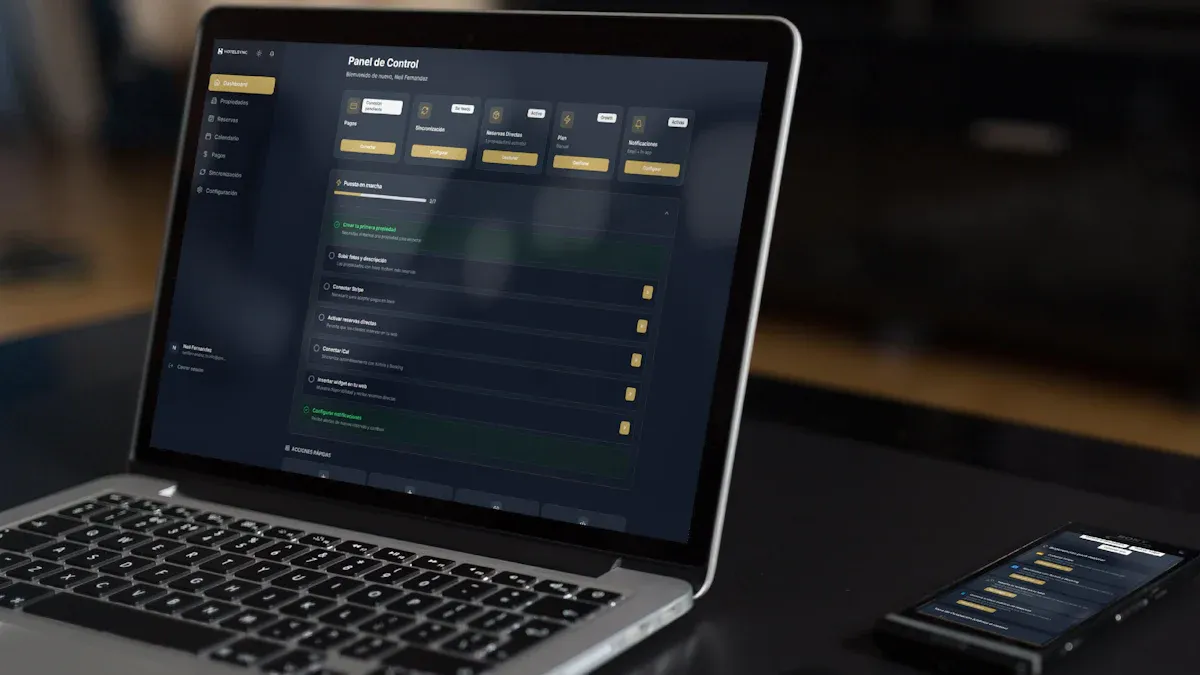
Operations directors do not need another static inventory report. They need a system that helps teams see replenishment risk early, prioritize exceptions, and act before service levels slip. That is the real value of AI in inventory management: moving from passive dashboard review to decision-oriented, AI-assisted inventory oversight.
Traditional inventory dashboards are useful for visibility, but they often tell teams what already happened: yesterday’s stockout, last week’s slow-moving items, or current on-hand balances without enough context on demand shifts, supplier delays, or changing reorder needs. By the time someone spots the issue manually, the replenishment window may already be closing.
With FineBI + Dora, business users can ask for analysis in chat, generate chart-based answers or dashboard-style views from trusted BI assets, and receive scheduled summaries before the next meeting. For operations leaders, that means fewer stockouts, lower excess inventory, better service levels, and faster response to demand changes across SKUs, locations, and suppliers.
[Insert Dashboard Demo Here: Show the main FineBI dashboard for this scenario, including primary KPIs, trend chart, breakdown chart, and risk/exception view]
All dashboards in this article are built with FineBI
AI in Inventory Management: Why Operations Directors Need More Than Static Dashboards
Inventory control is no longer just a reporting function. In most enterprises, it is a continuous decision loop involving demand sensing, replenishment timing, lead-time uncertainty, service-level targets, and cross-functional coordination.
A static dashboard helps answer questions like:
- What is current inventory by warehouse?
- Which SKUs are below reorder point?
- Which suppliers are late?
- How did stockout rate change last month?
Those are necessary questions, but they are not enough for modern replenishment management. Operations directors also need answers to forward-looking questions:
- Which SKUs are most likely to stock out in the next 7 to 14 days?
- Which locations should rebalance inventory before placing new orders?
- Which supplier delays require safety stock adjustment now?
- Which promotion plans will create replenishment pressure next week?
This is where AI in inventory management becomes practical. The goal is not to replace operational judgment. The goal is to help operations teams respond sooner, with better context, through trusted dashboards, governed metrics, and AI-assisted follow-up.
Why traditional dashboards surface problems too late
Most dashboard environments are descriptive. They summarize inventory positions, historical consumption, and open orders. That is valuable, but it creates a lag between signal and action.
Common issues include:
- Teams review dashboards only in scheduled meetings.
- Replenishment planners must manually interpret multiple screens.
- Lead-time risk sits in procurement data, while demand shifts sit in sales data.
- Critical exceptions are buried among low-priority fluctuations.
- Business users wait for analysts to build ad hoc views.
The result is familiar: stockouts that could have been prevented, excess stock that ties up working capital, and reactive expediting that raises logistics cost.
Operational goals that matter
For operations directors, successful inventory management is not about having more charts. It is about better decisions against clear business outcomes:
- Fewer stockouts: protect sales, production continuity, and customer satisfaction.
- Lower excess inventory: reduce carrying cost, markdown risk, and working capital pressure.
- Better service levels: maintain fulfillment reliability across channels and locations.
- Faster response to demand changes: adapt replenishment to volatility, promotions, and supplier disruptions.
FineBI supports these goals by providing trusted metrics, dashboards, and semantic modeling. Dora extends that foundation into an enterprise Data Agent layer that helps teams ask, analyze, summarize, alert, and follow up within real inventory workflows.
What AI Inventory Management Means in Practice
In plain language, AI inventory management means using data models and AI-assisted workflows to help teams make better stocking and replenishment decisions based on changing demand, supply conditions, and business rules.
It is different from simple rule-based automation.
A rule-based system might say:
- Reorder when stock falls below a fixed threshold.
- Increase safety stock by a fixed percentage.
- Trigger alerts if days of inventory drop below a set level.
Those rules are useful, but they are rigid. They do not adapt well when demand spikes unexpectedly, suppliers become unreliable, or promotion plans distort normal sales patterns.
AI-assisted inventory management is more context-aware. It can combine multiple signals and help users decide what deserves action now.
How AI supports better inventory decisions
In practice, AI can help operations teams:
- detect demand pattern changes earlier
- compare current inventory against expected consumption and lead times
- refine forecast assumptions with seasonality and event effects
- identify unusual supplier delay trends
- prioritize high-impact SKU-location exceptions
- support replenishment recommendations with chart-based evidence
This does not mean AI should make every decision automatically. In enterprise settings, the most effective approach is usually AI-assisted replenishment with human review, governed metrics, and permission-based access.
The data foundation required
Useful AI outputs depend on a strong data foundation. Without that, even the best AI layer will produce weak or untrusted recommendations.
Operations teams typically need a combination of:
- sales history
- shipment and fulfillment history
- current stock positions
- inbound purchase orders
- lead times and supplier performance
- seasonality patterns
- promotion calendars
- returns or cancellations
- inventory policies by category or service level target
- location-level demand patterns
FineBI plays a critical role here. It provides the BI foundation for integrating and modeling these data assets into governed KPIs, dashboard views, and trusted semantic definitions. Dora then uses that trusted layer to power natural-language requests, chart-based answers, scheduled summaries, anomaly alerts, and follow-up workflows.
How AI Turns Inventory Dashboards Into Proactive Replenishment Decisions
The biggest operational shift is this: inventory dashboards stop being an endpoint and become the foundation for guided action.
From descriptive metrics to forward-looking recommendations
A descriptive dashboard tells you that inventory turnover declined or that stockout rate increased. An AI-assisted inventory workflow helps answer what to do next.
For example, instead of only showing low-stock SKUs, AI can help surface:
- SKUs projected to fall below target before the next replenishment window
- items where current reorder points no longer match demand velocity
- locations with excess stock that could be rebalanced internally
- suppliers whose lead-time variability now requires higher safety stock
- promotion-driven demand risks that require order acceleration
This is the practical difference between visibility and action. Operations directors need systems that narrow the gap between signal detection and replenishment response.
Forecasts, reorder points, and dynamic safety stock
Three areas matter most in proactive replenishment:
Forecast refinement
Forecasts should not rely only on last period’s sales. They should consider:
- seasonality
- recent trend shifts
- campaign or promotion effects
- location-level differences
- product lifecycle stage
- external disruption patterns where available
AI helps teams improve forecast quality by identifying patterns that simple averages miss. Even when the forecast model itself lives in another planning system, FineBI can still expose the outputs in trusted dashboards and Dora can help users interpret them through chat-based analysis.
Reorder point adjustment
Fixed reorder points often become stale. If lead times stretch or demand rises, the threshold may no longer protect service. If demand softens, the threshold may drive excess stock.
AI-assisted analysis helps planners evaluate whether reorder thresholds should be adjusted by:
- SKU class
- location
- supplier
- demand volatility
- service-level requirement
Dynamic safety stock
Safety stock should reflect uncertainty, not habit. When both demand and lead time fluctuate, static buffers often either underprotect or overprotect inventory.
AI can help recommend where buffers should increase, decrease, or be reviewed based on recent volatility and supplier reliability. For operations directors, this is especially valuable in categories with high margin, high service sensitivity, or volatile replenishment cycles.
Prioritizing exceptions that need action now
One of the biggest challenges in inventory management is volume. Large enterprises may have thousands of SKUs across multiple sites. Not every exception deserves the same urgency.
A better workflow prioritizes based on business impact, such as:
- revenue at risk
- customer service impact
- margin importance
- critical product category
- days until projected stockout
- supplier recovery difficulty
- availability of substitute inventory
- transfer options across locations
FineBI dashboards can rank and visualize these exceptions clearly. Dora can then act as a Risk Alert Officer or Data Analyst digital employee, helping teams ask for the most urgent cases, summarize likely causes, and push the right insight to the right owner.
Core Framework and Key Metrics for AI Inventory Management
Operations directors need a common KPI framework before AI can support replenishment well. If definitions are inconsistent, AI outputs will not be trusted.
Essential inventory KPIs
-
Stockout Rate: Percentage of items, orders, or demand occasions that could not be fulfilled due to insufficient inventory.
Business value: Directly reflects service risk and lost revenue exposure.
AI use: Dora can retrieve the metric through chat, compare it by location or category, and include rising risk areas in scheduled briefings. -
Fill Rate: Percentage of demand fulfilled immediately from available stock.
Business value: Helps measure customer service performance and replenishment effectiveness.
AI use: Dora can summarize fill rate declines, identify affected SKUs or regions, and cite the underlying FineBI dashboard view. -
Forecast Accuracy: Degree to which projected demand matches actual demand.
Business value: Affects replenishment timing, purchase quantities, and buffer decisions.
AI use: Dora can compare forecast accuracy across product families and highlight where planner review is needed. -
Inventory Turns: How often inventory is sold or used over a period.
Business value: Indicates inventory efficiency and capital utilization.
AI use: Dora can surface low-turn categories, combine that with excess stock views, and generate a chart-based answer for management review. -
Days of Inventory on Hand: Estimated number of days current stock will last based on expected usage.
Business value: Supports replenishment timing and working capital control.
AI use: Dora can answer questions like which SKUs will fall below target days on hand within the next week. -
Reorder Point Coverage: Inventory position relative to current reorder threshold.
Business value: Shows where replenishment triggers may be outdated or insufficient.
AI use: Dora can retrieve SKUs near threshold breach and summarize which ones matter most by business impact. -
Safety Stock Utilization: Degree to which buffer stock is being consumed under current volatility.
Business value: Helps determine whether buffer settings are aligned with real uncertainty.
AI use: Dora can flag unusual safety stock consumption and push exception alerts to planners. -
Supplier On-Time Delivery: Percentage of purchase orders delivered as scheduled.
Business value: Critical input for replenishment reliability and stock-risk assessment.
AI use: Dora can connect supplier delay trends to inventory risk and propose which suppliers should be reviewed first. -
Expedite Cost: Additional logistics or procurement cost incurred due to urgent replenishment.
Business value: Reveals the financial cost of reactive inventory planning.
AI use: Dora can summarize where expedite cost is rising and relate it to stockout or lead-time issues.
Why KPI governance matters for AI
If one team defines fill rate at order line level and another defines it at shipment level, AI answers will confuse users. If lead time means order creation to goods receipt in one dashboard and supplier promise to delivery in another, replenishment recommendations become unreliable.
FineBI helps standardize KPI definitions, dimensions, and semantic logic. That governance is what makes Dora useful as an enterprise AI assistant rather than an unreliable prompt interface.
Common Enterprise Use Cases for AI-Driven Inventory Control
AI inventory management becomes most valuable when it is tied to recurring operational scenarios.
Multi-location inventory balancing
Enterprises with multiple warehouses, stores, or regional DCs often struggle with inventory imbalance. One location has excess stock while another faces imminent shortage.
AI-assisted analysis helps teams detect:
- where projected stockouts can be prevented by internal transfer
- which transfers are more cost-effective than emergency replenishment
- which locations are chronically overbuffered
- which SKU-location combinations deserve policy changes
FineBI dashboards can visualize stock by site, projected depletion, transfer candidates, and service risk. Dora can help planners query the highest-priority imbalances in chat and produce a dashboard-style analysis view for action.
Demand volatility and promotion planning
Promotion periods, seasonal peaks, and demand shocks create replenishment pressure quickly. Manual planning often underestimates the timing or scale of the spike.
AI helps by incorporating:
- historical uplift patterns
- current sell-through velocity
- similar campaign behavior
- category seasonality
- location-level response differences
For operations directors, the value is not just a better forecast. It is earlier warning on which SKUs and sites need inventory review before the shortage happens.
Supplier and lead-time uncertainty
Supplier performance is one of the most overlooked drivers of inventory risk. If replenishment logic assumes stable lead times but actual deliveries fluctuate significantly, reorder policy will fail even with decent demand planning.
AI-assisted inventory control can help teams:
- monitor lead-time drift
- identify suppliers with increasing delay risk
- connect supplier variability to stock exposure
- adjust safety stock or ordering cadence where uncertainty rises
Dora is especially useful here as a Risk Alert Officer that pushes timely alerts when supplier-related inventory risk breaches defined thresholds.
Retail and supply chain coordination
Inventory decisions often sit across multiple teams:
- merchandising shapes product mix and promotions
- procurement manages supplier commitments
- operations monitors service levels and replenishment execution
- finance watches working capital and stock efficiency
AI is most effective when these teams work from shared metrics and shared signals. FineBI provides the common dashboard and semantic foundation. Dora adds the AI assistant layer so each stakeholder can ask role-specific questions without breaking metric consistency.
How an AI Data Agent Handles This Scenario
For proactive replenishment, the most relevant Dora digital employees are:
- Data Analyst digital employee for natural-language data query, dashboard retrieval, and follow-up analysis
- Risk Alert Officer for threshold monitoring, anomaly detection, and owner notification
- Daily Briefing Secretary for scheduled inventory risk summaries before review meetings
The core idea is simple: FineBI provides the trusted inventory dashboards, metrics, and semantic assets. Dora turns those assets into a governed AI workflow that helps business users ask, analyze, generate, push, alert, and follow up.
A scenario-specific chat example
An operations director might ask:
“Show me the SKUs most likely to stock out in the next 10 days by warehouse, include current days on hand, supplier lead-time risk, and any locations with transferable excess inventory.”
Dora can use trusted FineBI assets to return:
- a chart-based answer ranking highest-risk SKU-location combinations
- a breakdown by warehouse or region
- cited dashboard or analysis-subject sources
- a short summary of likely drivers
- a list of exceptions that need review now
[Insert AI Agent Demo Here: Show Dora chat answering a scenario-specific business question, generating a chart/table, and citing the FineBI dashboard or data source used]
A governed AI workflow for replenishment decisions
-
Retrieve trusted FineBI inventory assets.
Dora accesses the relevant FineBI dashboard, semantic model, or analysis subject for stock position, demand trend, supplier performance, and replenishment KPIs. -
Interpret KPI definitions and business rules.
Dora understands governed definitions such as stockout rate, days on hand, reorder policy, warehouse hierarchy, and permission boundaries. -
Generate a chart-based answer or dashboard-style analysis view.
Based on the user’s request, Dora returns ranked exceptions, trend charts, SKU-location tables, and concise summaries in chat. -
Detect abnormal risk or threshold breaches.
If projected days on hand fall below policy thresholds or supplier delay risk increases materially, Dora can highlight those exceptions automatically. -
Push insights and notify responsible users.
Dora can send scheduled summaries, exception alerts, or follow-up tasks to planners, procurement owners, or regional operations leads. -
Prepare follow-up summaries for meetings and action review.
Before the next replenishment meeting, Dora can produce a concise inventory risk briefing with changes since the last review.
Why this AI approach lands in real enterprises
Many AI inventory projects fail because they start with a generic assistant and no trusted metric layer. That creates confusion, permission issues, and low user trust.
FineBI + Dora is more practical because:
- FineBI already builds the trusted dashboard, metric, and semantic foundation.
- Dora operates as an enterprise Data Agent on top of that foundation.
- Skills-based execution makes workflows more controllable and auditable.
- Permission governance helps ensure users only see authorized outputs.
- AI answers can cite trusted BI assets instead of inventing unsupported conclusions.
This is why Dora should be positioned as Agentic BI, not a generic chatbot. It is designed to support governed AI workflow execution around real business scenarios.
How Dora improves execution beyond dashboards alone
Operations teams do not just need answers on request. They also need timely execution support.
With Dora, enterprises can add:
- chat-based AI assistance for inventory questions
- dashboard and metric retrieval from FineBI assets
- scheduled daily or weekly briefings for replenishment meetings
- anomaly alerts when stock risk or supplier delay breaches thresholds
- push notifications to responsible users
- follow-up summaries after meetings or exception reviews
This helps reduce the time between insight and action. It also lowers dependency on analysts for every follow-up cut of the same inventory problem.
How Operations Directors Can Implement AI Inventory Management Successfully
Adopting AI in inventory management works best when it starts with one concrete decision process and expands through governed wins.
Start with one decision process, not a full transformation
A focused pilot is more effective than trying to automate all inventory decisions at once.
Good starting points include:
- one product category with frequent stockouts
- one region with supplier variability
- one replenishment workflow with high expedite cost
- one multi-location balancing scenario
The goal is to prove value in a recurring decision loop, not to launch a broad AI program without clear ownership.
Choose the right software, workflows, and governance
Operations directors should evaluate software and workflow readiness across four areas:
Explainability
Users need to understand why an SKU is flagged, why a reorder threshold appears insufficient, or why a supplier creates elevated risk. Black-box recommendations weaken adoption.
Integration
The solution should connect reliably to ERP, WMS, procurement, and sales data environments. FineBI helps unify these assets into trusted dashboards and semantics. Dora then adds the AI interaction and workflow layer.
User trust
If metrics are inconsistent or answers vary by prompt wording, business users will revert to spreadsheets. A governed semantic layer is essential.
Escalation and control
High-risk replenishment decisions should have clear responsibility rules, approval paths, and exception workflows. AI should support these controls, not bypass them.
Measure impact with operational metrics that matter
Success should be measured using real operational outcomes, such as:
- fill rate
- stockout rate
- forecast accuracy
- inventory turns
- days on hand by category
- expedite costs
- planner productivity
- exception response time
For executives, this ties AI investment to service, cost, and working capital impact. For IT teams, it shows whether the data and semantic foundation is strong enough to support scalable AI use.
Questions Leaders Should Ask Before Adopting AI for Replenishment
Before moving forward, leadership teams should pressure-test the operating model.
What decisions should remain human-led versus AI-assisted?
AI can help identify risk, summarize patterns, and support recommendations. But decisions involving major supplier changes, extraordinary inventory buys, or strategic service trade-offs should often remain human-led.
A practical model is:
- AI-assisted for monitoring, analysis, and prioritization
- human-led for high-impact exceptions and policy changes
How much data quality is enough to begin?
Perfect data is not required, but critical metrics must be trustworthy enough for operational use. Start by validating:
- stock balances
- sales history
- lead-time fields
- supplier performance records
- location and SKU master consistency
- KPI definitions
If these are unstable, fix the foundation first.
Which use cases are most likely to deliver quick wins?
Look for workflows that are:
- recurring
- high-volume
- currently manual
- measurable
- painful for business users
- tied to service or cost outcomes
In inventory management, replenishment exception review and supplier risk monitoring are often strong first candidates.
What risks should be monitored?
Leaders should monitor:
- model drift as demand patterns change
- supplier behavior shifts that invalidate old assumptions
- overreliance on automated outputs
- weak adoption due to poor explainability
- permission or data governance gaps
- low-quality inputs feeding high-visibility recommendations
These risks are manageable when AI is deployed on top of governed BI, not in isolation.
Actionable Best Practices
To make AI in inventory management land successfully, use these practical implementation principles.
1. Standardize KPI definitions, synonyms, filters, and metric ownership
Define exactly what each inventory KPI means, who owns it, and what dimensions are approved for analysis. Include business synonyms so Dora can understand natural-language variations consistently.
2. Build a semantic layer inside the BI workflow
Do not rely on raw table access and prompt engineering alone. FineBI should hold the trusted metric model, dimensions, and governed business logic that Dora uses for enterprise-safe AI interaction.
3. Treat data quality as part of the AI implementation
Inventory AI is only as reliable as the stock, demand, and supplier data beneath it. Data quality should be monitored as an operational workstream, not a one-time cleanup project.
4. Start with high-value recurring workflows instead of automating everything
Choose scenarios like stockout risk review, daily replenishment briefing, or supplier lead-time exception monitoring. These create faster adoption because users feel immediate value.
5. Define alert thresholds, ownership rules, and escalation paths
AI alerts become noise if nobody owns the response. Decide which thresholds trigger alerts, who receives them, how follow-up is tracked, and when exceptions escalate.
6. Preserve permission governance so AI outputs respect FineBI access boundaries
Enterprise users should only see inventory, supplier, or location data they are authorized to access. Dora must operate inside those governance boundaries.
7. Use human review for AI-generated reports and gradually expand Skills
Start with governed AI workflows and reviewed summaries. As trust improves, expand Dora Skills to cover more repeatable replenishment tasks.
FineBI + Dora Solution Pitch
Building this manually is complex. FineBI helps teams build trusted dashboards, metrics, and semantic assets. Dora turns those assets into an AI assistant that can answer questions in chat, generate dashboard-style analysis views, push scheduled summaries, monitor anomalies, and follow up with responsible owners.
For operations directors, that means one platform path from inventory visibility to proactive replenishment support:
- FineBI for governed inventory dashboards and KPI modeling
- Dora for enterprise AI assistance on top of those trusted assets
- implementation service to connect systems, define semantics, and roll out usable workflows
FineBI + Dora is not only a BI upgrade; it is a practical fourth-generation Agentic BI path. FineBI provides governed metrics and visual analysis. Dora provides the AI assistant layer for scenario execution, with more controlled Skills, lower token waste, faster execution paths, and more stable workflows than prompt-only agents.
This matters in inventory scenarios because enterprises need more than flashy AI answers. They need governed AI workflow, reliable KPI interpretation, permission-aware access, and business-ready execution.

Get Ready-to-Use Dashboard Templates in Fine Gallery
The strongest Dora pitch is scenario + product + service: FineBI provides the trusted BI foundation, Dora provides the AI digital employee, and implementation service connects data, governance, semantic setup, Skills, and rollout.
For enterprises exploring AI in inventory management, that is the difference between an AI demo and a real operational capability. Instead of asking teams to hunt through dashboards and spreadsheets, FineBI + Dora helps them move toward timely, governed, proactive replenishment decisions.
FAQs
AI in inventory management uses data, predictive analysis, and automated workflows to help teams monitor stock levels, anticipate demand, and make better replenishment decisions. It is designed to improve timing and accuracy, not replace operational judgment.