
Warehouse leaders are under pressure to move faster with fewer errors, lower labor waste, and tighter inventory control. For most operations directors, the challenge is not a lack of data. It is the gap between warehouse data, daily decisions, and timely action on the floor.
That is why artificial intelligence in warehouse management matters now. The real opportunity is not just to add another dashboard. It is to combine trusted BI with an enterprise AI assistant that helps managers ask better questions, investigate exceptions faster, and follow through with the right teams.
With FineBI + Dora, business users can ask for analysis in chat, generate chart-based answers or dashboard-style views from trusted BI assets, and receive scheduled summaries before the next meeting. FineBI provides the governed warehouse dashboard, KPI model, and semantic foundation. Dora adds the enterprise Data Agent layer that helps operations teams retrieve insights, explain issues, push alerts, and support follow-up.
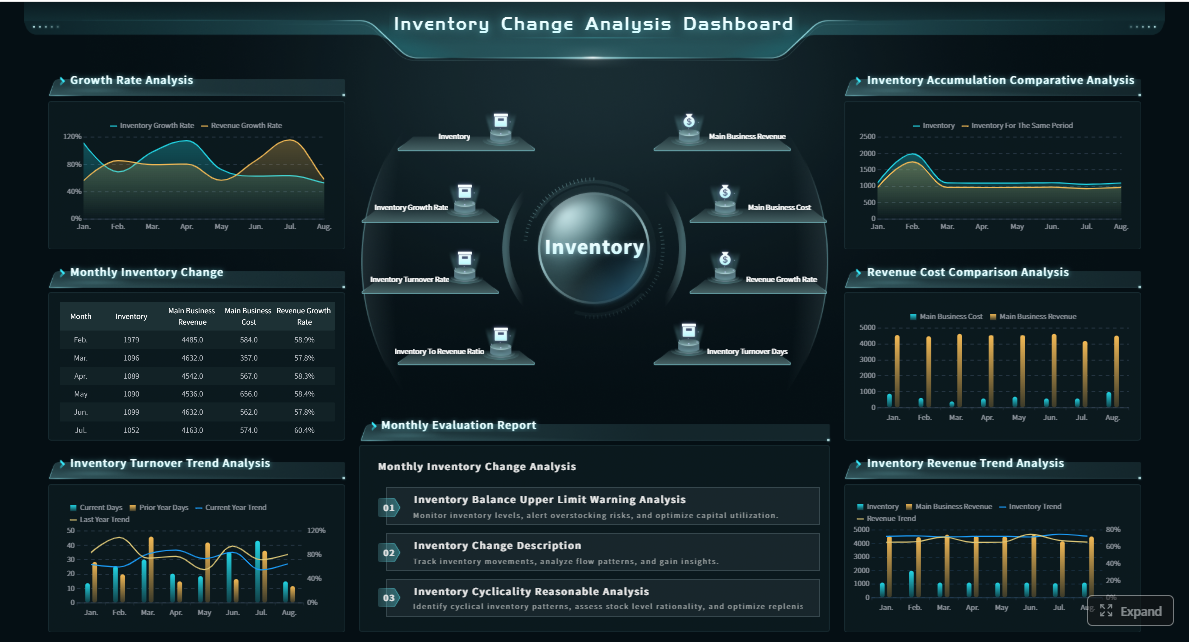 Click To Try The Dashboard
All dashboards in this article are built with FineBI
Why artificial intelligence in warehouse management matters now
The operational pressures driving change: labor volatility, rising customer expectations, and tighter margins
Warehouse operations have become harder to manage with static reports and manual follow-up alone. Labor availability changes week to week. Customer expectations for speed and accuracy keep rising. At the same time, cost pressure leaves little room for overstaffing, excess safety stock, or process inefficiency.
Operations directors need to answer practical questions every day:
- Where are delays building up?
- Which shift or zone is falling behind?
- Are inventory discrepancies concentrated in certain SKUs or locations?
- Is picking productivity dropping because of labor mix, replenishment delay, or layout issues?
- Which exceptions need immediate escalation?
Traditional BI can show these trends, but many teams still spend too much time searching across reports, exporting spreadsheets, and waiting for analysts. This is where artificial intelligence in warehouse management becomes useful in a business-ready way. The goal is not generic AI. The goal is faster, governed operational decisions.
Where AI creates practical value across receiving, storage, picking, packing, and shipping
AI creates the most value when it is attached to repeatable operational workflows.
Across warehouse processes, that means:
- Receiving: identify delayed inbound receipts, dock congestion, and dock-to-stock bottlenecks
- Storage: detect abnormal putaway delays, location imbalances, and replenishment risk
- Picking: analyze low pick rate by zone, SKU class, shift, or picker cohort
- Packing: monitor backlog buildup, quality exceptions, and cycle time drift
- Shipping: flag orders at risk of missing SLA and surface likely operational causes
The practical advantage of FineBI + Dora is that FineBI structures the warehouse metrics and visual analysis, while Dora turns those trusted assets into an AI assistant that supports managers through chat, summaries, alerts, and governed follow-up.
What operations directors should evaluate before investing in new systems
Before adopting any AI approach, operations directors should assess three things:
- Data readiness: Can warehouse data from WMS, ERP, barcode systems, and manual logs be connected and cleaned reliably?
- Metric governance: Are KPI definitions such as pick rate, order accuracy, labor utilization, and on-time shipment standardized?
- Decision workflow maturity: Does the business know who should act when an exception appears?
This is why enterprise AI projects often fail when they begin with prompts instead of process. For warehouse AI to land, there must be a trusted BI foundation and a clear operating model. FineBI + Dora is designed for exactly that path.
Core warehouse challenges AI can help solve
Inventory visibility and stock accuracy
Inventory accuracy is one of the highest-value use cases for artificial intelligence in warehouse management because small discrepancies create broad downstream damage: stockouts, mispicks, delayed replenishment, and customer service failures.
Reducing discrepancies between physical stock and system records
Physical stock often diverges from system stock because of missed scans, incorrect putaway, unit-of-measure confusion, timing delays, or process workarounds on the floor. A warehouse dashboard can highlight the variance, but managers still need faster diagnosis.
With FineBI, operations teams can build trusted views for:
- inventory variance by SKU, zone, and location
- recurring discrepancy patterns by shift or operator group
- aging of unresolved inventory exceptions
- cycle count performance and correction trends
Dora can then help managers query those trusted assets in natural language, summarize likely causes, and prepare issue briefs for supervisors. Instead of manually combining multiple reports, warehouse leaders can ask for targeted analysis and receive chart-based answers tied to governed definitions.
Improving replenishment timing and location accuracy
Replenishment problems often appear before they are reported. Pick faces run low, reserve stock is available but not moved in time, or replenishment tasks accumulate in certain zones. These issues directly affect pick productivity and shipment timing.
A strong warehouse BI model should track:
- low-stock pick faces
- replenishment task aging
- replenishment completion by zone and shift
- stock availability mismatch between reserve and pick locations
Dora can support a Risk Alert Officer workflow by detecting thresholds or abnormal changes, then pushing alerts to the responsible owner. This turns replenishment management from passive monitoring into governed exception handling.
Labor planning and workflow efficiency
Labor is usually the largest controllable warehouse cost. It is also the hardest variable to manage well when volume and order mix fluctuate daily.
Forecasting workload by shift, zone, and task type
Warehouse workload is not just about total order count. It depends on line count, SKU mix, storage profile, zone concentration, receiving peaks, and service deadlines. Operations directors need a clearer view of expected workload by shift and task type.
FineBI can model the relationship between:
- inbound receipts and receiving labor demand
- order lines and picking workload
- carton volume and packing capacity needs
- shipment cutoff windows and shipping pressure
This gives analysts and supervisors one version of the truth. Dora builds on that foundation by helping users ask questions such as:
- Which zones are likely to be overloaded this afternoon?
- How does today’s order profile compare with the last four Mondays?
- Where is labor utilization low despite backlog growth?
This chat-based approach reduces the friction of warehouse analysis for frontline leaders who may not want to navigate multiple dashboards during a shift.
Balancing staffing levels with throughput targets
Overstaffing reduces margin. Understaffing creates backlog, overtime, and late shipment risk. The challenge is to match labor deployment to actual operational demand, not just historical averages.
A good AI-supported warehouse decision process helps managers:
- compare planned labor against actual throughput
- identify whether low productivity is caused by demand mix, training gaps, congestion, or material flow issues
- adjust staffing by zone, process, or shift based on actual bottlenecks
Dora is especially useful here as a Data Analyst digital employee. It can retrieve trusted FineBI metrics, compare periods, generate dashboard-style analysis views, and summarize the most likely operational drivers for review by managers.
Bottlenecks, delays, and service risk
Detecting congestion points before they affect fulfillment performance
Warehouse bottlenecks rarely start at the final missed shipment. They usually begin earlier: delayed receiving, queue buildup in replenishment, pick path congestion, scanner downtime, or uneven labor allocation.
FineBI dashboards can surface:
- backlog by process stage
- throughput trend by hour and shift
- queue aging and exception counts
- process handoff delays between teams
Dora helps teams move from reactive reporting to proactive intervention. Instead of checking every report manually, supervisors can receive scheduled summaries and exception pushes when thresholds are breached or unusual patterns emerge.
Prioritizing interventions based on operational impact
Not every issue deserves the same response. Operations directors need a way to rank problems by business impact, such as shipment risk, customer priority, volume affected, or labor cost consequence.
This is where governed AI workflow matters. Dora should not act as a generic chatbot. It should operate as an enterprise Data Agent on top of defined metrics, permissions, and warehouse rules. That means it can help:
- identify the most severe service risks
- summarize which orders, zones, or tasks are affected
- suggest who should review the issue next
- push periodic updates to managers before review meetings
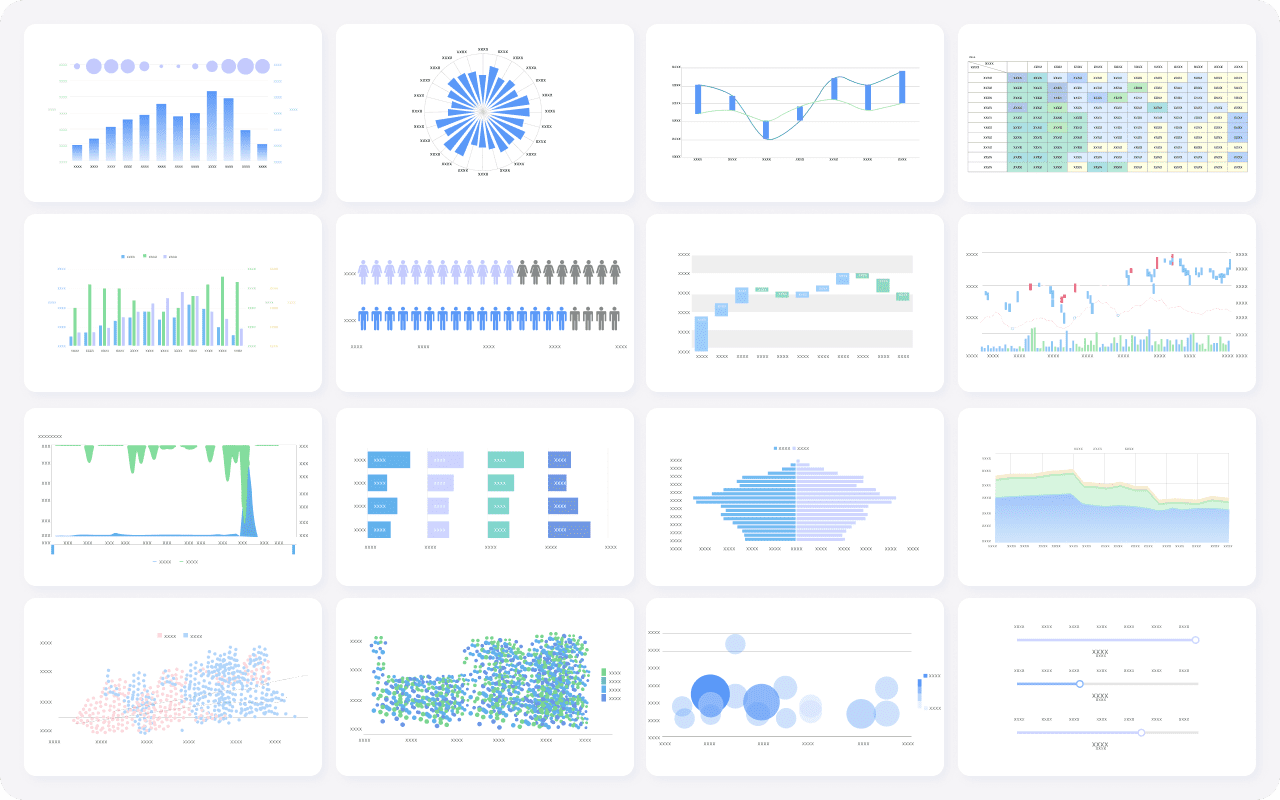
How FineBI + Dora support AI-driven warehouse decisions
Turning warehouse data into usable operational insight
Connecting data from WMS, ERP, barcode systems, and manual inputs
Most warehouse decisions depend on fragmented data. WMS contains execution detail. ERP reflects orders, inventory, and business transactions. Barcode systems capture task-level movement. Some critical events may still be recorded in spreadsheets or manual logs.
FineBI helps operations teams bring these sources together into trusted analysis models. That foundation matters because artificial intelligence in warehouse management is only useful when the underlying metrics are reliable.
For warehouse scenarios, FineBI can help teams unify:
- order and line data
- receipt and putaway events
- inventory balances and adjustments
- pick, pack, and ship timestamps
- labor logs and productivity records
- exception codes and service outcomes
Building dashboards that surface exceptions, trends, and root causes
Once data is connected, the next step is to design dashboards for operational decisions, not just reporting volume. For warehouse management, that means dashboards should show:
- current performance against target
- historical trend
- breakdown by zone, shift, task type, and product profile
- exception queue and aging
- likely root-cause dimensions for investigation
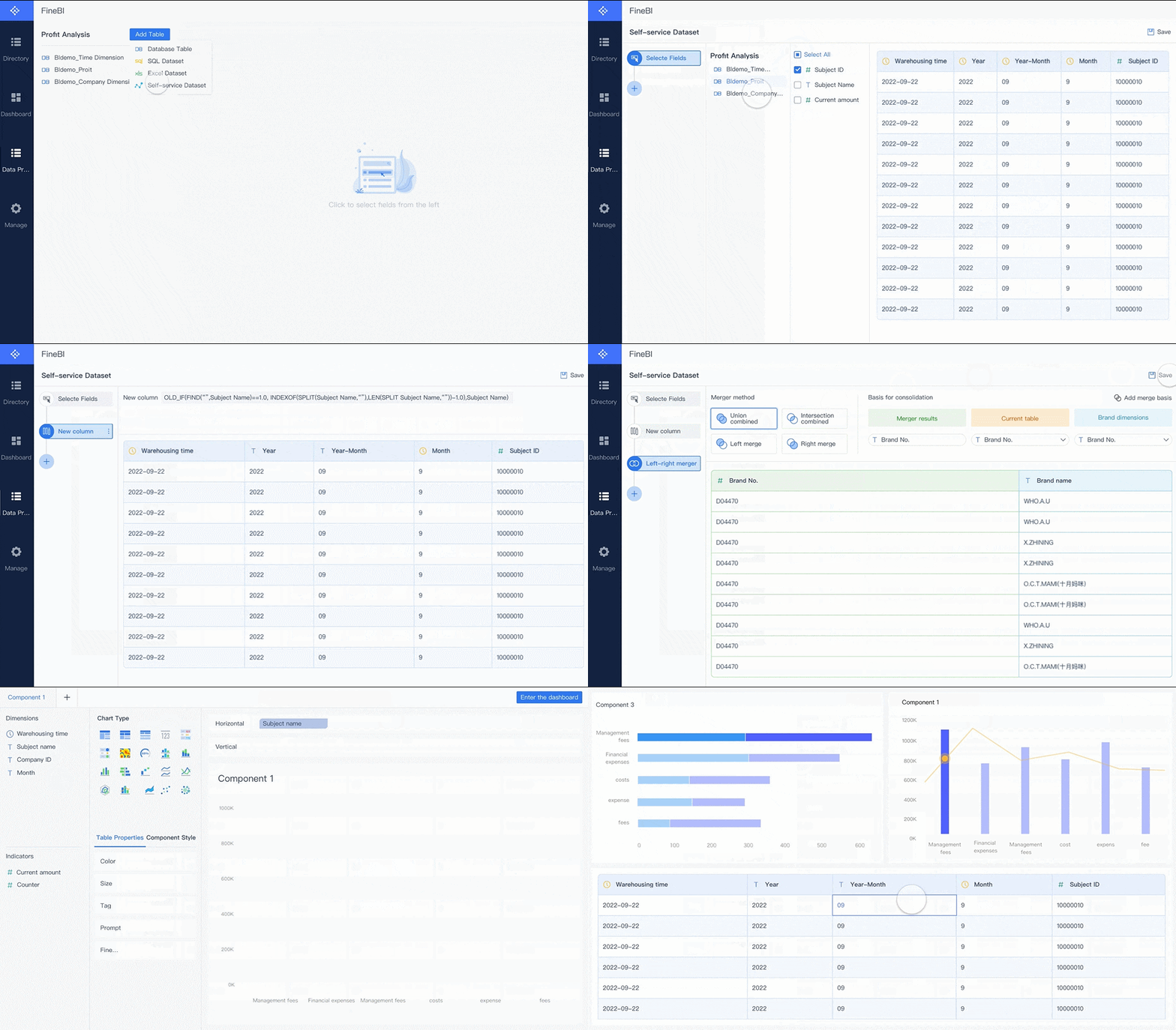
FineBI provides the self-service analytics, visual exploration, semantic assets, and governed KPI layer needed for this. It gives warehouse teams a trusted lens before AI is added.
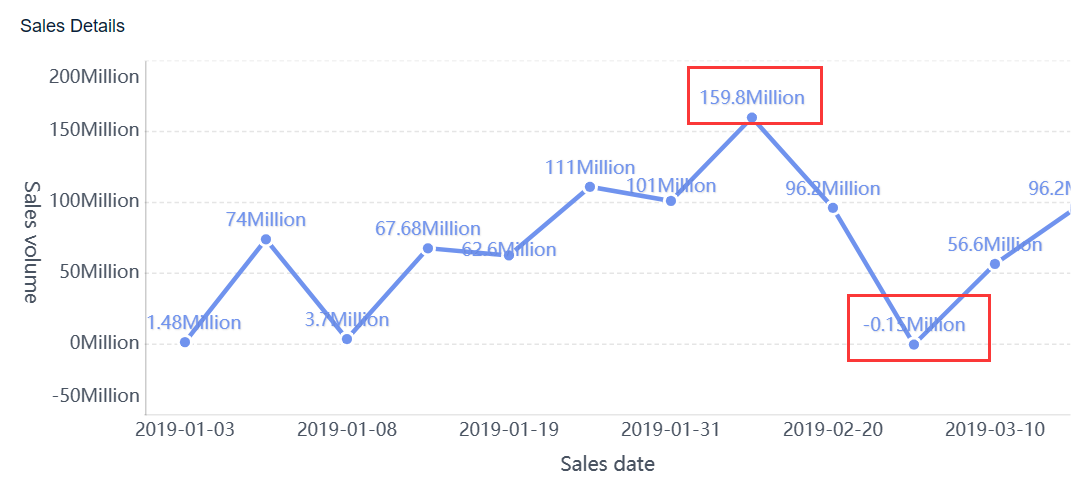
Applying Dora for faster analysis and decision support
Asking natural-language questions about warehouse performance
This is where Dora changes the operating experience. Instead of searching manually through many views, an operations director or supervisor can ask a direct question in chat and retrieve a chart-based answer from trusted FineBI assets.
Examples include:
- “Show today’s pick rate by zone compared with last Tuesday.”
- “Which outbound orders are most at risk of missing shipment cutoff?”
- “Why did dock-to-stock time increase this week?”
- “Which SKUs have the highest inventory variance rate this month?”
Dora uses the governed semantic layer and KPI rules from FineBI to interpret business terms correctly. That improves control, auditability, and enterprise fit compared with raw prompt-only agents.
Accelerating issue investigation for managers and frontline leaders
Many warehouse problems require quick preliminary analysis rather than a full data science project. Dora is valuable because it helps frontline leaders reach a useful first answer faster.
For example, if pick productivity falls, Dora can help managers:
- retrieve the relevant FineBI dashboard or analysis subject
- compare current shift with prior periods
- break results down by zone, SKU category, or labor group
- summarize likely factors such as replenishment lag or workload imbalance
- push a short briefing before the next ops huddle
This is more practical than simply adding more dashboards. It reduces search time and increases landing capability for repeatable warehouse workflows.
Creating a practical decision workflow
Moving from daily reporting to proactive alerts and guided action
Warehouse teams often still rely on end-of-day reporting. That is too late for many operational issues. A better model uses dashboards as the foundation, then adds AI-supported alerting and follow-up.
With FineBI + Dora, teams can move toward:
- scheduled daily or shift briefings
- anomaly or threshold-based notifications
- guided exception investigation
- owner-level follow-up for unresolved issues
- summary generation for manager review
This is how operations directors can make artificial intelligence in warehouse management operationally useful rather than experimental.
Aligning insights with SOPs, escalation paths, and team accountability
AI works best in warehouses when it is tied to existing responsibilities. If backlog in a picking zone exceeds threshold, who acts first? If inventory variance spikes for a product group, who investigates? If dock-to-stock time worsens, when is escalation required?
Dora supports this through governed AI workflow. It can help route insights into repeatable action patterns, but the organization still needs clear SOPs, metric ownership, and permission governance. FineBI ensures the AI layer is grounded in trusted definitions and access boundaries.
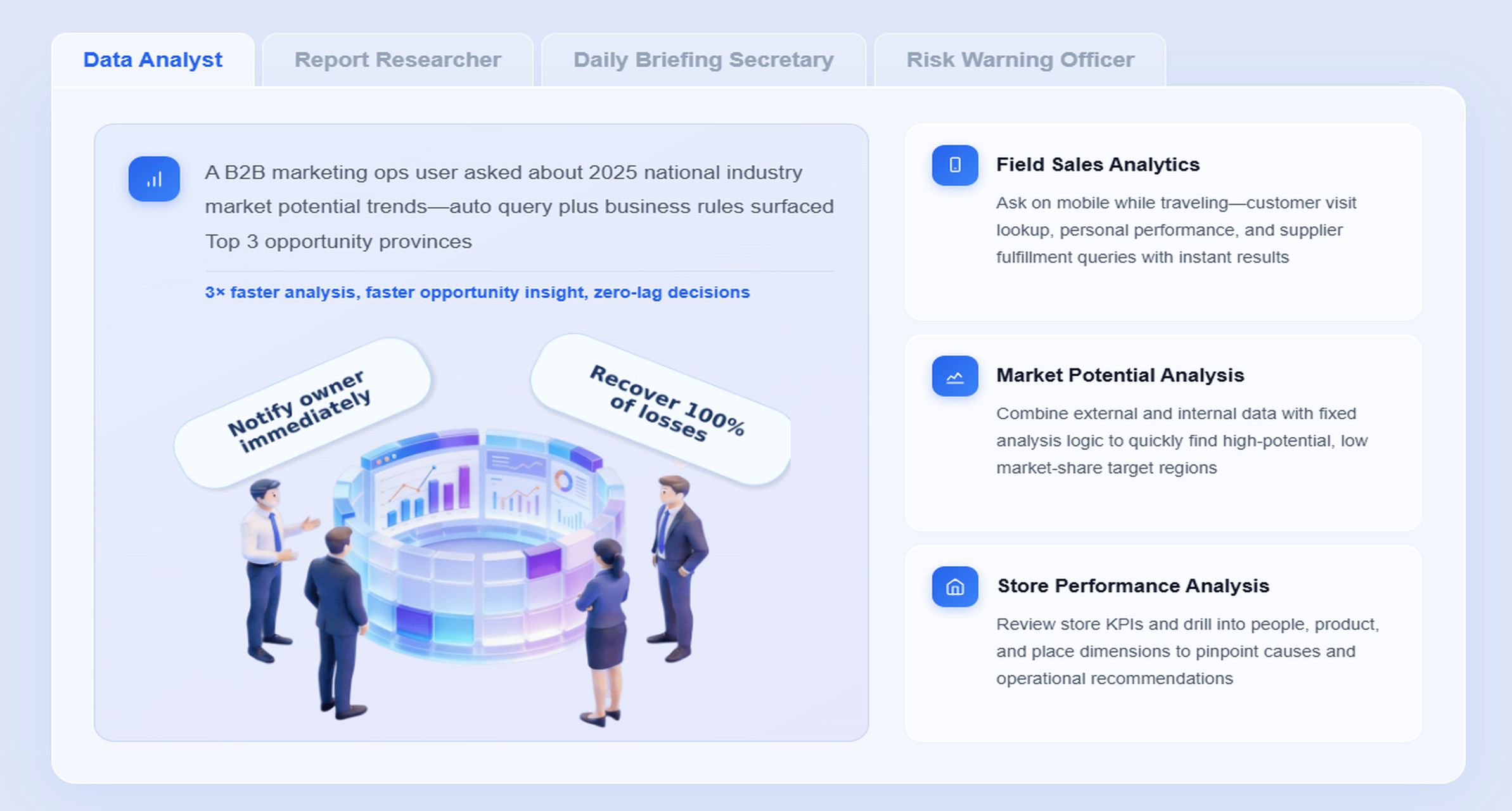
Core framework and key metrics for AI-enabled warehouse management
A warehouse AI initiative should start with a clear KPI framework. The following metrics are practical, measurable, and highly relevant to operations directors.
Inventory accuracy
- Metric Name: Inventory Accuracy
Definition: The percentage of system-recorded inventory that matches physical stock during counts or verification.
Business value: High inventory accuracy reduces stockouts, mispicks, emergency replenishment, and customer service issues.
AI use: Dora can retrieve this metric through chat, compare it by zone or SKU family, flag abnormal variance patterns, and include it in scheduled briefings.
Dock-to-stock time
- Metric Name: Dock-to-Stock Time
Definition: The elapsed time from inbound receipt at the dock to inventory availability in storage or picking locations.
Business value: Shorter dock-to-stock time improves inventory availability and reduces inbound congestion.
AI use: Dora can monitor trends, identify shifts or product types with rising delay, and push alerts when inbound processing falls outside expected thresholds.
Pick rate
- Metric Name: Pick Rate
Definition: The number of units, lines, or orders picked per labor hour, depending on the warehouse’s standard measurement.
Business value: Pick rate is a core driver of labor efficiency and order cycle performance.
AI use: Dora can answer natural-language questions about pick rate variance, compare periods, and generate chart-based analysis views by zone, shift, or order profile.
Labor utilization
- Metric Name: Labor Utilization
Definition: The ratio of productive labor time to total available labor time across warehouse processes.
Business value: This helps control labor cost while highlighting underused capacity or overloaded teams.
AI use: Dora can summarize utilization patterns, identify mismatch between staffing and workload, and support periodic staffing reviews.
Order accuracy
- Metric Name: Order Accuracy
Definition: The percentage of customer orders shipped without quantity, item, or packaging errors.
Business value: Strong order accuracy reduces returns, rework, credits, and customer dissatisfaction.
AI use: Dora can correlate error trends with locations, shifts, process stages, or SKU categories and prepare issue summaries for supervisors.
On-time shipment
- Metric Name: On-Time Shipment
Definition: The percentage of orders shipped before the promised or required cutoff time.
Business value: This is one of the most visible service KPIs for customers and senior leadership.
AI use: Dora can detect at-risk orders, summarize root-cause dimensions, and push timely notifications to responsible users.
Exception response time
- Metric Name: Exception Response Time
Definition: The average time between detection of an operational exception and the start of corrective action.
Business value: Faster response reduces the business impact of disruptions before they spread across workflows.
AI use: Dora can support a Risk Alert Officer scenario by monitoring exception queues, notifying owners, and generating follow-up summaries for management.
How an AI Data Agent Handles This Scenario
For warehouse operations, the most relevant Dora digital employees are usually the Data Analyst, Daily Briefing Secretary, and Risk Alert Officer. Together, they help move from passive reporting to practical Agentic BI execution.
A typical operations director might ask:
“Show me today’s warehouse performance by receiving, picking, and shipping. Highlight any zones with low pick rate, orders at risk of missing cutoff, and inventory discrepancies that could affect fulfillment.”
Example Dora workflow for warehouse management
-
Retrieve trusted FineBI assets
Dora accesses the relevant FineBI dashboard, warehouse subject area, or governed metrics for receiving, inventory, labor, and shipment performance. -
Understand KPI definitions and semantic rules
Dora uses FineBI’s semantic foundation to interpret business terms such as pick rate, on-time shipment, dock-to-stock time, and inventory variance according to enterprise definitions. -
Generate chart-based answers and dashboard-style analysis views
In response to the user’s chat request, Dora returns the most relevant metrics, trend views, breakdowns by zone or shift, and a concise written summary. -
Detect anomalies or threshold breaches
If pick productivity falls below threshold or shipment risk spikes in a zone, Dora can surface the exception and classify likely operational impact. -
Push insights and notify responsible users
As a Risk Alert Officer or Daily Briefing Secretary, Dora can send scheduled summaries, shift briefings, or issue notifications to managers and supervisors. -
Produce follow-up summaries for review
Dora can prepare a management-ready recap for daily operations meetings, including KPI movement, key exceptions, and unresolved follow-up items.
Why this works in a real enterprise
This scenario is practical because FineBI and Dora play different but connected roles:
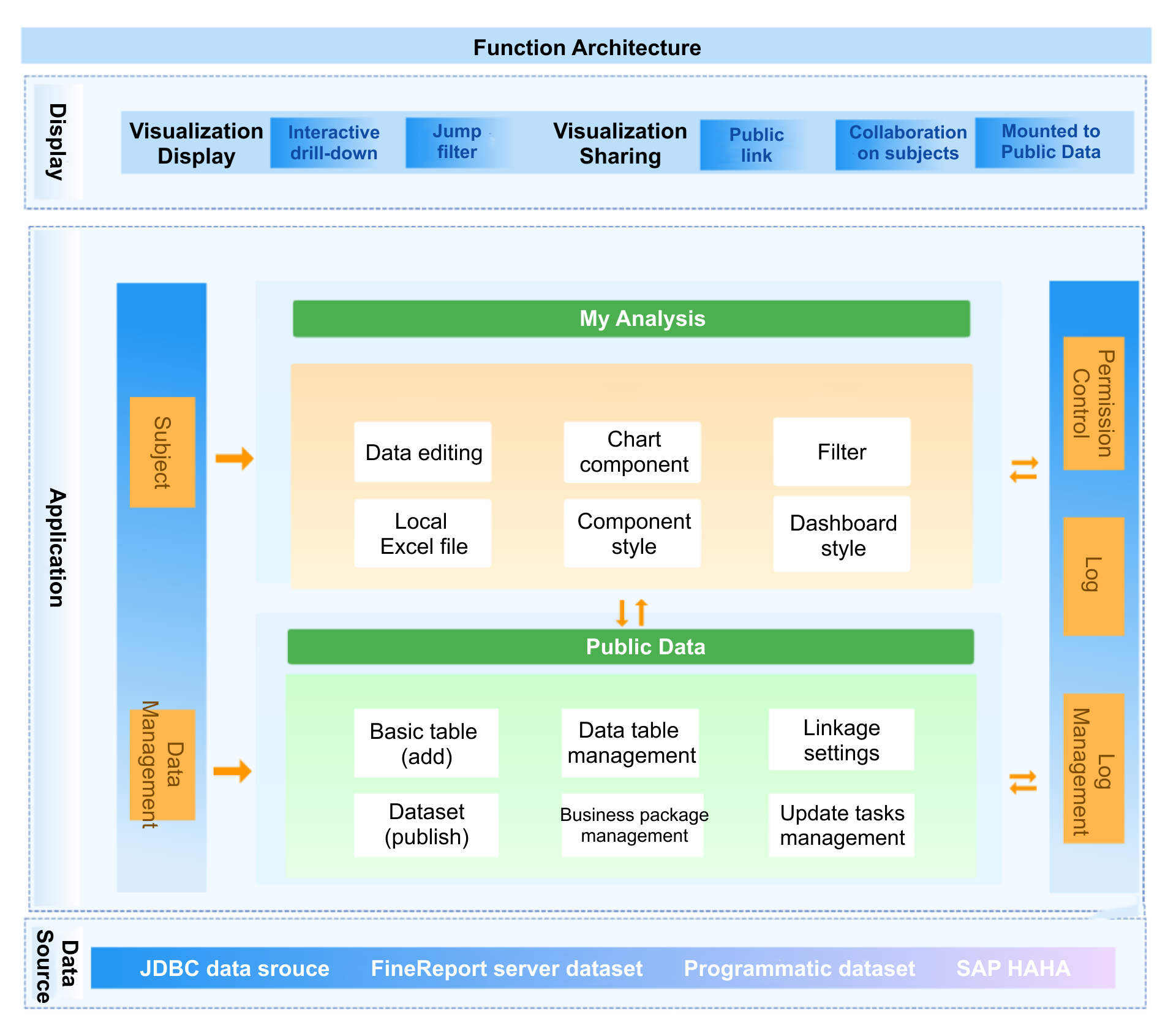
- FineBI builds the trusted dashboard, metric model, and semantic assets.
- Dora turns that foundation into a scenario-specific AI assistant or AI digital employee.
For operations directors, this means less time searching through reports and more time managing execution. For IT, it means they can focus on data connection, governance, permissions, and reusable AI Skills rather than manually building every answer. For business users, it means lower friction access to timely metrics, summaries, and alerts.
This is also why Dora has stronger enterprise fit than raw prompt-only agents. Skills-based execution provides a more controllable and auditable workflow. It also helps reduce token waste, improve response speed, and increase workflow stability compared with open-ended prompt chains, especially when users repeatedly ask warehouse questions based on the same governed data assets.
A practical implementation roadmap for operations directors
Start with high-impact use cases
Focus first on inventory accuracy, picking productivity, and order cycle time
Do not begin by trying to automate every warehouse decision. Start with use cases that have clear operational value and repeat often.
The best first scenarios usually include:
- inventory discrepancy monitoring
- pick rate and labor productivity analysis
- order cycle time and shipment risk review
These are high-frequency, KPI-driven workflows where FineBI dashboards and Dora digital employees can create immediate value.
Define measurable success criteria before expanding scope
Before rollout, define what success looks like. For example:
- fewer unresolved inventory exceptions
- faster identification of low-productivity zones
- reduced response time to shipment risk
- higher dashboard and AI adoption by supervisors
- better consistency in daily operational briefings
This keeps the project grounded in business outcomes rather than AI novelty.
Prepare the data and process foundation
Standardize key metrics, naming rules, and exception definitions
AI can only be as trustworthy as the metric layer behind it. Standardize:
- KPI definitions
- dimension naming rules
- location and zone hierarchy
- exception categories
- target thresholds
- metric ownership
This semantic discipline is one of the biggest reasons FineBI + Dora can land successfully in warehouse environments.
Improve data quality at the source to support trustworthy analysis
If scans are missed, timestamps are inconsistent, or manual corrections are delayed, AI output will inherit those weaknesses. Data quality must be treated as part of the AI implementation, not a separate clean-up step.
Operations and IT should jointly review:
- scanning compliance
- event timestamp completeness
- master data consistency
- exception code usage
- synchronization between WMS and ERP
Roll out in phases and train teams
Pilot with one warehouse, process, or shift before scaling
A phased rollout is usually more effective than enterprise-wide deployment. Start with one warehouse, one high-value process, or one shift. Validate the dashboards, alerts, and chat-based workflows before scaling.
This helps teams refine:
- threshold settings
- alert routing rules
- semantic synonyms for business users
- meeting summary formats
- role-based permissions
Equip supervisors and analysts to use dashboards and AI outputs confidently
Adoption matters as much as configuration. Supervisors should know how to use FineBI dashboards for trusted drill-down. Analysts should know how to improve the semantic layer. Managers should understand how to use Dora outputs for decisions without over-relying on AI-generated interpretation.
Human review is still important, especially for AI-generated summaries and report drafts during the early rollout stage.
KPIs to track and common mistakes to avoid
Metrics that show real operational improvement
The following metrics usually show whether artificial intelligence in warehouse management is delivering real value:
- Order accuracy: confirms service quality and process discipline
- Dock-to-stock time: shows inbound efficiency and inventory availability
- Pick rate: tracks labor productivity
- Labor utilization: reveals staffing efficiency
- On-time shipment: measures execution against service commitment
- Variance trends: highlights whether inventory control is improving
- Exception frequency: shows where process instability remains
- Response time to disruptions: indicates whether teams are acting faster
These metrics should be reviewed in context, not in isolation. FineBI makes that multidimensional view possible, while Dora helps users retrieve and interpret it more quickly.

Common pitfalls in AI warehouse projects
Automating poor processes without fixing root causes
AI will not solve weak process design. If replenishment logic is broken or scan compliance is low, AI may surface symptoms faster but cannot create reliable outcomes by itself.
Relying on too many dashboards without clear decision ownership
More dashboards do not guarantee better execution. Every metric and alert should have an owner, a threshold, and a response path. Dora is most valuable when it supports a clear operational workflow, not when it adds more noise.
Ignoring change management, adoption, and frontline feedback
Warehouse improvement depends on people. If supervisors do not trust the KPIs, or frontline users find the analysis unclear, adoption will stall. Include operations feedback in dashboard design, semantic setup, and AI workflow tuning.
Actionable best practices
1. Build the semantic layer before scaling AI access
Standardize KPI definitions, warehouse terms, location structures, and business synonyms in FineBI first. This gives Dora a trusted foundation for natural-language analysis and prevents confusion around basic concepts like pick rate, backlog, or inventory variance.
2. Start with recurring operational workflows, not broad AI ambitions
Pick a high-frequency workflow such as shift briefing, shipment risk monitoring, or discrepancy review. Dora performs best when supporting repeatable, governed data work as a Daily Briefing Secretary, Risk Alert Officer, or Data Analyst digital employee.
3. Define thresholds, owners, and escalation rules for alerts
An alert without ownership does not improve operations. Tie each exception type to a responsibility rule, escalation path, and expected response window. This makes Dora’s push notifications and follow-up summaries more actionable.
4. Preserve permission governance across BI and AI outputs
AI should respect the same access boundaries as the underlying FineBI assets. Operations directors, analysts, and supervisors may need different views of performance, labor, or customer-related information. Governance is a core enterprise requirement, not an optional feature.
5. Use human review for AI-generated summaries during rollout
Dora can accelerate report preparation and issue summaries, but teams should validate wording, causality, and recommended next steps early on. As data quality and semantic governance improve, the organization can gradually expand AI Skills with more confidence.
How to build a sustainable AI-enabled warehouse operation
Sustainable improvement requires more than a pilot. Operations directors need a repeatable management rhythm that combines trusted metrics, timely exception visibility, and continuous process refinement.
A strong cadence includes:
- daily or shift-level review of throughput, backlog, and service risk
- weekly review of recurring exceptions and root-cause trends
- monthly review of KPI movement, labor allocation, and process improvement priorities
- periodic refinement of slotting, replenishment rules, and staffing logic based on actual operating patterns
Over time, the warehouse can move from descriptive reporting toward more predictive and prescriptive decision support. But that progression should be earned through stronger data quality, stable KPI governance, and proven operational adoption.
This is the practical path for artificial intelligence in warehouse management: start with visibility, add governed AI assistance, and then expand into more proactive workflows.
FineBI + Dora solution pitch
Building this manually is complex. FineBI helps teams build trusted dashboards, metrics, and semantic assets. Dora turns those assets into an AI assistant that can answer questions in chat, generate dashboard-style analysis views, push scheduled summaries, monitor anomalies, and follow up with responsible owners.
For warehouse operations, that means one connected path from data to action:
- FineBI connects WMS, ERP, barcode, and operational data
- FineBI models warehouse KPIs and exception logic
- FineBI provides self-service analytics and visual dashboards
- Dora adds natural-language data query over trusted BI assets
- Dora retrieves dashboards and metrics for faster manager analysis
- Dora generates chart-based answers, periodic summaries, and alert pushes
- Dora supports digital employees for repeatable data work such as shift briefing, risk monitoring, and report research
FineBI + Dora is not only a BI upgrade; it is a practical fourth-generation Agentic BI path. FineBI provides governed metrics and visual analysis. Dora provides the AI assistant layer for scenario execution, with more controlled Skills, lower token waste, faster execution paths, and more stable workflows than prompt-only agents.
Get Ready-to-Use Dashboard Templates in Fine Gallery
For executives, the value is concrete scenario ROI: fewer delays, better labor decisions, faster exception follow-up, and more consistent operational reviews. For IT teams, the role shifts toward better data connections, semantic governance, permission control, data quality management, and reusable agent Skills. For business users, the payoff is timely metrics, chat-based answers, scheduled summaries, and lower friction in daily warehouse decisions.
The strongest Dora pitch is scenario + product + service: FineBI provides the trusted BI foundation, Dora provides the AI digital employee, and implementation service connects data, governance, semantic setup, Skills, and rollout.
FAQs
It helps managers spot delays, inventory issues, and productivity drops faster by turning warehouse data into actionable insights. In practice, AI works best when it supports daily decisions across receiving, storage, picking, packing, and shipping.