If you are searching for the Power BI API, you are usually trying to solve one of two problems:
You want to automate or control Power BI itself — such as refreshing datasets, managing workspaces, or supporting embedded analytics.
You want to pull data from another application into Power BI — such as a CRM, finance app, marketing platform, or support tool.
Those are related, but they are not the same thing. For beginners, this is where most confusion starts.
In practical terms, “Power BI API” can refer to two different workflows:
The Power BI REST API, which is used to interact with the Power BI service and its objects
External web APIs used through Power Query, which are used to import third-party data into your Power BI model
Understanding that difference early will save you time, reduce authentication issues, and help you choose the right setup for reporting, automation, or governance.
By contrast, calling a web API through Power Query means using Power BI Desktop or the Power BI service to fetch data from an external system. In that workflow, the API is the data source, not the platform being controlled.
For example, if your team wants to refresh a dataset after a nightly ETL process finishes, the REST API is the right tool. If your admins want to audit all workspaces and reports across the environment, the REST API is also relevant.
What web APIs in Power Query are designed to do
Web APIs in Power Query are designed to retrieve data from external systems and turn that data into rows and columns for analysis.
Typical use cases include:
Pulling deal data from a CRM
Importing campaign metrics from ad platforms
Downloading transactions from financial systems
Retrieving tickets, chats, or SLA metrics from support tools
Accessing product, inventory, or order data from SaaS applications
In practice, you work with:
Endpoints
Query parameters
Headers
Authentication tokens
Pagination logic
JSON transformation steps
This is often the more common beginner path because the goal is familiar: get data into a report.
How to choose the right option
Choose the Power BI REST API if you need to:
Control Power BI objects
Automate dataset or report operations
Support embedding
Handle admin or governance tasks
Query platform metadata rather than business transactions
Choose Power Query with web APIs if you need to:
Fetch external application data
Build a data model for reporting
Combine data from multiple business systems
Analyze operational metrics from SaaS platforms
A practical test is this:
If your question starts with “How do I make Power BI do something?” use the REST API
If your question starts with “How do I get data from another system into Power BI?” use Power Query
Getting set up before your first API connection
Access, authentication, and permissions
Authentication is where many beginner API projects slow down.
At a high level, you may encounter:
API keys: Simple tokens passed in headers or parameters; common with third-party SaaS APIs
OAuth: A more secure authorization flow used by many modern platforms
Delegated access: Actions are performed on behalf of a signed-in user
Service principals: App-based access used in more controlled automation scenarios
For beginners, the key takeaway is not to memorize every flow immediately. Instead, learn to answer these questions first:
Who is making the request — a user or an application?
What permissions does that identity need?
Does the API support the authentication method you plan to use?
Will the same method still work when the report is published and refreshed?
Common permission issues include:
Missing API scopes or app permissions
Workspace access not granted
Admin settings blocking service principal use
Wrong token audience or expired tokens
Using a method that works in Desktop but not in scheduled refresh
Tools and testing workflow
A good beginner workflow is to test the API before building the full Power BI query.
Recommended steps:
Read the endpoint documentation carefully
Test the endpoint in a documentation console, playground, or API tool
Save a sample request
Save a sample JSON response
Note the pagination pattern
Record rate limits and retry behavior
Only then build the Power Query steps
This approach helps you separate API problems from Power Query transformation problems.
Keep a small working document that tracks:
Endpoint URL
Required headers
Parameters
Authentication method
Expected fields
Pagination rules
Refresh limitations
Using a Power BI REST API as a data source in Power Query
This is the area that confuses many beginners most. Yes, you can sometimes use a Power BI REST API endpoint as a data source in Power Query, but you should be clear about what you are retrieving.
Usually, you are pulling metadata or service information, not the same kind of business fact data you would expect from a transactional application.
Building your first connection
A simple beginner pattern is:
Use the Web connector in Power Query
Start with an endpoint that returns JSON
Inspect the response structure
Expand records and lists
Convert the data into a clean table
Typical steps in Power Query include:
Connecting to the URL
Passing headers if needed
Parsing JSON
Expanding nested columns
Renaming fields
Setting data types
Removing irrelevant attributes
If you are new to APIs, begin with a small endpoint and a limited response size. Avoid highly nested or paginated endpoints until you are comfortable.
Handling real-world API challenges
Real APIs almost always introduce complications such as:
Pagination: Data comes back in pages instead of one full response
Filtering: You need parameters to limit results
Date ranges: Large history windows may be slow or fail
Incremental pulls: You need to fetch only new or changed data
Headers: Tokens and content types must be passed correctly
Error handling: Requests may fail or return incomplete payloads
For more reliable refreshes, beginners should:
Start with short date ranges
Confirm response shape stays consistent
Use parameters for dates and filters
Watch for HTTP errors
Plan around rate limits
Test in the service, not just Desktop
Common beginner mistakes
The most common mistakes include:
Confusing source-system APIs with Power BI platform APIs
Assuming any API that works in Desktop will also support scheduled refresh
Hard-coding secrets directly into queries
Ignoring pagination and only loading the first page
Expanding nested fields without checking for missing values
Pulling too much data too early
Skipping documentation and guessing endpoint behavior
A useful mindset is to treat API work as two separate tasks:
Can I successfully call the API?
Can I model the returned data cleanly in Power Query?
If either step is weak, the final dashboard will also be weak.
Common beginner scenarios and examples
When to use the Power BI REST API
The Power BI REST API is a good fit when your use case is operational, administrative, or embedded.
Examples include:
Triggering dataset refreshes after upstream data loads
These are platform-level tasks. They are less about reporting on external business events and more about controlling or monitoring the BI environment itself.
When to use external APIs in Power Query
External APIs in Power Query are the better choice when you want data for analysis.
Examples include:
CRM opportunity pipelines
Finance transactions and billing records
Marketing campaign and channel performance
Customer support ticket volumes and SLA status
Inventory, product, or order data from SaaS tools
These scenarios are directly tied to dashboards, KPIs, and business decisions.
Where beginners often get unstuck
Most beginners get stuck in one of these areas:
Authentication method confusion
Pagination not handled correctly
JSON too nested to model cleanly
Scheduled refresh fails after publishing
Endpoint permissions differ from expected
Community examples do not match the current API version
When this happens, troubleshoot in order:
Confirm the API works outside Power BI
Confirm credentials and permissions
Check whether the API response changed
Test with a smaller payload
Review whether your refresh scenario is supported
Compare your implementation with official examples and sandbox tools
Best practices for learning and scaling safely
If you are just learning the Power BI API, avoid jumping straight into a complex production workflow. Start small and build confidence with one successful request and one useful output.
Here are practical recommendations from a BI consulting perspective:
Start with a proof of concept
Pick one endpoint, one business question, and one small payload before designing a full pipeline.
Separate platform automation from data ingestion
Do not mix up governance tasks and reporting data tasks. Decide whether your need is platform control or analytical data access.
Avoid hard-coded secrets
Use secure credential handling wherever possible. Queries with embedded secrets become difficult to maintain and risky to share.
Design for refresh and change
Test in both Desktop and the service. APIs evolve, schemas shift, and rate limits matter more over time than in early testing.
Keep a simple API decision checklist
Before you build, ask:
Is this about controlling Power BI?
Is this about retrieving external data?
What authentication does it require?
Will scheduled refresh work?
How will pagination and schema changes be handled?
When teams may consider FineBI + Dora instead
Tools like Power BI are widely used in the BI market, especially for Microsoft-centered reporting and analytics workflows. But teams that need a more business-user-friendly, self-service BI platform may also consider FineBI.
Where this becomes relevant to the topic of the Power BI API is not just feature comparison. It is about the broader question behind the search: how much technical work should business reporting require?
Some organizations use APIs heavily because they need to bridge gaps between data access, dashboard building, and business-user adoption. In those cases, it is worth evaluating whether the BI platform makes data consumption and analysis easier after the data is connected.
Where FineBI fits in API-driven analytics workflows
FineBI is designed around self-service BI, interactive analysis, and dashboard creation for business teams as well as analysts. In API-related reporting scenarios, that can matter in a few ways:
Teams can connect and prepare enterprise data for broader business use
Business users can explore metrics with drag-and-drop analysis instead of relying only on technical report developers
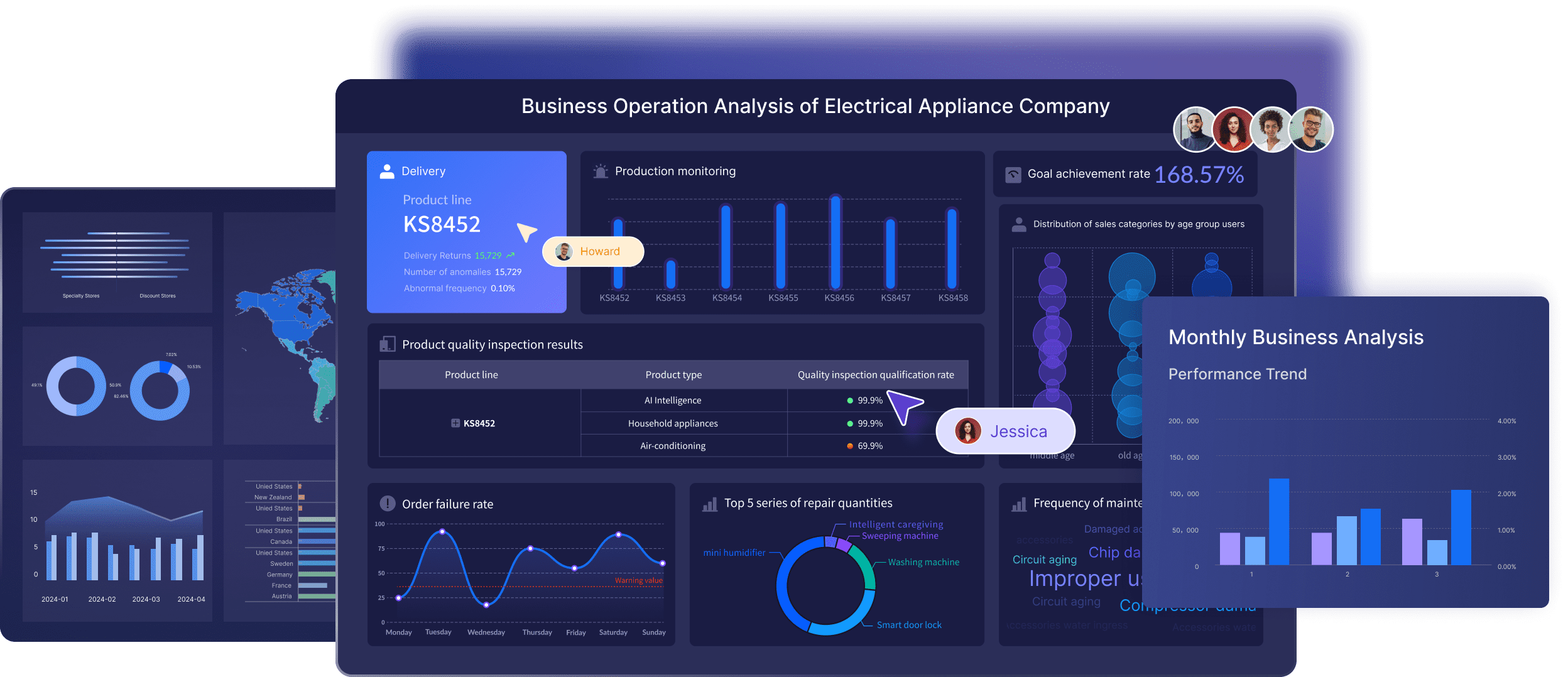
Interactive dashboards, filtering, and drill-down help turn imported API data into usable decisions
Shared dashboards make it easier to distribute operational views across departments
For example, if a company is using APIs to pull CRM, marketing, or financial platform data into a BI environment, the next challenge is often not the API call itself. It is making the resulting data model practical for managers, operators, and non-technical stakeholders.
This matters for API-heavy reporting environments because many teams move from one problem to another:
First, they struggle to connect data
Then they struggle to turn it into dashboards
Then they struggle to help users ask better questions and act faster
That is where FineBI + Dora becomes a useful model.
FineBI builds the trusted dashboard, metric, and semantic foundation
Dora turns that foundation into a scenario-specific Agentic BI workflow
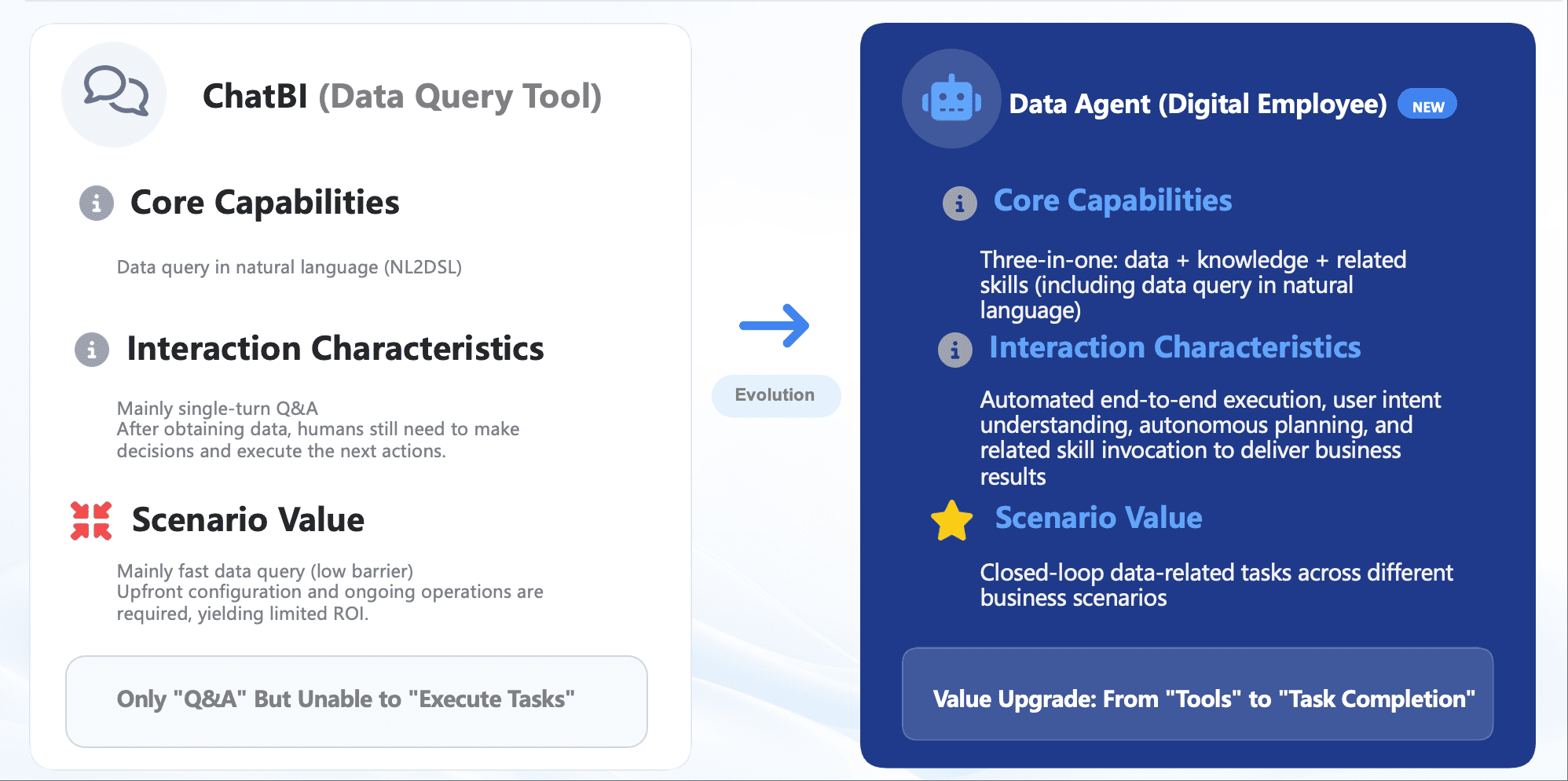
Instead of positioning Dora as a generic chatbot, it is more accurate to describe it as an enterprise Data Agent that can support governed AI workflows such as:
Natural-language business requests
Trusted metric interpretation through a semantic layer
Governed query or skill execution
Answers, summaries, charts, actions, and follow-up workflows
Depending on the use case, organizations may apply Dora in roles such as:
In the context of API-driven BI, this can help teams move beyond “data is available in a dashboard” to “AI helps users ask, analyze, generate, push, alert, and follow up” on trusted data.
Get Ready-to-Use Dashboard Templates in Fine Gallery
Final thoughts
For beginners, the most important thing to understand about the Power BI API is that the term covers two different paths:
The Power BI REST API for managing and automating the Power BI platform
Web APIs in Power Query for bringing external application data into reports
Once you separate those two ideas, the learning path becomes much clearer.
If your goal is automation, governance, embedding, or platform operations, start with the Power BI REST API. If your goal is reporting on SaaS or operational data, start with Power Query and external web APIs.
And if your larger challenge is not just data connection but also self-service analytics, dashboard usability, and governed AI assistance for business teams, FineBI + Dora is worth evaluating as part of a broader BI strategy.
FAQs
The Power BI REST API is for managing Power BI resources like datasets, reports, and workspaces. A web API in Power Query is for importing data from external systems into your Power BI model.
Use it when you need to automate or control Power BI itself, such as triggering refreshes, auditing workspaces, or supporting embedded analytics. It is the right choice for platform operations rather than data import.
In most cases, you connect through Power Query using the Web connector and provide the endpoint, credentials, and any required headers or parameters. Power Query then transforms the JSON response into tables for analysis.
You typically need app registration, the right API permissions, and access to the relevant Power BI tenant or workspace. Some scenarios also use delegated access or a service principal depending on how the automation is set up.
Common causes include invalid credentials, unsupported authentication methods, pagination issues, schema changes, or service-side throttling. Checking the endpoint requirements and refresh compatibility usually helps identify the problem.
Product Trial
FineReport
Pixel-perfect reports · Interactive dashboards · Easy data entry · Digital twins



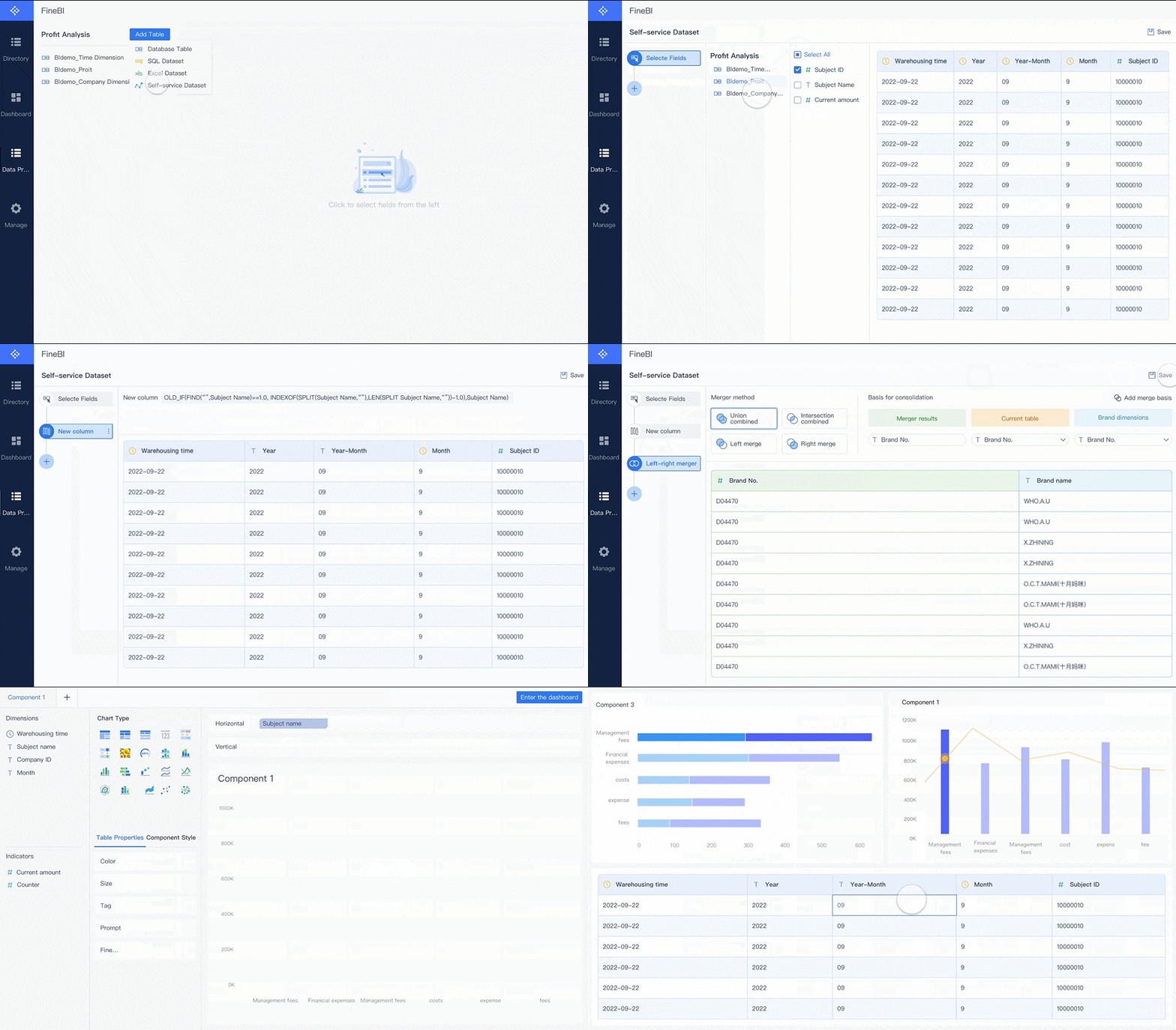 Drag-and-drop Analysis
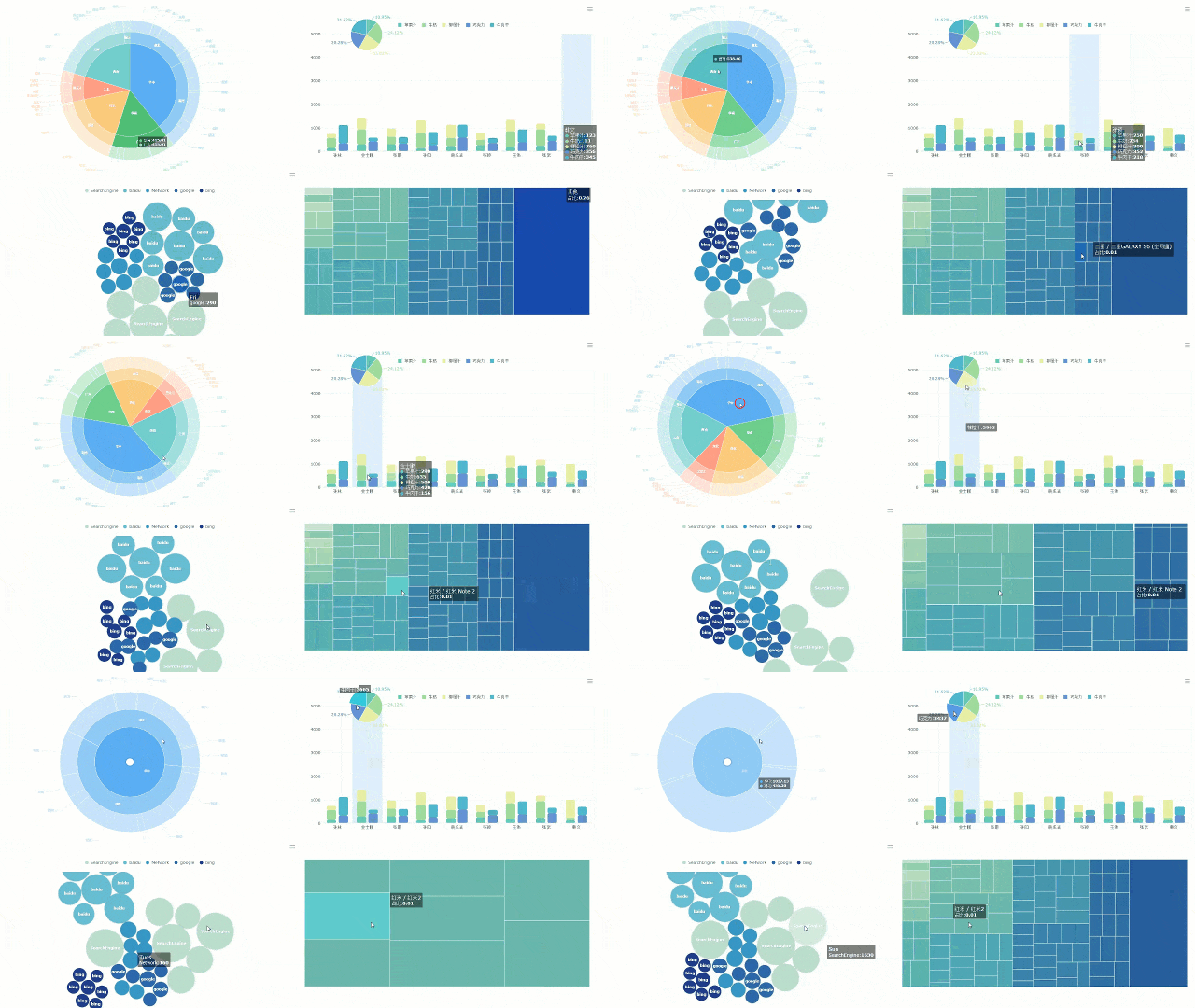 FineBI's Visual Charts