
The wave of enterprise digitization has swept across industries for over a decade. Yet, stepping onto the actual business frontlines often reveals a deeply ironic scene. Highly paid sales elites, whose primary mission is to conquer the market, are forced to spend massive amounts of time every day frowning at their screens, acting as emotionless data entry clerks.
This calls for a profound reflection on the efficiency of enterprise systems. When we attempt to standardize business processes with complex systems, have we strayed from the original intent of digitization? In this article, we will start with the biggest pain point of frontline sales — lead entry — to dissect the fundamental misconceptions of current enterprise digitization. We will also explore how transitioning from graphical interfaces to natural interactions can bring systems back to their true purpose of driving efficiency.
The Reality of the Frontline: Form-Filling Machines
Let us recreate an authentic daily business scenario.
It is eight in the evening. Saber, a frontline sales representative, has just wrapped up an incredibly tough client battle. He secured a verbal commitment from the client and returned to the office, exhausted but thrilled. At this moment, his core focus should be reviewing the negotiation details and preparing a targeted proposal for tomorrow. Instead, the reality before him is that he must log into a labyrinthine internal office system to spend an hour painstakingly processing his travel expenses. Following that, he has to open the complex customer relationship management system — notorious for its comprehensive rigor — and spend another half an hour creating new leads, linking opportunities, and drafting preliminary contracts.
This cumbersome interaction experience directly leads to severe operational pain points.
First is the extreme resistance from frontline staff and the phenomenon of batch data logging. The system’s page hierarchy is too deep, with far too many mandatory fields such as company size, industry code, and acquisition channel. To just get it over with, sales teams often choose to hoard a week’s worth of leads and visit records until Friday afternoon, mechanistically filling them out all at once. Second, this creates distorted retroactive data in the eyes of management. Because the data relies on after-the-fact memory and bulk entry, its granularity is extremely rough. Representatives might even randomly select dropdown options just to pass system validations, essentially falsifying the data. Managers stare at the beautiful charts on their data dashboards, mistakenly believing they have a complete view of the situation, while in reality, they are looking at a pile of delayed, distorted, and invalid information.
The core conflict lies here: the highest value of business professionals is generating revenue, yet the real-world system architecture forces them to expend immense energy acting as form-filling machines. When a system ceases to be an assistant to the business and instead becomes a hindrance, this digitization effort has failed right from the start.
The Misconception of System Design: Control Over Empowerment
Why do enterprise-level software platforms, which often cost millions, devolve into anti-efficiency tools in the mouths of employees? We need to return to the original intent of digitization to find the answer.
The initial purpose of introducing business systems is undoubtedly to improve efficiency. However, during this top-down procurement and implementation process, the system’s positioning often subtly shifts. It morphs from an empowerment tool serving the frontline into a control tool serving management. Those complex workflow routing nodes and endless forms in the middle are essentially physical carriers for the enterprise to enforce standard operating procedures.
The logic of system designers is crystal clear. To practice scientific management, there must be structured data to support decision-making. If no one diligently enters the client budget, follow-up status, and estimated closing month into the corresponding database fields, the management dashboard cannot generate those beautiful funnel charts.
Thus, the contradiction fully erupts. Management needs structured data for analytical decision-making, but they force the agonizing translation process of converting complex reality into structured data onto frontline business personnel. This is an outdated logic that forces people to forcibly adapt to machines and database table structures. In today’s rapidly changing business environment where extreme responsiveness is required, these cumbersome intermediate workflows have become the largest efficiency bottleneck for enterprises.
The Breakthrough Strategy: System Decoupling and Lightweight Entry
Once the pain points are recognized, the strategy for a breakthrough is actually quite straightforward. We do not need to completely overthrow the existing underlying technical architecture; instead, we need system decoupling.
The core architectural restructuring idea is that the core system of record — the underlying database — must remain absolutely rigorous and secure, while the interaction system — the frontend application — must pursue extreme lightweightness. This is precisely the transformation practice currently being undertaken by many forward-thinking business teams: abandoning heavy frontends and embracing lightweight entry points.
We no longer force sales to log into clunky system frontends. Instead, we move the business workflows directly into the lightweight communication tools they are most familiar with, or into a dedicated artificial intelligence assistant interface. The action is minimalist: intent equals operation. Sales personnel no longer need to hunt for the corresponding menus and forms. They simply send a voice memo or text message, just as they would to a colleague.
For example, a salesperson can directly tell the assistant that they visited Mr. Zhang from a certain client this afternoon, their budget is very sufficient at around one million, and they asked to send over a formal quote next Wednesday, so remember to remind them. In the instant this natural language message is sent, backend interfaces and intelligent data extraction tools have quietly taken over everything. The system automatically extracts the client name, decision-maker, status, budget, and next steps, converting this information into standard commands and automatically updating it in the underlying database.
From the circulation of complex graphical user interfaces to minimalist natural language interaction, this represents an epoch-making leap in efficiency. By eliminating the worthless interface friction in the middle, we truly give time back to the business itself. This is also the most crucial first step in any digital transformation: before discussing management, let the employees first feel the goodwill of the system.
The Unexpected Reward: Real, Timely, and Clean Data
When, out of empathy for frontline employees, we use minimalist interaction methods to solve their form-filling agony, companies often unexpectedly harvest an extremely valuable byproduct that could even change the company’s destiny: real, timely, and clean underlying data. This logic is tightly interlocked. Because the interaction is simple, salespeople no longer need to wait until the weekend for bulk entry; they can complete their check-ins with a casual spoken message in the taxi right after a visit. Because they no longer face the tedious validation of mandatory fields, they lose the incentive to randomly fill in data just to get the job done. Unstructured conversational information that was previously scattered across chat logs, notebooks, and salespeople’s minds is now automatically and in real-time converted into high-quality structured data, pouring continuously into the reservoir.
Sales representatives no longer randomly fill in data, and the underlying reservoir is finally filled with clear, living water. So, faced with this increasingly massive goldmine of high-quality data, will enterprises merely use it to draw a few more accurate reports? When data is no longer stagnant, the gears of intelligence have already begun to turn.
In the next part, we will explore in detail how, after solidifying the foundation of high-quality data, enterprises can naturally introduce micro-intelligence to empower business, such as automatic client identification and lead grading. We will also examine how, in the ultimate endgame of system architecture, artificial intelligence assistants will completely eradicate intermediate business workflows to build a true intelligent decision-making brain for the enterprise.
Got questions? Ping me on Linkedin.

Article by
Saber Chen
AI Product Architect & CPO
Saber has 15 years of experience in enterprise software, where he has guided 43,000+ clients and managed teams of 500+, building top-tier data intelligence solutions. When not building scalable B2B architecture, he's on the basketball court or diving into vibe coding.


Keep Learning
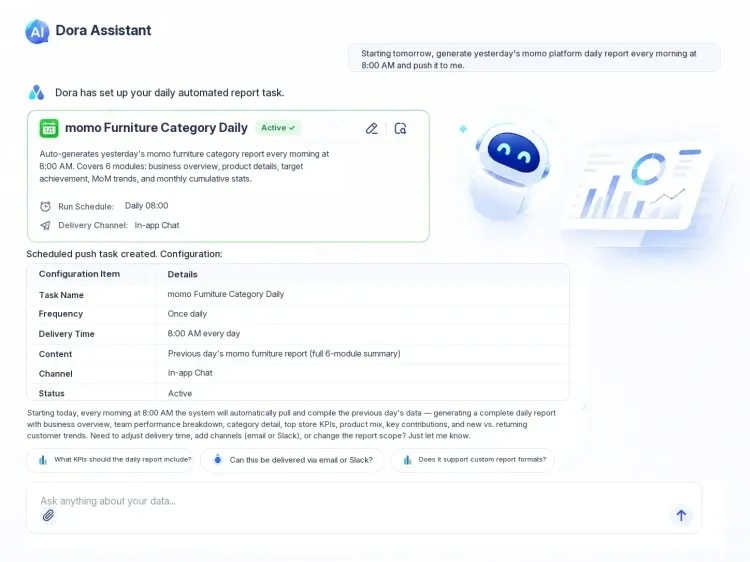 Fast Answers Are Not Enough: Why Data Agents Need AI-Ready Data
See why enterprise Data Agents need AI-ready data—and how trusted metrics, traceable sources, secure access, timely updates, and business context build trust.
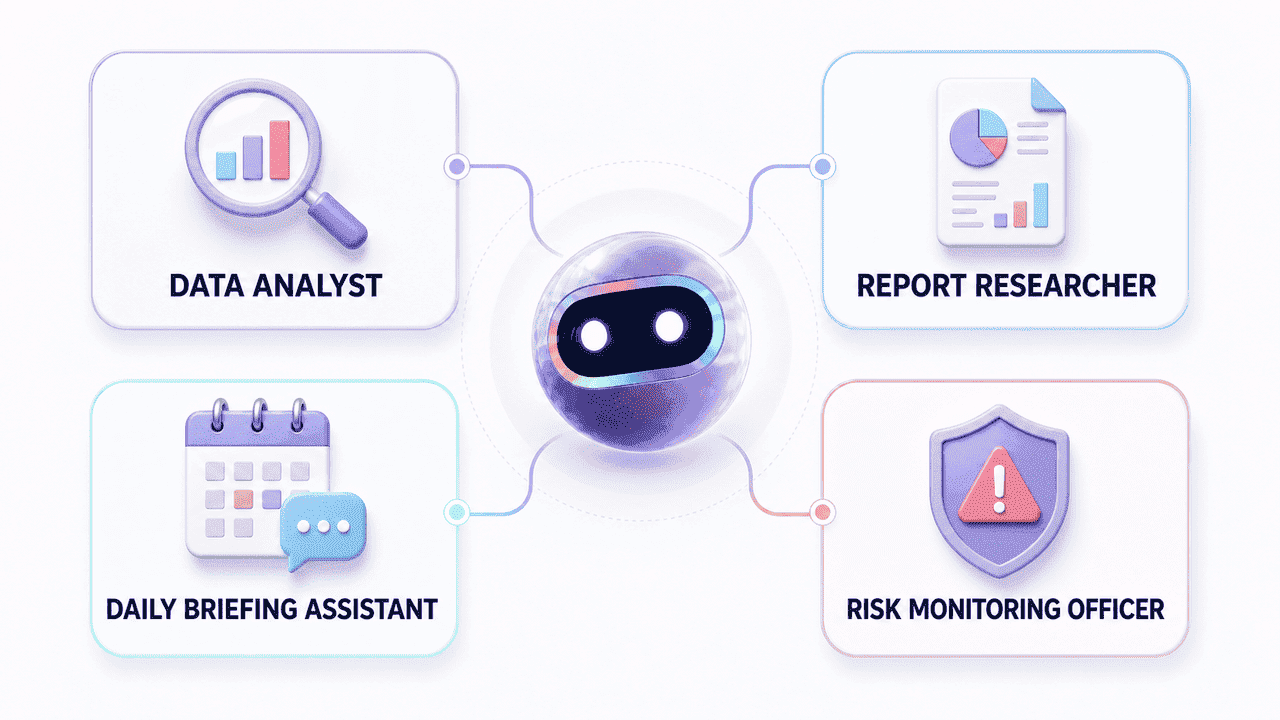 The Next Step for Enterprise AI: From Productivity Tools to Data Agents That Get Work Done
See how enterprise AI is evolving from productivity tools to Data Agents like Dora, which turn trusted BI into analysis, reports, alerts, and action.
 Stop Calling BI “Dashboards.” The Real Work Is Underwater.
The visualization is the visible 10%. The real work happens underwater, in the crushing depths where no one looks and no one credits.