
AI & Data
Buying AI Is the Easy Part: How Enterprises Build a Repeatable Digital Workforce
Many companies follow a familiar AI adoption curve.
In the first month after an AI tool rollout, training sessions are full. Employees trade prompt-writing tips, and departments propose a long list of ideas. A few months later, regular use is concentrated among a small group of enthusiasts. Most use cases remain experiments. Management has seen plenty of demos but cannot point to a process that now runs faster or a business measure that has improved.
What these companies lack is rarely another training course. They need an operating model that turns business problems into AI tasks and successful pilots into everyday workflows.
AI champions, or digital workforce builders, make that transition possible. They know the real process and its data. They can define a use case, validate the output, and bring business and IT together to put a digital employee to work.
Knowing the Tool Is Not the Same as Running a Use Case
Prompting skills can make an individual more productive. Building a durable enterprise capability requires a wider set of decisions. Which task is worth assigning to AI? What data does it need? Who determines whether the output is accurate? How will the team investigate an error? Who will improve the use case after it goes live?
These questions cross business operations, data, workflow design, and governance. IT understands the platform but may not see where a business team loses time each day. Business users know the pain points but may struggle to define them as executable data tasks. Digital workforce builders translate between the two and keep the work moving.
The Core Skill: Turning a Request into an Operable Use Case
An operations leader says, “I want a faster view of the business every morning.” The need is clear, but a Data Agent cannot work from that sentence alone.
The use-case owner must establish which metrics the leader reviews, where the data sits, when it refreshes, what level of change deserves attention, who receives the briefing, whether it should include root-cause analysis, which conclusions can be distributed automatically, and which require human approval.
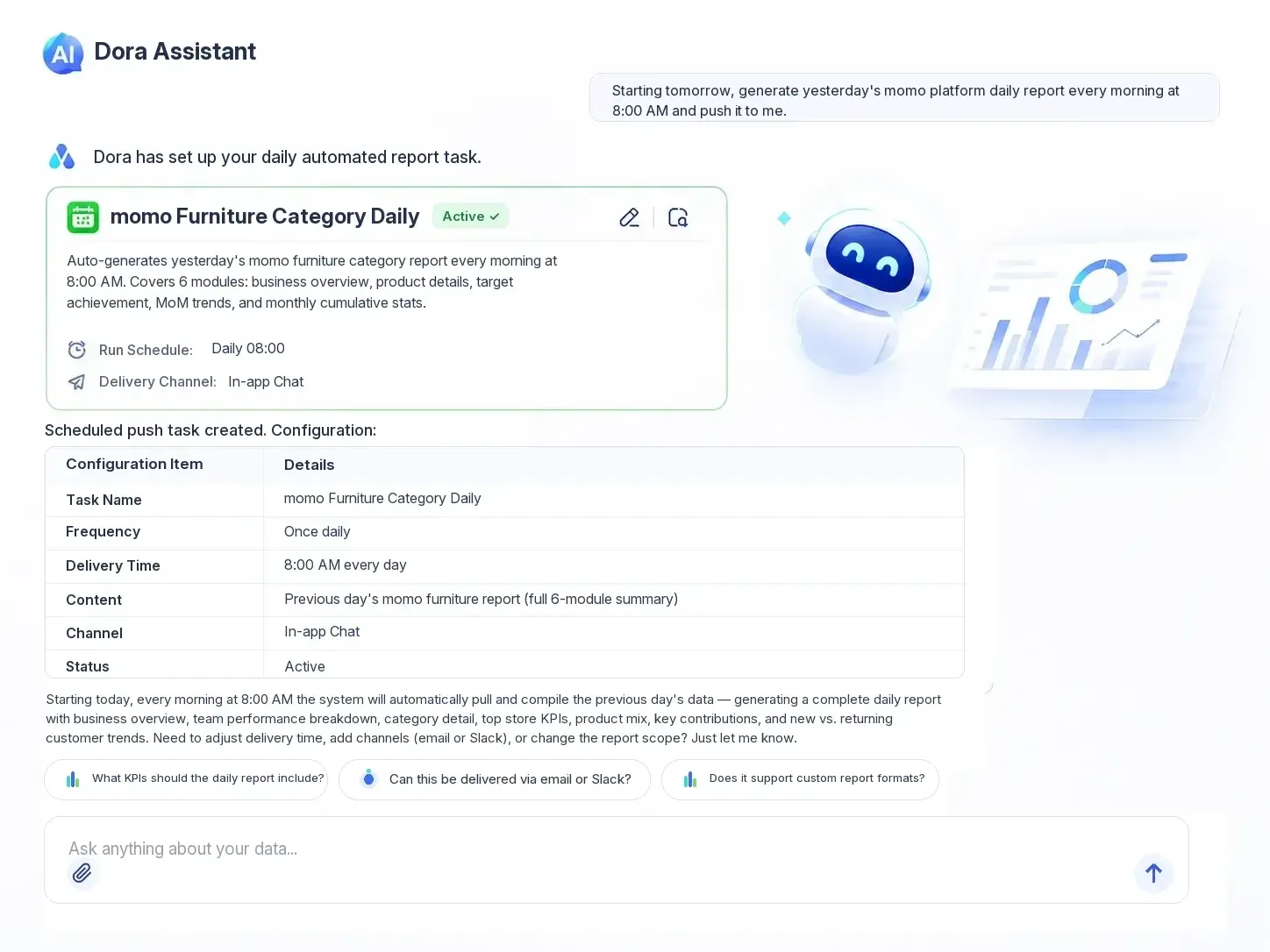
The answers form an executable use-case definition. The team can prepare the data, set permissions, design the output, and agree on acceptance criteria. A broad management request becomes a digital employee that delivers a reliable operations briefing at eight every morning.
Digital workforce builders do not all need to develop models. They need to break work into tasks, recognize data boundaries, design the division of labor between people and AI, and judge success through business outcomes.
Develop People Inside a Real Proof of Concept
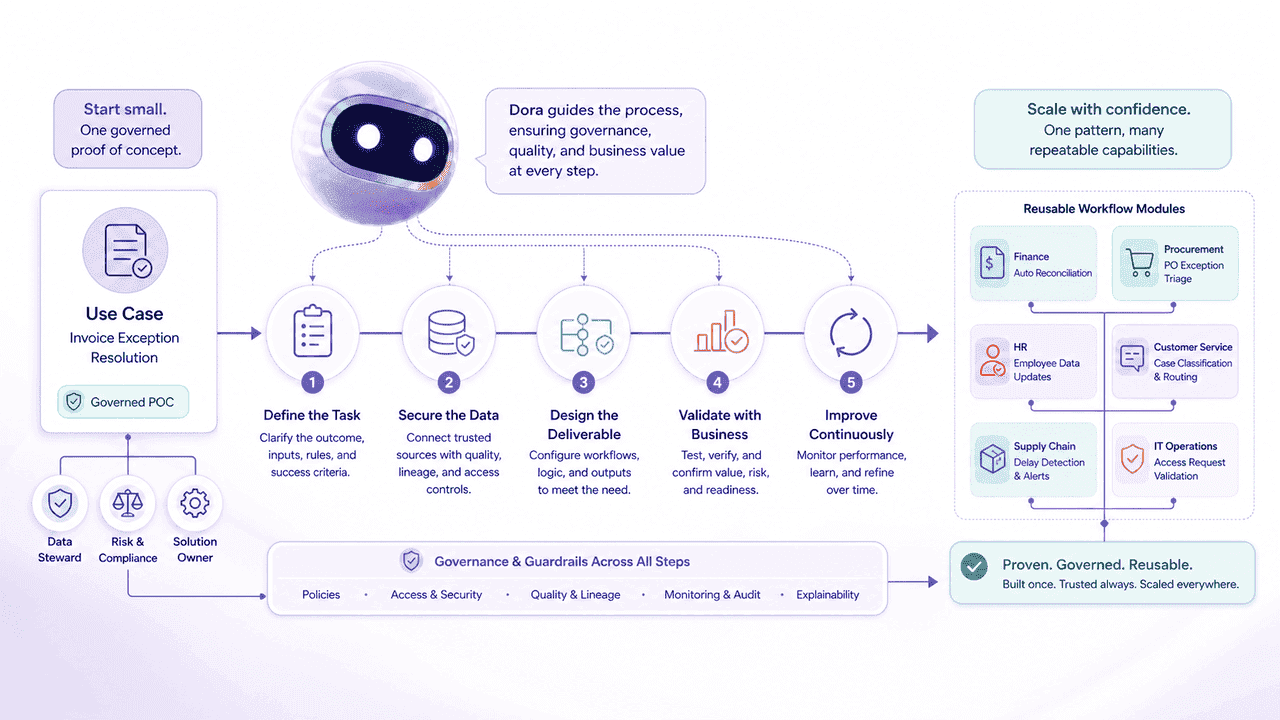
The most useful learning happens inside a live business use case. Seed-team members should take part in five stages of a proof of concept.
Define the task. Choose frequent, repetitive work with a clear data perimeter, such as a daily operations briefing, inventory-risk alert, monthly report, or sales query. Set a measurable objective.
Prepare the data. Confirm sources, metric definitions, refresh schedules, permissions, and quality. Close the most important gaps in the trusted data foundation.
Design the deliverable. Decide whether the digital employee should produce a summary, chart, report, or alert, and specify the audience and timing.
Validate with business users. Ask the people who use the output to assess accuracy, clarity, and decision value. Record the exceptions the AI cannot handle.
Operate and improve. Adjust the data, rules, format, and human review points. Track time saved, adoption, and business results.
After one complete proof of concept, participants have learned far more than how to operate a tool. They understand the path from use-case selection and data preparation to deployment and ongoing management. The enterprise gains a method it can apply elsewhere.
Every Digital Employee Needs a Use-Case Owner
Business requirements, data, and decision rules continue to change after a use case goes live. Without a named owner, a use case often stalls after its first delivery.
The owner should be the person closest to the process, its data, and its users. The operations management team might own a daily briefing. A supply-chain leader might own an inventory alert. The analytics function or executive reporting team might own a management report.
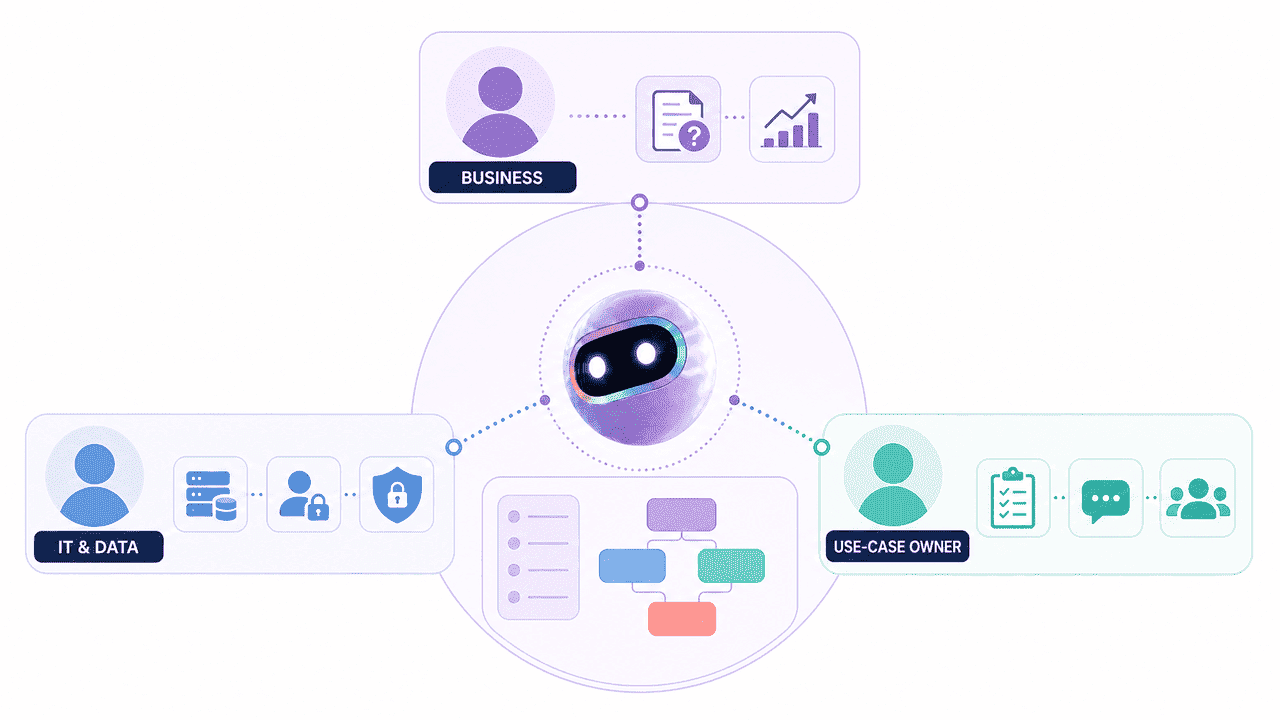
The owner defines the business problem and acceptance criteria, confirms the metrics, gathers user feedback, and decides when to expand, redesign, or stop the use case. IT provides the platform, data, permissions, security, and monitoring. Digital workforce builders coordinate the two sides and turn technical capability into a working business process.
This structure also clarifies accountability. When an AI output is wrong, the team knows who will assess the business impact, who will investigate the data and system, and who will update the operating rules.
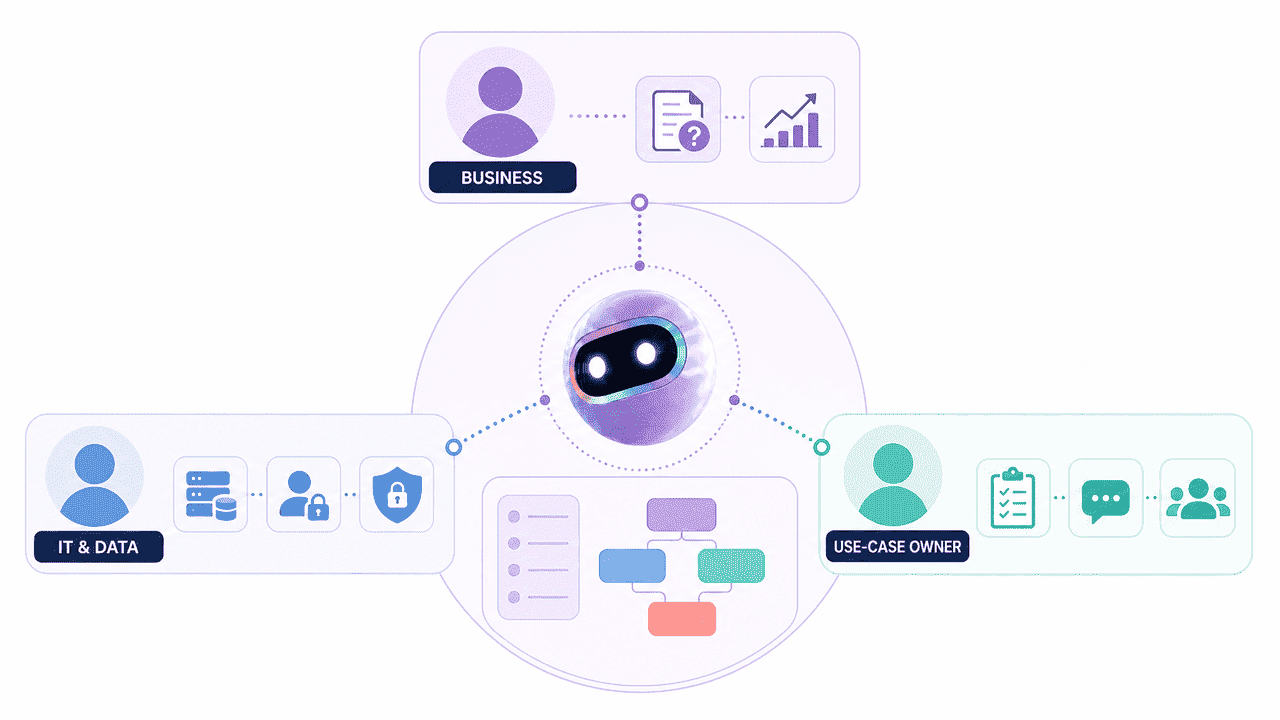
Start with a Seed Team and Build Reusable Patterns
Company-wide training can establish basic awareness. Delivery requires a small, cross-functional seed team. It may include business specialists, data analysts, IT business partners, process owners, and operations managers.
Technical background is not the main selection criterion. Strong candidates work close to recurring data tasks, understand where the process breaks, and can help colleagues adopt a new way of working.
The seed team runs two or three valuable use cases and documents what it learns: use-case briefs, data requirements, acceptance rules, human review points, and operating metrics. Other departments can start from these patterns instead of a blank page, adapting them to their own data and processes.
Scaling does not mean launching dozens of proofs of concept at once. It means building a reliable way to select a use case, prepare a digital employee, prove its value, and reproduce the result.
Make Risk Management Part of Daily Operations
Reports, alerts, and recommendations from digital employees may influence real decisions. During use-case design, the company must determine which content can be generated and distributed automatically, which conclusions require review, which sensitive data is out of bounds, and how the team will stop, trace, and correct a faulty output.
Digital workforce builders maintain these boundaries as well as promoting adoption. They monitor quality and usage, add newly discovered exceptions to the rules, and adjust the division of labor when value declines or risk rises.
This operating discipline determines whether a Data Agent remains a one-off innovation project or becomes a dependable colleague.
Build a Repeatable Capability from the First Use Case
A company can begin with one question: which recurring data task consumes the time of important employees every week and has a clear standard for a correct result?
Once the team finds it, it appoints a use-case owner and forms a seed group with business and IT. The group defines, builds, validates, and operates the use case in a real proof of concept. After the first digital employee goes live, the team turns what it learned into an organizational method and uses it to prepare the next one.
FanRuan can support this path through use-case discovery, co-design, the Dora platform and trusted data capabilities, and post-deployment performance reviews. The purpose of outside support is to help the company deliver its first successful use case while leaving the method inside the organization.
When an enterprise has people who can connect business needs, data, workflows, and AI, backed by clear ownership and operating practices, adoption moves beyond scattered experimentation. The amount of work a digital workforce can take on ultimately depends on the company’s ability to find, define, and manage the right tasks.
Turn Your First Use Case into a Digital Workforce
Join the Dora Spotlight Event to learn how enterprises can move from one governed use case to a repeatable way of building, operating, and scaling digital employees.

Article by
Saber Chen
AI Product Architect & CPO
Saber has 15 years of experience in enterprise software, where he has guided 43,000+ clients and managed teams of 500+, building top-tier data intelligence solutions. When not building scalable B2B architecture, he's on the basketball court or diving into vibe coding.


Keep Learning
 Buying AI Is the Easy Part: How Enterprises Build a Repeatable Digital Workforce
Learn how enterprises turn AI pilots into a repeatable digital workforce through Data Agents, seed teams, use-case owners, and proven operating workflows.
 Fast Answers Are Not Enough: Why Data Agents Need AI-Ready Data
See why enterprise Data Agents need AI-ready data—and how trusted metrics, traceable sources, secure access, timely updates, and business context build trust.
 The Next Step for Enterprise AI: From Productivity Tools to Data Agents That Get Work Done
See how enterprise AI is evolving from productivity tools to Data Agents like Dora, which turn trusted BI into analysis, reports, alerts, and action.