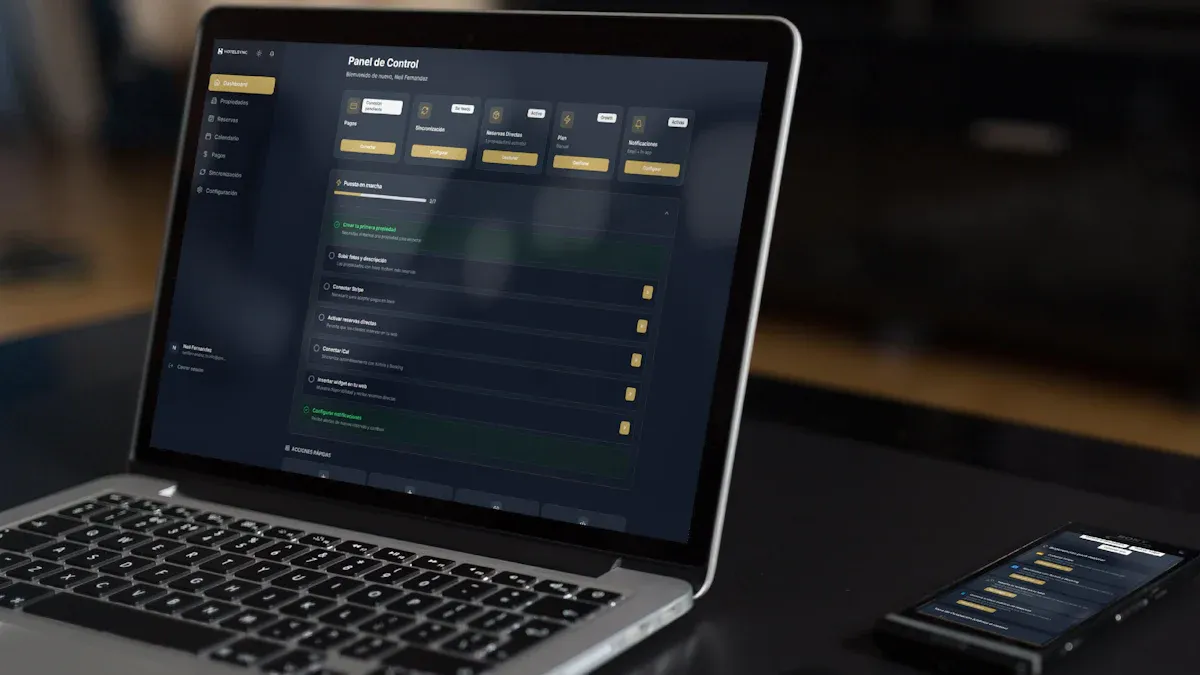

FineReport is an enterprise reporting and dashboard platform that helps organizations turn complex operational data into highly customized, audit-ready reports and analytics.
Corporate sustainability reporting software vs BI platforms: what decision-makers should compare
When teams evaluate corporate sustainability reporting software, they are usually comparing two very different product categories: purpose-built ESG platforms and flexible BI platforms such as FineReport. Both can support sustainability reporting, but they are designed for different priorities.
Dedicated sustainability tools are typically built to simplify disclosure workflows. They often provide predefined ESG data structures, standard templates, and guided processes for common reporting frameworks. A BI platform, by contrast, is built to connect data across the enterprise, model it according to business needs, and deliver tailored reports, dashboards, and analysis for many stakeholders.
Decision-makers should first clarify the reporting outcomes they actually need. In most organizations, sustainability reporting is not limited to producing one annual disclosure. It usually includes several parallel goals:
- Disclosure readiness for regulatory and voluntary frameworks
- Internal management reporting for operations, finance, procurement, and ESG teams
- Auditability and traceability for data confidence and review
- Executive visibility through dashboards, summaries, and board reporting
This comparison matters because many companies shortlist FineReport alongside dedicated ESG products without realizing they are solving different problems. If the main requirement is standardized, out-of-the-box disclosure support, dedicated tools may look attractive early on. But if the organization needs deeper integration, broader analytics, and reporting flexibility across multiple entities and functions, FineReport often becomes the stronger long-term choice.
Where dedicated sustainability reporting software excels
Built-in ESG workflows and disclosure support
Purpose-built sustainability platforms usually perform well when an organization wants a structured reporting environment from day one.
One-sentence overview: Dedicated ESG platforms are designed to streamline common sustainability reporting tasks with prebuilt workflows, templates, and framework-oriented guidance.
Key Features
- Preconfigured ESG data models
- Disclosure templates aligned to common frameworks
- Guided data collection and submission workflows
- Built-in checks for required fields and reporting completeness
- Centralized document storage for evidence and supporting files
Pros & Cons
- Pros: Faster setup for standard reporting use cases; easier alignment with common disclosure structures; less initial design work
- Cons: Often less flexible when metrics, logic, or reporting structures differ from the built-in model
Best For
- Organizations with relatively standardized ESG reporting requirements
- Teams focused primarily on compliance and periodic disclosures
- Businesses that want a more prescriptive workflow with less configuration
These strengths are especially useful for companies early in their reporting journey, where the biggest challenge is simply organizing ESG information into a format that matches external expectations.
Faster adoption for standardized reporting needs
For teams with straightforward requirements, dedicated sustainability reporting software can reduce the time needed to go live.
One-sentence overview: If the reporting scope is narrow and the required outputs closely match standard ESG templates, dedicated software can accelerate adoption.
Key Features
- Ready-made dashboards and forms
- Minimal customization for common disclosure scenarios
- Framework-specific setup options
- Guided onboarding for sustainability teams
Pros & Cons
- Pros: Shorter path to first output; easier for non-technical teams to understand; lower design burden at the start
- Cons: Quick-start benefits can fade when reporting needs expand beyond standard disclosure processes
Best For
- Companies with simple reporting structures
- Smaller ESG teams without strong internal BI support
- Organizations prioritizing speed over long-term flexibility
This is why purpose-built platforms often appeal to firms that need to meet an immediate compliance milestone and do not yet require broad cross-functional analytics.
Common limitations teams encounter
Even though dedicated tools can be efficient for standard use cases, many teams discover constraints as sustainability reporting matures.
One-sentence overview: The main tradeoff of dedicated ESG software is that convenience in standard reporting can turn into rigidity when business complexity increases.
Key Features
- Framework-centric reporting structures
- Controlled workflows and predefined schemas
- Limited space for highly customized analysis
Pros & Cons
- Pros: Strong structure for recurring ESG processes
- Cons: Less adaptable for custom KPIs, enterprise-wide reporting, and nonstandard data relationships
Best For
- Teams comfortable operating within a fixed reporting model
- Organizations with stable and consistent disclosure needs
Common limitations include:
- Rigid custom analysis: It may be difficult to create company-specific KPIs, industry-specific operational views, or management dashboards outside standard templates.
- Shallow integration depth: Some platforms connect to source systems, but not always with the breadth or flexibility required across finance, manufacturing, HR, supply chain, and regional subsidiaries.
- Weak cross-department reporting: Sustainability data often needs to be analyzed alongside cost, productivity, quality, procurement risk, and workforce indicators, which may be outside the design scope of niche ESG tools.
- Cost expansion over time: As users, entities, metrics, or modules increase, a platform that looked efficient initially can become more expensive and fragmented.
For enterprises with diverse reporting needs, these limitations often become the reason to consider a BI platform instead.
When a BI platform like FineReport is the better choice
Better fit for complex enterprise data environments
FineReport is often the better option when sustainability reporting depends on data spread across many systems, business units, and geographies.
One-sentence overview: FineReport is better suited to enterprises that need to unify sustainability data with finance, operations, supply chain, and HR information in one reporting layer.
Key Features
- Broad connectivity to databases, ERP systems, spreadsheets, APIs, and business applications
- Centralized reporting logic across departments
- Support for complex enterprise data models
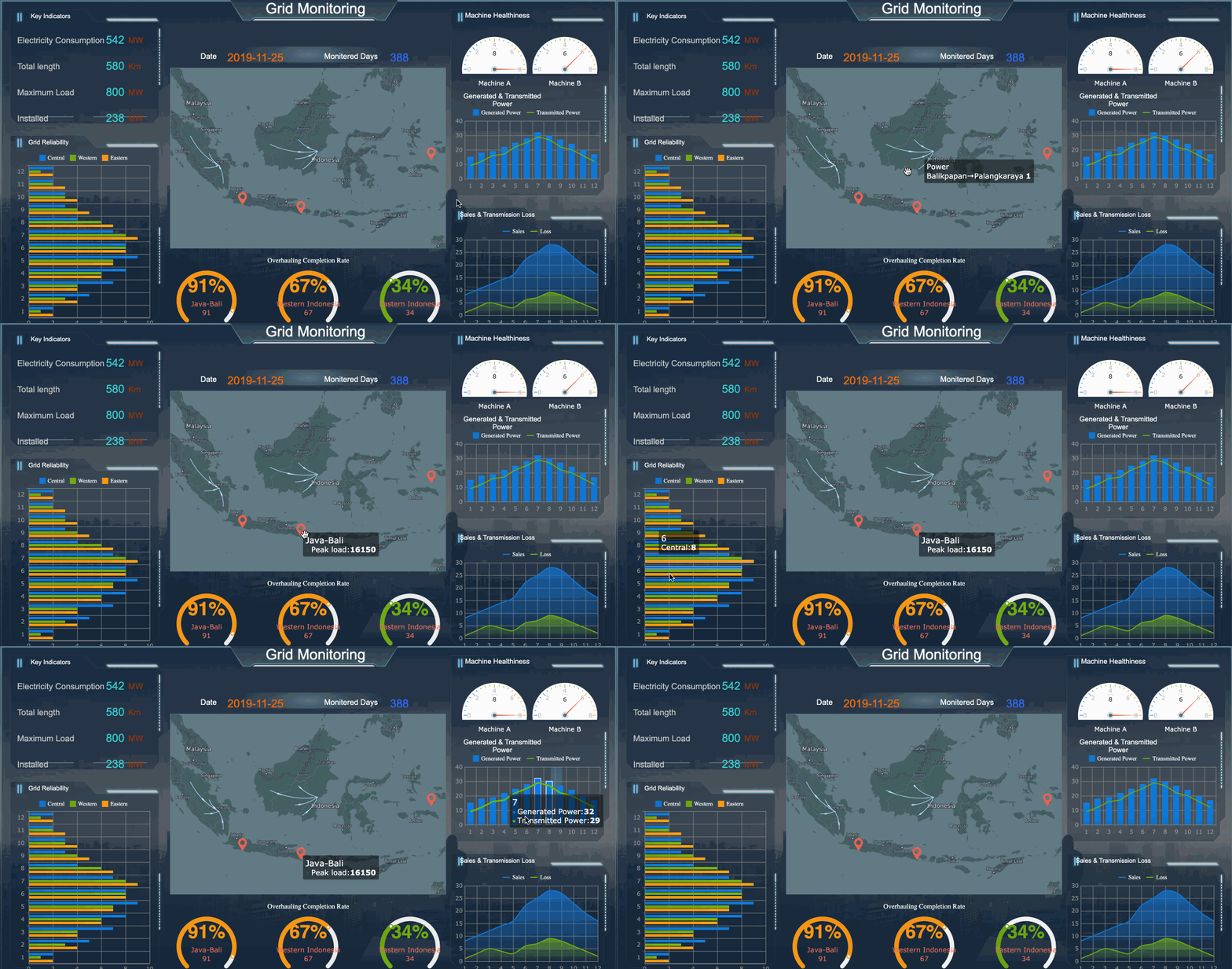
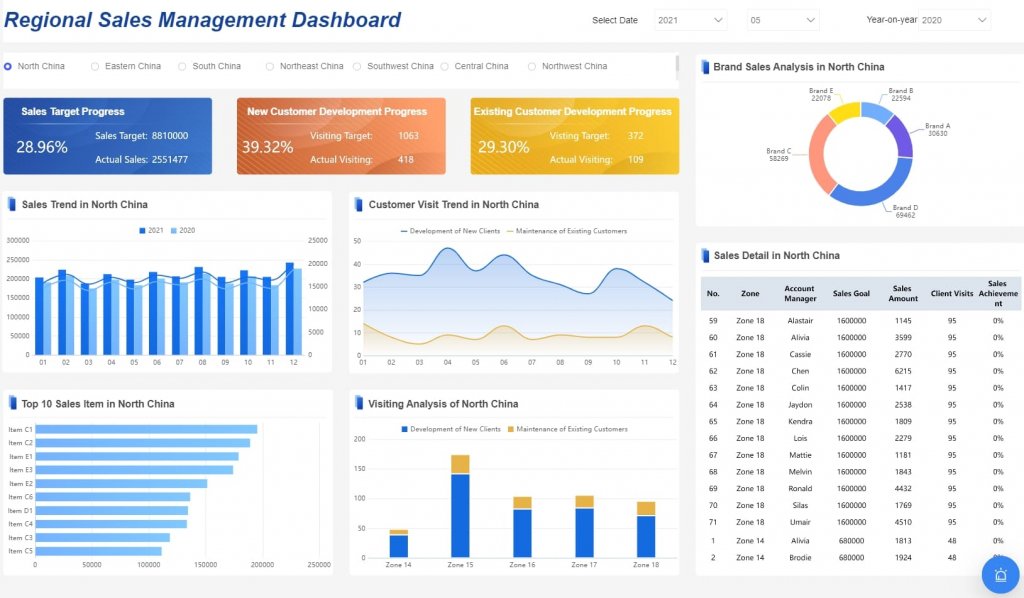
- Flexible dashboard and report design for different audiences
Pros & Cons
- Pros: Strong integration capabilities; supports enterprise complexity; avoids creating another isolated reporting environment
- Cons: Requires more design and governance effort than a purpose-built ESG tool at the beginning
Best For
- Large or multi-entity organizations
- Companies with fragmented sustainability data sources
- Enterprises that want a shared reporting foundation beyond ESG alone
In practice, sustainability metrics rarely live in one place. Emissions activity data may come from energy systems, procurement platforms, logistics tools, and supplier files. Workforce metrics may sit in HR systems. Governance information may come from legal, audit, or compliance systems. Financial context usually lives in ERP and consolidation platforms. FineReport allows these data flows to be brought together into one consistent reporting environment, which is often more valuable than using a narrow ESG layer on top of scattered systems.
Stronger customization for internal and external reporting
Not every sustainability report should look the same. Executive committees, plant managers, board members, and disclosure teams all need different views.
One-sentence overview: FineReport gives teams more freedom to build tailored outputs for both management use and external sustainability disclosures.
Key Features
- Pixel-level report design
- Interactive dashboards for executives and business teams
- Customized KPI logic and calculation rules
- Multi-format outputs for board packs, plant reports, and disclosure-ready documents
- Drill-down capability from summary metrics to source-level detail
Pros & Cons
- Pros: High reporting flexibility; suitable for custom layouts and business-specific metrics; supports both operational and formal reporting
- Cons: Customization requires clear governance to maintain consistency
Best For
- Organizations with unique KPI frameworks
- Companies producing multiple sustainability report formats
- Teams needing management dashboards in addition to compliance outputs
This is a major advantage over many forms of corporate sustainability reporting software that are optimized for fixed templates. FineReport can support disclosure-ready outputs while also giving internal users dashboards tailored to their responsibilities. A plant manager may need site-level energy intensity analysis, while a board member needs a concise summary of emissions trend, safety, supplier risk, and compliance exposure. FineReport makes both possible within the same platform.
More value when sustainability reporting is part of wider performance management
In mature organizations, sustainability reporting is not a standalone exercise. It is part of broader performance management.
One-sentence overview: FineReport becomes especially valuable when ESG metrics need to be analyzed alongside profitability, production, risk, and governance indicators.
Key Features
- Cross-functional dashboarding
- Shared metrics environment across business functions
- Support for balanced scorecards and performance management use cases
- Real-time or scheduled reporting across management levels
Pros & Cons
- Pros: Connects sustainability to business performance; improves decision support; enables broader enterprise insight
- Cons: May be more than some organizations need if they only want basic disclosure workflows
Best For
- Companies treating sustainability as a strategic management issue
- Leadership teams that want ESG and financial context in one view
- Organizations embedding sustainability targets into operating reviews
This is one of the clearest reasons to choose FineReport. A dedicated ESG platform may help publish sustainability data, but FineReport helps organizations manage it in context. Leaders can see not only emissions totals, but also their relationship to production output, margin pressure, procurement changes, or operational risk. That broader visibility supports better decisions.
Practical scenarios where FineReport outperforms niche tools
One-sentence overview: FineReport tends to outperform niche ESG tools when sustainability reporting requirements are highly customized, multi-entity, or deeply integrated with enterprise management processes.
Key Features
- Flexible hierarchy and entity-based reporting
- Custom KPI modeling
- Reusable reporting components across departments
- Enterprise-grade permission controls
Pros & Cons
- Pros: Strong fit for complex reporting environments; reduces silos; scales across varied business needs
- Cons: Needs planning and internal ownership to realize full value
Best For
- Enterprises with reporting complexity beyond standard ESG workflows
- Organizations already invested in BI-led reporting strategies
- Companies seeking one reporting platform rather than multiple disconnected tools
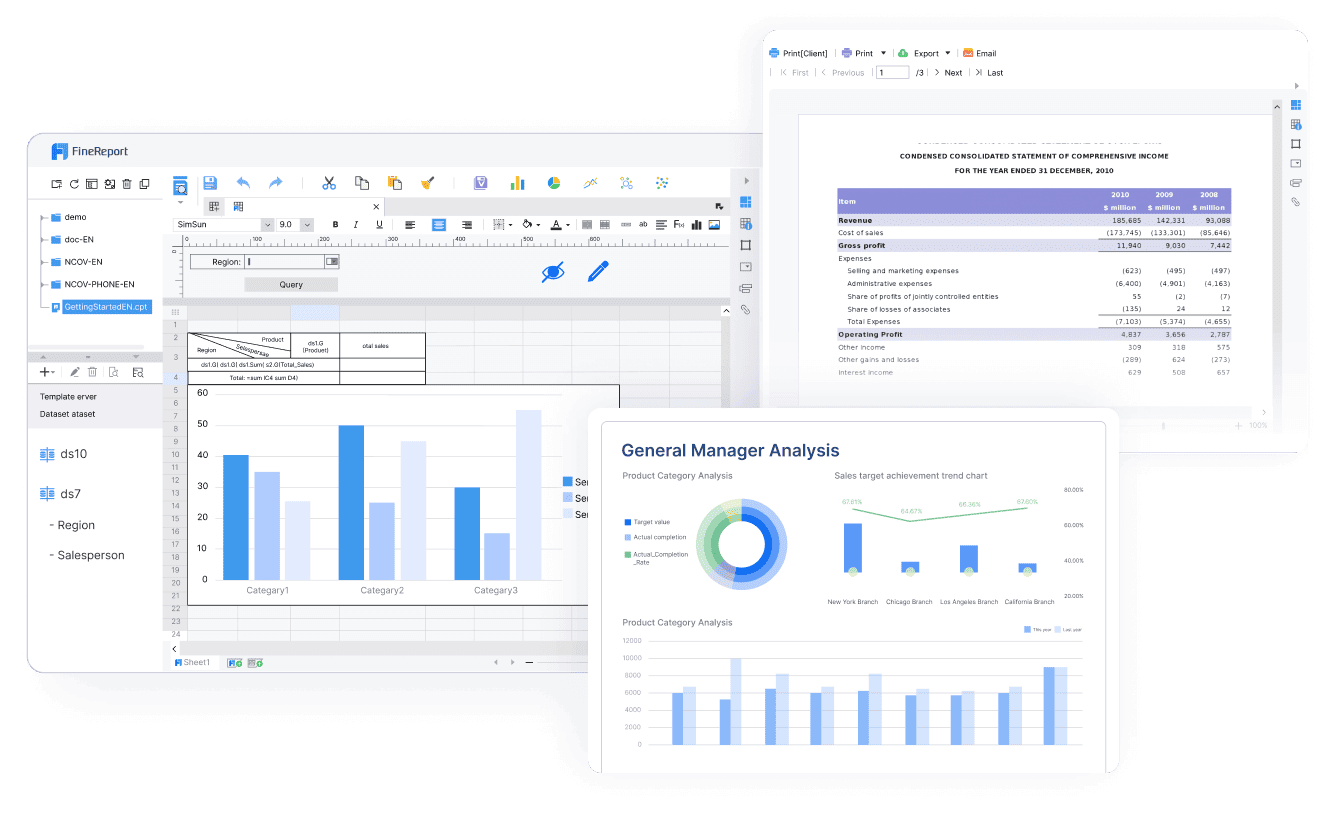
FineReport is typically the better choice in scenarios such as:
- Multi-entity reporting across subsidiaries and regions: Different legal entities, business units, and countries often require different views, currencies, units, and reporting logic.
- Highly customized KPI systems that do not fit fixed ESG templates: Many companies combine industry, regulatory, operational, and internal metrics in ways dedicated tools do not support well.
- Organizations that already rely on BI and want to avoid another siloed platform: If a business already has mature reporting practices, adding a separate ESG system can fragment governance and duplicate data logic.
In these scenarios, FineReport offers a more durable foundation than narrowly defined corporate sustainability reporting software.
FineReport vs ESG reporting software: a side-by-side evaluation
Implementation speed and learning curve
One-sentence overview: Dedicated ESG tools usually win on quick start, while FineReport wins when organizations can invest in setup for a better long-term fit.
Key Features
- Dedicated tools: preset workflows and faster initial onboarding
- FineReport: configurable architecture and flexible report building
- Different levels of user training depending on role
Pros & Cons
- Pros of dedicated tools: Faster time to first report
- Pros of FineReport: Better alignment with enterprise-specific requirements over time
- Tradeoff: Speed at the start versus flexibility later
Best For
- Dedicated software: urgent, standardized ESG deployment
- FineReport: organizations willing to configure a scalable reporting foundation
Implementation speed depends on the complexity of the organization. A standard ESG platform can be faster when the business process closely matches the software’s assumptions. FineReport may take longer to structure initially because data models, rules, and report layouts are more configurable. However, that setup effort often pays off when reporting needs evolve.
Data integration, quality control, and traceability
One-sentence overview: FineReport is often stronger for enterprise data integration, while dedicated ESG tools may offer easier framework-oriented data capture for specific sustainability workflows.
Key Features
- Connectivity to multiple source systems
- Data transformation and calculation logic
- Drill-through and traceability options
- Validation controls and reporting consistency
Pros & Cons
- Pros of dedicated tools: Simpler ESG-specific collection processes
- Pros of FineReport: Better source integration breadth and more flexible control over transformation logic
- Tradeoff: Convenience of preset workflows versus control over enterprise data architecture
Best For
- Dedicated software: teams collecting ESG data within a narrower process
- FineReport: enterprises needing confidence across many systems and complex data relationships
For many companies, confidence in reported sustainability metrics depends on whether each number can be traced back to source systems, reviewed, reconciled, and explained. FineReport is well suited to this because it can centralize reporting logic and expose drill-down paths from high-level KPIs to detailed records. That is especially important when sustainability data must be defended in internal reviews, audits, or investor scrutiny.
Reporting flexibility, scalability, and total cost
One-sentence overview: Dedicated tools offer template convenience, but FineReport often delivers better long-term value when reporting scope, users, and use cases expand.
Key Features
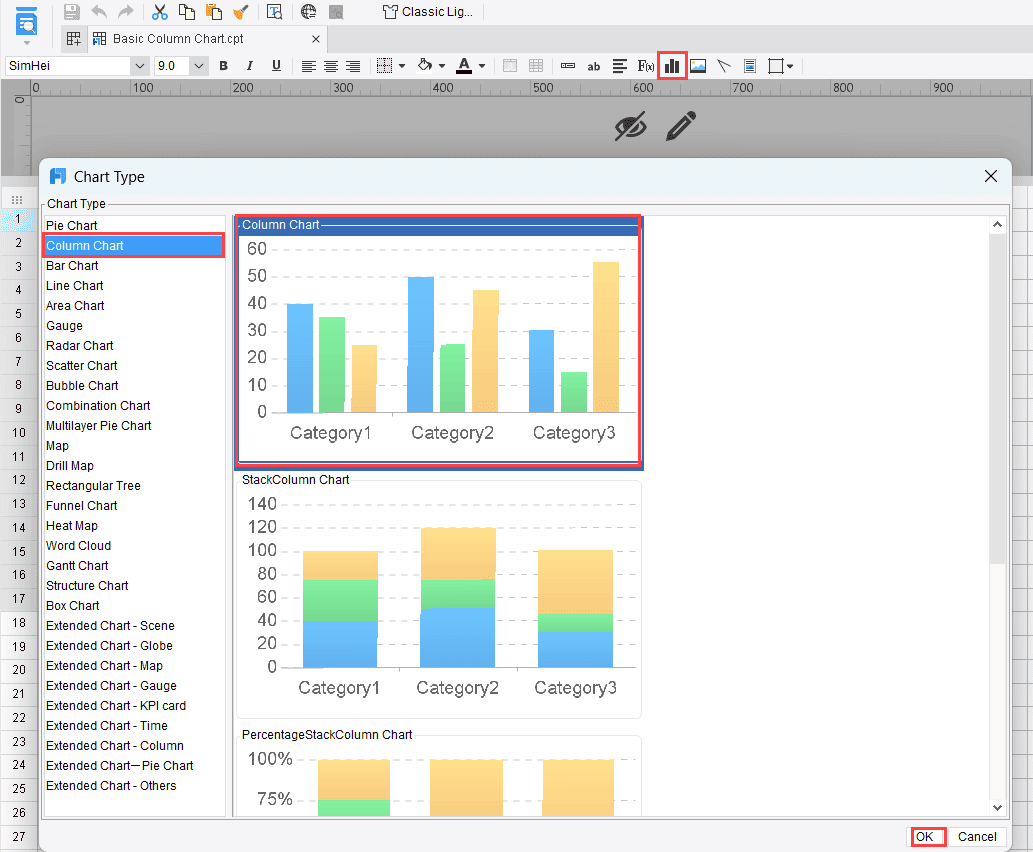
- Custom report design
- Dashboard scalability across functions
- Reusable logic across multiple reporting domains
- Support for growing user groups and reporting scenarios
Pros & Cons
- Pros of dedicated tools: Efficient for fixed ESG outputs
- Pros of FineReport: Greater adaptability, wider reporting breadth, and lower risk of future platform sprawl
- Tradeoff: Out-of-the-box convenience versus long-term scalability
Best For
- Dedicated software: limited ESG use cases with stable requirements
- FineReport: organizations expecting broader sustainability analytics and enterprise-wide reporting growth
A niche platform may appear cost-effective if the only goal is a specific disclosure workflow. But if the organization later needs board dashboards, entity-level scorecards, supplier sustainability analysis, plant-level monitoring, and integration with finance or operations, the cost of adding tools or workarounds can rise quickly. FineReport is often a better strategic investment in these cases because it supports more than one narrow reporting process.
Governance, collaboration, and stakeholder access
One-sentence overview: Both product types can support governance, but FineReport stands out when different stakeholder groups require tailored access to the same sustainability data ecosystem.
Key Features
- Role-based permissions
- User-specific report views
- Controlled access by entity, department, or region
- Shared reporting environment for executives and operating teams
Pros & Cons
- Pros of dedicated tools: Easier to structure around ESG-specific workflows
- Pros of FineReport: More flexible stakeholder access across the wider business
- Tradeoff: Workflow simplicity versus enterprise collaboration breadth
Best For
- Dedicated software: centralized ESG reporting teams
- FineReport: organizations with distributed ownership of sustainability metrics
In many enterprises, sustainability reporting is collaborative. Procurement owns supplier data, operations owns energy and waste data, HR owns workforce indicators, finance validates monetary values, and executives need a consolidated view. FineReport supports this model well because each group can work from the same reporting layer while accessing only the data and outputs relevant to their role.
How to choose the right platform for your organization
Choose dedicated software if your priority is rapid ESG standardization
One-sentence overview: Dedicated sustainability software is usually the right choice when the top priority is to standardize ESG reporting quickly with predefined workflows.
Key Features
- Ready-made templates
- Framework-oriented setup
- Prescriptive workflows
- Faster initial deployment
Pros & Cons
- Pros: Easier startup for narrow ESG use cases
- Cons: Less flexibility for broader analysis and future customization
Best For
- Teams seeking predefined ESG processes
- Organizations with narrower reporting requirements
- Companies focused on short-term compliance acceleration
If your organization wants a straightforward path to external reporting and does not need extensive integration or customized management analytics, dedicated software may be enough.
Choose FineReport if your priority is flexibility, integration, and enterprise-wide insight
One-sentence overview: FineReport is the stronger choice when sustainability reporting needs to be customized, integrated across systems, and connected to wider business intelligence.
Key Features
- Broad enterprise integration
- Highly customizable dashboards and reports
- Shared reporting infrastructure across functions
- Strong support for multi-entity and management reporting
Pros & Cons
- Pros: Flexible, scalable, and aligned with enterprise complexity
- Cons: Requires planning, data governance, and configuration effort
Best For
- Companies needing customized sustainability reporting
- Enterprises linking ESG with operational and financial intelligence
- Organizations seeking one reporting platform instead of another silo
For many complex businesses, FineReport is not just an alternative to corporate sustainability reporting software. It is the better strategic platform because it supports sustainability reporting as part of a broader performance management architecture.
Key questions to ask before making a shortlist
Before choosing any platform, decision-makers should ask:
- How many systems provide sustainability data today?
- Do reporting requirements vary by entity, region, or framework?
- Will sustainability data also be used for management decisions beyond disclosure?
- Is the organization prepared to maintain a configurable BI-based reporting approach?
If the answers point to fragmented systems, varied reporting structures, and growing internal analytics needs, FineReport should be high on the shortlist.
Final takeaway: when FineReport is the better choice
Dedicated ESG tools are often a good fit for companies that want standardized, out-of-the-box disclosure support with minimal design effort. They can simplify early-stage reporting and help teams move quickly when requirements are relatively narrow.
FineReport is the better choice when sustainability reporting is more complex than a template-driven compliance exercise. It stands out when organizations need to integrate multiple systems, support different entities and regions, create highly customized reports, and connect ESG metrics with finance, operations, supply chain, HR, and governance performance.
In other words, if your business is evaluating corporate sustainability reporting software purely for standardized disclosure, a purpose-built ESG platform may be sufficient. But if your reporting environment demands flexibility, traceability, enterprise integration, and long-term analytical value, FineReport is often the stronger option.
The best decision starts with an honest assessment of your data complexity, reporting maturity, and long-term platform strategy. If sustainability reporting is becoming part of how your organization manages performance, not just how it files disclosures, FineReport deserves serious consideration.
FAQs
Corporate sustainability reporting software is usually built around predefined ESG workflows, templates, and disclosure requirements. A BI platform like FineReport is more flexible and better suited for custom reporting, cross-functional analysis, and enterprise-wide data integration.