In modern businesses, the significance of data integration software cannot be overstated. It is the linchpin for consolidating diverse data sources into a unified system, enabling informed decision-making and enhancing operational efficiency. Choosing the right data integration tool is paramount in unlocking these benefits. As we delve into 2026, where technology continues to evolve rapidly, selecting the most suitable software becomes crucial. To aid in this selection process, we have meticulously outlined the criteria for identifying the top 8 data integration software solutions that align with the dynamic needs of businesses:
FineDataLink
SnapLogic
Apache Airflow
IBM InfoSphere DataStage
AWS Glue
Pentaho Data Integration
Informatica PowerCenter
DataMigrator
Overview of Data Integration Software
When considering data integration software, it's essential to understand the core concept and benefits these tools offer.
What is Data Integration?
Definition and Purpose of Data Integration Software
Data integration software is a tool that combines data from different sources into a unified view, making it easier to access, manage, and analyze. It ensures that data from various sources such as databases, data warehouses, applications, and external data sources are consolidated and harmonized into a single, coherent dataset. This integration can involve processes like data cleansing, transformation, and loading (ETL), as well as real-time data streaming and batch processing.
Purpose of Data Integration Software
Data Integration Software is designed to streamline the process of combining data from various sources into a single, unified view. The primary purposes of data integration software include:
Centralized Data Management:
Unified View: Provides a single, consolidated view of data from various sources, enabling comprehensive analysis and reporting.
Data Consistency: Ensures that data is consistent and accurate across different systems and platforms.
Improved Decision-Making:
Enhanced Analytics: Facilitates better data analysis by providing integrated datasets that can be easily queried and analyzed.
Real-Time Insights: Allows for real-time data integration, giving businesses up-to-date information for timely decision-making.
Operational Efficiency:
Automation: Automates the process of data collection, transformation, and loading, reducing the manual effort and minimizing errors.
Resource Optimization: Streamlines data workflows, optimizing the use of computational and human resources.
Data Quality and Governance:
Data Cleansing: Identifies and corrects data errors, ensuring high-quality, reliable data.
Compliance: Helps in maintaining data governance and compliance with regulations by providing a clear audit trail and consistent data handling.
Scalability and Flexibility:
Adaptability: Supports integration with a variety of data sources and formats, allowing businesses to adapt to changing data environments.
Scalability: Can handle large volumes of data, making it suitable for both small and large organizations.
Data Enrichment: Combines data from multiple sources to provide richer, more informative insights.
Types of Data Integration Software
Data integration software helps organizations combine data from different sources into a single, unified view, facilitating comprehensive analysis and reporting. There are various types of data integration software, each designed to meet specific needs and use cases. Here’s an overview of the main types of data integration software:
1. ETL (Extract, Transform, Load) Tools
ETL tools extract data from multiple sources, transform it to fit operational needs, and load it into a data warehouse or other storage system. These tools are crucial for data warehousing, data migration, and data consolidation projects.
Examples:
Informatica PowerCenter: Widely used in enterprise environments for its scalability and robust transformation capabilities.
Talend: An open-source ETL tool that supports big data and cloud integrations.
Microsoft SQL Server Integration Services (SSIS): A powerful ETL tool included with Microsoft SQL Server.
2. Data Replication Tools
Data replication tools duplicate data from one database to another, ensuring that data in the target system is an exact copy of the source. These tools are used for high availability, disaster recovery, and data distribution.
Examples:
Oracle GoldenGate: Provides real-time data integration and replication in heterogeneous IT environments.
HVR Software: Specializes in real-time data replication across various platforms and databases.
3. Data Virtualization Tools
Data virtualization tools create a virtual data layer that allows users to access and query data from multiple sources without needing to physically move or transform the data. This approach enables real-time data integration and reduces data redundancy.
Examples:
Denodo: Known for its comprehensive data virtualization capabilities and performance optimization.
TIBCO Data Virtualization: Provides a unified view of data across various sources without replication.
4. Data Warehousing Solutions
Data warehousing solutions integrate data from different sources into a central repository designed for query and analysis. These solutions are optimized for reading and analyzing large volumes of data.
Examples:
FineDataLink: Data integration platform that enables organizations to integrate and transform data across various sources and systems
Snowflake: A cloud-based data warehousing platform known for its scalability and performance.
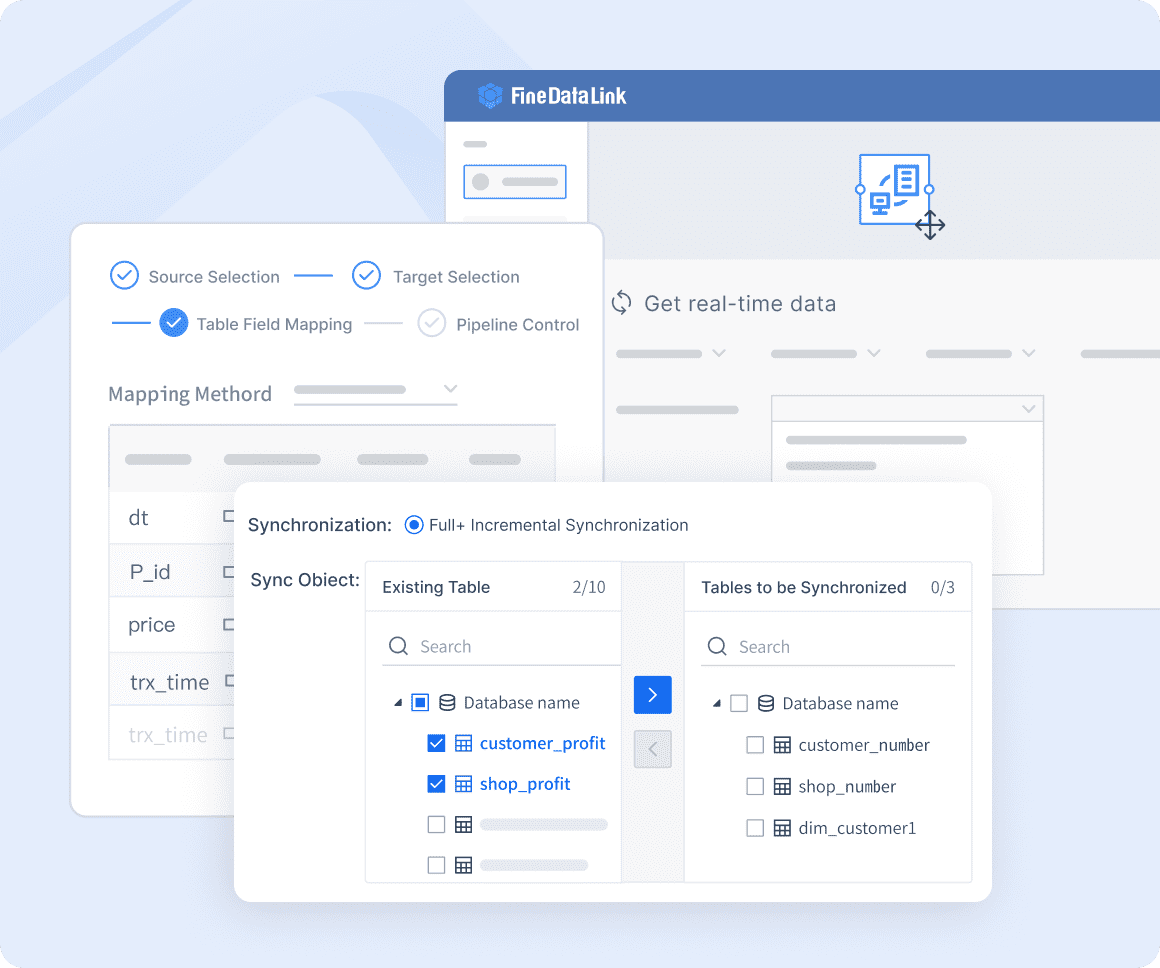
Efficient data warehouse construction
Transform your data integration experience! Click the banner below to try FineDataLink for free and see how seamless data management can be.
5. Application Integration Tools
Application integration tools connect different software applications to ensure seamless data exchange and workflow automation. These tools are essential for integrating cloud services, SaaS applications, and on-premises systems.
Examples:
MuleSoft Anypoint Platform: A leading integration platform for connecting applications, data, and devices.
Dell Boomi: Provides cloud-based integration and data management solutions.
6. Big Data Integration Tools
Big data integration tools are designed to handle the integration and processing of large and complex data sets typically associated with big data environments. These tools often support distributed computing frameworks like Hadoop and Spark.
Examples:
Apache Nifi: An open-source tool for automating the flow of data between systems.
Cloudera DataFlow: Provides real-time data streaming and ingestion capabilities for big data applications.
7. Cloud Data Integration Platforms
Cloud data integration platforms offer integration services specifically designed for cloud environments. These platforms support integration across various cloud services and on-premises systems, often with a focus on scalability and ease of use.
Examples:
Microsoft Azure Data Factory: A cloud-based data integration service for orchestrating and automating data movement and transformation.
Google Cloud Dataflow: A fully managed service for real-time data processing.
8. API Management Platforms
API management platforms facilitate the creation, deployment, and management of APIs, allowing different systems to communicate and exchange data through standardized interfaces. These platforms are crucial for enabling seamless integration in modern, API-driven architectures.
Examples:
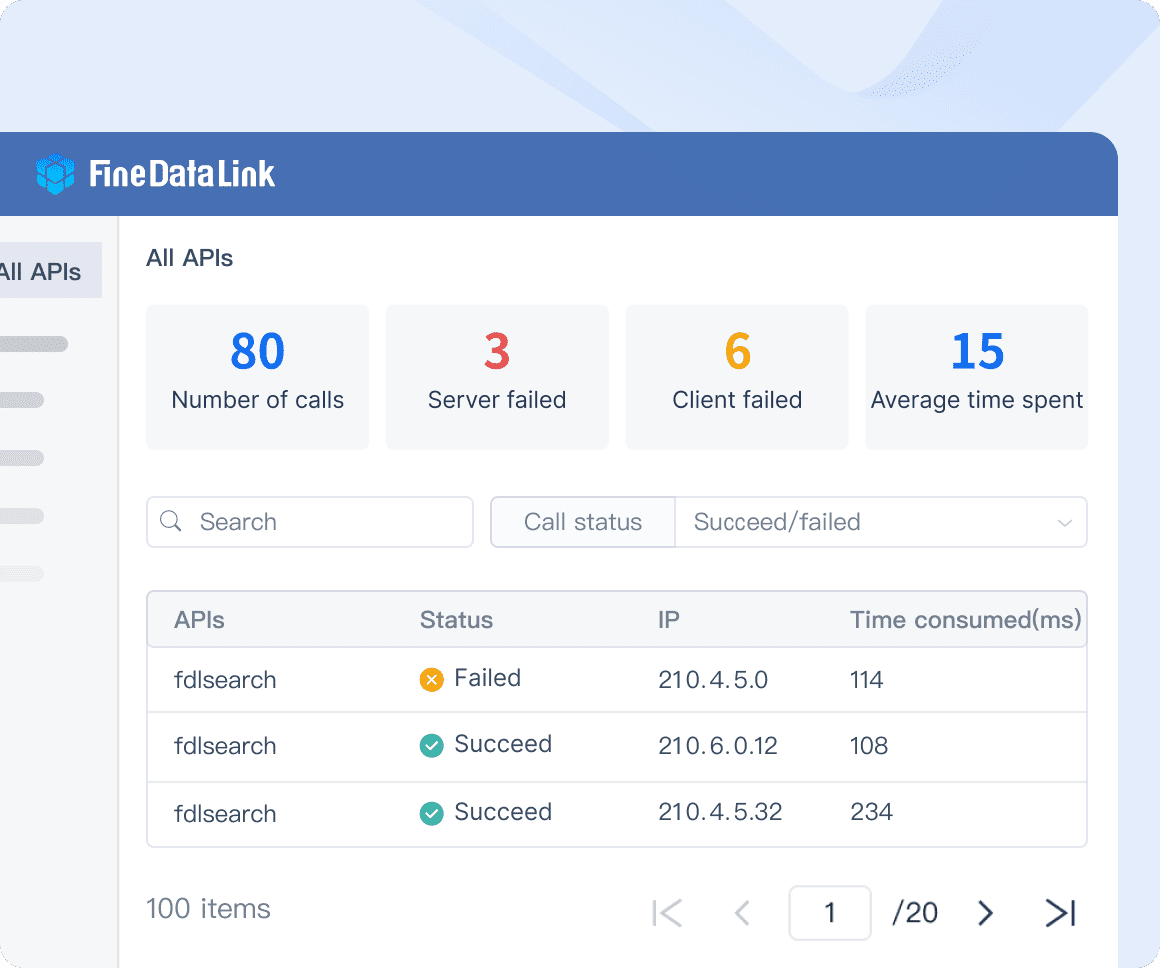
FineDataLink: Provides comprehensive API management capabilities.
Postman: Known for its API testing, development, and management features.
Application and API integration
Transform your data integration experience! Click the banner below to try FineDataLink for free and see how seamless data management can be.
9. Business Intelligence (BI) Integration Tools
BI integration tools focus on integrating data for business intelligence and analytics purposes. These tools often provide data visualization, reporting, and dashboard capabilities to help organizations derive insights from their data.
Examples:
Tableau: A popular data visualization and BI tool that connects to various data sources for real-time analytics.
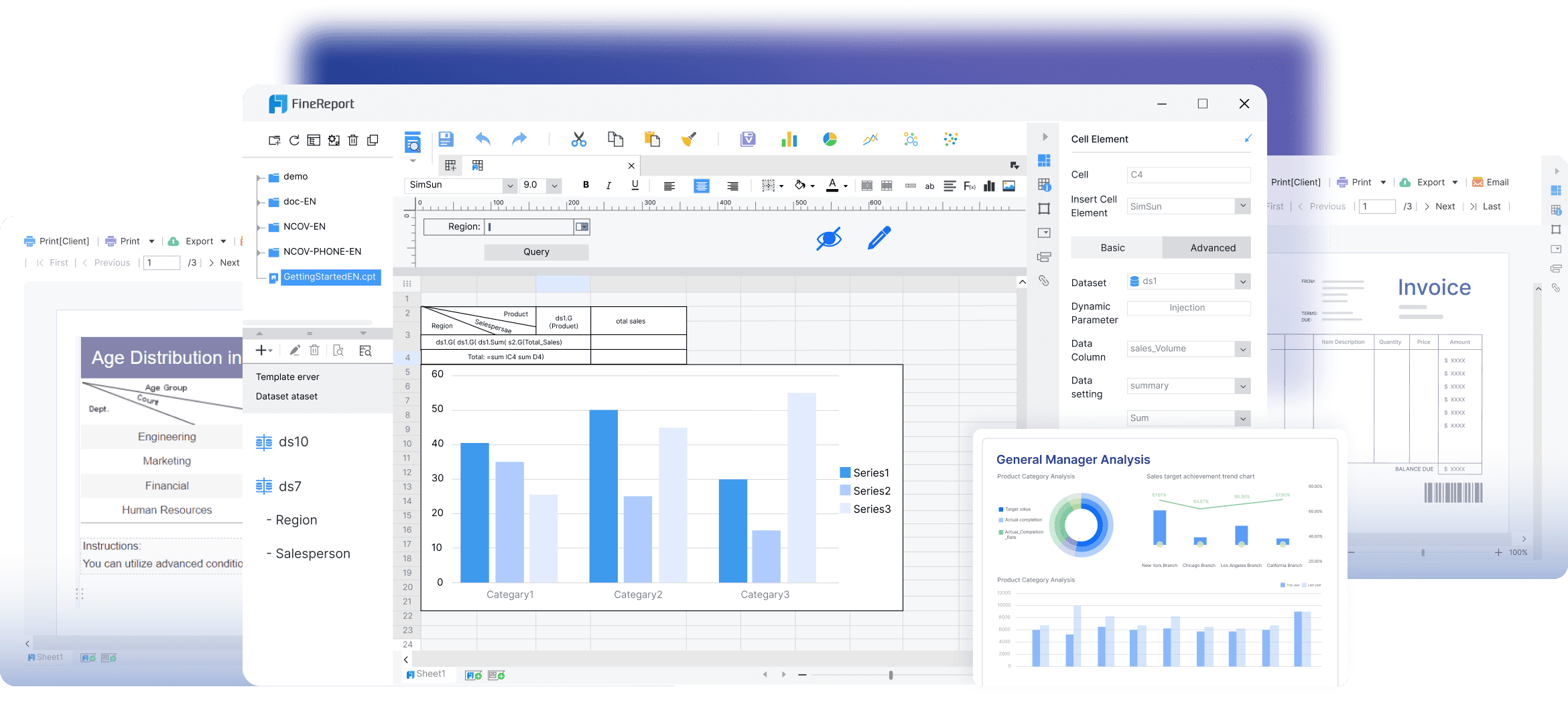
FineReport: An enterprise-level reporting and dashboard software that simplifies data integration and visualization with intuitive drag-and-drop functionality.
Ready to revolutionize your reporting process? Click the banner below to try FineReport for free and unlock powerful data insights today!
Different types of data integration software address various needs and use cases, from data warehousing and big data processing to real-time replication and API management. Choosing the right type of data integration tool depends on your specific requirements, data sources, and integration goals. Tools like FineReport excel in providing user-friendly data integration and visualization capabilities, making them a valuable addition to any data management strategy.
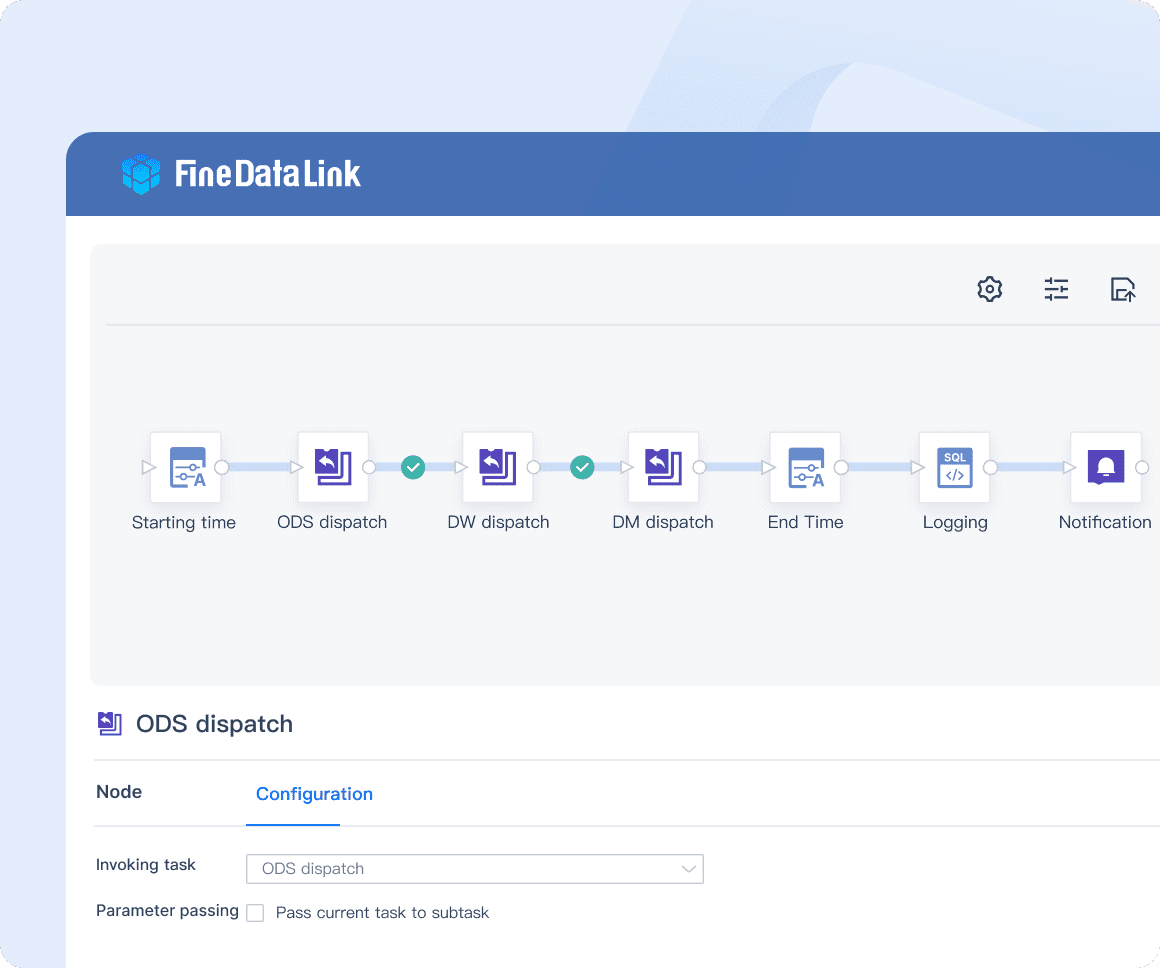
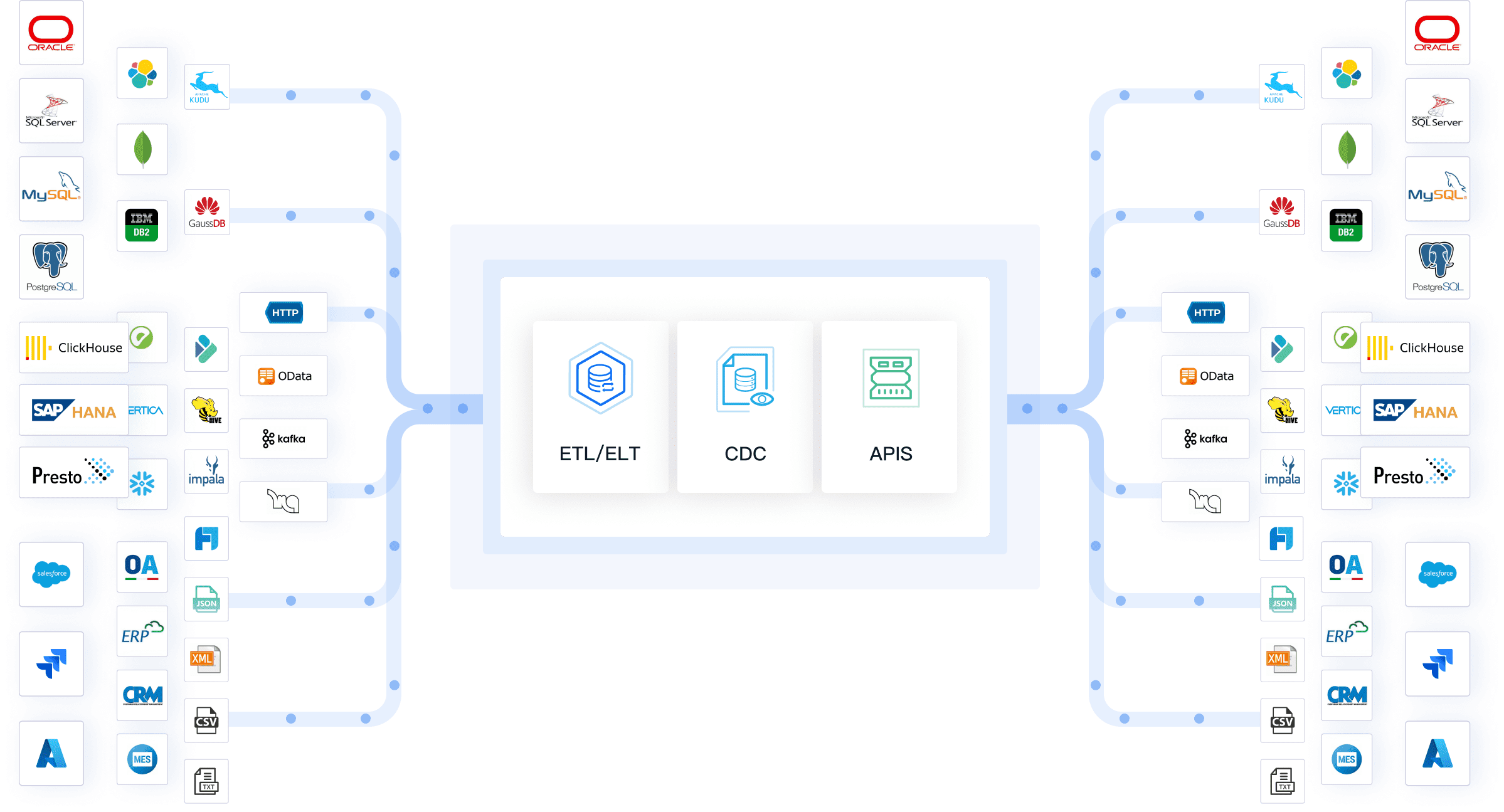
FineDataLink is a modern, scalable data integration platform designed to streamline and transform data from various sources and systems. It addresses the critical challenges of data integration, data quality, and data analytics through three core functions: real-time data synchronization, ETL/ELT, and APIs.
Core Value Propositions
Efficient Data Layer: Build a robust data layer to enhance business intelligence efforts.
Real-time Data Sync: Synchronize data across multiple tables in milliseconds, perfect for database migration, backup, and real-time data warehouses.
ETL/ELT Capabilities: Preprocess and transform data efficiently, supporting data warehouse construction.
API Development: Launch API interfaces in just 5 minutes without coding, facilitating data sharing across different systems, especially SaaS applications.
Data Silos: Integrate data stored in separate systems or departments seamlessly.
Complex Data Formats: Handle diverse data formats (CSV, XML, JSON, databases) effortlessly.
Manual Processes: Automate data extraction, transformation, and loading (ETL) to reduce errors and inefficiencies.
Scalability & Performance: Efficiently manage large data volumes and ensure optimal performance.
Real-Time Integration: Synchronize real-time data updates across multiple systems.
Connectivity Options: Connect to over 100 common data sources, including legacy and on-premises systems.
FDL-data connection
Product Advantages
User-Friendly Interface: A visual, modern interface makes deployment and operation intuitive and straightforward.
Extensive Integration: Supports over 100 data sources for flexible integration and synchronization.
Real-Time Sync: Synchronize business databases in real-time, reducing operational load.
Comprehensive Functions: ETL/ELT capabilities, message notifications, scheduling, data conversion, and SQL script support.
Cost-Effective: An economical solution for integrating products from different IT providers.
FineDataLink is your go-to solution for creating a high-quality, efficient data infrastructure, perfect for businesses aiming to leverage comprehensive data analytics and business intelligence.
SnapLogic stands out as an Integration Platform as a Service (iPaaS) that revolutionizes data integration workflows. With its user-friendly visual interface, businesses can effortlessly design and manage complex data pipelines.
Key Features
Wide Range of Connectors: SnapLogic offers an extensive selection of connectors, facilitating seamless integration with various data sources.
Intelligent Data Transformation Components: The platform provides pre-built intelligent components that streamline data transformation processes.
Pros and Cons
Pros:
Streamlined Workflow Design
Diverse Connector Options
Visual Interface for Easy Management
Cons:
Learning Curve for Advanced Features
Limited Customization Capabilities
Use Cases
E-commerce: SnapLogic is ideal for e-commerce businesses looking to integrate customer data from multiple platforms.
Healthcare: Healthcare providers can leverage SnapLogic to unify patient records from disparate systems efficiently.
Apache Airflow emerges as a robust platform for orchestrating data workflows with precision and reliability. Its advanced scheduling capabilities make it a top choice for managing intricate data processes.
Key Features
Workflow Design: Apache Airflow enables the creation of complex workflows through a user-friendly interface.
Monitoring Tools: The platform offers comprehensive monitoring tools to track workflow progress in real-time.
Pros and Cons
Pros:
Efficient Workflow Orchestration
Reliable Scheduling Mechanism
Scalability for Growing Data Needs
Cons:
Steep Learning Curve Initially
Resource-Intensive for Small-Scale Operations
Use Cases
Finance Sector: Apache Airflow caters to financial institutions requiring precise scheduling of transactional data processing.
Marketing Agencies: Marketing firms benefit from Apache Airflow's workflow automation for targeted campaign management.
Data Integration Software 4: IBM InfoSphere DataStage
With a focus on enterprise-grade ETL, IBM InfoSphere DataStage delivers a comprehensive solution for integrating, transforming, and loading diverse datasets into target systems seamlessly.
Key Features
Enterprise ETL Capabilities: IBM InfoSphere DataStage excels in handling large-scale ETL processes within enterprise environments.
Data Transformation Tools: The platform offers robust tools for transforming raw data into valuable insights efficiently.
Pros and Cons
Pros:
Enterprise-Level Scalability
Extensive Transformation Capabilities
Real-Time Data Processing Support
Cons:
Complex Setup Process
High Initial Investment Required
Use Cases
Manufacturing Industry: IBM InfoSphere DataStage is instrumental in streamlining supply chain data integration processes in manufacturing plants.
Telecommunications Sector: Telecommunication companies leverage IBM InfoSphere DataStage for real-time processing of network performance metrics.
AWS Glue emerges as a robust data integration tool tailored for seamless integration within the Amazon Web Services (AWS) ecosystem. It offers a comprehensive solution for extracting, transforming, and loading data efficiently, empowering businesses to harness the full potential of their data assets.
Key Features
Serverless Data Integration: AWS Glue operates in a serverless environment, eliminating the need for infrastructure management and enabling automatic scaling based on workload demands.
Data Catalog: The platform provides a centralized metadata repository that simplifies data discovery and enhances data governance practices.
ETL Capabilities: With built-in Extract, Transform, Load (ETL) functionalities, AWS Glue streamlines the process of preparing and transforming data for analytics and reporting purposes.
Pros and Cons
Pros:
Seamless Integration with AWS Services
Scalability and Flexibility
Automated Data Discovery
Cons:
Limited Customization Options
Dependency on AWS Ecosystem
Use Cases
E-commerce Platforms: AWS Glue is ideal for e-commerce platforms looking to integrate customer transaction data from various sources seamlessly.
Media Streaming Services: Media streaming companies can leverage AWS Glue to process large volumes of streaming data efficiently.
Data Integration Software 6: Pentaho Data Integration
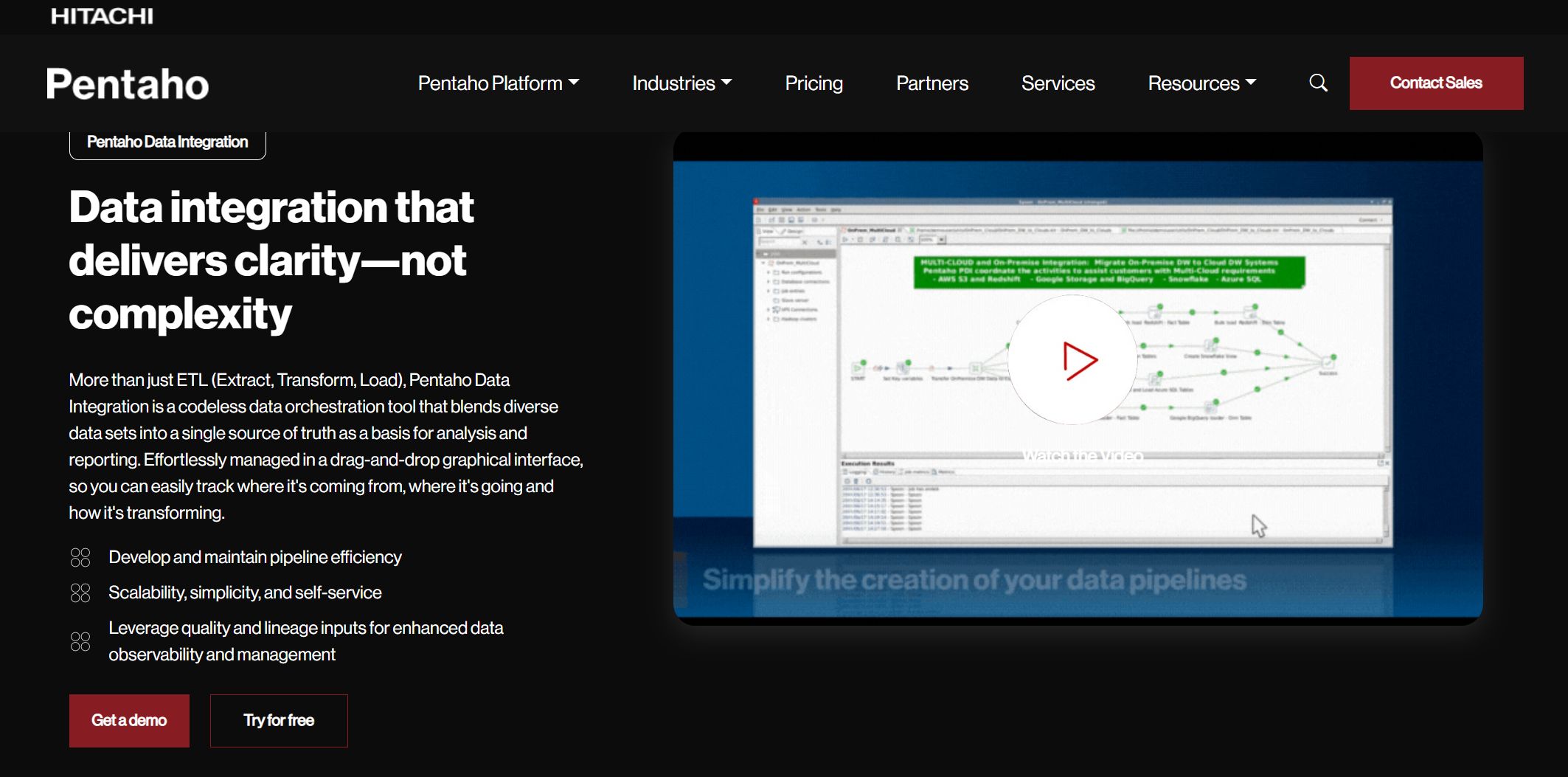
Pentaho Data Integration, an open-source ETL tool, stands out as a versatile solution for businesses seeking robust data integration capabilities without hefty licensing costs. It enables organizations to streamline their ETL processes effectively while maintaining flexibility in their data workflows.
Key Features
Drag-and-Drop Interface: Pentaho Data Integration offers an intuitive drag-and-drop interface that simplifies the design of complex ETL workflows without extensive coding requirements.
Big Data Integration: The tool supports seamless integration with various big data technologies, allowing businesses to handle large datasets with ease.
Job Orchestration: Pentaho Data Integration provides advanced job orchestration features that enable users to schedule and automate complex data processes efficiently.
Pros and Cons
Pros:
Cost-Effective Solution
Extensive Big Data Support
User-Friendly Interface
Cons:
Limited Advanced Analytics Capabilities
Community Support Dependency
Use Cases
Retail Analytics: As a comprehensive retail analytics software, Pentaho Data Integration helps retail companies gain deep insights by consolidating and analyzing sales trends across multiple stores, tracking performance metrics, and integrating data from various sources.
Educational Institutions: Universities can utilize Pentaho Data Integration to consolidate student information from diverse databases securely.
Data Integration Software 7: Informatica PowerCenter
Informatica PowerCenter, a leading enterprise-grade ETL tool, empowers organizations with robust data integration capabilities tailored for complex business environments. It offers a comprehensive platform for managing end-to-end ETL processes efficiently while ensuring high levels of scalability and performance.
Key Features
Scalable Architecture: Informatica PowerCenter's scalable architecture allows businesses to handle growing volumes of data seamlessly without compromising performance.
Data Quality Management: The tool includes advanced features for ensuring data quality throughout the integration process, enhancing the reliability of analytical outcomes.
Real-Time Processing: Informatica PowerCenter supports real-time processing capabilities, enabling organizations to make informed decisions based on up-to-date information promptly.
Pros and Cons
Pros:
Enterprise-Level Scalability
Robust Data Governance Features
Real-Time Processing Capabilities
Cons:
High Initial Investment Costs
Steep Learning Curve for Beginners
Use Cases
Financial Institutions: Informatica PowerCenter caters to financial institutions requiring real-time transaction processing and compliance reporting.
Healthcare Organizations: Healthcare providers benefit from Informatica PowerCenter's robust data quality management features when integrating patient records securely.
DataMigrator emerges as a versatile data integration tool designed to streamline the process of consolidating and transforming data from various sources. It offers a comprehensive platform for businesses to efficiently manage their data workflows with ease.
Key Features
Intuitive Interface: DataMigrator provides an intuitive user interface that simplifies the design and execution of complex data integration tasks.
Robust Connectivity: The tool offers a wide range of connectors, enabling seamless integration with diverse data sources and applications.
Automated Workflows: DataMigrator automates repetitive tasks, enhancing operational efficiency and reducing manual errors in data processing.
Pros and Cons
Pros:
Streamlined Data Integration Processes
Extensive Connectivity Options
Enhanced Operational Efficiency
Cons:
Limited Advanced Analytics Capabilities
Scalability Challenges for Large Enterprises
Use Cases
Retail Sector: DataMigrator is ideal for retail businesses looking to integrate sales data from multiple stores into a centralized system.
Logistics Industry: Logistics companies can leverage DataMigrator to streamline supply chain management processes by integrating shipment tracking information effectively.
Comparison of the Top 10 Data Integration Software
Data integration software plays a crucial role in enabling businesses to combine data from different sources into a unified view for better analysis and decision-making. Here's a comparison of the top 10 data integration tools, highlighting their key features, strengths, and ideal use cases.
Feature Comparison of Data Integration Software
Performance
When it comes to data integration software, performance is a crucial aspect that can significantly impact operational efficiency. FineDataLink stands out for its exceptional performance optimization infrastructure, allowing for seamless batch and stream processing. On the other hand, Pentaho Data Integration offers high customizability and extensibility, providing users with versatile data warehousing solutions.
Efficient data warehouse construction
Transform your data integration experience! Click the banner below to try FineDataLink for free and see how seamless data management can be!
Scalability
Scalability plays a vital role in accommodating the growing data needs of businesses. AWS Glue excels in this aspect by offering a serverless environment that automatically scales based on workload demands. Similarly, FineDataLink provides a scalable architecture that adapts to evolving data requirements efficiently.
Ease of Use
The ease of use of data integration software can streamline workflows and enhance user productivity. FineDataLink stands out for its intuitive drag-and-drop interface, simplifying complex ETL workflows without extensive coding requirements. Additionally, tools like SyncMaster Pro offer customizable dashboards for real-time monitoring, empowering users with actionable insights seamlessly.
Pricing Comparison of Data Integration Software
Subscription Models
When considering pricing models, businesses often look for flexibility and cost-effectiveness. FineDataLink ensures cost-efficient data processing tailored to specific needs. In contrast, Informatica PowerCenter caters to enterprise-grade requirements with comprehensive data integration capabilities but may involve higher initial investment costs.
Free vs. Paid Versions
The choice between free and paid versions depends on the organization's budget and feature requirements. Open-source tools like Pentaho Data Integration provide robust ETL capabilities without licensing costs, making them ideal for budget-conscious businesses willing to invest in technical expertise internally. Conversely, commercial solutions like FineDataLink offer advanced features but may require substantial financial commitment upfront.
User Reviews and Ratings of Data Integration Software
Customer Satisfaction
Customer satisfaction is a key indicator of a tool's effectiveness in meeting user needs. Based on reviews, FineDataLink receives high praise for its seamless integration within multiple data sources and efficient data processing capabilities. Similarly, it garners positive feedback for its user-friendly visual interface and wide range of connectors that simplify data integration tasks effectively.
Common Complaints
Despite their strengths, some tools face common criticisms that potential users should consider. For instance, while Informatica PowerCenter offers robust scalability and real-time processing features, users have reported steep learning curves for beginners entering the platform. Additionally, tools like DataMigrator may face scalability challenges in large enterprises due to limitations in handling extensive data workflows efficiently.
In summary, the top 10 data integration software solutions for 2026 offer diverse features catering to various business needs. Among them, FineDataLink stands out with its user-friendly interface and robust capabilities, making it perfect for seamless customer data integration at the enterprise level. FineDataLink also excels in orchestrating complex workflows, making it an ideal choice for financial institutions. As we look to the future, data integration software promises enhanced automation and real-time insights. Take the next step in optimizing your data processes by exploring these innovative tools, and discover how FineDataLink can transform your data integration strategy!