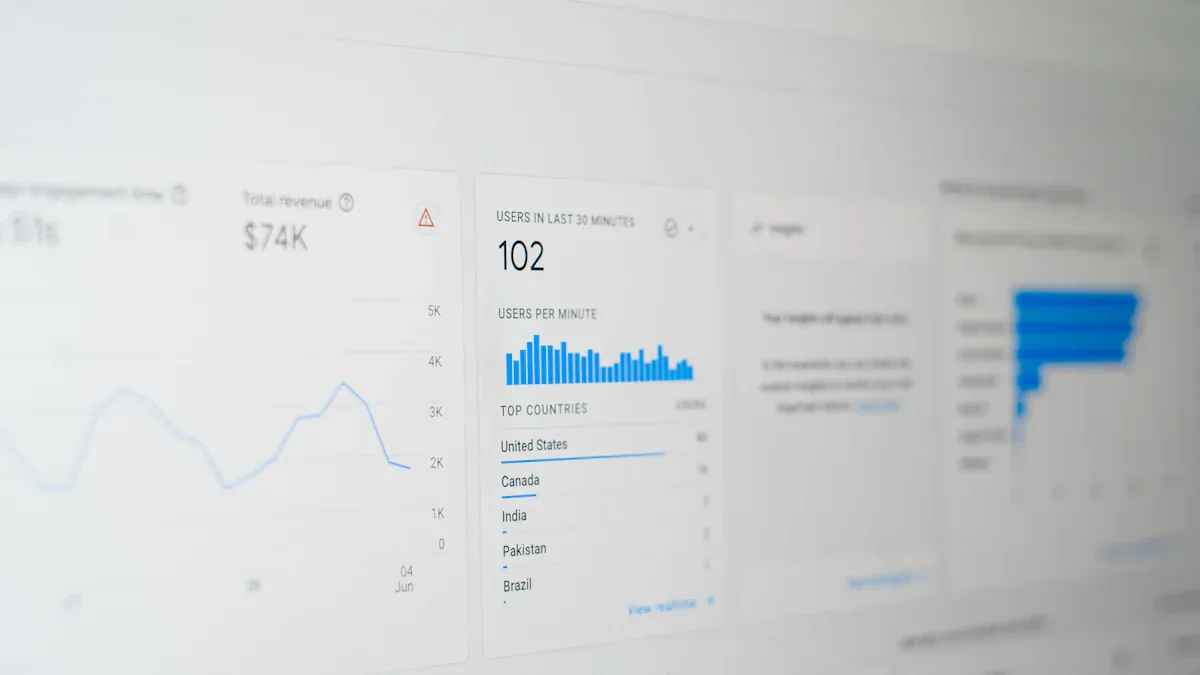

Procurement data management becomes a business priority when leaders realize their spend, supplier, PO, invoice, and contract reports do not agree with each other. If the same supplier appears under multiple names, if categories are mapped differently across systems, or if invoice status lags behind procurement activity, KPI reporting becomes unreliable. That makes it difficult to trust savings analysis, supplier risk monitoring, compliance reporting, or cycle-time decisions.
For enterprise procurement, finance, and IT teams, the right starting point is not an AI pilot. It is a trusted KPI foundation. With FineBI + Dora, business users can ask for analysis in chat, generate chart-based answers or dashboard-style views from trusted BI assets, and receive scheduled summaries before the next meeting. But that value only lands when procurement data management is structured, governed, and aligned to enterprise KPI definitions.
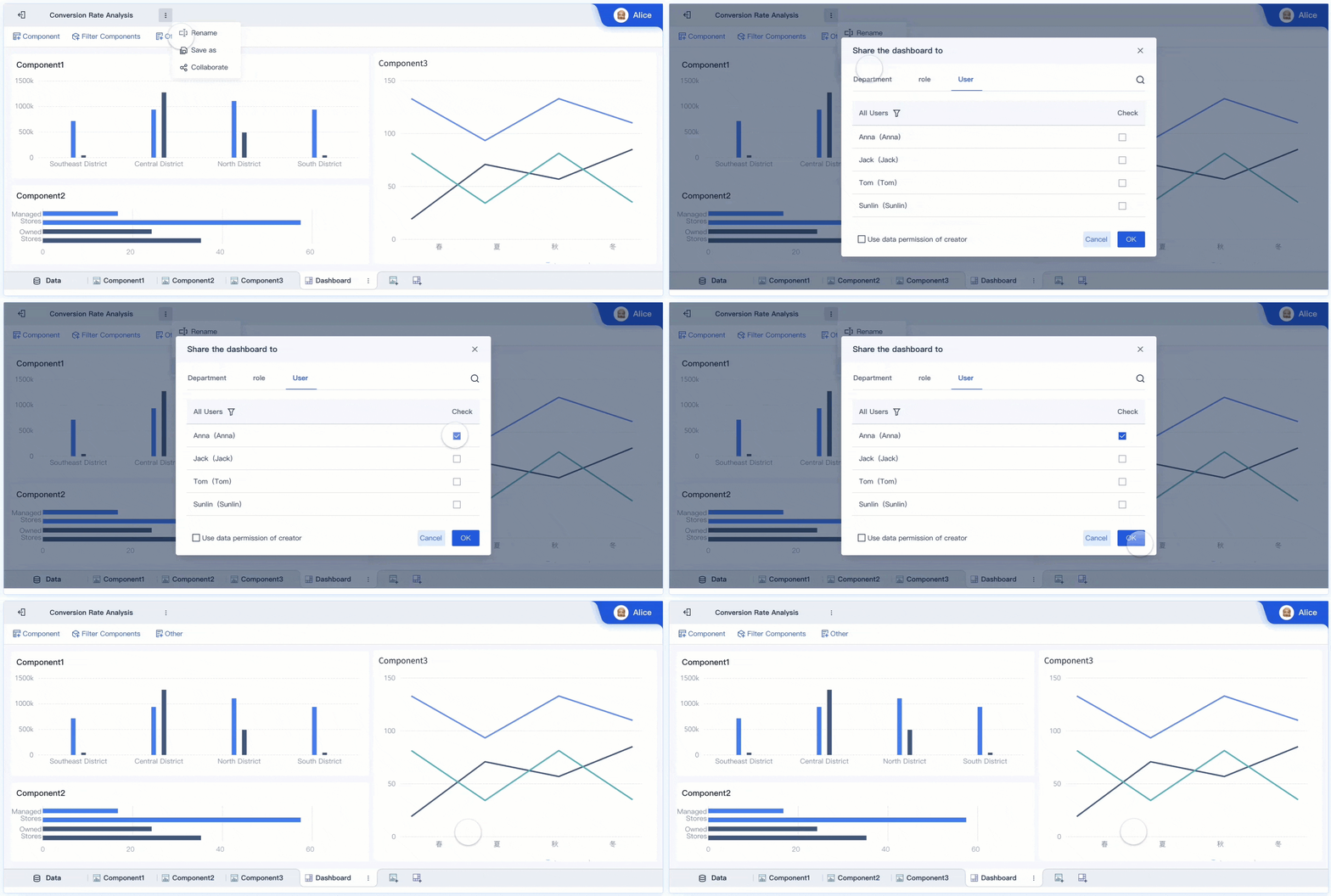
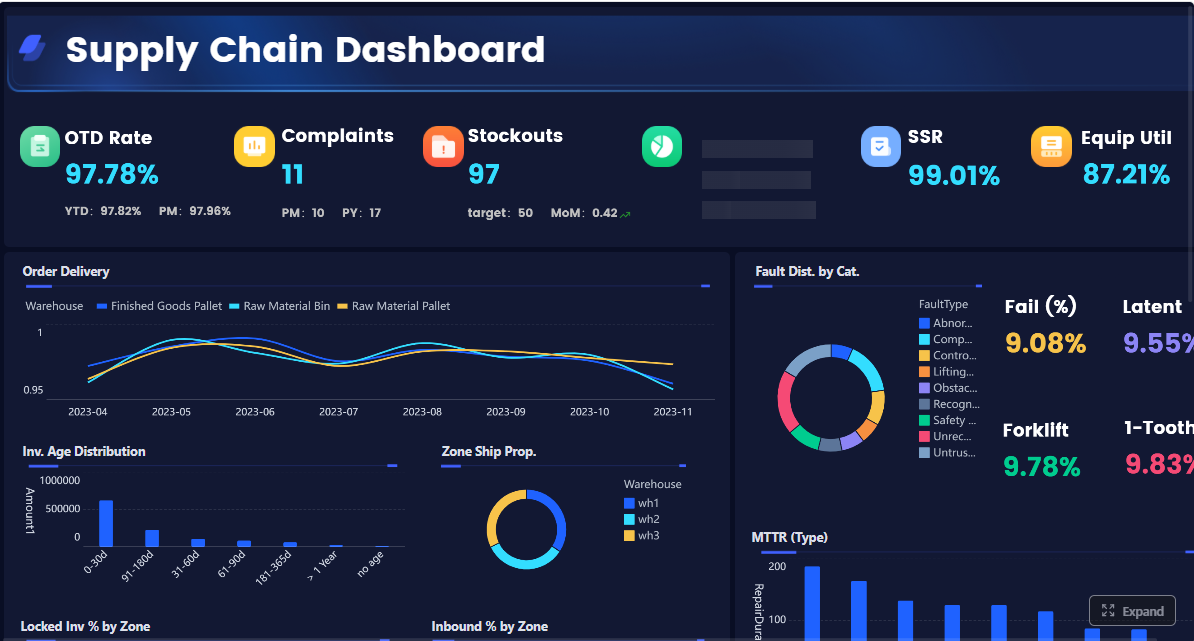 Click To Try The Dashboard
All dashboards in this article are built with FineBI
Why procurement data management is the foundation of reliable KPI reporting
Procurement leaders often face a familiar problem: reports are available, but confidence is low. One dashboard shows total spend by supplier. Another report shows invoice totals that do not reconcile. A contract coverage metric changes depending on which system was used. These issues usually come from fragmented procurement data management, not from a lack of dashboards.
In enterprise environments, supplier, purchase order, invoice, contract, and spend data often live across ERP systems, P2P tools, sourcing platforms, AP systems, spreadsheets, and local databases. When those records are not standardized and connected, KPIs become distorted in several ways:
- Supplier spend is split across duplicate or inconsistent supplier records
- Category reporting changes because taxonomies differ by business unit or region
- Savings numbers vary because baseline logic is not standardized
- PO and invoice cycle-time metrics are incomplete because timestamps are missing or inconsistent
- Compliance and contract coverage are understated when contract metadata is disconnected from spend
This is why procurement data management must come before large-scale AI analysis. If the underlying data is inconsistent, AI will simply respond faster with answers that look polished but may still be misleading. Forecasting, supplier risk detection, price variance analysis, and opportunity discovery all depend on trusted KPI logic first.
A trusted KPI foundation creates practical business outcomes:
- Visibility: leaders see total spend, supplier exposure, and compliance coverage clearly
- Comparability: business units, entities, plants, or regions can be compared using the same metric logic
- Accountability: data owners and KPI owners can trace how numbers were calculated
- Faster decisions: teams stop debating report validity and start acting on insights
For executives, this matters because procurement analytics should support negotiation strategy, working capital decisions, supplier consolidation, and risk control. For IT, it means building a reusable data and semantic layer rather than maintaining endless one-off reports. For procurement analysts and finance users, it means less time reconciling spreadsheets and more time interpreting performance.
What procurement data management includes in an enterprise environment
Procurement data management is broader than supplier onboarding and broader than spend reporting. In an enterprise environment, it includes the collection, standardization, maintenance, integration, and controlled use of procurement-related data across multiple business processes and systems.
The scope usually includes four major data types:
- Master data: suppliers, items, categories, cost centers, legal entities, plants, payment terms, contracts
- Transactional data: requisitions, purchase orders, goods receipts, invoices, payments, sourcing events
- Reference data: taxonomies, currencies, units of measure, approval rules, status codes, commodity mappings
- Performance data: supplier scorecards, on-time delivery, quality defects, lead times, savings, contract compliance, cycle times
This is different from broader enterprise data governance. Data governance sets enterprise-wide policy, ownership, access control, and quality standards. Procurement data management applies those governance principles specifically to procurement domains and workflows.
It is also different from ERP administration. ERP administration focuses on application configuration, roles, transactions, and technical maintenance. Procurement data management focuses on whether procurement data is usable, consistent, and trustworthy for reporting, operations, and analysis across systems.
In practice, ownership is shared:
- Procurement owns supplier, category, sourcing, contract, and performance requirements
- Finance owns accounting alignment, invoice integrity, chart of accounts linkage, and reconciliation logic
- IT owns integration, system architecture, permission governance, and platform stability
- Data or BI teams own data modeling, semantic definitions, metric governance, and reporting consistency
- Business stakeholders validate whether KPI outputs reflect real operating decisions
What procurement master data management means in practice
Procurement master data management is the discipline of maintaining core procurement entities as controlled, reusable business assets. In practice, this means more than cleaning records once. It means defining standards and workflows so new records stay clean over time.
Core master data domains often include:
- Suppliers: legal name, parent company, tax ID, payment terms, banking status, risk flags, diversity or compliance attributes
- Items and services: item codes, descriptions, units of measure, price references, commodity mapping
- Categories: enterprise-wide category taxonomy for spend analysis and sourcing decisions
- Cost centers: ownership of spend and linkage to budgets or departments
- Entities and locations: legal entities, business units, plants, warehouses, regions
- Payment terms: standardized terms to support AP reporting and cash-flow analysis
- Contracts: contract ID, owner, expiration date, covered category, associated suppliers, renewal terms
When master data is standardized, reporting improves immediately. Supplier totals roll up correctly. Category views become comparable. Compliance checks can be automated. Cross-system alignment becomes possible because the same business object means the same thing everywhere.
This also supports AI readiness. Dora can only perform governed analysis well when the underlying supplier names, KPI definitions, filters, and business terms are consistent in the FineBI semantic layer.
Common enterprise challenges and practical solutions
Most enterprise procurement data problems are recurring and predictable. The issue is rarely that teams do not know data matters. The issue is that ownership is fragmented, systems evolve at different speeds, and reporting needs outrun governance.
Below are common procurement data management challenges and practical responses.
Duplicate suppliers and fragmented supplier identity
A single supplier may appear under multiple names across ERP instances, countries, or acquired entities. That breaks spend aggregation and risk exposure analysis.
Practical solution:
- Define supplier creation standards and mandatory identifiers
- Create matching and survivorship rules for golden supplier records
- Maintain parent-child hierarchy mapping when enterprise reporting requires group-level visibility
- Add remediation workflows for suspected duplicates before they affect reporting
Inconsistent category taxonomies
One business unit may classify spend by commodity, another by GL code, and another by sourcing category. This makes enterprise category analytics unreliable.
Practical solution:
- Define one primary reporting taxonomy and mapping logic
- Maintain controlled synonyms and translation rules
- Review “other” or uncategorized spend as a standing governance queue
- Align taxonomy changes with KPI owners, not only local teams
Missing fields and incomplete transactional data
Cycle-time reporting, compliance tracking, and supplier performance analysis fail when approval dates, receipt dates, contract references, or buyer ownership fields are missing.
Practical solution:
- Set mandatory-field standards by process stage
- Add front-end validation rules and exception workflows
- Score completeness by domain and by source system
- Prioritize missing fields that affect executive KPIs first
Siloed systems and conflicting records
ERP, sourcing, contract lifecycle management, P2P, and AP systems often show different versions of procurement activity.
Practical solution:
- Build common data models and conformed dimensions across systems
- Define system-of-record rules by domain
- Use FineBI to model trusted metrics across integrated data assets
- Track reconciliation exceptions through issue queues instead of ad hoc email chains
Weak data stewardship
Data quality declines quickly when no one owns change requests, exceptions, or correction cycles.
Practical solution:
- Assign owners and stewards for each key data domain
- Define service levels for data corrections and approvals
- Create audit trails for key master data changes
- Review recurring root causes, not just one-off errors
A practical prioritization method is to rank fixes by three factors:
- KPI impact: does the issue materially affect spend, savings, compliance, risk, or cycle-time reporting?
- Risk exposure: does the issue create audit, payment, supplier, or operational risk?
- Implementation effort: can it be resolved quickly through rules and ownership, or does it require integration redesign?
This helps teams avoid spending months on low-value cleanup while critical KPI distortions remain untouched.
Governance and stewardship models that keep data clean
Sustainable procurement data management requires explicit roles and escalation paths.
A workable model typically includes:
- Data owner: accountable for business rules and quality expectations for a domain
- Data steward: responsible for monitoring, reviewing, correcting, and coordinating changes
- Approver: validates sensitive changes such as supplier records, payment terms, or category mappings
- Escalation owner: resolves disputes, repeated exceptions, or cross-functional conflicts
Recommended policies should cover:
- data creation standards
- change request approval rules
- duplicate handling procedures
- exception handling and override logging
- auditability for key changes
- review cadence for stale or inactive records
Without these controls, data cleanup becomes a recurring project rather than a managed operating capability.
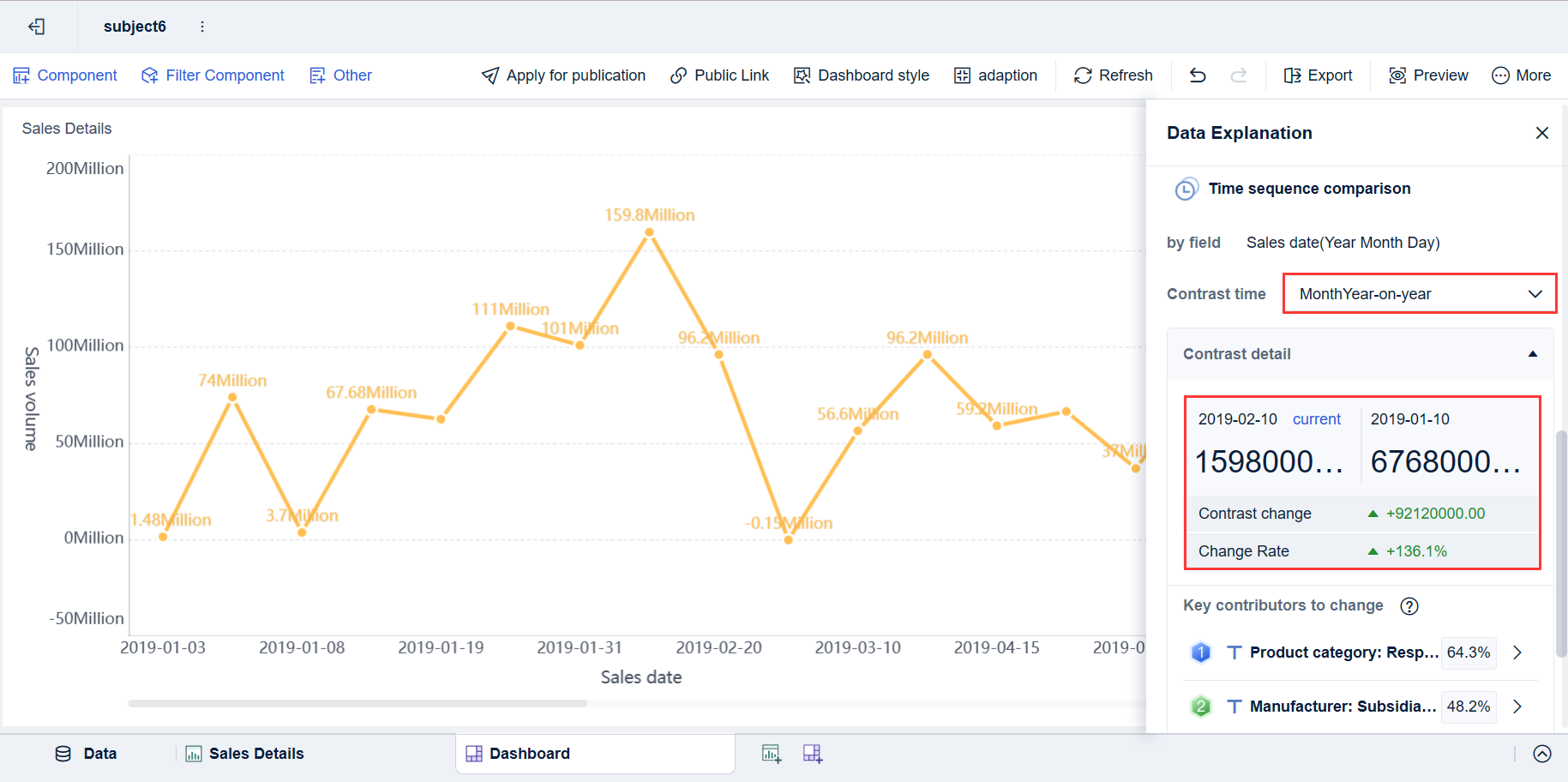
Key aspects of building a trusted KPI foundation
A trusted KPI foundation is what turns procurement data management from a technical exercise into decision support. Enterprise teams need both clean data and governed metric logic.
Core procurement KPIs that need trusted definitions
Below is a practical KPI set for enterprise procurement reporting.
-
Total Spend: Total approved procurement-related spend across selected entities, categories, or periods.
Business value: Provides the baseline for cost control, negotiation leverage, and category visibility.
AI use: Dora can retrieve total spend through chat, compare it across periods or entities, and include it in scheduled briefings. -
Spend Under Management: Share of spend governed by procurement policies, sourcing processes, or managed contracts.
Business value: Measures procurement influence and control over enterprise purchasing.
AI use: Dora can explain which business units have low managed-spend coverage and generate chart-based answers by owner or region. -
Contract Compliance Rate: Percentage of relevant purchases aligned with approved contracts or preferred suppliers.
Business value: Helps reduce leakage, improve negotiated value capture, and support auditability.
AI use: Dora can detect compliance gaps, summarize the largest exceptions, and push alerts to responsible users. -
Realized Savings: Savings achieved based on approved methodology and baseline rules.
Business value: Connects procurement initiatives to measurable financial outcomes.
AI use: Dora can retrieve savings by category, trace changes versus target, and produce meeting-ready summaries. -
PO Cycle Time: Time from requisition or request approval to purchase order issuance.
Business value: Indicates procurement efficiency and process friction.
AI use: Dora can surface bottlenecks, compare cycle time by process or team, and highlight delayed approvals. -
Invoice Match Rate: Percentage of invoices that match PO and receipt logic without exception.
Business value: Reflects transaction quality, process discipline, and AP efficiency.
AI use: Dora can identify exception trends and create dashboard-style analysis views for high-risk suppliers or entities. -
Supplier On-Time Delivery: Share of deliveries received on or before committed dates.
Business value: Supports continuity, planning reliability, and supplier performance management.
AI use: Dora can summarize underperforming suppliers and push periodic supplier performance briefings. -
Supplier Risk Exposure: Spend or operational dependency tied to suppliers with defined risk flags.
Business value: Helps procurement and operations prioritize mitigation and dual sourcing decisions.
AI use: Dora can monitor thresholds, issue anomaly alerts, and follow up with responsible owners.
Data quality dimensions that matter most
To trust those KPIs, procurement teams should monitor five core data quality dimensions:
- Accuracy: does the data reflect the real supplier, transaction, or contract condition?
- Completeness: are required fields present for reporting and controls?
- Consistency: do the same business terms and mappings apply across systems?
- Timeliness: is the data refreshed frequently enough for operational and management decisions?
- Uniqueness: are duplicate suppliers, items, or contracts under control?
These dimensions should not stay theoretical. They should be scored and visible in FineBI so data owners can see where KPI reliability is at risk.
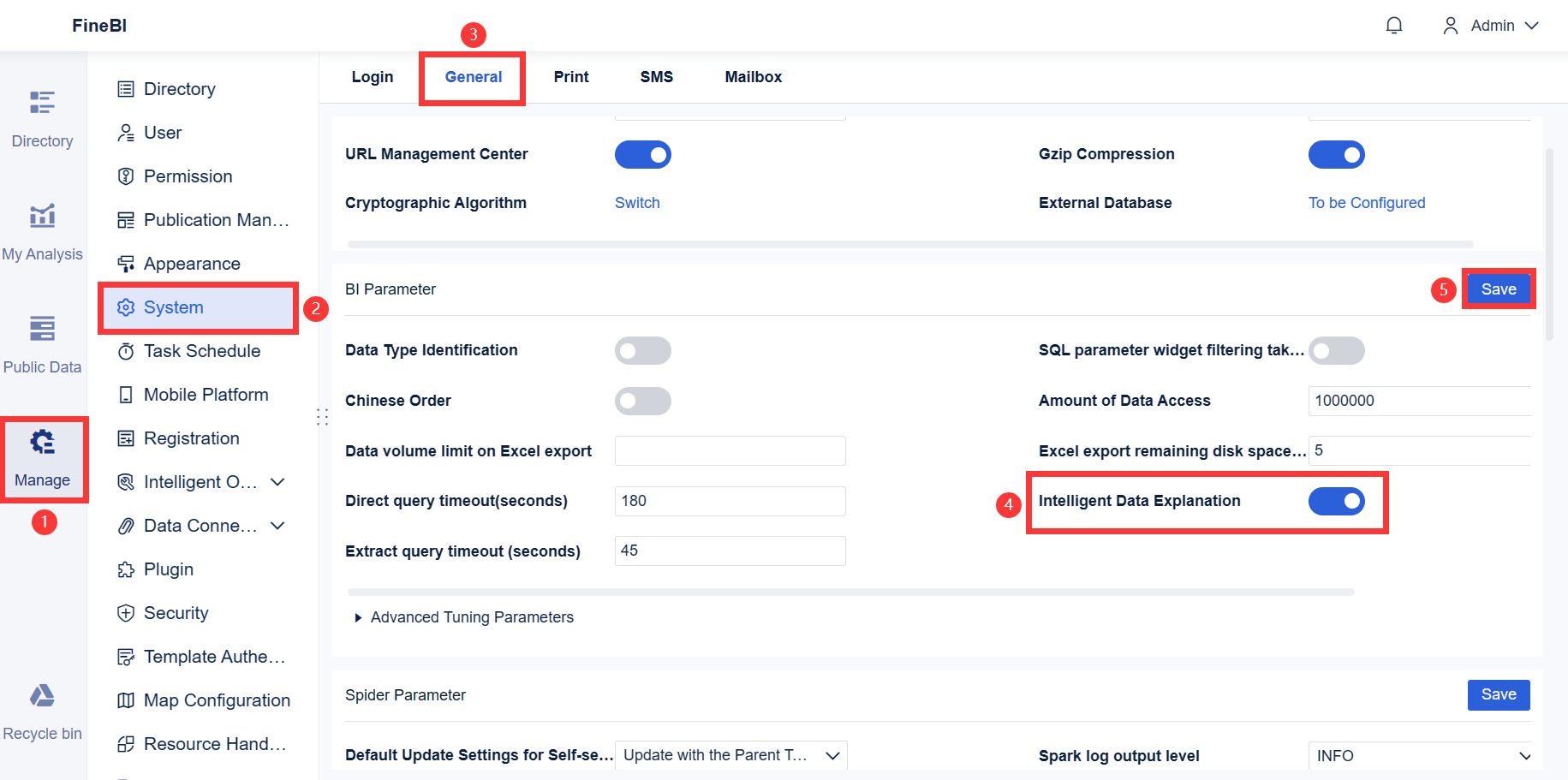
Common data models and mapping logic across procurement systems
Trusted KPI reporting requires a common model across ERP, P2P, sourcing, contract, and AP systems. This usually includes:
- conformed supplier dimension
- harmonized category dimension
- entity and cost center mappings
- standardized date logic for cycle-time metrics
- contract-to-spend linkage rules
- invoice and PO exception definitions
FineBI is well suited for this layer because it provides the trusted dashboard, metric modeling, self-service analytics, and semantic assets that procurement teams need before adding AI assistance.
Monitoring and control mechanisms
Once the KPI foundation exists, enterprises need controls to keep it healthy:
- data quality scorecards
- issue queues by source or domain
- root-cause review meetings
- trend monitoring on recurring exceptions
- alerts when critical KPI-supporting fields degrade
These controls make procurement data management sustainable rather than reactive.
A step-by-step implementation roadmap for enterprise teams
A realistic enterprise roadmap should be phased and measurable.
1. Assess current data sources, KPI definitions, and reporting pain points
Inventory the procurement-relevant systems, major reports, and contested KPIs. Identify where trust breaks down today.
2. Prioritize high-value data domains and high-risk gaps
Start with domains that materially affect executive KPIs, such as suppliers, categories, contracts, and invoice-linked spend.
3. Design governance, cleansing, harmonization, and ongoing controls
Define ownership, validation rules, mapping logic, duplicate handling, and escalation policies. Build the common semantic structure in FineBI.
4. Roll out in phases with measurable quality targets
Set quality targets such as completeness, duplicate reduction, category coverage, or contract-linkage coverage. Publish scorecards and review them regularly.
5. Expand trusted analytics and self-service access
After the foundation is stable, enable wider procurement and finance access to governed dashboards, analysis subjects, and reusable KPI views.
6. Add AI scenario execution on top of trusted BI assets
Once the KPI foundation is governed, Dora can help users ask questions in natural language, receive chart-based answers, get scheduled summaries, and act faster without bypassing data governance.
Preparing procurement data for AI analysis without undermining trust
AI makes procurement reporting easier to access, but it does not fix poor data by itself. If supplier identities are fragmented, contract coverage is incomplete, or KPI definitions differ by region, AI outputs will inherit those weaknesses.
That is why procurement data management remains the precondition for AI success.
For procurement AI use cases, data readiness usually requires:
- supplier master data that is standardized and deduplicated
- spend and category data mapped to controlled taxonomies
- contract metadata linked to supplier and spend records
- PO, invoice, and receipt timestamps available for process metrics
- governance rules for KPI definitions, access permissions, and business terminology
Different AI use cases also have different requirements:
- Spend classification: requires item, supplier, and transaction context with stable taxonomy mapping
- Supplier risk detection: requires reliable supplier identity, hierarchy, external risk indicators, and exposure logic
- Price variance analysis: requires unit price consistency, item normalization, contract terms, and time-based comparison rules
- Opportunity discovery: requires integrated spend, supplier, contract, and performance data with interpretable KPI logic
Metadata and explainability matter just as much as raw data quality. Enterprise teams should be able to answer:
- Which data source did this result come from?
- Which filters and KPI definitions were applied?
- Which supplier hierarchy or category mapping was used?
- What assumptions were made in the analysis?
This is where a governed BI foundation matters. FineBI provides trusted dashboards, semantic assets, and permission boundaries. Dora works on top of that foundation as an enterprise Data Agent, so users can ask business questions in chat without bypassing KPI governance.
Human review is still important. AI-generated summaries, report drafts, and risk narratives should be reviewed during rollout, especially for financial or supplier-sensitive decisions. Strong enterprises treat AI as a governed assistant, not a shortcut around data stewardship.
A practical maturity check before scaling AI in procurement includes:
- critical KPI definitions are approved and documented
- core supplier and category data quality is monitored
- access permissions are aligned with reporting rules
- major reconciliation gaps are understood and controlled
- data lineage is available for important management metrics
- there is a workflow for reviewing AI-generated outputs
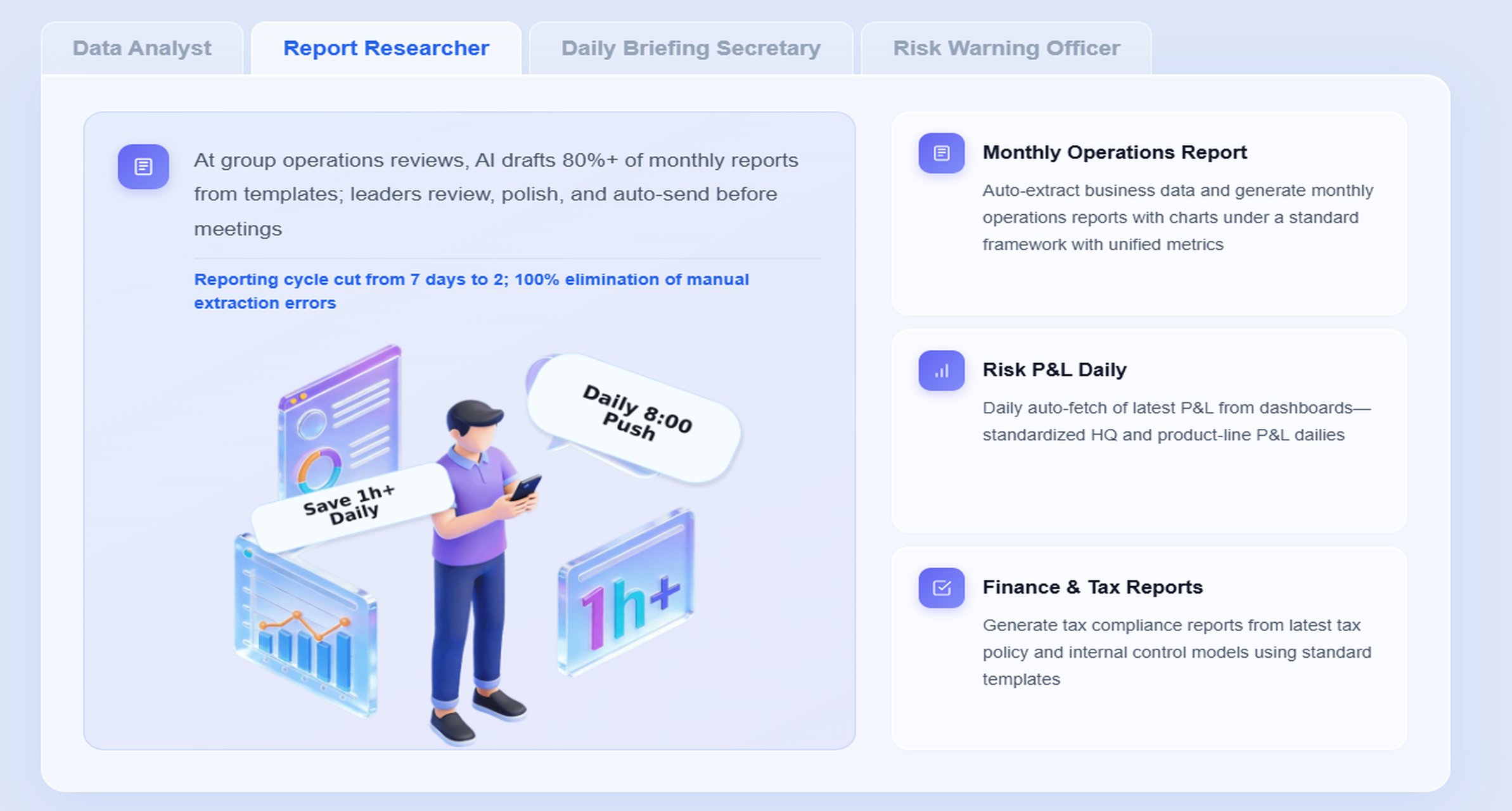
How an AI Data Agent Handles This Scenario
Once procurement data management has produced trusted metrics, Dora can turn those BI assets into a scenario-specific AI assistant for procurement leaders, analysts, finance partners, and category managers.
For this scenario, the most relevant Dora digital employees are:
- Data Analyst digital employee for natural-language query, dashboard retrieval, KPI breakdown, and follow-up analysis
- Daily Briefing Secretary for scheduled procurement KPI summaries before weekly operations or sourcing meetings
- Risk Alert Officer for threshold monitoring, supplier exposure alerts, and owner notification when compliance or risk KPIs change
A typical business question might look like this:
“Show me this month’s procurement spend by category and entity, contract compliance rate, top duplicate-supplier risk areas, and the suppliers driving invoice match exceptions.”
Here is how a governed Dora workflow works in practice:
-
Retrieve trusted FineBI data assets
Dora accesses the relevant FineBI procurement dashboard, metric model, or analysis-subject data instead of relying on unmanaged raw prompts. -
Understand KPI definitions and semantic rules
Dora uses the FineBI semantic layer to interpret business terms such as “contract compliance,” “managed spend,” “duplicate supplier risk,” or “invoice match exception” according to approved enterprise definitions. -
Generate a chart-based answer or dashboard-style analysis view
In chat, Dora returns the requested breakdowns, trends, or exception views in a business-readable format, often with a visual answer instead of only text. -
Detect abnormalities or threshold breaches
If compliance drops below a defined threshold or invoice exceptions spike in one entity, Dora can flag the change and identify likely contributing segments. -
Push insights and follow-up tasks to responsible users
Dora can send scheduled summaries, anomaly alerts, or owner-specific follow-up notifications to procurement managers, finance reviewers, or shared service teams. -
Produce management-ready summaries for meetings
Before a weekly procurement meeting, Dora can prepare a concise briefing covering KPI changes, major exceptions, and focus areas drawn from trusted FineBI assets.
This is where Agentic BI becomes practical. FineBI provides the trusted dashboard, governed metrics, and semantic layer. Dora adds the AI assistant layer so users do not have to manually search across dashboards, filter views repeatedly, or ask analysts for every update.
For business users, the benefit is lower friction. They ask in natural language and get a governed answer. For procurement analysts, Dora reduces repetitive reporting work and lets them focus on root-cause analysis. For executives, Dora is not an AI experiment. It is a landed AI digital employee for recurring data work such as spend briefing, exception follow-up, supplier performance review, and compliance monitoring.
Compared with raw prompt-only agents, Dora is designed for stronger enterprise landing capability. It uses governed query and Skills-based execution over trusted BI assets, which supports more controllable and auditable workflows, lower token waste, faster execution paths, and more stable business use than feature-only AI comparisons.
Actionable best practices
Enterprise procurement data management programs succeed when they combine KPI discipline, governance, and scenario-focused AI rollout.
1. Standardize KPI definitions before expanding self-service or AI
If “savings,” “contract compliance,” or “spend under management” means different things in different regions, AI will only spread confusion faster. Define formulas, filters, ownership, and business usage first.
2. Build the semantic layer inside the BI workflow
Do not leave business meaning trapped in analyst spreadsheets or tribal knowledge. Use FineBI to model trusted metrics, dimensions, and reusable analysis assets that both dashboards and Dora can rely on.
3. Treat data quality as part of AI implementation
AI adoption should include duplicate control, mandatory fields, category mapping discipline, and lineage visibility. Dora works best when procurement data management is already governed and monitored.
4. Start with high-value recurring workflows
Instead of trying to automate everything, begin with repeatable use cases such as weekly procurement KPI briefings, contract compliance monitoring, invoice exception tracking, or supplier risk review.
5. Preserve permissions and human review
AI outputs should respect FineBI access boundaries, semantic rules, and enterprise permissions. Use human review for AI-generated procurement summaries and gradually expand Dora Skills after trust is established.
6. Define thresholds, ownership, and escalation paths
If Dora is used for anomaly alerts or exception pushes, teams need clear rules for what triggers an alert, who receives it, and how resolution is tracked.
How enterprise teams can measure success and sustain improvement
A resilient procurement data management program is measurable. It should show improvement not only in data quality scores, but also in reporting confidence and operational decision speed.
Useful before-and-after measures include:
- KPI reliability and reconciliation rate
- reporting preparation time
- duplicate supplier rate
- spend visibility by category and entity
- contract coverage and compliance visibility
- invoice exception transparency
- supplier performance visibility
- percentage of reports using standardized KPI definitions
Teams should also establish a continuous improvement cadence:
- monthly stewardship reviews
- KPI definition review when business rules change
- control updates after audit or exception patterns
- feedback loops from procurement, finance, and operations users
- periodic Dora workflow refinement for alerts, summaries, and follow-up logic
The distinction between a resilient program and a one-time cleanup project is simple: resilient programs embed ownership, controls, semantic consistency, and review cycles into daily work. One-time cleanup projects improve a report temporarily, then let data drift return.
FineBI + Dora solution pitch
Building this manually is complex. FineBI helps teams build trusted dashboards, metrics, and semantic assets. Dora turns those assets into an AI assistant that can answer questions in chat, generate dashboard-style analysis views, push scheduled summaries, monitor anomalies, and follow up with responsible owners.
For procurement data management, that means enterprises can move from scattered reporting and manual reconciliation toward a more governed operating model:
- FineBI connects and models procurement-relevant data across systems
- FineBI provides trusted KPI dashboards, self-service analytics, and semantic assets
- Dora acts as the enterprise Data Agent layer on top of those trusted assets
- Dora helps business users retrieve metrics in natural language, receive chart-based answers, and get timely summaries and alerts
- Dora digital employees such as Data Analyst, Daily Briefing Secretary, and Risk Alert Officer support repeatable procurement data work without replacing governance
FineBI + Dora is not only a BI upgrade; it is a practical fourth-generation Agentic BI path. FineBI provides governed metrics and visual analysis. Dora provides the AI assistant layer for scenario execution, with more controlled Skills, lower token waste, faster execution paths, and more stable workflows than prompt-only agents.
Get Ready-to-Use Dashboard Templates in Fine Gallery
For enterprise decision-makers, the strongest message is practical: procurement AI should not start with ungoverned answers. It should start with a trusted KPI foundation. FineBI provides that BI foundation. Dora provides the AI digital employee layer. Implementation service connects the full path across data integration, governance, semantic setup, Skills, and rollout.
The strongest Dora pitch is scenario + product + service: FineBI provides the trusted BI foundation, Dora provides the AI digital employee, and implementation service connects data, governance, semantic setup, Skills, and rollout.
FAQs
Procurement data management is the process of collecting, standardizing, governing, and connecting supplier, spend, PO, invoice, contract, and performance data across systems. Its goal is to create trusted, usable data for reporting, operations, and decision-making.