If you’re searching for Snowflake vs Databricks, you’re probably not looking for a generic vendor showdown. You’re trying to answer a more practical question: which platform is the better fit for your team’s actual workloads in 2026.
For many organizations, the decision comes down to a core tradeoff:
- Snowflake is often favored for warehouse-first analytics, SQL-centric reporting, and operational simplicity.
- Databricks is often favored for lakehouse-first flexibility, engineering-heavy pipelines, and machine learning workflows.
That does not mean one is universally better. It means the right choice depends on whether your center of gravity is BI and analytics, data engineering, AI/ML, or a combination of all three.
This guide is written for:
- Data analysts who want fast SQL analytics and dependable BI access
- Data engineers comparing transformation, orchestration, and governance approaches
- ML and AI teams evaluating notebooks, feature workflows, and production readiness
- Data leaders reassessing platform strategy in 2026
Quick Comparison Table
| Criteria | Snowflake | Databricks |
|---|---|---|
| Best for | SQL analytics, governed warehousing, BI-heavy teams | Data engineering, large-scale processing, ML and AI workflows |
| Core architecture | Cloud data warehouse with separated storage and compute | Lakehouse platform built around open data lake patterns and unified analytics |
| Ease of use | Often easier for SQL analysts and business-facing teams | Often stronger for technical teams comfortable with notebooks and engineering workflows |
| Dashboard and BI access | Strong fit for BI consumption and downstream dashboard tools | Improving analyst experience, but commonly adopted first by engineering and ML teams |
| Data preparation | Good for SQL-based transformation and structured workloads | Strong for Spark-based ETL, batch/stream processing, and complex pipelines |
| Machine learning | Expanding AI/ML capabilities, but not always the first choice for ML-heavy teams | Commonly chosen for collaborative data science and ML lifecycle workflows |
| Governance and sharing | Strong governed data sharing and centralized warehouse model | Strong governance direction with unified cataloging and lakehouse controls |
| Scalability | Elastic warehouse scaling with workload isolation | High scalability for distributed compute and experimentation |
| Learning curve | Usually lower for analysts | Usually lower for engineers and data scientists already using Spark/notebooks |
| Recommended users | Analytics-led teams, BI programs, finance and operations reporting | Engineering-led platforms, advanced analytics teams, ML-centric organizations |
Snowflake vs Databricks at a Glance
At a high level, Snowflake and Databricks now overlap far more than they used to. Snowflake has expanded beyond classic warehousing, while Databricks has pushed beyond engineering and data science into analytics and business intelligence workflows.
Still, their origins matter.
- Snowflake grew up as a cloud data warehouse designed to make analytics easier to scale and manage.
- Databricks grew up from Apache Spark and evolved into a broader lakehouse platform for engineering, analytics, and AI.
A quick summary of how each platform serves analysts, data engineers, and machine learning teams
For analysts, Snowflake often feels more direct. SQL is central, warehouse concepts are familiar, and many BI teams find adoption simpler.
For data engineers, Databricks often offers more flexibility for heavy transformations, large-scale distributed processing, and mixed data types.
For ML teams, Databricks frequently stands out because notebook-driven exploration, feature work, and model development have been core parts of the platform experience for years.
The core tradeoff: warehouse-first simplicity versus lakehouse-first flexibility
This is the real comparison in most buying decisions:
- Choose warehouse-first simplicity when your priority is governed analytics, BI reliability, and SQL-first productivity.
- Choose lakehouse-first flexibility when your priority is large-scale engineering, open data patterns, experimentation, and AI workflows.
Who should keep reading
Keep reading if your team is:
- Selecting a modern data platform in 2026
- Reassessing a split stack with different tools for BI and engineering
- Trying to reduce cost surprises or architecture sprawl
- Determining whether one platform can serve multiple roles well enough
How Snowflake and Databricks Differ in Architecture and Experience
Architecture is not just a technical detail. It shapes cost behavior, user experience, performance patterns, and team ownership.
Data model and storage approach
Snowflake is commonly understood as a cloud data warehouse with a managed architecture that separates storage and compute. This makes it attractive for structured analytics and predictable business reporting. It also supports semi-structured data, but its mental model remains strongly warehouse-oriented.
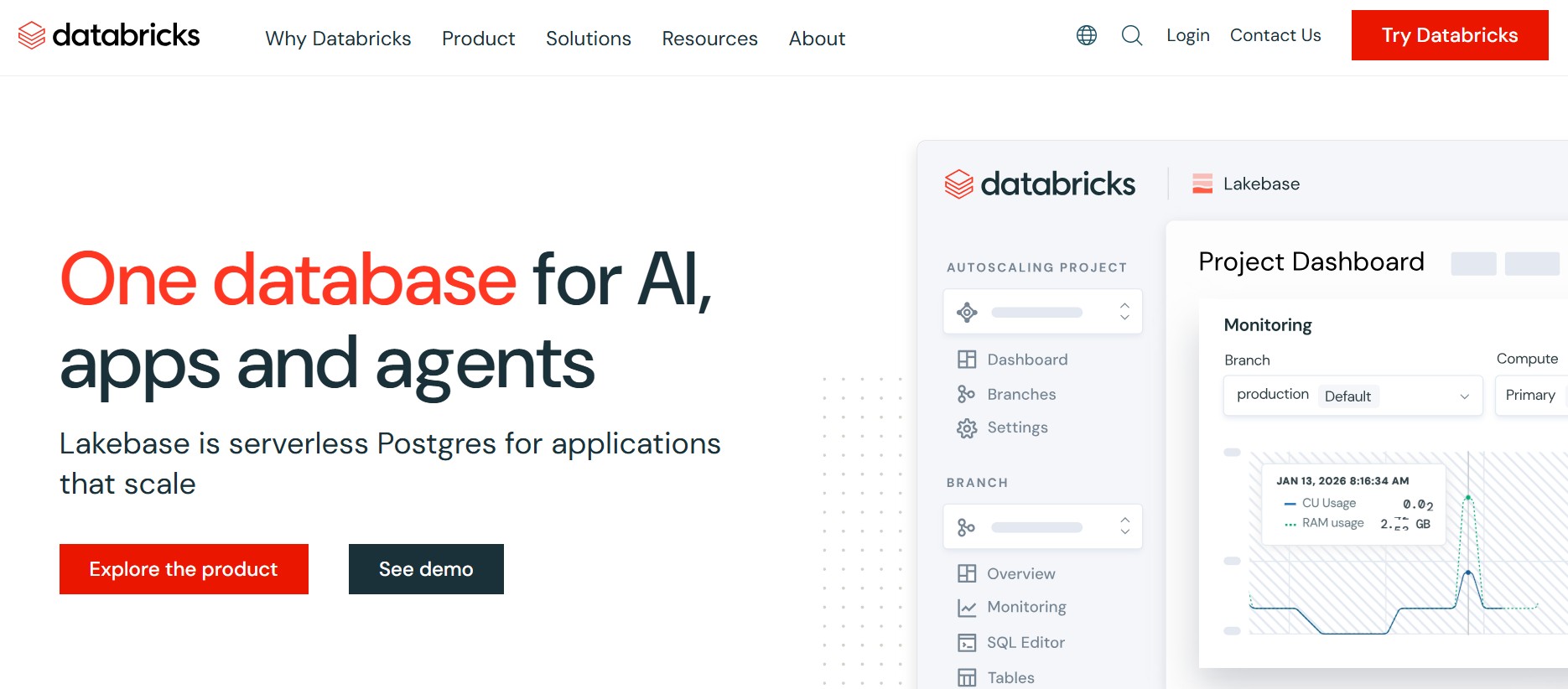
Databricks is commonly understood as a lakehouse platform. In practice, that means it aims to combine lower-cost, flexible data lake storage patterns with warehouse-like reliability, governance, and query performance.
How each platform handles structured, semi-structured, and large-scale data workloads
Snowflake tends to be straightforward for:
- Structured business data
- SQL analytics
- Departmental and enterprise reporting
- Data sharing across internal and external users
Databricks tends to be strong for:
- Very large-scale transformation workloads
- Mixed structured and unstructured or semi-structured data
- Batch and streaming pipelines
- AI and ML experimentation on broader data assets
What warehouse, lakehouse, and unified governance mean in practice
In practice:
- A warehouse approach usually means more managed abstraction, cleaner analyst experience, and easier BI standardization.
- A lakehouse approach usually means more flexibility in storage and processing patterns, often with stronger appeal to engineers and ML teams.
- Unified governance means different teams can work on shared data assets with consistent permissions, lineage, and semantic control instead of building isolated silos.
Compute, performance, and scalability
Both platforms scale well, but they scale in different ways and often optimize for different patterns.
How workload isolation, concurrency, and elastic scaling affect daily operations
Snowflake is widely associated with easy workload isolation through separate virtual compute resources. That can help when finance dashboards, executive reporting, and analyst queries all need stable performance at the same time.
Databricks is widely associated with distributed compute flexibility, which can be especially valuable when engineering teams are processing large volumes of data, running transformations, or supporting experimental workloads.
For day-to-day operations, this distinction matters:
- If lots of business users run concurrent SQL queries and dashboards, Snowflake may feel simpler to manage.
- If multiple teams run code-heavy pipelines, notebooks, and iterative experiments, Databricks may feel more natural.
Where each platform tends to shine for SQL analytics, ETL, and experimentation
Snowflake often shines in:
- SQL analytics
- BI-serving datasets
- Governed reporting layers
- Data-sharing workflows
Databricks often shines in:
- ETL and ELT at scale
- Spark-based processing
- Experimentation
- Combined engineering and ML workflows
User experience for different teams
The platform that looks strong on an architecture diagram may still fail if the day-to-day user experience does not match your team.
What analysts, engineers, and ML practitioners can expect from setup to day-to-day work
Analysts often prefer environments where:
- SQL is central
- Data models are easy to discover
- BI tools connect cleanly
- Performance is stable for dashboard workloads
That tends to be where Snowflake is often more comfortable.
Engineers often prefer environments where they can:
- Build and orchestrate complex transformations
- Work with notebooks and code
- Process large and varied datasets
- Keep flexibility in file and pipeline design
That tends to be where Databricks often feels stronger.
ML practitioners often look for:
- Notebook-based collaboration
- Feature engineering workflows
- Experiment tracking and deployment patterns
- Close access to raw and refined data
This is one reason Databricks is frequently associated with ML-led organizations.
Snowflake vs Databricks: Which Platform Is Best for Analysts, Engineers, and ML Teams
The right answer changes by role. That is why a single “winner” framing is often misleading.
For analysts and BI-heavy teams
If your organization is primarily driven by dashboards, recurring reporting, ad hoc SQL, and governed metric layers, Snowflake is often the easier fit.
Dashboard performance, SQL usability, data sharing, and ease of adoption
Analysts usually care about four things:
- How quickly they can query data
- How easily BI tools connect
- How understandable the data model is
- How reliably dashboards perform under real usage
Snowflake is often chosen because it aligns well with those expectations. It can be especially appealing for finance, sales, operations, and executive reporting teams that want a clean analytics foundation without forcing everyone into an engineering-heavy workflow.
Databricks can absolutely support analytics and BI use cases, but some organizations still find that its strongest adoption starts with technical teams first, then expands toward analysts later.
For data engineers and platform teams
For engineering-heavy environments, the comparison shifts.
Pipeline orchestration, transformation workflows, reliability, and governance controls
Data engineers often evaluate:
- Batch and streaming support
- Transformation flexibility
- Large-scale compute efficiency
- Reliability of production pipelines
- Governance across raw, intermediate, and curated layers
Databricks is often a strong fit when teams need a broad engineering platform rather than just an analytics destination. This is especially true when pipelines are complex, data volume is high, or engineering teams want to standardize around notebook and code-driven workflows.
Snowflake remains a strong option for SQL-based transformation patterns and can work well for engineering teams that want to reduce platform complexity and stay close to warehouse-centric modeling.
For ML and AI teams
For ML teams, architecture matters less than workflow support.
Notebook workflows, feature engineering, model development, and production readiness
ML teams usually ask:
- Can we experiment quickly?
- Can we access raw and curated data easily?
- Can we build repeatable feature workflows?
- Can we move from development to production cleanly?
Databricks is frequently seen as the more natural environment for these needs because its platform identity has long included notebooks, collaborative development, and machine learning support.
Snowflake’s AI and developer capabilities have expanded, and that matters in 2026. But organizations with deep ML ambitions often still lean toward Databricks, especially when data science is a core strategic function rather than an adjacent reporting use case.
Snowflake vs Databricks: 5 Key Features Compared for 2026
Governance, security, and data sharing
Both platforms understand that governance is now a buying requirement, not a nice-to-have feature.
Snowflake is widely recognized for governed data access and data-sharing workflows. Many enterprises value its ability to provide centralized control while supporting downstream BI consumption.
Databricks has invested heavily in unified governance so engineering, analytics, and AI teams can work across shared assets with stronger consistency.
What to evaluate closely:
- Role-based access models
- Lineage visibility
- Cross-team collaboration
- Internal and external sharing patterns
- How governance applies across SQL, notebooks, pipelines, and AI use cases
Ecosystem integrations and interoperability
No platform works alone.
Your choice should reflect how well Snowflake or Databricks fits with:
- BI tools
- Orchestration tools
- Data transformation frameworks
- Cloud storage
- Streaming layers
- AI and model tooling
Snowflake commonly fits neatly into SQL-first BI ecosystems.
Databricks commonly fits neatly into engineering and AI ecosystems, especially where open formats and large-scale data processing matter.
That said, both increasingly integrate across modern stacks, so the decision is less about “can it connect” and more about which platform becomes the operational center of gravity.
Cost structure and pricing predictability
Cost is where many buying decisions become more difficult.
Where costs are easy to forecast and where usage patterns can create surprises
Snowflake is often seen as easier to explain to business stakeholders when workloads are warehouse-oriented and reporting patterns are relatively stable. That does not make it cheap by default, but it can make cost attribution easier to discuss in SQL-analytics contexts.
Databricks can be highly effective for large engineering and AI workloads, but costs may feel less predictable if teams spin up broad experimentation, poorly governed compute usage, or inefficient processing patterns.
In both cases, surprises usually come from behavior, not just vendor pricing:
- Too many always-on workloads
- Inefficient transformations
- Weak workload governance
- Too many duplicate environments
- BI usage layered on top of unoptimized models
AI roadmap and future-fit considerations
In 2026, platform buyers are no longer asking only about storage and SQL. They are asking:
- How well does the platform support generative AI use cases?
- Can it help unify analytics and AI operations?
- Does it reduce fragmentation between engineers, analysts, and data scientists?
- Can it support governed automation?
Databricks is often associated with an aggressive AI and data platform expansion strategy, especially where ML and AI workflows are central.
Snowflake is also pushing further into AI-enabled analytics and broader platform capabilities.
The practical takeaway is this: future-fit should not mean chasing every roadmap announcement. It should mean choosing the platform that best supports your next two to three years of real workloads.
Snowflake vs Databricks: Pros, Cons, and Common Buying Mistakes
When Snowflake is the stronger choice
Snowflake is often the stronger choice when:
- Your organization is analytics-led
- SQL is the dominant interface
- BI reliability matters more than engineering flexibility
- You need a straightforward governed reporting foundation
- Business users and analysts are your main stakeholders
It is especially compelling when the goal is to make data broadly consumable without requiring every team to think like data engineers.
When Databricks is the stronger choice
Databricks is often the stronger choice when:
- Your organization is engineering-led
- You need flexible processing across large and varied datasets
- ML and AI workflows are first-class priorities
- Batch and streaming both matter
- Your team is comfortable with code-driven workflows and notebook-based development
It is especially compelling when analytics, engineering, and AI need to operate on a shared platform with fewer handoffs.
Why the wrong debate is choosing a winner without defining the workload
This is the most common buying mistake.
The question is not “Which is better, Snowflake or Databricks?”
The better question is:
- What percentage of our workload is BI?
- What percentage is engineering and transformation?
- How important are notebooks, ML, and experimentation?
- Who owns the platform day to day?
- Which users need the smoothest experience?
Brand comparisons are much less useful than workload definitions, team maturity, and operating model clarity.
Final Decision Framework for 2026
You do not need a perfect answer. You need a useful one.
A simple checklist based on team skills, workload types, governance needs, and budget model
Choose Snowflake first if most of these are true:
- Your primary use case is SQL analytics and BI
- Analysts are the largest user group
- You want easier adoption for business-facing teams
- You need stable reporting performance and governed sharing
- Your transformation logic is mostly structured and SQL-friendly
Choose Databricks first if most of these are true:
- Your primary use case is large-scale engineering or AI
- Engineers and data scientists are the largest user groups
- You need flexibility across structured and non-structured workloads
- You rely on notebooks, distributed compute, or advanced ML workflows
- You want one environment to support engineering, experimentation, and AI operations
Questions to ask before committing to one platform or adopting both
Before making a platform decision, ask:
- Who are our highest-value users: analysts, engineers, or ML teams?
- What workloads create the most cost and complexity today?
- Do we want one platform standard or a split-by-role strategy?
- How strong is our governance model today?
- Can our business users work effectively without engineering mediation?
- What will our AI roadmap require over the next 24 months?
A practical recommendation matrix for analysts, engineers, and ML teams
| Team profile | Likely better fit | Why |
|---|---|---|
| BI-heavy company with strong SQL culture | Snowflake | Simpler warehouse-first analytics experience |
| Data platform team managing complex transformations | Databricks | Flexible engineering and distributed processing workflows |
| AI-led organization building models and experimentation loops | Databricks | Stronger alignment with notebook and ML workflows |
| Enterprise focused on governed reporting and broad business adoption | Snowflake | Easier path for analyst and dashboard consumers |
| Mixed enterprise with mature teams and multiple workload types | Both may coexist | Different roles may benefit from different platform strengths |
Practical Recommendations Before You Choose
Here are five recommendations I would give as a BI consultant before any Snowflake vs Databricks purchase decision:
-
Map workloads before features.
Separate BI, transformation, data science, and AI workloads. Do not evaluate everything as one bucket. -
Score the platform by user group, not just architecture.
A strong engineering platform can still fail if analysts cannot adopt it efficiently. -
Run a real proof of value.
Test the top 3 to 5 business-critical workflows, not just demo queries. -
Evaluate operating discipline, not just vendor capability.
Many cost and performance problems come from governance gaps, not platform limits. -
Plan the consumption layer early.
Even the best data platform fails the business if dashboards, metric definitions, and self-service access remain difficult.
Where FineBI + Dora Fits in a Snowflake or Databricks-Centered Stack
Tools like Snowflake and Databricks are widely used in the modern data platform market, but teams that need a more business-user-friendly, self-service BI layer should also think carefully about what happens after the data platform decision.
In many enterprises, the warehouse or lakehouse is not the final user experience. Business users still need a practical way to:
- Explore governed metrics
- Build interactive dashboards
- Filter and drill down into results
- Share insights across departments
- Reduce dependence on technical teams for every reporting need
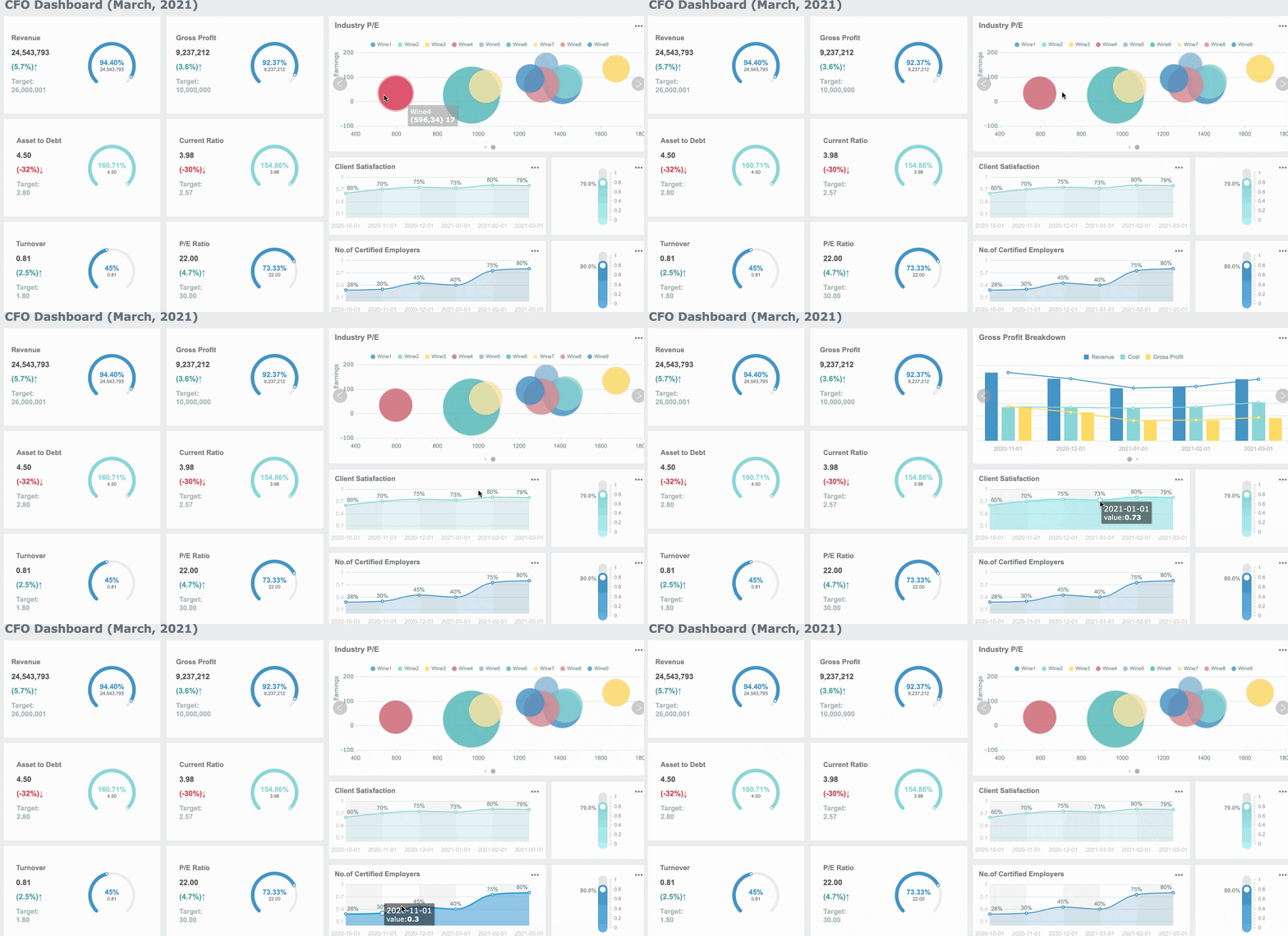 An Interactive Dashboard created by FineBI
That is where FineBI becomes relevant.
FineBI is designed as a self-service BI platform for interactive analysis and dashboard creation. For organizations using a data foundation such as Snowflake, Databricks, or other enterprise data assets, FineBI can help turn trusted datasets into more accessible business analysis experiences.
Relevant strengths include:
- Drag-and-drop dashboard creation
- Interactive filtering and drill-down analysis
- Business-user-friendly self-service workflows
- Dashboard sharing and collaboration
- Faster iteration for reporting and analysis teams
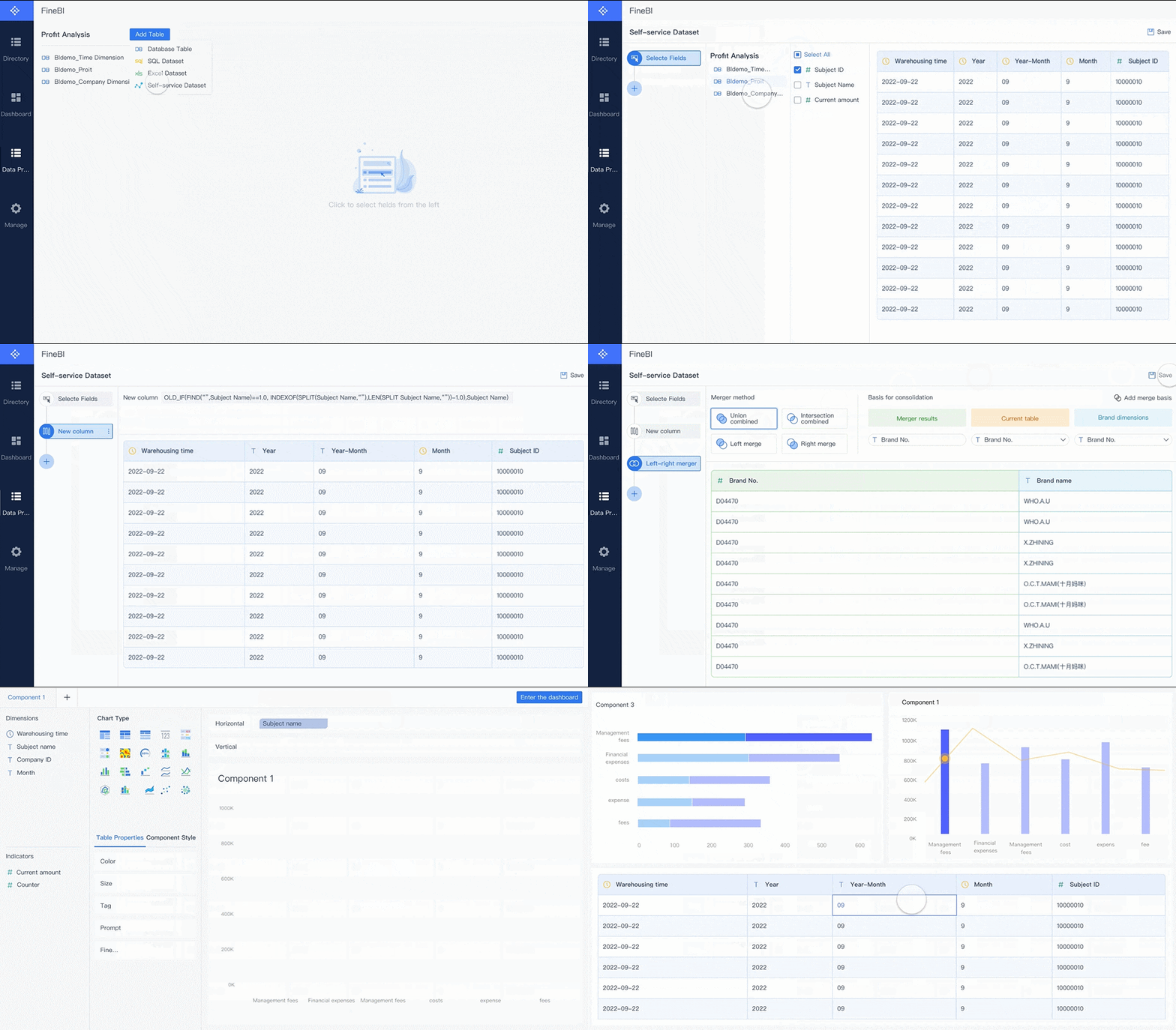 Drag-and-drop Creation
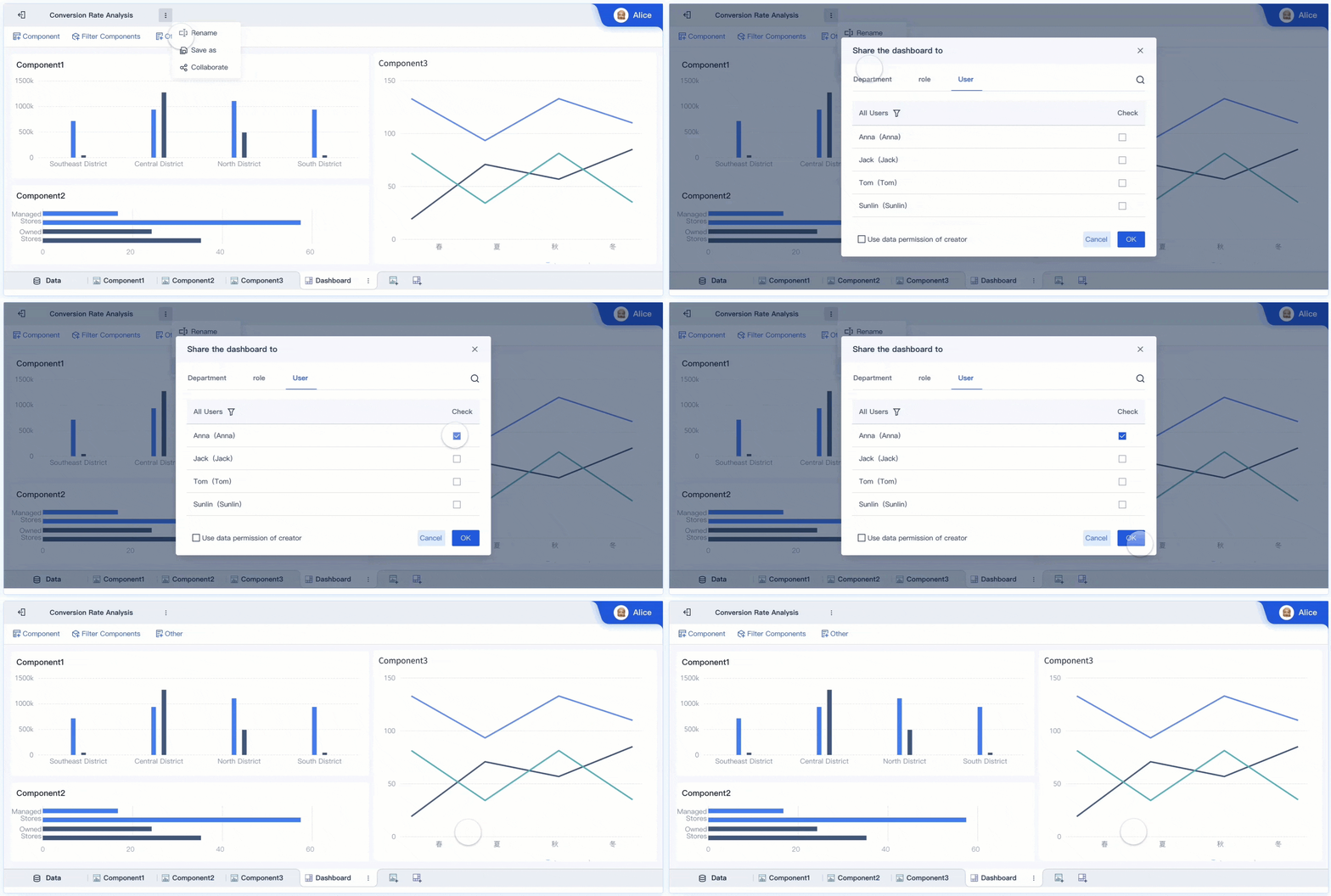
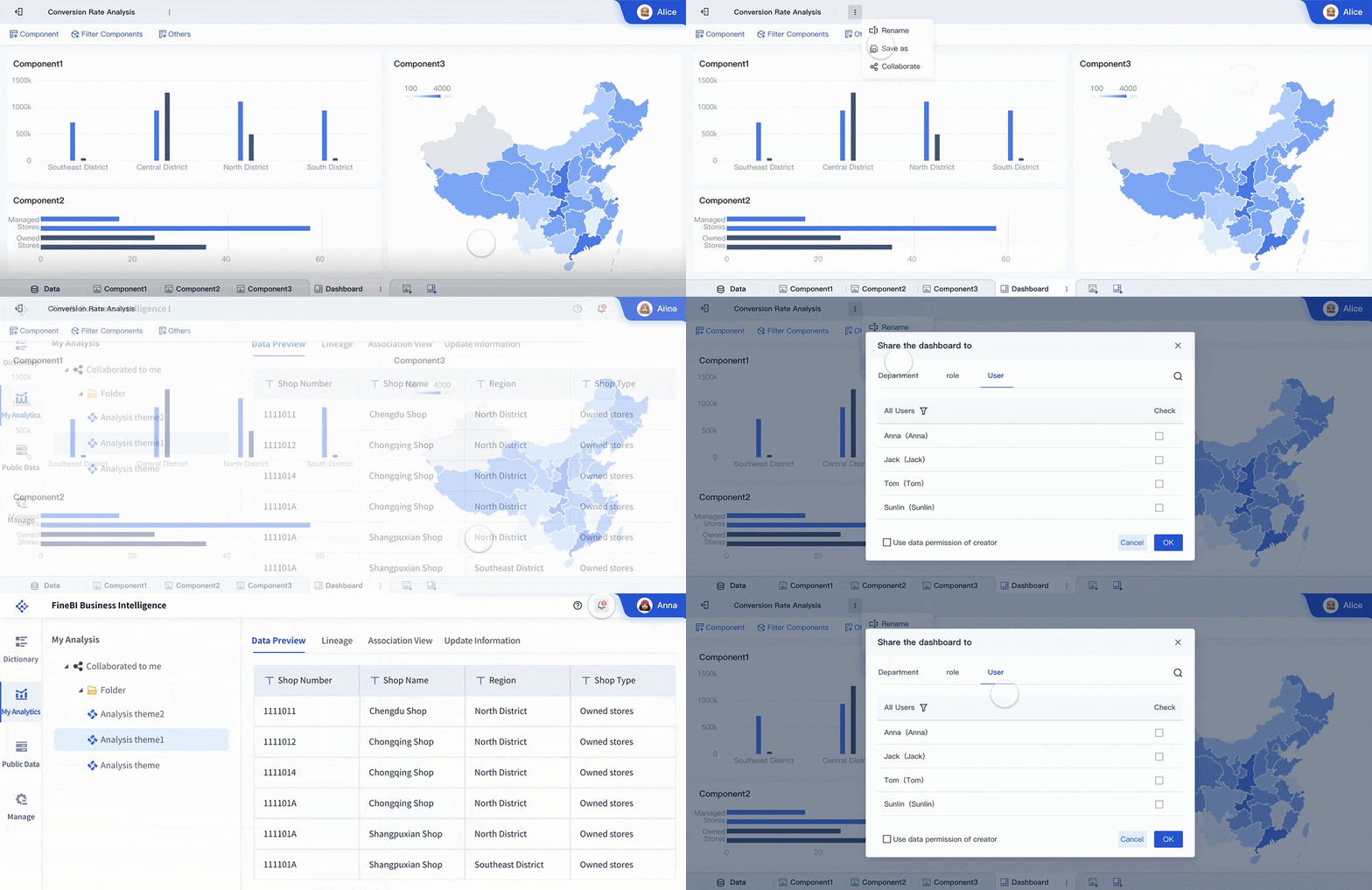 Dashboard Sharing and Collaboration
This is especially useful when your platform strategy is technically strong, but your last-mile analytics experience still needs to improve.
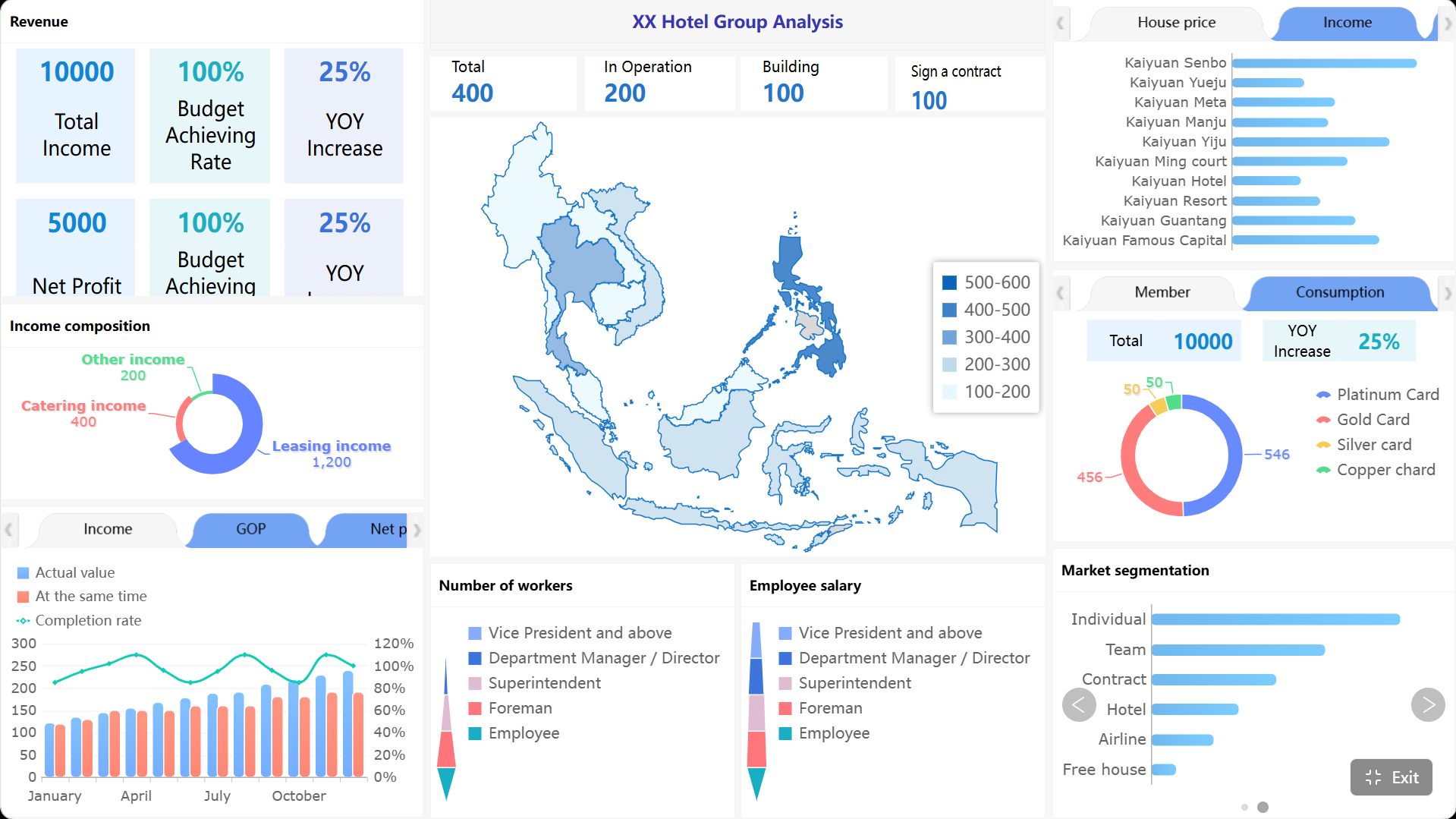
Get Ready-to-Use Dashboard Templates in Fine Gallery
Dora adds another layer to this strategy.
Dora is FanRuan’s enterprise Data Agent platform. It works as an AI assistant or AI digital employee layer on top of FineBI and existing enterprise data assets. Together, FineBI + Dora helps enterprises move beyond static dashboard consumption toward Agentic BI workflows where people can ask, analyze, generate, push, alert, and follow up in governed ways.
In practical terms:
- FineBI builds the trusted dashboard, metric, and semantic foundation
- Dora turns that foundation into a scenario-specific AI assistant or digital employee
Dora can support governed AI workflows such as:
- Data Analyst, digital employee
- Report Researcher
- Daily Briefing Secretary
- Risk Alert Officer
This is not about replacing your data platform. It is about making your data platform more useful to business users and decision-makers.
The Bottom Line
The best answer to snowflake vs databricks in 2026 is not a blanket winner.
- Choose Snowflake when your priority is warehouse-led analytics, BI usability, and SQL-centric adoption.
- Choose Databricks when your priority is engineering flexibility, large-scale data processing, and ML or AI workflows.
- Consider a broader analytics strategy when your challenge is not only data storage and processing, but also business adoption, dashboard usability, and governed self-service BI.
For many organizations, the platform decision is only half the story. The other half is how analysts and business teams actually consume trusted data. That is why teams often pair a strong data foundation with a business-friendly BI layer such as FineBI, and increasingly explore Dora to extend dashboards into governed AI-assisted workflows.
FAQs
Snowflake is often the better fit for SQL-first analytics, governed reporting, and BI-heavy teams. Databricks can support analytics too, but it is usually stronger when engineering and data science are central.