
FineReport is an enterprise reporting and dashboard platform that helps supply chain teams turn operational data into actionable visibility across planning, inventory, logistics, and performance management.
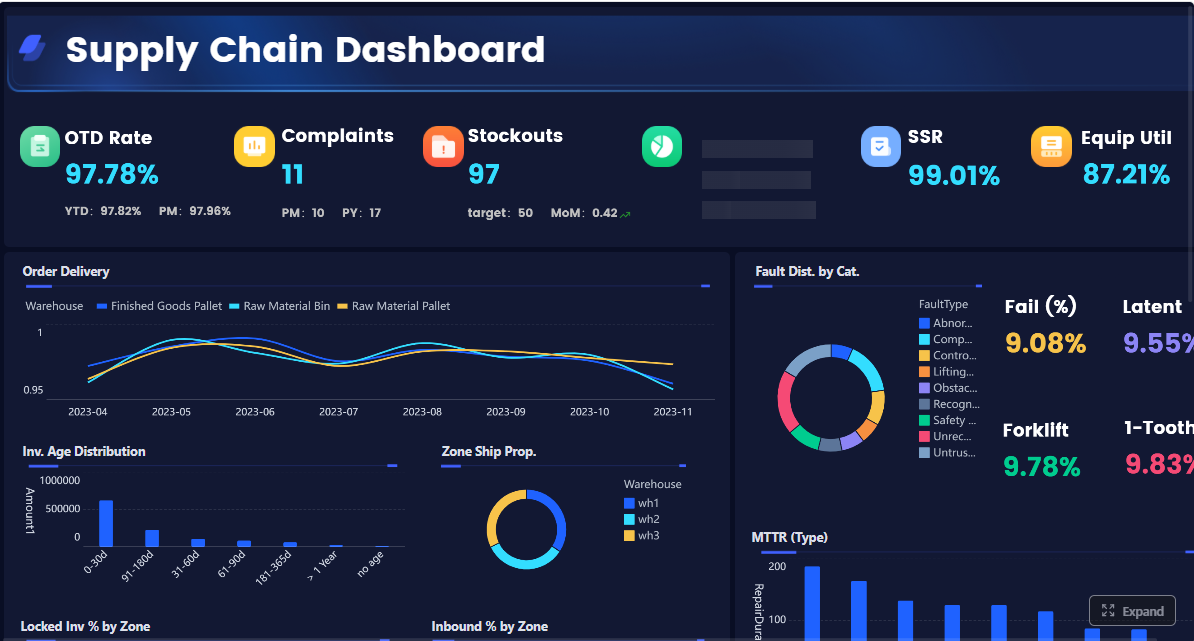 Click To Try The Dashboard
How to Compare Supply Chain Management Solutions in 2026
In 2026, evaluating supply chain management solutions is less about checking whether a platform covers basic planning and execution and more about how well it helps organizations respond to volatility, coordinate across systems, and turn fragmented data into decisions.
What changed this year is the expectation of real-time responsiveness. Many buyers now look for platforms that go beyond static planning cycles and support:
- Faster demand sensing and forecast updates
- Multi-echelon inventory optimization
- End-to-end visibility across suppliers, warehouses, carriers, and customers
- Workflow automation for procurement, fulfillment, and exception handling
- Resilience features such as scenario modeling, alerts, and control tower views
- AI-assisted recommendations that are practical, explainable, and embedded in day-to-day operations
The core evaluation criteria for modern supply chain management systems typically include:
- Functionality: Demand planning, supply planning, procurement, transportation, warehouse coordination, order orchestration, supplier collaboration, and analytics
- Integrations: ERP, MES, WMS, TMS, CRM, e-commerce platforms, EDI networks, and data warehouses
- Usability: Planner experience, role-based dashboards, workflow design, mobile access, and adoption curve
- Deployment model: SaaS, hybrid, or on-premises support; upgrade cadence; scalability by region or business unit
- Total cost: Subscription fees, implementation services, integration work, training, support, and ongoing administration
This comparison is built for organizations that need to shortlist the right platform based on operational reality, especially:
- Manufacturers with complex production and supplier dependencies
- Distributors managing inventory across multiple facilities
- Retailers balancing demand volatility and fulfillment speed
- Multi-site operations that need standardized processes with local flexibility
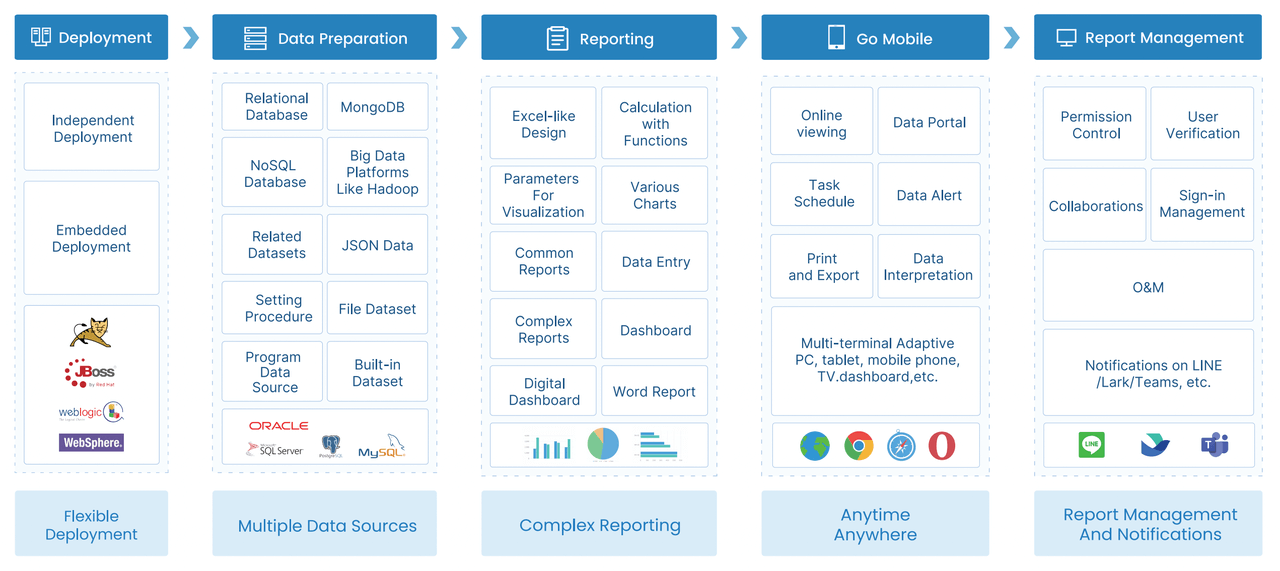
A final point often overlooked: software alone does not create supply chain visibility. Teams also need a strong reporting layer. That is where FineReport is relevant even when it is not the core transactional SCM platform. For organizations using ERP, WMS, TMS, or planning applications from multiple vendors, FineReport can help consolidate KPIs, exceptions, supplier performance, inventory turns, fill rates, and logistics costs into a unified operational view.
The Top 10 Supply Chain Management Systems for 2026 at a Glance
Below is a quick-look list of leading supply chain management solutions for 2026. The platforms are not ranked universally because the best option depends on business scale, complexity, and primary use case.
1. FineReport
- One-sentence overview: A reporting and analytics platform that complements supply chain systems by centralizing operational data into highly usable dashboards, reports, and decision views.
- Key Features:
- Real-time dashboards for inventory, procurement, logistics, and supplier performance
- Pixel-perfect operational reporting
- Cross-system data integration from ERP, WMS, TMS, MES, and databases
- Self-service analysis for planners and managers
- Mobile dashboards and scheduled reporting
- Pros & Cons:
- Pros: Strong visibility layer; useful across fragmented system landscapes; flexible for KPI management and exception reporting
- Cons: Not a transactional SCM suite; works best as a reporting and decision-support layer alongside core systems
- Best For: Data-driven operations that need unified supply chain visibility without replacing core execution systems
2. SAP Integrated Business Planning and SAP Digital Supply Chain
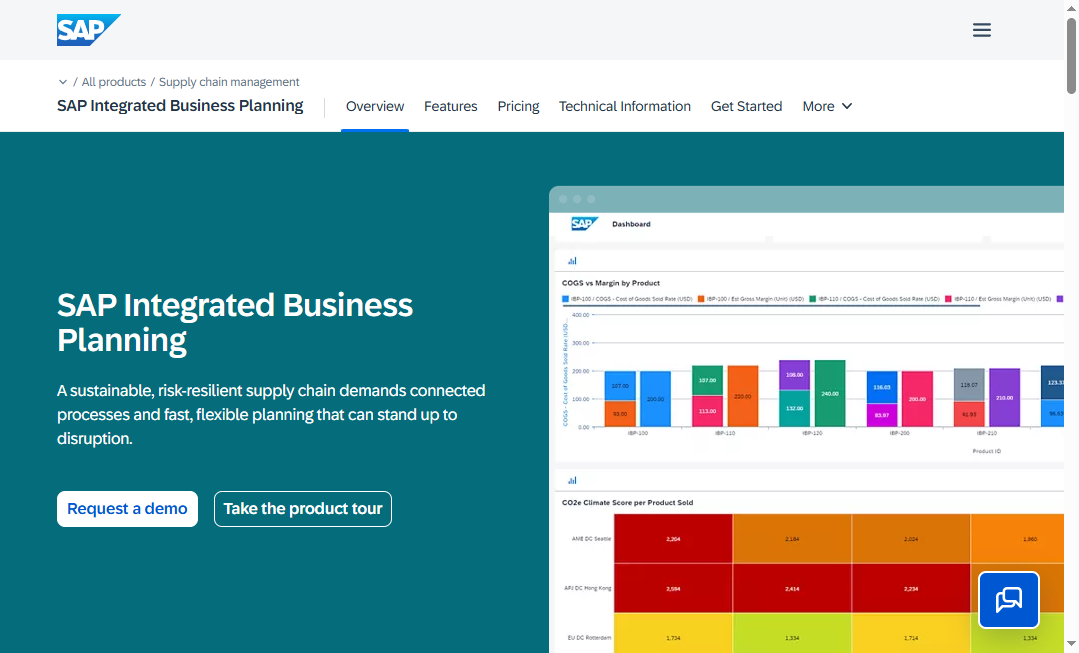
- One-sentence overview: A broad enterprise-grade supply chain suite with strong planning, manufacturing, logistics, and ERP alignment.
- Key Features:
- Demand and supply planning
- Inventory optimization
- Production planning
- Control tower and analytics
- Deep SAP ecosystem integration
- Pros & Cons:
- Pros: Strong enterprise process depth; global scale; broad suite coverage
- Cons: Implementation complexity; premium pricing; best value often comes within SAP-centric environments
- Best For: Global manufacturers and enterprises already invested in SAP
3. Oracle Fusion Cloud SCM
- One-sentence overview: A full-suite cloud SCM platform combining planning, procurement, manufacturing, logistics, and order management.
- Key Features:
- Supply chain planning
- Procurement and sourcing
- Manufacturing execution support
- Logistics and order management
- Embedded analytics and automation
- Pros & Cons:
- Pros: Strong end-to-end breadth; unified cloud architecture; suitable for large transformations
- Cons: Broad scope can mean longer deployment; may be more than mid-market teams need
- Best For: Large enterprises seeking suite standardization
4. Kinaxis Maestro
- One-sentence overview: A planning-focused platform known for concurrent planning, fast scenario analysis, and decision agility.
- Key Features:
- Demand and supply planning
- What-if modeling
- Inventory and capacity analysis
- Rapid re-planning
- Control tower capabilities
- Pros & Cons:
- Pros: Strong planning agility; excellent for volatile environments; fast simulation capabilities
- Cons: Less comprehensive in execution than broad suites; value depends on planning maturity
- Best For: Manufacturers and distributors prioritizing planning responsiveness
5. Blue Yonder
- One-sentence overview: An advanced supply chain platform with deep strengths in planning, retail, warehouse, and transportation operations.
- Key Features:
- AI-assisted forecasting
- Fulfillment optimization
- WMS and TMS
- Inventory planning
- Control tower visibility
- Pros & Cons:
- Pros: Strong retail and logistics depth; broad operational capabilities; mature optimization focus
- Cons: Can be complex to deploy; licensing and module choices require careful scoping
- Best For: Retailers, logistics-intensive businesses, and complex distribution networks
6. Manhattan Associates
- One-sentence overview: A supply chain execution leader with standout warehouse, transportation, and omnichannel fulfillment capabilities.
- Key Features:
- Warehouse management
- Transportation management
- Order management
- Labor management
- Omnichannel fulfillment coordination
- Pros & Cons:
- Pros: Execution excellence; strong fulfillment orchestration; highly regarded in distribution environments
- Cons: Less planning-centric than some competitors; best fit often depends on execution-heavy needs
- Best For: Retail, wholesale, and 3PL operations focused on execution performance
7. Infor Nexus
- One-sentence overview: A multi-enterprise supply chain network platform centered on supplier collaboration, logistics visibility, and global trade coordination.
- Key Features:
- Supplier and partner collaboration
- Shipment visibility
- Purchase order tracking
- Global trade process support
- Network-based orchestration
- Pros & Cons:
- Pros: Strong external collaboration; useful for extended supply chains; good visibility across trading partners
- Cons: Not as broad in internal planning as full-suite platforms; best value depends on partner network usage
- Best For: Global brands with complex supplier ecosystems
8. E2open
- One-sentence overview: A cloud platform built for multi-enterprise visibility, planning, logistics, and trade compliance across partner networks.
- Key Features:
- Demand and supply planning
- Channel and inventory visibility
- Logistics coordination
- Global trade compliance
- Partner network connectivity
- Pros & Cons:
- Pros: Strong network model; wide process coverage; useful for global ecosystems
- Cons: Broad scope may require phased deployment; interface and usability can vary by module
- Best For: International businesses needing cross-partner orchestration
9. Microsoft Dynamics 365 Supply Chain Management
- One-sentence overview: A flexible cloud ERP-connected SCM option that balances core functionality with Microsoft ecosystem integration.
- Key Features:
- Inventory and warehouse management
- Manufacturing support
- Procurement
- Asset and maintenance workflows
- Native ties to Power Platform and Microsoft tools
- Pros & Cons:
- Pros: Familiar ecosystem; strong fit for Microsoft-centric organizations; flexible extension options
- Cons: Advanced planning depth may lag best-of-breed specialists; customization governance matters
- Best For: Mid-market to upper mid-market firms standardizing on Microsoft
10. o9 Solutions

- One-sentence overview: A decision-centric planning platform designed for integrated business planning, scenario modeling, and cross-functional alignment.
- Key Features:
- Demand planning
- Supply and capacity planning
- Scenario modeling
- Cross-functional planning
- AI-assisted decision support
- Pros & Cons:
- Pros: Strong planning intelligence; supports complex modeling; useful for S&OP and IBP
- Cons: More planning-oriented than execution-oriented; success depends on data and process discipline
- Best For: Data-driven operations with mature planning teams
Detailed Comparison of the 10 Solutions
Features That Matter Most
When comparing supply chain management solutions, the most important features generally fall into six operational categories.
Demand Planning and Forecasting
The best platforms support forecast collaboration, AI-assisted demand sensing, seasonality handling, promotion effects, and exception-driven adjustments. Kinaxis, o9, SAP, Oracle, and Blue Yonder are especially strong here.
Inventory Optimization
Inventory optimization now means more than reorder points. Buyers increasingly expect multi-echelon optimization, service-level balancing, safety stock recommendations, and simulations for constrained supply scenarios. SAP, Oracle, Blue Yonder, and E2open are notable in this area.
Procurement and Supplier Collaboration
Procurement depth varies widely. Oracle, SAP, and Microsoft offer stronger suite-level procurement integration, while Infor Nexus and E2open stand out for external supplier collaboration and network visibility.
Transportation and Warehouse Coordination
Execution-heavy operations should pay close attention to transportation management, warehouse coordination, labor planning, and omnichannel fulfillment. Manhattan Associates and Blue Yonder are particularly strong here, while Oracle and SAP offer broader suite integration.
Reporting, Scenario Modeling, and Exception Management
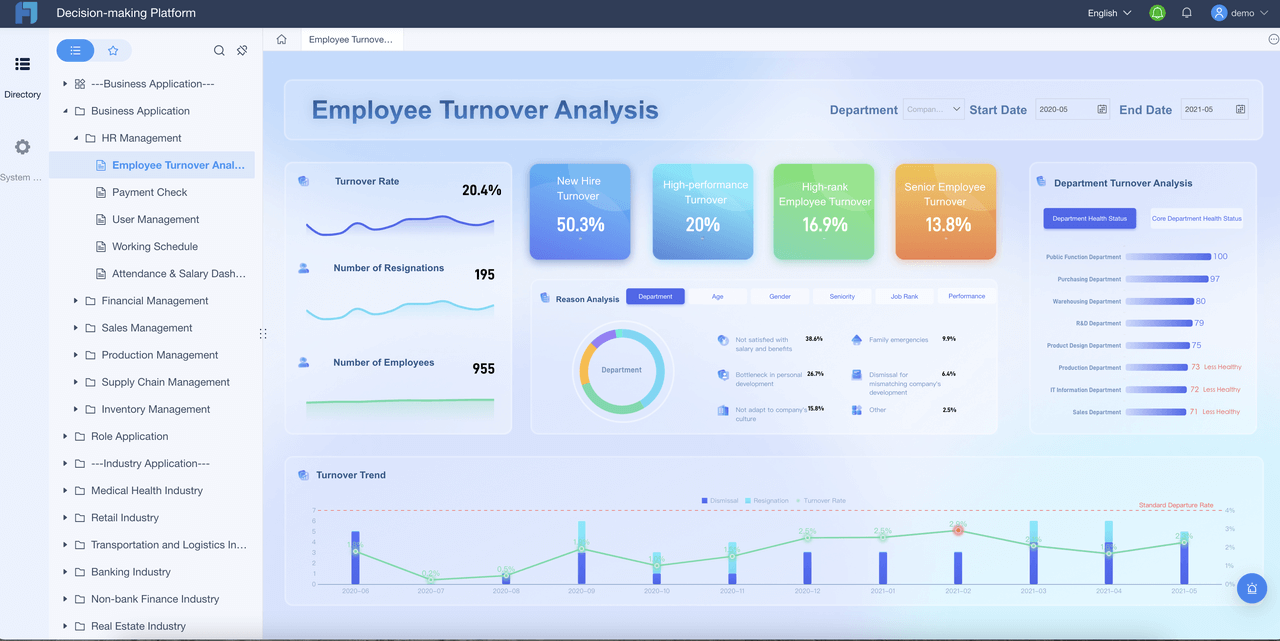
This is where many deployments succeed or fail in practice. Decision-makers need dashboards that surface delay risks, stock exposure, supplier performance, OTIF trends, and margin-impacting exceptions. Kinaxis and o9 are strong in scenario planning. FineReport adds value by making those metrics more accessible across business users through customizable dashboards and operational reporting.
AI-Assisted Forecasting and Decision Support
AI features are now common in product messaging, but practical utility differs. The most useful capabilities are those that improve forecast quality, recommend responses, explain anomalies, and prioritize exceptions. Blue Yonder, Kinaxis, o9, Oracle, and SAP are frequent shortlist candidates for organizations that want more advanced intelligence built into planning.
Pros and Cons by Platform
Below is a more practical view of where each platform stands out and where buyers should be cautious.
SAP Integrated Business Planning and SAP Digital Supply Chain
- One-sentence overview: A comprehensive choice for enterprises needing integrated planning and execution within a large-scale digital core.
- Key Features:
- Sales and operations planning
- Response and supply planning
- Inventory optimization
- Manufacturing and logistics integration
- Enterprise analytics
- Pros & Cons:
- Pros: Strong scalability; broad process coverage; good fit for global governance
- Cons: Complex implementation; substantial change management; licensing can be difficult to estimate
- Best For: Enterprise supply networks with significant global process complexity
Oracle Fusion Cloud SCM
- One-sentence overview: A broad cloud suite that connects planning, procurement, manufacturing, and logistics in one architecture.
- Key Features:
- End-to-end supply chain suite
- Procurement and sourcing
- Manufacturing and maintenance support
- Logistics and order orchestration
- Embedded analytics
- Pros & Cons:
- Pros: Strong breadth; unified user experience across modules; enterprise-ready automation
- Cons: Broad transformations can take time; configuration depth requires skilled implementation partners
- Best For: Large organizations seeking platform consolidation
Kinaxis Maestro
- One-sentence overview: A planning-first platform that excels at rapid decision-making in volatile supply conditions.
- Key Features:
- Concurrent planning
- Scenario simulation
- Demand and supply balancing
- Inventory and capacity views
- Rapid re-planning workflows
- Pros & Cons:
- Pros: High planning agility; very strong for exception-driven environments; strong executive visibility
- Cons: Less suited as a full execution suite; relies on quality upstream and downstream integrations
- Best For: Companies where planning speed and responsiveness drive competitive advantage
Blue Yonder
- One-sentence overview: A sophisticated platform covering both planning and execution with strong AI and retail-logistics heritage.
- Key Features:
- Forecasting and replenishment
- WMS and TMS
- Fulfillment optimization
- Labor and warehouse coordination
- Control tower analytics
- Pros & Cons:
- Pros: Deep functional specialization; strong for retail and distribution; mature optimization capabilities
- Cons: Can be resource-intensive to implement; module selection must be carefully matched to priorities
- Best For: Organizations with demanding fulfillment and inventory challenges
Manhattan Associates
- One-sentence overview: A leading execution platform for warehouses, transportation, and omnichannel order flows.
- Key Features:
- Warehouse and labor management
- Transportation optimization
- Order management
- Fulfillment orchestration
- Distribution execution visibility
- Pros & Cons:
- Pros: Excellent execution depth; strong in fast-moving fulfillment environments; proven for complex distribution
- Cons: Planning breadth is narrower than planning specialists; may need complementary planning tools
- Best For: Distribution-led businesses prioritizing service levels and fulfillment precision
Infor Nexus
- One-sentence overview: A network-centric platform for managing collaboration and visibility across global trading partners.
- Key Features:
- Supplier collaboration
- Shipment tracking
- Purchase order management
- Multi-party visibility
- Global logistics coordination
- Pros & Cons:
- Pros: Strong partner ecosystem support; useful for external visibility; good for extended supply networks
- Cons: Less broad as a single internal system of record; planning depth is not the primary differentiator
- Best For: Consumer goods, fashion, retail, and import-heavy operations
E2open
- One-sentence overview: A multi-enterprise cloud platform that combines planning, logistics, trade, and channel visibility.
- Key Features:
- Supply and demand planning
- Inventory visibility
- Logistics and transportation workflows
- Trade compliance
- Partner network connectivity
- Pros & Cons:
- Pros: Strong cross-enterprise process support; broad international use cases; useful for risk visibility
- Cons: Breadth can make deployments feel complex; some organizations may use only a portion of the suite
- Best For: Global businesses needing visibility beyond internal operations
Microsoft Dynamics 365 Supply Chain Management
- One-sentence overview: A practical SCM option for companies that want integrated operations within the Microsoft business application stack.
- Key Features:
- Inventory and warehouse management
- Procurement
- Manufacturing workflows
- Planning support
- Power BI and Power Platform integration
- Pros & Cons:
- Pros: Familiar ecosystem; flexible workflows; balanced functionality for growing organizations
- Cons: Advanced planning use cases may require add-ons or companion tools; governance is essential for custom extensions
- Best For: Mid-sized and upper mid-market firms seeking manageable digital transformation
o9 Solutions
- One-sentence overview: A planning intelligence platform designed for organizations that want sophisticated modeling and integrated decision-making.
- Key Features:
- Integrated business planning
- Scenario modeling
- Demand and supply analytics
- Knowledge graph-based modeling
- AI-supported decision processes
- Pros & Cons:
- Pros: Strong analytical depth; useful for complex planning processes; supports cross-functional visibility
- Cons: Best suited to mature planning organizations; can be too advanced for teams needing simpler execution-first tools
- Best For: Enterprises with established S&OP or IBP disciplines
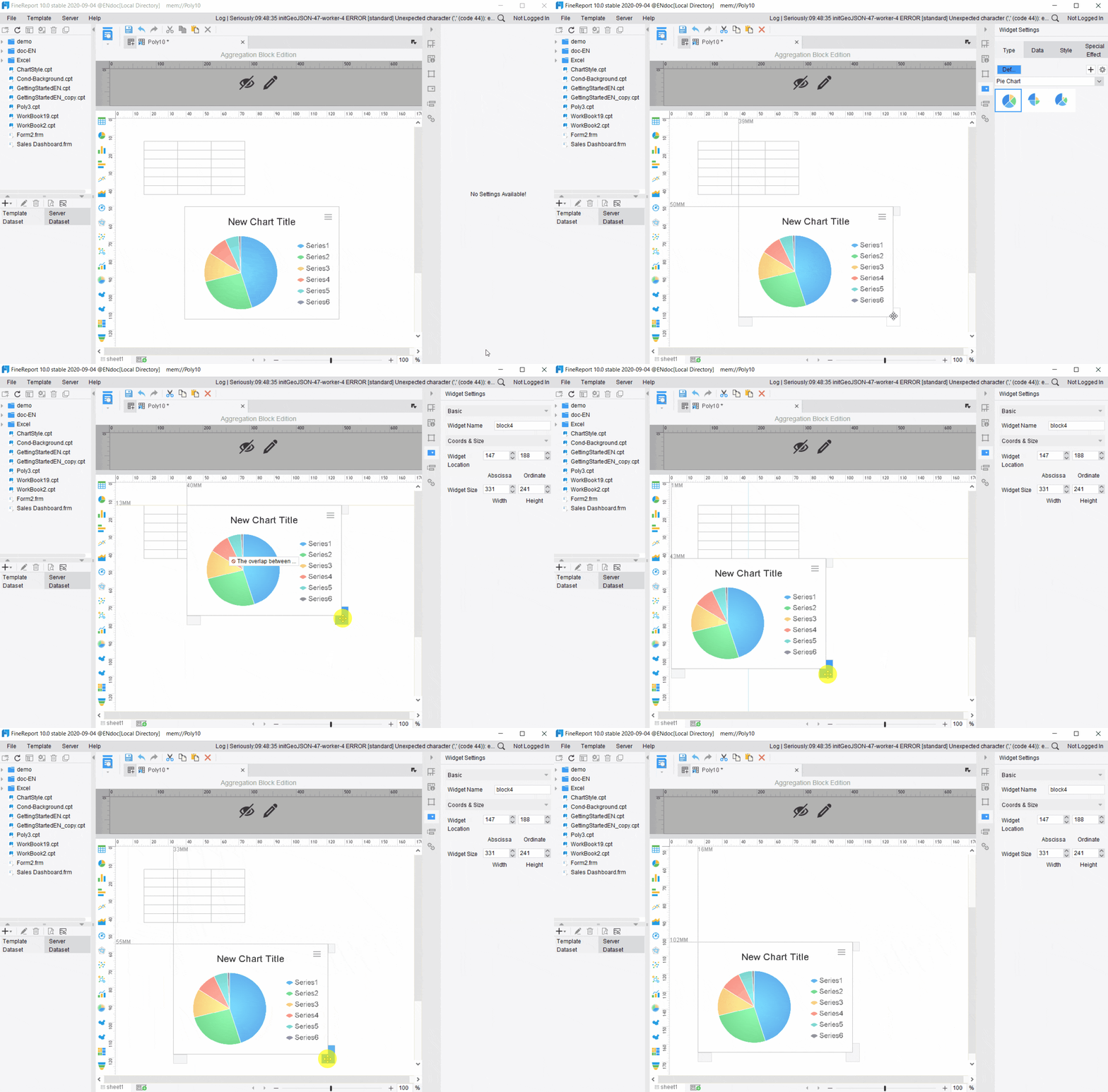
FineReport
- One-sentence overview: A powerful reporting layer for supply chain organizations that need to unify data from multiple systems into one operational decision environment.
- Key Features:
- Supply chain KPI dashboards
- Inventory aging, stockout, and service-level reporting
- Procurement and supplier scorecards
- Logistics cost and delivery analysis
- Scheduled and mobile reporting for daily operations
- Pros & Cons:
- Pros: Fast visibility gains; strong for cross-system reporting; reduces reliance on spreadsheet consolidation
- Cons: Not intended to replace core SCM transaction processing; requires clear KPI and data model design
- Best For: Organizations with multiple operational systems that need better reporting, analytics, and management visibility
Best Fit by Business Type
Different organizations should weigh these tools differently.
Enterprise Supply Networks
Large global businesses with multiple business units, plants, distribution centers, and regional constraints usually fit best with:
- SAP
- Oracle
- Blue Yonder
- E2open
- o9
- Kinaxis
These platforms tend to support scale, scenario complexity, governance, and multi-region process design.
Lean Mid-Sized Teams
Mid-sized organizations usually need balanced functionality, easier administration, and faster time-to-value. Strong candidates include:
- Microsoft Dynamics 365 Supply Chain Management
- Oracle for firms standardizing on a broader cloud suite
- Kinaxis for planning-led companies
- FineReport as a high-value visibility layer when core systems already exist
Retail and Omnichannel Operations
Retailers, wholesalers, and direct-to-consumer operations often need strong order orchestration and fulfillment depth. Best matches often include:
- Blue Yonder
- Manhattan Associates
- SAP
- Oracle
Global Supplier and Partner Networks
Organizations with outsourced manufacturing, global suppliers, freight complexity, or high compliance exposure often benefit most from:
- Infor Nexus
- E2open
- Blue Yonder
- SAP
Data-Driven Planning Organizations
Companies that already have disciplined planning processes and want stronger modeling, exception handling, and integrated decision support should prioritize:
- Kinaxis
- o9 Solutions
- SAP
- Oracle
- FineReport for management reporting and visualization across systems
Best Supply Chain Management Software in 2026 by Use Case
Best for Enterprise-Scale Supply Chain Management
For complex global operations, breadth and orchestration matter most.
SAP
- One-sentence overview: Best suited to enterprises that want deep process standardization across planning, manufacturing, and logistics.
- Key Features:
- Enterprise-grade planning
- Global process support
- Strong ERP integration
- Inventory and production synchronization
- Pros & Cons:
- Pros: Deep functionality; scalable globally; strong governance support
- Cons: High implementation effort; often best within existing SAP landscapes
- Best For: Large multinational enterprises
Oracle
- One-sentence overview: Strong option for enterprises seeking a unified cloud suite with broad operational coverage.
- Key Features:
- Planning through fulfillment
- Procurement and manufacturing integration
- Embedded workflow automation
- Broad cloud suite alignment
- Pros & Cons:
- Pros: Broad suite consistency; good standardization potential; strong enterprise architecture
- Cons: Transformation scope can become large; may exceed needs of smaller firms
- Best For: Enterprises pursuing suite consolidation
Blue Yonder
- One-sentence overview: Enterprise-ready for organizations that need both planning sophistication and execution depth.
- Key Features:
- Inventory and demand optimization
- Warehouse and transportation tools
- Retail and fulfillment specialization
- AI-driven insights
- Pros & Cons:
- Pros: Strong operational depth; good for large-scale fulfillment complexity
- Cons: Complexity and cost require disciplined scoping
- Best For: Retail-heavy and logistics-intensive enterprises
Best for Mid-Market and Growing Companies
These organizations usually need practical deployment, manageable administration, and enough depth to scale.
Microsoft Dynamics 365 Supply Chain Management
- One-sentence overview: A balanced choice for companies that want modern SCM tied to finance, operations, and Microsoft productivity tools.
- Key Features:
- Core inventory and procurement
- Manufacturing and warehouse support
- Familiar ecosystem integrations
- Extendibility through Microsoft tools
- Pros & Cons:
- Pros: Easier organizational fit for Microsoft users; balanced feature set; flexible reporting options
- Cons: Not always the strongest for advanced planning depth out of the box
- Best For: Growing firms that want a manageable cloud platform
Kinaxis
- One-sentence overview: A strong mid-market and upper mid-market option for businesses where planning agility matters more than broad transactional breadth.
- Key Features:
- Fast simulations
- Demand and supply balancing
- Scenario analysis
- Decision-centric workflows
- Pros & Cons:
- Pros: High speed to insight; useful for volatile planning environments
- Cons: Often paired with other execution systems; not a broad ERP replacement
- Best For: Manufacturers and distributors with dynamic planning needs
FineReport
- One-sentence overview: An efficient add-on for growing companies that need better supply chain reporting without replacing operational systems.
- Key Features:
- Executive dashboards
- Multi-source reporting
- Alert-driven KPI monitoring
- Mobile and scheduled report delivery
- Pros & Cons:
- Pros: Faster ROI than full system replacement; supports better decisions with existing tools
- Cons: Complementary rather than core SCM software
- Best For: Companies that need visibility improvements before or alongside wider SCM transformation
Best for Planning, Visibility, and Analytics
This category matters most for teams seeking stronger forecasting, control tower capabilities, and decision support.
Kinaxis
- One-sentence overview: One of the strongest choices for real-time planning and scenario-driven decision-making.
- Key Features:
- Concurrent planning
- Exception management
- Scenario comparison
- Fast impact analysis
- Pros & Cons:
- Pros: Excellent agility; planning-first design
- Cons: Requires integration with execution environments
- Best For: Fast-changing planning environments
o9 Solutions
- One-sentence overview: A strong platform for integrated business planning and advanced analytical modeling.
- Key Features:
- Enterprise planning models
- Cross-functional scenario analysis
- AI-driven recommendations
- Rich planning analytics
- Pros & Cons:
- Pros: Deep analytical capability; strategic planning support
- Cons: Better suited to mature organizations with planning discipline
- Best For: Data-intensive planning organizations
FineReport
- One-sentence overview: An effective visibility and analytics layer for consolidating supply chain KPIs across disconnected platforms.
- Key Features:
- Real-time dashboards
- Exception and performance reporting
- Supplier, logistics, and inventory analytics
- Flexible data integration
- Pros & Cons:
- Pros: Strong reporting flexibility; helps unify fragmented data; supports decision transparency
- Cons: Does not replace planning engines or transactional execution
- Best For: Organizations that already have core systems but lack unified reporting and actionable visibility
Pros, Cons, Pricing Factors, and Implementation Considerations
Common Advantages Across Leading Platforms
The best supply chain management solutions tend to deliver a similar set of business outcomes when properly implemented:
- Better forecast accuracy and planning responsiveness
- Lower inventory exposure and fewer stockouts
- Improved service levels and fulfillment performance
- Stronger collaboration across procurement, planning, logistics, and operations
- Greater visibility into supplier, inventory, and transportation risk
- More consistent decision-making through standardized workflows and reporting
For many companies, the biggest value does not come from a single algorithm. It comes from reducing latency between signal and action. That is why reporting platforms such as FineReport can be strategically important: they help decision-makers see the same numbers, in the same format, at the same time.
Common Drawbacks and Adoption Challenges
Even the strongest platform can underperform if the operating model is not ready. Common challenges include:
- Poor master data quality
- Inconsistent process definitions across sites or business units
- Overly ambitious implementation scope
- Integration complexity with ERP, WMS, TMS, and supplier systems
- Weak change management and low planner adoption
- Long onboarding periods before business users trust the outputs
Another recurring issue is expecting one platform to solve every supply chain problem. In practice, many organizations succeed with a combination of systems: a core ERP or SCM suite, specialized planning tools, and a reporting layer like FineReport to unify visibility.
What to Check Before You Choose
Before selecting from a shortlist of supply chain management systems, verify these areas carefully:
Pricing Structure
Look beyond subscription rates. Confirm:
- Module-based pricing
- User or transaction limits
- Integration costs
- Storage or environment charges
- Upgrade and support inclusions
Deployment Resources
Clarify:
- Internal team requirements
- Partner dependence
- Data migration effort
- Process redesign needs
- Testing and training workload
Vendor Support and Product Roadmap
Ask:
- How frequently are releases delivered?
- Are AI features practical or mainly roadmap-level?
- How strong is the partner ecosystem?
- What customer success resources are available after go-live?
Time-to-Value Expectations
A realistic timeline matters. Some organizations should not begin with a full-suite transformation. If reporting gaps are the immediate pain point, implementing FineReport first can create faster operational value while broader SCM modernization continues in phases.
Final Recommendations: Choosing the Right SCM Solution for Your Business
The best supply chain management solutions are the ones that match your business complexity, decision speed requirements, and transformation capacity.
Use this simple framework to narrow your shortlist:
If You Are a Large Global Enterprise
Prioritize suite breadth, process governance, and scalability.
- Shortlist: SAP, Oracle, Blue Yonder, E2open
- Add: o9 or Kinaxis if advanced planning is a strategic priority
If You Are a Mid-Market or Growing Business
Prioritize faster deployment, easier administration, and balanced functionality.
- Shortlist: Microsoft Dynamics 365 Supply Chain Management, Kinaxis
- Consider: Oracle if broader cloud standardization is already underway
- Add: FineReport if visibility and reporting are limiting performance
If Planning Agility Is Your Main Goal
Prioritize scenario modeling, exception management, and fast re-planning.
- Shortlist: Kinaxis, o9, SAP
- Add: FineReport for executive dashboards and operational KPI visibility
If End-to-End Visibility Is the Biggest Gap
Prioritize network collaboration, logistics tracking, and cross-system analytics.
- Shortlist: E2open, Infor Nexus, Blue Yonder
- Add: FineReport to unify metrics across ERP, WMS, TMS, procurement, and supplier data sources
When to Choose Suite Breadth vs Best-of-Breed Depth
- Choose suite breadth when standardization, governance, and vendor consolidation matter most
- Choose best-of-breed depth when planning sophistication, logistics excellence, or analytics capability is the priority
- Choose a hybrid approach when you already have core systems in place but need stronger visibility, reporting, and decision support
For many organizations in 2026, the smartest path is not replacing everything at once. It is selecting the right transactional backbone, then strengthening planning and analytics where they create the fastest ROI. That is why platforms like FineReport deserve consideration in any serious evaluation: even when another tool runs procurement, planning, or fulfillment, FineReport can make the entire supply chain more transparent, measurable, and manageable.
FAQs
The best fit depends on your operating model, existing systems, and whether you need stronger planning, execution, or end-to-end suite coverage. Large enterprises often shortlist platforms like SAP, Oracle, Kinaxis, Blue Yonder, or Manhattan Associates based on complexity and scale.