A SOC 2 compliance report is a third-party attestation that helps security teams, procurement leaders, and vendor risk reviewers evaluate whether a service provider has designed and operated controls to protect customer data. In practice, it answers the questions buyers care about most: What systems are in scope? Which controls were tested? Over what time period? Were there exceptions? For SaaS companies and technology vendors, this report often becomes a make-or-break document in enterprise sales cycles. For buyers, it is a fast way to reduce uncertainty without running a full onsite audit.
Click To Try The Dashboard
All reports in this article are built with FineReport
What a SOC 2 compliance report is and why it matters
A SOC 2 compliance report is not a casual security summary or a marketing badge. It is a formal attestation report issued by an independent licensed CPA firm. The report evaluates controls at a service organization against the Trust Services Criteria and is primarily used by customer security teams, procurement departments, internal auditors, and third-party risk programs.
In plain English, the report helps reviewers understand whether a vendor’s controls are appropriately designed and, in some cases, whether those controls actually operated effectively over time. That matters because buyers are no longer satisfied with broad claims like “we take security seriously.” They want documented evidence.
Who issues it, who uses it, and what questions it is meant to answer
A SOC 2 report is issued by an independent auditor, typically a CPA firm with experience in IT controls and assurance. It is used by several groups:
Security teams reviewing vendor risk
Procurement teams supporting supplier onboarding
Legal and compliance teams validating due diligence
Enterprise buyers during late-stage sales reviews
Internal stakeholders managing trust and governance programs
The report is meant to answer practical questions such as:
What product, platform, or environment was reviewed?
Which Trust Services Criteria were included?
Was this a Type I or Type II review?
Did the auditor find any exceptions?
Are there customer-side responsibilities required for the controls to work?
Were any outsourced providers involved in delivering the service?
Certification language vs. attestation language
One of the most common misunderstandings is calling SOC 2 a “certification.” That is not technically accurate. SOC 2 is an attestation, not a certification.
Here is the distinction:
Certification language implies a company has been formally certified against a standard by a certifying body.
Attestation language means an independent auditor examined management’s control assertions and issued an opinion.
That difference matters in procurement and legal reviews. A vendor can say it has a SOC 2 report or has completed a SOC 2 examination, but the more precise phrasing is that it has received a SOC 2 attestation report.
How SOC 2 works: scope, criteria, and report types
To use a SOC 2 compliance report correctly, you need to understand three things: scope, criteria, and report type. Most review mistakes happen when teams skip one of these.
The Trust Services Criteria in simple terms
SOC 2 is built around the Trust Services Criteria (TSC). Security is the mandatory foundation. The other categories are included based on what the company says it provides and what customers need to assess.
Key Metrics (KPIs)
Security coverage: Confirms whether the core security criteria were included in scope. This is the baseline in every SOC 2 report.
Availability coverage: Shows whether controls support uptime, resilience, and recovery commitments.
Processing integrity coverage: Evaluates whether system processing is complete, valid, accurate, timely, and authorized.
Confidentiality coverage: Assesses how sensitive information is protected from unauthorized access and disclosure.
Privacy coverage: Reviews how personal information is collected, used, retained, disclosed, and disposed of according to commitments.
Audit period length: Indicates how much operating history the auditor tested, especially important in Type II reports.
Exception count: Captures the number of control deviations or failed samples noted during testing.
Scope completeness: Measures whether the reviewed systems align with the actual product or service being sold.
Subservice organization reliance: Identifies whether critical outsourced providers affect the control environment.
CUEC dependency: Tracks Complementary User Entity Controls, meaning controls the customer must operate for the vendor’s controls to remain effective.
In simple terms, the criteria mean:
Security: Is the system protected against unauthorized access?
Availability: Is the service available as committed?
Processing Integrity: Does the system process data correctly?
Confidentiality: Is confidential business information properly protected?
Privacy: Is personal data handled according to stated privacy commitments?
This is one of the most important distinctions in any SOC 2 compliance report review.
Type I
A Type I report evaluates:
Whether controls were suitably designed
At a specific point in time
This is useful for early-stage vendors, fast-growing SaaS businesses, or companies that recently formalized their control environment.
Type II
A Type II report evaluates:
Whether controls were suitably designed
And whether they operated effectively over a period of time
That operating period is often 3 to 12 months. For enterprise buyers, Type II is usually more persuasive because it provides evidence that controls were not just documented, but consistently followed.
Who needs a report and when buyers ask for one
Not every company needs a SOC 2 report immediately, but many technology vendors eventually face pressure to obtain one. Common triggers include:
Selling SaaS or managed services to mid-market or enterprise buyers
Handling customer data, credentials, logs, or production integrations
Entering regulated industries like healthcare, finance, or critical infrastructure
Repeatedly receiving security questionnaires that ask for third-party assurance
Needing a trust document that scales across many buyer reviews
Buyers usually ask for a SOC 2 report during:
Sales security reviews
Procurement onboarding
Annual third-party risk reassessments
Renewal cycles for key vendors
Internal audit or compliance reviews
For vendors, the business value is straightforward: a current SOC 2 compliance report can shorten review cycles, reduce one-off questionnaires, and improve close rates in enterprise deals.
What is included in a SOC 2 report
A SOC 2 report follows a recognizable structure. Once reviewers know how to read it, they can quickly identify whether the document is relevant, current, and decision-ready.
Core sections you will typically see
Most reports include these core components:
Management assertion: The company states that the system description is fairly presented and the controls are suitably designed, and for Type II, operated effectively.
System description: Explains the services, infrastructure, software, people, processes, boundaries, and data flows in scope.
Auditor opinion: The independent auditor provides an opinion on management’s assertion.
Controls and tests performed: Lists the controls examined and the procedures used to test them.
Results of testing: Shows whether the controls passed, had deviations, or produced exceptions.
Complementary User Entity Controls (CUECs): Outlines what customers must do on their side.
Subservice organizations: Identifies third parties relied upon for parts of service delivery.
If you are reviewing a SOC 2 report example, read it in this order:
1. Start with scope
Check:
The product or service name
Legal entity covered
Infrastructure and environment included
Trust Services Criteria selected
If the report covers a different product than the one being purchased, the report may not be sufficient.
2. Confirm the report type and period
Look for:
Type I or Type II
Point-in-time date or testing period
Whether the report is still current enough for your policy
A stale report can create approval friction, even if the opinion is clean.
3. Read the auditor opinion carefully
You are looking for:
Unqualified or clean opinion
Qualified opinion
Exceptions or carve-outs
Language suggesting limitations in scope
4. Review controls and test results
Focus on:
Access management
Change management
Logging and monitoring
Incident response
Backup and recovery
Vendor management
HR security and termination procedures
5. Check customer dependencies
CUECs matter more than many buyers realize. If the report assumes customers manage permissions correctly, encrypt data before upload, or review access logs, your own organization may need to confirm those steps internally.
Common limitations and what a report does not prove
A clean SOC 2 compliance report is useful, but it does not prove everything.
It does not prove:
Zero security risk
Total immunity from breach
Perfect operational maturity
Future control performance
Full compliance with every law or regulation
Security coverage for products or environments outside scope
This is where many procurement teams overestimate the report. SOC 2 is a strong assurance artifact, but it is still bounded by scope, timing, sampling, and management-defined system descriptions.
A practical review mindset is this: a clean opinion reduces uncertainty; it does not eliminate it.
SOC 2 compliance checklist for preparation and review
Whether you are preparing for an audit or reviewing a vendor’s report, a checklist prevents avoidable mistakes. This is where teams turn a compliance exercise into a disciplined operating process.
Readiness steps before the audit
If you are a vendor preparing for a SOC 2 examination, follow these steps.
1. Define scope clearly
Start with the service customers actually buy. Then identify:
Document which controls address each selected Trust Services Criterion. This should include:
Administrative controls
Technical controls
Monitoring controls
Policy-level controls
Incident and change procedures
3. Assign control owners
Every control needs a named owner. Avoid “shared ownership” without accountability. In strong programs, each control has:
One owner
A review cadence
A defined evidence source
A remediation path if the control fails
4. Collect evidence early
Evidence gathering is where many SOC 2 projects slow down. Build a repeatable process for:
Access review records
Change approvals
Ticket logs
Security awareness completions
Backup test results
Incident records
Vulnerability management artifacts
5. Remediate gaps before the audit window
Do not enter the examination period with known unresolved weaknesses if you can avoid it. Fix basic gaps first, especially around:
Joiner-mover-leaver processes
MFA coverage
Privileged access management
Logging retention
Change management approvals
Vendor review procedures
Buyer-side review checklist
If you are the buyer reviewing a vendor’s SOC 2 compliance report, use this short but rigorous checklist.
Confirm scope: Does the report cover the product or service you will use?
Check the report period: Is it current enough for your internal review standard?
Review the opinion: Was it clean, qualified, or limited?
Scan exceptions: Were exceptions isolated or systemic?
Identify CUECs: Do you need to implement any customer-side controls?
Review subservice organizations: Are critical third parties included, carved out, or separately assured?
Match criteria to risk: If privacy matters, was privacy included? If uptime matters, was availability included?
Verify legal entity and hosting model: Make sure the covered entity matches the contracted vendor.
Questions to ask when the report is missing or outdated
Sometimes a vendor does not have a current SOC 2 compliance report. That does not always mean automatic rejection, but it does require follow-up.
Ask these practical questions:
Is a bridge letter available to cover the period since the last report?
Is a new audit currently in progress?
Can the vendor provide a recent security questionnaire?
Is there evidence of a formal readiness program?
Are there penetration test summaries or policy artifacts available under NDA?
Can the vendor show a remediation roadmap with executive ownership?
For buyers, the goal is not just to demand documents. It is to determine whether the vendor’s control environment is credible, current, and proportionate to the risk.
Key differences: SOC 2 vs. other security and assurance documents
Many stakeholders treat all security documents as interchangeable. They are not. A SOC 2 compliance report serves a distinct purpose in due diligence.
SOC 2 vs. ISO 27001, SIG, and security questionnaires
These documents overlap, but they are not substitutes in a strict sense.
SOC 2 vs. ISO 27001
SOC 2: Attestation report focused on controls relevant to the Trust Services Criteria.
ISO 27001: Certification of an information security management system against an international standard.
In vendor due diligence:
SOC 2 often gives buyers more control-level detail.
ISO 27001 often signals broader management-system maturity.
SOC 2 vs. SIG
SOC 2: Independent auditor attestation
SIG: Standardized questionnaire completed by the vendor
In vendor due diligence:
SOC 2 provides external assurance
SIG provides structured self-disclosure and can cover broader operational details
SOC 2 vs. security questionnaires
SOC 2: Formal assurance artifact with testing
Security questionnaire: Buyer-specific set of questions answered by the vendor
In vendor due diligence:
SOC 2 reduces repetitive questioning
Questionnaires fill in gaps related to architecture, product features, AI usage, data residency, or regulatory specifics
A SOC 2 compliance report is the output. A compliance program is the operating model behind it.
The broader program includes:
Policy development
Risk assessments
Control design
Training
Monitoring
Evidence collection
Internal reviews
Remediation tracking
Executive oversight
This distinction matters because some organizations focus too narrowly on passing the audit instead of building a repeatable control system. Buyers can often tell the difference. Mature vendors speak confidently about process ownership, continuous monitoring, and remediation discipline—not just about obtaining a report.
SOC 2 vs. SOC 1 and SOC 3
These reports serve different audiences and purposes.
SOC 1
Focuses on controls relevant to financial reporting
Common for payroll processors, financial service providers, and systems that affect customer accounting
SOC 2
Focuses on controls relevant to security, availability, processing integrity, confidentiality, and privacy
Common for SaaS, cloud, managed service, and technology providers
SOC 3
Covers similar subject matter as SOC 2 but is designed for general distribution
Usually less detailed and more marketing-friendly
Not sufficient for most in-depth enterprise security reviews
A key sharing difference:
SOC 2 reports are typically restricted and shared under controlled conditions
SOC 3 reports are intended for broader public sharing
How to use a SOC 2 report in real-world decisions
A SOC 2 compliance report is only valuable if teams know how to apply it in actual go/no-go decisions.
For vendors, the decision path usually looks like this:
Pursue readiness work if controls are still being formalized
Pursue Type I if buyers need near-term assurance and the control design is in place
Pursue Type II if enterprise procurement expects evidence of sustained operation
For buyers, the decision path is different:
Approve based on the report if scope, period, criteria, and results align with risk
Request follow-up if there are exceptions, missing criteria, or stale timing
Require compensating evidence if the report is missing, outdated, or too narrow
The most effective teams operationalize this review process with dashboards, workflow, and standardized checklists. That is especially important when procurement, security, legal, and business stakeholders all need visibility into report status, exceptions, and remediation follow-up.
Best practices for implementing a SOC 2 review and tracking workflow
1. Standardize your intake criteria
Define in advance what counts as acceptable:
Minimum report freshness
Required report type
Required Trust Services Criteria
Acceptable exception thresholds
Escalation triggers
This reduces subjective back-and-forth across deals.
2. Build a central review workflow
Create one workflow for receiving, storing, reviewing, and renewing assurance documents. Track:
Vendor name
Product in scope
Report period
Expiration or renewal date
Review owner
Exceptions identified
Follow-up actions
3. Separate critical findings from minor deviations
Not every exception should block a deal. Classify findings by business impact:
Access control failures
Logging gaps
Change management weaknesses
Backup failures
Documentation-only gaps
This helps teams prioritize what truly matters.
4. Monitor renewal and bridge-letter windows
Many approvals fail because the report expires during a contract cycle. Use alerts and dashboards to track:
Upcoming expiration dates
Audit in-progress status
Bridge letter receipt
Open remediation commitments
5. Tie report review to executive reporting
Security and procurement leaders should be able to see portfolio-wide trends such as:
Percentage of strategic vendors with current SOC 2 reports
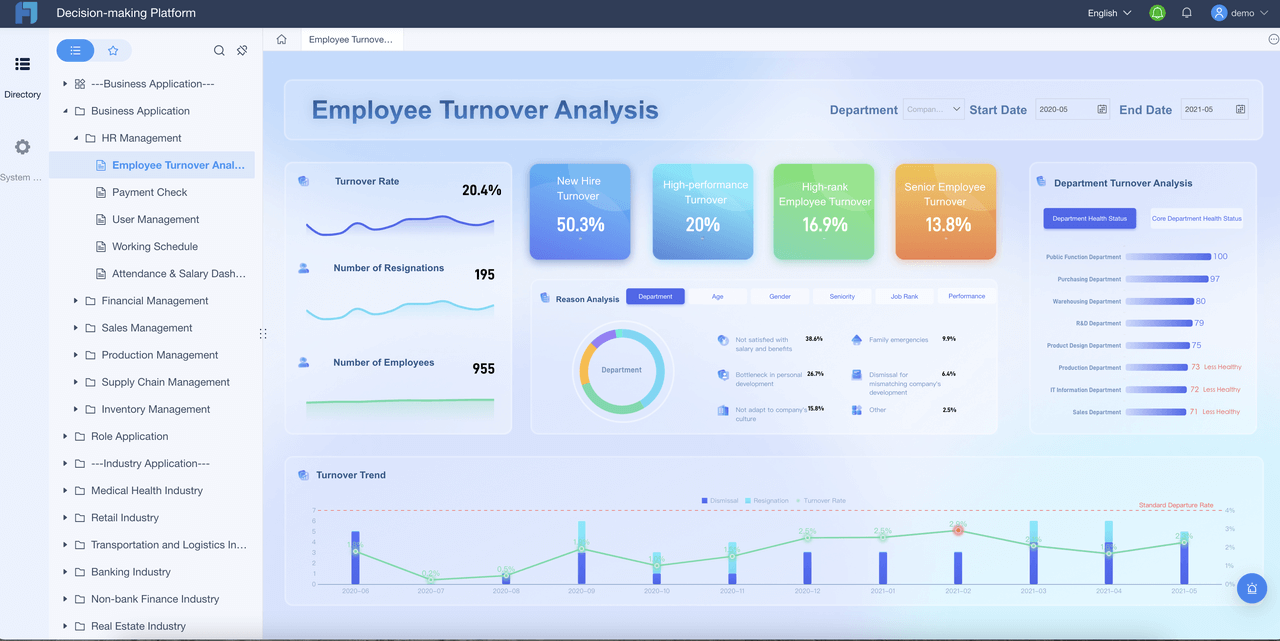
After best practices, the next challenge is execution at scale. Building this manually is complex; use FineReport to utilize ready-made templates and automate this entire workflow.
Get Ready-to-Use Dashboard Templates in Fine Gallery
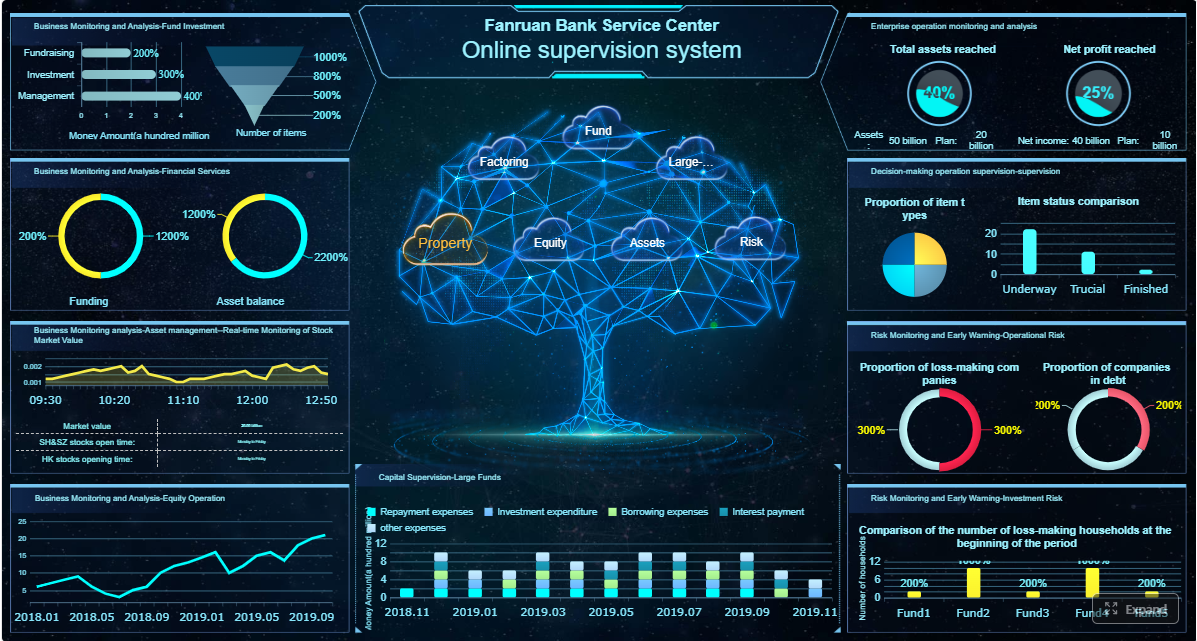
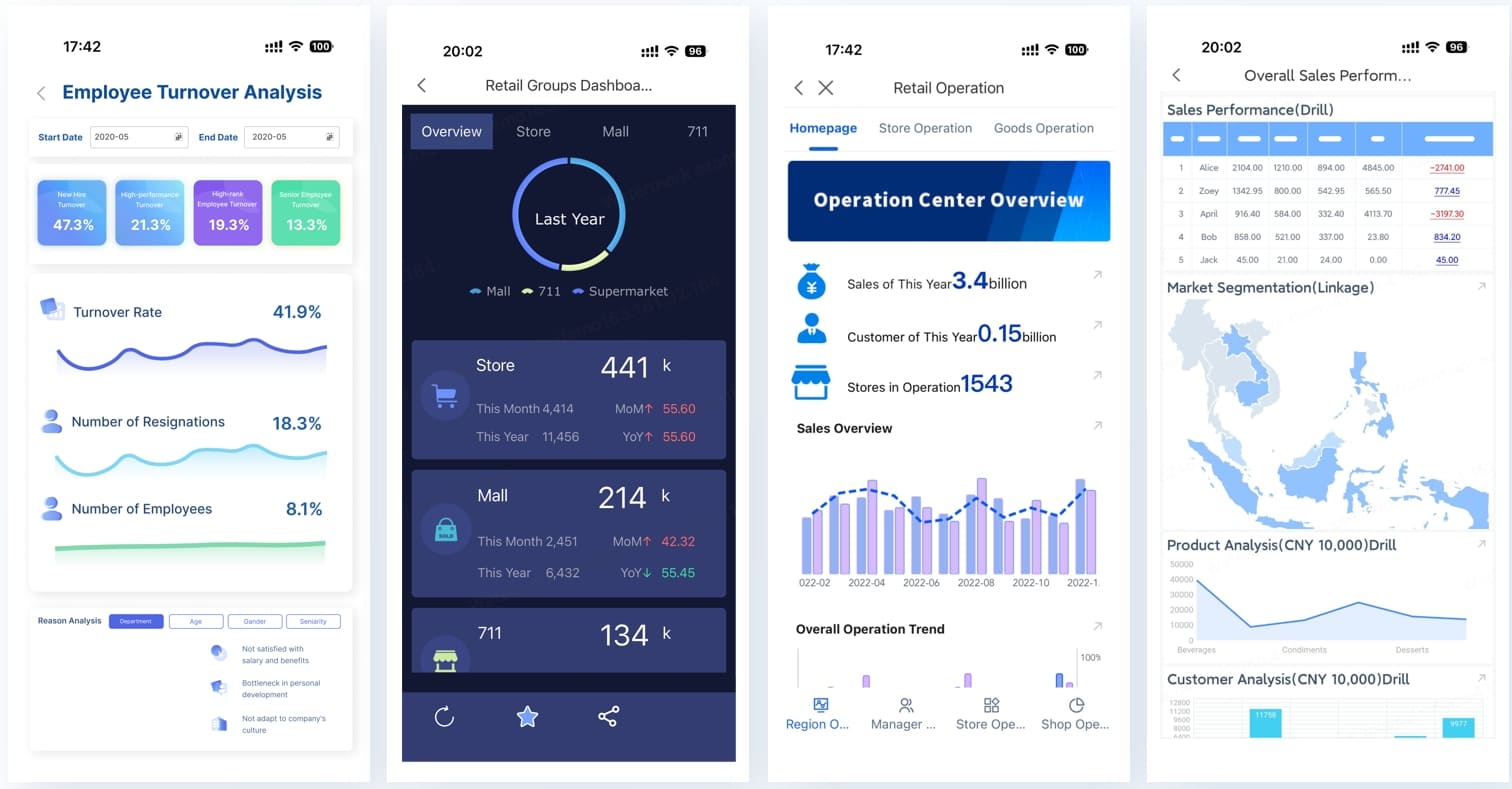
With FineReport, teams can centralize SOC 2 review data, visualize audit periods, track exceptions, monitor vendor documentation freshness, and automate stakeholder reporting across security, procurement, and compliance functions. Instead of stitching together spreadsheets, inbox approvals, and static status updates, you can build a governed reporting layer that supports both operational review and executive decision-making.
The bottom line is simple: a SOC 2 compliance report is one of the most useful trust documents in modern vendor assurance, but only if you understand what it covers, what it does not cover, and how to review it in context. Vendors should align report type to sales-stage needs. Buyers should test scope, timing, exceptions, and dependencies before treating the report as sufficient evidence.
If your team wants to turn SOC 2 review from a manual document exercise into a repeatable, visual workflow, FineReport can help you operationalize the process end to end.
A SOC 2 compliance report is an independent CPA attestation that evaluates whether a service organization’s controls meet relevant Trust Services Criteria. It helps customers review security, scope, testing period, and any noted exceptions.
SOC 2 is an attestation, not a certification. The report contains an auditor’s opinion on management’s control assertions rather than a formal certification award.
A Type I report assesses whether controls are suitably designed at a specific point in time. A Type II report also tests whether those controls operated effectively over a defined review period.
It typically includes the systems and services in scope, the Trust Services Criteria covered, the audit period, the auditor’s opinion, and any exceptions found during testing. It may also describe subservice providers and customer responsibilities.
Vendors use it to build trust and speed up enterprise sales reviews. Buyers use it to reduce vendor risk and confirm that key security controls have been independently examined.
Product Trial
FineReport
Pixel-perfect reports · Interactive dashboards · Easy data entry · Digital twins