
FineReport is an enterprise reporting and dashboard platform that helps procurement and risk teams turn supplier data, risk signals, and operational metrics into actionable executive reporting.
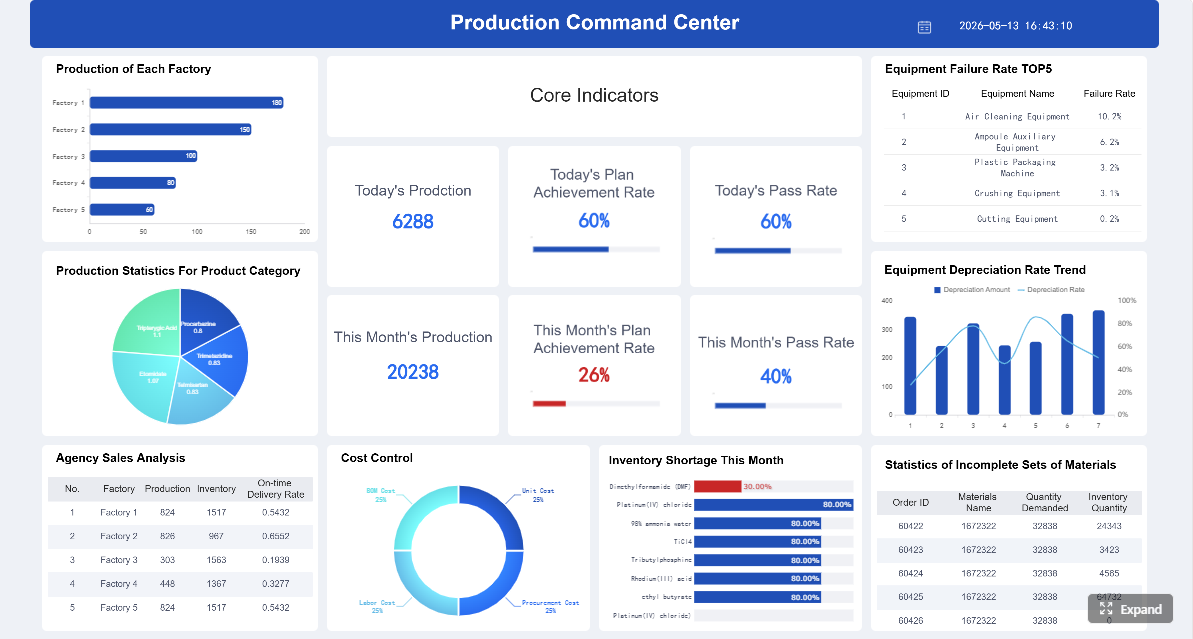 Click To Try The Dashboard
Side-by-side comparison of the 10 best supply chain risk management software platforms
Comparison table: features, strengths, limitations, and ideal use cases
If you are evaluating supply chain risk management software, start with the shortlist below. The table focuses on the buying criteria that matter most in 2026: core risk coverage, deployment, integrations, reporting depth, and pricing model.
| Platform | Core capabilities | Deployment model | Integration options | Reporting depth | Pricing approach | Best known for | Main limitation | Ideal use case |
|---|---|---|---|---|---|---|---|---|
| Everstream Analytics | Network mapping, event monitoring, risk alerts, predictive insights, sub-tier visibility | Cloud/SaaS | ERP, procurement, planning, API-based workflows | Strong operational dashboards and alerting views | Custom enterprise pricing | Real-time supply chain event intelligence | May be more complex than needed for small programs | Global manufacturers needing disruption monitoring |
| Resilinc | Multi-tier mapping, supplier risk monitoring, event intelligence, incident management | Cloud/SaaS | ERP, supply chain systems, APIs | Strong disruption and supplier impact reporting | Custom pricing | Deep mapping and resilience workflows | Implementation can require significant supplier data collection | Enterprises with complex multi-tier networks |
| Exiger | Supplier due diligence, trade compliance, risk workflows, AI-assisted remediation | Cloud/SaaS | APIs, procurement platforms, compliance workflows | Strong audit, compliance, and remediation reporting | Custom pricing | Compliance-heavy risk management | Less specialized in logistics-style operational sensing | Regulated industries and defense-related environments |
| Prewave | AI news monitoring, ESG and supplier risk detection, predictive monitoring, mapping | Cloud/SaaS | APIs, procurement and ERP connectors | Strong alerting and category-based risk reporting | Custom pricing | Broad external risk sensing across languages | Depth may vary by region and supplier disclosure quality | Global supply chains exposed to ESG and geopolitical risk |
| Interos | Supply chain mapping, ecosystem risk scoring, geopolitical and cyber intelligence | Cloud/SaaS | APIs, enterprise connectors | Strong network-level and executive risk views | Custom pricing | Large-scale relationship mapping | Can feel data-heavy for teams wanting simple workflows | Large organizations needing ecosystem-level visibility |
| Sphera | Supplier risk, ESG, sustainability, transparency, compliance workflows | Cloud/SaaS | ERP, EHS, sustainability and procurement integrations | Strong ESG and governance reporting | Custom pricing | ESG-focused supply chain risk management | Not always the best fit for teams prioritizing only operational disruptions | Firms aligning supplier risk with ESG reporting |
| Moody’s / Maxsight | Financial risk, supplier scorecards, sanctions, compliance, cyber, sustainability signals | Cloud/SaaS + data delivery | APIs, data feeds, procurement tools | Excellent scorecard and executive reporting | Custom pricing | Financial and third-party risk intelligence | Less operations-centric than some SCRM specialists | Procurement teams prioritizing supplier financial health |
| BitSight | Cyber risk ratings, third-party monitoring, vendor exposure intelligence | Cloud/SaaS | Security and third-party risk integrations, APIs | Strong cyber posture reporting | Subscription/custom | Cyber risk in supplier ecosystems | Narrower scope outside cyber and digital exposure | Organizations where cyber supply chain risk is critical |
| SAP Ariba Supplier Risk | Supplier onboarding, risk data, workflow integration, procurement-connected risk views | Cloud/SaaS | Native SAP ecosystem, APIs | Good procurement-linked reporting | Enterprise subscription/custom | Embedded risk in procurement process | Best value often depends on existing SAP footprint | SAP-centric procurement organizations |
| Coupa Supply Chain Design & Risk Ecosystem | Supplier risk workflows, spend-linked context, procurement integrations, partner risk data | Cloud/SaaS | Coupa ecosystem, APIs, partner connectors | Good spend and sourcing-oriented reporting | Enterprise subscription/custom | Risk context inside procurement operations | May rely on partner data for broader specialist risk depth | Mid-to-large procurement teams wanting risk inside sourcing workflows |
Platforms 1–5
1. Everstream Analytics
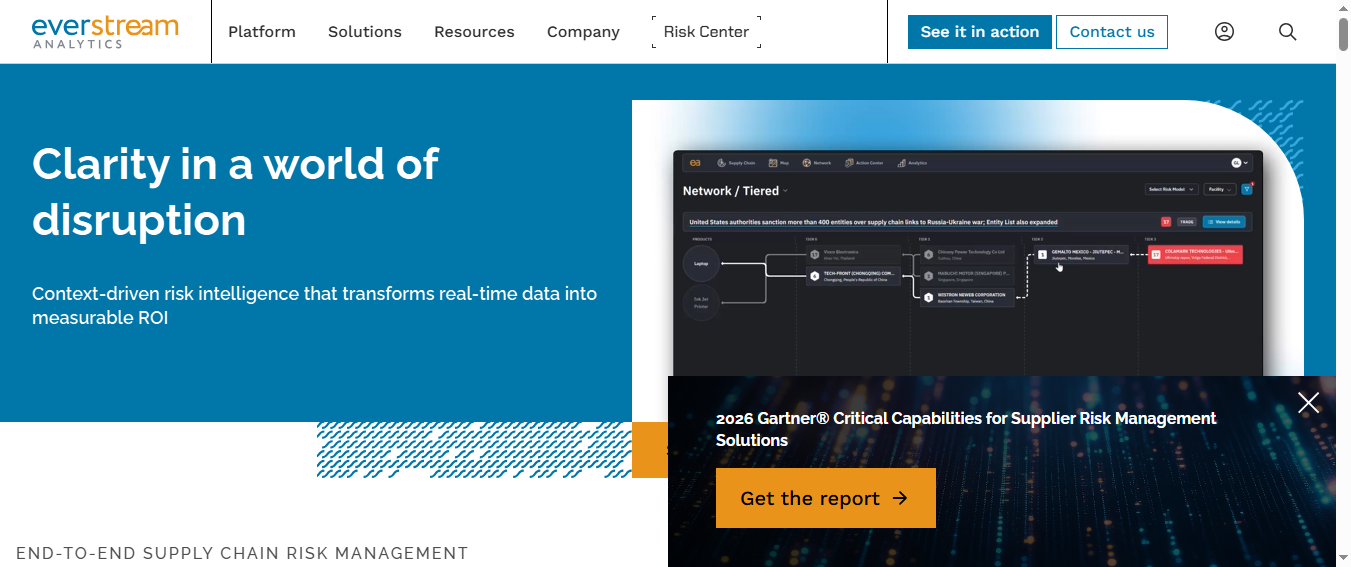
- One-sentence overview: Everstream Analytics is a supply chain risk management software platform built for organizations that need continuous monitoring, predictive alerts, and operational visibility across global supplier networks.
- Key Features:
- Multi-tier supply chain mapping
- Real-time event monitoring
- Predictive disruption alerts
- Supplier and location risk assessment
- Insights-to-action workflows
- Pros & Cons:
- Pros: Strong real-time monitoring, good fit for operational decision-making, broad disruption coverage
- Cons: Enterprise-oriented implementation, may exceed the needs of smaller procurement teams
- Best For (Target user/scenario): Global manufacturers, planning teams, and procurement organizations that need to detect disruption early and act quickly
Everstream stands out when your biggest concern is operational continuity. Teams that need to monitor weather, logistics bottlenecks, geopolitical developments, and supplier events in one environment will appreciate its focus on fast-moving risk signals.
2. Resilinc
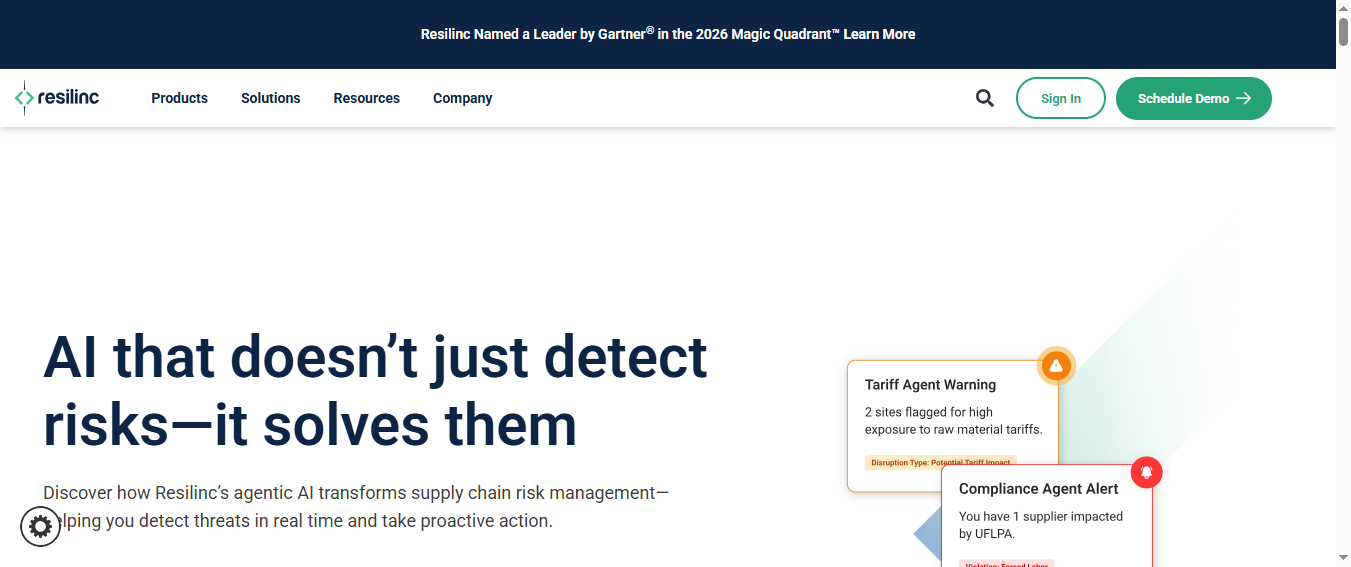
- One-sentence overview: Resilinc is a resilience-focused platform that combines multi-tier mapping, supplier monitoring, and event-driven response workflows.
- Key Features:
- Multi-tier and sub-tier mapping
- Event monitoring and disruption intelligence
- Supplier risk assessments
- Incident management workflows
- Business impact analysis
- Pros & Cons:
- Pros: Strong network mapping, mature resilience use cases, useful for disruption response
- Cons: Data collection can be demanding, adoption depends on supplier participation and internal process maturity
- Best For (Target user/scenario): Enterprises with complex supplier dependencies and formal business continuity programs
Resilinc is often a strong fit for teams that want to move beyond point-in-time supplier checks and build an ongoing resilience program. It is especially useful where sub-tier visibility matters.
3. Exiger
- One-sentence overview: Exiger is a supplier risk and compliance platform designed for organizations that need defensible due diligence, trade compliance, and documented remediation.
- Key Features:
- Supplier screening and due diligence
- Compliance and sanctions monitoring
- Risk scoring and case management
- AI-assisted remediation workflows
- Audit trails and attestations
- Pros & Cons:
- Pros: Strong compliance orientation, robust auditability, suited for highly regulated environments
- Cons: More compliance-centric than logistics-centric, may be broader than needed for simple supplier monitoring
- Best For (Target user/scenario): Defense, public sector, energy, and highly regulated procurement programs
Exiger is particularly compelling when legal, trade, and regulatory obligations are central to your supplier risk management process. Teams that need clear evidence of review and remediation will value its workflow depth.
4. Prewave
- One-sentence overview: Prewave is an AI-driven monitoring platform that detects supplier, ESG, and geopolitical risks from large-scale external data sources across many languages.
- Key Features:
- AI-based external news monitoring
- ESG and sustainability risk detection
- Predictive risk identification
- Supplier mapping
- Multi-language signal collection
- Pros & Cons:
- Pros: Strong external risk sensing, useful ESG monitoring, good global signal coverage
- Cons: Signal quality can depend on public data availability, remediation workflow depth may vary by use case
- Best For (Target user/scenario): Global procurement and sustainability teams that need early-warning visibility across diverse geographies
Prewave is a good option when supplier risk extends beyond financial health into labor issues, environmental events, adverse media, and fast-changing geopolitical signals.
5. Interos
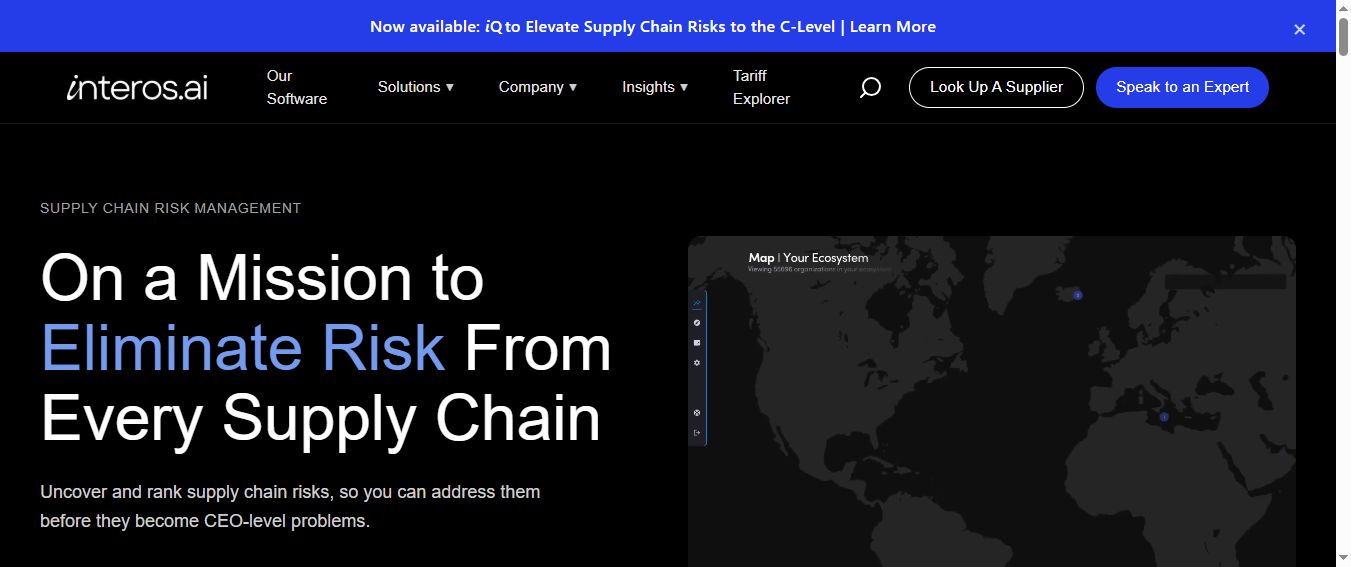
- One-sentence overview: Interos provides large-scale supply network mapping and risk scoring to help enterprises understand ecosystem dependencies and concentration risk.
- Key Features:
- Relationship mapping across suppliers and sub-tiers
- Cyber, geopolitical, and operational risk signals
- Concentration and dependency analysis
- Executive dashboards
- Continuous monitoring
- Pros & Cons:
- Pros: Strong at network-level visibility, useful for identifying hidden dependencies, broad risk lens
- Cons: Can be overwhelming for teams seeking lightweight workflows, adoption may require strong data governance
- Best For (Target user/scenario): Large enterprises and government-facing organizations managing broad, interconnected supplier ecosystems
Interos is strongest when leadership wants to see how exposure spreads across an ecosystem rather than only reviewing supplier records one by one.
Platforms 6–10
6. Sphera
- One-sentence overview: Sphera is a risk and sustainability platform that brings ESG, transparency, and supplier risk management into one governance-oriented environment.
- Key Features:
- Supplier transparency tools
- ESG and sustainability tracking
- Risk and compliance workflows
- Reporting for governance and audit
- Enterprise integration options
- Pros & Cons:
- Pros: Strong ESG alignment, useful for governance-heavy organizations, solid enterprise reporting
- Cons: Less focused on real-time disruption sensing than some specialists
- Best For (Target user/scenario): Companies that want supplier risk management solutions tied closely to ESG and sustainability objectives
Sphera is a practical choice if your team reports not only on disruption risk, but also on sustainability performance, compliance, and supply chain transparency.
7. Moody’s / Maxsight
- One-sentence overview: Moody’s delivers supplier risk intelligence centered on financial health, compliance, sanctions, cyber, and sustainability scorecards.
- Key Features:
- Supplier financial risk scoring
- Compliance and sanctions data
- Cyber and sustainability indicators
- Data feeds and API delivery
- Executive scorecards
- Pros & Cons:
- Pros: Excellent financial risk strength, strong company coverage, useful for standardized scorecarding
- Cons: Less operationally focused than event-monitoring specialists
- Best For (Target user/scenario): Procurement and third-party risk teams that prioritize supplier viability and financial stability
Moody’s is often a smart fit where supplier failure risk, sanctions exposure, and standardized assessments carry more weight than logistics event tracking.
8. BitSight
- One-sentence overview: BitSight is a cyber-focused risk platform that helps organizations monitor the digital security posture of suppliers and third parties.
- Key Features:
- Security ratings
- Continuous cyber exposure monitoring
- Third-party cyber risk workflows
- Vendor segmentation
- API and security ecosystem integrations
- Pros & Cons:
- Pros: Strong cyber visibility, effective for digital supply chain exposure, mature third-party cyber use cases
- Cons: Narrower supply chain scope if you also need operational, ESG, and financial risk in the same tool
- Best For (Target user/scenario): Security-conscious organizations where supplier cyber risk is a major procurement concern
If your supply chain includes software providers, cloud vendors, data processors, or critical digital partners, BitSight can be an important specialist layer in the stack.
9. SAP Ariba Supplier Risk
- One-sentence overview: SAP Ariba Supplier Risk embeds supplier risk workflows directly into procurement and supplier lifecycle management processes.
- Key Features:
- Supplier onboarding and qualification
- Integrated risk data and alerts
- Procurement workflow alignment
- SAP ecosystem connectivity
- Supplier records and documentation
- Pros & Cons:
- Pros: Natural fit for SAP users, useful embedded workflows, good process consistency
- Cons: Best value depends on SAP adoption, specialist risk depth may require complementary tools
- Best For (Target user/scenario): Enterprises already running SAP procurement and supplier management processes
SAP Ariba Supplier Risk is less about being the deepest standalone specialist and more about embedding risk checks where procurement teams already work.
10. Coupa Supply Chain and Risk Ecosystem
- One-sentence overview: Coupa supports supplier risk management through procurement-connected workflows, partner data, and spend-linked decision support.
- Key Features:
- Procurement-integrated supplier workflows
- Risk signals through ecosystem partners
- Sourcing and supplier performance context
- API-based integrations
- Spend-informed reporting
- Pros & Cons:
- Pros: Good for procurement adoption, ties risk to sourcing decisions, useful for spend visibility
- Cons: Broader specialist coverage may depend on partner ecosystem choices
- Best For (Target user/scenario): Procurement teams that want risk embedded into sourcing, contracting, and supplier management processes
Coupa works well for teams that want risk management to support procurement execution rather than sit in a separate specialist environment.
Quick takeaways by buyer type
- Best for enterprise procurement teams: Everstream Analytics, Resilinc, Interos, SAP Ariba Supplier Risk
- Best for mid-market organizations: Prewave, Coupa, Moody’s depending on complexity and budget
- Best for highly regulated industries: Exiger, Sphera, Moody’s, SAP Ariba Supplier Risk
- Best for global supply networks: Everstream Analytics, Resilinc, Interos, Prewave
- Best for cyber-heavy supplier ecosystems: BitSight, Exiger, Interos
- Best for executive reporting and internal risk visibility: FineReport works especially well as a reporting layer to consolidate risk data from SCRM, ERP, procurement, and compliance systems into tailored dashboards for leadership, audit, and board reviews
Why supply chain risk management software matters in 2026
Procurement and risk leaders face a wider range of threats than they did even a few years ago. Supplier disruption is still the most visible issue, but it now sits alongside supplier insolvency, ransomware exposure, sanctions changes, labor violations, ESG noncompliance, commodity volatility, and geopolitical shocks. In practice, the challenge is not only identifying these risks. It is also prioritizing them before they affect continuity, cost, and compliance.
That is why supply chain risk management software has become a core operational capability rather than a niche procurement add-on. Modern teams need more than a static vendor database or annual scorecard. They need:
- End-to-end supplier visibility
- Continuous monitoring across internal and external data sources
- Automated alerts tied to material risk thresholds
- Workflow tools for investigation and remediation
- Clear reporting for executives, auditors, and regulators
This comparison is for procurement teams, third-party risk teams, compliance leaders, supply chain operations managers, and executives building a shortlist of platforms for 2026. Use it to narrow the field based on your main priority: disruption resilience, financial risk, cyber exposure, ESG oversight, or enterprise reporting.
How supply chain risk management software works
Most supplier risk platforms follow a similar workflow, even if their data depth and specialization differ.
- Supplier onboarding and segmentation: Teams collect supplier master data, classify vendors by criticality, geography, category, and spend, and define which suppliers require enhanced due diligence.
- Data collection: The platform gathers information from questionnaires, internal systems, and external intelligence providers.
- Risk scoring: Rules and models convert raw signals into risk scores, flags, or tiers.
- Continuous monitoring: The system tracks changes in supplier conditions, external events, and compliance indicators.
- Alerting and triage: Teams receive notifications when thresholds are triggered.
- Remediation tracking: Owners investigate issues, assign actions, collect evidence, and close or escalate cases.
- Reporting: Dashboards and reports summarize exposure by supplier, category, geography, business unit, or risk type.
Common data sources include:
- Supplier self-assessment questionnaires
- Financial health and credit data
- Sanctions and watchlists
- Cyber ratings
- Adverse media and news monitoring
- ESG and sustainability datasets
- Internal ERP, procurement, and quality systems
- Trade and ownership databases
When evaluating supplier risk management solutions, the most important criteria usually are:
- Coverage: How many suppliers, countries, and risk domains can the platform support?
- Usability: Can procurement and risk teams work in it without heavy technical support?
- Integrations: Does it connect cleanly with ERP, SRM, GRC, and reporting systems?
- Customization: Can you adapt scorecards, workflows, and thresholds to your policies?
- Analytics: Does it provide both operational views and executive-level reporting?
- Total cost of ownership: What will implementation, data, services, and ongoing administration actually cost?
What to look for in supplier risk management solutions
Essential capabilities to prioritize
The best supplier risk management solutions in 2026 should cover a core set of capabilities.
- Configurable risk models: You should be able to weight financial, cyber, compliance, ESG, geopolitical, and operational signals differently by supplier segment.
- Continuous monitoring: Annual reviews are no longer enough for critical suppliers.
- Issue and remediation management: Teams need documented workflows, owners, due dates, and evidence collection.
- Audit trails: Every assessment, escalation, and supplier response should be traceable.
- Supplier onboarding support: Criticality assessment, segmentation, and data intake should be structured from the start.
- Alerts and thresholds: The system should reduce noise, not create more of it.
- Executive reporting: Leadership needs concise, decision-ready views of concentration risk, critical supplier exposure, open incidents, and trend movement.
This is also where FineReport can add practical value. Many organizations already have risk data in several systems, but leadership still lacks a unified view. FineReport helps centralize metrics from procurement platforms, SCRM tools, ERP systems, and spreadsheets into one dashboard environment, making it easier to standardize monthly supplier risk reporting and board-ready summaries.
Questions to ask before choosing a platform
Before signing a contract, ask vendors the following:
- How long does implementation typically take for an organization like ours?
- How is supplier data validated, refreshed, and deduplicated?
- What onboarding support is included for internal users and suppliers?
- Which integrations are prebuilt, and which require custom work?
- How much configuration can our team handle without professional services?
- How does pricing scale with supplier count, data modules, or regions?
- Can the platform support both operational users and executive stakeholders?
- What happens when we need to adjust risk models or reporting structures later?
These questions often reveal the true difference between an impressive demo and a workable long-term platform.
Common gaps and trade-offs
No single tool is strongest in every category, so buyers should expect trade-offs.
- Breadth versus depth of data: Some platforms cover many risk domains lightly, while others specialize in one area such as cyber, financial health, or event intelligence.
- Ease of use versus configurability: Highly flexible tools often require more setup and governance.
- Specialty coverage versus all-in-one functionality: A cyber specialist may outperform broad platforms in security visibility, but it may not help much with ESG or logistics disruption.
- Embedded workflow versus external analytics: Procurement-native tools are often easier to adopt, while specialist platforms may offer better risk depth.
- Operational alerting versus executive reporting: Some systems are built for analysts; others are better for management summaries.
A practical approach is to decide whether you want one primary platform, or a combination of specialist risk tools plus a reporting layer such as FineReport for consolidated oversight.
How to choose the right platform for your team
The right supply chain risk management software depends on your program maturity, supplier landscape, reporting expectations, and budget.
- If your program is early-stage, prioritize usability, onboarding workflows, and core supplier segmentation.
- If your supplier base is global and multi-tiered, prioritize mapping, event monitoring, and dependency analysis.
- If your industry is heavily regulated, prioritize audit trails, compliance workflows, and documented remediation.
- If leadership demands frequent updates, prioritize reporting flexibility and dashboarding.
A practical shortlist process usually looks like this:
- Define your top three use cases: For example, financial supplier monitoring, disruption alerting, ESG oversight, or cyber risk.
- Segment your supplier base: Identify critical suppliers, high-spend categories, and regions with the highest exposure.
- Create a weighted scorecard: Score vendors on data coverage, workflow fit, integrations, reporting, service model, and cost.
- Run a pilot: Test with a limited supplier set and real users from procurement, risk, compliance, and IT.
- Check reporting output early: Confirm the platform can support leadership updates, audit requests, and cross-functional reviews.
- Align stakeholders: Procurement, IT, compliance, operations, and finance should agree on success criteria before rollout.
A simple decision framework can help:
- Choose Everstream or Resilinc if disruption monitoring and supply continuity are your top priorities.
- Choose Exiger or Sphera if compliance, auditability, and regulated workflows matter most.
- Choose Moody’s if supplier financial health and standardized scorecards drive decisions.
- Choose BitSight if supplier cyber risk is your dominant concern.
- Choose SAP Ariba or Coupa if embedded procurement workflows are more important than specialist depth.
- Use FineReport when you need to unify risk outputs from multiple systems into clear operational dashboards and executive reporting.
For most organizations, the best-fit platform is not the one with the longest feature list. It is the one your team can implement, trust, and use consistently to reduce risk exposure across the supplier base.
FAQs
It helps teams identify, assess, and monitor risks across suppliers, logistics, compliance, cyber exposure, and operational disruptions. The goal is to improve visibility, reduce disruption impact, and support faster decision-making.