
So, we finally killed the form-filling machine. The sales representatives are happy, the data is flowing organically, and the underlying CRM reservoir is finally filled with highly accurate, real-time information. But let’s pause and ask the critical question: Now what?
When enterprise systems finally shed their clunky manual interfaces, many companies fall into a dangerous digital illusion. They immediately want to leap straight into predictive AI and advanced forecasting. Yet, in reality, most of these organizations cannot even track a basic customer click trail or reliably map the lifecycle of a single lead. Attempting to build a sophisticated AI strategy on a foundation of incomplete and manually patched data is the ultimate corporate trap. It is like trying to build a skyscraper on a foundation of sand.
Efficiency vs. Intelligence: Navigating the Trade-offs
To understand how to move forward, we have to honestly analyze the current business landscape. When evaluating the return on investment for internal workflow optimization, companies must view the benefits through two distinct lenses, which are efficiency and intelligence.
Efficiency (The Primary Focus)
Efficiency is about the physical friction of work, meaning the actual time and effort it takes to fill out a form, log a call, or navigate a five-tier dropdown menu. This must be the absolute priority. The stark reality is that most enterprise software turns highly paid and revenue-generating elites into exhausted data entry clerks. By replacing cumbersome graphical user interfaces with lightweight and intent-driven natural language interfaces, you solve a massive morale and productivity crisis. Solving efficiency delivers immediate and measurable ROI. It gives your teams their time back.
Intelligence (The Secondary Benefit)
Intelligence involves the flashy features software vendors love to pitch, such as automated lead grading, predictive merging, and sentiment analysis derived from customer feedback. However, in today’s landscape, pushing for intelligence first rarely yields obvious efficiency gains. Why? Because most companies simply are not ready for it. They lack the comprehensive user behavior tracking, historical data hygiene, and structural readiness required to make these AI features reliable. If you lead with intelligence before fixing the efficiency of data entry, you end up with a smart system fed by bad data.
Therefore, the pragmatic strategy is to stop rushing toward disruption. We must stop forcing AI where it does not belong and instead let it emerge naturally as a byproduct of improved efficiency.
The Quiet Power of Micro-Intelligence
When you fix the efficiency problem by allowing employees to input data seamlessly via voice or quick text, you inadvertently solve the data quality problem. With this newly cleaned and organic data, we can start experiencing the quiet convenience of micro-intelligence.
Micro-intelligence is not about replacing human strategy, instead, it is about low-effort and high-impact enhancements. For instance, imagine a salesperson dictates a quick voice note into their mobile device immediately after a pitch. Because the interface is frictionless, the data is captured perfectly. Behind the scenes, the AI instantly cross-references the database, realizes this client is already assigned to a different region, and suggests merging the records to prevent an embarrassing territory clash. Furthermore, without the representative needing to check a single box, the system analyzes the sentiment of the dictated feedback and tags the lead as high priority, adjusting the recommended follow-up cadence accordingly.
From a management perspective, this kind of transformation is the holy grail. Leadership gets the structured data and smart showcase-ready results needed for upward reporting, while frontline teams experience a massive reduction in administrative burden. It is exactly what makes a digital project successful, as it aligns the needs of the executives with the daily realities of the workers.
The Endgame: The Death of the Middleman Workflow
Following this lightweight and efficiency-first mindset inevitably reveals the endgame of enterprise system architecture. If you strip down any business system, you find three core modules, which are underlying data storage, intermediate workflow routing, and upper-level data display.
In the foreseeable future, underlying data storage will absolutely remain. It is the core asset of the enterprise. Similarly, upper-level data displays and reports will not disappear anytime soon; management still relies on visual dashboards to digest information and make strategic operational decisions.
What is doomed to die out is the middleman workflow. The cumbersome operational flows, the multi-step approval chains, and the rigid routing nodes in the middle are fundamentally obsolete. They will soon be completely replaced by intelligent agents operating quietly in the background. We are crossing an era-defining line, transitioning from a world where humans are forced to adapt to the rigid structures of machines, to a world where machines are finally fluid enough to understand human intent.
Naturally, watching these middle workflows disappear triggers a deep anxiety for many managers, which is a terrifying black box fear of losing control over the process. If you cannot see the steps, how do you know the work is being done correctly?
The antidote to this fear is right at hand. System design must introduce human-in-the-loop confirmation mechanisms combined with radical process observability. The AI can do the heavy lifting of routing and data entry, but the human retains the power to approve it with a single click. You maintain total oversight without the exhausting friction.
No matter how hesitant organizations may be, the evolution of technology is unforgiving and unstoppable. We are at an absolute turning point, moving from simple digital record-keeping to true and intent-driven intelligence. The business rules are currently being rewritten.
The only question left to answer is this. In the next cycle of business evolution, will you be the one directing the AI to gain a decisive edge, or will you be the one still bitterly filling out forms?
Got questions? Ping me on Linkedin.

Article by
Saber Chen
AI Product Architect & CPO
Saber has 15 years of experience in enterprise software, where he has guided 43,000+ clients and managed teams of 500+, building top-tier data intelligence solutions. When not building scalable B2B architecture, he's on the basketball court or diving into vibe coding.


Keep Learning
 Fast Answers Are Not Enough: Why Data Agents Need AI-Ready Data
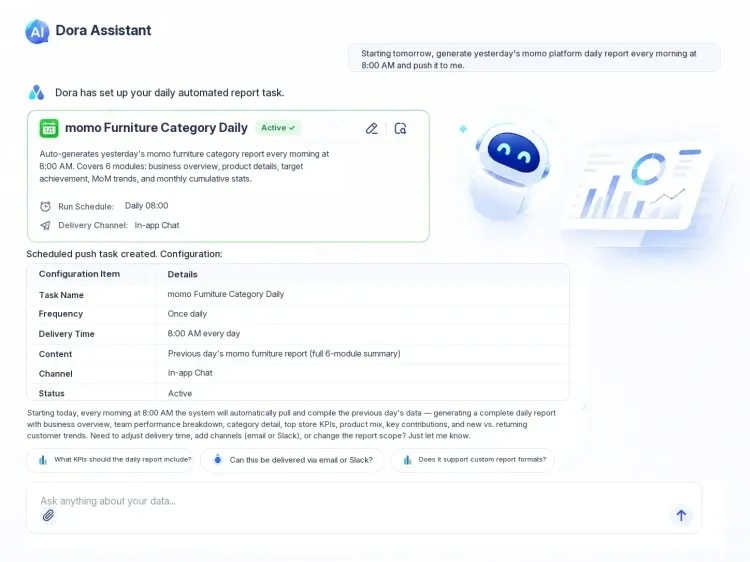
See why enterprise Data Agents need AI-ready data—and how trusted metrics, traceable sources, secure access, timely updates, and business context build trust.
 The Next Step for Enterprise AI: From Productivity Tools to Data Agents That Get Work Done
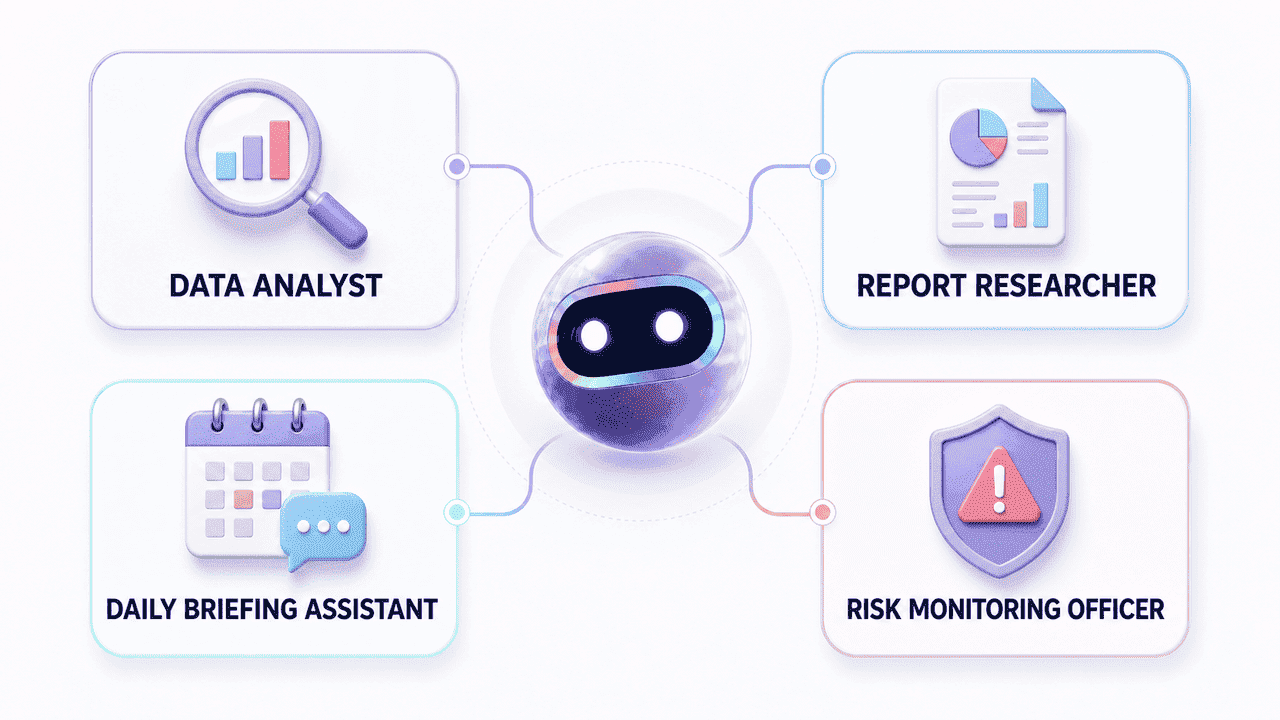
See how enterprise AI is evolving from productivity tools to Data Agents like Dora, which turn trusted BI into analysis, reports, alerts, and action.
 Stop Calling BI “Dashboards.” The Real Work Is Underwater.
The visualization is the visible 10%. The real work happens underwater, in the crushing depths where no one looks and no one credits.