When the books are closed but the board pack is still not ready, CFO teams usually face the same problem: reporting work is happening too late, in too many hands, with too little standardization. The result is familiar—compressed review windows, repeated variance questions, disclosure churn, and executive frustration right before the board meeting.
That is why many finance leaders turn to financial reporting consulting. The goal is not just to move faster. It is to create a close-to-board process that keeps technical rigor, review discipline, and executive confidence intact.
At the same time, CFO teams now have a second lever beyond process redesign: the AI assistant upgrade. With FineReport + Dora, teams can ask for a report summary in chat, generate structured narratives from trusted report assets, receive scheduled briefings, and push exceptions to the right owner. That means finance can reduce manual report assembly work without weakening governance.
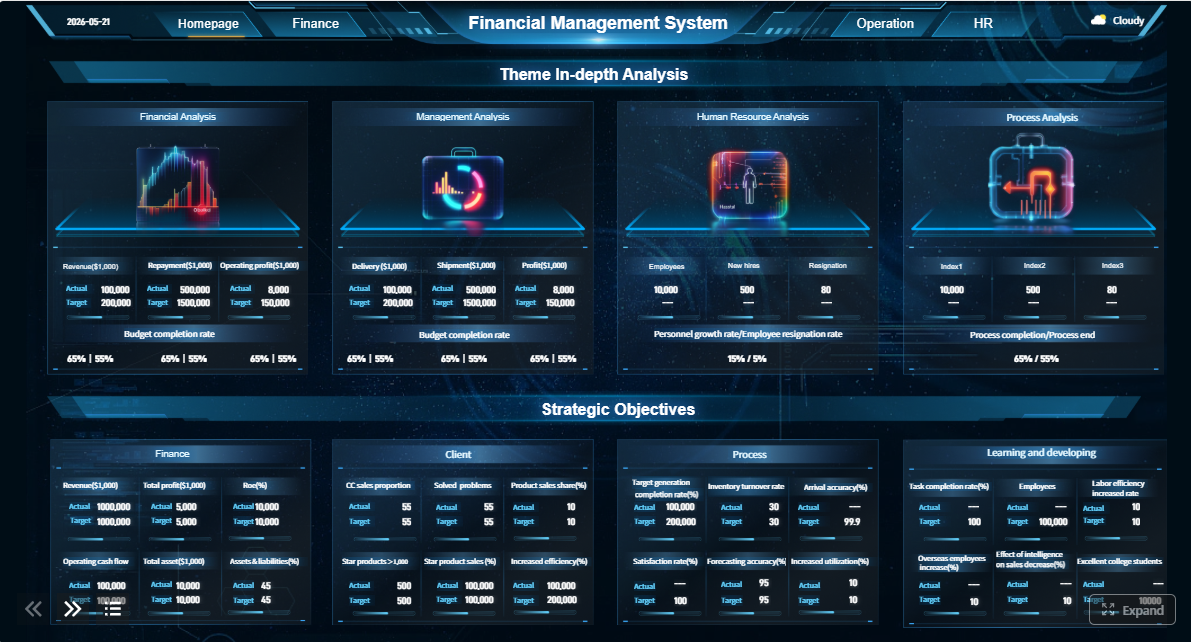
Click To Try The Dashboard
All reports in this article are built with FineReport
Why CFO teams turn to financial reporting consulting when reporting cycles stall
Close-to-board reporting often breaks down in the space between accounting completion and board-ready communication. The close may finish on time, but the package still stalls because commentary is incomplete, disclosure support is still moving, or leadership review starts too late.
Typical bottlenecks between close, review, and board-ready reporting
In many organizations, delays are caused less by one major failure and more by a chain of smaller frictions:
Accounting finalizes numbers, but FP&A waits for variance signoff.
Legal and tax inputs arrive after draft narratives are already circulating.
Different teams use different versions of the same tables.
Executive reviewers ask basic definition questions because KPIs are not consistently framed.
Disclosure wording changes force rework across multiple outputs.
These bottlenecks matter because board reporting is not just a compliance exercise. It is the moment where raw financial results must become a coherent management story.
The tradeoff leaders worry about most: speed versus control
Most CFOs are not afraid of faster reporting. They are afraid of faster errors. If speed comes from bypassing reviews, weakening evidence trails, or allowing uncontrolled narrative edits, the risk simply moves downstream.
That is why effective financial reporting consulting focuses on both dimensions:
shorter cycle time
better process clarity
stronger ownership
more controlled review
fewer end-stage surprises
Where external expertise can reduce rework, escalation, and last-minute surprises
External specialists can help where internal teams are stretched thin or too embedded in the current process to redesign it objectively. In practice, that usually means:
identifying unnecessary review loops
clarifying approval gates
strengthening disclosure preparation
surfacing technical accounting questions earlier
creating repeatable board-pack templates
supporting peak-period execution without shifting accountability away from CFO leadership
The biggest benefit is often not labor capacity alone. It is structure. A well-designed process reduces the number of times finance has to “rebuild the story” after close.
1) Redesign the close-to-board workflow around decision points
A faster reporting cycle starts with understanding where decisions actually happen. Many CFO teams still run reporting calendars around legacy habits rather than the real judgment points that determine whether the board pack can move forward.
Map the handoffs that create avoidable delays
Every handoff should answer one question: what decision or input is this person responsible for, and what happens if it is late?
Common delay points include:
accounting waiting for late journal support from business units
FP&A waiting for finalized actuals before drafting commentary
legal waiting for near-final drafts before disclosure review
investor communications requesting revisions after executive review has started
A workflow map should identify where accounting, FP&A, legal, tax, and investor communications wait on one another. It should also distinguish between:
approvals required for control
reviews added historically but no longer necessary
informational touchpoints that do not need to block progress
Removing one redundant handoff can save more time than adding another resource late in the cycle.
Build a reporting calendar that works backward from the board date
Board reporting should be reverse-engineered from the meeting date, not forward-built from the close date. That means defining milestone deadlines for:
Each milestone should have a completion standard, not just a due date.
Report Element: Draft variance explanations. Definition: Initial written explanations for material period-over-period or actual-versus-plan changes. Business value: Prevents leadership from encountering unexplained swings late in review. AI use:Dora can summarize unusual variances from FineReport outputs and generate a structured first-pass narrative for owner review.
Report Element: Executive review pack. Definition: A near-final package with consistent numbers, commentary, and supporting appendices. Business value: Gives CFOs and board-facing leaders time to review substance rather than formatting. AI use:Dora can produce a structured report summary and highlight sections with unresolved changes or open items.
2) Standardize reporting packages so teams stop rebuilding every period
If every reporting cycle starts from a blank page, cycle-time improvement will always be limited. Standardization is one of the highest-return moves in financial reporting consulting because it reduces drafting effort, review fatigue, and version confusion at the same time.
Create a board-ready template library for recurring reports
A template library should cover the recurring elements that appear every month, quarter, or board cycle:
Pre-approved structures help teams focus on what changed, not how to format it.
Report Element: KPI summary page. Definition: Standard board-facing view of revenue, margin, cash, working capital, forecast movement, and selected operating indicators. Business value: Reduces review time by presenting performance in a familiar structure each period. AI use:Dora can explain chart movement, summarize KPI changes, and prepare a scheduled management briefing from the same trusted report layout.
Report Element: Management commentary block. Definition: Standard narrative sections covering performance drivers, risks, and actions. Business value: Improves consistency between finance, operations, and executive communication. AI use:Dora’s Report Researcher can draft structured commentary from FineReport tables and charts for human review.
Where appropriate, finance can also pre-approve language for recurring disclosures, judgments, and policy updates. That reduces unnecessary rewriting while preserving controlled review over material changes.
Strengthen source data discipline across functions
Standard templates only work if the underlying data is controlled. CFO teams should align data owners around:
KPI definitions
reporting cutoffs
source-of-truth systems
ownership by line item
version control rules
Report Element: Source ownership matrix. Definition: A documented mapping of each key board metric to its owner, source, cutoff, and validation responsibility. Business value: Reduces manual reconciliations and repeated “whose number is right?” debates. AI use:Dora can use the governed semantic layer to retrieve the correct metric definition and respond to board-prep questions in chat.
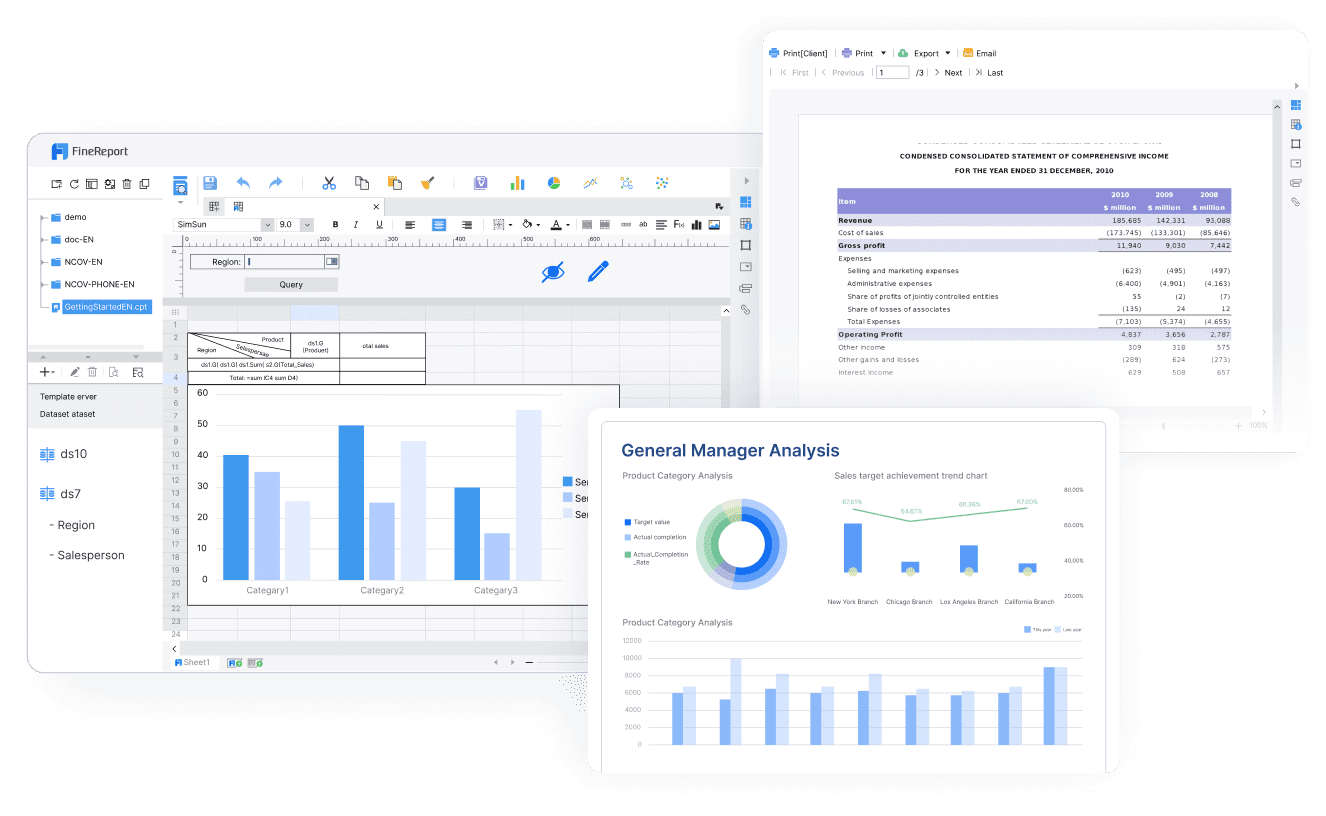
This is where FineReport matters. It provides the trusted reporting foundation—formatted reports, complex report logic, management packs, and operational cockpits—so the finance team is not asking AI to summarize uncontrolled spreadsheets. Dora works on top of governed report assets, which is why the output is more usable in enterprise reporting scenarios.
3) Tighten technical accounting and disclosure review before the final sprint
Late-stage technical debate is one of the fastest ways to derail a reporting calendar. When new transactions or policy questions are left unresolved until drafting starts, the board package becomes a moving target.
Resolve complex accounting issues earlier in the cycle
A good reporting model pulls nonroutine issues forward. That includes:
unusual contracts
debt modifications
acquisitions or disposals
impairments
stock compensation questions
revenue recognition edge cases
policy changes triggered by new facts
These issues should be escalated before reporting drafts are due, with positions documented clearly enough that reviewers are not debating conclusions at the last minute.
Report Element: Technical issue tracker. Definition: Central log of nonroutine accounting matters, status, owner, memo deadline, and review outcome. Business value: Keeps technical questions from surfacing unexpectedly during final package assembly. AI use:Dora can include outstanding technical-review items in a scheduled finance leadership briefing and flag unresolved items nearing milestone deadlines.
Improve readiness for regulated and external-facing reporting needs
For public companies or businesses preparing for higher scrutiny, consistency matters across every output:
Report Element: Disclosure consistency review. Definition: Cross-checking tables, narratives, and notes across reporting outputs. Business value: Prevents credibility damage caused by inconsistent wording or mismatched figures. AI use:Dora can retrieve the latest FineReport-based reporting package, summarize updates, and surface sections where key figures changed between drafts for targeted human review.
4) Use advisory support to remove review friction without weakening oversight
Advisory support works best when it removes bottlenecks while leaving ownership and final judgment exactly where they belong: with CFO leadership and designated internal process owners.
Clarify roles between internal owners and external specialists
The most effective model is targeted support, not vague augmentation. External specialists can be assigned to specific workstreams such as:
draft statement preparation
technical accounting research
disclosure drafting
board-pack project management
review coordination
change-log administration
This allows internal leaders to focus on decision-making rather than administrative chasing.
Report Element: Review responsibility matrix. Definition: A map of who drafts, reviews, approves, and archives each section of the reporting package. Business value: Prevents duplicated work and unclear accountability. AI use:Dora can push scheduled reminders, status summaries, and unresolved item follow-ups to responsible users as part of a governed AI workflow.
Define control checkpoints that preserve confidence
Speed is sustainable only when the review model is disciplined. CFO teams should preserve:
evidence trails for material numbers
reviewer signoffs for high-risk sections
change logs for sensitive narratives
exception-based review rules for senior leadership
Report Element: Exception review log. Definition: A focused list of high-risk changes, threshold breaches, or unresolved items that require judgment. Business value: Keeps leaders focused on issues that matter instead of re-reading low-risk sections. AI use:Dora’s Risk Alert Officer can monitor exception conditions from FineReport assets and push alerts when thresholds are breached or reviews remain overdue.
5) Build a practical 90-day plan to shorten cycle time sustainably
Finance transformation fails when teams try to fix everything at once. A 90-day plan creates enough structure to show improvement quickly while still building a sustainable operating model.
Start with a baseline of cycle-time metrics and recurring pain points
Before redesigning, measure the current state:
time from close completion to first board-pack draft
number of review rounds by section
frequency of post-review number changes
average delay by dependency type
number of last-minute executive escalations
count of unresolved open items within 48 hours of board release
Report Element: Cycle-time scorecard. Definition: A reporting view of timeline performance, review rounds, open issues, and control exceptions across each period. Business value: Makes reporting improvement measurable instead of anecdotal. AI use:Dora can generate weekly or period-end summaries of cycle performance, explain where delays concentrated, and support follow-up with specific owners.
Prioritize the changes most likely to improve speed in the next two reporting periods. Usually that means focusing first on recurring friction, not edge cases.
Choose the right consulting partner for your reporting environment
The best financial reporting consulting partner is not simply the firm with the broadest resume. It is the one that can operate effectively inside your reporting environment.
Look for:
industry familiarity
technical accounting depth
board-pack and disclosure experience
ability to support lean finance teams
responsiveness during peak periods
process design capability, not just execution support
practical comfort with reporting technology, governance, and workflow discipline
For modern CFO teams, this evaluation should also include AI-readiness. A partner should understand how trusted reporting assets, semantic rules, permissions, and workflow automation affect the success of AI-assisted reporting.
6) The 7 ways to shorten close-to-board reporting cycles without losing control
Here are the seven most practical moves CFO teams can make.
1. Eliminate redundant handoffs and approval layers
Not every review step adds control. Some only add waiting time. Remove approvals that do not change outcomes, and keep formal signoff for high-risk sections.
2. Standardize templates, narratives, and recurring disclosure language
Template libraries reduce drafting time, lower formatting churn, and make board packs easier to review. They also give AI better structured inputs for repeatable summaries.
3. Surface technical accounting issues earlier
Technical questions should be identified before the final sprint. Early escalation reduces last-minute debate and protects reporting quality.
4. Assign clear ownership for every key data input
Every number in the board pack should have a named owner, a source, and a validation expectation. Ownership discipline is one of the fastest ways to reduce rework.
5. Introduce milestone-based review gates instead of end-loaded review
Do not wait until the full package is assembled to start substantive review. Gate reviews by milestone so issues are addressed earlier and closer to source.
6. Use targeted advisory support for peak-cycle bottlenecks
Bring in specialists where technical depth or drafting capacity is the real constraint. Keep internal accountability intact, but remove pressure where it slows the cycle most.
7. Track cycle-time improvements and control exceptions after each reporting period
Continuous improvement requires evidence. Review what improved, what slipped, and which control exceptions emerged. Then adjust the next cycle accordingly.
Even after process redesign, many CFO teams still waste time on report consumption rather than report creation. Executives ask for summaries. Controllers request updated variance explanations. FP&A restates commentary from charts. Finance leaders chase status across multiple drafts.
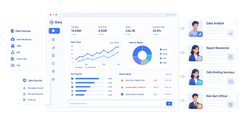
This is where Dora adds practical value as an enterprise Data Agent.
Dora is not a replacement for FineReport. FineReport remains the trusted reporting foundation: formatted financial reports, management packs, operational cockpits, workflow-driven reporting, and governed KPI logic. Dora turns those trusted assets into a scenario-specific AI assistant that helps finance teams query, summarize, push, alert, and follow up.
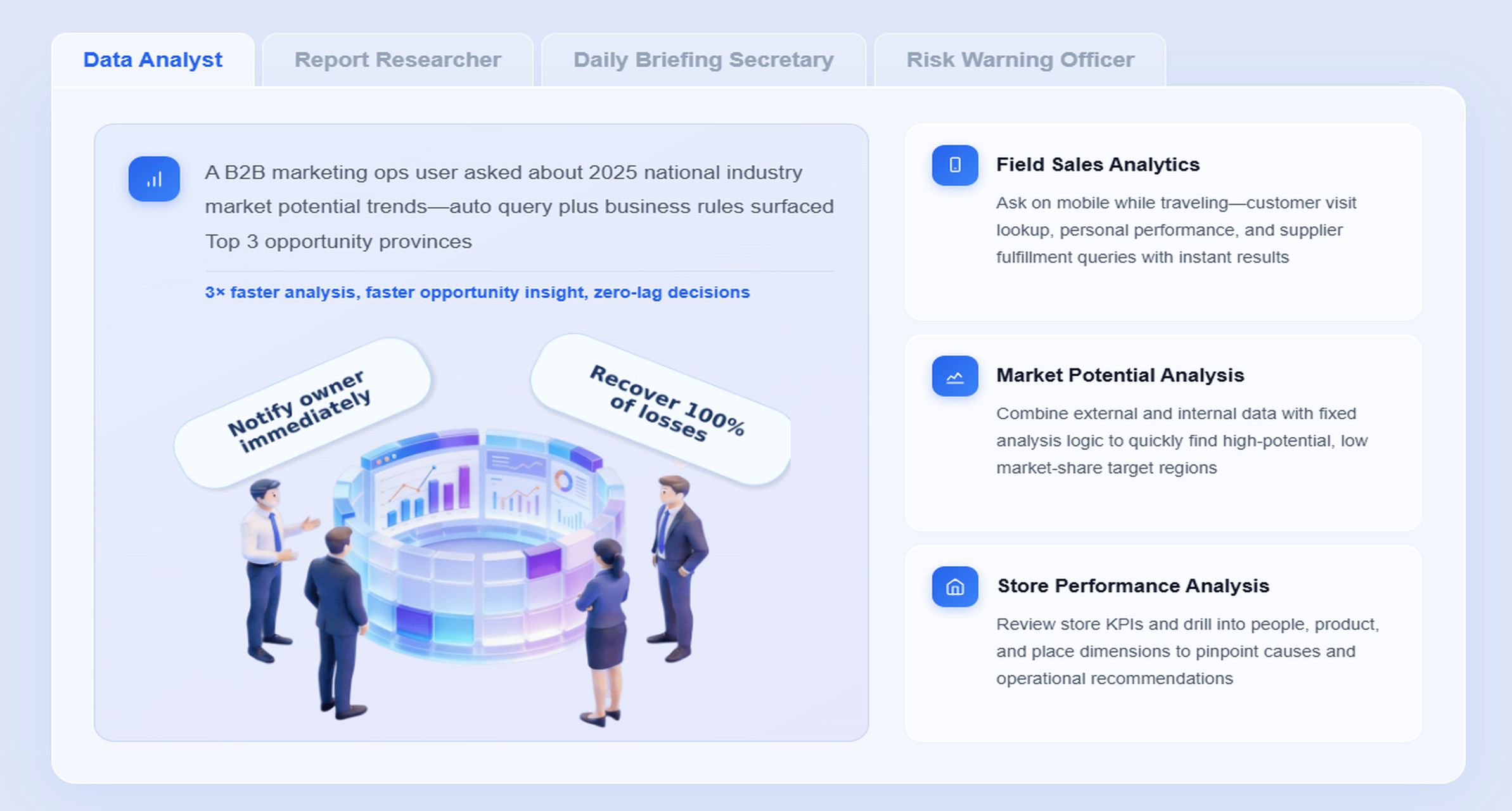
The most relevant digital employees for this scenario are:
Report Researcher for structured board-pack summaries and commentary generation
Daily Briefing Secretary for scheduled reporting updates and executive prep
Risk Alert Officer for late-item and exception monitoring
“Summarize this month’s board reporting package, highlight material EBITDA and cash flow variances versus plan, identify any sections still awaiting review, and list the owners who need follow-up before tomorrow’s executive meeting.”
Dora can respond using trusted FineReport assets rather than ungoverned files. That is critical in board reporting, where answer quality depends on KPI definitions, permissions, approved templates, and source consistency.
A practical 6-step Dora workflow for close-to-board reporting
Retrieve trusted FineReport report or management cockpit data Dora accesses the approved board-pack reports, KPI pages, variance schedules, and exception lists built in FineReport.
Understand KPI definitions, filters, templates, and business rules Dora uses the governed semantic layer to interpret terms such as adjusted EBITDA, free cash flow, working capital, or segment contribution according to enterprise-approved logic.
Generate a structured report summary through chat
The Report Researcher creates a structured report summary, chart explanations, and draft management narrative aligned to the board-report format.
Detect exceptions and incomplete review items
The Risk Alert Officer identifies abnormal changes, overdue approvals, threshold breaches, or high-risk sections that still have open comments.
Push summaries and alerts to responsible users
The Daily Briefing Secretary distributes scheduled summaries to CFO leadership, while relevant exceptions are pushed to section owners for action.
Produce follow-up records and review briefings Dora creates a follow-up log or periodic briefing so leaders can see what changed, what remains unresolved, and what requires judgment before release.
Why this works in enterprise finance environments
Many AI reporting demos fail because they rely on prompt-only behavior without trusted structure. Enterprise finance reporting needs more than a large model. It needs:
governed KPI definitions
permission-aware report access
approved report templates
repeatable workflows
traceable source reports
controlled execution rules
That is why Dora should be positioned as fourth-generation Agentic BI:
natural-language request
trusted semantic layer
governed query or Skill execution
report summary, answer, exception push, action, and follow-up
Compared with raw prompt-only agents, this model gives enterprises better landing capability. Skills-based execution is more controllable and auditable. It also helps reduce token waste, improve response speed, and increase workflow stability because the process is tied to known reporting assets and reusable action logic rather than open-ended prompting.
For executives, the value is concrete: Dora is not an AI experiment. It is a landed AI digital employee for recurring finance work such as monthly management reports, board-prep summaries, variance explanation support, reporting exception alerts, and owner follow-up.
For IT teams, the role shifts from manually building every answer to strengthening the reporting foundation: data connections, semantic rules, permission governance, report templates, and reusable agent Skills.
For business users in finance, the benefit is lower friction: timely report summaries, chat-based answers, scheduled briefings, and exception pushes without searching through multiple files or waiting on manual restatement.
1. Standardize KPI definitions, board-pack templates, and exception rules first
AI output quality depends on reporting discipline. Before automating summaries, make sure board metrics, narrative sections, thresholds, and ownership rules are standardized.
2. Build the semantic layer inside the reporting workflow
Do not treat AI as a separate experiment outside finance reporting. Define business terms, mappings, filters, and review logic inside the FineReport-centered reporting environment so Dora can work from governed context.
3. Treat data quality as part of the AI implementation
If source data is inconsistent, AI will only spread the inconsistency faster. Finance and IT should jointly improve source ownership, cutoff discipline, and reconciliation practices.
4. Start with high-value recurring reports
Begin with monthly management packs, variance commentary, board-prep summaries, disclosure support views, or exception follow-up. These use cases have clear repetition, measurable cycle impact, and easier governance.
5. Preserve permission governance and human review
AI-generated report narratives should respect FineReport access boundaries and remain subject to human review, especially for technical accounting, board-facing commentary, and regulated disclosures. Expand Dora Skills gradually as confidence and process maturity increase.
Building this manually is complex. FineReport helps teams standardize trusted reports, operational cockpits, templates, and reporting workflows. Dora turns those assets into an AI assistant that can answer report questions in chat, generate structured summaries, push scheduled briefings, monitor exceptions, and follow up with responsible owners.
For CFO teams using financial reporting consulting, this combination is especially practical. Consulting helps redesign the process, define control points, and standardize the board-pack workflow. FineReport provides the reporting foundation that makes those standards operational. Dora adds the AI digital employee layer that helps finance consume and act on reports faster.
FineReport + Dora is not only a reporting upgrade; it is a practical fourth-generation Agentic BI path. FineReport provides governed reports and operational cockpits. Dora provides the AI assistant layer for scenario execution, with more controlled Skills, lower token waste, faster execution paths, and more stable workflows than prompt-only agents.
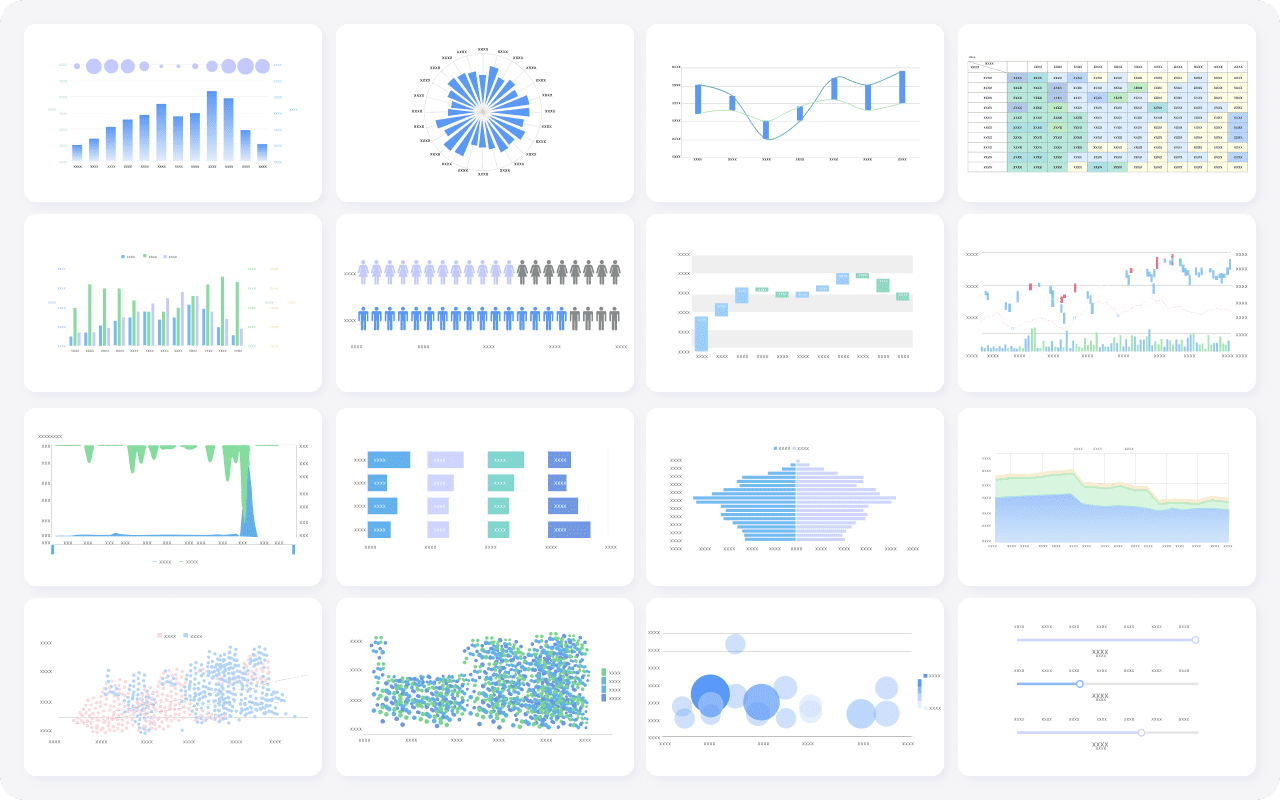
Get Ready-to-Use Dashboard Templates in Fine Gallery
The strongest Dora pitch is scenario + product + service: FineReport provides the trusted reporting foundation, Dora provides the AI digital employee, and implementation service connects data, governance, semantic setup, Skills, report templates, permissions, and rollout.
For CFO organizations trying to shorten close-to-board reporting cycles without losing control, that matters. Better reporting does not come from AI alone, and it does not come from consulting alone. It comes from combining process design, governance, trusted reporting assets, and an enterprise-ready AI assistant that can actually land in the finance workflow.
It helps CFO teams shorten the path from close to board-ready reporting by redesigning workflows, clarifying approvals, standardizing templates, and reducing late-cycle rework. The goal is faster reporting without weakening controls or review discipline.
Auditors provide independent assurance and usually cannot take ownership of preparing reporting materials without creating independence issues. Financial reporting consultants help management build the package, improve the process, and strengthen documentation before final review.
Delays usually happen because commentary, disclosures, variance explanations, and cross-functional approvals are still moving after accounting is done. Inconsistent data versions and unclear ownership also create last-minute questions and rework.
Yes, if they are used on trusted report assets within a governed process. They can accelerate summaries, first-pass narratives, scheduled briefings, and exception routing while human owners still review and approve the final output.
Look for experience in close process design, technical accounting, disclosure support, governance, and executive reporting. The right partner should reduce cycle time, improve audit readiness, and fit into your control environment without taking accountability away from finance leadership.
Product Trial
FineReport
Pixel-perfect reports · Interactive dashboards · Easy data entry · Digital twins