Interim financial reporting is not just a compliance exercise between year-end closes. For finance managers, it is a practical way to give boards, lenders, investors, and internal leadership a timely view of performance, liquidity, risk, and change. When the reporting window is short, pressure rises: teams must produce reliable mid-year financial statements faster, explain what changed since year-end, and highlight issues that need action.
With FineReport + Dora, teams can ask for a report summary in chat, generate structured narratives from trusted report assets, receive scheduled briefings, and push exceptions to the right owner. That makes interim financial reporting easier to consume, not just easier to produce.
Click To Try The Dashboard
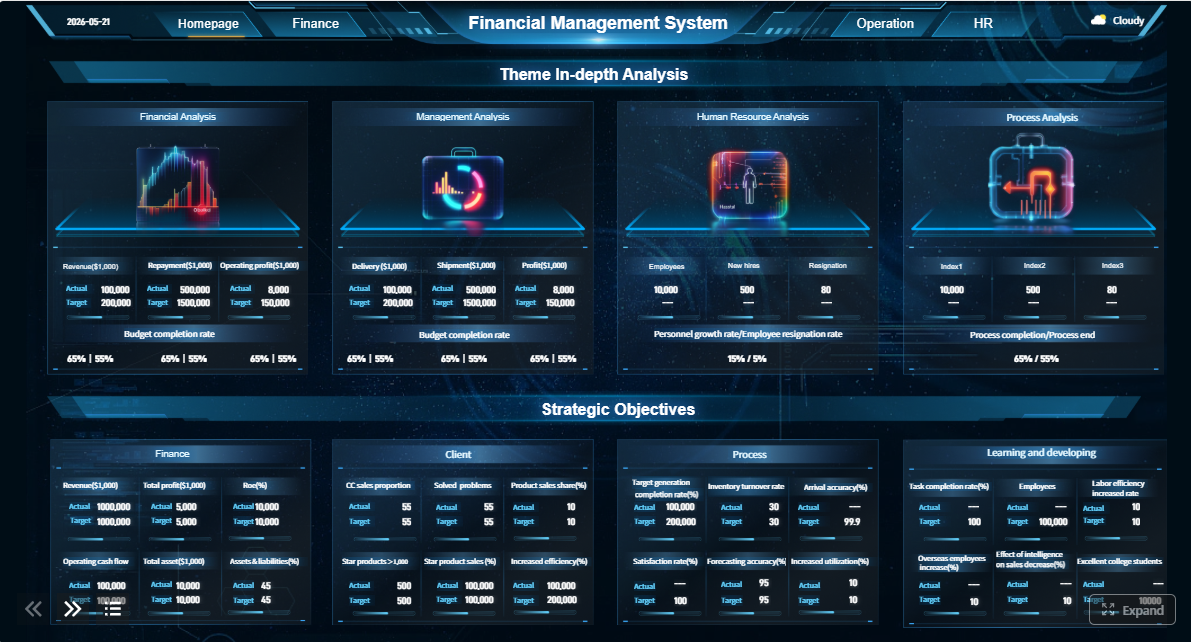
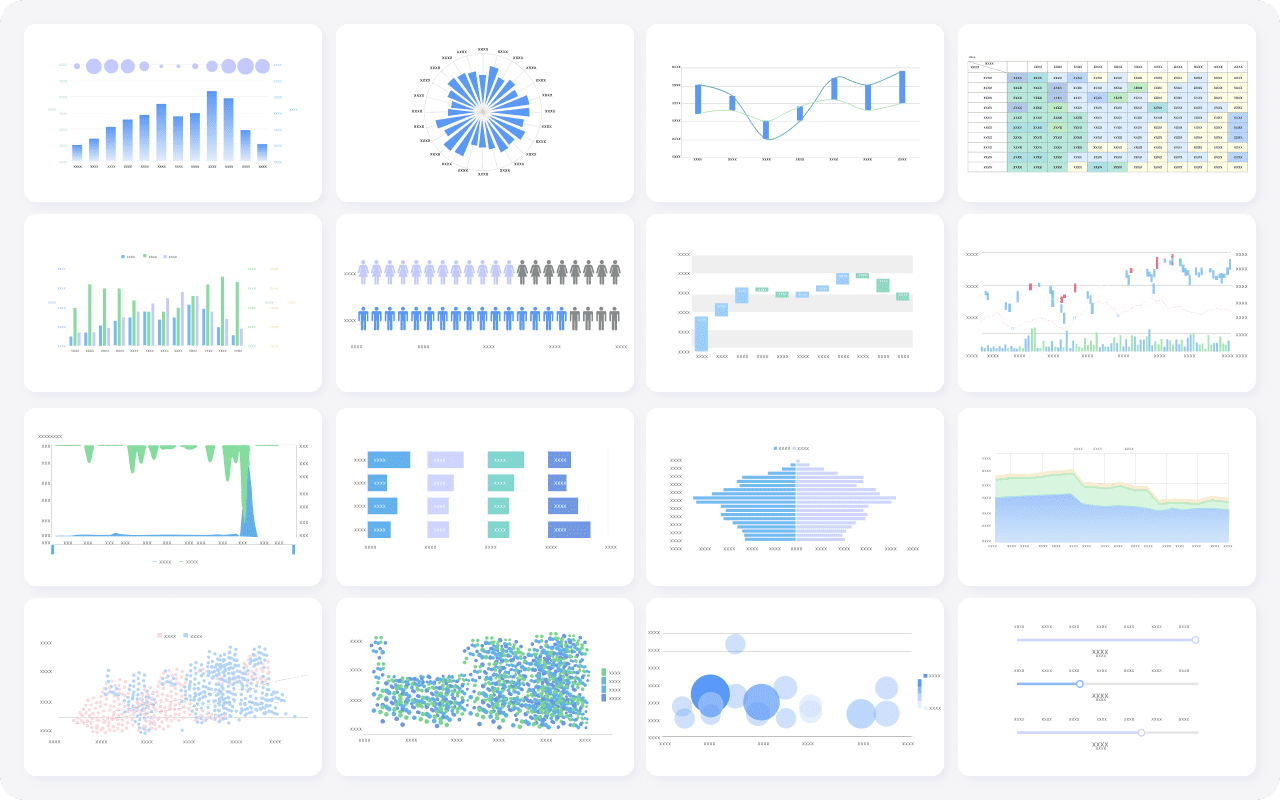
All reports in this article are built with FineReport
What interim financial reporting means and why it matters mid-year
Interim financial reporting refers to financial statements prepared for a period shorter than a full financial year, such as a half-year or quarter. Its main purpose is to update users on the company’s financial position and performance since the most recent annual financial statements.
For finance managers, this matters because major decisions rarely wait until year-end. Boards need visibility into results against plan. Lenders monitor covenant pressure and liquidity. Investors want to understand whether trends seen at year-end are continuing, improving, or deteriorating. Management teams need earlier warning signs on margin decline, cash strain, impairment indicators, tax volatility, or operational disruption.
Annual reporting is broader and more complete. Interim financial reporting is narrower, faster, and more selective. It typically focuses on material changes since the last annual report rather than repeating all annual disclosures. That means the work is not lighter in principle. It is simply more targeted. Finance teams still need disciplined recognition, measurement, presentation, and explanation.
A company may be required or expected to issue interim financial statements for several reasons:
Listing rules or securities regulation
Lender or investor reporting obligations
Board governance requirements
Group reporting packages for parent entities
Market expectations for timely financial updates
In practice, even when formal rules do not require a full interim report, stakeholders often expect interim financial reporting that is disciplined, comparable, and decision-useful.
What IAS 34 requires in interim financial statements
The objective and scope of IAS 34
IAS 34 sets out the requirements for interim financial reporting when an entity prepares interim financial statements that claim compliance with IFRS Accounting Standards. Its objective is to ensure users receive an update on the latest annual financial statements, with emphasis on new activities, events, and circumstances that are significant to understanding the entity’s current financial position and performance.
For finance managers, the key point is this: IAS 34 is about updating, not rewriting, the annual report. Users are assumed to have access to the most recent annual financial statements, so the interim report should focus on what has changed since year-end.
IAS 34 does not itself decide which entities must publish interim reports. That usually comes from local law, exchange rules, regulators, or contractual requirements. But once an interim report is presented as IFRS-compliant, IAS 34 becomes the standard that governs its minimum content and accounting treatment.
Condensed statement of profit or loss and other comprehensive income
Condensed statement of changes in equity
Condensed statement of cash flows
Selected explanatory notes
A complete set would contain the same components and broader disclosures expected in annual financial statements. A condensed set presents fewer line items and less note detail, but it must still include enough information to avoid being misleading.
For finance managers, selected explanatory notes are especially important. They are where the business explains the material movements and events that make the interim numbers understandable.
Here is a practical breakdown of the core report elements finance teams should manage carefully:
Statement of financial position: A snapshot of assets, liabilities, and equity at the interim date. Business value: Shows liquidity, leverage, and working capital pressure. AI use:Dora can summarize period-end balance sheet changes, explain major swings in receivables, inventory, debt, or cash, and include them in a scheduled management briefing.
Statement of profit or loss and other comprehensive income: Period and year-to-date performance results. Business value: Helps leadership assess profitability, margin trends, and earnings quality. AI use:Dora can generate structured report summaries, explain unusual income or expense changes, and answer chart-based questions in chat.
Statement of changes in equity: Movements in retained earnings, reserves, dividends, and other equity items. Business value: Gives users visibility into shareholder value movement and capital actions. AI use:Dora can pull key equity changes from FineReport and turn them into concise narrative updates for the CFO or board pack.
Statement of cash flows: Operating, investing, and financing cash movement during the interim period. Business value: Highlights cash generation quality and funding pressure. AI use:Dora can flag adverse cash conversion changes, summarize financing movements, and push liquidity alerts to responsible owners.
Selected explanatory notes: Material updates since the latest annual report. Business value: Provides the context needed to interpret the numbers correctly. AI use:Dora can retrieve the linked note sections, summarize the impact of significant events, and prepare briefing language for review.
Recognition and measurement rules to apply during the interim period
IAS 34 generally requires the same accounting policies used in annual financial statements to continue in interim periods, unless a policy change is required. That consistency matters. Finance managers should resist the temptation to treat interim reporting as a lighter version of accounting rules.
The interim period should be measured on a year-to-date basis using the information available at the reporting date. Because the period is shorter and deadlines are tighter, estimates often play a bigger role than in the annual close. That does not reduce the need for rigor.
Key areas to handle carefully include:
Seasonality: Interim results should not distort annual performance patterns. If the business is highly seasonal, the notes should explain that users should not annualize one interim period too aggressively.
Estimates: Interim reporting often requires more judgment around accruals, provisions, fair values, expected credit losses, and tax calculations.
Impairments: Impairment indicators must still be assessed at the interim date. Material impairment losses should be recognized when required.
Income taxes: Interim tax expense is usually based on the estimated annual effective tax rate, adjusted for specific circumstances where needed.
Material changes: Significant events, unusual transactions, and major estimate revisions must be reflected promptly and clearly explained.
For finance managers, the practical takeaway is simple: interim financial reporting may be condensed, but it is not casual.
How condensed interim financial statements should be structured
Required line items and comparative information
Condensed interim financial statements should preserve the major headings and subtotals from the latest annual financial statements. The purpose is continuity. Users should be able to compare the interim report with the annual report without guessing how items have been regrouped or redefined.
Comparative information is a common area of weakness, so finance teams should be precise. Interim financial reporting usually includes:
A statement of financial position as of the current interim date, with a comparative balance sheet as of the prior year-end
Statements of profit or loss and other comprehensive income for the current interim period and year-to-date period, with comparatives for the corresponding prior-year interim periods
A statement of changes in equity for the current year-to-date period, with a comparative for the corresponding prior-year period
A statement of cash flows for the current year-to-date period, with a comparative for the corresponding prior-year period
The exact presentation can vary depending on reporting cadence and local requirements, but the principle is stable: users need enough comparative information to interpret performance and position meaningfully.
Notes that finance managers should prioritize
The note section in interim financial reporting should focus on significant changes since the last annual report. Finance managers do not need to restate every accounting policy or duplicate unchanged annual note tables. Instead, they should prioritize disclosures that explain what changed and why it matters.
High-priority note areas often include:
Significant events and transactions: Restructurings, major contracts, litigation developments, or financing events
Unusual items: Non-recurring gains, losses, costs, or operational disruptions
Changes in estimates: Revisions to provisions, useful lives, expected credit losses, or tax assumptions
Business combinations or disposals: Acquisitions, integrations, carve-outs, or disposals completed during the period
Segment information: Where relevant, updated segment performance and material shifts
Liquidity and going concern-related matters: Debt refinancing, covenant pressure, cash shortfalls, or other financing risk indicators
Fair value or impairment-sensitive balances: When interim events materially change carrying values
Post-period events: Important events after the interim reporting date but before issuance, if they are relevant to understanding the report
The best interim notes are selective, specific, and tied directly to the financial statements.
Common presentation mistakes to avoid
Many interim reporting issues do not come from complex accounting. They come from execution mistakes under deadline pressure.
Common errors include:
Missing comparative information
Inconsistent line-item presentation versus the latest annual report
Applying accounting policies differently from year-end without adequate basis
Weak materiality judgments that omit important disclosures
Overly thin explanatory notes that fail to explain major movements
Narrative commentary that conflicts with the numbers
Insufficient review of estimates, tax assumptions, or post-period events
Finance managers should also watch for reporting packages that are technically complete but operationally unclear. If stakeholders cannot quickly understand the drivers of change, the interim financial reporting package has not done its job well.
A practical checklist for finance managers preparing the report
Before drafting begins
Before the first draft is prepared, finance managers should confirm the reporting framework and governance expectations for the period.
Use this checklist early:
Confirm the interim reporting date, filing deadline, and internal review calendar
Verify whether the entity is issuing condensed or complete interim financial statements
Check whether local listing, regulatory, or lender rules require additional disclosures beyond IAS 34
Review the latest annual financial statements to preserve consistency in line items and terminology
Identify significant transactions or events since year-end that will likely require note disclosure
Confirm ownership of key estimates, tax calculations, impairment reviews, and segment reporting
Align legal, treasury, tax, controllership, and investor relations contributors before close
This step reduces last-minute gaps, especially where interim financial reporting sits under both IFRS and local regulatory expectations.
During preparation and review
During the close and drafting process, finance teams should focus on accuracy, comparability, and explanation.
A practical mid-process review should cover:
Reconcile the trial balance and confirm mapping to the interim statement format
Validate key judgments and estimates, including tax rate assumptions, provisions, fair values, and expected credit losses
Review impairment indicators, liquidity risks, and debt covenant implications
Compare interim results against budget, forecast, and prior-year interim periods
Review post-period events up to the authorization date
Ensure note disclosures explain major movements, unusual items, and changes in estimates
Check that narrative commentary is consistent with the financial data and management discussion
Confirm that segment, financing, and business combination information is complete where relevant
A good rule for finance managers is this: every major swing in the statements should have a documented explanation and review trail.
Before issuing interim financial statements
Final issuance controls are where many avoidable errors can still be caught.
Before publication or submission, confirm:
The report is consistent with the latest annual report unless a justified change is disclosed
Comparative figures are complete and presented correctly
Board, audit committee, CFO, or delegated approver sign-off has been obtained
The report clearly explains major changes since year-end
Cross-references between the primary statements and note disclosures are correct
Figures, labels, dates, and period captions are internally consistent
Version control is locked and the final issued file matches the approved draft
High-quality interim financial reporting is not only about technical compliance. It is also about issuing a report that stakeholders can trust and act on quickly.
Producing the statements is only half the challenge. Finance leaders, controllers, audit committees, and business heads also need to consume interim financial reporting quickly and accurately. That is where Dora, FanRuan’s enterprise Data Agent, adds practical value on top of FineReport.
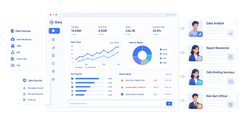
In this scenario, the most relevant Dora digital employees are:
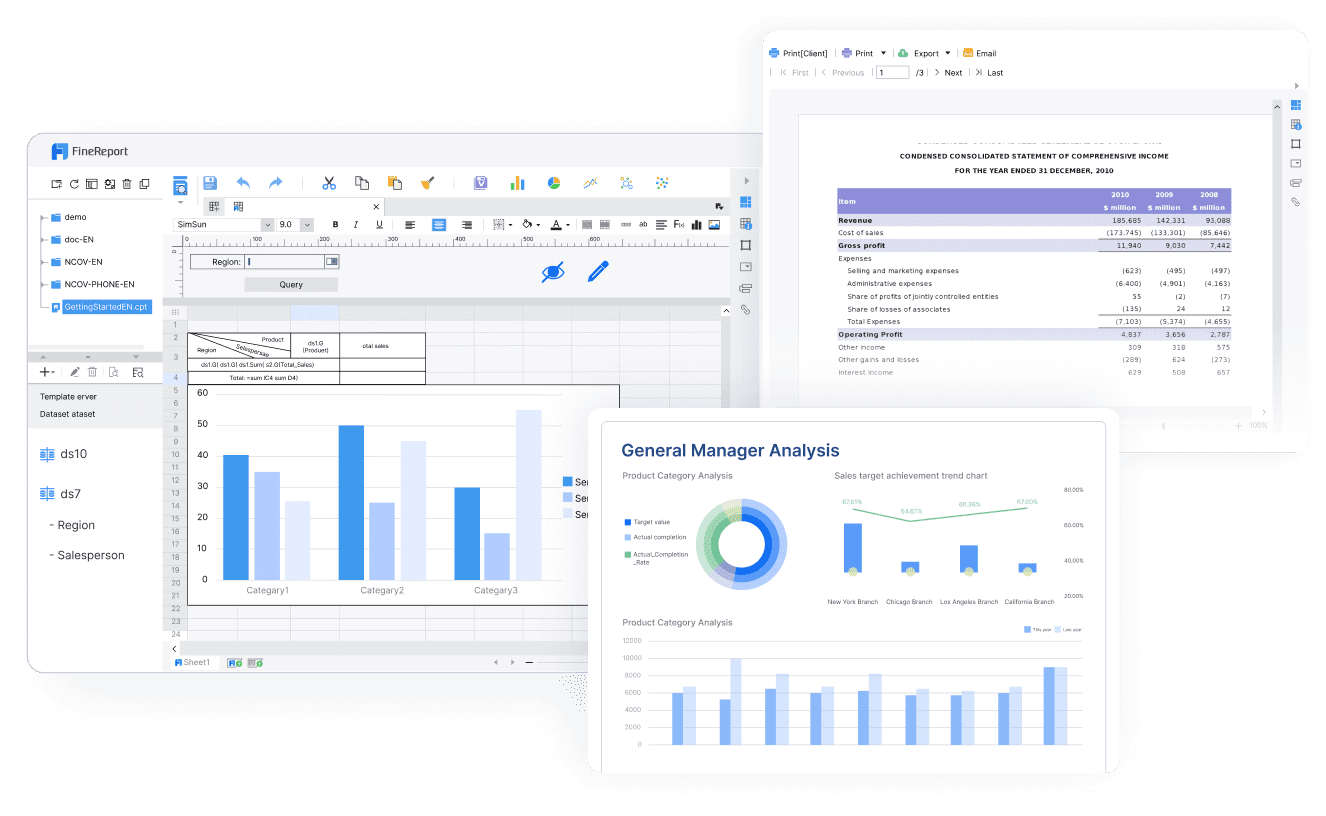
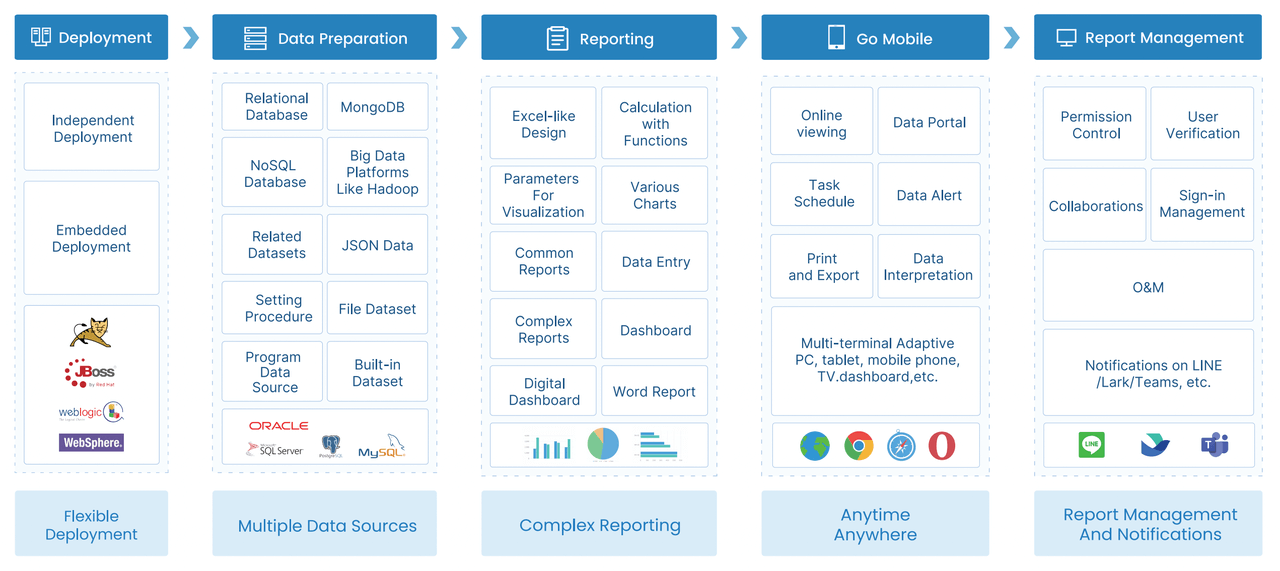
FineReport provides the trusted reporting foundation: formatted interim financial packs, board-ready reports, CFO cockpits, note schedules, variance tables, cash flow tracking, and governed access to approved financial data. Dora turns those trusted report assets into a scenario-specific AI assistant that helps teams ask, summarize, explain, alert, and follow up.
Here is a concrete chat-style example:
“Summarize this quarter’s interim financial reporting package, highlight material changes in gross margin, operating cash flow, and net debt since year-end, and list the note disclosures the CFO should review before board submission.”
That request is useful because finance managers do not just need raw numbers. They need a structured interpretation grounded in trusted reporting assets.
Retrieve trusted FineReport report or financial cockpit data Dora accesses the approved interim financial reporting package, including statements, comparative tables, variance reports, and note-support schedules built in FineReport.
Understand KPI definitions, report templates, and business terms Dora uses governed semantic rules for terms such as EBITDA, net debt, operating cash flow, effective tax rate, covenant headroom, and materiality thresholds.
Generate a structured report summary through chat Dora produces a concise management narrative: what changed since year-end, which balances moved materially, and what the likely discussion points are for finance leadership.
Detect exceptions and risk conditions Dora checks for abnormal margin swings, cash deterioration, overdue close tasks, covenant threshold pressure, impairment indicators, or estimate changes that need review.
Push alerts and summaries to the right users
The Daily Briefing Secretary can send scheduled interim close summaries to the CFO and controller, while the Risk Alert Officer can push exception notices to treasury, FP&A, or accounting owners.
Create follow-up records for review and action Dora can help log items requiring human review, such as note expansion, tax assumption validation, or board-question preparation.
This is where Agentic BI becomes practical. Instead of a finance manager manually opening multiple files, rewriting commentary, and chasing issue owners, Dora helps orchestrate a governed AI workflow over enterprise-approved reporting assets.
Interim financial reporting often fails not because statements are unavailable, but because insight arrives too late. Finance managers spend time assembling decks, answering repetitive questions, and tracking exceptions manually. Dora helps reduce that friction in several ways:
Natural-language query over trusted reporting assets: Users can ask questions in plain English without rebuilding analysis manually.
Chat-based AI assistant for report consumption: Finance leaders can request explanations, summaries, or note-focused views directly from approved FineReport outputs.
Structured report summaries and management narratives:Dora turns charts, tables, and variance sections into draft executive language for review.
Scheduled briefings and periodic pushes: The CFO, board secretary, or regional finance leads can receive timely summaries before review meetings.
Exception retrieval and escalation: Material changes in liquidity, tax, margins, or financing can be surfaced quickly to the right owner.
Skills-based execution for controllable workflows: Compared with raw prompt-only agents, Dora is built for more stable, auditable enterprise workflows using governed Skills.
Stronger enterprise fit: Permissions, KPI governance, semantic rules, report templates, and data quality controls help keep AI outputs aligned with finance reporting standards.
For executives, this matters because Dora is not an AI experiment. It is a landed digital employee approach for recurring reporting work such as monthly close briefings, interim financial reporting summaries, covenant monitoring, variance explanations, and owner follow-up.
For IT and data teams, the role shifts from manually responding to every finance reporting request to strengthening data connections, semantic layers, permissions, report templates, and reusable AI Skills.
For business users and finance stakeholders, the value is simple: faster access to trusted explanations without waiting for analysts to manually rewrite the same interim reporting story each cycle.
1. Standardize templates, definitions, and note logic
Interim financial reporting becomes easier when core statement formats, KPI labels, note structures, and business definitions are standardized in advance. FineReport can serve as the reporting foundation for these templates, while Dora can use them as governed context for report summaries and question answering.
2. Build a semantic layer into the reporting workflow
This is one of the most important AI-specific practices. If terms like adjusted operating profit, net debt, free cash flow, or materiality thresholds are not consistently defined, AI answers will be less reliable. Dora performs best when FineReport assets already reflect governed KPI logic and clear business terminology.
3. Treat data quality as part of the AI rollout
AI does not fix poor close discipline. Reconciliations, mapping logic, note-support schedules, and approval controls still matter. Finance teams should treat data quality, period-end governance, and source consistency as prerequisites for useful AI-assisted interim financial reporting.
4. Start with recurring high-value finance scenarios
Do not try to automate every finance deliverable at once. Start with recurring, high-friction scenarios such as interim financial reporting packs, variance briefings, liquidity summaries, covenant alerts, and board-prep narratives. These scenarios have repeatable structure and clear stakeholder value.
5. Preserve permission governance and human review
Another essential AI-specific practice is to keep access control and review discipline intact. Dora outputs should respect FineReport permissions, and AI-generated narratives should be reviewed by finance owners before external issue or board circulation. Start with summary and alert workflows, then expand Skills gradually.
Why strong interim reporting improves decisions and compliance
Strong interim financial reporting improves more than compliance. It improves timing. Boards receive earlier visibility into risk. Treasury can react faster to liquidity pressure. Investors and lenders gain confidence in the company’s reporting discipline. Management can course-correct before small performance issues become year-end problems.
High-quality interim reporting strengthens credibility because it shows that the business can explain not only what happened, but also what changed since year-end and why. That is especially important in volatile periods involving refinancing, acquisition activity, cost pressure, tax uncertainty, or margin compression.
Weak interim financial reporting creates the opposite effect. The risks include:
Compliance failures
Late or incomplete disclosures
Restatements or corrections
Poor board decisions due to weak visibility
Loss of investor or lender confidence
Operational delay because issue owners are not alerted in time
For finance managers, the recurring focus each cycle should be clear:
Keep recognition and measurement consistent with annual reporting principles
Present the required components and comparatives correctly
Explain material changes since year-end through concise, relevant notes
Validate estimates, taxes, liquidity, and post-period developments carefully
Make the report easy for decision-makers to consume and act on
Building this manually is complex. FineReport helps teams standardize trusted reports, operational cockpits, templates, and reporting workflows. Dora turns those assets into an AI assistant that can answer report questions in chat, generate structured summaries, push scheduled briefings, monitor exceptions, and follow up with responsible owners.
For an interim financial reporting scenario, that means FineReport can provide the formatted financial pack, variance analysis, liquidity dashboard, note-support schedules, and governance structure. Dora can sit on top of that foundation as an enterprise Data Agent that helps finance leaders consume the reporting package faster and more consistently.
FineReport + Dora is not only a reporting upgrade; it is a practical fourth-generation Agentic BI path. FineReport provides governed reports and operational cockpits. Dora provides the AI assistant layer for scenario execution, with more controlled Skills, lower token waste, faster execution paths, and more stable workflows than prompt-only agents.
Get Ready-to-Use Dashboard Templates in Fine Gallery
The strongest Dora pitch is scenario + product + service: FineReport provides the trusted reporting foundation, Dora provides the AI digital employee, and implementation service connects data, governance, semantic setup, Skills, report templates, permissions, and rollout.
If your finance team wants interim financial reporting that is both compliant and easier to consume, this combination gives you a practical path: build the trusted reporting base first, then add a governed AI layer that helps summarize, explain, alert, and follow up.
Interim financial reporting is a set of financial statements prepared for a period shorter than a full financial year, such as a quarter or half-year. Under IAS 34, it updates users on significant changes since the latest annual financial statements.
A minimum IAS 34 package usually includes a condensed statement of financial position, profit or loss and other comprehensive income, changes in equity, cash flows, and selected explanatory notes. The report must include enough detail to avoid being misleading.
No. IAS 34 does not decide which entities must publish interim financial reports; that usually depends on laws, listing rules, or contractual obligations. It applies when a company presents an interim report as compliant with IFRS Accounting Standards.
Interim reports are narrower and focus mainly on material changes since year-end rather than repeating all annual disclosures. They are faster and more selective, but still require consistent recognition, measurement, and presentation.
Selected explanatory notes explain the major events, transactions, and movements behind the numbers. They help boards, lenders, and investors understand what changed and why it matters during the interim period.
Product Trial
FineReport
Pixel-perfect reports · Interactive dashboards · Easy data entry · Digital twins