If you are searching for the best investment reporting tool, you are likely trying to solve one of a few practical problems: inconsistent portfolio data, time-consuming client reporting, limited support for alternatives, or difficulty producing polished reports across multiple entities, households, or investor groups.
For RIAs, asset managers, and family offices, investment reporting is no longer just about sending quarterly PDFs. In 2026, firms are evaluating platforms based on how well they handle performance reporting, consolidated views, client presentation quality, automation, permissions, and operational scale. The right tool should help your team reduce manual work while improving reporting accuracy and client experience.
This comparison is not about declaring one universal winner. Some firms need advisor portal workflows, some need family office consolidation, and others need highly customized reporting that generic wealth platforms cannot easily accommodate.
What Makes an Investment Reporting Tool Worth Considering in 2026?
An investment reporting tool is software used to collect, calculate, organize, and present portfolio information for internal stakeholders, clients, or investors. Depending on the firm, that can mean quarterly client reviews, household performance summaries, capital account reporting, benchmark comparisons, exposure analysis, or multi-entity family office reporting.
In 2026, the platforms worth shortlisting generally need to handle a core set of jobs well.
Core jobs these platforms need to handle for advisors, asset managers, and family offices
Data aggregation from custodians, portfolio systems, administrators, spreadsheets, or internal platforms
Flexible reporting outputs for client reviews, board materials, investor updates, and internal operations
Alternative asset visibility for private equity, real estate, hedge funds, partnerships, or illiquid holdings
Role-based access and permissions so teams can share the right views with the right audiences
Scheduled distribution for recurring reports and statements
Interactive dashboards for ad hoc analysis, not just static files
For RIAs, the emphasis often falls on client communication and scalable review meetings. For family offices, the challenge is usually more about entity complexity, consolidated views, and nontraditional assets. For asset managers, investor communications and repeatable reporting processes tend to matter more.
Why reporting accuracy, automation, and client experience now shape buying decisions
Investment reporting sits close to trust. If values are inconsistent, benchmarks are unclear, or commentary arrives late, clients notice quickly.
That is why buying decisions now revolve around three practical factors:
1. Reporting accuracy
Firms need confidence in their source data, calculations, and refresh logic. That includes reconciled holdings, correct performance periods, and transparent treatment of alternatives.
2. Automation
Manual report production does not scale well. Teams increasingly want automated data refreshes, reusable templates, scheduled distribution, and less spreadsheet dependency.
3. Client experience
Even when numbers are correct, poor report design can weaken client communication. Advisors and family office teams now want cleaner presentation, interactive access where appropriate, and the flexibility to tailor reports to different audiences.
The shift from static reports to interactive portfolio reporting workflows
Static reports still matter. Many firms need printable, board-ready, or presentation-ready reporting. But buyers also expect interactive workflows, such as:
Drill-down from summary to position detail
On-demand filtering by household, entity, strategy, or time period
Dashboards paired with downloadable statements
Secure portals or guided access for clients and internal users
The result is a broader definition of reporting. It is no longer just a document. It is now a workflow that combines data aggregation, analytics, presentation, distribution, and governance.
How We Compared the 7 Platforms
To compare each investment reporting tool fairly, it helps to focus on the reporting requirements that actually affect daily operations and client delivery.
Evaluation criteria
We assessed the platforms using the criteria below.
Report flexibility: Can the platform support simple client summaries as well as more detailed and branded reports?
Data aggregation: How well does it consolidate data from multiple custodians, systems, and asset classes?
Performance calculations: Does it support meaningful portfolio reporting across time periods, benchmarks, and account structures?
Dashboards and analytics: Are users limited to static reports, or can they also explore data interactively?
Integrations: Can the tool fit into the firm’s existing operations and data environment?
Permissions and sharing: Can administrators control who sees household, entity, account, or investor-level information?
Pricing transparency: Is pricing easy to evaluate during shortlist and procurement stages?
Consolidated reporting across trusts, LLCs, and other entities
Household and ownership views
Tracking of traditional and illiquid assets
Flexible presentation for family principals and professional staff
Firms managing alternative assets
These firms typically need:
Better visibility into capital activity and nontraditional holdings
More flexible report structures
Support for operational data beyond public market positions
Investor-facing reporting that reflects bespoke structures
Why implementation effort, support, and customization matter in the real world
A platform can look strong in a demo and still be a poor fit in practice. Real-world success often depends on:
How much data cleanup is required
Whether the firm needs vendor-led setup or can self-configure
How easy it is to adapt templates and workflows later
Whether support teams understand reporting edge cases
How much internal IT or operations involvement is needed
In other words, the best investment reporting tool is not just the one with the longest feature list. It is the one your team can implement, trust, and scale.
The 7 Platforms Compared
Platform 1: FineReport — Best for highly customizable enterprise investment reporting workflows
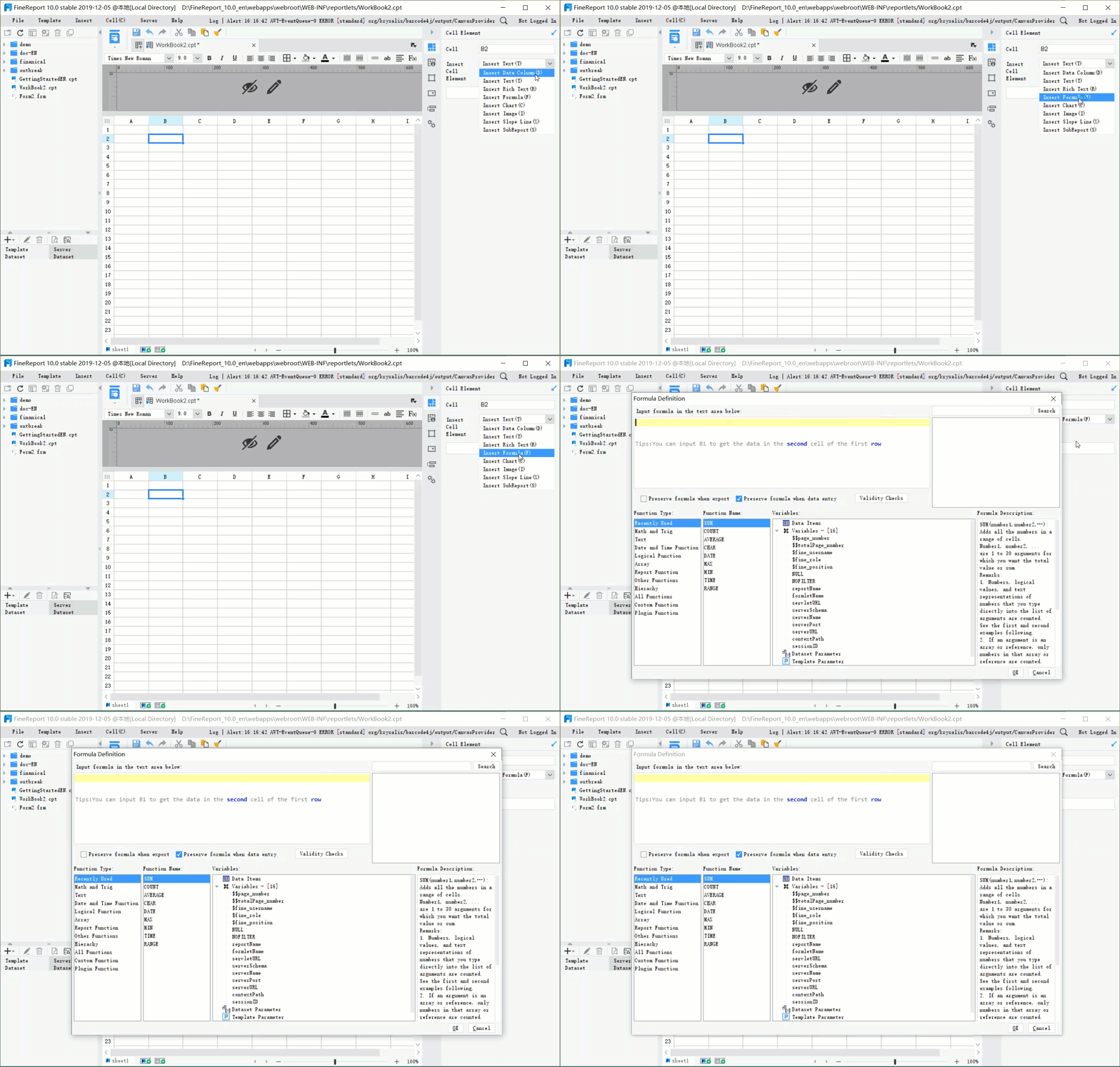
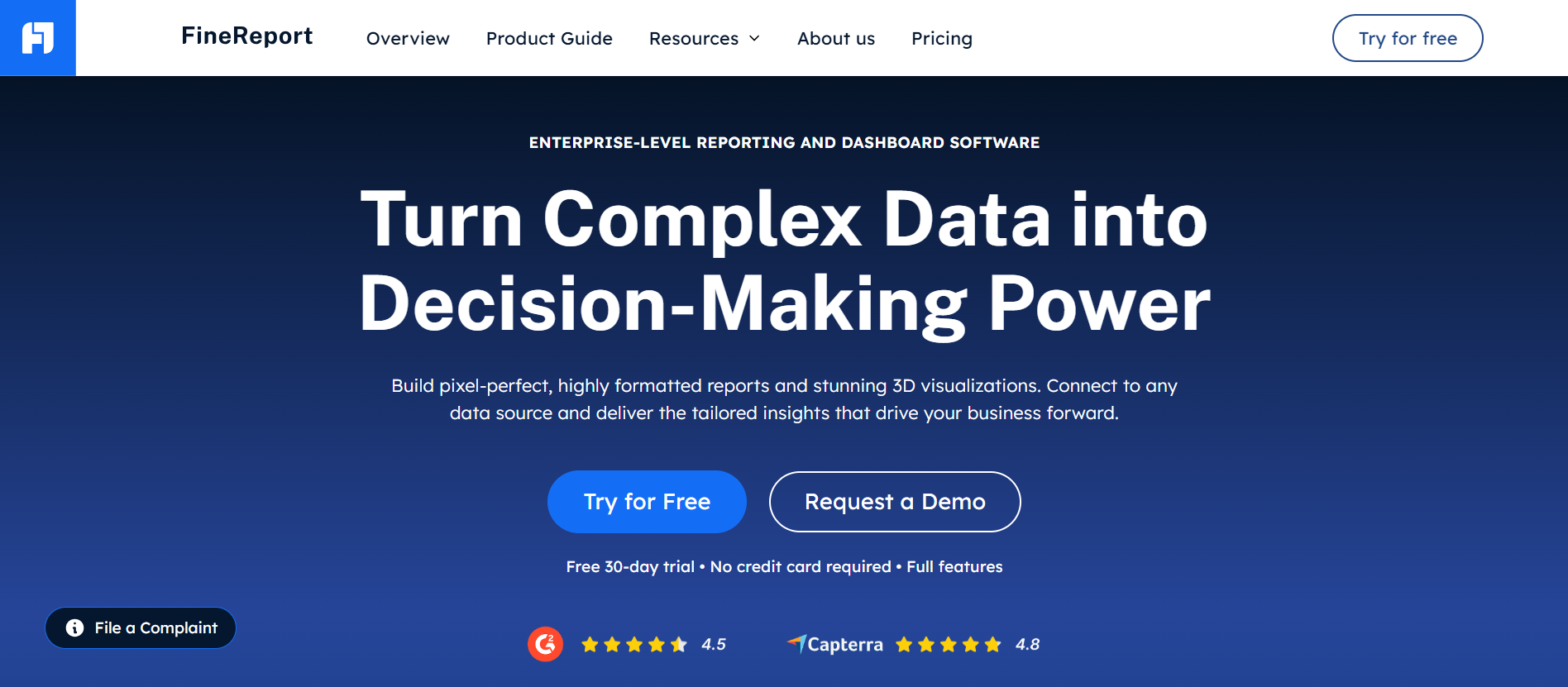
FineReport is not a niche wealth platform. It is an enterprise reporting and dashboard platform that becomes relevant when investment firms need more control over report design, distribution, data entry workflows, and operational reporting than packaged portfolio tools typically provide.
Strengths
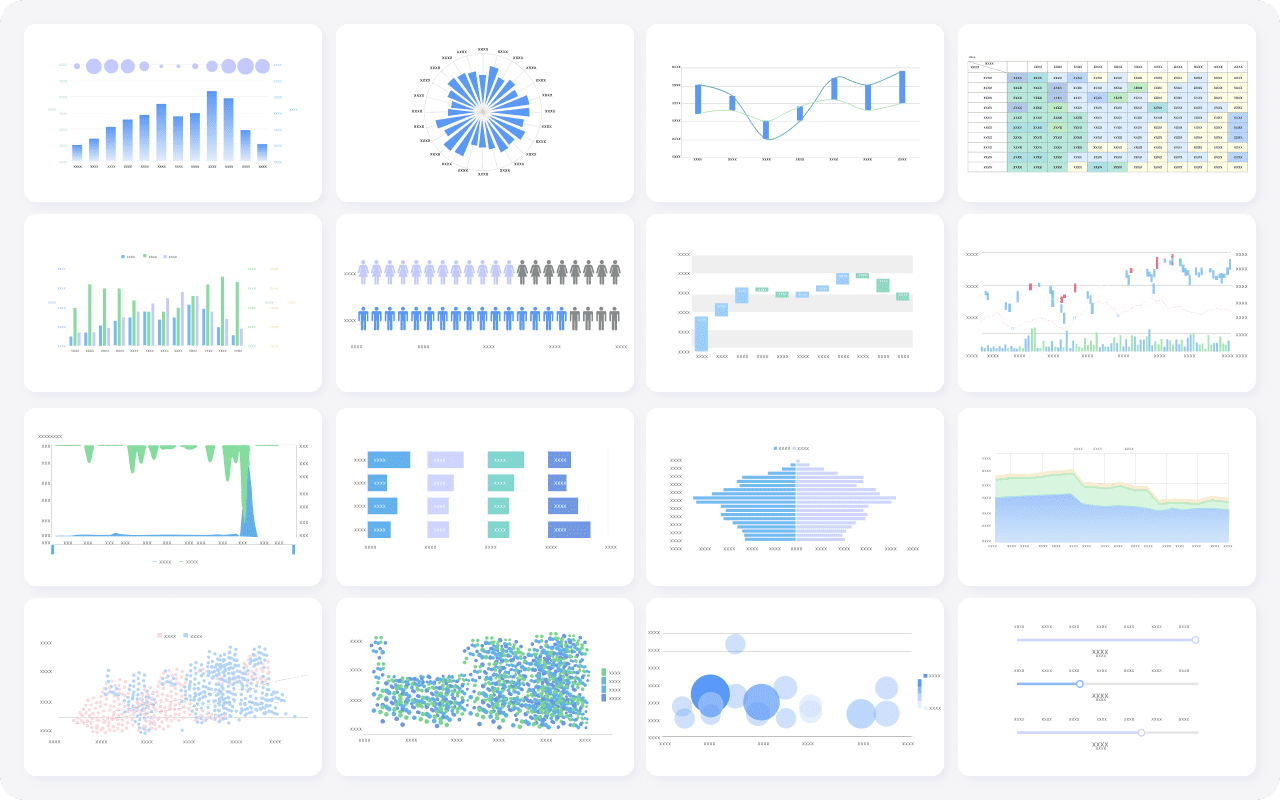
Strong for pixel-perfect report design and formatted, presentation-ready outputs
Supports paginated reporting, scheduled report generation, and automated distribution
Useful when firms need dashboards and structured reports together
Supports parameter queries, making it easier to filter by account, entity, advisor, period, or strategy
Can be valuable for teams that need form-based workflows or data entry alongside reporting
FineReport is not positioned as a turnkey wealth aggregation platform
Firms still need a sound underlying data model and source systems for holdings and performance data
Best fit is often for firms that need customized reporting workflows rather than an out-of-the-box advisor platform
Ideal firm profile
FineReport fits firms that already have investment, portfolio, or accounting data available and need a more capable layer for custom investment reporting, board-ready documents, printable statements, scheduled distribution, and cross-department reporting workflows.
Platform 2: Orion — Best for advisor-friendly performance reporting
Orion is widely known in the advisor technology space for portfolio accounting and reporting workflows geared toward financial advisors and wealth firms.
Supports personalized report creation and branded client communication
Helpful for firms that want to streamline recurring advisor reporting
Designed around advisor-facing operating workflows rather than purely institutional analytics
Trade-offs
Best fit may depend on how closely your firm aligns with advisor-centric processes
Firms with highly bespoke multi-entity structures or unusual reporting formats may need more flexibility than packaged workflows provide
Deep customization needs can affect implementation scope
Ideal firm profile
Orion is a sensible option for RIAs and advisor-led wealth firms that want a reporting environment centered on client reviews, performance communication, and advisor efficiency.
Platform 3: Masttro — Best for family office reporting across complex entities
Masttro is positioned around consolidated wealth visibility for family offices and complex portfolios spanning multiple asset classes and structures.
Strengths
Built for visibility across complex portfolios, entities, and ownership structures
Strong focus on family office and UHNW reporting needs
Useful for firms managing both traditional and alternative assets
Emphasizes consolidated views and intuitive portfolio visualization
Trade-offs
May be more than smaller advisory firms need
Firms focused primarily on standard advisor reporting may prefer a more advisor-native workflow
Buyers should evaluate how its reporting outputs match their exact presentation standards
Ideal firm profile
Masttro is best suited to single and multi-family offices, as well as wealth managers serving clients with complex entity structures and illiquid holdings.
Platform 4: Addepar — Best for highly customizable investor reporting software
Addepar is commonly considered when firms need flexible multi-asset reporting, analytics, and tailored investor or client reporting.
Strengths
Strong reputation for handling complex portfolio data and alternative investments
Broad fit across advisors, family offices, and institutions needing sophisticated reporting
Good choice when firms want a mix of analytics, reporting, and stakeholder-facing presentation
Often shortlisted where customization and multi-source data consolidation are central requirements
Trade-offs
Customization depth can increase implementation and operating complexity
Some firms may need a dedicated internal team to get the most from the platform
Buyers should review how much reporting logic must be configured versus delivered out of the box
Ideal firm profile
Addepar is often a fit for firms with more sophisticated reporting demands, mixed asset classes, and a need to tailor outputs for different client or investor audiences.
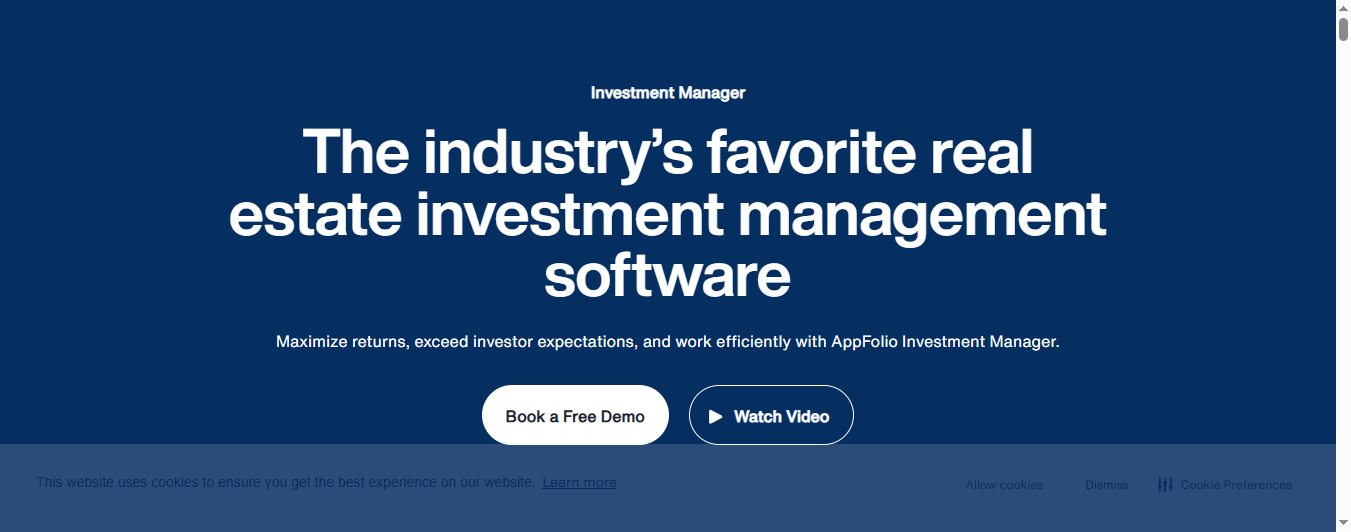
Platform 5: AppFolio Investment Manager — Best for real estate and alternative investment reporting
AppFolio Investment Manager is most relevant for firms focused on commercial real estate and related investment operations.
Strengths
Strong alignment with real estate investor reporting
Useful for teams that need property-level performance visibility and investor communications
Supports reporting tied to distributions, operational visibility, and investor transparency
Appeals to firms trying to move away from spreadsheet-heavy waterfall and reporting processes
Less suitable for firms needing broad multi-asset wealth reporting across many non-real-estate structures
Buyers should confirm how well it handles their exact reporting package requirements
Ideal firm profile
AppFolio is best for real estate investment teams, sponsors, and operators that need investor reporting tied to property performance and capital activity.
Best-fit options often include Orion and other advisor-focused platforms. If your team also needs highly tailored operational or management reporting beyond standard client outputs, FineReport can complement or extend those workflows.
Asset managers
Asset managers tend to need a mix of investor communications, internal oversight, and reporting governance.
Focus on:
Consistent investor reporting
Composite-style or benchmark-oriented views where relevant
Structured internal controls and permissions
Repeatable production processes
Reporting flexibility across products and investor groups
Confluence, Landytech, and Addepar may be more relevant depending on complexity. FineReport also becomes useful when asset managers need highly formatted recurring reports, workflow-driven report generation, or internal reporting standardization.
Family offices and multi-entity structures
Family offices usually care less about generic dashboards and more about representing reality clearly across entities, ownership layers, currencies, and illiquid assets.
Compare platforms based on:
Consolidated household and entity reporting
Support for bespoke structures
Permissions at entity and stakeholder level
Alternative asset visibility
Presentation flexibility for principals, staff, and advisors
Masttro and Addepar are often strong starting points here. Landytech may also fit where consolidation and modern reporting delivery are priorities.
Real estate and alternative investment teams
These firms need reporting that reflects the operational nature of nontraditional assets, not just market-value snapshots.
Assess tools based on:
Capital account visibility
Waterfall or distribution-related reporting support
AppFolio is especially relevant for real estate-focused firms. For teams that need custom operational reporting across projects, entities, finance systems, and investor communications, FineReport can be a practical reporting layer.
Pros, Cons, and Buying Factors to Weigh Before You Decide
A good buying process compares not just product features, but the trade-offs that will matter six months after implementation.
Ease of use versus depth of customization
This is one of the biggest decision points.
Tools with more packaged workflows can be faster to adopt
Tools with deeper customization can better reflect your firm’s actual reporting model
The right balance depends on whether your reporting needs are standard or highly bespoke
If your firm sends mostly standardized advisor reports, simplicity may matter more. If your reporting spans investment, operations, finance, and investor communications, flexibility matters more.
Data quality controls, reconciliation, and audit readiness
Even the best-looking report is weak if users do not trust the data behind it.
Look closely at:
Source system consistency
Refresh processes
Exception handling
Reconciliation support
Visibility into calculation logic
Export and archival requirements
Firms with complex portfolios should ask not only how data enters the platform, but also how exceptions are surfaced and corrected.
Total cost of ownership, onboarding demands, and vendor responsiveness
Software cost is only part of the picture. Also weigh:
Internal implementation effort
Services dependency
Template change requests
Training requirements
Time to first usable report
Ongoing support quality
A lower-license platform can become expensive if every report change requires external help.
When a modern investment reporting tool is a better fit than generic portfolio management software
In many firms, the real goal is not replacing every system. It is improving the reporting layer that stakeholders actually see.
Practical Recommendations Before You Shortlist a Platform
Here are five practical ways to make a better investment reporting tool decision.
1. Start with your reporting outputs, not the feature list
List the exact reports you send today: quarterly reviews, investor statements, family balance sheets, exposure dashboards, board packs, and operational summaries. Then test whether each platform can reproduce them with reasonable effort.
2. Separate data aggregation needs from report design needs
Some tools are strongest at consolidation. Others are strongest at presentation and workflow. Do not assume one product will handle both equally well.
3. Test alternative asset and entity edge cases early
If your firm manages trusts, SPVs, real estate entities, private funds, or mixed ownership structures, use those examples in the demo. Generic sample data will hide real limitations.
4. Evaluate scheduled reporting and distribution workflows
A report that looks good in a live demo may still be painful to run every month or quarter. Ask how templates, approvals, scheduling, and distribution actually work.
5. Involve both client-facing and operations teams
Advisors, investor relations teams, finance, operations, and IT often care about different things. A balanced evaluation avoids buying a tool that solves only one team’s problem.
Why FineReport Is Worth Considering for Investment Reporting Workflows
Tools like Orion, Masttro, Addepar, and Landytech are widely used for portfolio visibility, performance analysis, and client reporting. But teams with complex reporting workflows may also need a dedicated enterprise reporting platform like FineReport.
FineReport becomes especially relevant when your challenge is not just portfolio visualization, but also:
Producing pixel-perfect reports for clients, boards, or internal stakeholders
Creating paginated and printable reports
Running parameterized queries by entity, household, advisor, asset class, or period
Automating scheduled reports and distribution
Combining dashboards with detailed tabular reports
Standardizing reporting across finance, operations, management, and investment teams
For example, an investment firm may already have data in a portfolio accounting system, data warehouse, or administrator feed. What it still lacks is a flexible reporting layer for:
That is where FineReport can fit well. It is less about replacing specialized investment infrastructure and more about improving how your firm delivers, formats, filters, schedules, and governs reporting.
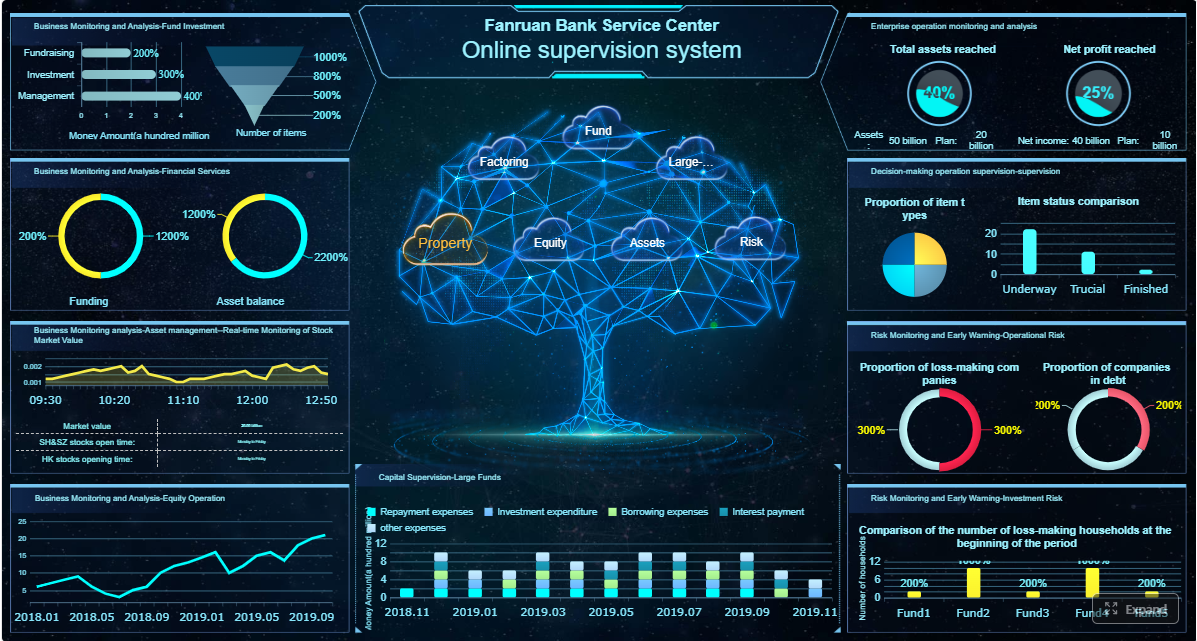
Get Ready-to-Use Dashboard and Report Templates in Fine Gallery
Final Verdict: How to Choose the Best Investment Reporting Tool for 2026
Landytech is compelling for consolidated multi-asset reporting with modern delivery.
FineReport is particularly useful when your firm needs highly customized, pixel-perfect, scheduled, and workflow-driven reporting on top of existing investment data.
The best approach is to build a shortlist based on your own reporting complexity, client expectations, asset mix, and growth plans.
A practical checklist for demos, trials, and stakeholder sign-off
Before making a final decision, ask each vendor to show:
Your real reporting use cases, not just generic dashboards
Support for your asset classes and entity structures
Permission controls for advisors, clients, entities, and internal teams
The effort required to modify templates after go-live
How dashboards and printable reports work together
What implementation support is included
How your operations team will validate data quality
If your firm needs more than standard portfolio snapshots—and especially if you need polished recurring reports, board-ready output, operational dashboards, or flexible reporting across multiple business teams—FineReport deserves a place on the shortlist.
The best tool depends on your reporting needs, asset complexity, and operating model. Advisors often prioritize client-ready performance reporting, while family offices usually need stronger consolidation, alternative asset support, and multi-entity visibility.
A strong platform should support portfolio performance reporting, data aggregation, customizable dashboards, scheduled report delivery, and role-based access. For more complex firms, support for alternative assets and household or entity-level reporting is also important.
Many modern platforms can include private equity, real estate, hedge funds, and other illiquid holdings alongside traditional investments. The quality of that support varies, so firms should check how each platform handles valuations, entity structures, and reporting detail.
Spreadsheets are hard to scale and increase the risk of manual errors, inconsistent calculations, and delayed reporting. Dedicated software improves accuracy, automation, and presentation quality while making recurring reporting easier to manage.
Yes, many platforms now support both interactive dashboards and polished reports for meetings, investor updates, or scheduled distribution. The best options let firms combine on-screen analysis with branded, presentation-ready outputs.
Product Trial
FineReport
Pixel-perfect reports · Interactive dashboards · Easy data entry · Digital twins



 Masttro is positioned around consolidated wealth visibility for family offices and complex portfolios spanning multiple asset classes and structures.
 Addepar is commonly considered when firms need flexible multi-asset reporting, analytics, and tailored investor or client reporting.
 AppFolio Investment Manager is most relevant for firms focused on commercial real estate and related investment operations.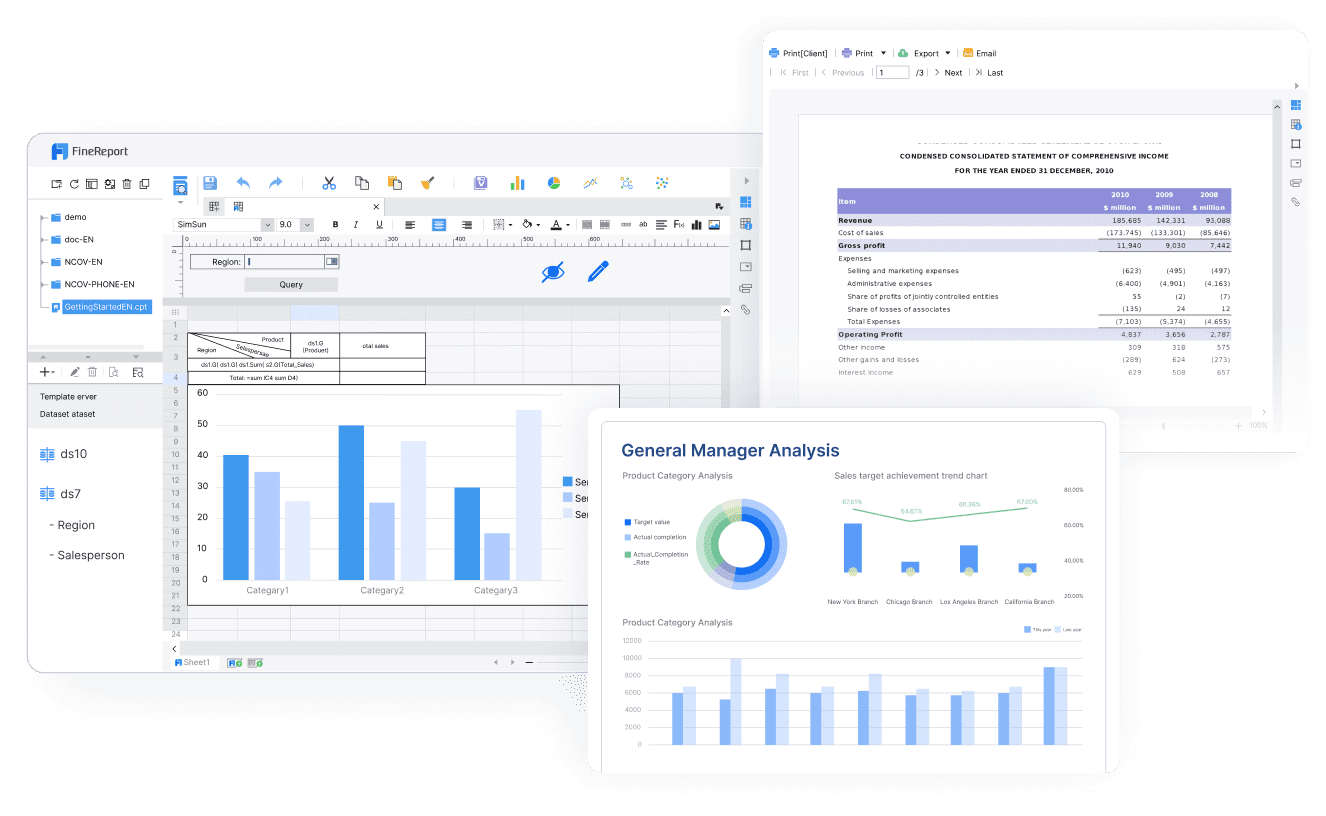
 Confluence is more institutional in orientation, with solutions for
 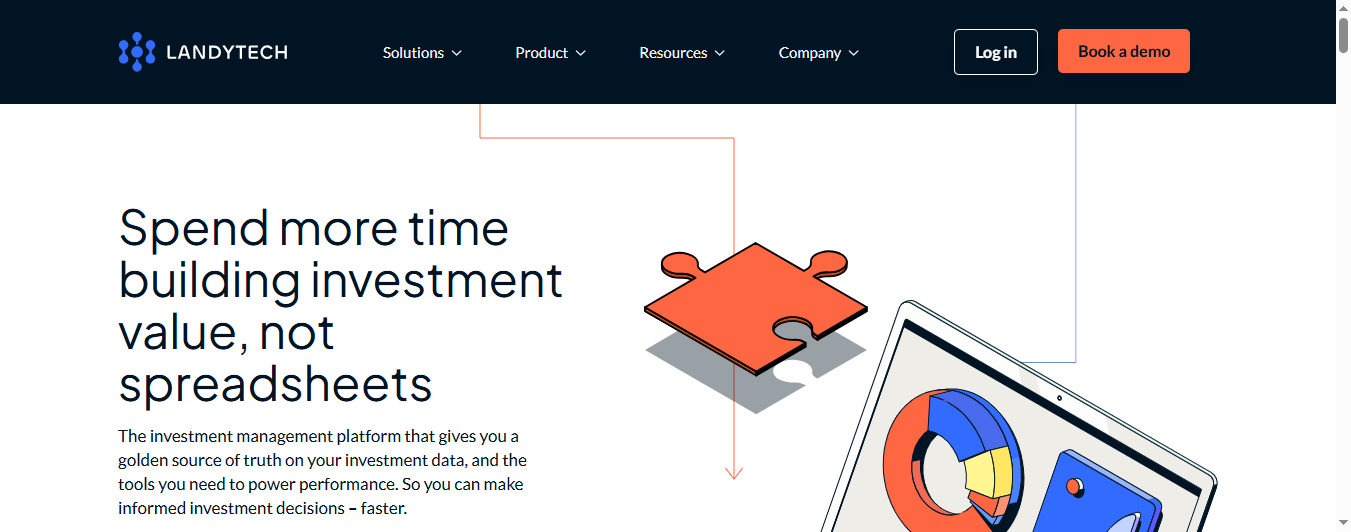 Landytech focuses on