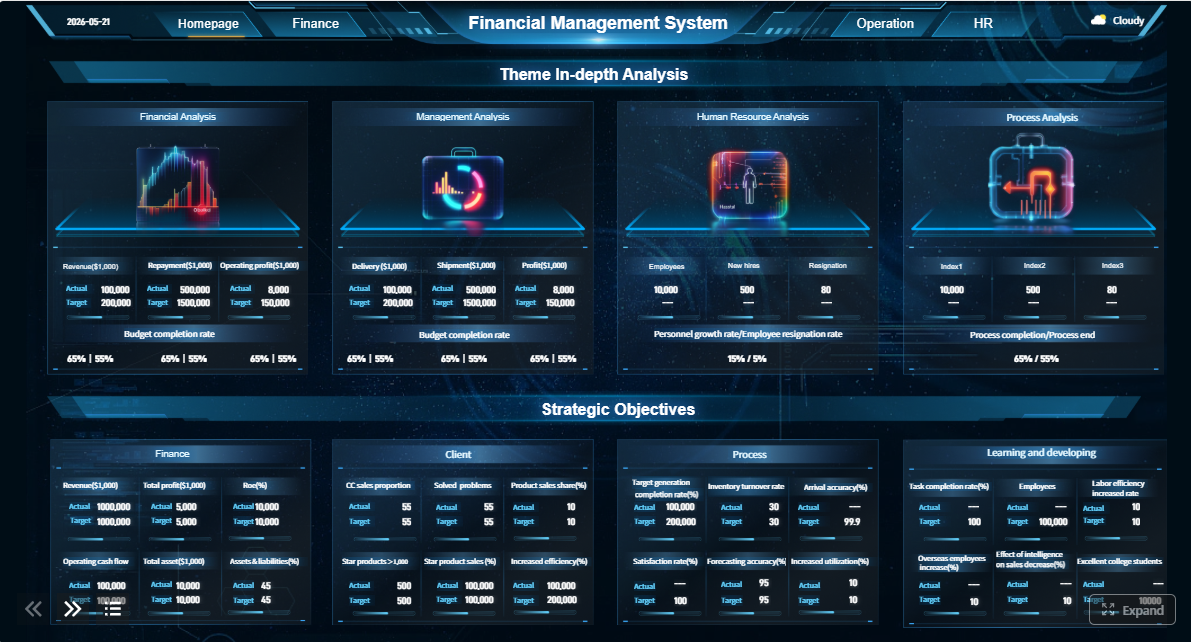
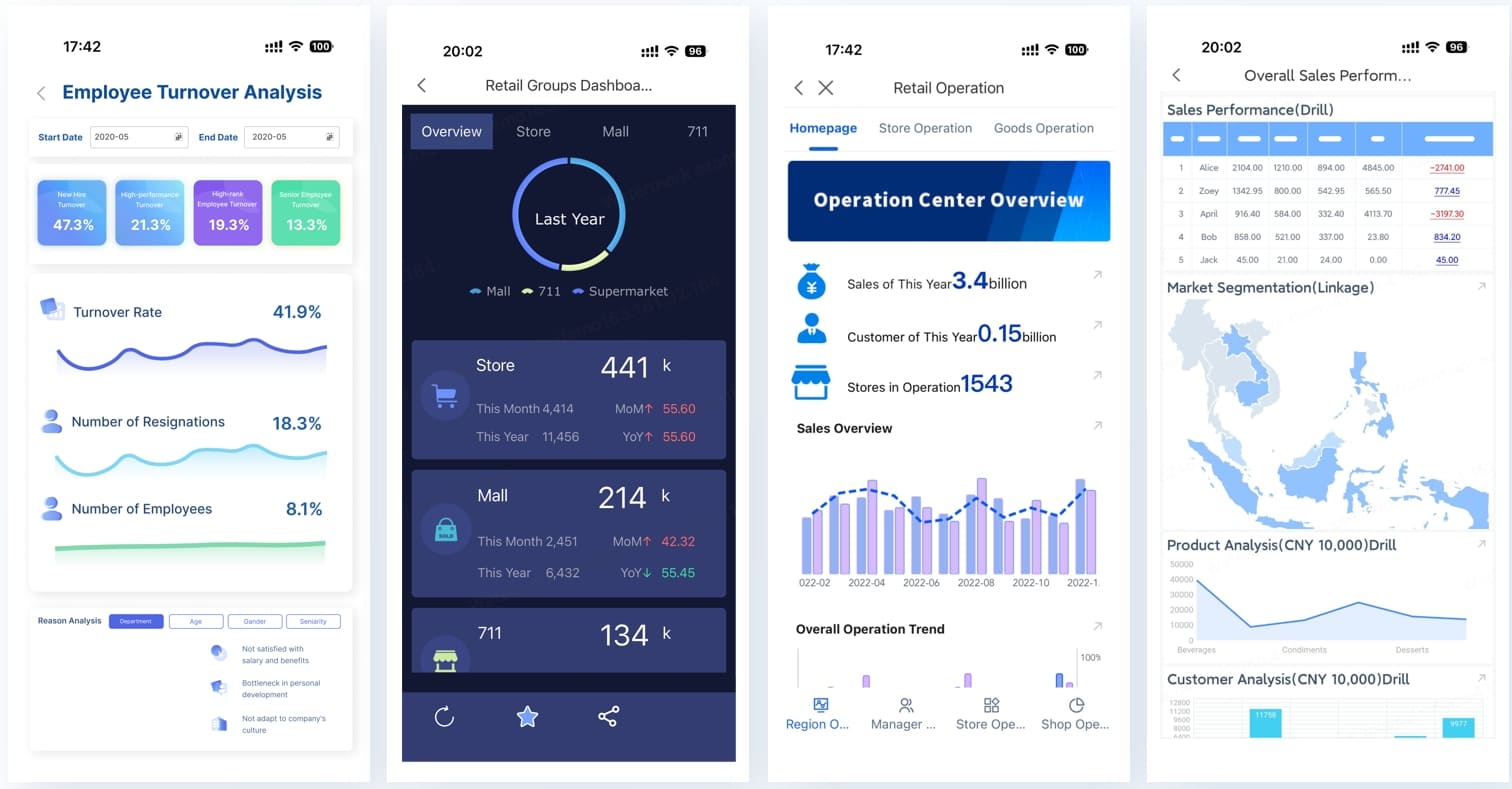
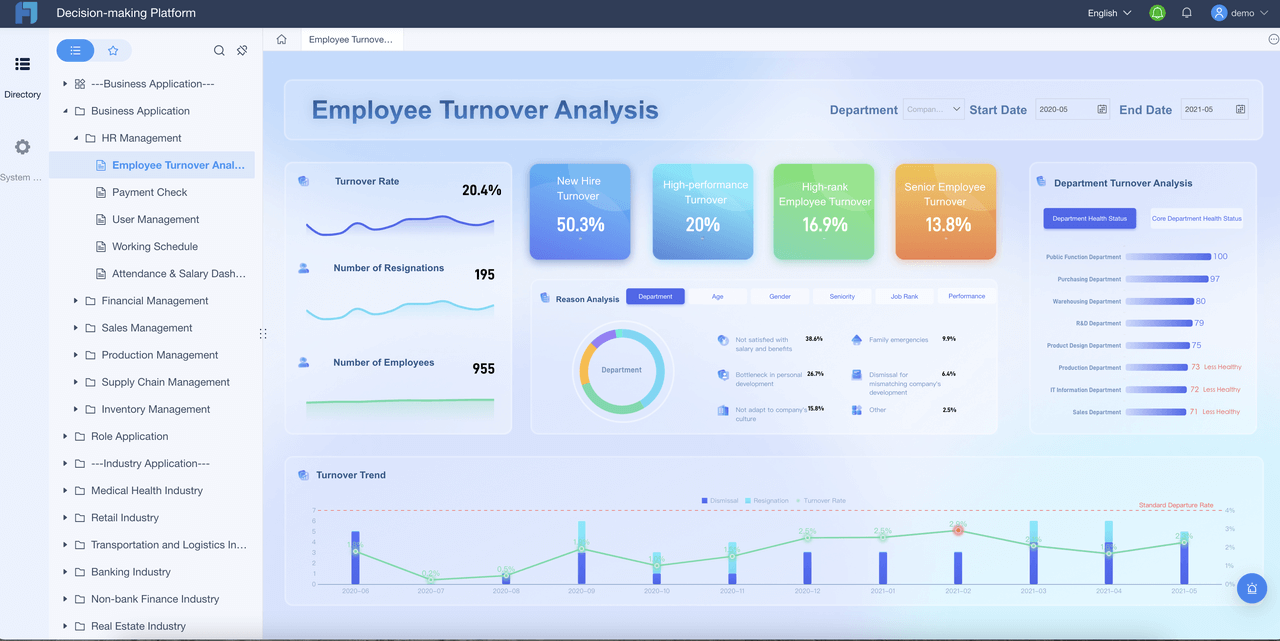
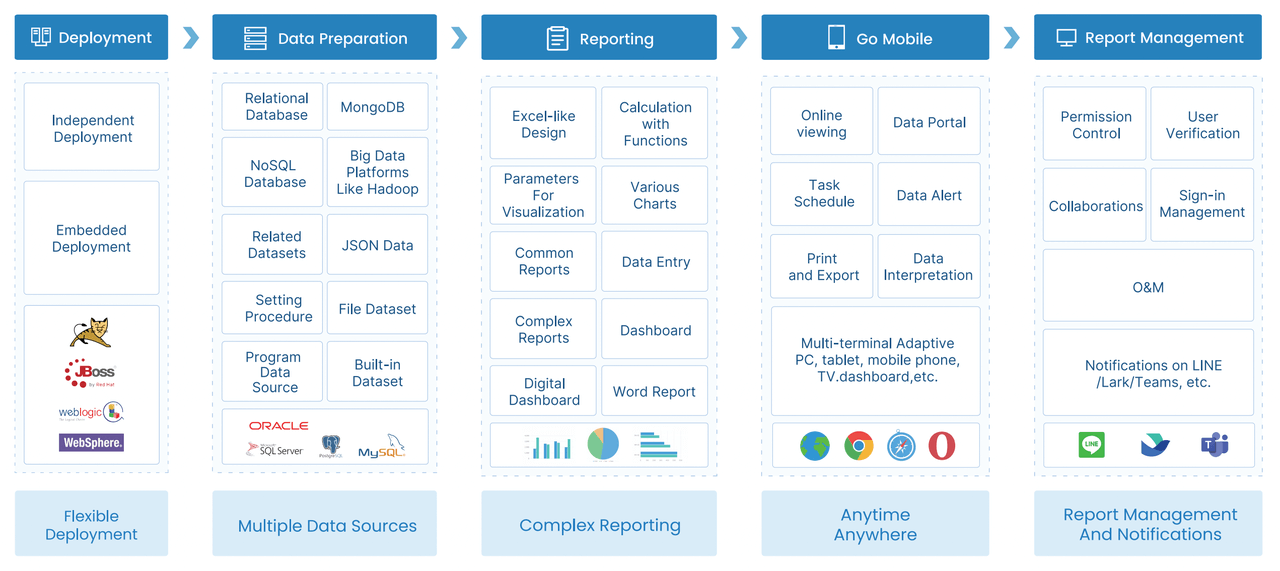
General purpose financial reporting exists to give a broad group of external users a clear, consistent view of a company’s financial position, performance, and cash flows. For finance managers, that makes it more than a compliance exercise. It is the reporting foundation that supports board communication, lender discussions, investor confidence, and internal planning.
In practice, finance teams are often pulled in two directions. On one side, they need accurate financial statements and operational reporting. On the other, stakeholders want faster answers, clearer summaries, and quicker follow-up on exceptions. With FineReport + Dora, teams can ask for a report summary in chat, generate structured narratives from trusted report assets, receive scheduled briefings, and push exceptions to the right owner.
Click To Try The Dashboard
All reports in this article are built with FineReport
General purpose financial reporting is the preparation and presentation of financial information designed for a wide range of users who cannot demand custom reports for their own specific needs. In plain language, it is the standard set of financial statements and disclosures a business provides so external stakeholders can understand the business without needing private access to management.
For a finance manager, this matters because decision-making becomes more consistent when everyone works from the same reporting base. Instead of explaining different versions of the truth to lenders, directors, investors, and auditors, the finance team maintains one governed reporting structure that supports comparability over time.
General purpose financial reporting is different from a report prepared for a single bank, tax authority, regulator, or internal department. A covenant calculation for one lender, for example, is usually tailored to a narrow contractual need. A departmental profitability analysis may be designed for internal management only. By contrast, general purpose financial reporting serves broader external information needs.
Three qualities sit at the center of this reporting approach:
Comparability: users should be able to compare performance across periods and, to a reasonable extent, across companies.
Transparency:financial statements should communicate what happened, not hide it behind inconsistent presentation or vague disclosures.
Usefulness: the information should help users make decisions about providing resources to the business or assessing how management has used those resources.
For enterprise finance teams, this reporting foundation is also where digital reporting transformation begins. FineReport can standardize management reports, statutory-style report packages, formatted financial outputs, and finance cockpits. Dora then turns these trusted assets into an enterprise Data Agent layer that helps users consume reports faster through chat, summaries, alerts, and follow-up workflows.
The objective of general purpose financial reporting
The core objective of general purpose financial reporting is to provide useful financial information to existing and potential investors, lenders, and other creditors. These users rely on the reports to decide whether to invest, lend, extend credit, or continue supporting the business.
For finance managers, this objective has three practical dimensions.
Capital allocation: stakeholders use the information to decide where to place money and under what terms.
Stewardship assessment: boards and owners use reporting to evaluate whether management has used company resources responsibly and effectively.
Risk evaluation: creditors and investors assess liquidity, solvency, volatility, and cash generation before making decisions.
This objective also connects directly to day-to-day finance responsibilities. Budgeting, forecasting, variance analysis, and monthly review processes all improve when the underlying financial reporting is reliable and clearly structured. Even though general purpose financial reporting is aimed at broad users, the discipline it imposes benefits internal planning as well.
How the Conceptual Framework shapes reporting decisions
The conceptual framework provides the logic behind financial reporting. It helps guide decisions about:
Measurement: how assets, liabilities, income, and expenses should be valued
Presentation: how information should be organized and displayed
Disclosure: what additional explanation is needed in the notes
Finance managers do not need to become standard setters, but they do need to understand framework-based judgment. Standards do not always answer every practical question with perfect precision. Revenue arrangements, expected credit losses, impairment judgments, provisions, and fair value estimates often require interpretation.
When finance managers understand the conceptual basis for reporting decisions, they can better defend accounting positions, improve review quality, and explain judgments to auditors, boards, and lenders. That is especially important when report readers are evaluating not just the numbers, but the quality of financial oversight behind them.
Why financial reporting matters to business decisions
Reliable general purpose financial reporting supports decisions well beyond statutory filing.
It improves:
planning and forecasting discipline
financing discussions with banks and investors
board reporting quality
performance monitoring across periods
confidence in capital expenditure and working capital decisions
Weak reporting creates the opposite effect. Inconsistent classifications, unclear disclosures, and poor close controls can lead to poor business decisions, compliance risk, and reduced stakeholder confidence. A profitable company can still appear risky if its reporting obscures cash flow weakness, covenant pressure, or significant judgments.
For finance leaders, the message is simple: reporting quality is strategic, not just technical.
Who uses general purpose financial reports and what they need
The main users of general purpose financial reports are those who need information but typically cannot request a custom report every time they have a question.
Primary users often include:
investors
lenders
other creditors
boards and audit committees
analysts
regulators
Each group looks at the same core financial statements, but asks different questions.
Investors ask whether earnings are sustainable, whether returns justify risk, and whether the company can grow profitably.
Lenders focus on liquidity, debt service capacity, covenant risk, and cash flow resilience.
Creditors want to know whether the business can pay obligations on time.
Boards assess performance, governance quality, and management stewardship.
Analysts look for trends, margins, capital structure signals, and comparability across periods or peers.
Regulators focus on compliance, completeness, and faithful presentation.
A finance manager cannot change the general-purpose nature of the reports to suit each reader individually, but can improve presentation clarity. That means using consistent formats, understandable note disclosures, clean reconciliation logic, and a clear story behind changes in performance and financial position.
General-purpose vs. special purpose financial statements
General-purpose financial statements are designed for a broad external audience. Special purpose financial statements are prepared for a specific user need or reporting framework.
regulatory submissions built for a narrow requirement
The difference matters because the scope, measurement basis, and disclosures may not be the same. A tax-basis report may be useful for a tax filing but not for an investor assessing economic performance. A covenant-focused report may highlight debt metrics but omit broader information needed by other users.
Mixing general-purpose and special purpose reporting without clear labeling creates confusion. Users may misunderstand assumptions, think the statements are comparable when they are not, or rely on them for decisions they were not designed to support. Finance managers should keep the boundaries clear.
Together, these statements explain the company’s financial position, performance, and cash flows. The notes add critical detail about accounting policies, estimates, judgments, uncertainties, and significant transactions.
Below is a practical finance manager’s framework for reading the package.
Key reporting elements finance managers should monitor
Balance Sheet: A snapshot of assets, liabilities, and equity at a point in time. Business value: Helps users assess liquidity, solvency, financial flexibility, and capital structure. AI use:Dora can summarize major period-end movements, explain working capital changes, and generate a management-ready narrative tied back to FineReport balance sheet outputs.
Income Statement: A summary of revenue, expenses, and profit over a reporting period. Business value: Shows operating performance, margin trends, and earnings quality. AI use:Dora can highlight margin changes, explain unusual variances, and create structured performance summaries for finance review meetings.
Cash Flow Statement: A report of operating, investing, and financing cash movements. Business value: Reveals cash generation, funding pressure, and whether profit is converting into cash. AI use:Dora can identify cash flow pressure points, compare operating cash flow against profit trends, and push briefing summaries to finance leadership.
Statement of Changes in Equity: A rollforward of equity balances, including profit, distributions, share movements, and reserves. Business value: Helps users understand how ownership interests and retained earnings changed over time. AI use:Dora can summarize the causes of equity movement and include them in board-ready report narratives.
Notes and Disclosures: Explanations of policies, estimates, judgments, commitments, contingencies, and unusual transactions. Business value: Provides context needed to interpret the numbers correctly. AI use:Dora can retrieve the relevant disclosure note, explain accounting policy impacts in plain language, and answer chart-based or note-based questions in chat.
How to read the statements as a finance manager
A finance manager should not read the statements in isolation.
Balance sheet: Start with liquidity and capital structure. Review current assets against current liabilities, debt maturity concentration, receivables quality, inventory build, and covenant-sensitive ratios.
Income statement: Focus on margins, cost behavior, recurring versus nonrecurring items, and period-over-period trends. A rise in profit means less if it comes from one-off items or aggressive assumptions.
Cash flow statement: Test the quality of earnings. Is the company generating cash from operations? Are financing inflows masking operating weakness? Are capital expenditures sustainable relative to operating cash flow?
Notes: Look for the accounting decisions behind the numbers. Significant estimates, revenue policies, impairment triggers, contingent liabilities, and post-reporting events can materially change interpretation.
This is also where modern reporting platforms matter. FineReport can organize these statements, supporting schedules, and finance cockpit views into a consistent reporting environment. Dora can then help executives and finance users consume them faster through natural-language questions, chart explanations, and scheduled report briefings.
Traditional financial reporting often breaks down after the statements are produced. Finance teams finish the package, but then spend days answering follow-up questions, summarizing trends for executives, and chasing owners on exceptions.
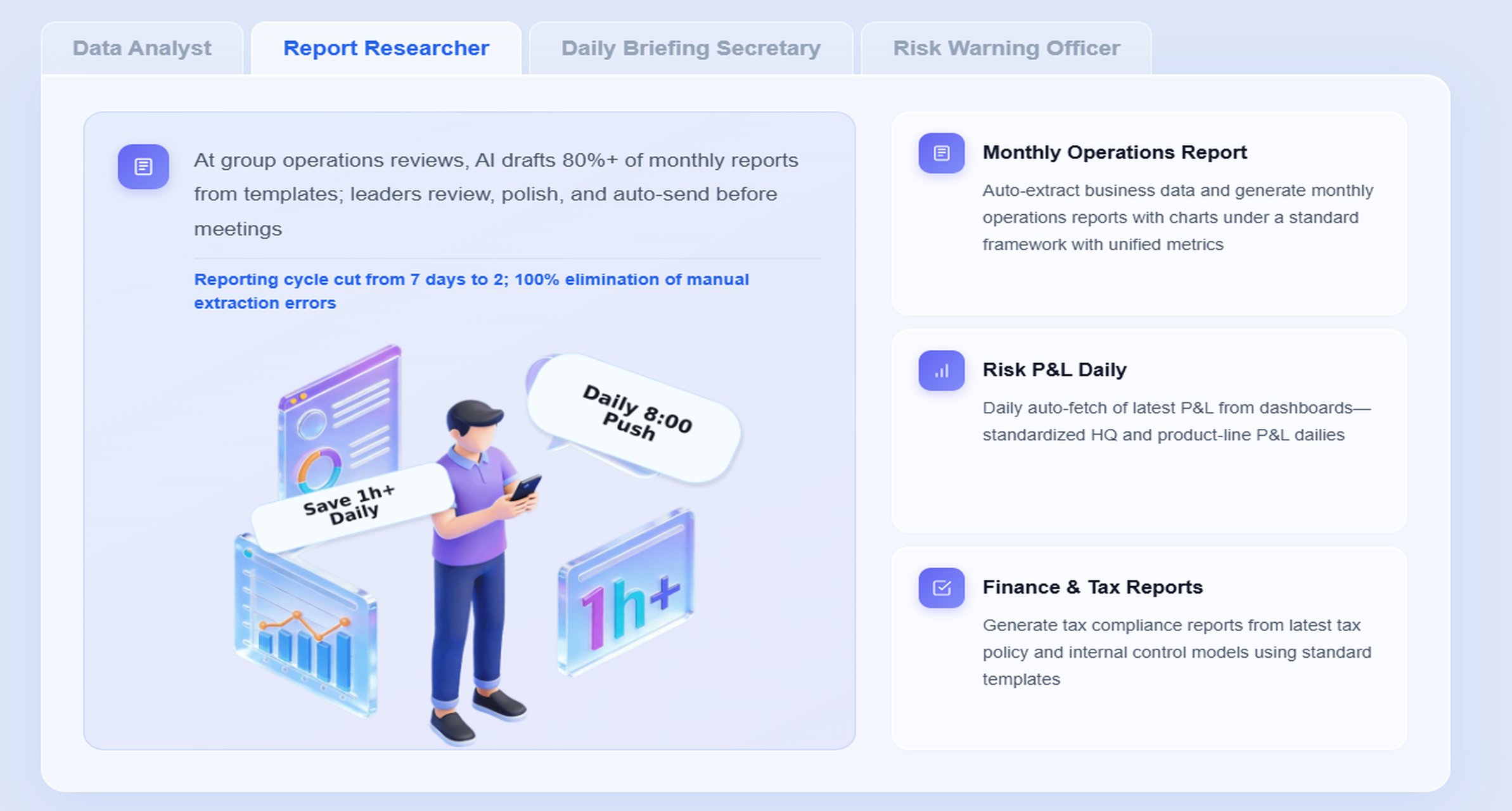
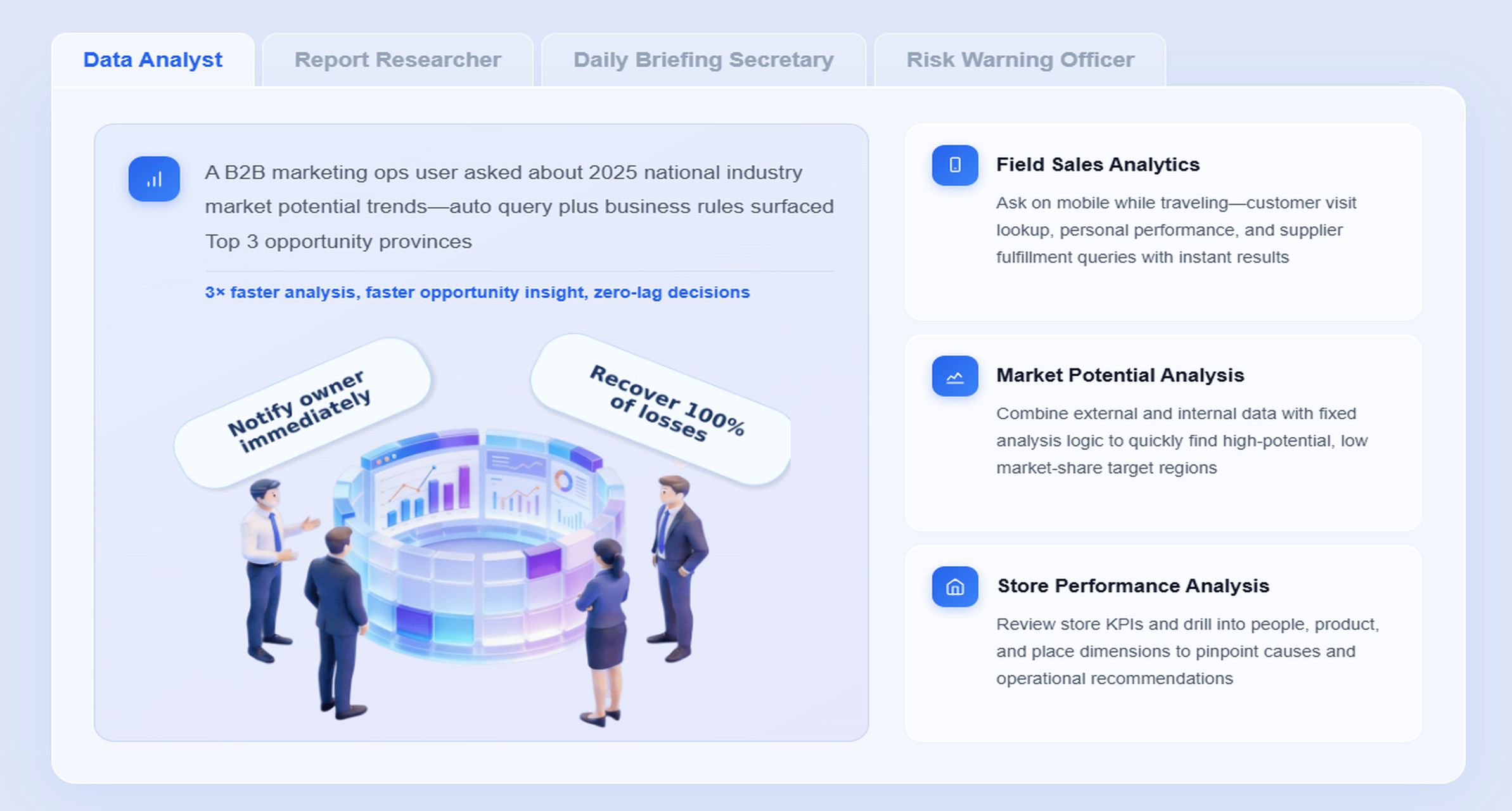
Dora can act as a Daily Briefing Secretary and Data Analystdigital employee for recurring finance reporting scenarios. Instead of replacing the reporting foundation, Dora sits on top of trusted FineReport report assets and helps users consume, understand, and act on them more efficiently.
A concrete chat-style example
A finance manager or CFO could ask:
“Summarize this month’s general purpose financial reporting package, explain the major cash flow changes, highlight any unusual margin movements, and list items that need board follow-up.”
Dora can return a structured report summary based on governed FineReport assets, with links back to the underlying reports and schedules.
A 6-step AI workflow for financial reporting consumption
Retrieve trusted FineReport report data Dora accesses the approved financial reporting package, management cockpit, cash flow schedules, and exception lists built in FineReport.
Understand KPI definitions and reporting semantics Dora uses governed business terms, chart logic, metric definitions, report templates, and permission rules so it interprets finance metrics consistently.
Generate a structured report summary Dora produces a management narrative that explains financial position, performance, and cash flow changes in clear business language.
Detect exceptions and unusual movements Dora identifies abnormal variance patterns, overdue close items, disclosure flags, or threshold breaches defined by finance policy.
Push alerts and briefings to stakeholders Dora sends scheduled daily, weekly, monthly, or period-close summaries to finance leaders, business heads, or board support teams.
Support follow-up and review records Dora can log follow-up items, route exceptions to responsible owners, and prepare recurring review summaries for the next meeting cycle.
For this scenario, the most relevant Dora roles are:
Daily Briefing Secretary: ideal for scheduled monthly or quarterly reporting summaries, board prep, and recurring financial package distribution.
Data Analystdigital employee: useful for natural-language follow-up questions about variances, cash flow drivers, and report interpretation.
Risk Alert Officer: valuable when the finance team wants automated alerts on covenant pressure, liquidity thresholds, or disclosure-related exceptions.
Why FineReport matters in the AI workflow
AI reporting only lands in real enterprises when the reporting foundation is trusted. FineReport provides that foundation through:
That matters because Dora’s answers should come from trusted report assets, not improvised logic. FineReport provides the reporting and semantic base. Dora adds the governed AI workflow layer that helps users query, summarize, alert, push, and follow up.
How Dora improves execution in finance reporting
Dora improves report consumption in several concrete ways:
retrieves relevant reports, metrics, charts, and exceptions from FineReport
generates structured report summaries and management narratives
explains charts and variances in chat without requiring users to search manually
sends scheduled briefings for monthly close, board packs, or lender review prep
pushes exception alerts for risk conditions or unusual movements
supports more controllable, auditable workflows through Skills-based execution
Compared with raw prompt-only agents, this enterprise Data Agent approach has a stronger landing path because it is built around permissions, KPI governance, report templates, semantic rules, and reporting workflows already familiar to finance teams. It is designed to reduce token waste, improve response speed, and increase workflow stability compared with generic AI approaches, without overclaiming unsupported automation.
For executives, the value is concrete: Dora is not an AI experiment. It is a landed digital employee for recurring reporting work such as monthly financial summaries, cash flow review briefings, board preparation, covenant monitoring, and finance follow-up.
For IT teams, the role changes as well: IT no longer has to manually respond to every reporting access and summary request. Instead, the team can focus on data connections, semantic governance, permissions, finance templates, and reusable AI Skills.
For business users and non-finance stakeholders, Dora lowers friction. They can get timely, chart-based answers and scheduled summaries without waiting for the finance team to manually rewrite what is already in the reporting system.
Common reporting challenges and best practices for finance managers
General purpose financial reporting is conceptually straightforward, but operationally difficult. Common issues appear in nearly every finance function.
Common challenges
inconsistent classifications across periods
timing differences between subledgers and general ledger close
revenue recognition complexity
disclosure overload that hides the important story
weak documentation of judgments and estimates
fragmented reporting packs that require heavy manual reconciliation
These problems reduce clarity for external users and increase rework for finance teams.
Actionable best practices
1. Standardize report templates and KPI definitions
Use consistent report structures, accounting labels, mapping rules, and period comparison formats. This improves comparability and reduces last-minute presentation debates.
From an AI perspective, this is also essential. Dora works best when financial statements, management packs, and exception logic follow governed templates and clear metric definitions.
2. Build a semantic layer into the reporting workflow
Finance teams often use terms like EBITDA, free cash flow, adjusted operating profit, or working capital in slightly different ways across reports. Define those terms centrally.
FineReport can provide the trusted reporting structure and standardized outputs. Dora can then use those semantic rules to generate more accurate chart explanations and structured summaries.
3. Treat data quality as part of the AI implementation
AI does not fix weak close processes. If underlying balances, mappings, or disclosures are unreliable, AI-generated summaries will reflect those weaknesses.
These use cases create clear business value and are easier to govern.
5. Preserve permissions, review controls, and follow-up ownership
Finance reporting is sensitive. AI outputs must respect access boundaries. Preserve FineReport permission governance so Dora only retrieves and summarizes information users are authorized to see.
Also keep human review in the loop for AI-generated report narratives, especially in early rollout phases. Expand Dora Skills gradually as confidence, governance, and data quality improve.
Before releasing a general purpose financial reporting package, finance managers should ask:
Are the statements complete, neutral, and understandable for external users?
Do disclosures clearly explain significant judgments, estimates, and unusual transactions?
Can a non-specialist stakeholder follow the story behind performance and financial position?
Are reconciliations, note references, and presentation logic consistent across the package?
If Dora summarizes this report, will the underlying structure and definitions support a reliable management narrative?
These questions improve both compliance quality and communication quality.
FineReport + Dora solution pitch
Building a strong general purpose financial reporting process manually is complex. Finance teams need trusted statements, consistent templates, workflow discipline, approvals, access control, and timely communication across stakeholders.
FineReport helps teams standardize trusted reports, operational cockpits, templates, and reporting workflows. Dora turns those assets into an AI assistant that can answer report questions in chat, generate structured summaries, push scheduled briefings, monitor exceptions, and follow up with responsible owners.
FineReport is the reporting foundation. It supports formatted reports, complex report packages, operational cockpits, management reports, and enterprise reporting automation. Dora is the enterprise Data Agent layer that helps organizations move from manual report preparation and repeated explanation to governed AI-assisted report consumption and follow-up.
FineReport + Dora is not only a reporting upgrade; it is a practical fourth-generation Agentic BI path. FineReport provides governed reports and operational cockpits. Dora provides the AI assistant layer for scenario execution, with more controlled Skills, lower token waste, faster execution paths, and more stable workflows than prompt-only agents.
Get Ready-to-Use Dashboard Templates in Fine Gallery
use Dora to deliver recurring summaries and chart-based answers
monitor exceptions without manually checking every report
improve timeliness of stakeholder communication
support better follow-up on reporting issues and risk items
The strongest Dora pitch is scenario + product + service: FineReport provides the trusted reporting foundation, Dora provides the AI digital employee, and implementation service connects data, governance, semantic setup, Skills, report templates, permissions, and rollout.
Its main purpose is to provide useful financial information to investors, lenders, and other creditors who need to make decisions about providing resources to a business. It helps them assess performance, financial position, cash flows, and risk.
The primary users are existing and potential investors, lenders, and other creditors. Boards, auditors, and other external stakeholders also rely on these reports when they cannot request custom information directly from management.
General purpose reporting is designed for a broad group of external users and follows a consistent reporting framework. Special purpose reporting is tailored to the needs of a specific user, such as a bank, regulator, or internal department.
It typically includes the balance sheet, income statement, cash flow statement, statement of changes in equity, and related notes. Together, these explain a company’s financial position, performance, and movements in cash and equity.
It gives finance managers a reliable reporting base for board communication, lender discussions, and investor updates. It also improves planning, forecasting, and confidence in the numbers used across the business.
Product Trial
FineReport
Pixel-perfect reports · Interactive dashboards · Easy data entry · Digital twins