Month-end close is where finance teams feel the tension between speed, accuracy, and control most sharply. Leadership wants timely reporting. Auditors want consistency and traceability. Controllers want confidence that the numbers are complete before anything moves downstream into board packs, lender updates, management reporting, or planning.
That is why financial reporting challenges rarely come from one issue alone. Delays usually build up across disconnected systems, manual reconciliations, unclear ownership, layered reviews, late adjustments, and limited capacity during peak close periods. The result is familiar: the books may eventually close, but reporting arrives later than the business needs.
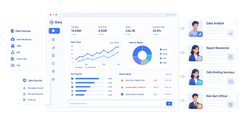
With FineReport + Dora, teams can ask for a report summary in chat, generate structured narratives from trusted report assets, receive scheduled briefings, and push exceptions to the right owner. That matters in finance because faster reporting only helps when control, permissions, KPI definitions, and auditability stay intact.
Click To Try The Dashboard
All reports in this article are built with FineReport
Why month-end close creates financial reporting challenges
Month-end close compresses many competing demands into a short window. Finance must collect data from multiple systems, validate balances, post entries, resolve exceptions, complete reviews, and deliver reporting that executives can trust. In practice, each of those steps has different priorities:
Speed pushes teams to close and report earlier.
Accuracy pushes teams to keep validating and reconciling.
Control pushes teams to document, review, approve, and retain an audit trail.
These priorities are all legitimate, but they often pull in different directions during close. A team that moves too fast may create rework later. A team that adds too many checkpoints may protect compliance but delay decisions. A team that relies on heroic effort may finish the month but create an unstable process that cannot scale.
The impact goes beyond accounting operations. Reporting delays reduce leadership visibility into margin, cash, accrual quality, working capital, and entity performance. They also weaken audit readiness because support is scattered across files, inboxes, and personal workarounds. Downstream planning suffers too, since FP&A, business unit leaders, and executives end up reviewing numbers that are either incomplete or already out of date.
Most month-end reporting slowdowns trace back to seven recurring issues. Fixing them does not mean abandoning controls. It means redesigning the reporting workflow so the right controls are applied in the right places, supported by trusted reporting foundations and governed AI workflows where they make sense.
The 7 most common financial reporting challenges in month-end close
1. Late data from multiple systems
Disconnected ERPs, subledgers, spreadsheets, expense tools, payroll platforms, and operational systems create one of the most common financial reporting challenges in close. Even when each source is individually reliable, the reporting process slows down when finance has to wait for different extracts, formats, and timing windows before reconciliation can begin.
Multi-entity environments add another layer of complexity. One subsidiary may define revenue timing differently from another. Departments may use inconsistent cost center mappings. Local teams may submit supporting files in different formats or on different schedules. These differences force finance to spend time aligning definitions before it can even analyze the numbers.
Report Element: Source system submission status Business value: Shows whether the data needed for close reporting has arrived on time and in the required format. AI use:Dora can summarize which entities or departments are late, explain likely reporting impact, and include overdue sources in a scheduled close briefing.
Report Element: Cross-system reconciliation variance Business value: Highlights mismatches between the general ledger, subledgers, and operational source systems before reporting is finalized. AI use:Dora can explain which variances are material, identify recurring mismatch patterns, and push exception summaries to owners.
Report Element: Data definition consistency by entity or department Business value: Reduces confusion caused by inconsistent mappings, KPI definitions, and reporting logic. AI use:Dora can answer chat-based questions about metric definitions and reference the trusted reporting logic behind each number.
A practical improvement here is not just faster integration. It is a governed reporting layer where financial statements, close cockpits, and exception views are standardized in FineReport, so teams stop recreating visibility every month.
2. Manual reconciliations and journal entries
Manual spreadsheet reconciliations remain a major source of delay because they increase both effort and uncertainty. Teams often copy balances from multiple systems, perform matching logic manually, circulate files for review, and then update journals based on findings. Every manual touchpoint introduces risk: version confusion, formula errors, missed comments, and duplicated work.
Repetitive manual journal workflows create similar drag. Even when the entries themselves are straightforward, the process of collecting support, checking completeness, routing approvals, and confirming posting status can stretch across the close window.
Report Element: Reconciliation aging by account Business value: Reveals which reconciliations are unresolved, stale, or likely to delay reporting. AI use:Dora can summarize overdue reconciliations, explain concentration by account class, and trigger alerts for high-risk aging items.
Report Element: Manual journal entry volume Business value: Indicates the amount of close effort still dependent on human intervention. AI use:Dora can identify where recurring manual entries cluster and include that pattern in continuous improvement reporting.
Report Element: Review turnaround time for entries Business value: Shows where approvals are slowing the close. AI use:Dora can produce chart-based answers about approval bottlenecks and notify managers when review SLAs are at risk.
The goal is not to eliminate judgment. It is to reduce low-value repetition so finance can focus on material review, unusual transactions, and reporting quality.
3. Weak visibility into task status and bottlenecks
Close delays become much harder to manage when controllers cannot see who owns each task, what is complete, what is overdue, and which dependencies are blocked. In many organizations, status is still tracked through email, chat messages, and static spreadsheets. That makes escalation late and reactive.
Weak workflow visibility causes two problems at once. First, actual bottlenecks remain hidden until reporting deadlines are already at risk. Second, teams spend extra time asking for updates instead of resolving issues.
Report Element: Close task completion status Business value: Gives finance leaders a single view of progress across reconciliations, entries, reviews, and reporting deliverables. AI use:Dora can generate a structured progress summary for daily close briefings and highlight tasks most likely to impact reporting deadlines.
Report Element: Overdue task list with owner and dependency Business value: Helps controllers intervene before blockers cascade into missed reporting dates. AI use:Dora can push exception alerts to responsible owners and summarize dependency risk for management.
Report Element: Escalation path tracking Business value: Ensures delayed tasks do not stay invisible. AI use:Dora can follow predefined Skills to route exception notices and record follow-up status.
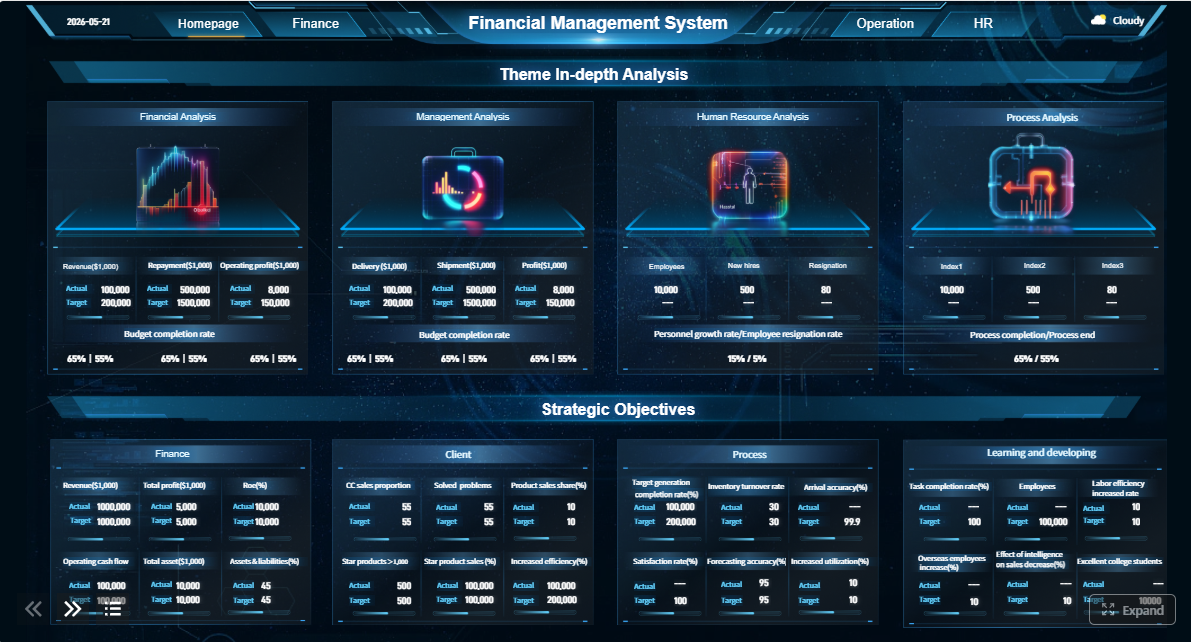
This is where a FineReport operational cockpit becomes especially useful. Instead of waiting for manual status updates, finance leaders can monitor close progress, exception aging, and reporting readiness in one governed view.
4. Control-heavy reviews that do not scale
Strong controls matter. Finance cannot simply remove approvals and hope reporting quality improves. But many close processes accumulate review layers over time without revisiting whether each step still reduces risk. The result is a control-heavy process that slows close without meaningfully improving reporting confidence.
Not all reviews are equal. Some protect material balances, unusual transactions, regulatory exposure, or high-risk entities. Others merely repeat prior checks because no one wants to own the decision to simplify them.
Report Element: Approval step count by workflow Business value: Reveals whether close controls are proportionate or excessive. AI use:Dora can summarize which workflows have the longest review chains and where delays are concentrated.
Report Element: Materiality-based review coverage Business value: Aligns review depth with account risk instead of applying the same process everywhere. AI use:Dora can help explain why certain items appear in high-priority exception lists within management briefings.
Report Element: Review rework rate Business value: Shows whether multiple reviews are actually preventing issues or simply extending cycle time. AI use:Dora can include rework patterns in weekly close retrospectives and support process redesign discussions.
Risk-based controls scale better than blanket controls. Finance teams that redesign approvals around materiality and exception handling usually gain speed without giving up governance.
5. Frequent adjustments after preliminary reporting
Late entries and post-close corrections are especially damaging because they undermine trust in preliminary reporting. Executives may receive one set of numbers, only to see material changes after additional accruals, reclasses, or reconciliations are completed. That creates hesitation around using early reports for decisions.
Frequent post-close adjustments also produce rework across management reports, lender packs, board decks, commentary, and forecast inputs. Finance then spends more time explaining what changed than analyzing performance.
Report Element: Number of post-close adjustments Business value: Measures how stable reported numbers are after preliminary release. AI use:Dora can track adjustment patterns over time and summarize which entities or accounts drive repeated rework.
Report Element: Preliminary-to-final variance Business value: Indicates how much reported figures shift after initial reporting. AI use:Dora can generate management narratives explaining significant movements between preliminary and final versions.
Report Element: Adjustment cause classification Business value: Helps distinguish process issues from one-off events. AI use:Dora can structure recurring causes into periodic improvement briefings for controllers and finance leadership.
A mature reporting process is not one with zero change. It is one where late changes are visible, explainable, and reduced over time through better upstream discipline.
6. Limited capacity during peak close periods
Many finance teams still close through concentrated bursts of effort. That works until growth adds more entities, more accounts, more reporting expectations, and more stakeholder requests. Then the same people, same spreadsheets, and same routines no longer scale.
Capacity constraints usually show up in three ways:
Heavy reliance on a few key people
Delayed reviews because multiple deadlines collide
Reduced time for analysis because teams are consumed by close mechanics
The problem is not just headcount. It is process design. If too much close activity depends on tribal knowledge or manual intervention, even experienced teams struggle to maintain timeliness as complexity grows.
Report Element: Task concentration by owner Business value: Highlights key-person dependency and workload imbalance. AI use:Dora can identify overloaded owners and include resource risk in close status summaries.
Report Element: Peak-period request volume Business value: Shows how ad hoc demands compete with core close tasks. AI use:Dora can help triage reporting requests by retrieving existing FineReport assets instead of requiring fresh manual analysis each time.
Report Element: Analysis time vs. processing time Business value: Measures whether finance is spending enough effort on insight rather than cleanup. AI use:Dora can turn trusted report outputs into structured summaries so analysts spend less time drafting recurring commentary.
This is where an enterprise Data Agent becomes practical. It does not replace accountants. It reduces friction in report consumption, explanation, and follow-up so the finance team can use its limited capacity better.
7. Difficulty producing timely insights, not just statements
Closing the books is only part of the job. Leadership also wants timely interpretation: What changed? What is off plan? Which entities need attention? Where are margin or cash risks building? Finance often struggles here because so much time is consumed producing the statements themselves.
This is one of the most important financial reporting challenges today. Executives increasingly expect reporting to move faster from numbers to meaning. They want concise narratives, exception flags, and action-oriented summaries, not only static statements.
Report Element: Variance bridge by account, entity, or department Business value: Connects reported figures to the operational and financial drivers behind change. AI use:Dora can generate chart explanations and structured management narratives directly from trusted report assets.
Report Element: Exception list for material variances Business value: Focuses attention on what needs follow-up instead of forcing leaders to scan every line item. AI use:Dora can detect threshold breaches and push alerts to the right owner.
Report Element: Management commentary readiness Business value: Measures how quickly finance can turn closed numbers into decision support. AI use:Dora can act as a Report Researcher or Daily Briefing Secretary to prepare scheduled summaries for leadership review.
A faster close only creates value when it shortens the distance between finalized numbers and usable insight.
How finance teams cut delays without losing control
Standardize close inputs and ownership
Finance teams gain speed when they make the reporting workflow more predictable. That starts with clear submission deadlines, a defined source-of-truth system for each data domain, and common data standards across entities and functions. It also means documenting who owns reconciliations, who approves journals, who resolves exceptions, and who signs off on final reporting packages.
Without that structure, every close becomes a fresh coordination exercise. With it, exceptions become visible earlier and easier to manage.
Automate repeatable work first
The highest-value automation opportunities are usually the most repetitive tasks: account reconciliations, journal workflows, intercompany matching, recurring variance checks, and standardized report assembly. Automation should reduce low-value effort while preserving traceability and audit trails.
For finance leaders, the practical question is not whether a task can be automated in theory. It is whether automation will reduce cycle time, rework, and dependency on manual status chasing in a controlled way.
Redesign controls around risk
A well-run close process is not control-light. It is control-smart. Focus review depth on material accounts, unusual transactions, complex entities, and known risk areas. Remove duplicate approvals that add delay without improving reporting quality.
That often means classifying workflows by risk level, defining exception thresholds, and using standard review paths for lower-risk items while reserving deeper attention for items that truly deserve it.
Use a close calendar with real-time tracking
A centralized close calendar gives controllers and finance leaders earlier warning before blockers affect reporting. It should show task status, dependencies, overdue items, and escalation paths in one place. This makes close management more proactive and less dependent on manual follow-up.
When that close tracking is tied to a FineReport cockpit, the organization gains not just visibility but a governed reporting surface that Dora can later use for summaries, alerts, and follow-up workflows.
A practical framework to improve reporting quality and close speed
Start with baseline metrics
Before redesigning the process, finance should measure the current state. Useful baseline metrics include:
Close duration
Number of post-close adjustments
Reconciliation aging
Manual journal volume
Review turnaround time
Percentage of tasks completed on time
Preliminary-to-final reporting variance
These metrics help teams identify whether the real problem is data latency, review bottlenecks, exception volume, or process inconsistency. They also create a way to evaluate financial reporting quality over time rather than relying on anecdotal frustration.
Fix the highest-friction steps first
Not every part of close needs immediate transformation. In most organizations, a small number of accounts, entities, or workflows create a disproportionate amount of delay. Target those first.
For example, if intercompany reconciliations repeatedly block reporting, fix that process before redesigning every close step. If one entity consistently submits late data, address ownership and standards there before expanding broader automation. Quick wins matter, but they should support structural consistency rather than become isolated patches.
Build a continuous close mindset
Finance teams reduce month-end pressure when selected activities move earlier in the month. Reconciliations, validations, data quality checks, and issue resolution should happen continuously where possible. That spreads effort across the reporting cycle and reduces the end-of-period spike.
A continuous close mindset also creates better conditions for AI support. Dora performs best when it works on trusted, standardized, and timely reporting assets rather than on fragmented late-stage files.
Finance teams do not only need faster report production. They also need faster, more controlled report consumption after the numbers are available. That is where Dora, FanRuan’s enterprise Data Agent platform, adds practical value on top of FineReport.
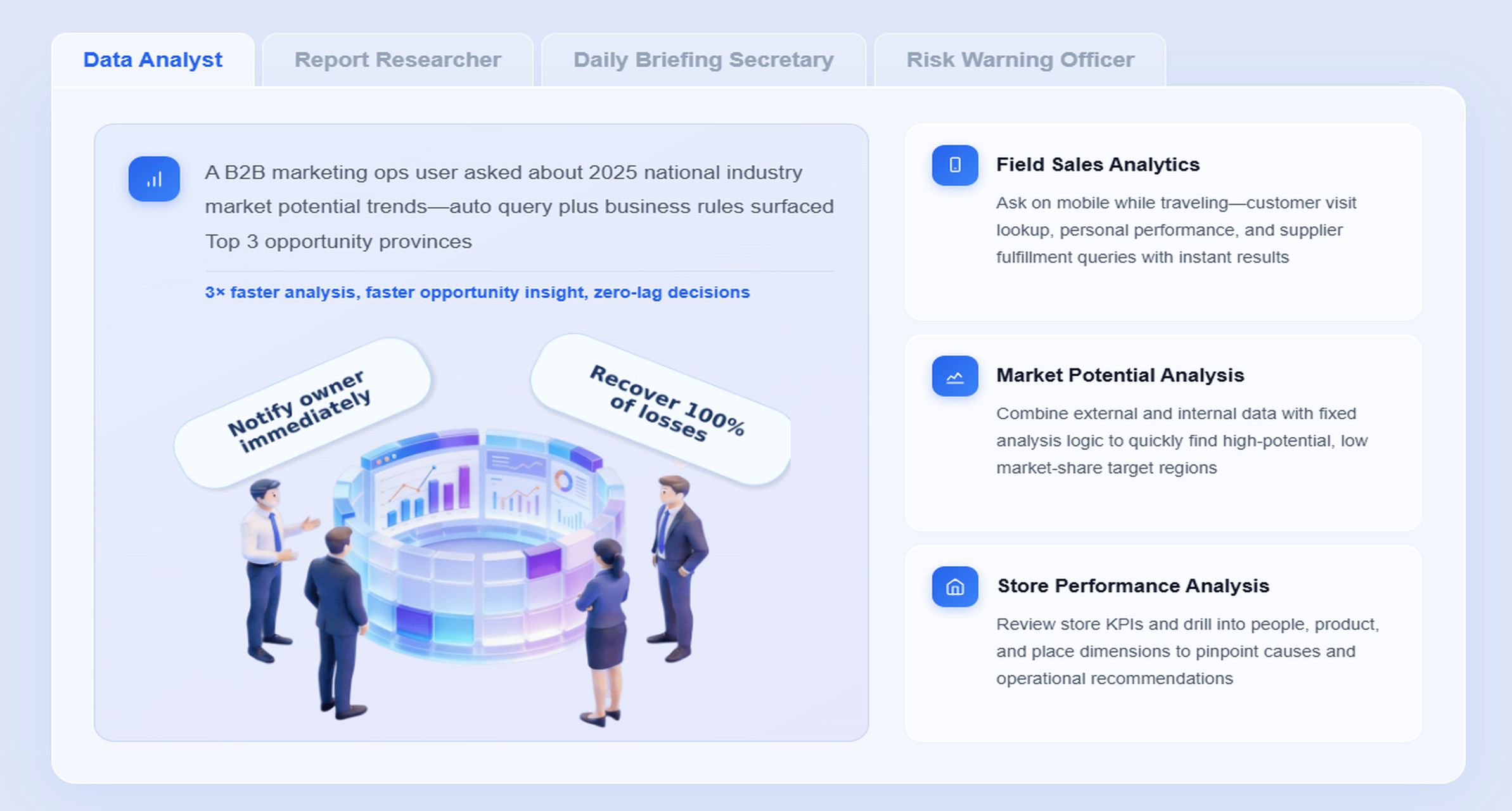
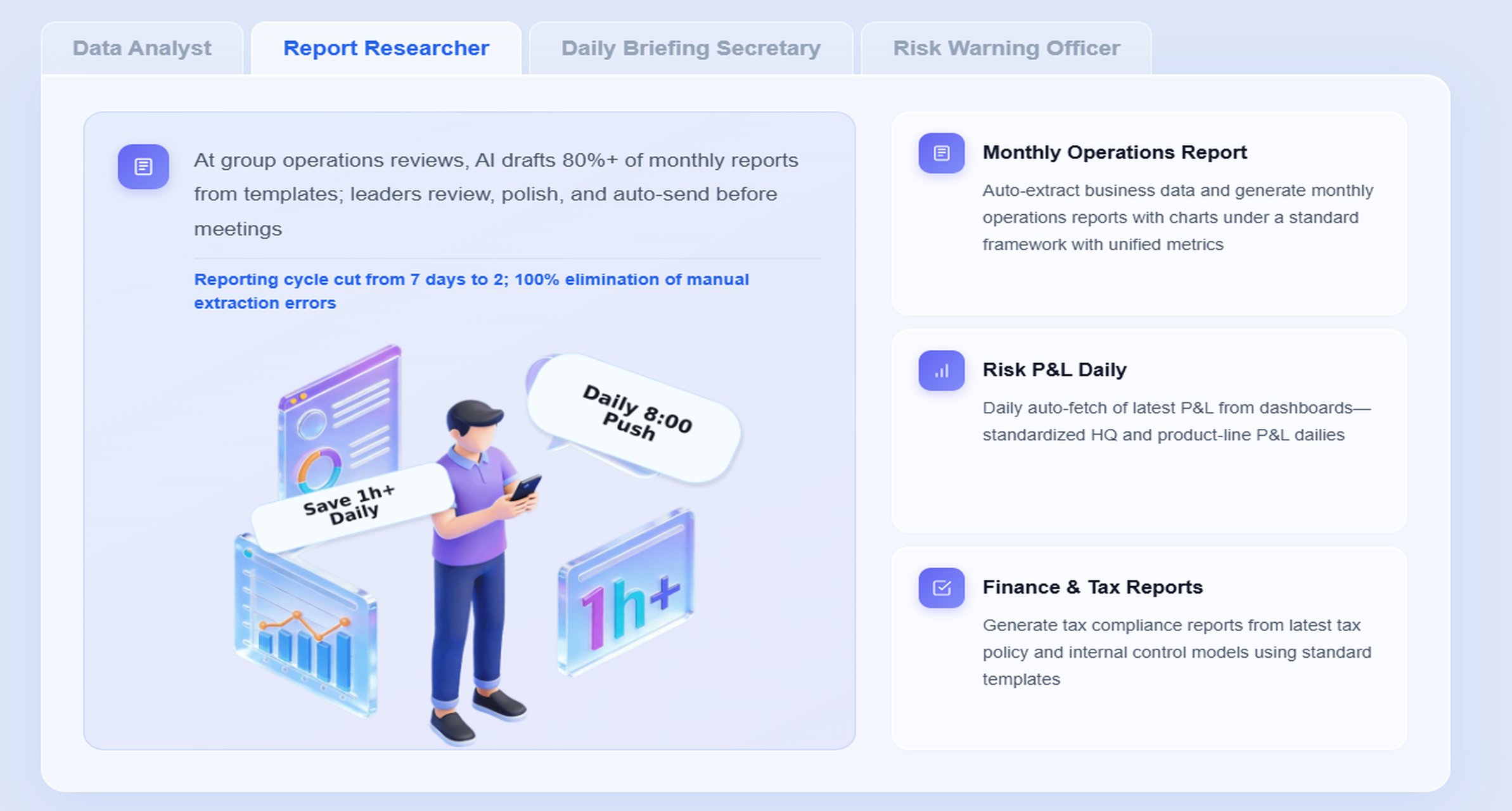
In month-end close and post-close reporting, the most relevant Dora digital employees are:
Daily Briefing Secretary for scheduled close and reporting summaries
FineReport provides the trusted reporting foundation: formatted financial reports, close status dashboards, management cockpits, exception lists, and governed KPI logic. Dora turns those assets into a scenario-specific AI assistant that helps users ask questions, retrieve the right report, summarize what matters, and push follow-up to the right person.
A finance leader could ask:
“Summarize this month’s close report, highlight material post-close adjustments, list overdue reconciliations by owner, and prepare a short management briefing for the CFO.”
Here is how a governed AI workflow can work in practice:
Retrieve trusted FineReport assets Dora accesses the approved close cockpit, financial report package, reconciliation aging view, and exception list built in FineReport.
Understand KPI definitions and reporting context Dora uses the trusted semantic layer, report templates, filters, materiality rules, and business terms defined in the reporting workflow.
Generate a structured report summary Dora creates a concise management narrative: close progress, major variances, key adjustments, overdue tasks, and likely reporting risks.
Detect exceptions and threshold breaches
If reconciliation aging exceeds policy, preliminary-to-final variance crosses tolerance, or a high-risk entity is delayed, Dora highlights that in the summary.
Push alerts and follow-up tasks
As a Risk Alert Officer or Daily Briefing Secretary, Dora can send scheduled briefings, exception pushes, and owner notifications through governed workflows.
Produce a review record for finance leadership Dora supports follow-up by compiling daily or weekly close summaries that controllers and executives can review without manually rebuilding the narrative each time.
This matters because finance teams often waste time not only preparing reports, but also explaining them repeatedly to different stakeholders. Dora improves execution through chat, summaries, scheduled pushes, and follow-up records while staying anchored to trusted FineReport assets.
The enterprise fit is important. Dora is not a generic chatbot layered loosely over financial data. It is an Agentic BI approach built around permissions, semantic rules, report templates, KPI governance, and reusable Skills. That gives finance a more controllable and auditable AI workflow than prompt-only approaches that often produce unstable outputs or waste effort re-explaining report context.
For executives, the value is concrete: Dora is not an AI experiment. It is a landed digital employee for recurring work such as monthly management reports, close summaries, variance briefings, finance risk alerts, and owner follow-up.
For IT and data teams, the role shifts from building every one-off report request to strengthening the data connections, semantic layer, permission model, report templates, and reusable agent Skills that make AI reporting scenarios reliable.
For business users and finance stakeholders, the benefit is lower friction. They can get timely chart-based answers, structured report summaries, and scheduled briefings without waiting on analysts to manually restate what is already in the reporting system.
1. Standardize report templates, KPI definitions, and exception rules
AI output quality depends heavily on reporting consistency. If entities define metrics differently or management packs follow different structures each month, summaries become harder to trust. Standardized templates and definitions make both finance reporting and Dora-driven summarization more reliable.
2. Build a semantic layer inside the reporting workflow
Do not treat business definitions as tribal knowledge. Define account logic, materiality thresholds, ownership rules, and reporting terms inside the governed reporting environment. FineReport provides the trusted report and cockpit foundation; Dora performs better when it can work against that governed semantic context.
3. Treat data quality as part of AI implementation
Poor source data does not become strategic insight just because an AI assistant can access it. Reconciliation quality, source timing, account mapping discipline, and exception handling are all part of successful AI reporting adoption. Finance should improve data quality and reporting governance together.
4. Start with high-value recurring reports
Do not try to automate every reporting scenario at once. Start with recurring close and management workflows such as monthly close briefings, variance summaries, overdue reconciliation alerts, or post-close adjustment tracking. These scenarios are frequent, structured, and easier to govern.
5. Preserve permissions and add human review
AI-generated report narratives should respect existing FineReport access boundaries. Finance should also use human review for summaries and management commentary in early rollout stages, then gradually expand Dora Skills as the workflow matures. This improves trust, control, and adoption.
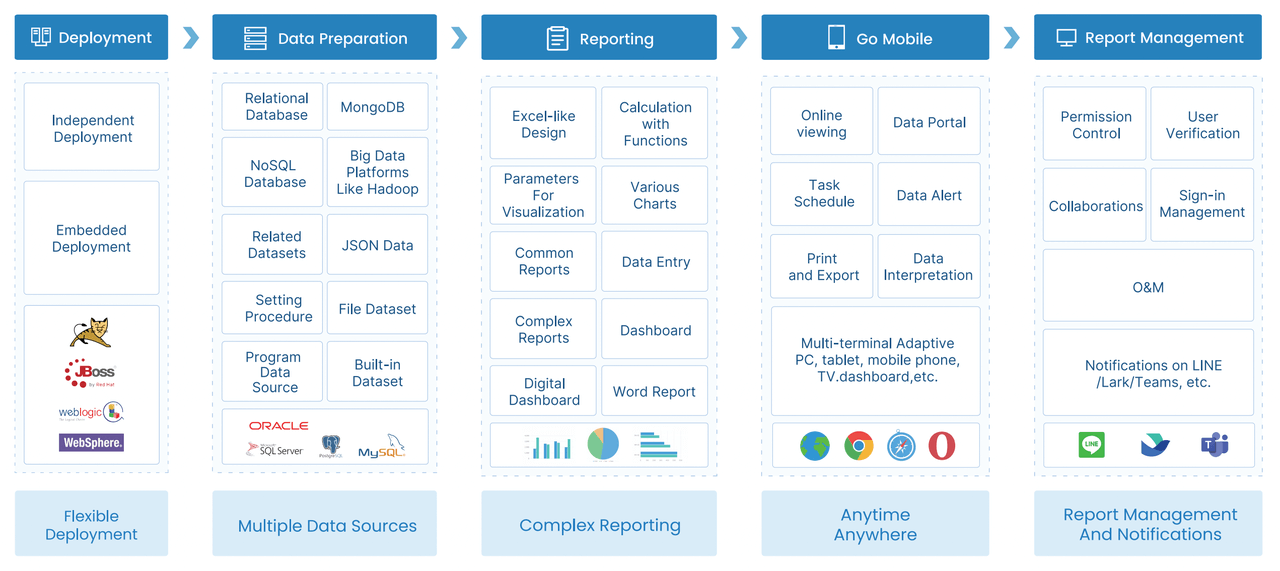
Building this manually is complex. FineReport helps teams standardize trusted reports, operational cockpits, templates, and reporting workflows. Dora turns those assets into an AI assistant that can answer report questions in chat, generate structured summaries, push scheduled briefings, monitor exceptions, and follow up with responsible owners.
For month-end close and finance reporting, that combination is practical because it matches how enterprises actually work. Finance needs governed reports, consistent metric logic, permissions, and audit-friendly workflows. Then it needs a simpler way for users to consume those outputs without repeatedly asking analysts to summarize the same information.
FineReport + Dora is not only a reporting upgrade; it is a practical fourth-generation Agentic BI path.FineReport provides governed reports and operational cockpits. Dora provides the AI assistant layer for scenario execution, with more controlled Skills, lower token waste, faster execution paths, and more stable workflows than prompt-only agents.
Get Ready-to-Use Dashboard Templates in Fine Gallery
After the close process improves, better reporting looks different:
Faster reporting cycles with fewer surprises
Less dependence on last-minute manual effort
Stronger confidence in numbers from executives, auditors, and business stakeholders
Better decision support because finance spends more time on analysis instead of cleanup
A clearer view of both the challenges and benefits of financial reporting when processes are controlled and timely
The strongest Dora pitch is scenario + product + service: FineReport provides the trusted reporting foundation, Dora provides the AI digital employee, and implementation service connects data, governance, semantic setup, Skills, report templates, permissions, and rollout.
Delays usually come from a mix of disconnected systems, manual reconciliations, late submissions, and too many review handoffs. The problem is rarely one bottleneck alone but several small issues stacking up during a short close window.
The best approach is to standardize reporting workflows, automate repetitive steps, and keep approvals, permissions, and audit trails built into the process. That lets teams move faster while preserving accuracy and traceability.
Spreadsheet-heavy close processes increase the chance of version confusion, formula errors, and duplicated work. They also make it harder to maintain a consistent source of truth across entities and reviewers.
When data arrives from different ERPs, subledgers, payroll tools, and operational systems, finance has to align timing, formats, and definitions before reporting can start. That extra reconciliation work slows close and can introduce inconsistencies.
FineReport provides a governed reporting layer with standardized dashboards, statements, and exception views, while Dora helps summarize reports, flag delays, and route issues to the right owners. Together, they support faster reporting from trusted data without losing control.
Product Trial
FineReport
Pixel-perfect reports · Interactive dashboards · Easy data entry · Digital twins