Executives do not need another month-end spreadsheet pack. They need timely, trusted answers about workforce performance, hiring pressure, retention risk, labor cost, and organizational health. Traditional hr reporting and analytics often fails because HR teams spend too much time exporting data, reconciling definitions, and building static summaries that are outdated before leadership meetings begin.
With FineBI + Dora, business users can ask for analysis in chat, generate chart-based answers or dashboard-style views from trusted BI assets, and receive scheduled summaries before the next meeting. FineBI provides the governed HR Dashboard, metric, and semantic foundation. Dora adds the enterprise Data Agent layer that helps HR leaders and executives ask, analyze, generate, push, alert, and follow up in a controlled way.
All HR Dashboards in this article are built with FineBI
Why executives need better HR reporting and analytics every month
Monthly workforce reviews shape hiring plans, cost decisions, retention actions, and management priorities. If the reporting process is slow or inconsistent, leaders are forced to make decisions on partial information.
The limits of manual spreadsheets and delayed updates
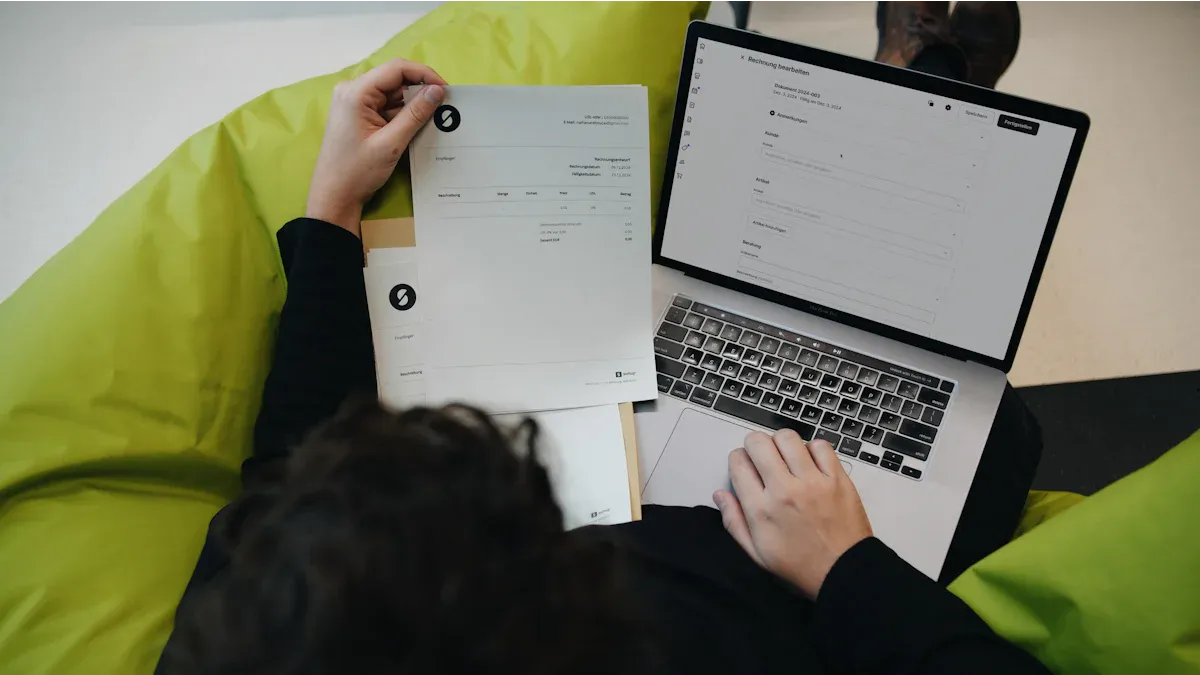
Many HR teams still depend on a fragile monthly cycle:
export data from HRIS, payroll, ATS, engagement, and performance systems
clean columns manually
reconcile employee IDs and department names
recalculate turnover or headcount definitions
rebuild slides for different stakeholders
This creates familiar problems:
inconsistent KPI definitions between HR, finance, and business units
delays that compress analysis time
too much effort on formatting and not enough on insight
limited drill-down when executives ask follow-up questions
What changed in headcount, hiring, and turnover this month?
Which functions or regions are showing retention risk?
Are open roles affecting delivery capacity or growth plans?
How is labor cost changing relative to output or revenue?
Are absenteeism, engagement, or manager effectiveness signaling broader issues?
Which trends require immediate intervention before the next quarter?
Executives do not want raw tables alone. They want a clear signal, context, and next-step discussion.
How faster insight improves workforce, budget, and retention decisions
When HR reporting is timely and analytics is accessible, leaders can:
adjust hiring plans before talent gaps become operational bottlenecks
target retention action in high-risk teams rather than using broad programs
align labor cost decisions with business performance
spot management or engagement issues earlier
prepare better board, leadership, and budget discussions
This is where the AI assistant upgrade matters. FineBI gives executives and HR leaders a trusted view of workforce KPIs. Dora extends that value by turning those governed assets into a scenario-based AI assistant that can summarize monthly changes, answer executive questions in chat, and push alerts when risk thresholds are breached.
What an AI data agent does in monthly HR reporting
Monthly HR reporting becomes much more effective when AI is grounded in trusted business definitions and governed data access. Dora should be positioned here as an enterprise Data Agent, not a generic chatbot. It works on top of FineBI and existing enterprise data assets to help HR and executives complete recurring reporting work with more speed and control.
Connects data from HRIS, payroll, ATS, engagement, and performance systems
HR data rarely lives in one system. Monthly executive reporting often needs inputs from:
HRIS for headcount, employee movement, organization structure, and demographics
payroll for compensation, overtime, and labor cost
ATS for requisitions, pipeline, and time-to-fill
engagement tools for survey results and participation
performance systems for ratings, goal outcomes, and manager effectiveness
FineBI can unify and model these sources into trusted analysis subjects, dashboards, and semantic assets. Dora then uses those assets for governed natural-language retrieval and scenario execution.
Cleans, validates, and standardizes people data automatically
The biggest reporting delays usually come from standardization problems, not from chart design. Teams need consistent rules for:
active employee definition
contractor treatment
voluntary vs. involuntary turnover
organizational hierarchy mapping
month-end snapshot timing
approved diversity categories
hiring funnel stage logic
FineBI supports this governance through reusable metric modeling and semantic definitions. Dora benefits because its answers depend on trusted KPI rules instead of one-off prompts or unmanaged spreadsheets.
Generates recurring summaries, trend analysis, and executive-ready commentary
This is where AI begins to deliver visible business value. Dora can function as a Daily Briefing Secretary or Report Researcher for HR monthly reviews. Instead of waiting for an analyst to prepare a memo, executives can receive:
scheduled monthly KPI summaries
trend commentary by business unit or region
chart-based answers to follow-up questions
concise narrative explanations for leadership meetings
dashboard-style analysis views generated through chat over trusted assets
The value is not just speed. It is repeatability, governance, and lower friction for recurring executive reporting.
Flags anomalies and follow-up questions before leadership meetings
A strong monthly workforce review should not only describe what changed. It should identify what deserves attention.
Dora can act as a Risk Alert Officer to monitor thresholds and unusual movements such as:
a spike in regrettable turnover in a critical function
time-to-fill deterioration in high-priority roles
rising absenteeism in a specific plant or region
sudden labor cost increase without expected productivity gain
engagement declines in teams with recent manager changes
Instead of discovering these issues inside the meeting, leaders can receive timely alerts and pre-read summaries before the meeting starts.
How the monthly reporting workflow becomes automated
Automation should not mean giving up governance. In enterprise HR scenarios, the goal is a controlled workflow that reduces repetitive effort while preserving metric trust, privacy, and permissions.
Collects source data on a schedule without manual exports
A better workflow starts by removing month-end data chasing. FineBI can connect to core HR systems and refresh governed datasets on a scheduled basis. This reduces dependence on:
manual CSV exports
local spreadsheet consolidation
late-night reconciliation work before executive reviews
For IT teams, this changes the role from report factory to platform enabler. Instead of rebuilding every HR report manually, IT and data teams focus on data integration, quality, semantic setup, and permission governance that can support many HR use cases.
Applies consistent metrics, definitions, and business rules
This matters for AI. Dora can only answer responsibly if it understands approved KPI definitions and business vocabulary. That is why Agentic BI lands better in real enterprises than prompt-only experiments.
Builds dashboards and narrative summaries for different executive audiences
Not every executive needs the same view. A CHRO may need deeper talent and manager-level insights. A CFO may focus on labor cost, productivity, and workforce planning. A CEO may want enterprise risk, hiring progress, and leadership-ready summaries.
FineBI supports role-specific dashboards and drill-down analysis. Dora adds the AI layer that can generate:
executive summary commentary
audience-specific briefings
chart-based responses to ad hoc questions
meeting-ready talking points based on trusted FineBI assets
This is a practical move from “people looking at dashboards” to “AI helping people use dashboards and metrics more effectively.”
Distributes reports securely with alerts for important changes
Monthly reporting should not end when a PDF is sent. It should continue through secure distribution and follow-up.
FineBI supports governed access to dashboards and analysis content. Dora enhances execution through:
scheduled summary pushes
timely anomaly alerts
follow-up reminders to responsible owners
question-and-answer support in chat
management briefings built from approved HR metrics
For sensitive HR content, this enterprise fit is critical. Outputs must respect role-based permissions, privacy policies, and approved access boundaries.
Which HR metrics and insights matter most to executives
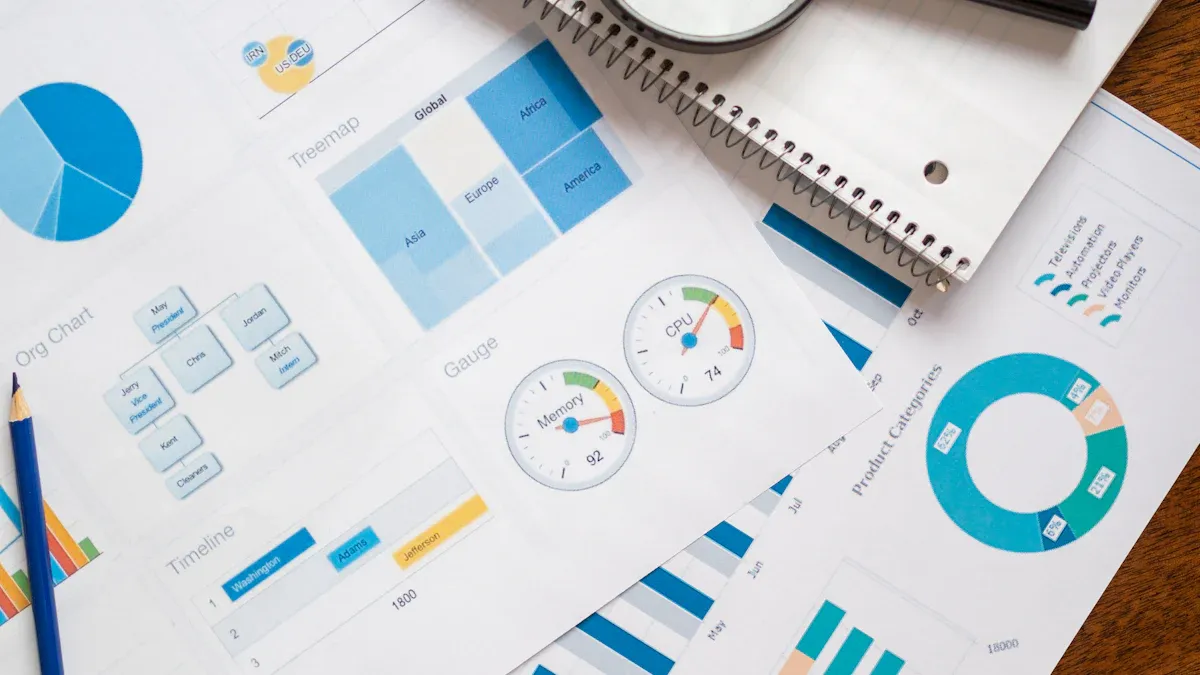
Executives need a focused KPI framework, not a crowded dashboard. The right hr reporting and analytics design combines essential monthly metrics with explanation of what changed and why.
Headcount, hiring, turnover, absenteeism, and time-to-fill
Below is a practical executive KPI structure for monthly HR reporting.
Headcount: Total active workforce at the selected month-end snapshot, usually segmented by region, function, legal entity, or employment type. Business value: Helps leaders monitor capacity, growth alignment, and organizational structure. AI use:Dora can retrieve headcount by business unit in chat, compare month-over-month changes, and include deviations in scheduled executive briefings.
Hiring volume: Number of hires completed during the reporting period. Business value: Shows whether recruiting output is keeping pace with growth or backfill needs. AI use:Dora can summarize hiring performance by function, highlight underperforming hiring areas, and produce a chart-based answer for leadership review.
Turnover rate: Percentage of employees who left during the period, often split into voluntary and involuntary turnover. Business value: Reveals retention pressure, replacement cost exposure, and possible leadership or culture issues. AI use:Dora can monitor turnover thresholds, flag spikes in critical teams, and push alerts to HR leaders for follow-up.
Absenteeism rate: Percentage of scheduled work time lost to unscheduled absence. Business value: Can signal morale, workload, health, management, or operational risk. AI use:Dora can compare absenteeism trends across sites or departments and include exceptions in monthly summary notes.
Time-to-fill: Average number of days from job requisition approval to accepted offer or filled role, based on approved business definition. Business value: Indicates recruiting efficiency and potential risk to delivery capacity. AI use:Dora can answer ad hoc questions about time-to-fill by role family, surface bottlenecks, and generate a dashboard-style analysis view from FineBI assets.
Diversity, engagement, performance, and manager effectiveness trends
These metrics help executives move beyond pure staffing volume toward workforce quality and organizational health.
Diversity mix: Representation across approved demographic categories by level, function, or geography. Business value: Supports inclusion goals, workforce planning, and leadership accountability. AI use:Dora can retrieve representation trends with approved privacy boundaries and summarize changes suitable for executive review.
Engagement score or participation rate: Employee sentiment and survey participation trends from approved survey cycles. Business value: Signals morale, change readiness, and possible attrition risk. AI use:Dora can correlate engagement shifts with turnover or manager changes and include preliminary commentary in leadership briefings.
Performance distribution: Distribution of performance ratings or performance outcomes across teams or roles. Business value: Supports talent review, succession planning, and manager calibration discussions. AI use:Dora can generate structured summaries that compare performance distributions over time or by organizational slice.
Manager effectiveness indicators: Metrics derived from team turnover, engagement, performance stability, or completion of management routines. Business value: Helps leaders identify where management quality may be affecting retention and team outcomes. AI use:Dora can surface teams with unusual combinations of turnover, absenteeism, and engagement decline for deeper HRBP follow-up.
Labor cost, productivity, and workforce planning indicators
HR reporting for executives should also connect people data to operating performance.
Labor cost: Total payroll-related workforce expense for the period, often segmented by function, entity, or workforce type. Business value: Essential for budget control and operating margin discussions. AI use:Dora can retrieve labor cost trends, compare actuals against plan, and summarize notable shifts before finance-HR reviews.
Overtime or premium pay: Additional compensation paid beyond standard schedules. Business value: Can indicate staffing gaps, scheduling inefficiency, or demand pressure. AI use:Dora can monitor threshold breaches and notify managers or HR operations when unusual spikes occur.
Revenue per employee or output per employee: A workforce productivity indicator based on available business data. Business value: Helps executives evaluate workforce efficiency and scaling choices. AI use:Dora can combine trusted HR and business metrics from FineBI to answer cross-functional productivity questions in chat.
Workforce plan variance: Difference between planned and actual headcount or hiring progress. Business value: Supports budgeting, execution accountability, and resource planning. AI use:Dora can generate monthly exception summaries and identify which functions are off plan.
The difference between reporting historical metrics and explaining why they changed
why did turnover rise in customer support but not in engineering?
is absenteeism linked to shift structure or manager changes?
is time-to-fill worsening because of approval delays, sourcing issues, or compensation competitiveness?
Executives need both. Historical reporting creates a trusted operating picture. Analytics helps frame action.
Why you need both reporting and analytics for executive decisions
Too many HR programs stop at descriptive reporting. That is useful, but incomplete.
Reporting shows what happened in the workforce each month. It provides operational visibility, consistency, and accountability.
Analytics helps explain patterns, risks, and likely outcomes. It adds context, root-cause exploration, and decision support.
Combining both supports clearer action on hiring, retention, and organizational health. Leaders can move from observation to intervention.
This is where FineBI + Dora becomes especially practical. FineBI handles dashboards, visual exploration, metric modeling, and trusted semantic assets. Dora adds a governed AI workflow that helps leaders ask better questions, retrieve answers faster, and receive summaries or alerts without waiting for manual report production.
How an AI Data Agent Handles This Scenario
For monthly executive HR reviews, the most relevant Dora digital employees are usually the Daily Briefing Secretary, Report Researcher, and Risk Alert Officer. Together, they turn routine HR reporting into a repeatable Agentic BI workflow.
A scenario-specific executive query might look like this:
“Show me this month’s headcount, turnover, time-to-fill, and labor cost by business unit, explain the biggest changes from last month, and highlight any retention or hiring risks before the executive committee meeting.”
[Insert AI Agent Demo Here: Show Dora chat answering a scenario-specific business question, generating a chart/table, and citing the FineBI dashboard or data source used]
Here is how Dora handles that request in a governed enterprise workflow:
Retrieve trusted FineBI dashboard or analysis-subject data. Dora starts from FineBI’s governed HR dashboards, semantic models, and approved metric definitions rather than guessing from raw text or unmanaged files.
Understand KPI definitions, filters, business terms, and semantic rules.
It interprets terms like headcount, voluntary turnover, executive business unit, and month-end snapshot using the semantic layer built in FineBI.
Generate chart-based answers and dashboard-style analysis views through chat. Dora returns a concise answer with the requested KPI table, trend comparison, and visual breakdown suitable for executive review.
Detect abnormal changes or threshold breaches.
If turnover exceeds a defined threshold in a critical function, or time-to-fill deteriorates beyond target, Dora can identify the exception and call it out.
Push insights, alerts, or suggested follow-up to responsible users.
HR leaders, HRBPs, or managers can receive a scheduled briefing, alert, or task-oriented summary before the meeting.
Produce follow-up summaries for management review.
After the first answer, Dora can prepare an executive-ready recap, including major changes, likely discussion points, and areas needing deeper analyst review.
This approach matters because it is not just “AI answering a question.” It is Agentic BI grounded in trusted assets and governed execution. FineBI provides the BI foundation: dashboards, metrics, dimensions, drill paths, and semantic consistency. Dora provides the execution layer: natural-language request handling, controlled Skills, summary generation, scheduled pushes, and anomaly follow-up.
For business users, that means lower operating friction. They do not need to navigate every dashboard tab or wait for analysts to prepare custom cuts. For IT and data teams, it means better landing capability than feature-only AI demos because outputs stay anchored to permissions, metric governance, and reusable data logic.
Dora also improves enterprise execution in ways that matter for HR:
chat-based access to approved workforce metrics
scheduled monthly executive briefings
anomaly alerts for retention, hiring, or labor cost changes
follow-up summaries for leadership meetings
auditable, Skills-based workflows that are more stable than raw prompt-only agents
better control over token usage and response paths by relying on governed BI assets rather than open-ended prompting alone
For executives, the value is simple: Dora is not an AI experiment. It is a landed AI digital employee for recurring data work such as monthly HR briefings, attrition risk follow-up, workforce planning review, and labor cost monitoring.
How to choose tools and prepare for successful adoption
Good hr reporting and analytics tools should support both reporting discipline and analytic flexibility. Enterprise AI adds another layer: governance and workflow control.
What to look for in HCM analytics and reporting software
AI assistant capability over trusted BI assets, not disconnected prompts
scheduled summaries, alerting, and follow-up workflow support
This is the practical strength of FineBI + Dora. FineBI builds the trusted dashboard and semantic layer. Dora turns that foundation into a scenario-specific AI assistant or AI digital employee for monthly HR reporting execution.
Data governance, privacy, and access controls for sensitive HR information
HR data is highly sensitive. Any AI-enabled reporting model must preserve:
controlled access to diversity and compensation data
clear KPI ownership
auditable workflows
data quality checks before summaries are generated
Dora should only work on top of governed data access boundaries. That is a major enterprise advantage compared with unmanaged AI tools.
Change management steps for HR teams and business leaders
Adoption succeeds when teams treat this as a process redesign, not just a software feature rollout.
Practical steps include:
define the monthly executive reporting use case first
align HR, finance, and IT on KPI definitions
build FineBI dashboards and semantic assets for trusted retrieval
configure Dora for recurring briefing, report, or risk alert scenarios
start with one executive audience and expand after validation
train users on how to ask business questions in chat and how to review AI summaries responsibly
Common implementation mistakes and how to avoid them
Common mistakes include:
automating reports before KPI definitions are standardized
ignoring data quality and organizational mapping issues
exposing AI to sensitive HR data without proper permissions
trying to automate every HR workflow at once
expecting AI summaries to replace analyst judgment in complex cases
The right model is phased and governed. Start with recurring, high-value reporting tasks where the business case is clear and the metrics are already well understood.
Actionable best practices
To make monthly HR reporting automation work in a real enterprise, focus on these practical steps.
1. Standardize KPI definitions, synonyms, filters, and metric ownership
Agree on the exact meaning of headcount, turnover, time-to-fill, labor cost, and other core metrics. Map common language variants executives may use in chat, such as “attrition” vs. “turnover” or “open roles” vs. “vacancies.” This improves both dashboard consistency and Dora’s natural-language understanding.
2. Build a semantic layer inside the BI workflow
Do not leave business meaning inside separate documents or analyst memory. FineBI should hold the trusted semantic foundation, including dimensions, hierarchies, approved calculations, and aliases. This is what lets Dora provide governed, enterprise-grade answers instead of loose prompt responses.
3. Treat data quality as part of the AI implementation
AI cannot rescue poor source data. Before expanding automation, validate employee identifiers, organizational mappings, date logic, and movement events. In HR scenarios, data quality is not a technical detail. It directly affects executive trust.
4. Start with high-value recurring workflows instead of automating everything
A monthly executive workforce pack is an ideal starting use case because it is repetitive, visible, and time-consuming. Dora can serve as a Daily Briefing Secretary or Report Researcher for this recurring workflow before expanding into broader HRBP or manager scenarios.
5. Define alert thresholds, responsibility rules, and escalation paths
For AI-driven anomaly monitoring to land, the business must define what matters and who owns follow-up. For example:
turnover above threshold in critical roles goes to HRBP and function leader
absenteeism spikes go to HR operations and site management
hiring delays in priority functions go to talent acquisition leadership
This turns AI insight into operational action.
6. Preserve permission governance so AI outputs respect FineBI access boundaries
Sensitive HR metrics should never appear outside approved roles. FineBI permissions should remain the control layer, and Dora should inherit those access rules when retrieving dashboards, metrics, and summaries.
7. Use human review for AI-generated reports and gradually expand Skills
Start with a review step for executive summaries and anomaly commentary. Over time, as trust grows and workflows stabilize, expand Dora Skills for recurring reporting tasks, follow-up prompts, and broader leadership briefing scenarios.
Building this manually is complex. FineBI helps teams build trusted dashboards, metrics, and semantic assets. Dora turns those assets into an AI assistant that can answer questions in chat, generate dashboard-style analysis views, push scheduled summaries, monitor anomalies, and follow up with responsible owners.
This is especially valuable because executive HR reporting is both repetitive and sensitive. It needs speed, but it also needs control.
FineBI + Dora is not only a BI upgrade; it is a practical fourth-generation Agentic BI path. FineBI provides governed metrics and visual analysis. Dora provides the AI assistant layer for scenario execution, with more controlled Skills, lower token waste, faster execution paths, and more stable workflows than prompt-only agents.
Get Ready-to-Use Dashboard Templates in Fine Gallery
The strongest Dora pitch is scenario + product + service: FineBI provides the trusted BI foundation, Dora provides the AI digital employee, and implementation service connects data, governance, semantic setup, Skills, and rollout.
If your executive team still waits on manual monthly workforce packs, the opportunity is clear. Move from delayed spreadsheets to governed dashboards and from static reports to AI-assisted execution. That is how hr reporting and analytics becomes more timely, more trusted, and more useful for executive decisions.
HR reporting shows what happened using standard workforce metrics, while HR analytics explains why it happened and what action leaders should take next. Together, they help executives move from static updates to better decisions.
An AI data agent can automate data collection, summarize monthly KPI changes, answer follow-up questions in chat, and send scheduled updates or alerts. This reduces manual reporting work and gives executives faster access to trusted insights.
Most executive reviews focus on headcount, hiring, turnover, open roles, labor cost, absenteeism, and engagement or performance signals. The right mix depends on business goals, workforce risks, and the decisions leaders need to make.
Governance ensures metrics like headcount and turnover are defined consistently across HR, finance, and business units. Without it, automated reports and AI answers can become unreliable or misleading.
FineBI provides the governed data models, dashboards, and semantic definitions, while Dora uses those trusted assets to deliver natural language analysis, summaries, and alerts. This combination helps HR teams automate reporting without losing control over data quality or access.
Product Trial
FineReport
Pixel-perfect reports · Interactive dashboards · Easy data entry · Digital twins



 Many HR teams still depend on a fragile monthly cycle:
 These metrics help executives move beyond pure staffing volume toward workforce quality and organizational health.
 Common mistakes include: