Operations directors do not need more isolated reports. They need logistics management solutions that connect transport, warehouse, inventory, and order execution into one decision environment. When shipment updates live in carrier portals, warehouse data sits in WMS screens, order status stays in ERP, and exceptions are escalated by email, teams react too late and leadership loses visibility.
A unified logistics control tower solves that gap. It gives operations leaders a trusted view of service, cost, throughput, and risk across the network. With FineBI + Dora, business users can ask for analysis in chat, generate chart-based answers or dashboard-style views from trusted BI assets, and receive scheduled summaries before the next meeting.
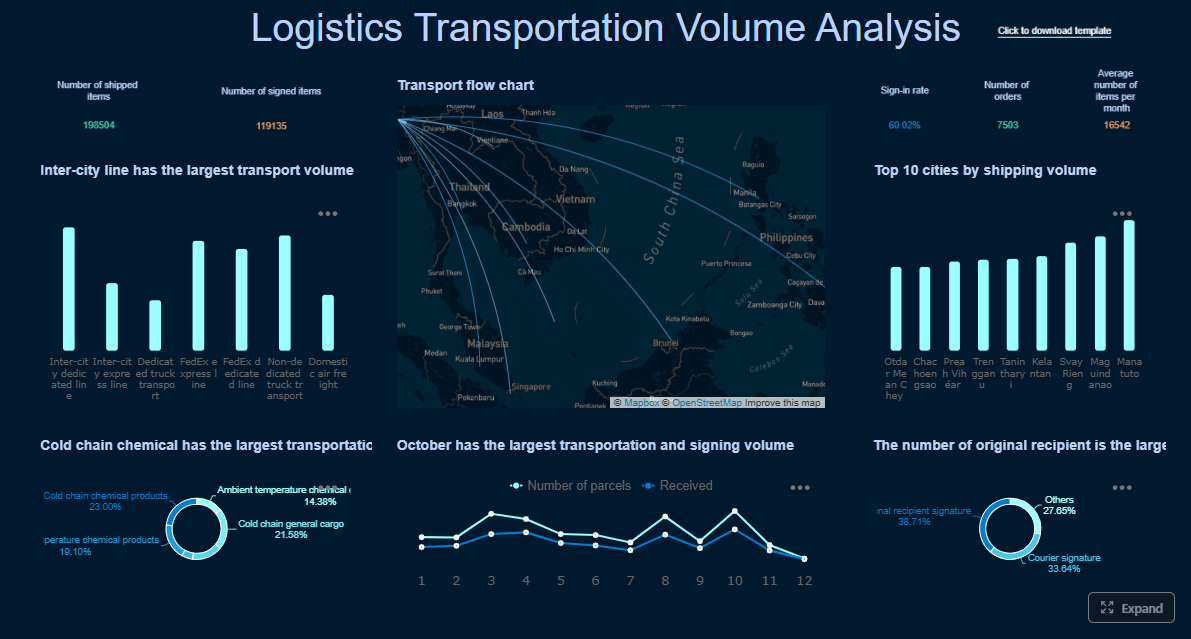 Click To Try The Dashboard
All dashboards in this article are built with FineBI
Why Operations Directors Need Modern Logistics Management Solutions
Many logistics teams still operate with a patchwork of spreadsheets, static reports, and siloed TMS, WMS, and ERP data. That setup may support daily firefighting, but it does not support scalable operational control. By the time KPI reports are consolidated, late deliveries have already impacted customers, warehouse congestion has already reduced throughput, and cost overruns are already embedded in the month-end numbers.
Modern logistics management solutions must do more than display data. They should help operations directors answer questions such as:
- Which regions are at highest risk of missing OTIF this week?
- Which warehouses are slowing order cycle time?
- Which carriers are driving avoidable exceptions and cost?
- Where should managers intervene first today?
A unified control tower improves four things immediately:
- Shipment visibility across in-transit, delayed, and exception-prone orders.
- Warehouse coordination through common views of inventory, throughput, and backlog.
- Exception handling with faster identification and escalation of late, blocked, or imbalanced flows.
- Executive decision-making through governed KPIs and role-based analysis.
This is where FineBI + Dora becomes practical. FineBI provides the trusted BI foundation: dashboards, metrics, semantic models, self-service analysis, and visual exploration. Dora adds the enterprise Data Agent layer so teams can move from reading dashboards to asking, analyzing, summarizing, alerting, and following up through governed AI workflows. For operations directors, that means fragmented logistics data can become operational action instead of another reporting burden.
The Core Problems a Unified Logistics Control Tower Must Solve
Fragmented visibility across transport, warehouse, and order workflows
In many enterprises, logistics data is technically available but operationally fragmented. Transport planners monitor TMS events. warehouse managers check WMS queues. customer service teams review order systems. finance tracks freight cost elsewhere. The result is not a lack of data, but a lack of shared context.
This fragmentation creates blind spots such as:
- Inventory moving between facilities without clear downstream impact
- Orders appearing “open” without accurate fulfillment progress
- Carrier performance reviewed too late to protect service levels
- Regional teams using different local logic for the same KPI
A control tower must connect these workflows so that an operations director can see how inbound delays affect warehouse workload, how warehouse bottlenecks affect cycle time, and how those issues ultimately affect customer service and logistics cost.
Slow response to disruptions and operational exceptions
Logistics performance rarely fails because teams do not care. It fails because disruptions surface too slowly or reach the wrong people too late. Common issues include:
- Late deliveries
- Route changes and unplanned detours
- Stock imbalances across sites
- Dock congestion
- Rising exception volumes
- Manual escalation delays between teams
Without timely alerts and shared exception views, operations managers spend too much time identifying what happened and too little time coordinating what to do next. A strong logistics control tower should support both monitoring and execution: detect risk, provide the likely context, and help the right owner act faster.
Inconsistent KPI definitions across teams and regions
One site counts on-time delivery from dispatch. Another counts from confirmed handoff. One region includes partial shipments in OTIF. Another excludes them. One finance team calculates freight cost per order differently from operations. These inconsistencies make cross-network decisions unreliable.
A unified control tower needs one source of truth for metrics such as:
- OTIF
- Order cycle time
- Cost per shipment
- Warehouse throughput
- Carrier reliability
- Service-level performance
This is not only a reporting issue. It is also an AI issue. If the KPI definitions are inconsistent, any AI assistant will return inconsistent answers. That is why governed metrics and semantic rules inside FineBI matter before Dora executes AI-assisted retrieval, summaries, alerts, and follow-up.
How FineBI + Dora Build a Unified Control Tower
Connect data from TMS, WMS, ERP, and partner systems
Most operations directors cannot replace every logistics system just to gain visibility. They need a solution that integrates with current tools and centralizes analysis without disrupting execution systems. FineBI supports multi-source integration across platforms such as TMS, WMS, ERP, spreadsheets, and partner feeds, helping enterprises consolidate operational data into a trusted analytics layer.
That matters because logistics management solutions must reflect the network as it really works:
- Transportation events from TMS and carrier systems
- Inventory and throughput data from WMS
- Order and customer records from ERP
- Cost and settlement data from finance systems
- Supplier or partner milestones from external feeds
Instead of forcing teams to abandon existing systems, FineBI brings the data together for governed metric modeling, dashboarding, and visual exploration.
Turn dashboards into guided operational decisions
Dashboards are necessary, but alone they are not enough. An operations director may see that OTIF is falling in one region, but still need to determine why, which warehouses or carriers are involved, whether the issue is temporary or systemic, and who should act first.
This is where Agentic BI becomes useful. FineBI provides the trusted dashboard, metric, and semantic foundation. Dora turns that foundation into an AI assistant that can support scenario-specific execution. Rather than acting like a generic chatbot, Dora works as an enterprise Data Agent on top of governed BI assets.
That means users can:
- Ask logistics questions in natural language over trusted BI assets
- Retrieve dashboard and metric views from FineBI
- Get chart-based answers and dashboard-style analysis views
- Receive scheduled summaries before operations reviews
- Monitor anomalies and threshold breaches
- Push insights and follow-up items to responsible users
For operations teams, this reduces friction between “seeing a problem” and “starting coordinated action.”
Support role-based visibility from executives to frontline managers
A unified control tower must serve different roles without creating conflicting reports.
Executives need cross-network service, cost, and risk summaries.
Operations directors need trend, exception, and root-cause views.
Regional managers need local site and carrier performance.
Warehouse leaders need execution-level backlog, throughput, and pick accuracy.
Analysts need flexible drill-down and self-service analysis.
FineBI supports role-based dashboards and governed access. Dora builds on those permissions and semantic rules, so AI outputs respect enterprise visibility boundaries instead of bypassing them. That is critical for enterprise fit. Operations teams get the usability of chat-based analysis without losing control over data permissions, KPI governance, and data quality standards.
What to Measure in a Logistics Management System
A control tower only works when the KPI layer is clear, trusted, and tied to action. Below are the metrics operations directors should prioritize in modern logistics management solutions.
Operational visibility metrics
-
Shipment Status Accuracy: The percentage of shipments whose reported status matches actual operational milestones.
Business value: Reduces planning errors, improves ETA confidence, and strengthens customer communication.
AI use: Dora can retrieve shipment status accuracy by region or carrier through chat, compare recent changes, and include the metric in scheduled briefings. -
Inventory Transparency: The degree to which inventory positions, movements, and imbalances are visible across facilities.
Business value: Helps prevent stockouts, overstock, and delayed fulfillment caused by hidden inventory issues.
AI use: Dora can summarize where inventory visibility is weakest, highlight imbalances, and push exception views to responsible managers. -
Warehouse Throughput: The volume of receipts, picks, packs, or shipments processed within a defined period.
Business value: Shows whether facilities can handle demand without creating cycle-time delays.
AI use: Dora can answer natural-language questions about throughput trends, compare sites, and generate chart-based analysis for operations reviews. -
Exception Volume: The count of shipments, orders, or warehouse tasks with delays, discrepancies, or unresolved issues.
Business value: Indicates operational instability and identifies where management attention is required.
AI use: Dora can monitor thresholds, surface spikes, and trigger timely exception summaries.
Service and performance metrics
-
OTIF (On Time In Full): The percentage of orders delivered on time and complete according to agreed service rules.
Business value: Core service KPI that links logistics execution directly to customer satisfaction and revenue protection.
AI use: Dora can retrieve OTIF from FineBI dashboards, explain trend changes, and provide regional or carrier-level breakdowns in chat. -
Order Cycle Time: The total elapsed time from order release to completed delivery or fulfillment.
Business value: Measures end-to-end responsiveness and helps expose handoff delays between systems and teams.
AI use: Dora can compare cycle time across warehouses, products, or regions and summarize preliminary attribution. -
Dock-to-Stock Time: The time required to move received goods into available inventory status.
Business value: Reflects inbound efficiency and affects inventory availability for downstream fulfillment.
AI use: Dora can flag sites with rising dock-to-stock time and include them in a Daily Briefing Secretary summary. -
Pick Accuracy: The percentage of picks completed without item, quantity, or order errors.
Business value: Protects customer service, reduces returns, and lowers rework cost.
AI use: Dora can identify declining pick accuracy by site or shift and provide chart-based answers from governed BI assets. -
Carrier Reliability: A measure of how consistently carriers meet schedule and service expectations.
Business value: Supports carrier management, routing decisions, and service-risk prevention.
AI use: Dora can compare carriers in chat, retrieve relevant dashboard views, and help prepare supplier review meetings.
Cost and optimization metrics
-
Freight Cost per Order: Total freight spend divided by fulfilled orders.
Business value: Helps operations balance service quality with transportation efficiency.
AI use: Dora can retrieve this metric by lane, region, or customer segment and include it in weekly cost briefings. -
Route Efficiency: A measure of route performance relative to distance, capacity, stops, or plan adherence.
Business value: Reveals route design and execution opportunities that lower cost and improve service consistency.
AI use: Dora can summarize underperforming routes and support follow-up analysis through governed query workflows. -
Labor Utilization: The degree to which warehouse or logistics labor capacity is used productively.
Business value: Supports staffing optimization and prevents hidden productivity loss.
AI use: Dora can combine labor and throughput views into a dashboard-style analysis for site managers. -
Return Handling Costs: The cost of processing returns, reverse logistics, and related handling activities.
Business value: Important for margin protection and for identifying quality or fulfillment problems upstream.
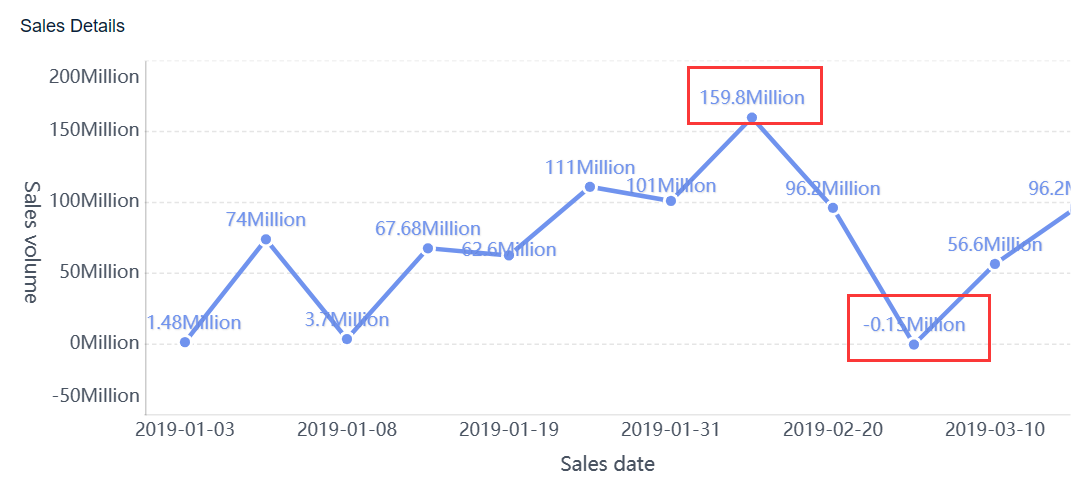
AI use: Dora can monitor return cost increases and push a summary when thresholds are breached.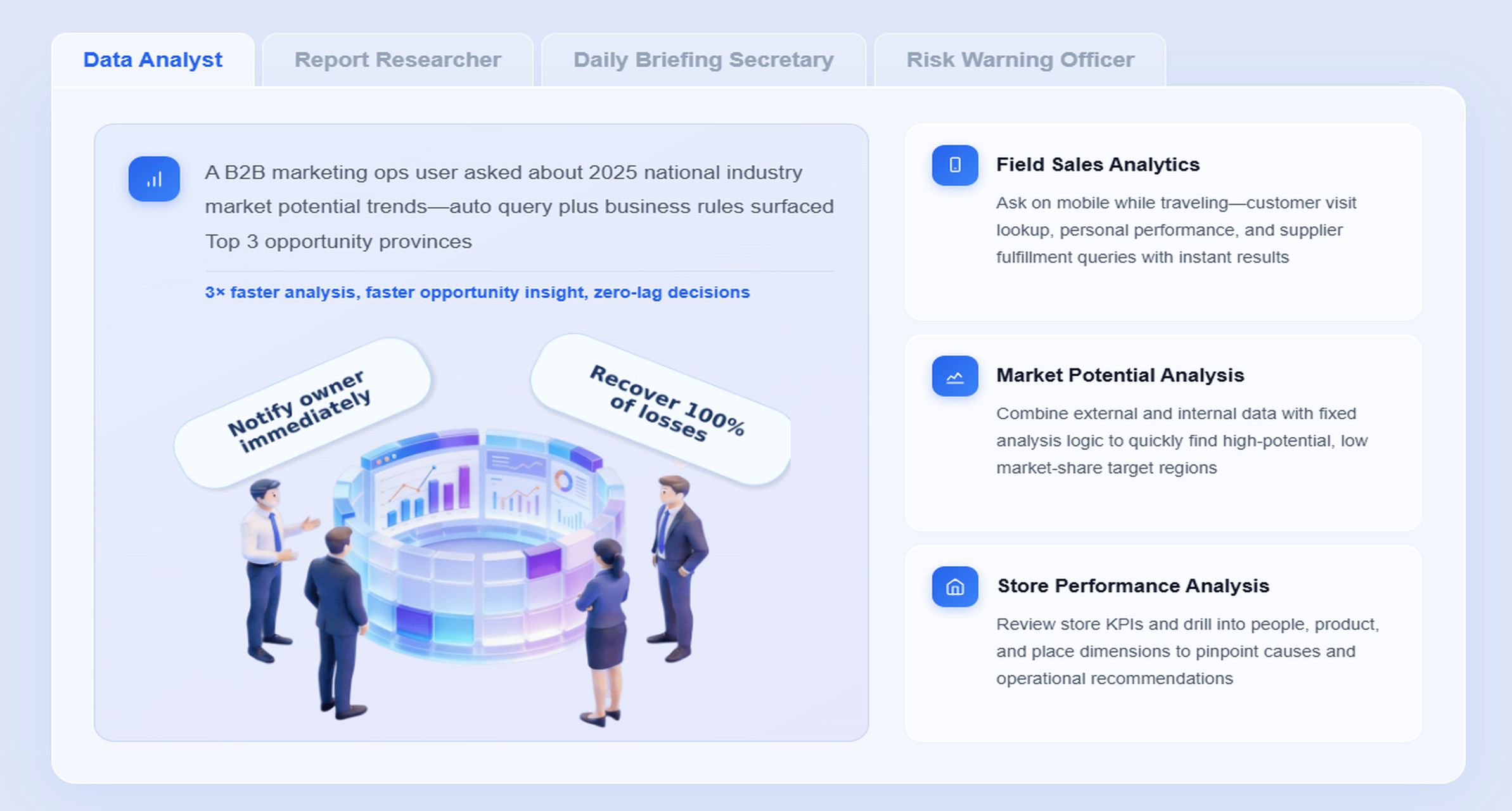
How an AI Data Agent Handles This Scenario
For operations directors, the most relevant Dora digital employees are usually the Data Analyst, Daily Briefing Secretary, and Risk Alert Officer. In a unified logistics control tower scenario, these digital employees help convert trusted BI assets into repeatable operational workflows.
A common chat request might look like this:
“Show me this week’s logistics performance by region, including OTIF, order cycle time, warehouse throughput, top delivery exceptions, and the carriers causing the highest service risk.”
Here is how a Dora-powered governed AI workflow can handle that request:
-
Retrieve trusted FineBI assets
Dora accesses the relevant FineBI dashboard, analysis subject, or metric model for logistics performance, using enterprise permissions and approved data connections. -
Understand KPI definitions and semantic rules
Dora interprets business terms such as OTIF, throughput, exception, and service risk according to the governed semantic layer in FineBI, including filter logic, date ranges, and regional definitions. -
Generate a chart-based answer or dashboard-style analysis view
Instead of returning a vague text response, Dora can provide a structured answer with charts, trend views, breakdowns, and metric comparisons grounded in trusted BI assets. -
Perform preliminary attribution and exception identification
Dora can highlight which regions, warehouses, or carriers are driving the deviation, and identify anomaly patterns such as sudden OTIF decline, rising exception volume, or throughput slowdown. -
Push timely summaries or alerts to owners
If thresholds are met, Dora as a Risk Alert Officer can send scheduled or event-based notifications to responsible users, such as regional operations managers or warehouse leaders. -
Produce follow-up output for management review
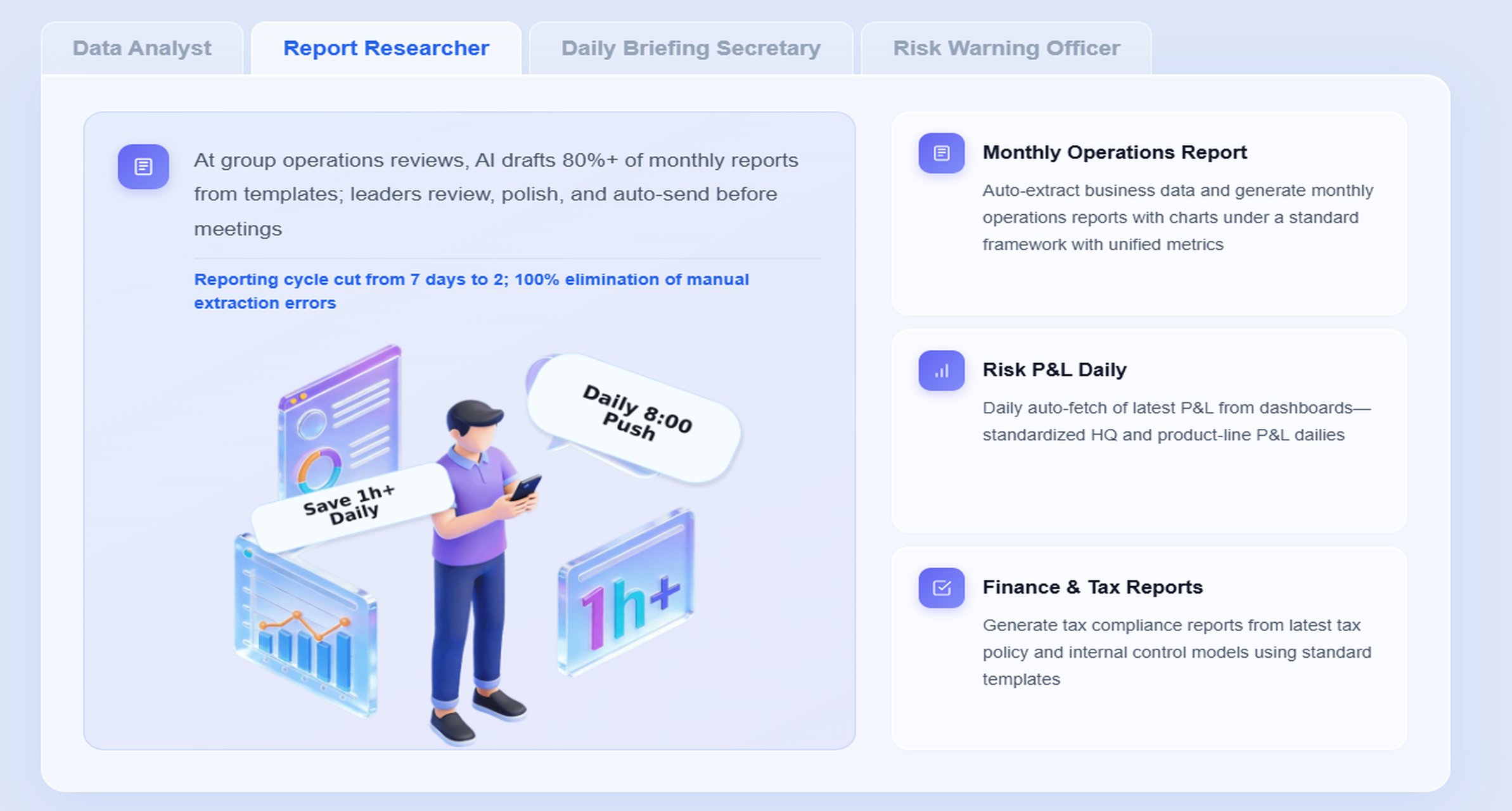
Dora as a Daily Briefing Secretary or Report Researcher can generate a meeting-ready summary, including KPI changes, risk points, and action-oriented notes for the next operations review.
This is where the FineBI + Dora combination becomes more powerful than feature-only agent comparisons. FineBI provides the governed metric foundation, dashboard assets, and trusted semantic context. Dora provides the enterprise Data Agent layer for natural-language retrieval, controlled Skill execution, summaries, alerts, pushes, and follow-up.
That distinction matters in real enterprises. Raw prompt-only agents often struggle with KPI governance, permissions, business terminology, and workflow stability. Dora is designed for more controllable and auditable AI workflows, with stronger enterprise fit through permissions, semantic rules, KPI governance, and data quality controls. It also offers better landing capability because it is anchored in repeatable business scenarios like daily logistics briefing, order risk follow-up, and carrier exception monitoring.
Which Dora digital employee fits logistics operations best?
- Data Analyst digital employee: Best for natural-language data query, dashboard retrieval, ad hoc logistics analysis, and preliminary attribution.
- Daily Briefing Secretary: Best for scheduled daily or weekly operations summaries before review meetings.
- Risk Alert Officer: Best for threshold monitoring, anomaly detection, owner notification, and escalation support.
- Report Researcher: Best for periodic logistics performance packs, regional reviews, and management report assembly.
For operations directors, Dora is not an AI experiment. It is a landed digital employee for recurring data work such as service briefing, shipment exception follow-up, warehouse performance review, and logistics cost monitoring.
Implementation Roadmap for Operations Directors
Start with high-impact use cases
Do not begin by trying to automate every logistics process. Start where visibility gaps create the greatest business risk. In most organizations, that means one or more of the following:
- OTIF risk monitoring by region
- Warehouse backlog and throughput visibility
- Carrier exception tracking
- Freight cost deviation analysis
- Inventory imbalance monitoring across facilities
A focused first use case makes it easier to align teams, validate KPI definitions, and prove operational value.
Standardize data definitions and ownership
A control tower works only when metrics are governed. Operations, supply chain, finance, and IT should align on:
- KPI definitions
- Filter logic
- Time dimensions
- Regional business rules
- Data refresh expectations
- Ownership for each metric and exception workflow
This is where FineBI’s semantic modeling and governed dashboards become essential. It creates the trusted asset base that Dora can use safely in AI-assisted workflows.
Scale from pilot dashboards to enterprise-wide control
A practical rollout usually follows three phases:
- One region or site: Build dashboards and exception views for a clearly defined operation.
- One process family: Extend from transport or warehouse visibility into cross-process analysis.
- Cross-network orchestration: Expand to enterprise-wide KPI governance, role-based dashboards, and Dora digital employees for recurring logistics workflows.
This phased model reduces risk and helps IT and business teams mature governance together rather than forcing a large-bang transformation.
Actionable Best Practices
1. Standardize KPI definitions, synonyms, filters, and metric ownership
Operations users often ask the same business question in different language. One manager asks for “on-time delivery,” another asks for “service attainment,” and another asks for “OTIF by region.” To make both dashboards and AI retrieval trustworthy, define metric synonyms, filter rules, and owners upfront.
2. Build the semantic layer inside the BI workflow
Do not treat semantics as an afterthought. FineBI should hold the approved business logic, metric definitions, and reusable analysis subjects that both people and Dora can rely on. This gives Dora a stable foundation for natural-language data query over trusted BI assets.
3. Treat data quality as part of the AI implementation
AI cannot fix broken logistics event data, missing milestones, or inconsistent site coding by itself. If shipment statuses, warehouse timestamps, or partner feeds are unreliable, both dashboards and AI summaries will degrade. Data quality should be part of the logistics management solution design, not a later cleanup step.
4. Start with high-value recurring workflows instead of automating everything
The fastest wins come from repeatable work such as daily logistics briefings, weekly carrier reviews, OTIF exception alerts, and warehouse throughput summaries. Dora performs best when tied to clear, governed scenarios with repeatable Skills rather than open-ended experimentation.
5. Preserve permission governance and use human review as AI use expands
AI outputs should respect the same access boundaries as FineBI dashboards. Keep role-based permissions intact, especially for regional performance, cost data, and customer-sensitive views. For AI-generated reports and summaries, use human review early, then gradually expand Dora Skills and push workflows as confidence grows.
How to Evaluate the Right Solution Partner
Choosing among logistics management solutions is not only about feature lists. Operations directors should assess whether a platform can actually land in the enterprise.
Look for these capabilities:
- Integration depth: Can it connect TMS, WMS, ERP, spreadsheets, and partner systems without forcing system replacement?
- Self-service analytics: Can analysts and operations leaders explore issues without always waiting for IT?
- AI assistance on governed data: Can users ask questions in chat and receive answers grounded in trusted BI assets rather than ungoverned raw data?
- Enterprise governance: Does it support permissions, semantic rules, KPI consistency, and auditable workflows?
- Role-based usability: Can executives, analysts, site managers, and frontline users each get views appropriate to their decisions?
- Scalable rollout: Can the solution start with one high-value scenario and expand to broader operational control?
A strong partner should also understand the operational adoption challenge. The real goal is not to deploy another dashboard project. It is to shorten the path from data to action, so leaders can make faster decisions, reduce logistics cost, and improve service resilience.
FineBI + Dora Solution Pitch
Building this manually is complex. FineBI helps teams build trusted dashboards, metrics, and semantic assets. Dora turns those assets into an AI assistant that can answer questions in chat, generate dashboard-style analysis views, push scheduled summaries, monitor anomalies, and follow up with responsible owners.
For operations directors, this creates a practical unified logistics control tower:
- FineBI centralizes transport, warehouse, order, and cost data into governed dashboards
- FineBI supports self-service analytics and trusted KPI modeling
- Dora adds natural-language access to those trusted BI assets
- Dora enables digital employees for recurring logistics work such as daily briefing, exception monitoring, report generation, and owner follow-up
FineBI + Dora is not only a BI upgrade; it is a practical fourth-generation Agentic BI path. FineBI provides governed metrics and visual analysis. Dora provides the AI assistant layer for scenario execution, with more controlled Skills, lower token waste, faster execution paths, and more stable workflows than prompt-only agents.
That matters for real logistics environments where operations cannot rely on AI outputs that ignore permissions, KPI definitions, or process context. FineBI + Dora is designed for stronger enterprise fit through semantic rules, governance, data quality alignment, and controlled execution.

Get Ready-to-Use Dashboard Templates in Fine Gallery
The strongest Dora pitch is scenario + product + service: FineBI provides the trusted BI foundation, Dora provides the AI digital employee, and implementation service connects data, governance, semantic setup, Skills, and rollout.
If your operations team is trying to move from fragmented reporting to a real logistics control tower, this is the practical path: unify the data, govern the KPIs, and then upgrade dashboards into guided AI-assisted execution.
FAQs
A logistics control tower is a unified view of transport, warehouse, inventory, and order execution data in one place. It helps operations directors spot risks earlier, align teams faster, and make decisions based on shared KPIs instead of disconnected reports.