
Corporate performance management is no longer just about reviewing monthly KPIs and explaining last quarter’s variance. In 2026, finance leaders are expected to connect strategy, planning, forecasting, reporting, and accountability into one operating discipline. They also need a faster way to move from numbers to action.
With FineBI + Dora, business users can ask for analysis in chat, generate chart-based answers or dashboard-style views from trusted BI assets, and receive scheduled summaries before the next meeting. For finance teams, that means less time chasing spreadsheets and more time guiding decisions with governed, trusted insights.
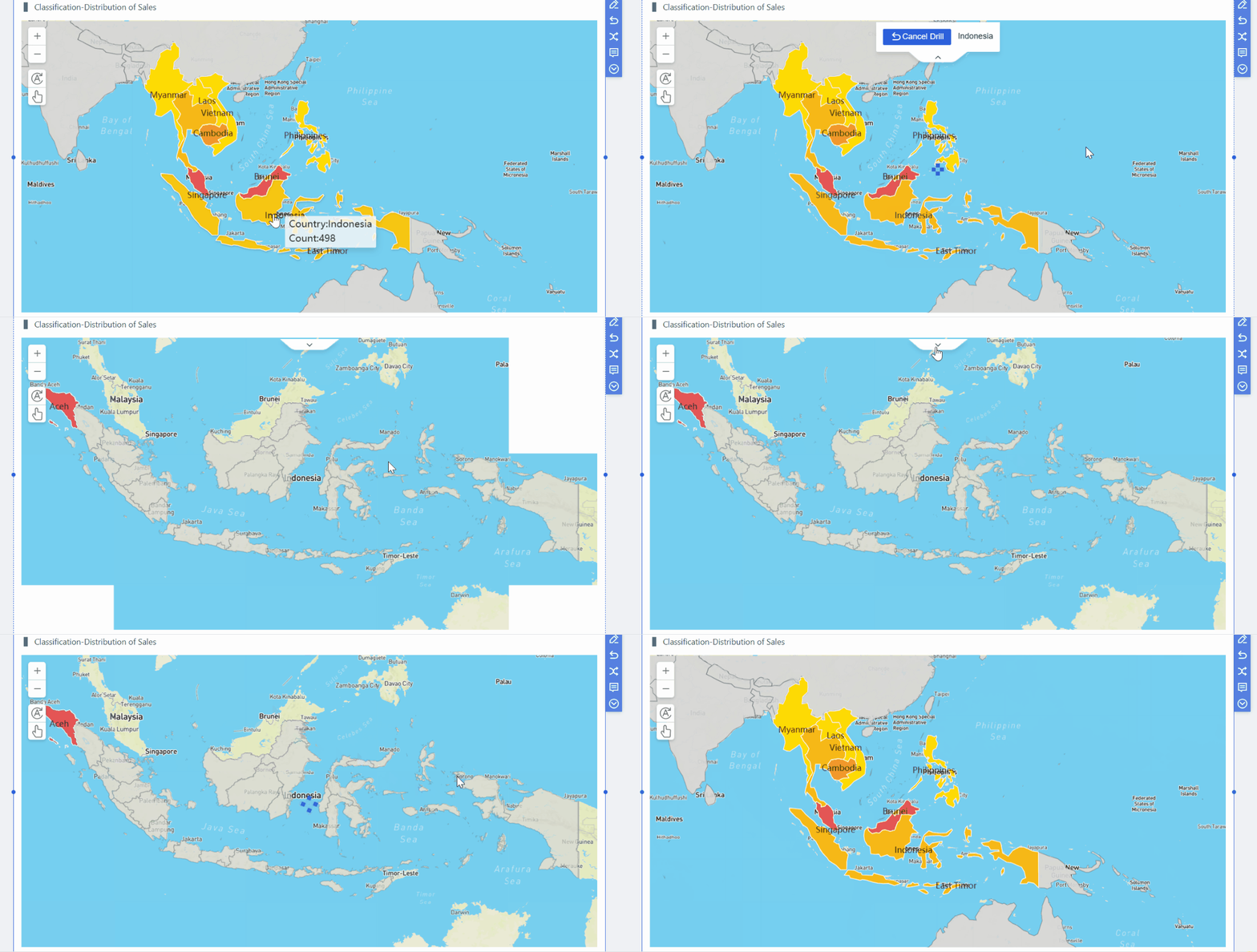
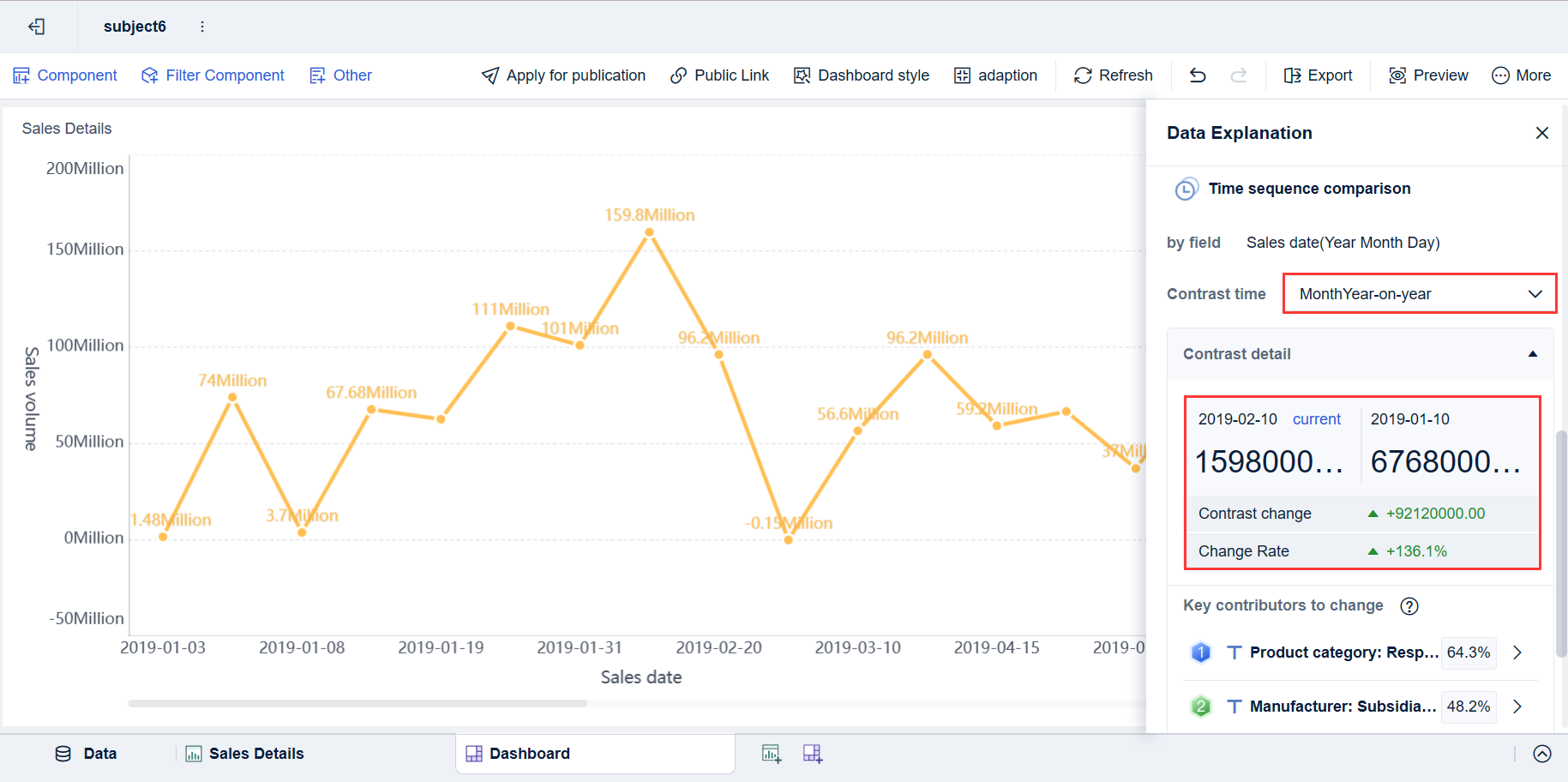
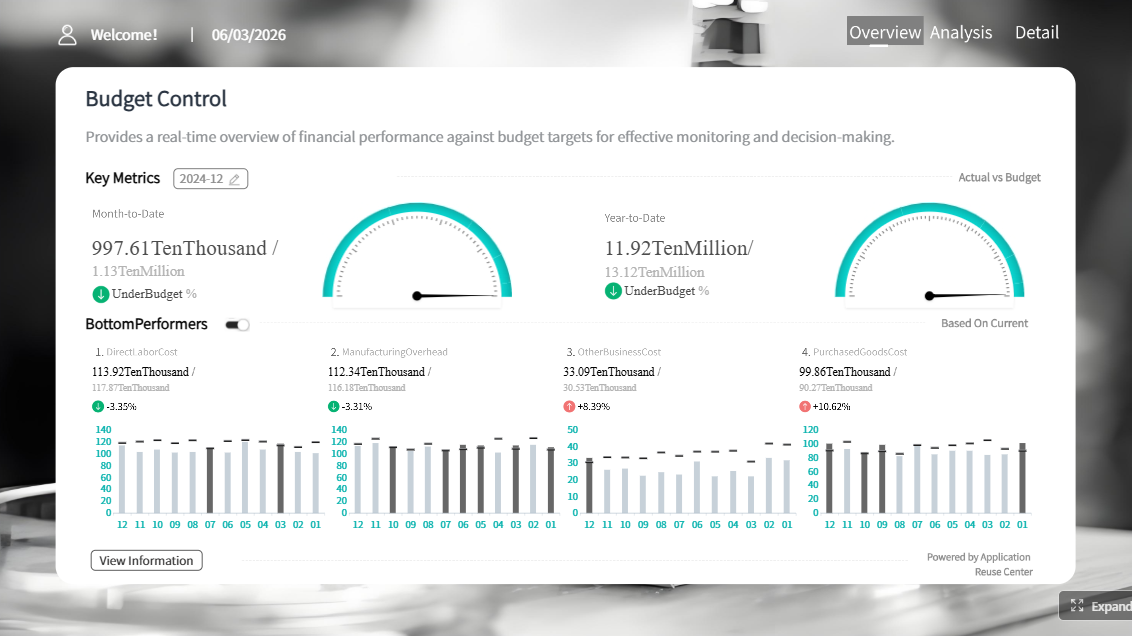 Click To Try The Dashboard
All dashboards in this article are built with FineBI
What corporate performance management means in 2026
For finance leaders, corporate performance management means the structured process of turning strategy into measurable targets, tracking results against plan, understanding why performance changed, and coordinating action across the business.
In plain language, CPM helps answer five recurring questions:
- What are we trying to achieve?
- What targets and assumptions support that strategy?
- How are we performing against plan?
- Why are results changing?
- What should the business do next?
That is why CPM connects far more than reporting. It links:
- Strategy: corporate objectives, priorities, and value drivers
- Planning: annual plans, departmental targets, and resource allocation
- Budgeting and forecasting: expected outcomes based on assumptions and market changes
- Reporting and analysis: actuals, variances, trends, and root-cause investigation
- Accountability: owners, review cadences, corrective actions, and follow-up
This is also why CPM is broader than simple KPI tracking or dashboard monitoring. A dashboard may show that gross margin fell 2 points. A true CPM capability explains which products, regions, pricing decisions, cost drivers, or operational issues caused the drop, who owns remediation, and how the forecast should change as a result.
For finance leaders in 2026, CPM is increasingly becoming a decision-support system, not just a reporting discipline.
Why finance teams are moving beyond KPI tracking
Limits of static reports and disconnected metrics
Many finance teams still operate with a familiar pattern:
- ERP data is extracted into spreadsheets
- Department managers submit separate assumptions
- Monthly reviews rely on static slides or exported dashboards
- Follow-up actions happen in email or meetings
- Forecast updates lag behind business reality
This approach creates several problems.
First, siloed data makes it difficult to reconcile financial and operational drivers. Revenue may sit in CRM, headcount in HR systems, production data in MES or ERP, and working capital details in separate finance tools. If those systems are not aligned, performance reviews become debates over numbers instead of conversations about action.
Second, lagging indicators limit management response. A month-end report may show a problem, but by the time leaders review it, the underlying issue has already expanded.
Third, spreadsheet-heavy workflows slow down analysis and introduce risk. Version-control issues, broken formulas, manual consolidations, and inconsistent assumptions all weaken confidence in the outcome.
Finally, traditional KPI reviews often stop at observation. They can show that forecast accuracy fell, operating expense rose, or collections slowed, but they often fail to reveal:
- what caused the change
- which business driver moved first
- who should respond
- what the next-best action should be
A finance function that only reports performance is helpful. A finance function that helps the business manage performance is far more valuable.
The shift toward decision-ready finance operations
Modern finance leaders are moving toward decision-ready finance operations. That means building a performance management model where planning, actuals, forecasts, and business actions are continuously connected.
In practice, this includes:
- Integrated planning across finance, sales, operations, procurement, and HR
- Scenario analysis to test assumptions under changing market conditions
- Cross-functional visibility into both financial and operational drivers
- Timely insight delivery through dashboards, alerts, summaries, and review workflows
- Workflow orchestration so owners know what to do after an exception appears
This is where business intelligence and AI begin to matter in a more practical way. Finance teams do not just need prettier dashboards. They need systems that help users retrieve trusted metrics quickly, identify deviations early, summarize what changed, and push the right information to the right owner.
That is the shift from KPI tracking to performance management.
Core methods and components of an effective CPM framework
Strategic planning and target setting
A strong CPM framework starts with strategic planning. Finance cannot manage performance if the business has not translated strategy into measurable outcomes.
That means defining objectives such as:
- revenue growth in a specific segment
- margin improvement by product line
- cash conversion cycle reduction
- capacity expansion with target ROI
- cost optimization without harming service levels
These objectives then need to cascade into specific targets across functions, business units, and time horizons. For example:
- Corporate target: improve operating margin by 3 points
- Sales target: improve mix toward higher-margin products
- Procurement target: reduce input cost volatility
- Operations target: improve yield and reduce scrap
- Finance target: monitor margin bridge, driver changes, and forecast impact
When targets cascade properly, teams can align on the same performance model rather than pursuing isolated departmental goals.
Key CPM metrics finance leaders should structure early
Below is a practical KPI set often used in corporate performance management.
-
Revenue Growth: Measures change in revenue over a defined period.
Business value: Indicates commercial momentum and market demand.
AI use: Dora can retrieve revenue growth by business unit, explain changes by segment, and include it in scheduled executive briefings. -
Gross Margin: Revenue minus direct costs, shown as amount or percentage.
Business value: Reveals product mix quality, pricing strength, and cost discipline.
AI use: Dora can compare margin against plan, identify unusual declines, and generate a chart-based answer tied to FineBI metrics. -
Operating Expense Ratio: Operating expense as a share of revenue or another baseline.
Business value: Helps finance monitor cost efficiency and scaling discipline.
AI use: Dora can flag expense drift by department and push alerts when thresholds are exceeded. -
Forecast Accuracy: Degree to which forecasted results match actuals.
Business value: Measures planning reliability and decision confidence.
AI use: Dora can summarize where forecast misses are concentrated and support follow-up analysis. -
Cash Conversion Cycle: Measures how long cash is tied up across receivables, inventory, and payables.
Business value: Connects profitability with liquidity and working capital performance.
AI use: Dora can monitor exceptions, identify worsening trends, and notify owners of working capital risk. -
Return on Invested Capital: Measures how effectively capital generates returns.
Business value: Supports capital allocation, strategic prioritization, and shareholder value creation.
AI use: Dora can retrieve the metric in chat, compare units or projects, and summarize shifts for management review.
Budgeting, forecasting, and scenario planning
If strategic planning defines direction, budgeting and forecasting define how the business expects to get there.
The most effective CPM frameworks now rely less on one fixed annual budget and more on a mix of:
- annual planning for governance and resource allocation
- rolling forecasts for continuous adjustment
- scenario planning for uncertainty
- driver-based modeling for better transparency
This matters because uncertain markets quickly make static assumptions obsolete. Input costs change, demand fluctuates, foreign exchange moves, and customer churn accelerates. Finance leaders need a way to update expectations without rebuilding models from scratch every time.
Rolling forecasts help the organization stay current. What-if analysis helps teams understand how changes in price, volume, labor cost, demand, or collection timing will affect profitability and cash flow.
The real value comes from aligning assumptions across the business. If sales is using one demand view, operations another capacity view, and finance a third margin assumption, forecast outputs will look precise but remain strategically weak.
A modern CPM framework should make assumptions visible, governed, and reusable.
Performance reporting, analysis, and accountability
Reporting is still essential, but reporting alone is not enough. Effective CPM requires a management rhythm that turns insight into action.
That usually includes:
- recurring variance analysis against budget, forecast, and prior period
- management reporting by executive, business unit, and function
- review cadences such as weekly, monthly, and quarterly cycles
- action logs for remediation and owner accountability
- auditability around metric definitions and reporting logic
Finance leaders should pay special attention to ownership. Every critical KPI should have:
- a business definition
- a calculation method
- a data source
- a metric owner
- a review frequency
- an escalation rule when performance deviates
Without this governance, performance meetings turn into interpretation exercises. With it, the organization can move faster and make better decisions.
How agentic BI changes corporate performance management
From passive dashboards to proactive intelligence
Traditional BI often stops at presentation. It shows performance but leaves users to search for the right dashboard, interpret the result, and manually communicate follow-up.
Agentic BI changes that model. Instead of waiting for users to find insights, the system helps users ask, analyze, summarize, alert, and follow up through governed workflows.
For finance, this means moving from passive reporting to proactive intelligence:
- dashboards become trusted starting points, not the final output
- metrics can be retrieved in natural language
- anomalies can trigger alerts before the next formal review
- analysis summaries can be pushed to decision-makers on schedule
- recurring finance tasks can be handled by AI digital employees with human oversight
This does not remove the need for finance judgment. It improves finance execution by reducing time spent on retrieval, formatting, and repetitive explanation.
Where AI agents fit into the finance workflow
The most practical finance use cases for AI agents are not abstract. They are recurring work patterns that consume time every week or month.
Examples include:
- narrative reporting for management packs
- forecast monitoring against target thresholds
- exception alerts for revenue, margin, opex, or cash metrics
- review preparation before operating meetings
- ad hoc management questions answered through trusted BI assets
- structured planning support using approved metrics, business terms, and templates
This is where FineBI + Dora fits well.
- FineBI provides the trusted dashboard, metric modeling, self-service analytics, visual exploration, and semantic foundation.
- Dora acts as the enterprise Data Agent layer on top of that foundation, turning static BI assets into scenario-based AI assistance.
For finance teams, Dora should be positioned as a governed AI assistant or AI digital employee, not a generic chatbot. It works best when it can rely on approved KPI definitions, permissions, business rules, and FineBI semantic assets.
Human oversight remains essential. Finance still owns assumptions, approvals, policy interpretation, and decision-making. Dora supports execution through chat, summaries, alerts, pushes, and follow-up in a more controlled and auditable way than raw prompt-only workflows.
How an AI Data Agent Handles This Scenario
For corporate performance management, the most relevant Dora digital employees are usually the Data Analyst, Daily Briefing Secretary, and Risk Alert Officer. Together, they support recurring finance work without replacing analysts or finance managers.
A finance leader might ask Dora:
“Show me this month’s corporate performance versus plan, including revenue, gross margin, operating expense ratio, forecast accuracy, and any business units with rising risk.”
Here is how a governed AI workflow works in practice.
-
Retrieve trusted FineBI dashboard or analysis-subject data.
Dora starts from approved FineBI dashboards, models, and semantic assets instead of scraping unknown data sources. -
Understand KPI definitions, filters, business terms, and semantic rules.
Because FineBI provides governed metric logic, Dora can distinguish between budget, latest forecast, actuals, region, BU, or management view without relying on ambiguous prompts. -
Generate a chart-based answer or dashboard-style analysis view through chat.
The user receives a concise answer with trend charts, variance breakdowns, or ranked business units rather than only raw text. -
Detect abnormal changes or threshold breaches.
If margin falls below threshold or forecast variance widens beyond policy rules, Dora can surface the issue automatically. -
Push insights, alerts, or suggested actions to responsible users.
Relevant managers can receive timely summaries, exception pushes, or role-based notifications for follow-up. -
Produce meeting-ready summaries for management review.
Dora can generate a short briefing, highlight key movements, and prepare a consistent summary before finance or executive reviews.
The Dora digital employee for finance
For this scenario, the strongest lead role is the Daily Briefing Secretary, supported by the Data Analyst and Risk Alert Officer.
- Daily Briefing Secretary: sends scheduled KPI summaries for executives and finance leaders
- Data Analyst digital employee: answers natural-language finance questions using trusted BI assets
- Risk Alert Officer: monitors threshold breaches and anomaly patterns for proactive follow-up
Why FineBI matters in the workflow
Dora becomes enterprise-ready when it stands on a trusted BI foundation. FineBI provides:
- governed KPI definitions
- reusable semantic models
- visual dashboards for finance review
- permission-controlled access to metrics and drill paths
- self-service exploration for analysts and managers
That foundation is what allows Dora to deliver more reliable finance support. Instead of acting like a free-form assistant with uncertain data context, Dora works through governed AI workflows that respect definitions, permissions, and enterprise logic.
What finance teams gain from FineBI + Dora
With FineBI + Dora, finance teams can:
- ask for performance analysis in natural language
- retrieve dashboards and metrics without hunting through folders
- receive chart-based answers based on trusted BI assets
- automate scheduled summaries for management meetings
- detect exceptions earlier through alerts and pushes
- reduce repetitive reporting effort with digital employees for repeatable work
This has practical landing value. It helps finance move from manually preparing every update to orchestrating a controlled performance management process.
How to evaluate and implement CPM in your organization
Signs your current approach is falling short
Many organizations already have reports, dashboards, planning files, and monthly reviews. The question is whether those elements actually function as a CPM capability.
Common warning signs include:
- frequent version-control conflicts in spreadsheets
- inconsistent KPI definitions across teams
- long close-to-report cycles
- weak forecast accuracy
- delayed root-cause analysis
- too much manual consolidation across systems
- leadership meetings focused on reconciling numbers instead of deciding actions
- poor follow-through after risks or exceptions are identified
If these symptoms appear regularly, your current tools may support reporting but not enterprise-wide performance management.
What to look for in a modern CPM solution
A modern CPM solution should support more than reporting output. Finance leaders should evaluate whether the platform can handle enterprise complexity across planning, reporting, governance, and action.
Key capabilities to look for include:
- Integration: ability to connect ERP, CRM, HR, operations, and other core data sources
- Governance: consistent KPI definitions, semantic rules, permissions, and auditability
- Modeling flexibility: support for rolling forecasts, driver models, and scenario planning
- Collaboration: shared workflows, ownership, comments, and follow-up processes
- Analytics capability: dashboards, drill-down, variance analysis, and visual exploration
- Scalability: support for multiple entities, business units, geographies, and changing structures
- AI readiness: governed support for chat-based analysis, summaries, alerts, and repeatable digital employee workflows
For many enterprises, the strongest architecture is not one giant promise of autonomous finance. It is a governed stack where BI, metrics, semantics, workflow, and AI assistance work together.
A practical rollout roadmap for finance leaders
A successful CPM rollout usually starts with discipline, not with technology alone.
A practical roadmap looks like this:
-
Start with a priority use case.
Focus on a recurring, high-value scenario such as executive performance briefing, monthly variance review, forecast monitoring, or working capital risk management. -
Clean the data foundation.
Align source systems, metric definitions, master data, and reporting hierarchies before expanding automation. -
Secure executive alignment.
Agree on the review rhythm, decision expectations, target KPIs, and accountability structure. -
Build in phases.
Start with trusted dashboards and governed metrics, then add AI assistant workflows such as summaries, alerts, and chat-based retrieval. -
Define ownership and success criteria.
Assign metric owners, workflow owners, and measurable outcomes such as faster review cycles, fewer manual report steps, or improved exception handling.
This phased approach reduces risk and helps CPM land as an operating capability, not just a software project.
Actionable best practices
1. Standardize KPI definitions, synonyms, filters, and ownership
If one team defines operating margin differently from another, CPM breaks down quickly. Finance should create a governed KPI dictionary that includes calculation logic, business meaning, owner, and approved dimensions.
This is also essential for AI. Dora performs best when business terms, metric aliases, date logic, and filter rules are standardized inside the BI semantic layer.
2. Build a semantic layer inside the BI workflow
A semantic layer is what turns raw data fields into trusted business concepts. Instead of asking users to remember table names or formula logic, FineBI helps structure metrics and entities in business language.
That foundation matters because Dora relies on governed semantic assets to provide more controllable and auditable AI workflows. It also improves landing capability compared with feature-only agent comparisons that ignore enterprise data governance.
3. Treat data quality as part of the AI implementation
AI does not fix broken data. If source systems are incomplete, delayed, or inconsistent, summaries and alerts will reflect those weaknesses.
Finance and IT should treat data quality, reconciliation, and refresh reliability as core parts of both CPM and AI rollout. Better data quality improves trust, adoption, and downstream decision value.
4. Start with high-value recurring workflows instead of automating everything
The best early AI use cases are repeatable and high-friction:
- weekly executive KPI briefing
- monthly variance summary
- forecast exception alert
- business-unit performance review prep
- cash flow risk monitoring
These workflows create visible value quickly and help teams define reusable Skills for governed execution. They also reduce token waste, improve response speed, and increase workflow stability compared with raw prompt-only agents because the process is scoped and controlled.
5. Preserve permission governance and human review
Finance data is sensitive. AI outputs must respect FineBI access boundaries, row-level permissions, and role-based visibility.
In addition, AI-generated summaries and reports should be reviewed by humans, especially for executive communication, policy interpretation, and sensitive performance commentary. Expand Dora Skills gradually as trust, governance, and process maturity improve.
FineBI + Dora Solution Pitch
Building this manually is complex. FineBI helps teams build trusted dashboards, metrics, and semantic assets. Dora turns those assets into an AI assistant that can answer questions in chat, generate dashboard-style analysis views, push scheduled summaries, monitor anomalies, and follow up with responsible owners.
For finance leaders, this matters because CPM requires both structure and speed. FineBI provides the structure: governed metrics, visual analysis, self-service exploration, and trusted semantic assets. Dora provides the execution layer: an enterprise Data Agent that helps teams retrieve, summarize, alert, and coordinate recurring finance workflows.
FineBI + Dora is not only a BI upgrade; it is a practical fourth-generation Agentic BI path. FineBI provides governed metrics and visual analysis. Dora provides the AI assistant layer for scenario execution, with more controlled Skills, lower token waste, faster execution paths, and more stable workflows than prompt-only agents.

Get Ready-to-Use Dashboard Templates in Fine Gallery
The strongest Dora pitch is scenario + product + service: FineBI provides the trusted BI foundation, Dora provides the AI digital employee, and implementation service connects data, governance, semantic setup, Skills, and rollout.
Key takeaways for finance leaders
Corporate performance management in 2026 is the discipline of connecting strategy, planning, forecasting, reporting, and accountability into one decision-support capability.
The core shift is clear:
- CPM is not just KPI tracking
- dashboards alone are not enough
- finance needs connected, action-oriented performance management
- AI becomes valuable when it is governed, trusted, and tied to real workflows
For finance leaders, the opportunity is to move from static reporting toward a model where trusted BI assets, structured governance, and enterprise AI assistance work together. FineBI + Dora supports that shift by combining a strong BI foundation with a practical Data Agent layer for chat-based analysis, scheduled summaries, anomaly alerts, and follow-up.
Treat CPM as a capability that combines process, technology, and governance. That is what turns finance from a reporting function into a performance management partner.
FAQs
Corporate performance management is the process of turning strategy into targets, tracking results against plan, explaining variances, and coordinating action across the business. It goes beyond reporting by helping finance teams decide what should happen next.