
Corporate financial reporting consulting becomes essential when finance teams are expected to deliver board packs, management reports, and compliance submissions from the same underlying data, yet still rely on spreadsheet chains, offline reconciliations, and email-based approvals. That model does not scale. It creates reporting delays, inconsistent definitions, weak audit trails, and too much executive time spent validating numbers instead of acting on them.
The real goal is not just to make reports look cleaner. It is to build a reporting operating model that can produce trusted financial outputs for different audiences, on schedule, with clear ownership and controlled change management.
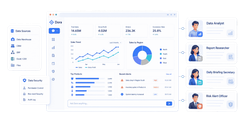
With FineReport + Dora, teams can ask for a report summary in chat, generate structured narratives from trusted report assets, receive scheduled briefings, and push exceptions to the right owner. That means finance leaders can move beyond manually assembling packs and toward a governed reporting foundation enhanced by an enterprise AI assistant.
 Click To Try The Dashboard
All reports in this article are built with FineReport
Why Spreadsheet-Driven Reporting Breaks at the Board, Management, and Compliance Levels
Spreadsheet-based reporting usually begins as a practical workaround. Over time, it becomes the default operating model for consolidating actuals, drafting commentary, adjusting mappings, and preparing audience-specific packs. The problem is that board, management, and compliance reporting each impose different requirements, while spreadsheets provide limited governance.
At the board level, leadership needs concise, strategic reporting with variance analysis, liquidity visibility, and forward-looking implications. Management teams need more operational detail, accountability by function, and faster refresh cycles. Compliance teams need consistency, traceability, and supportable evidence. When all three outputs are assembled manually, the risk multiplies.
Typical breakdowns include:
- Version control confusion across multiple files and owners
- Manual consolidation from ERP, budgeting, subsidiary, and operational systems
- Inconsistent KPI definitions between finance, FP&A, and business teams
- Narrative mismatch where the commentary does not align with the latest numbers
- Approval ambiguity when releases happen through email rather than governed workflows
The result is often one set of source data turning into multiple “final” versions. A board pack may show one EBITDA view, a management report another, and a compliance submission a third because mappings, definitions, or cutoff logic changed during preparation.
This has direct business consequences:
- Slower close and reporting cycles
- Lower confidence in reported numbers
- More time spent on reconciliation than analysis
- Increased audit and regulatory pressure
- Reduced executive trust in finance outputs
For executives, this is not just a process inefficiency. It is a governance problem. If reporting cannot be reproduced consistently and explained clearly, leadership decisions become slower and riskier.
What Corporate Financial Reporting Consulting Actually Standardizes
Corporate financial reporting consulting is not only about redesigning a few reports. It standardizes the structures, rules, ownership, workflows, and output logic that allow reporting to scale reliably across the enterprise.
A strong consulting engagement aligns finance, accounting, FP&A, legal, compliance, and business stakeholders around one reporting model. That model defines what numbers mean, where they come from, how they are reviewed, which templates apply, and what approval steps must occur before release.
The scope typically includes:
- Reporting structures and hierarchies
- Source system alignment
- Data mappings and consolidation logic
- KPI definitions and account classifications
- Review and sign-off workflows
- Board, management, and compliance output templates
- Evidence retention and traceability controls
This is the difference between improving individual reports and building a repeatable reporting governance framework.
Improving an individual report might solve a formatting issue or reduce manual effort in one monthly pack. A governance framework ensures that every critical financial report follows common rules, reusable templates, clear responsibilities, and approved definitions.
Core reporting components to align
-
Metrics, KPIs, and account definitions
Definition: Agreed logic for financial metrics, management KPIs, account groupings, and reporting categories.
Business value: Prevents board, management, and compliance reports from using different definitions for the same metric.
AI use: Dora can explain KPI definitions in chat, summarize metric changes, and reference the trusted FineReport semantic layer when users ask why a number differs across periods or entities. -
Reporting calendars and submission deadlines
Definition: Standard timing for close, consolidation, review, approval, and release.
Business value: Creates predictable reporting cycles and reduces deadline risk.
AI use: Dora can act as a Daily Briefing Secretary, sending scheduled reminders, daily reporting status summaries, and follow-up prompts for overdue submissions. -
Review, sign-off, and escalation paths
Definition: Defined owners for preparation, review, exception handling, and final approval.
Business value: Improves accountability and reduces release risk caused by unclear ownership.
AI use: Dora can identify pending approvals, summarize unresolved issues, and push exception alerts to the right owner without bypassing governance. -
Templates for board, management, and compliance reporting
Definition: Standard output structures for each reporting audience, including required sections, charts, commentary blocks, and support schedules.
Business value: Reduces rework while preserving audience-specific presentation.
AI use: Dora can generate structured report summaries and narrative drafts aligned to each template, based on FineReport outputs and approved business terms.
Build a Reporting Framework That Serves Different Audiences Without Rework
A mature reporting framework uses one trusted data foundation but delivers different outputs for different audiences. That is the key to reducing rework without sacrificing relevance.
The underlying numbers should remain consistent. What changes is the presentation layer:
- level of detail
- materiality threshold
- narrative emphasis
- action orientation
- supporting evidence
In practice, that means finance should not rebuild the report from scratch for each audience. It should design a governed model where board, management, and compliance packs are generated from shared data structures and approved templates.
A good framework separates:
-
Common financial truth
The controlled source for balances, actuals, budgets, forecasts, entity mappings, and core KPIs. -
Audience-specific reporting views
The board gets strategic summaries. Management gets operational breakdowns. Compliance gets disclosure-specific structures and audit-ready support. -
Recurring reporting vs. exception-based analysis
Recurring reports should be standardized and automated wherever possible. Exceptions should trigger targeted analysis rather than forcing teams to manually rework the entire reporting pack.
FineReport is especially useful here because it supports formatted reports, complex reports, management reports, operational cockpits, and reporting workflows on a governed foundation. Dora then adds the enterprise Data Agent layer so users can query those assets in natural language, receive structured summaries, and push exception follow-up to responsible owners.
Board reporting priorities
- Strategic performance, major variances, risks, liquidity, and forward-looking context
Definition: A concise view of enterprise financial health and strategic movement.
Business value: Helps directors focus on performance drivers, capital implications, and emerging risks.
AI use: Dora’s Report Researcher can summarize board-report sections, explain large variances, and prepare a management-ready narrative from FineReport board pack assets.
Management reporting priorities
- Operational KPIs, budget-to-actual insights, accountability by function, and near-term decisions
Definition: Detailed operating performance views that support business execution.
Business value: Enables department leaders to act on short-term priorities and performance gaps.
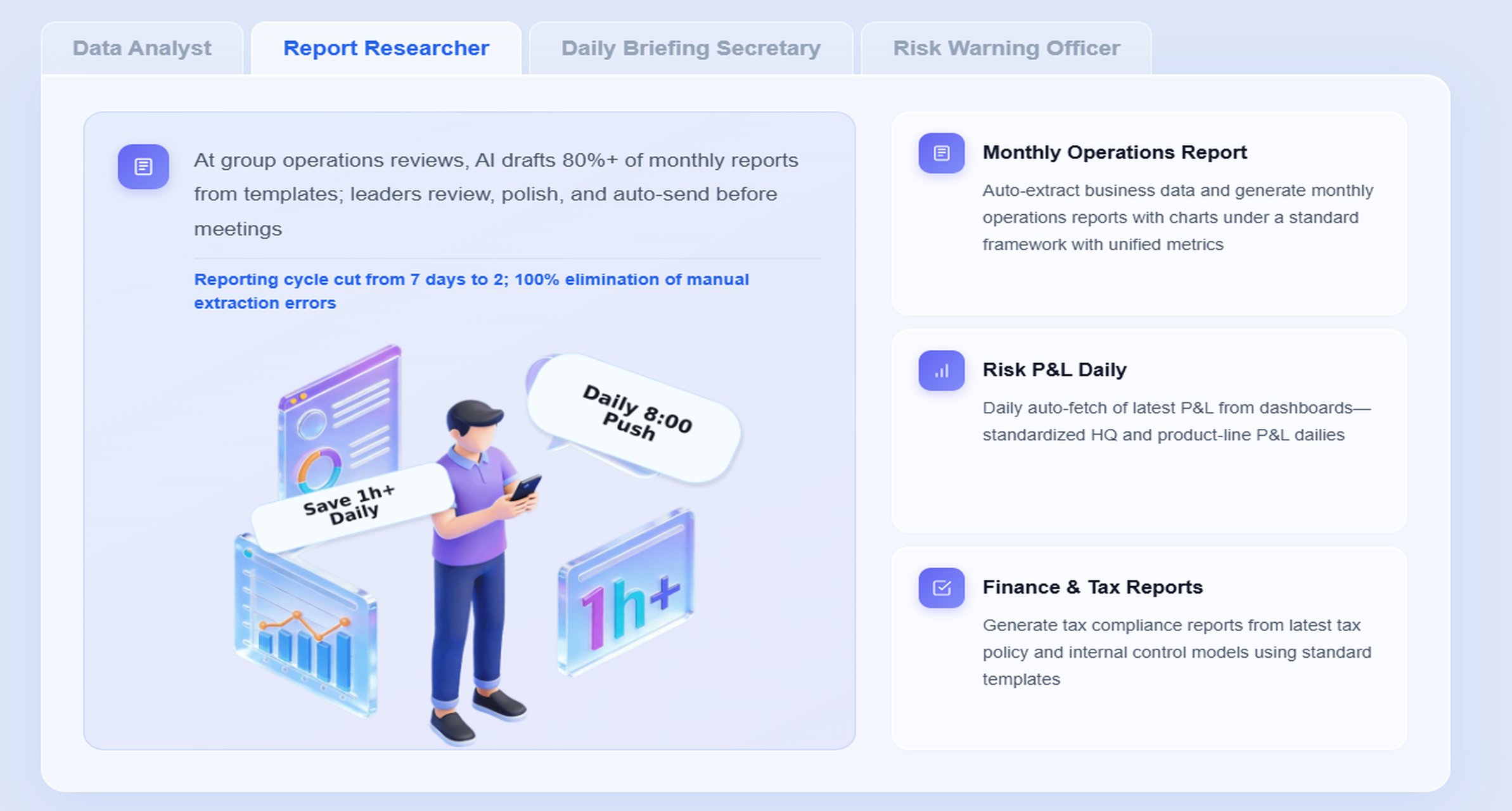
AI use: Dora’s Data Analyst digital employee can answer chat-based questions such as which functions drove overspend, which business units missed budget, and which trends require immediate follow-up.
Compliance reporting priorities
- Required disclosures, control evidence, filing consistency, and audit-ready support
Definition: Structured reports and supporting documentation required for regulatory and internal control purposes.
Business value: Reduces filing risk and strengthens defensibility during audits or reviews.
AI use: Dora’s Risk Alert Officer can monitor overdue evidence, highlight missing support schedules, and summarize exceptions that may affect filing readiness.
Fix the Process Bottlenecks That Create Spreadsheet Chaos
Before standardization can succeed, finance teams need to identify where delays and errors are actually occurring. Most spreadsheet chaos is not caused by one bad file. It is caused by a broken chain of preparation, reconciliation, commentary, approval, and revision.
Common bottlenecks include:
- collecting data from multiple systems in different formats
- manually mapping entities, cost centers, or chart of accounts structures
- reconciling differences across actuals, budgets, and adjustments
- drafting commentary separately from the numbers
- routing reports for review through email
- making last-minute changes without controlled traceability
These process gaps create specific control problems:
- no clear source of truth for final numbers
- poor audit trails for changes and approvals
- inconsistent explanations of variances
- hidden dependencies on individual spreadsheet owners
- repeated manual effort every reporting cycle
Standard templates, automated data flows, and governed review workflows help reduce these issues materially. Rather than extracting and reformatting data repeatedly, teams can centralize reporting logic and then distribute trusted outputs in a consistent way.
Common root causes to address first
-
Duplicate data extraction from multiple systems
Definition: Different teams pulling similar data separately from ERP, consolidation, budgeting, or operational systems.
Business value: Eliminating duplicate extraction reduces effort and minimizes conflicting report versions.
AI use: Dora can retrieve trusted FineReport report assets instead of encouraging users to build ad hoc offline copies, improving consistency in report consumption. -
Manual mapping between entities or business units
Definition: Spreadsheet-based remapping of legal entities, departments, account groups, or business segments.
Business value: Standardized mapping reduces recurring reconciliation work and lowers reporting risk.
AI use: Dora can explain mapped views through chat and summarize where changes in reporting structure are affecting period comparisons. -
Inconsistent commentary and variance explanations
Definition: Different report owners using different language and logic to explain similar results.
Business value: Consistent narratives improve executive understanding and reduce follow-up confusion.
AI use: Dora can generate structured report summaries and chart explanations from approved templates, producing more consistent first-draft narratives for finance review. -
No single source of truth for final numbers
Definition: Multiple “final” files across finance, FP&A, and compliance teams.
Business value: A governed reporting foundation improves trust and speeds approvals.
AI use: Dora uses FineReport’s trusted reporting and semantic foundation, so answers are grounded in controlled report assets rather than unsupported spreadsheet copies.
Design the Right Operating Model, Controls, and Technology Support
Standardization fails when it is treated as a one-time cleanup project. To hold reporting standards over time, organizations need the right operating model, governance, controls, and enabling technology.
The operating model should define:
- who owns data preparation
- who owns report generation
- who reviews and approves
- how exceptions are escalated
- how changes to templates or KPI definitions are governed
- how supporting evidence is retained
For IT and data teams, the role shifts in the AI era. Instead of manually building every one-off report request, they can focus on enterprise data connections, semantic layers, permission governance, data quality, report templates, and reusable agent Skills that support recurring reporting scenarios.
Important controls include:
- Accuracy controls: reconciliation checks, mapping validation, and review checkpoints
- Traceability controls: version history, source lineage, and evidence retention
- Approval controls: structured sign-off before release
- Change management controls: documented updates to templates, rules, or definitions
- Access controls: permissions aligned to reporting sensitivity
Technology should support the full reporting process, not just report display. That includes:
- data consolidation
- template-driven reporting
- workflow routing
- commentary support
- audit trails
- scheduled distribution
- exception monitoring
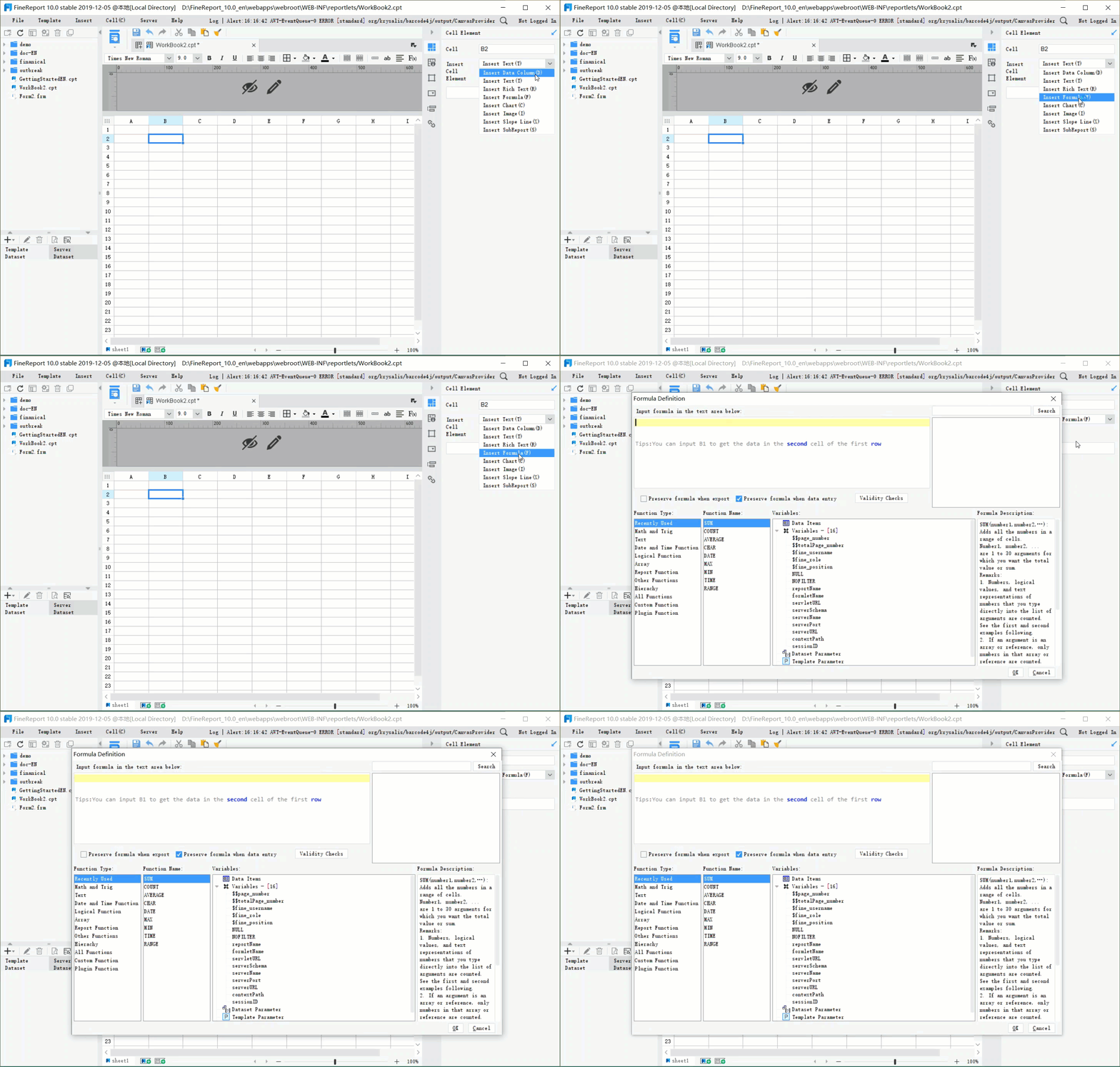
FineReport provides the reporting foundation for this model through formatted reports, management reports, operational cockpits, data entry workflows, and reporting automation. Dora adds a governed AI workflow layer on top, allowing users to consume reports through natural-language interaction, structured summaries, scheduled briefings, exception alerts, and follow-up tasks.
Questions to evaluate readiness
-
Which reports are business-critical and time-sensitive?
Definition: Identify reports whose delay or inconsistency creates business or compliance risk.
Business value: Helps prioritize the first standardization wave.
AI use: Dora is best introduced first in recurring high-value reporting scenarios, where scheduled summaries and exception pushes create immediate operational value. -
Where do definitions differ across teams?
Definition: Find metrics, accounts, and labels interpreted differently by finance, FP&A, legal, or business units.
Business value: Resolving these gaps is essential to trusted reporting.
AI use: Dora can reference governed semantic rules and provide chart-based answers grounded in approved KPI logic. -
Which approvals are required before release?
Definition: Clarify mandatory review and sign-off steps by report type.
Business value: Reduces release risk and improves accountability.
AI use: Dora can summarize outstanding approval items and push reminders without replacing formal governance. -
What evidence must be retained for audit or regulatory review?
Definition: Define support schedules, commentary records, sign-offs, and change logs that must be preserved.
Business value: Improves audit readiness and filing defensibility.
AI use: Dora can help prepare periodic summary records and follow-up digests tied back to trusted report assets.
How an AI Data Agent Automates Report Consumption
Once reporting standards are in place, the next bottleneck is not report creation alone. It is report consumption. Executives, finance leaders, controllers, and compliance managers still spend too much time opening files, reading long packs, comparing tabs, drafting commentary, and chasing unresolved issues.
This is where Dora works as an enterprise Data Agent on top of FineReport.
Instead of treating AI as a generic chatbot, Dora operates through governed AI workflows and reusable Skills. It can retrieve trusted report, cockpit, metric, and exception outputs from FineReport; understand KPI definitions and report templates; generate structured summaries; detect exceptions; and push the right follow-up to the right people.
For this financial reporting scenario, the most relevant Dora digital employees are:
- Report Researcher for structured report generation and narrative explanation
- Daily Briefing Secretary for recurring board or management briefing summaries
- Risk Alert Officer for compliance exceptions, overdue evidence, and unresolved reporting issues
- Data Analyst digital employee for natural-language exploration of financial report outputs
Scenario-specific chat example
A finance director preparing for an executive review could ask:
“Summarize this month’s management report, highlight material budget-to-actual variances above threshold, list unresolved compliance reporting issues, and identify which business units need follow-up before board submission.”
Dora can then produce a structured, chart-based answer linked back to the trusted FineReport reports and operational cockpit.
A practical 6-step AI workflow
-
Retrieve trusted FineReport assets
Dora accesses the approved board pack, management report, compliance status report, or financial cockpit built in FineReport. -
Apply semantic rules and KPI definitions
Dora uses the governed semantic layer, report templates, metric definitions, filters, and business terminology configured around the reporting process. -
Generate a structured report summary
The Report Researcher produces a concise narrative of performance, major variances, liquidity movement, entity-level issues, or filing readiness status. -
Detect exceptions and overdue items
The Risk Alert Officer checks for threshold breaches, unresolved reconciliations, missing support schedules, overdue approvals, or filing risks. -
Push the summary and alerts to stakeholders
The Daily Briefing Secretary delivers scheduled daily, weekly, or monthly summaries to finance leaders, business owners, or executives. -
Create follow-up records for accountability
Dora captures action items, unresolved exceptions, and periodic briefing outputs for review and escalation.
Why FineReport matters to AI accuracy and enterprise fit
Dora is strongest when it sits on top of governed reporting assets. FineReport provides:
- trusted report templates
- formatted and complex financial reports
- operational cockpits
- controlled filters and dimensions
- KPI governance
- permission rules
- reporting workflows
- enterprise reporting automation
That foundation matters because financial reporting cannot depend on loosely defined prompts alone. The quality of AI output depends on standardized templates, semantic clarity, data quality, access controls, and trusted report logic.
This is also why FineReport + Dora has better enterprise landing capability than feature-only AI comparisons. Dora is designed for governed execution through Skills and enterprise reporting workflows, helping reduce token waste, improve response speed, and increase workflow stability compared with raw prompt-only agents. More importantly, it fits the way real finance organizations operate: with permissions, approvals, evidence, reporting calendars, and accountability.
For business users, the value is simple: timely report summaries, chat-based answers, scheduled briefings, and exception pushes without waiting for analysts to re-explain the same report every cycle.
For executives, the value is practical ROI: Dora is not an AI experiment. It is a landed digital employee for recurring reporting work such as monthly management reports, liquidity summaries, variance explanations, compliance status updates, and owner follow-up.
How to Measure Success After Standardization
Success should be measured by process performance and stakeholder confidence, not just by whether a new template was launched.
Key outcomes include:
- faster reporting cycle times
- fewer manual adjustments and offline reconciliations
- improved consistency across board, management, and compliance reporting
- stronger confidence in reported numbers
- lower rework in commentary and approvals
- better audit and control readiness
Useful adoption and performance indicators include:
-
Template usage rate
Tracks whether teams are actually using standardized report structures. -
On-time delivery rate
Measures how consistently reports are produced and released by deadline. -
Exception rate
Shows how often reports trigger unresolved data, mapping, approval, or compliance issues. -
Rework reduction
Indicates whether fewer last-minute revisions and spreadsheet corrections are needed. -
Approval cycle time
Measures the efficiency of review and sign-off workflows. -
AI-assisted consumption rate
Tracks how often users rely on Dora for summaries, explanations, and follow-up instead of manual report interpretation.
The best approach is usually phased:
- standardize the highest-risk and most time-sensitive reports
- unify KPI definitions and templates
- implement governed workflows and access controls
- add AI summary, exception push, and briefing scenarios
- expand to broader enterprise reporting governance
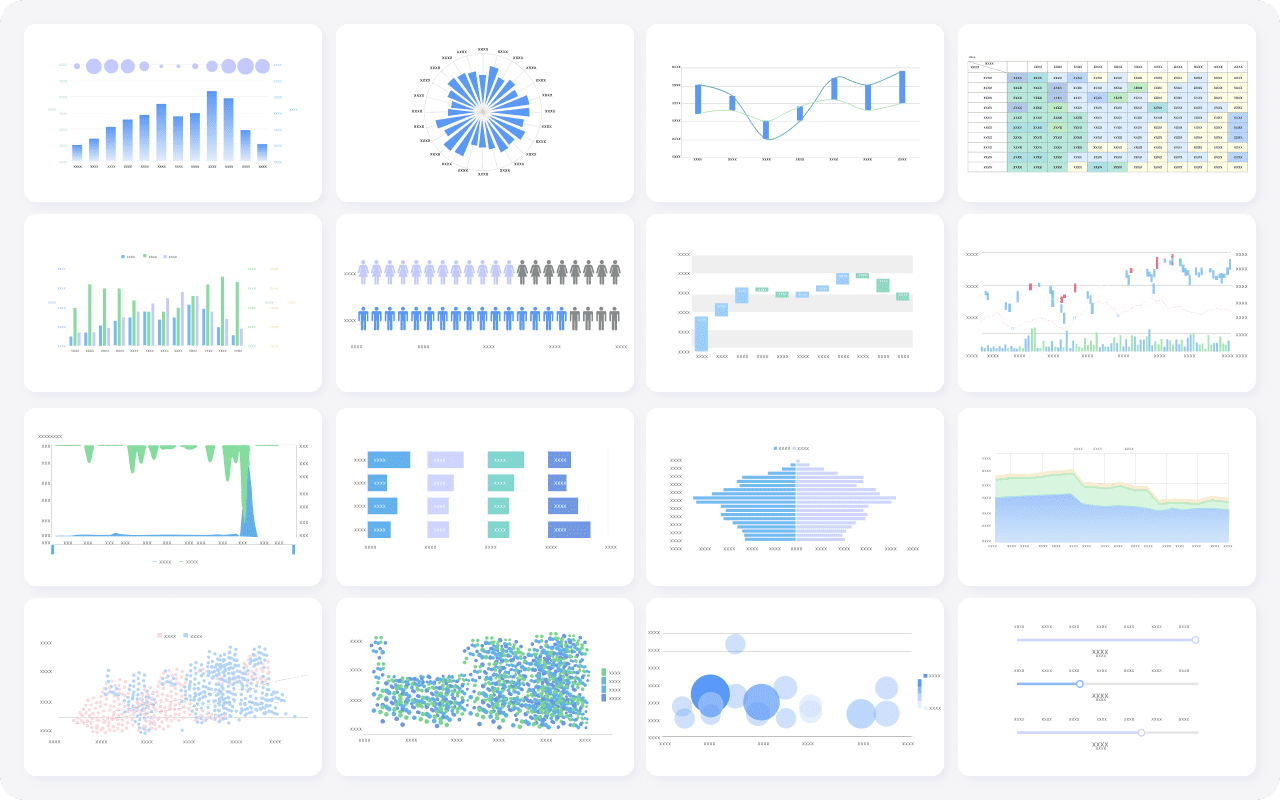
Actionable Best Practices
1. Standardize high-value recurring reports first
Do not try to redesign every financial report at once. Start with recurring reports that carry the highest business, executive, or compliance risk, such as monthly management packs, board reports, cash flow summaries, and filing support reports.
This creates faster wins and makes governance easier to sustain.
2. Build a semantic layer into the reporting process
AI cannot produce reliable report summaries if KPI definitions, account mappings, and business terms remain ambiguous. Standardize metric definitions, reporting hierarchies, threshold rules, and approved terminology before scaling AI-assisted report consumption.
This is where FineReport’s reporting foundation becomes critical. Dora performs best when it can rely on trusted semantics rather than inconsistent offline logic.
3. Treat data quality as part of the AI rollout
Do not separate reporting standardization from data readiness. If the data is late, inconsistent, or poorly mapped, neither the report nor the AI summary will be trusted.
Establish validation rules, exception handling, and ownership for source data corrections before promoting wider use of AI-generated narratives.
4. Define alert thresholds, ownership rules, and escalation paths
AI-driven exception monitoring works only when the business knows what counts as an exception and who must respond. Set materiality thresholds, due dates, responsibility assignments, and escalation rules for variance breaches, overdue support schedules, and approval delays.
This allows Dora’s Risk Alert Officer and Daily Briefing Secretary to support execution rather than generate noise.
5. Preserve permission governance and use human review for narratives
Financial reporting is sensitive. AI outputs must respect FineReport access boundaries and approved workflow rules. Start with human-reviewed summaries for board, management, and compliance scenarios, then gradually expand Dora Skills as confidence and governance mature.
This controlled rollout improves enterprise trust and makes the AI implementation practical.
FineReport + Dora Solution Pitch
Building this manually is complex. FineReport helps teams standardize trusted reports, operational cockpits, templates, and reporting workflows. Dora turns those assets into an AI assistant that can answer report questions in chat, generate structured summaries, push scheduled briefings, monitor exceptions, and follow up with responsible owners.
For corporate financial reporting consulting, this matters because finance organizations do not just need better visualization. They need a practical operating model for recurring reporting work across board, management, and compliance scenarios.
FineReport supports that foundation with:
- formatted financial reports
- complex board and management report structures
- data entry and reporting workflows
- operational cockpits
- governed templates
- enterprise reporting automation
Dora extends that foundation with:
- natural-language query over trusted reporting assets
- chat-based AI assistant for report consumption
- report, cockpit, metric, and exception retrieval from FineReport assets
- structured report summaries, chart explanations, and management narratives
- scheduled summaries, daily or weekly briefings, and push notifications
- digital employees for repeatable reporting workflows
- skills-based execution for more controllable and auditable AI workflows
FineReport + Dora is not only a reporting upgrade; it is a practical fourth-generation Agentic BI path. FineReport provides governed reports and operational cockpits. Dora provides the AI assistant layer for scenario execution, with more controlled Skills, lower token waste, faster execution paths, and more stable workflows than prompt-only agents.
Get Ready-to-Use Dashboard Templates in Fine Gallery
The strongest Dora pitch is scenario + product + service: FineReport provides the trusted reporting foundation, Dora provides the AI digital employee, and implementation service connects data, governance, semantic setup, Skills, report templates, permissions, and rollout.
If your finance team is still building critical reporting outputs through spreadsheet chains, corporate financial reporting consulting should not stop at process documentation. It should result in a governed reporting framework that scales across audiences, reduces manual effort, strengthens controls, and makes AI-assisted report consumption genuinely usable in the enterprise.
FAQs
It standardizes reporting structures, KPI definitions, data mappings, workflows, approval steps, and templates for board, management, and compliance reporting. The goal is to create consistent outputs from the same trusted data.