Month-end close breaks down when finance teams rely on disconnected spreadsheets, manual reconciliations, and version-heavy report preparation. The result is slow approvals, inconsistent numbers, and unnecessary risk right when leadership needs confidence in the books.
Accurate financial reporting requires more than correct formulas. It needs a trusted reporting foundation, a repeatable close workflow, and an AI assistant layer that helps teams consume reports faster and act on exceptions earlier. With FineReport + Dora, teams can ask for a report summary in chat, generate structured narratives from trusted report assets, receive scheduled briefings, and push exceptions to the right owner.
Click To Try The Dashboard
All reports in this article are built with FineReport
Why accurate financial reporting matters during month-end close
Month-end close is not just an accounting deadline. It is the control point where raw transactions become management visibility, board-ready outputs, lender-facing statements, and audit-supporting records. If reporting is wrong or delayed, every downstream decision is weaker.
Reliable reporting supports three core business goals:
Decision-making: Executives need clean views of revenue, margin, cash flow, liabilities, and budget variance.
Compliance and control: Finance teams must produce statements and supporting schedules that hold up to internal review and external scrutiny.
Stakeholder trust: Boards, investors, lenders, auditors, and department leaders all expect consistency and traceability.
Spreadsheet-heavy close processes put these goals at risk. Common problems include:
Multiple versions of the same file
Broken links and formulas
Manual copy-paste between systems
Inconsistent account mappings
Delayed reconciliations
Missing supporting documentation
Last-minute adjustments with poor visibility
When these issues stack up, finance spends more time proving the numbers than explaining the business.
A clean, repeatable month-end close and reporting workflow should give teams a different experience:
A single source of truth for validated reporting data
Structured commentary for material changes
Timely summaries for managers and executives
This is where the combination of FineReport + Dora becomes practical. FineReport standardizes the reporting foundation. Dora adds an enterprise Data Agent layer that helps users retrieve trusted reports, summarize key movements, explain charts, push exceptions, and follow up on overdue close items without forcing finance teams back into manual report chasing.
Map the month-end close process before building reports
Before building dashboards, statement packs, or automated report pushes, finance needs to map the close process itself. Accurate financial reporting is usually lost upstream, long before the final PDF or management pack is prepared.
Identify the reports and financial statements your team must deliver
Most finance teams produce a mix of internal and external outputs each month. Start by listing every required deliverable and making ownership explicit.
For each report, define the operating structure behind it:
Owner: Who prepares it
Reviewer: Who validates it
Approver: Who signs off
Deadline: When it must be complete
Dependencies: Which reconciliations, journal entries, or subledger closes must happen first
Distribution audience: Internal management, external stakeholders, auditors, or regulators
This matters because accurate financial reporting is not only about data correctness. It is also about accountability. If no one owns a report element, version conflict and late adjustments become normal.
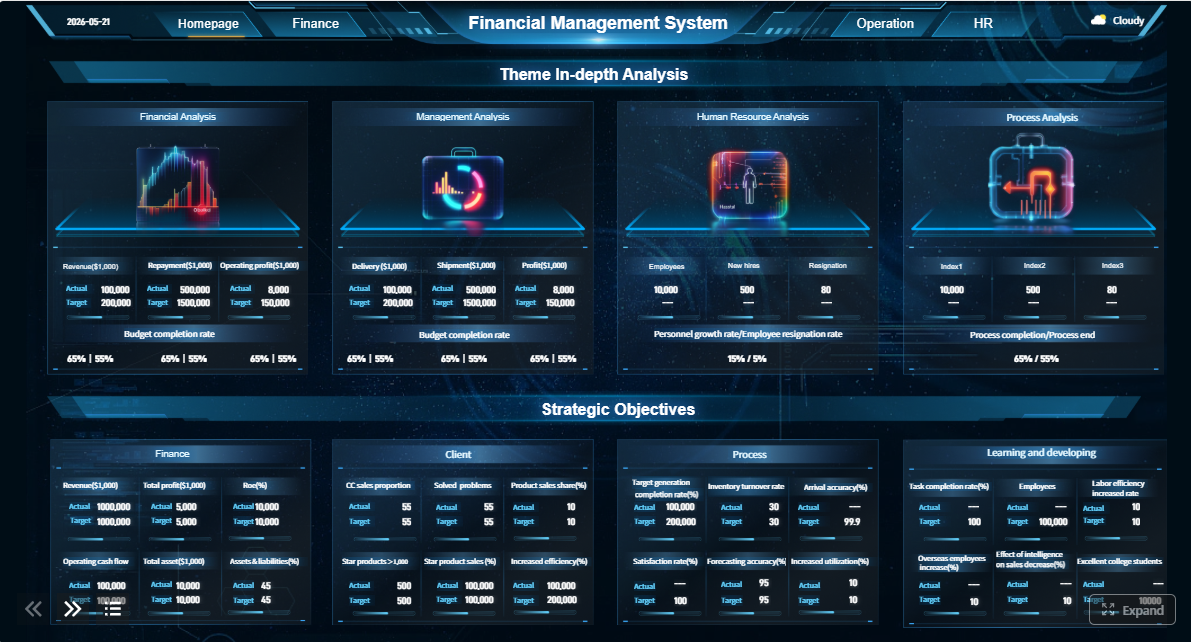
A strong reporting model also clarifies which outputs belong in a governed reporting platform. FineReport is especially useful here because it can standardize formatted reports, management reports, and close cockpits in one reporting foundation, instead of leaving critical outputs scattered across files and inboxes.
Pinpoint where spreadsheet chaos creates reporting errors
Once the reporting inventory is defined, review where the current process fails. Most finance teams already know the symptoms. The goal is to identify the exact control gaps behind them.
Common breakdowns include:
Duplicate files with slightly different assumptions
Broken formulas after line insertions or mapping changes
Inconsistent sign conventions across reports
Missing support for manual journal entries
Different account mappings in different workbooks
Roll-forward tabs that are not refreshed correctly
Hidden overrides that bypass source-system logic
Late data pulls from ERP or subledgers
Manual consolidation steps with no audit visibility
The fix is not “use fewer spreadsheets” in the abstract. The fix is to reduce uncontrolled reporting steps before the month-end report pack is assembled.
Controls that reduce rework include:
Locked templates for recurring statement formats
Standard account mapping tables
Review status indicators for reconciliations
Exception flags for material variances
Ownership and due-date tracking for close tasks
Approval workflows for adjustments
Audit trail preservation for every change
In practice, many finance leaders use FineReport to centralize these close-related views into operational cockpits and structured reporting templates. That creates the governed layer Dora later uses to answer report questions in natural language and push finance-ready summaries to stakeholders.
Build a reliable foundation for accurate financial reporting
A finance team cannot automate or scale what it has not standardized. The foundation for accurate financial reporting is a governed data model, a repeatable close control structure, and a single place where validated numbers are consumed.
Standardize data sources and chart-of-accounts structure
Month-end reporting becomes unstable when ERP data, subledgers, payroll systems, expense tools, and operational files use different naming logic or mapping rules. Standardization reduces interpretation risk.
Key design priorities include:
Align the ERP general ledger with subledgers and supporting systems
Define account mapping rules once and use them everywhere
Standardize entity, department, cost center, and project naming conventions
Clarify how adjustments, reclasses, and eliminations are labeled
Set update rules for master data changes
Define reporting periods and cutoff rules consistently
KPI and report elements finance should govern
Revenue by entity or business unit
Definition: Recognized revenue by company, region, product line, or business unit for the reporting period.
Business value: Helps leadership understand growth quality and concentration risk.
AI use:Dora can summarize major revenue shifts, explain which entities moved most, and include revenue commentary in a scheduled monthly briefing.
Gross margin or contribution margin
Definition: Revenue less cost of sales or other directly attributable costs, shown by period and segment.
Business value: Reveals profitability trends and operational efficiency.
AI use:Dora can identify unexpected margin compression, compare against prior month, and highlight affected business units.
Operating expenses
Definition: Period expenses categorized by function, department, or cost center.
Business value: Supports budget control and expense discipline during close review.
AI use:Dora can flag expense accounts with unusual swings and generate structured explanations for management review.
Accruals and manual adjustments
Definition: End-of-period entries made to reflect incomplete invoices, estimates, allocations, or corrections.
Business value: These entries often have the highest judgment risk and review importance.
AI use:Dora can surface material adjustments, summarize where they occurred, and push follow-up reminders for unresolved support.
Cash position and cash flow movement
Definition: Beginning cash, ending cash, and major operating, investing, and financing movement drivers.
Business value: Critical for liquidity planning and executive confidence.
AI use:Dora can generate a concise cash movement narrative from FineReport statement outputs and point users to the source report.
Balance sheet reconciliations status
Definition: The completion and review status of account reconciliations for key balance sheet accounts.
Business value: Prevents unresolved balance issues from flowing into final statements.
AI use:Dora can monitor overdue reconciliations, summarize unresolved items, and push alerts to owners.
When these definitions are standardized in FineReport reports and cockpits, Dora can work on top of trusted semantics instead of guessing what a line item means. That is a major difference between a governed enterprise Data Agent workflow and a raw prompt-only approach.
Set close controls and review checkpoints
Controls should be embedded into the reporting workflow, not added as an afterthought. Month-end close benefits from a layered review structure that catches issues before they reach executives.
Core controls include:
Reconciliations for material accounts
Variance analysis vs. prior period and budget
Approval workflows for journal entries
Evidence attachment for support schedules
Materiality thresholds by report line
Escalation rules for unusual balances
Final sign-off before report release
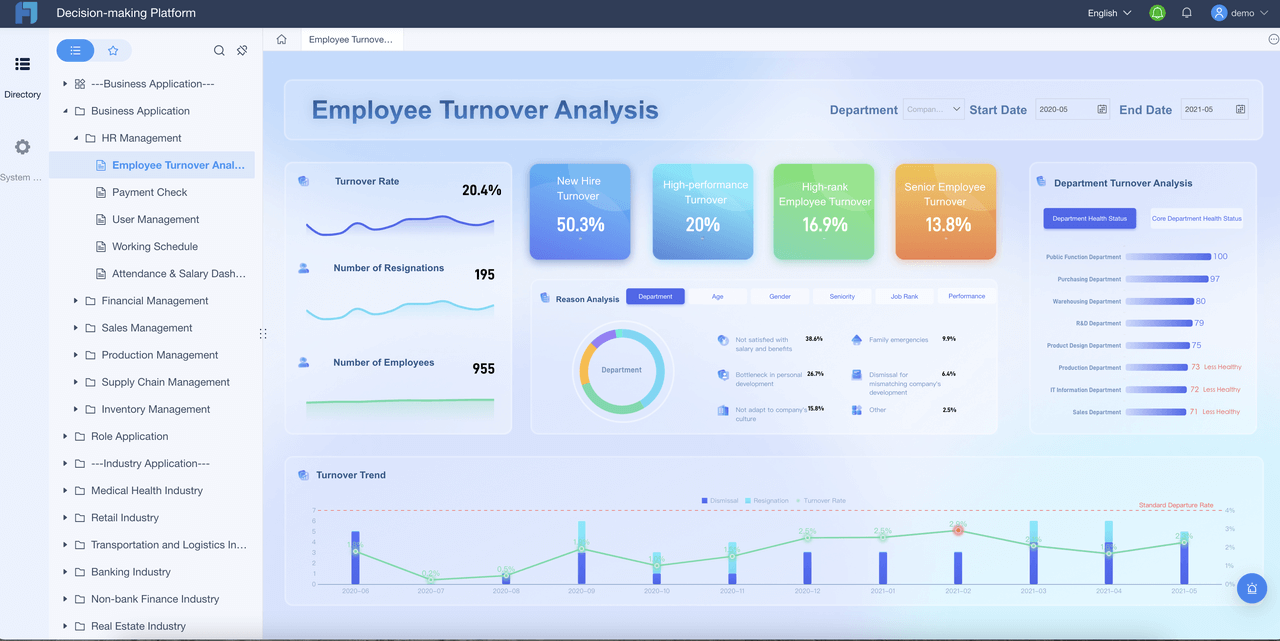
A close cockpit built in FineReport can make these checkpoints visible through status indicators, aging views, owner tracking, and exception lists. This helps finance managers see where the process is stuck instead of waiting for email updates.
Dora strengthens this process by turning the cockpit into an actionable AI workflow. Rather than checking every close status manually, leaders can ask for a summary of overdue reconciliations or material variances and receive a structured answer tied back to the source report.
Define a single source of truth for reporting data
A single source of truth does not mean every system disappears. It means validated reporting data is centralized so finance teams are not rebuilding statements from disconnected spreadsheets.
Standard filters for entity, department, period, and scenario
Permission controls by user role
Consistent calculations and line-item logic
Full traceability for adjustments and refresh timing
Reusable templates for recurring report packs
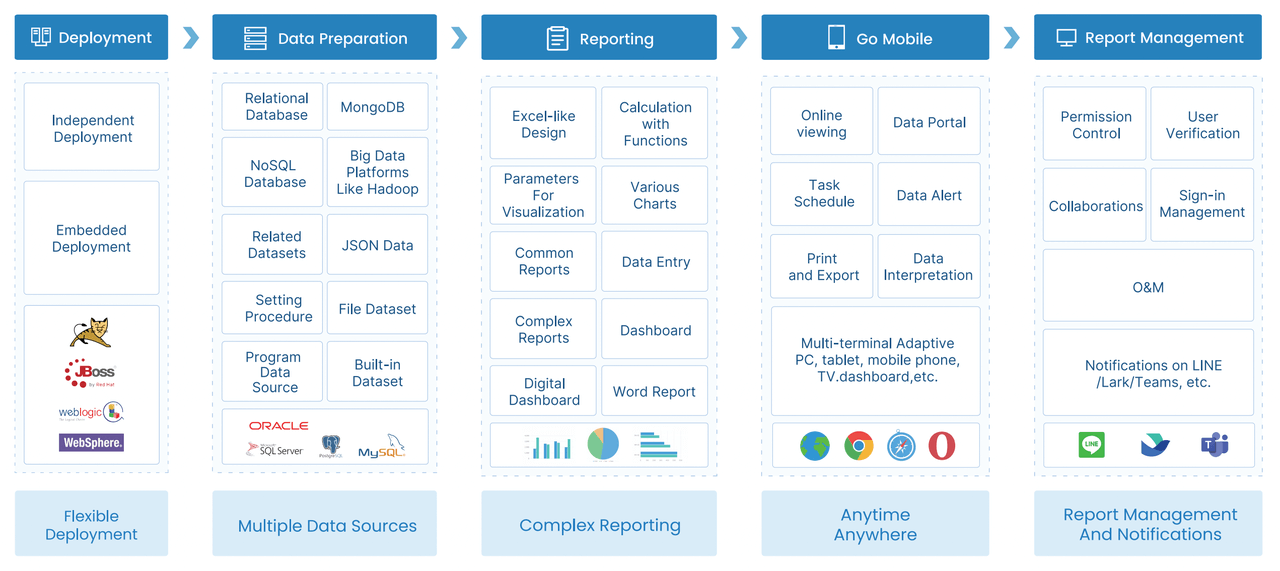
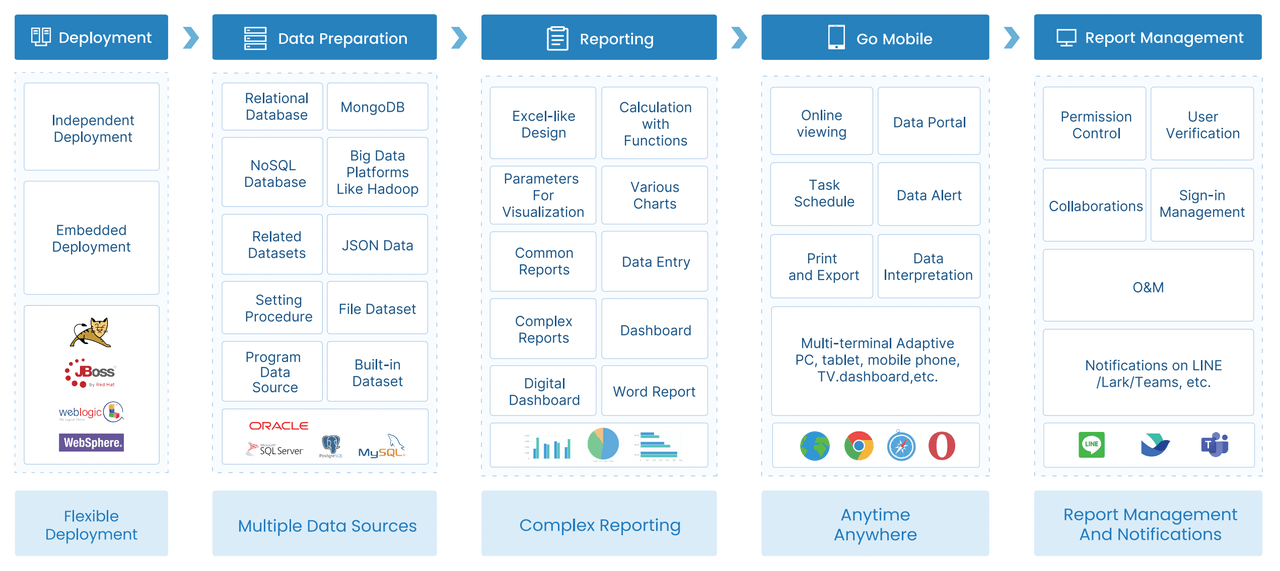
FineReport fits this role well because it supports formatted reports, complex reports, management reporting, data entry workflows, and reporting automation. In month-end close, this creates the trusted foundation. Dora then acts as the AI assistant layer that helps people consume those reports faster and act on findings.
Use best practices to make reporting timely, accurate, and easier to review
Accurate financial reporting is not only about control. It is also about making reports faster to prepare and easier to interpret. The best month-end processes reduce manual effort while increasing review quality.
Create reporting templates that are consistent and easy to read
Executives and reviewers should not have to relearn report structure every month. Standardized templates improve accuracy because they reduce interpretation errors and presentation inconsistency.
Consistent layouts also help Dora generate better structured report summaries. If the source report follows clear sections and KPI definitions in FineReport, Dora can produce more useful management narratives, chart explanations, and exception summaries.
Automate repeatable steps where possible
Not every finance process should be automated immediately. Start with repetitive, rules-based steps that add little analytical value when done manually.
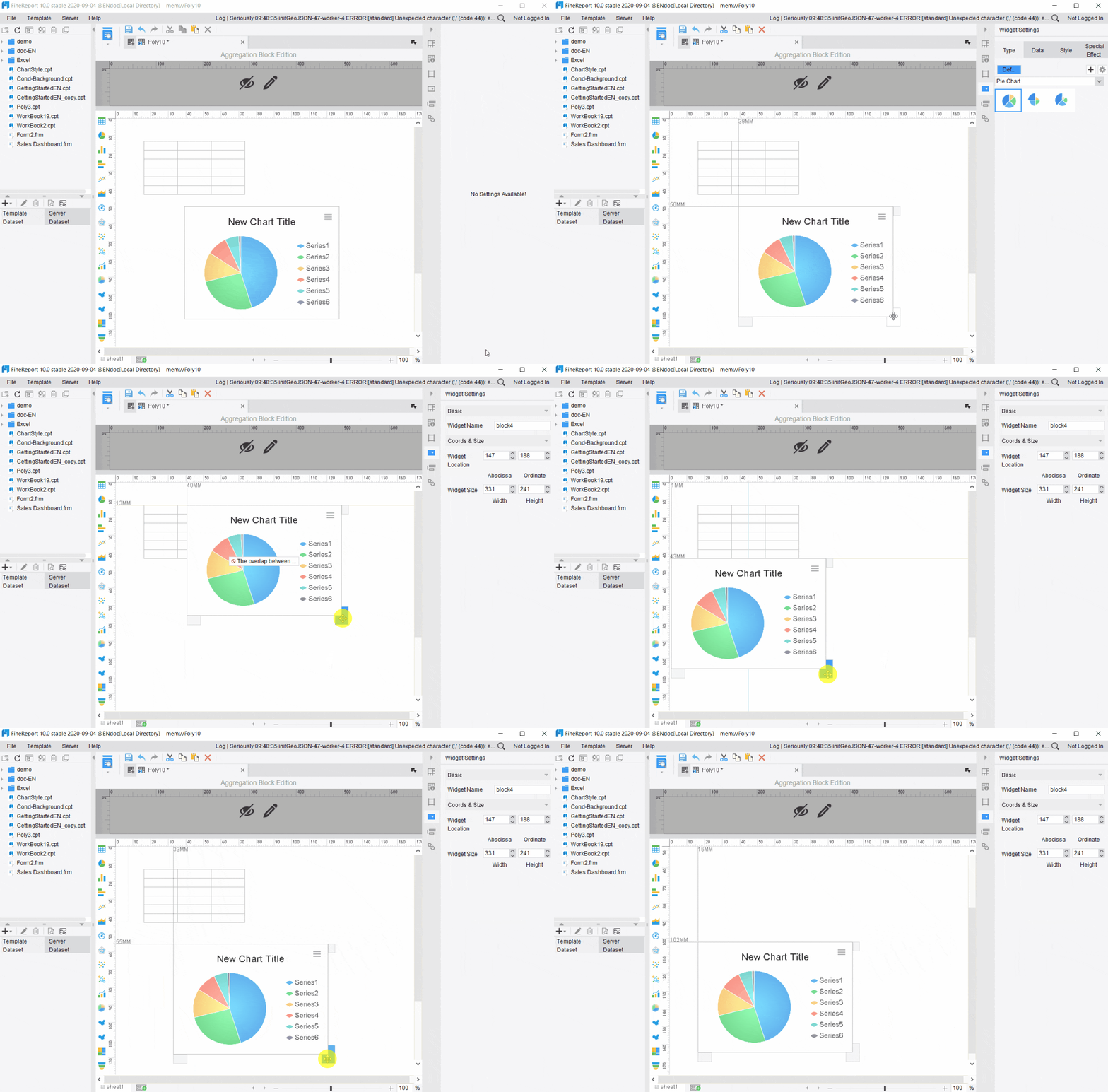
FineReport can automate recurring reporting outputs and operational cockpit updates. Dora extends this by enabling chat-based report consumption, scheduled summaries, and owner-facing pushes. Instead of sending the same manual explanation every month, finance can use Dora to generate a structured summary from the trusted report asset and deliver it to the right stakeholder on schedule.
Strengthen financial reporting analysis before reports go out
A report can be technically complete and still not be decision-ready. Finance should validate completeness and accuracy through pre-distribution analysis.
Review comparisons should include:
Current month vs. prior month
Current month vs. budget
Year-to-date vs. plan
Current month vs. expected trend
Entity-level or department-level outlier review
For significant movements, add concise explanation:
What changed
Why it changed
Whether it is recurring or non-recurring
Whether action is required
Who owns the follow-up
This is another point where Dora adds practical value. Instead of leaving reviewers to assemble commentary manually, Dora can generate a structured report summary, explain chart movements, and draft a management narrative from FineReport outputs. Finance still governs the definitions and review process, but the communication burden becomes lighter.
Accurate financial reporting does not end when the report is published. A major problem in month-end close is report consumption: managers cannot find the right version, executives ask for quick explanations, and finance teams spend hours re-answering the same questions.
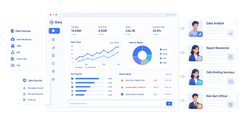
This is where Dora, FanRuan’s enterprise Data Agent platform, creates measurable operating value. Dora is not a replacement for FineReport. FineReport provides the trusted reports, cockpits, templates, semantic rules, and governed data access. Dora turns those assets into a scenario-specific AI assistant for finance reporting workflows.
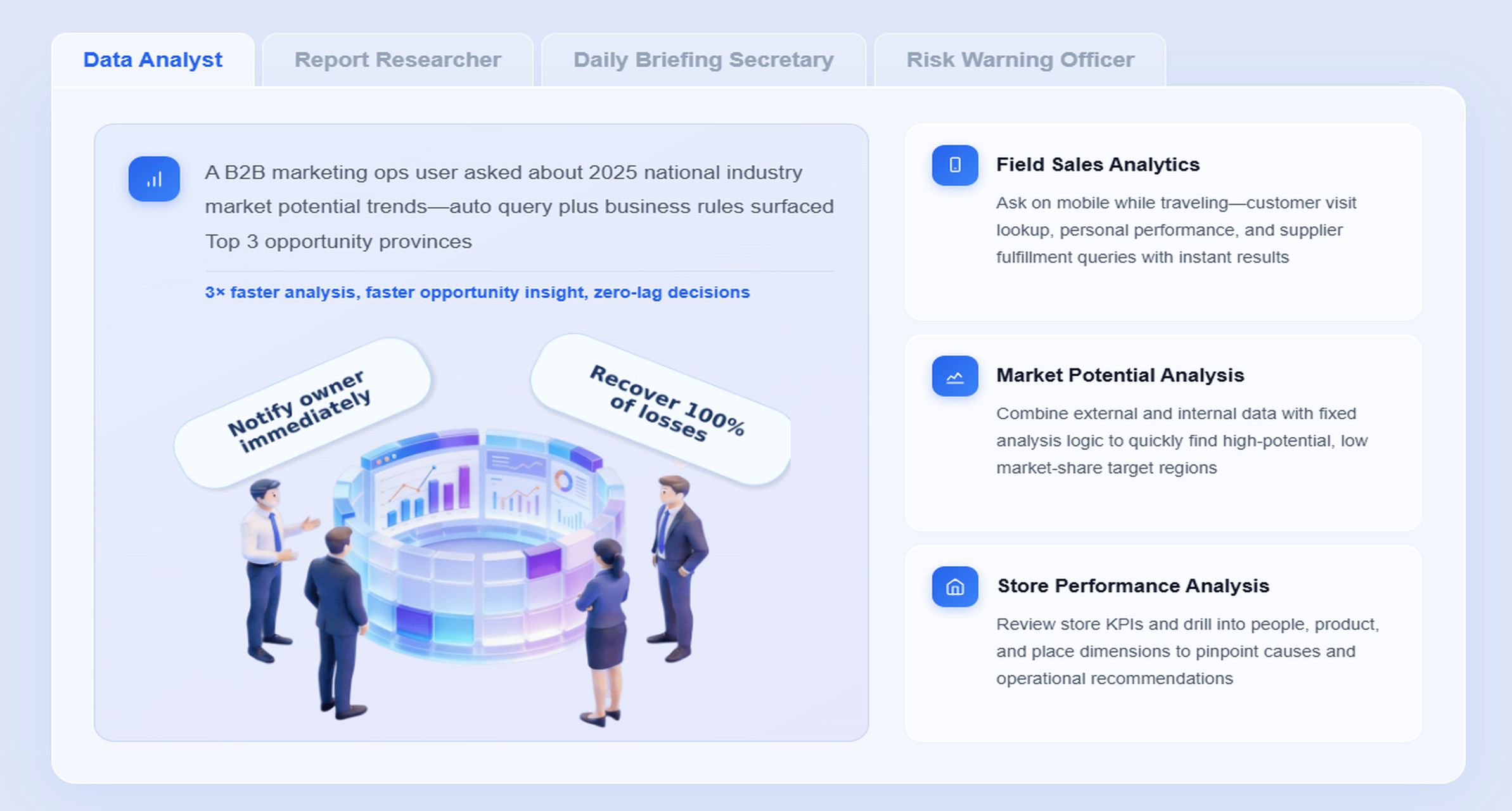
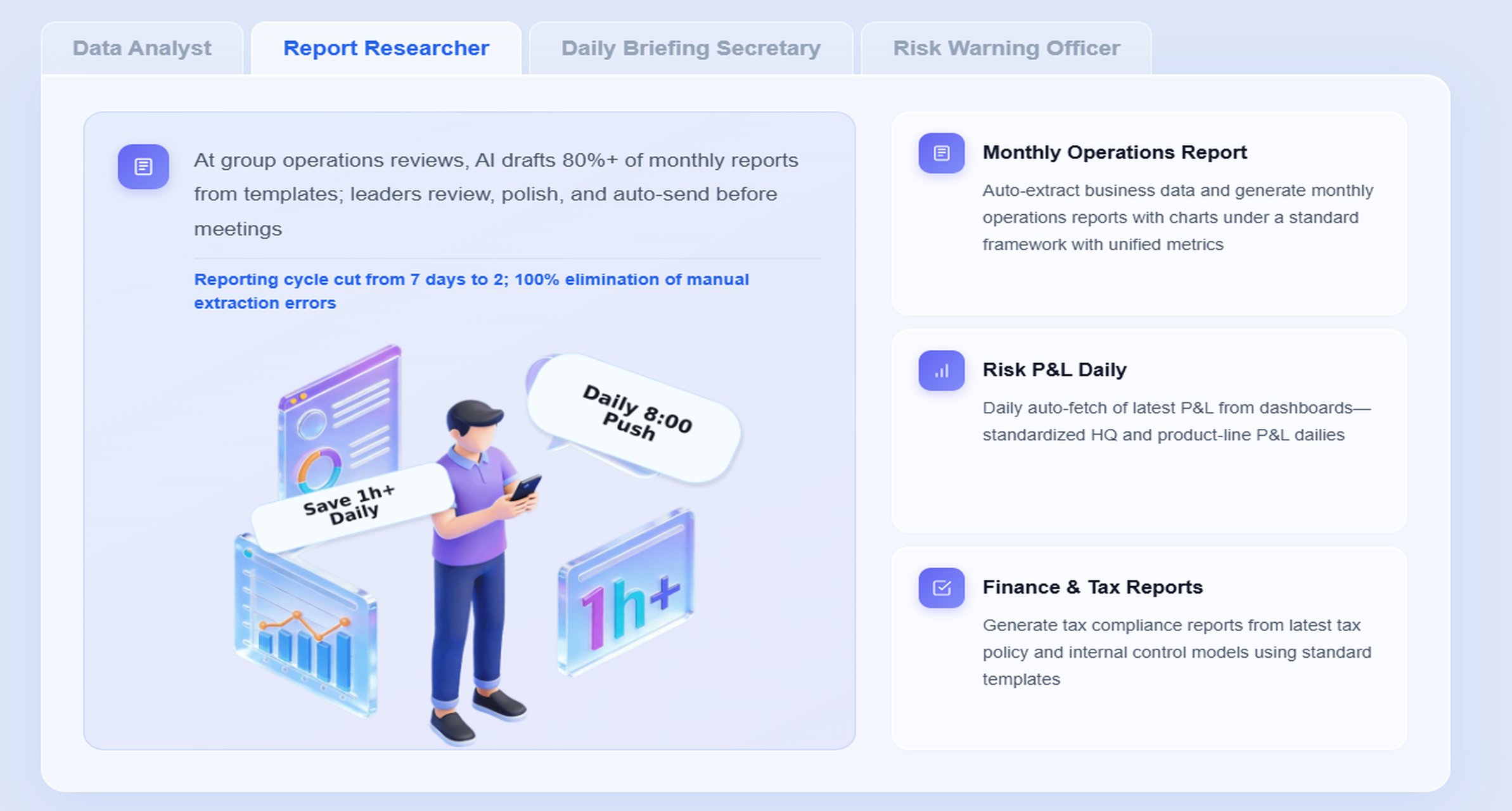
For month-end close, the most relevant Dora digital employees are:
Daily Briefing Secretary for scheduled monthly summaries and executive preparation
Report Researcher for structured report generation and financial narrative drafting
Risk Alert Officer for overdue reconciliations, unusual balances, and material variance alerts
“Summarize this month’s financial reporting pack, highlight material balance sheet variances, identify overdue reconciliations, and list the departments that need follow-up before final sign-off.”
Dora can answer using trusted FineReport assets rather than free-form internet-style guessing. That matters in finance, where KPI definitions, permission rules, and reporting templates must be governed.
Dora workflow for month-end close report consumption
Retrieve trusted FineReport report or close cockpit data Dora accesses the approved month-end financial statement pack, reconciliation status cockpit, variance report, or other governed FineReport assets.
Understand KPI definitions, templates, filters, and business rules Dora uses the trusted semantic layer behind financial statements, account mappings, materiality thresholds, and review dimensions such as entity, department, and period.
Generate a structured report summary through chat Dora returns a finance-ready answer with chart explanations, statement highlights, and concise management narrative rather than an unstructured text blob.
Detect exceptions and unresolved items Dora checks for material variances, overdue reconciliations, threshold breaches, late adjustments, or missing approvals that require attention before final distribution.
Push findings to responsible users Dora can send scheduled summaries, exception alerts, or role-specific updates to finance leaders, controllers, or department owners.
Create follow-up records for review Dora supports a governed AI workflow by helping teams document what was flagged, who owns the issue, and what still requires review.
Finance leaders often see AI demos that sound impressive but fail to land in production because the workflow is not governed. Month-end reporting needs more than a chat interface. It needs:
Trusted report templates
Controlled permissions
Stable KPI definitions
Audit-conscious workflows
Reusable report assets
Clear escalation rules
That is why FineReport + Dora is a stronger enterprise fit. FineReport provides the reporting foundation and semantic structure. Dora provides the Agentic BI layer for execution.
Natural-language query over trusted reporting assets
Retrieval of reports, cockpits, metrics, and exception lists
Generation of structured report summaries and management narratives
Scheduled daily, weekly, or month-end briefings
Exception pushes for overdue items or unusual balances
Follow-up support for recurring close workflows
It also offers better landing capability than feature-only agent comparisons because it is designed for governed enterprise use. With Skills-based execution, Dora can support more controllable and auditable AI workflows, while reducing token waste and improving workflow stability compared with raw prompt-only agents. The benefit is not hype. The benefit is that finance teams can actually use it inside reporting operations without giving up control.
Read and present financial statements with more confidence
Once the close is under control, finance still needs to present results clearly. Accurate financial reporting should improve understanding, not just compliance.
Focus on the core financial statements and what each one reveals
The three core financial statements work together, and month-end review should test their consistency before release.
Income statement
Shows revenue, cost, and profitability for the period.
Important checks include:
Revenue recognition consistency
Margin reasonableness
Expense cutoff accuracy
Large or unusual period-end adjustments
Variance vs. budget and prior month
Balance sheet
Shows what the company owns, owes, and carries at period end.
Important checks include:
Cash tie-out
AR and AP consistency with subledgers
Inventory or accrual reasonableness
Prepaid and deferred balance movement
Reconciliation completion for material accounts
Cash flow statement
Shows how cash changed across operating, investing, and financing activities.
Important checks include:
Ending cash tie to the balance sheet
Large non-operating cash drivers
Working capital movement explanation
One-time items that distort trend interpretation
FineReport can bring these views together in a single management reporting package or operational cockpit. Dora can then explain what changed across all three statements in a chart-based answer or structured report summary, saving finance leaders from preparing repetitive explanations manually.
Tailor reporting for internal and external audiences
Not every audience needs the same level of detail. Accurate financial reporting depends partly on presentation discipline.
Internal management reporting
Usually includes:
More operational detail
Department and cost-center views
Budget comparisons
Variance commentary
Forward-looking context for action
External financial reporting
Usually requires:
Tighter formatting control
More formal review and approval
Disclosure discipline
Audit-ready support
Greater sensitivity around permissions and distribution timing
FineReport helps teams manage these structured outputs with the right formatting and governance. Dora helps each audience consume them more efficiently. For example, executives may receive a concise monthly summary, while finance reviewers receive exception lists and follow-up items linked back to source reports.
Turn month-end reporting into a scalable operating rhythm
The best close process is not the one that survives a heroic month. It is the one that repeats cleanly every month with less effort and fewer surprises.
Build a close calendar and accountability structure
A strong close calendar makes accurate financial reporting operational, not aspirational. Each step should be time-bound and owner-bound.
Typical close calendar milestones include:
Subledger close deadlines
Journal entry submission cutoff
Balance sheet reconciliation due dates
Variance analysis completion
Management review meetings
Final reporting pack generation
Executive sign-off and distribution
A recurring checklist should track:
Task owner
Due date
Current status
Review requirement
Escalation path
Blocking dependency
FineReport can support this through operational close cockpits and status-driven reports. Dora can serve as a Daily Briefing Secretary or Risk Alert Officer, pushing reminders, summarizing open issues, and helping finance leaders review what is still pending before sign-off.
Measure reporting quality and continuously improve the process
If finance wants sustained improvement, it should measure close and reporting quality directly.
Useful performance indicators include:
Error rate in final reports
Number of post-close adjustments
Close cycle time
Late reconciliation count
Review comments by report section
Report reissue frequency
Exception resolution time
Post-close reviews should answer:
Which report sections required the most rework?
Which accounts or entities caused recurring delays?
Where are manual spreadsheet steps still creating risk?
Which review controls worked well?
Which AI summaries or exception pushes improved follow-up speed?
This is where Dora can evolve from a simple assistant into a repeatable digital employee layer. As finance standardizes templates, semantic rules, permissions, and exception logic, Dora can handle more recurring report consumption tasks with stable governed workflows.
Actionable Best Practices
To make accurate financial reporting sustainable during month-end close, focus on the following practical implementation steps.
1. Standardize report templates, KPI definitions, and business terms
Do not ask users or AI to interpret inconsistent report structures. Define statement layouts, line names, variance logic, commentary sections, and approval markers once. This improves both human review and Dora’s ability to generate reliable structured report summaries.
2. Build the semantic layer inside the reporting workflow
AI in finance works best when it sits on top of trusted report assets, not scattered files. FineReport should hold governed templates, KPI definitions, account mappings, period logic, and permission-aware report access. Dora then uses that foundation for more controlled Agentic BI execution.
3. Treat data quality as part of the AI implementation
Dora should not be expected to “fix” poor source data. Reconciliation discipline, mapping consistency, and validated close data remain essential. In enterprise finance, accurate AI output depends on accurate reporting inputs.
4. Start with high-value recurring reports instead of automating everything
Begin with monthly management packs, variance reports, reconciliation status cockpits, or executive close summaries. These scenarios are repeatable, time-consuming, and easier to govern. That makes them strong early use cases for FineReport + Dora.
5. Preserve permission governance and human review
AI-generated narratives should respect the same access boundaries as the source reports. Keep approvals, sensitive data access, and final distribution under finance control. Expand Dora Skills gradually, especially for exception pushes, scheduled briefings, and follow-up workflows.
Building this manually is complex. FineReport helps teams standardize trusted reports, operational cockpits, templates, and reporting workflows. Dora turns those assets into an AI assistant that can answer report questions in chat, generate structured summaries, push scheduled briefings, monitor exceptions, and follow up with responsible owners.
For finance teams focused on accurate financial reporting during month-end close, this combination is practical because it connects reporting, governance, and execution:
Dora produces chart explanations and structured management narratives
Dora can push scheduled month-end summaries and exception alerts
Dora supports repeatable digital employees for report consumption and follow-up
FineReport + Dora is not only a reporting upgrade; it is a practical fourth-generation Agentic BI path. FineReport provides governed reports and operational cockpits. Dora provides the AI assistant layer for scenario execution, with more controlled Skills, lower token waste, faster execution paths, and more stable workflows than prompt-only agents.
Get Ready-to-Use Dashboard Templates in Fine Gallery
The strongest Dora pitch is scenario + product + service: FineReport provides the trusted reporting foundation, Dora provides the AI digital employee, and implementation service connects data, governance, semantic setup, Skills, report templates, permissions, and rollout.
If your finance team wants accurate financial reporting without spreadsheet chaos, the goal is not just to close faster. It is to build a reporting operating model that stays reliable as complexity grows.
Spreadsheet-driven close processes create version conflicts, broken formulas, inconsistent mappings, and manual copy-paste errors. These issues make it harder to reconcile accounts quickly and trust the final numbers.
Most teams should start with core statements like the income statement, balance sheet, cash flow statement, trial balance, and key supporting schedules. Management packs, budget vs. actual reports, and variance commentary are also common priorities.
Map the close workflow, assign clear owners and deadlines, standardize report templates, and use governed data sources. Adding review checkpoints before distribution helps catch errors before they reach leadership or auditors.
FineReport provides a centralized reporting foundation for standardized statements, dashboards, and close cockpits. Dora adds AI-assisted summaries, chart explanations, scheduled briefings, and exception follow-up using trusted report assets.
The biggest risk is that leadership makes decisions based on delayed or unreliable numbers. It can also create compliance issues, weaken audit readiness, and reduce trust from boards, lenders, and investors.
Product Trial
FineReport
Pixel-perfect reports · Interactive dashboards · Easy data entry · Digital twins