
If you are searching for a Supermetrics alternative, you are probably trying to solve one of a few practical problems: rising reporting costs, connector limits, fragile spreadsheet workflows, slow dashboard refreshes, or the need to move beyond simple data extraction into a more scalable analytics setup.
Supermetrics is widely used for pulling marketing data into spreadsheets, BI tools, and warehouses. It remains a familiar option for many agencies and performance teams. But in 2026, many teams want more than connector-based reporting. They want cleaner data pipelines, better governance, easier dashboarding, more flexible destinations, and a reporting stack that can scale without becoming hard to manage.
This guide is for agencies, in-house marketers, e-commerce teams, and analytics-heavy reporting teams evaluating what to use instead of Supermetrics. We will compare 10 alternatives fairly, explain who each tool fits best, and show where a broader BI layer becomes relevant when your reporting needs go beyond data delivery.
Quick Comparison Table
| Tool | Best for | Ease of use | Data destinations | Transformation depth | Dashboard/reporting focus | Recommended users |
|---|---|---|---|---|---|---|
| FineBI | Teams that want self-service BI on top of marketing data | High for business users | BI environment, enterprise data sources | Moderate to strong inside BI workflows | Strong interactive dashboards and governed analysis | Enterprises, regional teams, business-led analytics teams |
| Funnel | Centralizing multi-channel marketing data at scale | Moderate | Warehouses, dashboards, exports | Strong for marketing data modeling | Good | Scaling brands and agencies |
| Improvado | Enterprise reporting and custom data models | Moderate to low | Warehouses, BI tools, reporting outputs | Strong | Good | Large enterprises with complex marketing stacks |
| Adverity | Governance and advanced transformation | Moderate to low | Warehouses, BI tools | Strong | Good | Enterprises with technical data teams |
| Coupler.io | Spreadsheet-first and lightweight reporting | High | Sheets, BI tools, warehouses | Moderate | Good for lightweight use | SMBs and lean marketing teams |
| Windsor.ai | Budget-conscious teams with broad connector needs | High | Sheets, BI tools, warehouses | Moderate | Good | SMBs, agencies, performance marketers |
| Porter | Fast dashboard delivery | High | Looker Studio and common reporting endpoints | Light to moderate | Strong for templates | Agencies and freelancers |
| Dataddo | No-code pipelines and warehouse delivery | Moderate | Warehouses, apps, BI tools | Moderate | Limited compared with BI-first tools | Mid-market and data pipeline users |
| Whatagraph | Presentation-ready client reporting | High | Dashboards and exports | Light to moderate | Strong | Agencies focused on client-facing reports |
| AgencyAnalytics | Recurring agency reporting | High | Dashboards and agency reports | Light | Strong | SEO/PPC agencies |
What makes a strong Supermetrics alternative in 2026
A strong Supermetrics alternative is not just another connector library. It should make your reporting workflow more reliable, easier to operate, and more cost-efficient as your data volume and stakeholder count grow.
Key evaluation criteria: data source coverage, refresh speed, destination flexibility, pricing transparency, and ease of setup
When I evaluate marketing data tools for clients, I usually start with five practical criteria:
- Data source coverage: Can the tool connect to the ad platforms, analytics tools, CRM systems, and e-commerce data you actually use?
- Refresh speed: How often can it sync data, and how reliable is scheduled refresh?
- Destination flexibility: Can you send data to spreadsheets, dashboards, BI tools, and warehouses without rebuilding everything later?
- Pricing transparency: Can you predict what happens when you add more clients, accounts, connectors, users, or destinations?
- Ease of setup: Can marketing and analytics teams manage it without heavy engineering support?
Secondary criteria also matter:
- Transformation features
- Governance and permissions
- Support quality
- Template availability
- Scalability across teams and regions
Who should switch: agencies, in-house marketers, e-commerce teams, and analytics-heavy reporting workflows
A switch usually makes sense if you are in one of these groups:
Agencies
Agencies often outgrow connector-based workflows first. The more clients, accounts, and recurring reports you add, the more fragile spreadsheet-heavy reporting becomes.
In-house marketers
In-house performance teams often need data from paid media, CRM, web analytics, and revenue sources in one place. If reporting logic is spread across separate tools, maintaining KPI consistency gets harder.
E-commerce teams
E-commerce reporting usually needs ad platform data, product data, conversion data, and order or margin data together. That often pushes teams toward tools with stronger modeling or BI support.
Analytics-heavy reporting workflows
If your workflow includes attribution analysis, budget pacing, regional rollups, blended CAC or ROAS logic, or executive dashboards, you may need more than extraction alone.
Common pain points with connector-based reporting tools and where alternatives improve
Connector-based tools are useful, but they often create recurring friction:
- Too many separate workflows across Sheets, dashboards, and warehouses
- Per-destination pricing that grows fast
- Connector maintenance issues when APIs change
- Manual KPI logic repeated in multiple reports
- Weak governance when many users need access
- Limited business-user analysis after the data lands
Alternatives improve in different ways:
- Funnel, Improvado, and Adverity improve centralization and modeling
- Coupler.io, Windsor.ai, and Porter improve usability and cost efficiency for lighter teams
- Whatagraph and AgencyAnalytics improve client-facing reporting workflows
- FineBI + Dora improve the analysis and decision layer after data ingestion, especially for teams that want interactive dashboards and governed, self-service exploration rather than static exports alone
10 best Supermetrics alternative tools in 2026
Below is a ranked list based on practical fit, workflow flexibility, and how well each tool addresses common reasons teams start looking for a Supermetrics alternative.
1. FineBI
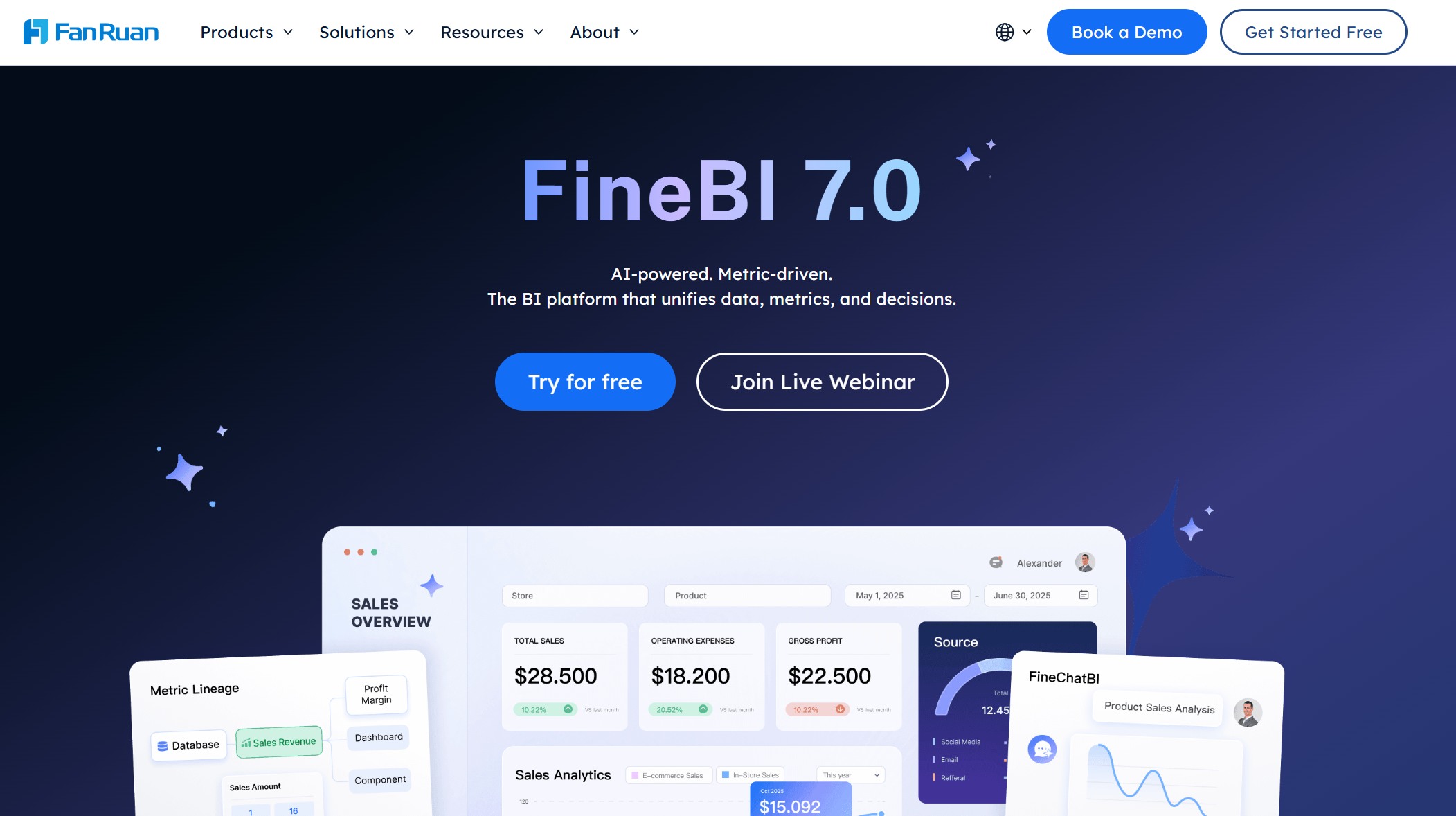 Website: https://www.fanruan.com/en/finebi
Best for: teams that want to turn marketing data into governed self-service dashboards, business analysis, and AI-assisted decision workflows
Strictly speaking, FineBI is not a connector-only clone of Supermetrics. That is also why it deserves the top spot for many organizations in 2026. Teams often begin by searching for a Supermetrics alternative, but what they actually need is not just another extraction layer. They need a better way to analyze, share, govern, and operationalize the marketing data once it is connected.
FineBI is a self-service BI platform designed to help business users and analysts build interactive dashboards, explore data with drag-and-drop workflows, and share trusted metrics across teams. It fits especially well when marketing data must be combined with sales, finance, operations, or regional business data in one reporting environment.
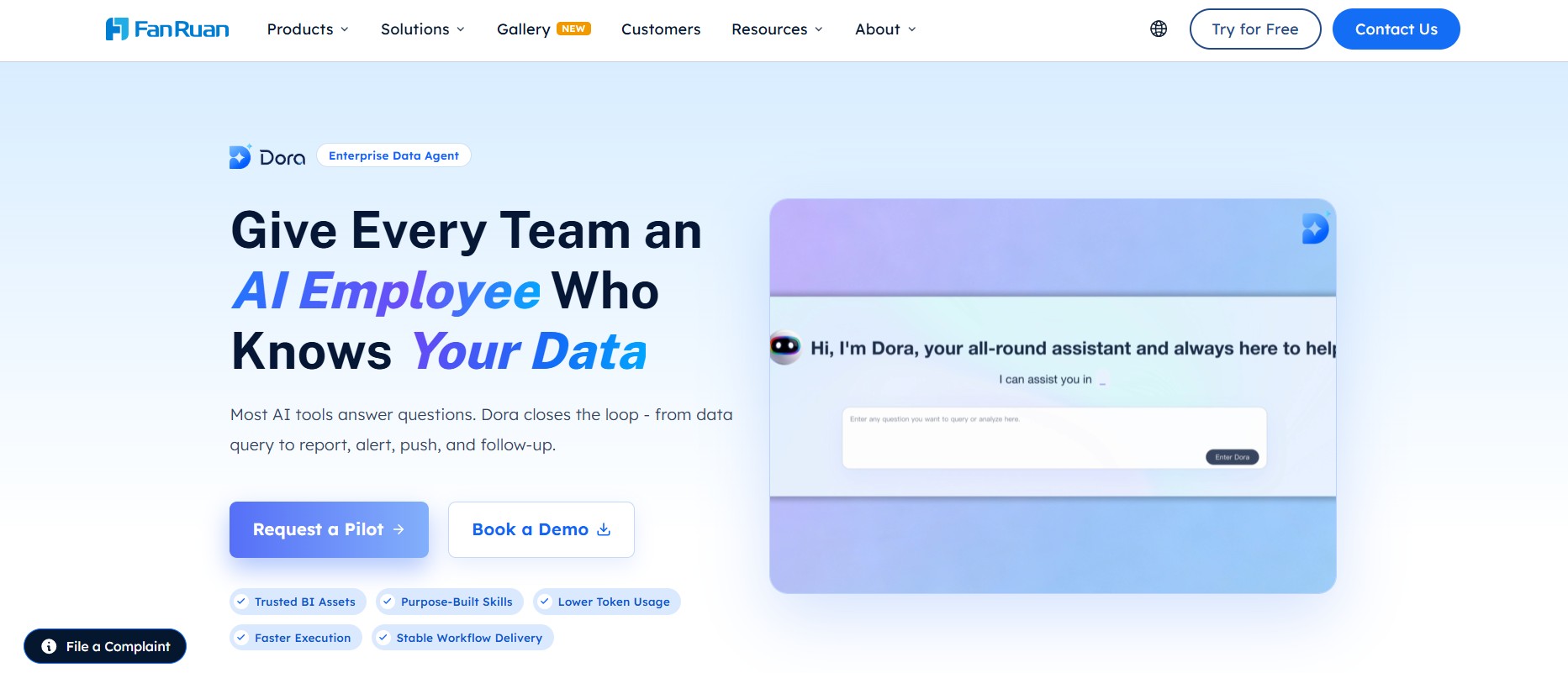
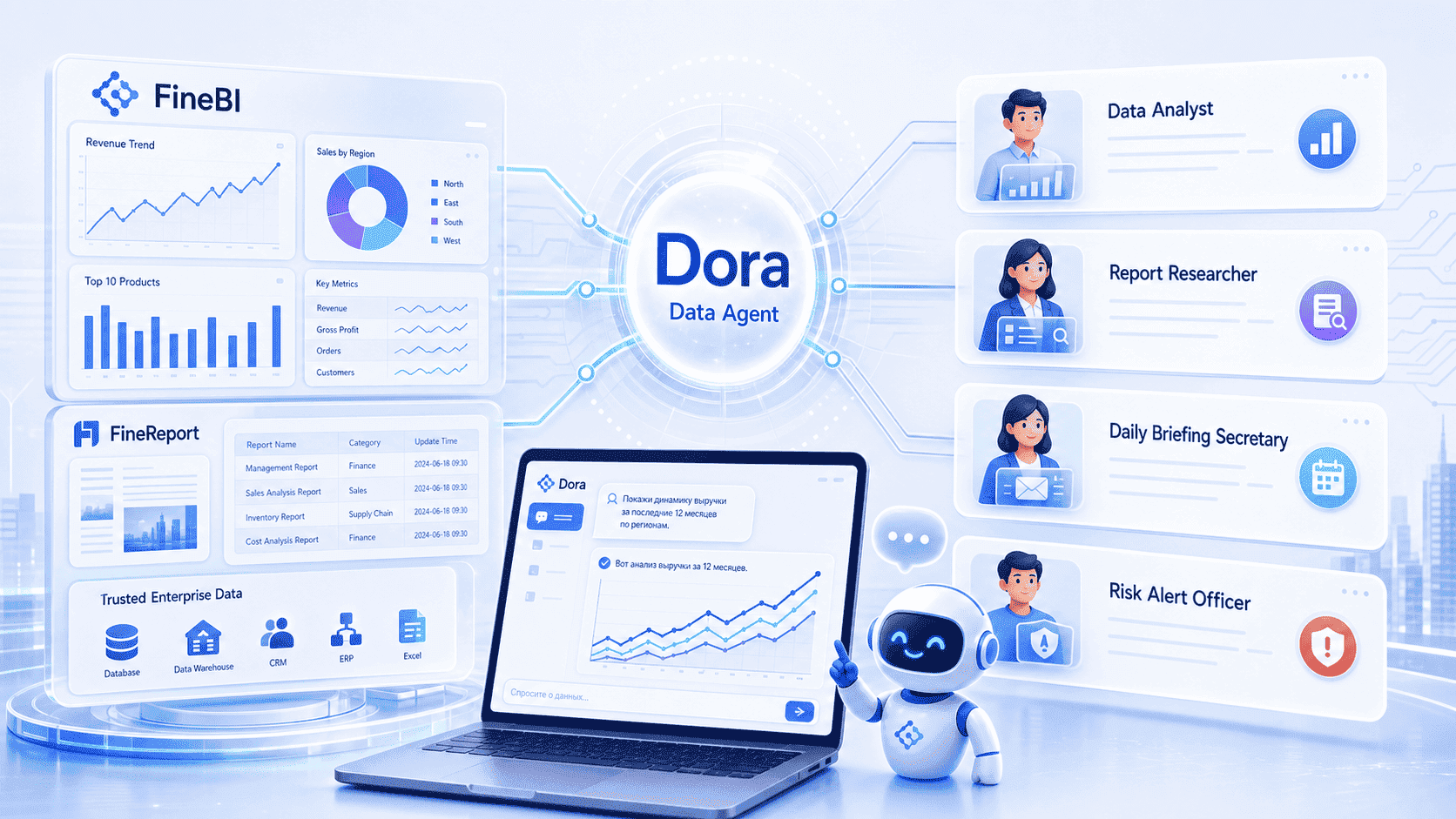
Dora adds an enterprise Data Agent layer on top of that foundation. Rather than acting like a generic chatbot, Dora is positioned as an Agentic BI layer that helps users ask questions in natural language, trigger governed analytics workflows, generate summaries, push alerts, and follow up on business tasks using trusted enterprise data.
Why FineBI + Dora can be a strong alternative path
Many teams that outgrow Supermetrics are really facing these problems:
- Data is spread across too many reports
- Stakeholders want dashboards, not just exports
- KPI definitions vary by team
- Business users depend too much on analysts
- Leadership wants faster answers, not just refreshed spreadsheets
That is where FineBI + Dora becomes relevant.
With FineBI, teams can:
- Build interactive dashboards with filters, drill-downs, and KPI cards
- Explore data using drag-and-drop analysis
- Connect enterprise data sources and create reusable analysis models
- Share dashboards across departments
- Support business-user adoption beyond technical teams
With Dora, the same organization can move from passive reporting to governed AI-assisted analytics:
- natural-language requests
- trusted semantic foundation
- governed query or skill execution
- answer, chart, summary, action, and follow-up
That means Dora can act like a scenario-specific AI assistant or AI digital employee, such as:
- Data Analyst digital employee
- Report Researcher
- Daily Briefing Secretary
- Risk Alert Officer
In practice, this matters when a CMO, regional manager, or campaign lead wants to ask questions such as:
- Why did paid social ROAS drop this week?
- Which markets missed lead volume targets?
- Summarize campaign performance changes by region
- Alert me if CAC rises above target for three days
Instead of just opening static dashboards, teams get a governed workflow built on the trusted BI layer.
Pros
- Strong fit for self-service BI and interactive dashboarding
- Easier adoption for business users than highly technical BI stacks
- Useful when marketing data must be combined with broader enterprise data
- Supports drill-down analysis and dashboard sharing
- Dora adds an AI assistant layer on top of governed analytics
- Can help enterprises move from reporting consumption to guided action
Cons
- Not a pure plug-and-play connector-only tool
- May require a separate ingestion strategy depending on your existing stack
- Best fit for teams that already need BI, governance, and analysis maturity
Pricing fit
Pricing depends on deployment scope and enterprise requirements. For evaluation, treat FineBI as a BI platform investment rather than a lightweight connector subscription.
Ideal use cases
- Enterprises standardizing marketing and business KPIs
- Teams replacing spreadsheet-heavy reporting with interactive dashboards
- Regional organizations that need governed self-service analytics
- Companies that want to add AI-assisted analysis on top of trusted dashboards
2. Funnel
 Website: https://funnel.io/
Best for: centralizing multi-channel marketing data at scale
Funnel is one of the most established alternatives for teams that want a marketing-focused data hub. It is commonly used by brands and agencies that need to harmonize data across many channels and send it into dashboards or warehouses.
Pros
- Strong connector ecosystem for marketing platforms
- Good fit for centralized marketing data modeling
- Useful for growing multi-market reporting environments
- Better suited than lightweight add-ons for scaling workflows
Cons
- Pricing can become harder to predict depending on plan structure
- Permissioning and administration may become more involved as teams grow
- Can be more than smaller teams need
Pricing fit
Usually better suited to mid-market or larger teams than very small businesses.
Ideal use cases
- Scaling agencies
- Multi-brand in-house marketing teams
- Businesses that want a marketing data hub before BI
3. Improvado
 Website: https://improvado.io/
Best for: enterprise reporting and custom data models
Improvado is typically evaluated by larger organizations with complex marketing data needs, multiple source systems, and stronger governance requirements.
Pros
- Enterprise-oriented data consolidation
- Broad connector coverage
- Good fit for custom models and standardized KPI frameworks
- Can support large reporting environments
Cons
- Usually more complex than SMB teams need
- Likely requires more structured onboarding
- Better fit where analytics ownership is more mature
Pricing fit
Generally positioned for enterprise budgets and larger reporting operations.
Ideal use cases
- Large global marketing teams
- Organizations with multiple brands or regions
- Teams needing harmonized enterprise reporting
4. Adverity
 Website: https://www.adverity.com/
Best for: teams that need governance and advanced transformation
Adverity is often shortlisted when data governance, transformation control, and enterprise workflow requirements are high.
Pros
- Strong transformation and governance orientation
- Good for enterprise-grade data operations
- Useful for teams with technical analytics support
Cons
- Steeper learning curve for non-technical users
- Longer setup and onboarding than lightweight tools
- Less ideal for teams wanting immediate self-serve simplicity
Pricing fit
Typically better aligned with enterprise or upper mid-market budgets.
Ideal use cases
- Technical data teams supporting marketing analytics
- Regulated or governance-heavy organizations
- Multi-source reporting with strict controls
5. Coupler.io
 Website: https://www.coupler.io/
Best for: spreadsheet-first teams and lightweight reporting
Coupler.io is a practical option for teams that want straightforward imports into Sheets, Excel, BI tools, or warehouses without enterprise-level overhead.
Pros
- Friendly setup experience
- Good coverage for lightweight reporting workflows
- Useful for spreadsheet and dashboard users
- Flexible enough for SMB reporting stacks
Cons
- Less suitable for complex governance-heavy environments
- Advanced modeling needs may outgrow the platform
- Enterprise-scale administration is not its core strength
Pricing fit
Often attractive for SMBs and cost-conscious teams.
Ideal use cases
- Startups and SMBs
- Spreadsheet-first marketers
- Teams that need quick reporting automation
6. Windsor.ai
 Website: https://windsor.ai/
Best for: budget-conscious teams that need broad connector coverage
Windsor.ai is often considered by teams that care about connector breadth and value. It is especially visible among PPC teams and smaller agencies.
Pros
- Broad connector availability
- Generally attractive for cost-conscious buyers
- Works for common reporting destinations
- Good fit for practical paid media workflows
Cons
- Product depth may vary by use case
- Teams with more advanced governance or BI needs may still need another layer
- Some organizations may prefer a more centralized analytics environment
Pricing fit
Often appealing to smaller teams and agencies that want lower upfront cost.
Ideal use cases
- PPC agencies
- Small in-house performance teams
- Budget-conscious reporting setups
7. Porter
 Website: https://portermetrics.com/en/home/
Best for: fast dashboard delivery to clients and internal stakeholders
Porter is usually evaluated by teams that need to get client-facing dashboards live quickly, especially in common marketing reporting environments.
Pros
- Fast setup
- Good template-driven workflow
- Friendly for agencies and consultants
- Useful for repeatable dashboard delivery
Cons
- Less suitable for advanced data stack architecture
- Limited depth compared with more robust modeling platforms
- Better for speed than complex governance
Pricing fit
Generally accessible for smaller teams and agencies.
Ideal use cases
- Freelancers
- Small agencies
- Fast-turnaround stakeholder reporting
8. Dataddo
 Website: https://www.dataddo.com/
Best for: no-code pipelines and warehouse destinations
Dataddo sits closer to the pipeline layer and is often considered by teams that want no-code delivery into data warehouses and downstream reporting systems.
Pros
- No-code pipeline setup
- Useful for warehouse-oriented workflows
- Better than spreadsheet plug-ins for centralized movement of data
- Practical for teams building a modern data stack
Cons
- Reporting and dashboarding are not the main focus
- Business users may still need a separate BI layer
- May not feel as turnkey for pure marketing reporting users
Pricing fit
Usually fits mid-market organizations better than micro teams.
Ideal use cases
- Warehouse-first analytics teams
- Companies modernizing data movement
- Teams separating pipeline and BI layers
9. Whatagraph
 Website: https://whatagraph.com/
Best for: agency-friendly reporting and presentation-ready dashboards
Whatagraph is especially relevant for agencies that want polished, shareable reports and visual dashboards for clients.
Pros
- Client-friendly output
- Presentation-ready reporting
- Good for recurring stakeholder communication
- Easier for non-technical teams
Cons
- Less flexible than a full BI platform
- Advanced transformation and modeling needs may require additional tools
- Best for reporting presentation, not deep analysis
Pricing fit
Often suitable for agencies and marketing service teams.
Ideal use cases
- Client reporting
- Executive summaries
- Agencies with recurring monthly reports
10. AgencyAnalytics
 Website: https://agencyanalytics.com/
Best for: agencies managing recurring client reporting
AgencyAnalytics is designed around digital marketing agency workflows and recurring multi-client reporting.
Pros
- Agency-oriented structure
- Easy recurring reporting
- Familiar workflow for SEO, PPC, and client reporting teams
- Good fit for standardized service reporting
Cons
- More limited if you need deep data modeling
- Less suitable for broader enterprise analytics
- Better for agency operations than cross-functional BI
Pricing fit
Usually practical for agencies, depending on client volume and reporting needs.
Ideal use cases
- SEO agencies
- PPC agencies
- Service teams with recurring client dashboards
Supermetrics vs. competitors: how the top options compare
Choosing a Supermetrics alternative depends less on marketing claims and more on where your current workflow breaks.
Pricing and value
The most common reason teams explore alternatives is not that Supermetrics fails at data extraction. It is that total cost grows faster than expected as reporting complexity increases.
Watch for these pricing factors:
- number of connectors included
- premium connectors
- destination-based pricing
- additional account limits
- user limits
- API or warehouse access tiers
- required annual contracts
In general:
- Windsor.ai, Coupler.io, and Porter tend to appeal to more cost-conscious buyers
- Funnel, Adverity, and Improvado are usually considered when teams need more control and scale
- FineBI should be evaluated differently: not as a connector substitute alone, but as the BI layer that may reduce long-term reporting sprawl and dashboard duplication
Connectors and data destinations
Most buyers begin with connectors, but destinations matter just as much.
Questions to ask:
- Do you need Google Sheets, Excel, and Looker Studio?
- Do you also need BigQuery, Snowflake, or another warehouse?
- Will you eventually need Power BI, Tableau, or an enterprise BI environment?
- Can the same tool support both quick reporting and long-term scale?
In practice:
- Funnel, Improvado, Adverity, Dataddo lean more toward centralization and scale
- Coupler.io, Windsor.ai, Porter support faster lightweight delivery
- FineBI becomes relevant when the destination itself needs to become a governed analytics hub rather than a static output layer
Ease of use, support, and implementation time
Ease of use is often the dividing line between a good demo and a successful rollout.
- Coupler.io, Windsor.ai, Porter, Whatagraph, and AgencyAnalytics are generally easier for marketing-led teams
- Funnel balances usability with more centralization
- Improvado and Adverity are more suitable when teams can support a more structured implementation
- FineBI is strong when business users need self-service analysis after implementation, especially for dashboard consumption and exploration across departments
Best fit by team type
Best for agencies
- Funnel
- Whatagraph
- AgencyAnalytics
- Porter
Best for SMBs
- Coupler.io
- Windsor.ai
Best for enterprise teams
Best for in-house performance marketers
- Funnel
- Coupler.io
- Windsor.ai
- FineBI if the organization needs a stronger dashboarding and analytics layer
Best Supermetrics alternatives by use case
Best for scaling agencies
Agencies need to balance client volume, margin control, reusable templates, permissions, and reporting reliability.
Strong options:
- Funnel for more scalable centralized marketing data workflows
- Whatagraph for polished client reporting
- AgencyAnalytics for recurring digital marketing reports
- Porter for fast dashboard production
If the agency is evolving into a more advanced analytics provider, adding a BI layer such as FineBI can help standardize cross-client dashboard frameworks and internal performance analysis.
Best value options
For teams that want lower total cost without losing core integrations, look first at:
- Windsor.ai
- Coupler.io
- Porter
These tools are often sufficient when reporting needs are straightforward and governance complexity is low.
Best for PPC and paid media reporting
PPC workflows usually prioritize:
- campaign pacing
- spend monitoring
- ROAS and CPA tracking
- channel-level variance analysis
- fast reporting refresh
Strong fits include:
- Windsor.ai
- Coupler.io
- Porter
- Funnel
If PPC data also needs to be analyzed alongside downstream sales or regional business performance, FineBI becomes more useful as the analysis layer.
Best for advanced data stacks
If your organization already uses a warehouse or plans to standardize one, consider:
- Adverity
- Improvado
- Dataddo
- Funnel
Then consider what sits on top of that stack. This is where FineBI + Dora can complement the ingestion layer well:
- FineBI builds the trusted dashboards and semantic business views
- Dora turns those assets into an enterprise AI assistant workflow
- teams can ask, analyze, summarize, alert, and follow up on trusted marketing data instead of only reading dashboards manually
How to choose the right tool for your reporting stack
The right choice depends on your connectors, destinations, budget, and the maturity of your analytics process.
Start with your required connectors, reporting destinations, and refresh needs
Make a short must-have list:
- ad platforms
- analytics tools
- CRM or sales tools
- e-commerce systems
- spreadsheet destinations
- BI tools
- warehouse destinations
- refresh interval requirements
Do not buy based on connector count alone. Buy based on whether the tool covers your actual stack reliably.
Match the tool to your budget, technical resources, and stakeholder expectations
Use this simple matching logic:
- Lightweight reporting, small team: Coupler.io, Windsor.ai
- Agency reporting operations: Funnel, Whatagraph, AgencyAnalytics, Porter
- Enterprise governance and data modeling: Adverity, Improvado
- Interactive BI, self-service analysis, and AI-assisted decision workflows: FineBI + Dora
Use a short trial checklist to test accuracy, reliability, and workflow fit before migrating
Before switching, test the tool with one or two real reporting workflows.
Trial checklist:
- Rebuild one high-value recurring report
- Compare numbers against source platforms
- Test refresh reliability for at least several cycles
- Check how easily KPI logic can be reused
- Validate permissions, sharing, and stakeholder usability
Final recommendation framework based on business size, reporting complexity, and growth stage
- Small and cost-sensitive: start with a lightweight connector tool
- Growing agency or in-house marketing team: prioritize centralization and predictable scale
- Enterprise or cross-functional reporting team: separate ingestion from BI, then standardize analysis and access
- Organizations moving toward AI-assisted analytics: build a trusted dashboard and semantic foundation first, then add an AI agent layer
Practical recommendations before you switch
Here are five practical recommendations I would give any marketing or BI team evaluating a Supermetrics alternative:
-
Map your reporting workflow, not just your connectors.
The real bottleneck is often in KPI definitions, dashboard maintenance, and stakeholder access. -
Estimate scaling cost early.
Model what happens when you double accounts, users, or destinations. Cheap entry pricing can become expensive fast. -
Decide whether you need a connector tool or a reporting platform.
If your pain starts after data lands, the problem is likely in the BI layer, not just the pipeline layer. -
Standardize core metrics before migration.
Agree on definitions for CAC, ROAS, pipeline value, attributed revenue, and conversion logic before rebuilding reports. -
Test business-user adoption, not only analyst setup.
A tool that analysts can configure is not enough. Stakeholders need to actually use the outputs with confidence.
When FineBI + Dora is a smart alternative direction
Tools like Supermetrics, Funnel, and Coupler.io are widely used in the marketing data space, but teams that need a more business-user-friendly, self-service BI platform may also consider FineBI.
This is especially true if your organization has already solved part of the connector problem but still struggles with:
- dashboard sprawl
- inconsistent metrics
- low stakeholder adoption
- limited self-service analysis
- slow follow-up after insights are found
FineBI helps by giving teams a governed environment for:
- interactive dashboard creation
- drag-and-drop analysis
- exploration and drill-down
- enterprise data connectivity
- dashboard sharing and collaboration
- faster dashboard iteration for business teams
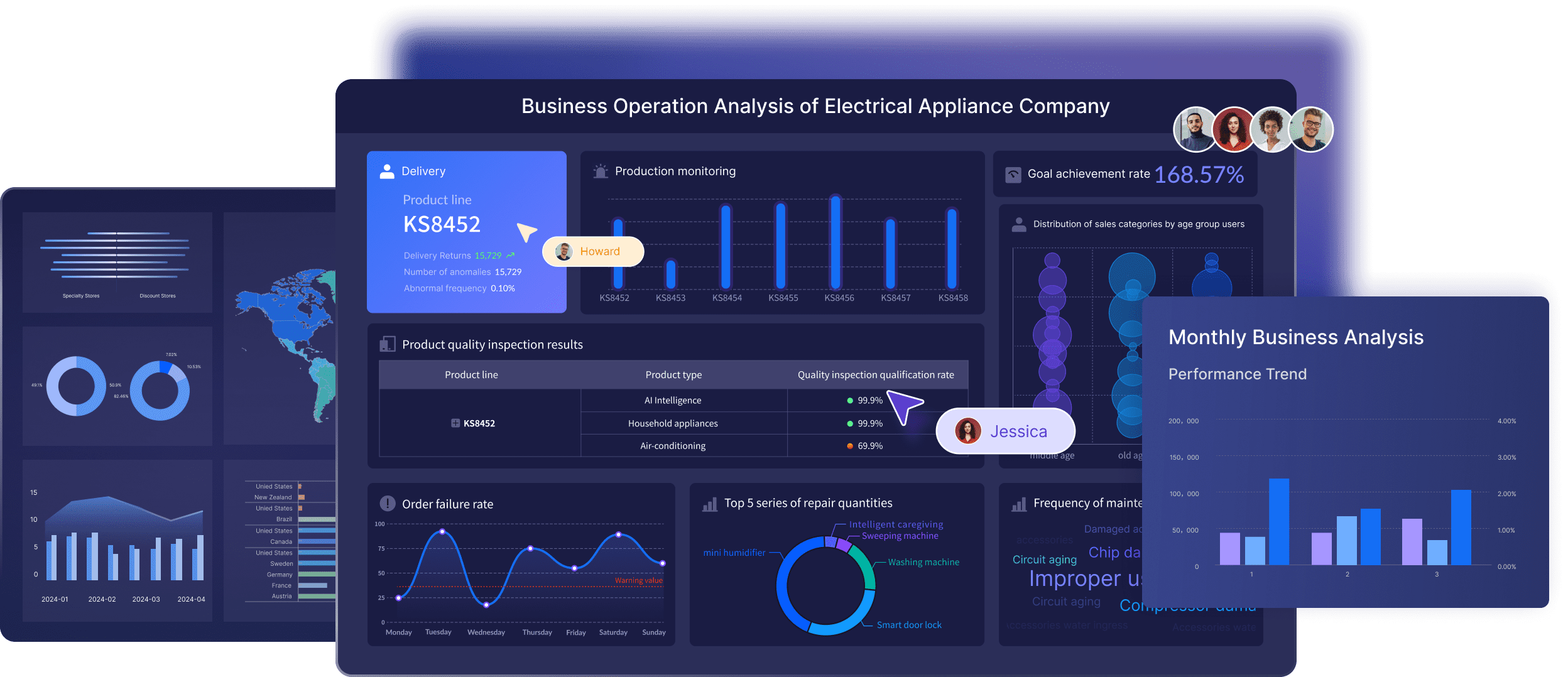
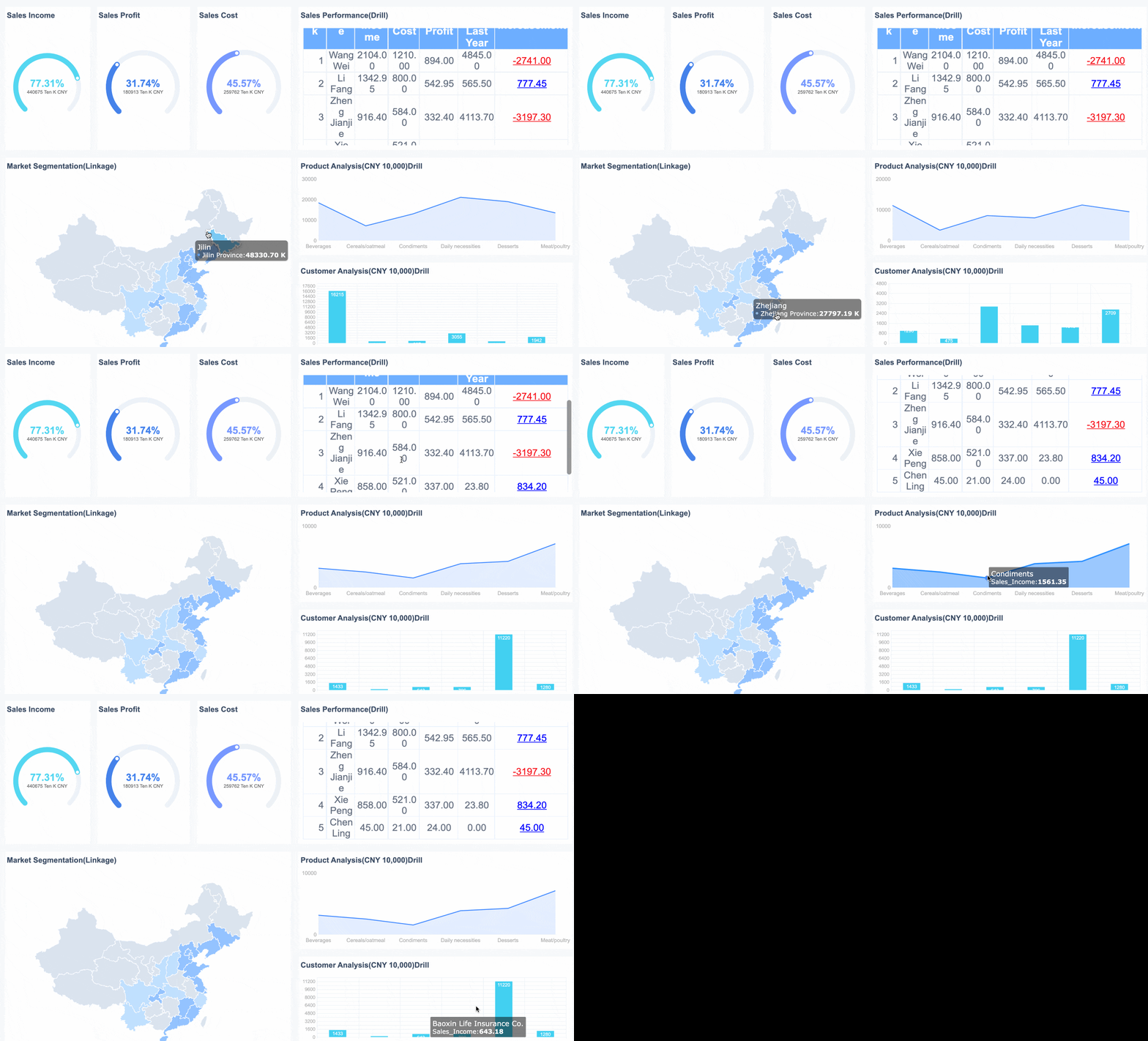 An Interactive Dashboard Created by FineBI
Then Dora extends that environment into Agentic BI.
Instead of replacing FineBI, Dora works on top of the trusted dashboard and data foundation. That means your enterprise can move from:
- people opening reports manually
to - AI helping people ask, analyze, generate, push, alert, and follow up
This matters for modern marketing teams because reporting is no longer only about seeing the number. It is about acting on the number quickly and consistently.
Examples of where FineBI + Dora can help:
- A marketing leader asks for a daily campaign performance summary by region
- A team receives a proactive alert when conversion efficiency drops
- A manager asks for a chart and summary explaining week-over-week CAC changes
- An analyst team standardizes dashboards while Dora helps users access insights through governed natural-language requests
In other words, if your search for a Supermetrics alternative is really about building a stronger reporting and decision system, not merely replacing one connector subscription, FineBI is worth evaluating.
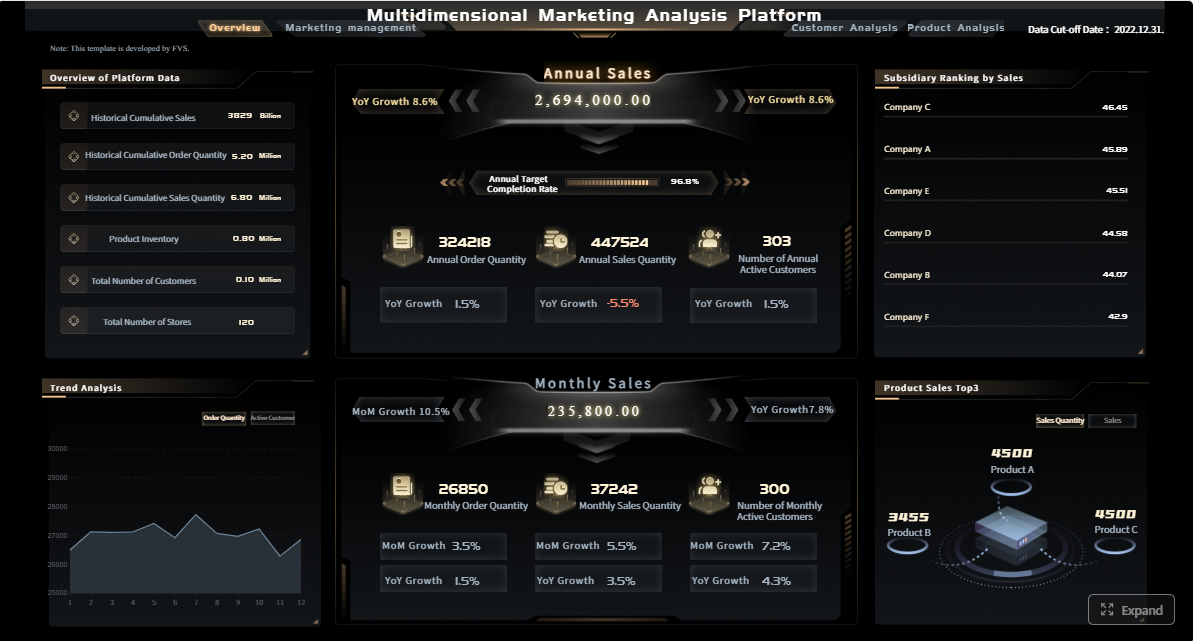 Click the picture to view this live dashboard
Final thoughts
There is no single best Supermetrics alternative for every team.
- Choose Coupler.io, Windsor.ai, Porter if you want lightweight, cost-conscious reporting automation.
- Choose Funnel, Dataddo, Whatagraph, or AgencyAnalytics if you need a stronger fit for agency operations or structured reporting workflows.
- Choose Improvado or Adverity if enterprise governance and complex data modeling are your top priority.
- Choose FineBI + Dora if your real goal is to turn marketing data into interactive, governed, self-service analytics with an enterprise AI assistant layer on top.
If your current reporting setup feels fragmented, a connector swap may help. But if the bigger problem is adoption, analysis speed, and decision-making, it may be time to upgrade the whole analytics experience, not just the data pipe.
FAQs
It depends on your workflow. Agencies that need fast client-facing dashboards often prefer Porter, Whatagraph, or AgencyAnalytics, while larger agencies with more complex data modeling may lean toward Funnel or Improvado.